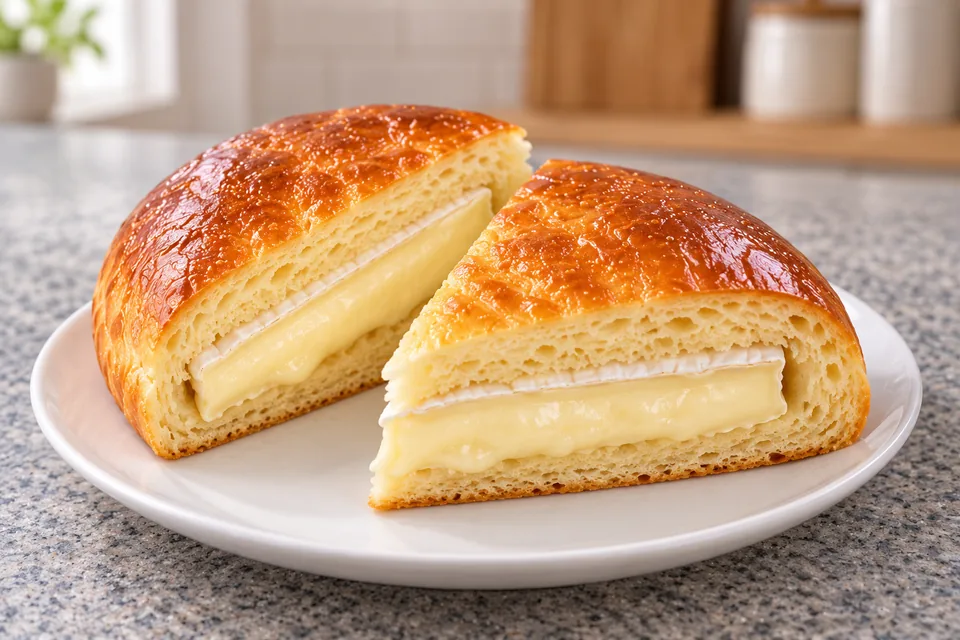
Brie brioche parcel
A whole Brie enclosed in soft savoury brioche. Let the baked parcel rest briefly, then cut into wedges while the cheese is warm.
Method
01 · Mix and develop the dough
7–9 minUse: Strong white bread flour; Whole milk; Beaten whole egg; Instant dried yeast; Fine salt
Mix the dough flour, milk, 50 g egg, yeast and salt in a stand-mixer bowl with the dough hook. Knead at the manufacturer’s recommended speed for 5 minutes after the flour is moistened.Ready when: The dough gathers together and begins to stretch.

01 Brie brioche parcelDevelop the dough before adding the butter. 02 · Work in the butter
5–8 minUse: Unsalted butter
Work the 50 g butter into the dough in small pieces. Continue kneading for 5–8 minutes, scraping the bowl if needed.Ready when: The dough is smooth and stretchy, with no separate butter pieces.
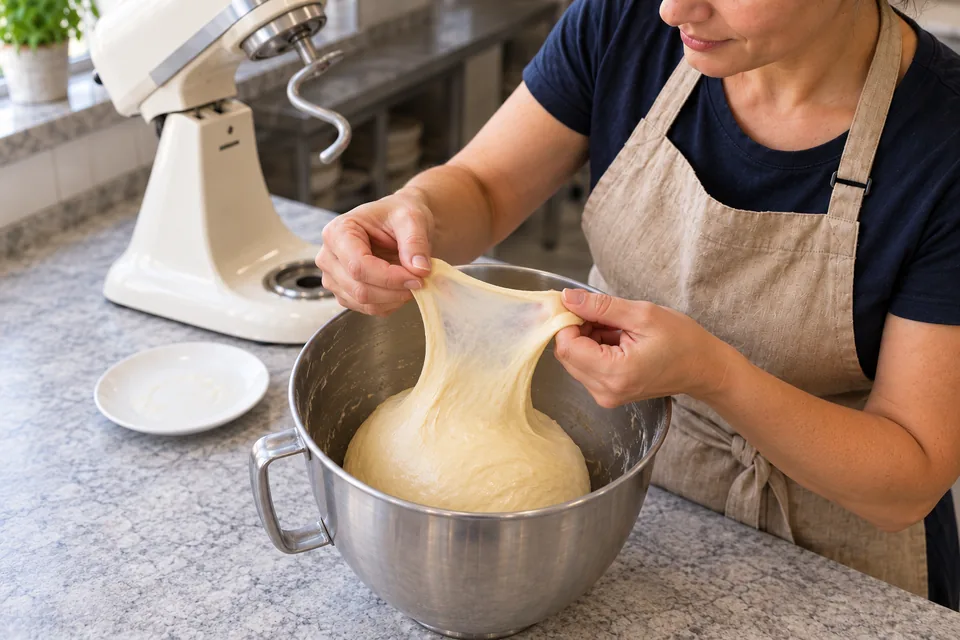
02 Brie brioche parcelWork in the butter until the dough stretches smoothly. 03 · Let the dough rise
60–90 minUse:
Cover the bowl and leave at 22–24°C for 60–90 minutes.Ready when: The dough becomes airy and roughly doubles in volume.
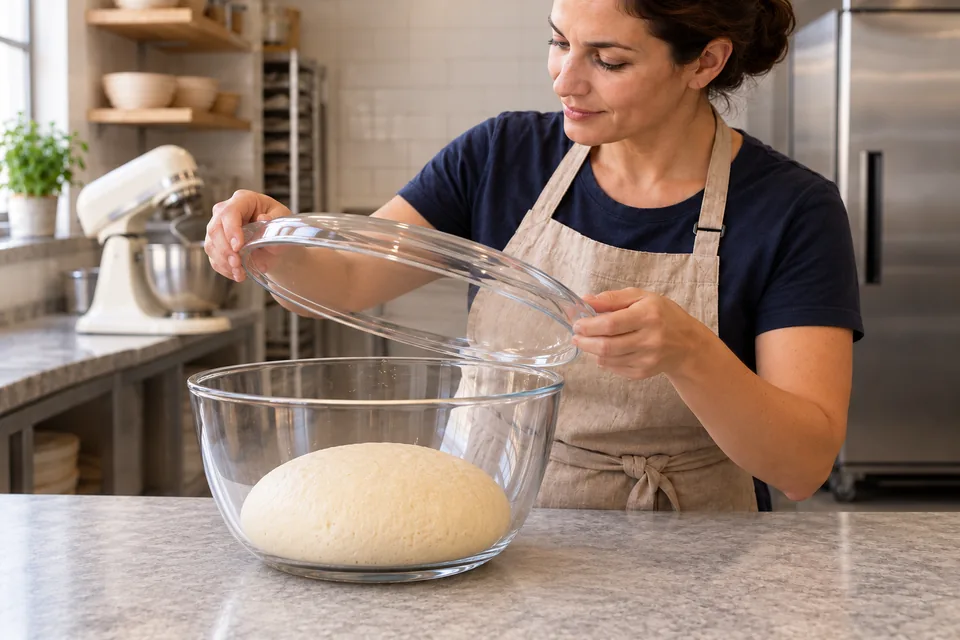
03 Brie brioche parcelLet the dough rise until airy and roughly doubled. 04 · Chill before wrapping
45–60 minUse:
Press down the dough gently, cover and refrigerate for 45–60 minutes.Ready when: The butter is firm enough that the dough rolls without smearing.
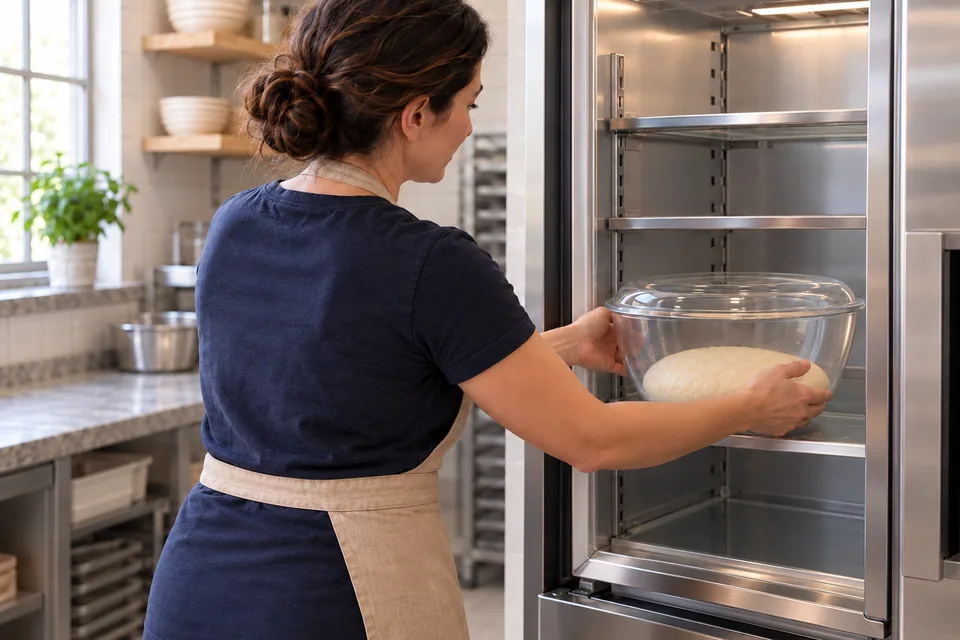
04 Brie brioche parcelChill the dough until it rolls without smearing. 05 · Enclose the whole Brie and seal
10–15 minUse: Flour for shaping; Whole Brie
Line a 30×40 cm baking tray with baking paper. Lightly flour the worktop and roll the dough into a circle about 30 cm across and 6 mm thick to start. Remove all packaging from the chilled Brie, leaving its rind intact. Check the dough against the wheel: it must cover the base, sides and top with small overlaps. Roll it larger and thinner if needed. Put the Brie in the centre, bring the dough over it and gently stretch without tearing until the cheese is fully covered. Spread the overlaps flat and pinch every join closed. Turn the parcel over onto the tray so the joins sit underneath.Ready when: The cheese is completely enclosed by unbroken dough. The underside has small, flat, sealed overlaps rather than a thick dough knot.
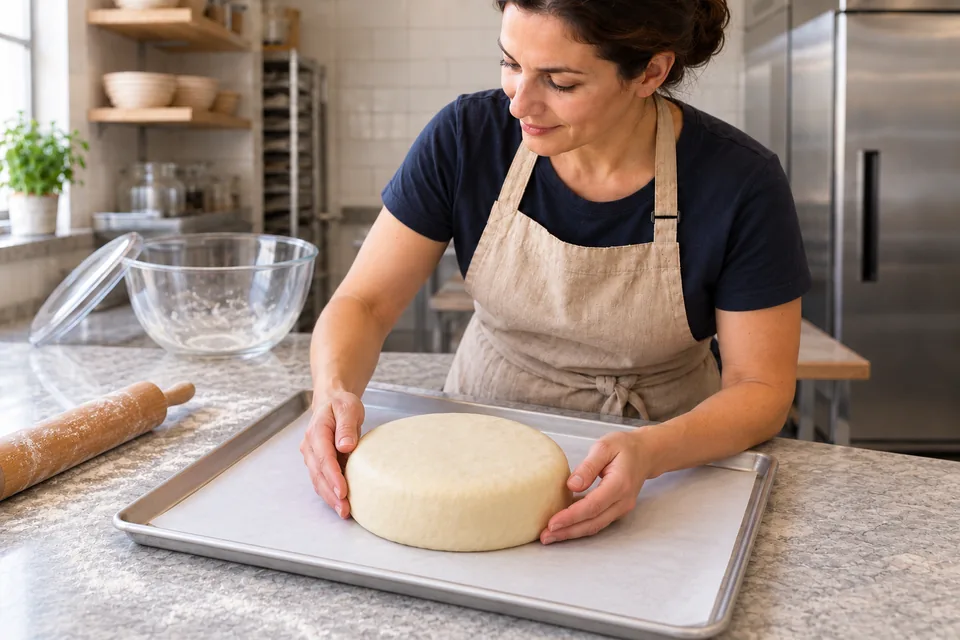
05 Brie brioche parcelEnclose the chilled Brie and seal the joins underneath. 06 · Proof and heat the oven
45–60 minUse:
Cover loosely and leave at 22–24°C for 45–60 minutes. Heat the oven to 200°C conventional during the final 20 minutes.Ready when: The dough covering has visibly puffed and a light fingertip dent recovers slowly.
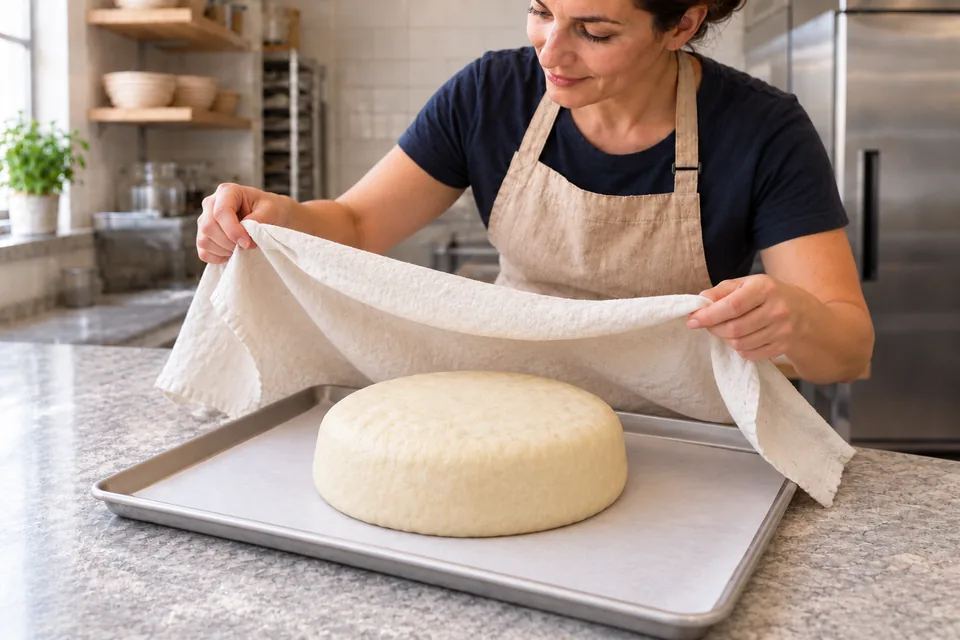
06 Brie brioche parcelLet the covering puff before glazing. 07 · Brush and bake the parcel
27–37 minUse: Beaten egg for brushing
Brush the parcel lightly with the separate beaten wash egg. Bake for 25–35 minutes, covering loosely with foil if it colours too quickly. Check the thick folded bread near the underside with a probe, avoiding the cheese.Ready when: The crust is deep golden, the underside is set and the bread at the folds reaches at least 90°C.
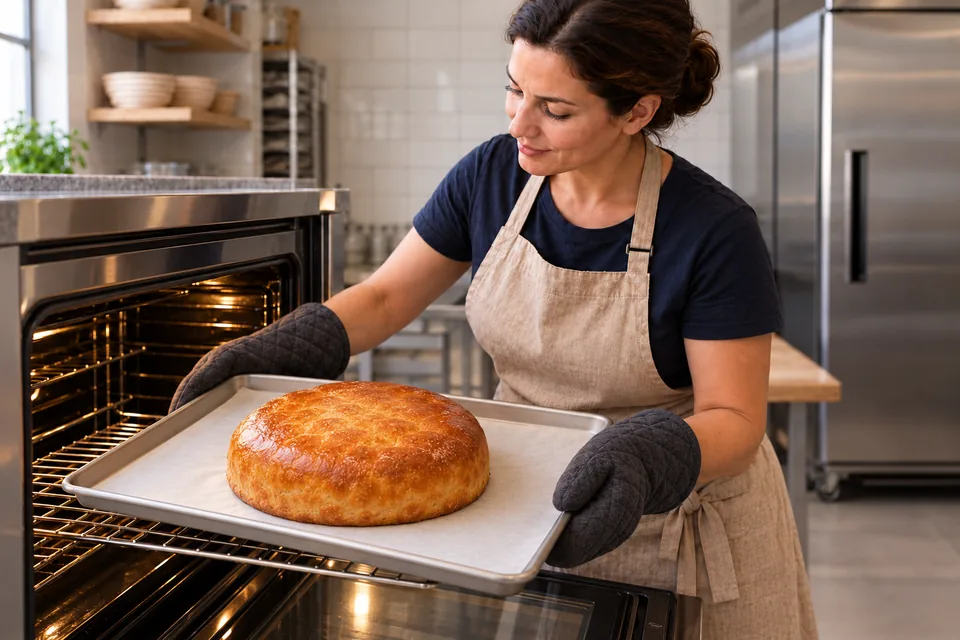
07 Brie brioche parcelBrush lightly with egg and bake until the bread is cooked. 08 · Rest and cut into wedges
20–23 minUse:
Leave the parcel on the tray for 20 minutes. Move it to a board and cut into eight wedges with a serrated knife.Ready when: The bread cuts cleanly and the warm cheese is soft without being boiling hot.
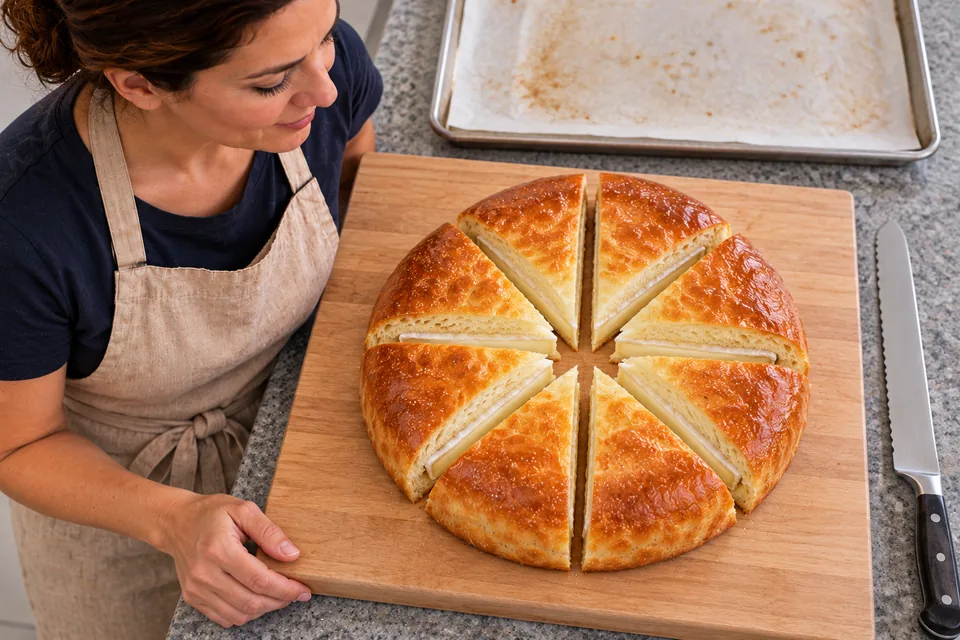
08 Brie brioche parcelRest,then divide the warm parcel into eight wedges.
What to look for
| Stage | Look / feel for | Needs attention |
|---|---|---|
| Mix and develop the dough | The dough gathers together and begins to stretch. | |
| Work in the butter | The dough is smooth and stretchy, with no separate butter pieces. | |
| Let the dough rise | The dough becomes airy and roughly doubles in volume. | |
| Chill before wrapping | The butter is firm enough that the dough rolls without smearing. | |
| Enclose the whole Brie and seal | The cheese is completely enclosed by unbroken dough. The underside has small, flat, sealed overlaps rather than a thick dough knot. | |
| Proof and heat the oven | The dough covering has visibly puffed and a light fingertip dent recovers slowly. | |
| Brush and bake the parcel | The crust is deep golden, the underside is set and the bread at the folds reaches at least 90°C. | |
| Rest and cut into wedges | The bread cuts cleanly and the warm cheese is soft without being boiling hot. |
Troubleshooting
| If you see this | Likely cause | What to do now | Next time |
|---|---|---|---|
| Cheese escapes through the underside. | A seam was open or the rind was cut before wrapping. | Let the baked parcel rest on its lined tray before moving it. | Keep the rind intact and seal every dough join before proofing. |
| The underside has a dense dough patch. | Too many folds were piled in one place or the parcel was removed too early. | If still baking, cover the top loosely and continue until the folded bread is set. | Spread the overlaps and check the bread at the seam rather than probing only cheese. |
Storage: Serve warm after the stated rest. Refrigerate cooled leftovers within 2 hours of baking and use within 2 days. Reheat individual wedges in an oven until hot through.; Contains: wheat, milk, egg.; This Nepedia version has not been kitchen-tested.
Other approaches to this recipe
| Cook / recipe | Use | What differs |
|---|
The working ingredients and method form one recipe. Different formulas are compared without averaging their quantities or rise schedules.