Laminated butter croissants

Four letter folds create alternating dough and butter layers.

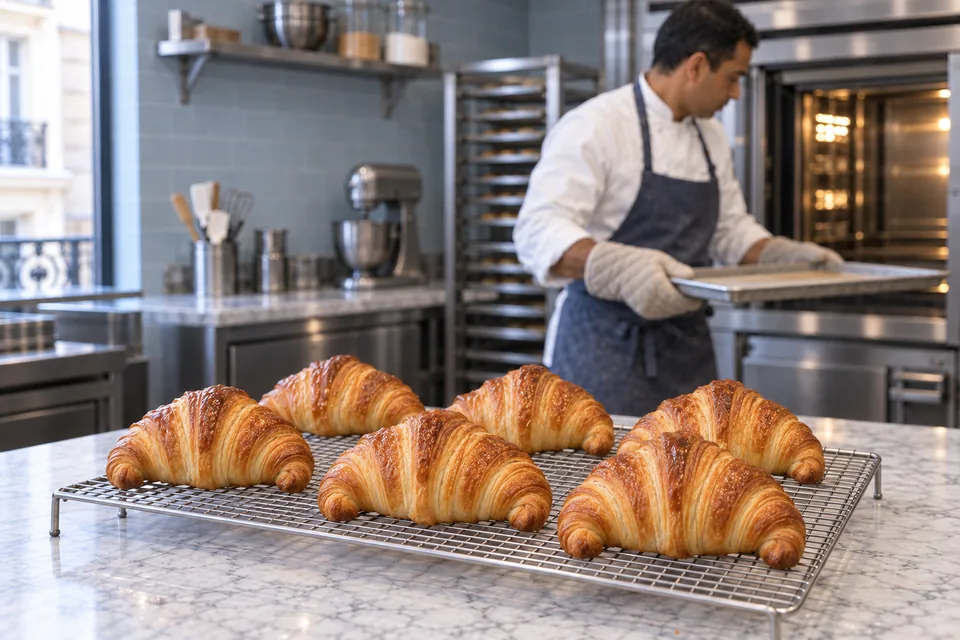
Six whole golden laminated croissants cool on a wire rack.
Makes
24 croissants
Heat
220°C → 175°C
Baking time
15 min + 10–15 min

Reduce after the first 15 min.

View

Laminated butter croissants

Makes
24 croissants
Heat
220°C → 175°C
Baking time
15 min + 10–15 min

Reduce after the first 15 min.

France · Laminated pastries

Laminated butter croissants

Four letter folds create alternating dough and butter layers.

Method

  1. 01 · Sponge

    During block preparation

    Use: Sponge group

    Mix; rest while making block.

    Ready when: Combined

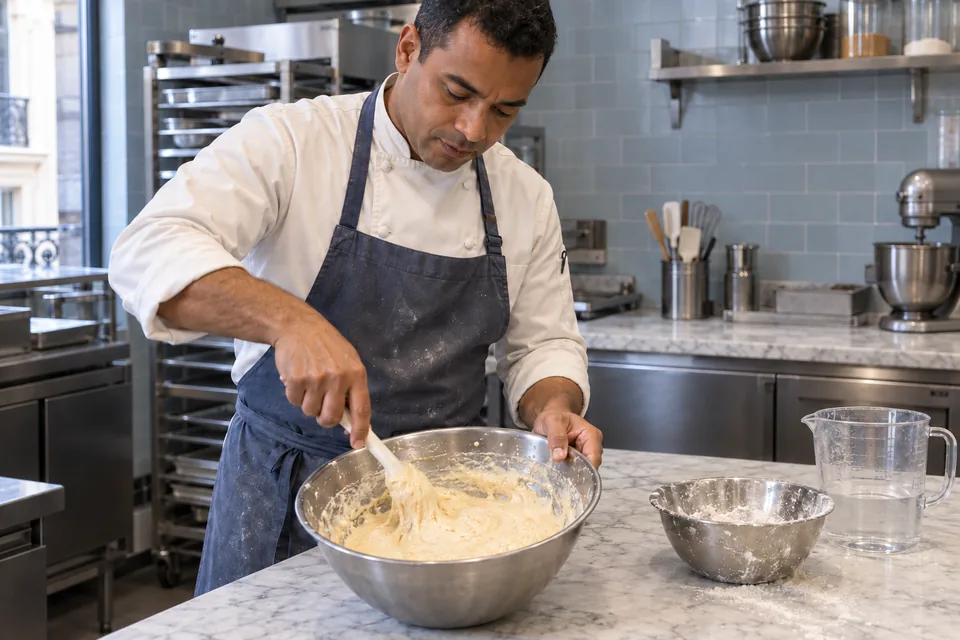
    Pastry chef stirs a thick pale sponge mixture in a steel bowl.
    01 SpongeMix the sponge and let it rest while you prepare the butter block.
  2. 02 · Block

    30 min

    Use: Block group

    Paddle just smooth; form 20 cm square; wrap and chill.

    Ready when: Cool, flexible

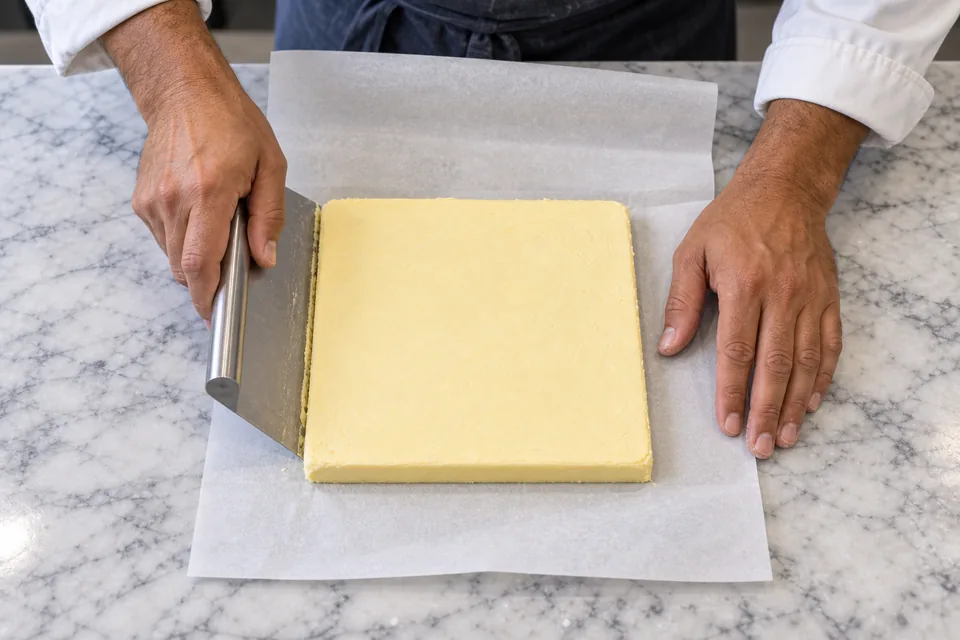
    Hands square a pale butter block on parchment with a bench scraper.
    02 BlockShape the butter mixture into a flat square, wrap and chill.
  3. 03 · Dough

    5 min knead; 30 min chill

    Use: Sponge + Final dough

    Combine; knead, adding reserve flour only if sticky. Form 23 cm square; wrap and chill.

    Ready when: Smooth, elastic

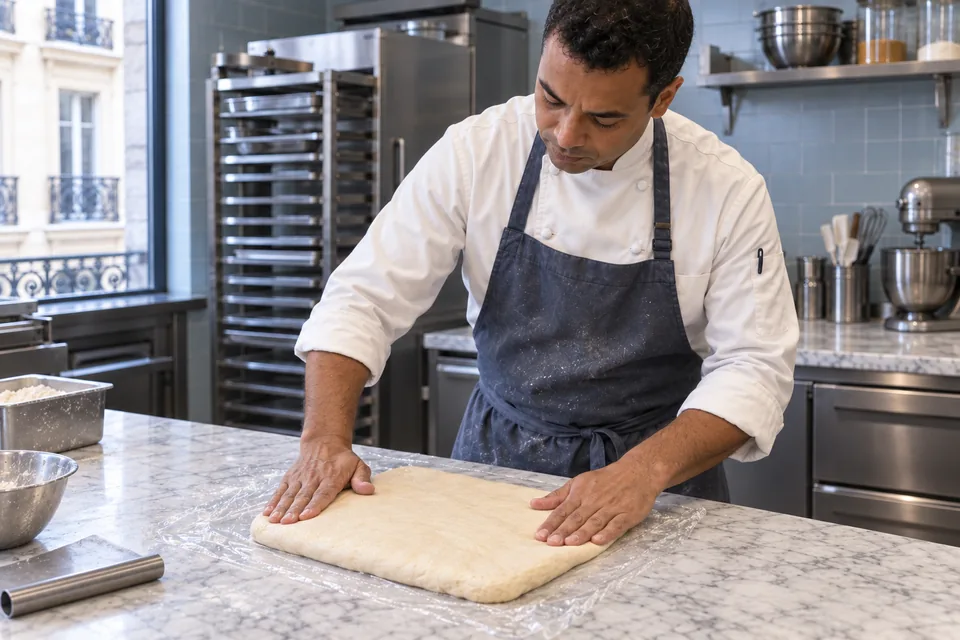
    Chef shapes the smooth croissant dough into a square before wrapping.
    03 DoughMake a smooth dough, flatten it into a square and chill.
  4. 04 · Enclose

    Before turns

    Use: Dough; block

    Roll dough 30 cm square. Centre block diagonally; bring corners over butter; dampen and seal seams.

    Ready when: Butter enclosed

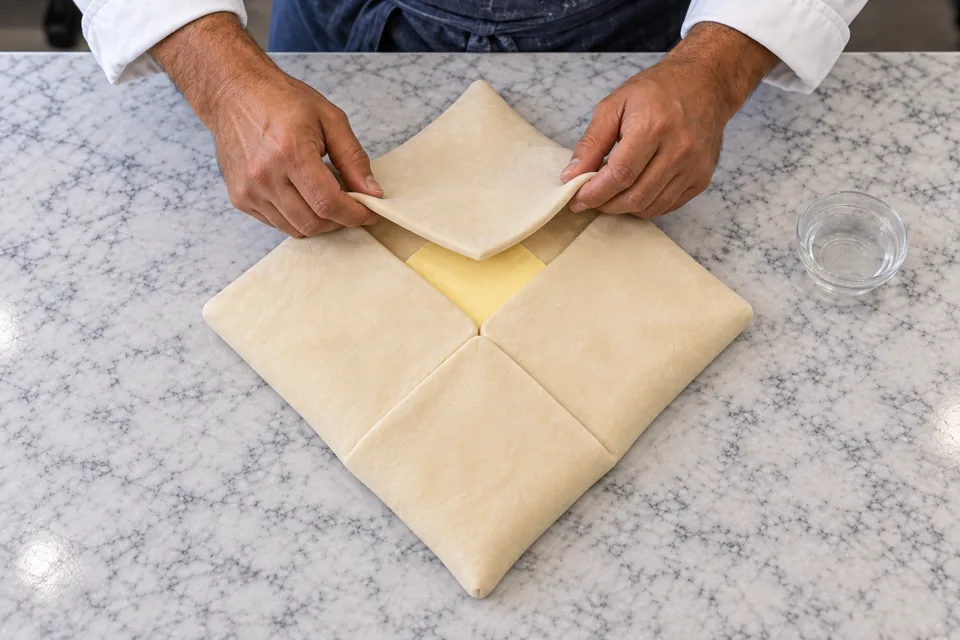
    Hands close the dough envelope around a square butter block.
    04 EncloseFold the dough corners over the butter and seal the seams.
  5. 05 · Turns 1–2

    30 min chill

    Use: Packet

    Roll 51 × 25 cm; brush off flour; fold in thirds. Rotate 90°; repeat. Wrap; chill.

    Ready when: Straight, aligned edges

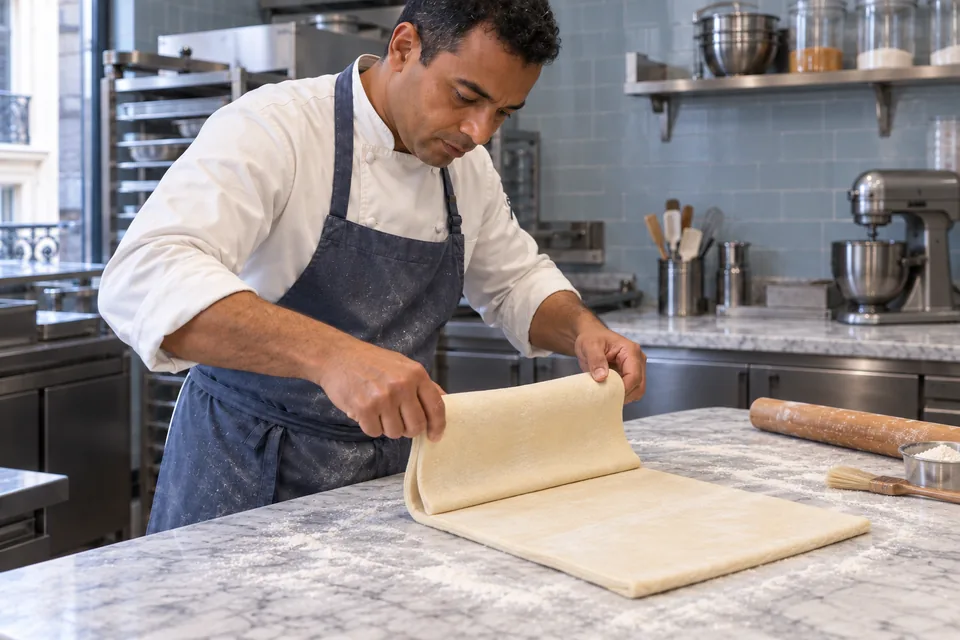
    Chef folds one third of a rectangular croissant dough sheet over the centre.
    05 Turns 1–2Roll into a rectangle and fold in thirds; repeat, then chill.
  6. 06 · Turns 3–4

    At least 1 h or overnight

    Use: Packet

    Repeat two roll-and-third-fold cycles. Wrap; chill.

    Ready when: Four turns total

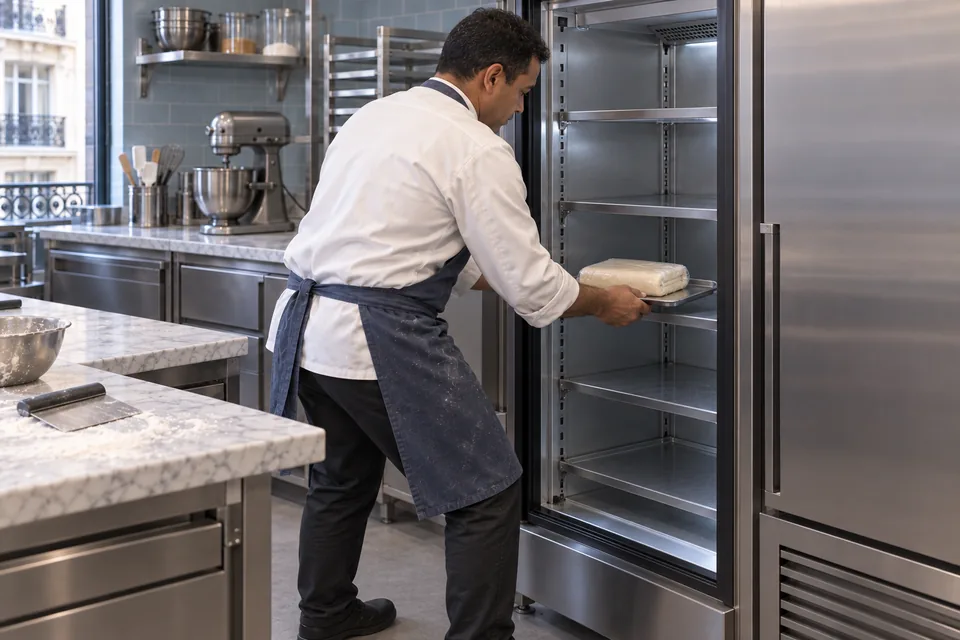
    Chef places the wrapped folded croissant dough into a refrigerator.
    06 Turns 3–4Complete the remaining two turns, then wrap and chill the dough.
  7. 07 · Cut

    12 triangles per half

    Use: Dough

    Halve; keep one half chilled. Roll each half 33 × 46 cm; trim edges. Cut a 3-by-2 grid, then diagonal triangles.

    Ready when: Clean cuts

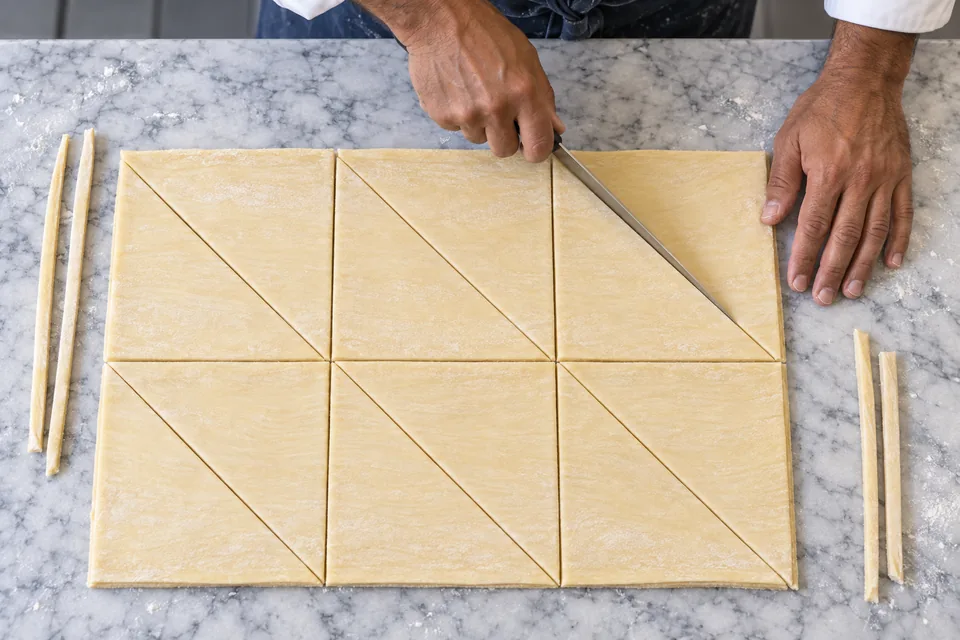
    Hands cut a rectangular laminated dough sheet into a grid of twelve triangles.
    07 CutCut each half of the rolled dough into twelve triangles.
  8. 08 · Shape

    30 min

    Use: Triangles

    Stretch gently; notch base 2.5 cm. Roll base to tip; tip underneath. Curve; cover on trays and chill.

    Ready when: Tips secured

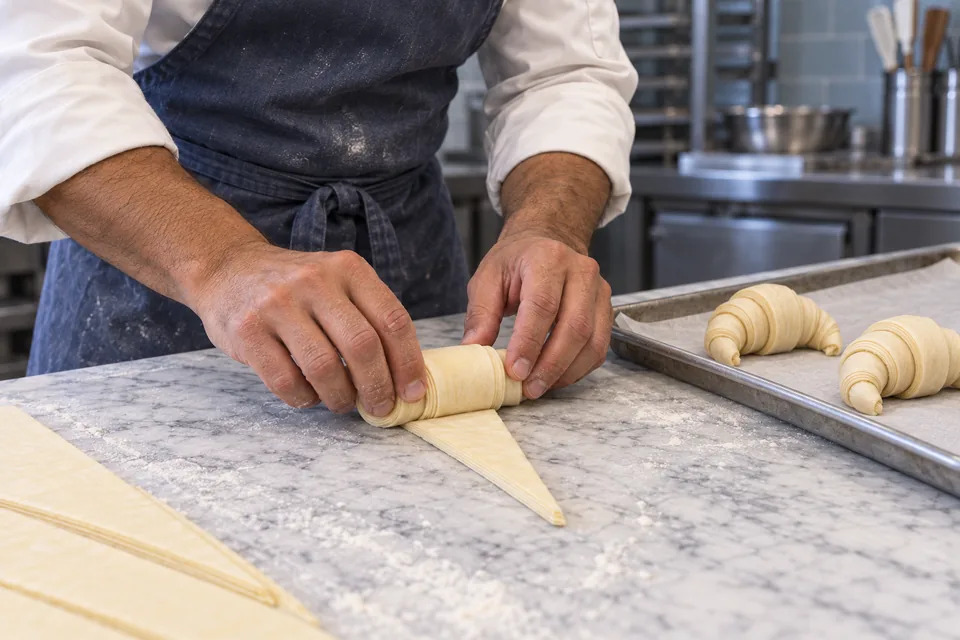
    Hands roll a croissant triangle toward its point beside two shaped crescents.
    08 ShapeRoll each triangle from its notched base and tuck the tip underneath.
  9. 09 · Proof

    60–90 min

    Use: Croissants

    Keep covered at room temperature; preheat near end.

    Ready when: Expanded; indentation remains
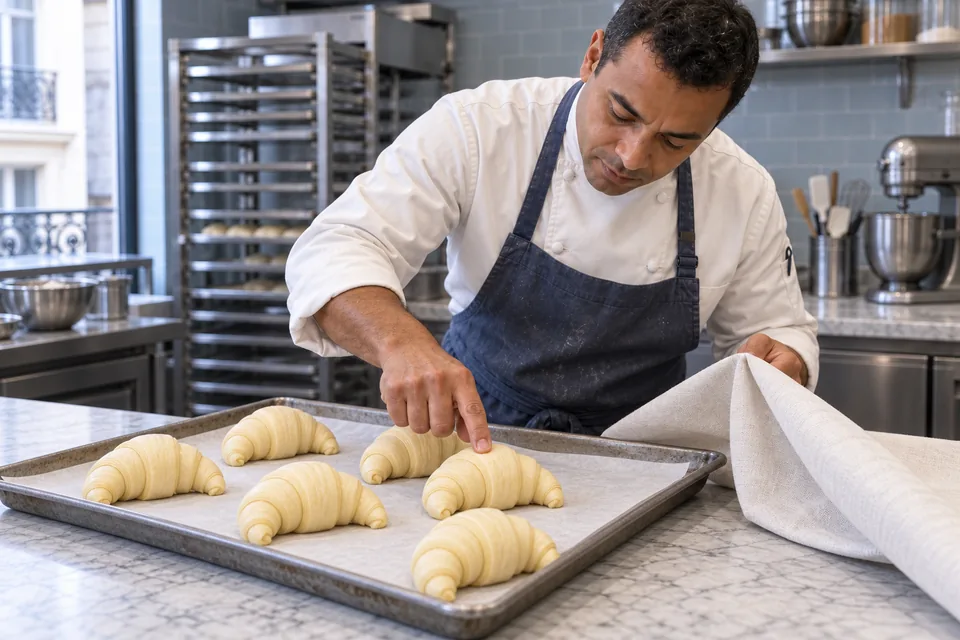
    Chef gently checks a puffy unbaked croissant among six on a lined tray.
    09 ProofProof until the croissants expand and a gentle indentation remains.
  10. 10 · Bake

    Cool 20 min

    Use: Wash; croissants

    Whisk wash; brush. Bake 15 minutes at 220°C, then 10–15 at 175°C; rack-cool.

    Ready when: Deep gold; no raw overlap

    Six whole golden laminated croissants cool on a wire rack.
    10 BakeBake until deeply golden and let the croissants cool on a rack.

What to look for

StageLook / feel forNeeds attention
RollingButter bends with doughHard fragments or oily smears
BakeBrown layers at overlapsPale raw seams

Troubleshooting

If you see thisLikely causeWhat to do nowNext time
Butter cracksBlock too coldPause briefly until pliableMatch dough/block firmness
Butter smearsDough too warmChill before rollingWork in cool intervals
Poor layersExtra turns or crushed edgesKeep next batch to four turnsUse sharp cuts

Optional flavour extract is omitted. Follow the quantities, temperatures and resting times together.

Ingredient choices & substitutions
IngredientSpecified typeBrandStatus
FlourUnbleached all-purposeKing ArthurSpecified product
ButterUnsalted, firm but flexibleNoneFunctional requirement
Milk powderBaker’s Special Dry Milk or nonfat dry milkKing ArthurSource alternatives
IngredientAlternative / ratioAdjust handlingLikely outcome
Special dry milkNonfat dry milkEqual 56 g weightDisperse lumpsSource-listed alternative
Butter brandUnsalted block butterEqual weightMatch pliability, not fridge time aloneLayering depends on firmness; spreadable blends unsuitable

Match the ingredient’s function and weight. See the flour, gluten, yeast and salt guide.

Other approaches to this recipe

McKenney uses an egg-free milk dough, three turns and a final chilled proof. Reid’s egg-and-water dough uses four turns. Keep each complete process together; the companion tutorial is the same developer, not another independent formula.

Cook / recipeUseWhat differs
Susan ReidKing Arthur BakingBaker’s CroissantsSelected quantities, initial dough, shaping dimensions and bake schedule · Current credited recipeEgg-and-water dough; four turns
Susan ReidKing Arthur BakingMaking Baker’s CroissantsLamination procedure, readiness and troubleshooting · Same-developer companion; not independentEarlier formula version differs slightly
Sally McKenneySally’s BakingHow to Make CroissantsComparison; temperature handling · Credits Joy of Baking, Food & Wine/Fine Cooking and Epicurious; independence unresolvedMilk dough; three turns; 16 croissants

The working ingredients and method form one recipe. Different formulas are compared without averaging their quantities or rise schedules.

King Arthur Baking

Recipe

Laminated butter croissants

Four letter folds create alternating dough and butter layers.

How do I make it?

  1. Start the dough

    During block preparation

    Mix the eggs-and-water mixture, sugar, flour and yeast listed under Sponge. Let this starter mixture rest while you make the butter block.

    Pastry chef stirs a thick pale sponge mixture in a steel bowl.
    Mix the sponge and let it rest while you prepare the butter block.

    Ready when: Combined

  2. Make the butter block

    30 min

    Use the mixer paddle to combine the block butter, salt and flour just until smooth. Shape into a 20 cm square, wrap and chill for 30 minutes; it should be cool but still bendable.

    Hands square a pale butter block on parchment with a bench scraper.
    Shape the butter mixture into a flat square, wrap and chill.

    Ready when: Cool, flexible

  3. Finish the dough

    5 min knead; 30 min chill

    Mix the starter mixture with the final dough ingredients and knead for 5 minutes, adding reserve flour only if sticky. Shape the smooth, stretchy dough into a 23 cm square. Wrap and chill for 30 minutes.

    Chef shapes the smooth croissant dough into a square before wrapping.
    Make a smooth dough, flatten it into a square and chill.

    Ready when: Smooth, elastic

  4. Wrap the butter

    Before turns

    Roll the dough into a 30 cm square and put the butter block diagonally in the centre. Bring the dough corners over the butter, dampen the seams and press them shut so the butter is completely enclosed.

    Hands close the dough envelope around a square butter block.
    Fold the dough corners over the butter and seal the seams.

    Ready when: Butter enclosed

  5. Fold twice

    30 min chill

    Roll the packet to 51 × 25 cm, brush off loose flour and fold into thirds like a letter. Turn it 90° and repeat, keeping the edges straight and lined up. Wrap and chill for 30 minutes.

    Chef folds one third of a rectangular croissant dough sheet over the centre.
    Roll into a rectangle and fold in thirds; repeat, then chill.

    Ready when: Straight, aligned edges

  6. Fold twice more

    At least 1 h or overnight

    Repeat the same rolling and folding into thirds two more times, making four folds in total. Wrap and chill for at least 1 hour or overnight.

    Chef places the wrapped folded croissant dough into a refrigerator.
    Complete the remaining two turns, then wrap and chill the dough.

    Ready when: Four turns total

  7. Cut triangles

    12 triangles per half

    Cut the dough in half and keep one half chilled while you work. Roll each half to 33 × 46 cm, trim the edges and cut into a grid of 3 columns and 2 rows. Cut each rectangle diagonally to make 12 triangles per half.

    Hands cut a rectangular laminated dough sheet into a grid of twelve triangles.
    Cut each half of the rolled dough into twelve triangles.

    Ready when: Clean cuts

  8. Roll the croissants

    30 min

    Gently stretch each triangle and cut a 2.5 cm notch in its base. Roll from base to tip, leaving the tip underneath, and curve the ends. Cover on trays and chill for 30 minutes so the tips stay secured.

    Hands roll a croissant triangle toward its point beside two shaped crescents.
    Roll each triangle from its notched base and tuck the tip underneath.

    Ready when: Tips secured

  9. Let them rise

    60–90 min

    Keep covered at room temperature for 60–90 minutes, until expanded and a light finger dent remains. Heat the oven to 220°C near the end.

    Chef gently checks a puffy unbaked croissant among six on a lined tray.
    Proof until the croissants expand and a gentle indentation remains.

    Ready when: Expanded; indentation remains

  10. Bake

    Cool 20 min

    Whisk the wash egg and water together and brush over the croissants. Bake for 15 minutes at 220°C, then 10–15 minutes at 175°C, until deep gold with no raw dough where layers overlap. Cool on a rack for 20 minutes.

    Six whole golden laminated croissants cool on a wire rack.
    Bake until deeply golden and let the croissants cool on a rack.

    Ready when: Deep gold; no raw overlap

What can go wrong, and how can I fix it?

What you noticeLikely causeWhat to do
Butter cracksBlock too coldPause briefly until pliable Match dough/block firmness
Butter smearsDough too warmChill before rolling Work in cool intervals
Poor layersExtra turns or crushed edgesKeep next batch to four turns Use sharp cuts
Useful recipe notes

Optional flavour extract is omitted. Follow the quantities, temperatures and resting times together.

See the detailed method and ratios in , or follow ingredients through the .

Ingredient proportions & recipe details

Laminated butter croissants at a glance

Makes
24 croissants
Heat
220°C → 175°C
Baking time
15 min + 10–15 min
Leavening
Yeast
How do the ingredient proportions compare?

Percentages compare each listed weight with the combined flour weight (100%). These are ingredient ratios, not dough hydration; milk, eggs and fillings contain other ingredients as well as water.

Formula componentGramsFlour = 100%
Granulated sugar13 g1.8%
All-purpose flour362 g50.3%
Instant yeast7 g1%
Unsalted butter425 g59%
Table salt4.5 g0.6%
All-purpose flour60 g8.3%
Unsalted butter28 g3.9%
Sugar37 g5.1%
All-purpose flour298 g41.4%
Nonfat dry milk56 g7.8%
Table salt16 g2.2%