Choux pastry · cream puffs
Cooked flour paste rises with steam into hollow shells, then receives a cream filling.
Method
01 · Prepare
5 minUse: Oven; sheets
Heat oven to 220°C and line sheets.Ready when: Sheets ready
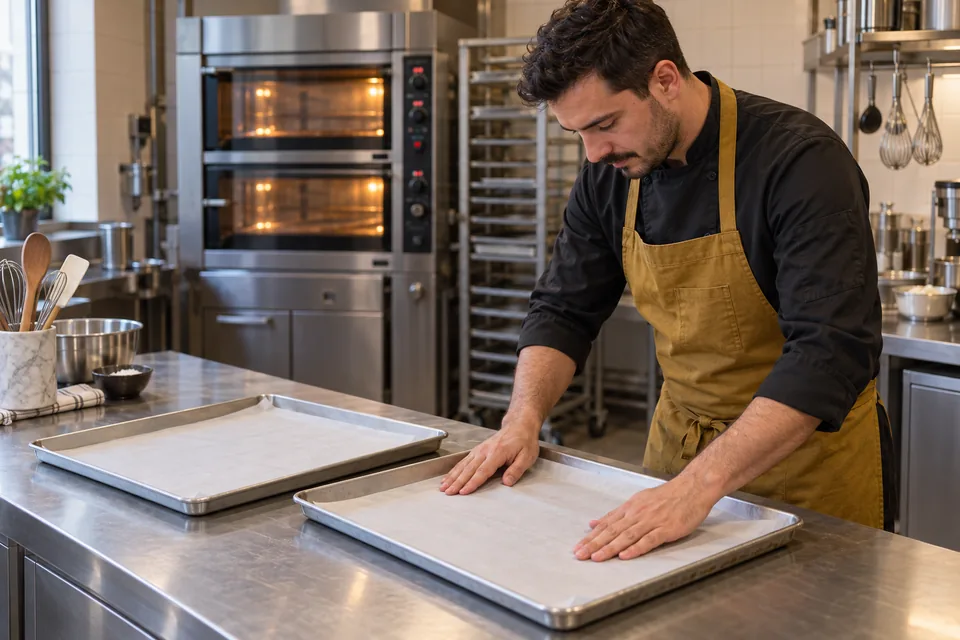
01 PreparePreheat the oven and line two baking sheets. 02 · Heat
A few minUse: Water, butter, salt
Bring to a full boil once butter melts.Ready when: Butter fully melted
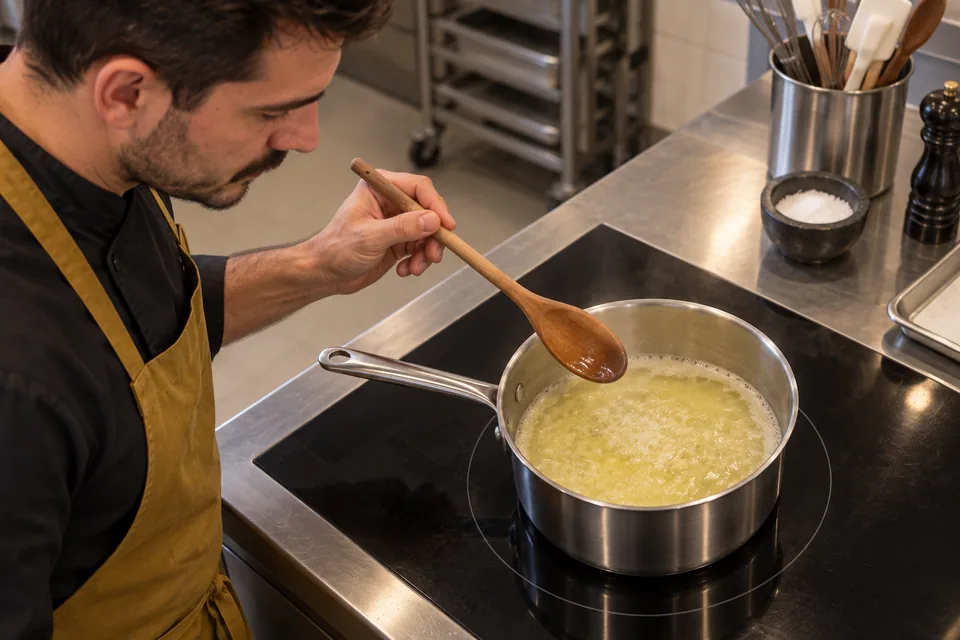
02 HeatBring the water, butter and salt to a full boil. 03 · Cook paste
About 1 minUse: Flour
Off heat, stir in all flour. Return to heat and stir until a ball forms and leaves a light film.Ready when: Paste follows the spoon
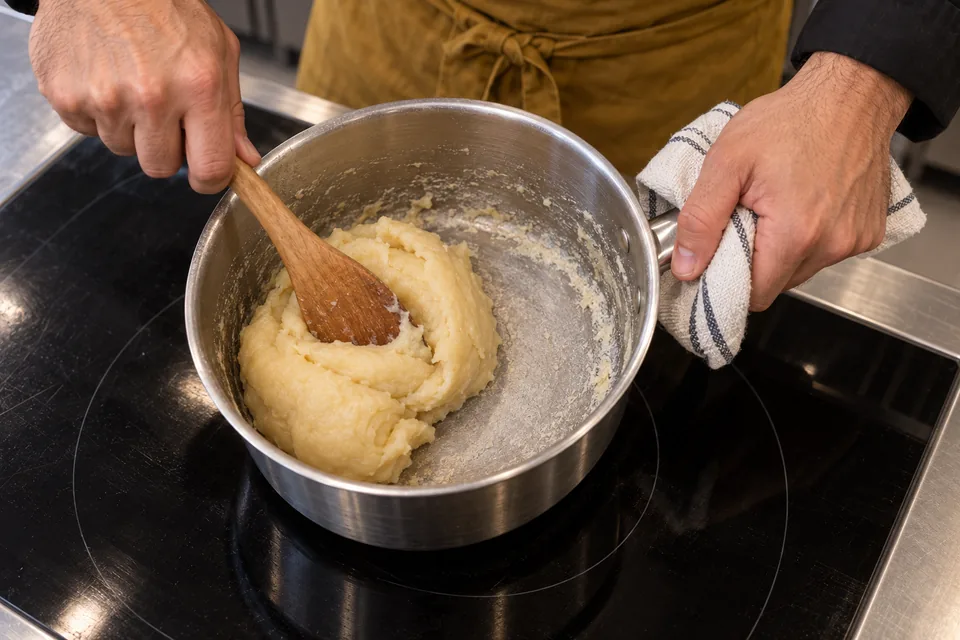
03 Cook pasteStir until the paste gathers into a ball and leaves a light film in the pan. 04 · Cool
5–10 minUse: Cooked paste
Transfer to a bowl and cool below 50°C.Ready when: Warm, not hot enough to cook egg
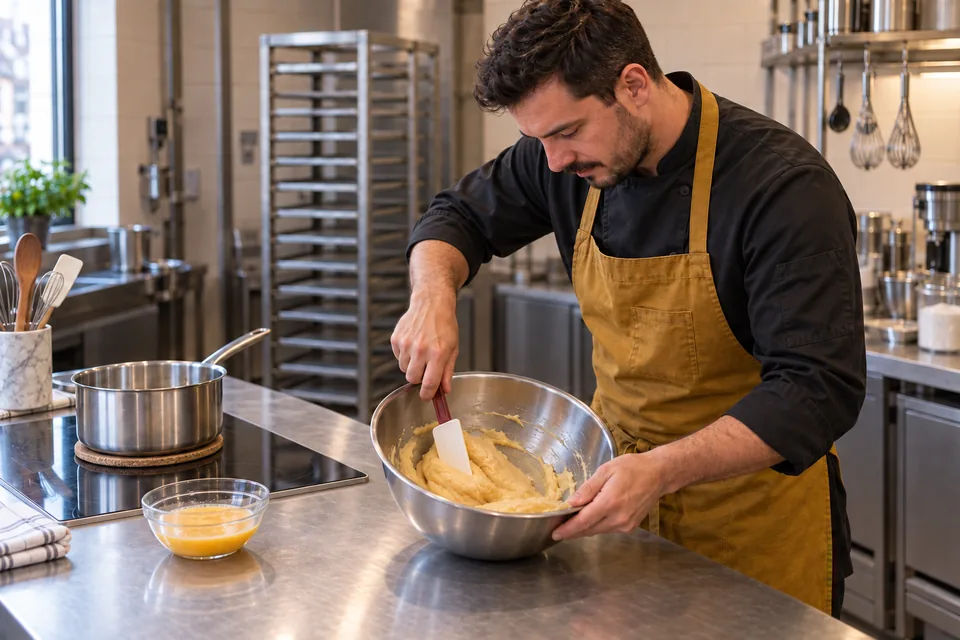
04 CoolLet the cooked paste cool until warm before adding eggs. 05 · Add eggs
A few minUse: Paste; beaten eggs
Beat eggs in gradually, holding back the last portion if paste becomes loose.Ready when: Glossy; a thick ribbon drops from the paddle
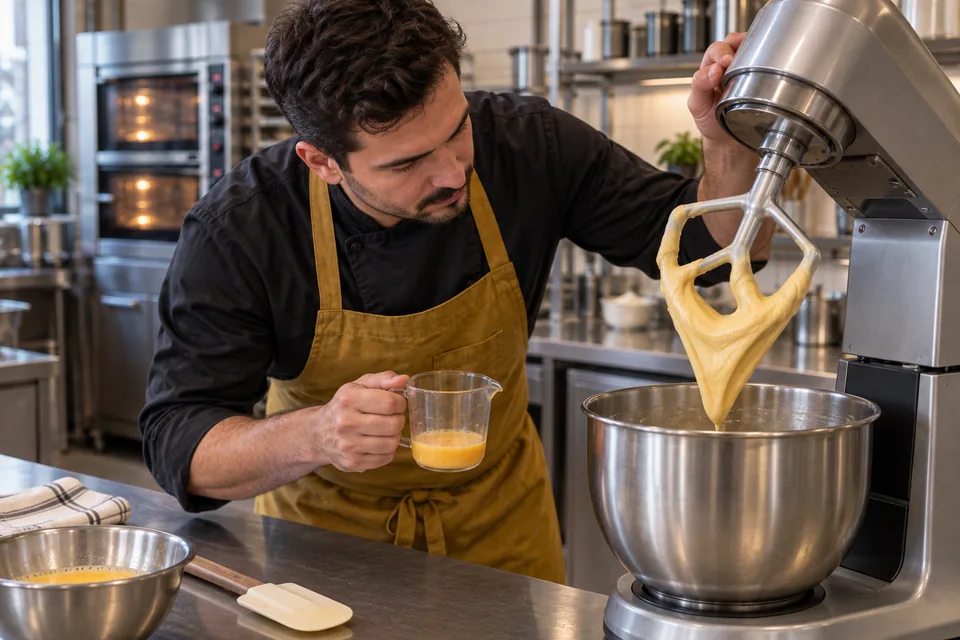
05 Add eggsAdd the eggs gradually until a thick glossy ribbon drops from the paddle. 06 · Portion
5 minUse: Paste
Scoop 12 mounds with generous gaps. Flatten pointed tips with a damp finger.Ready when: Mounds retain shape
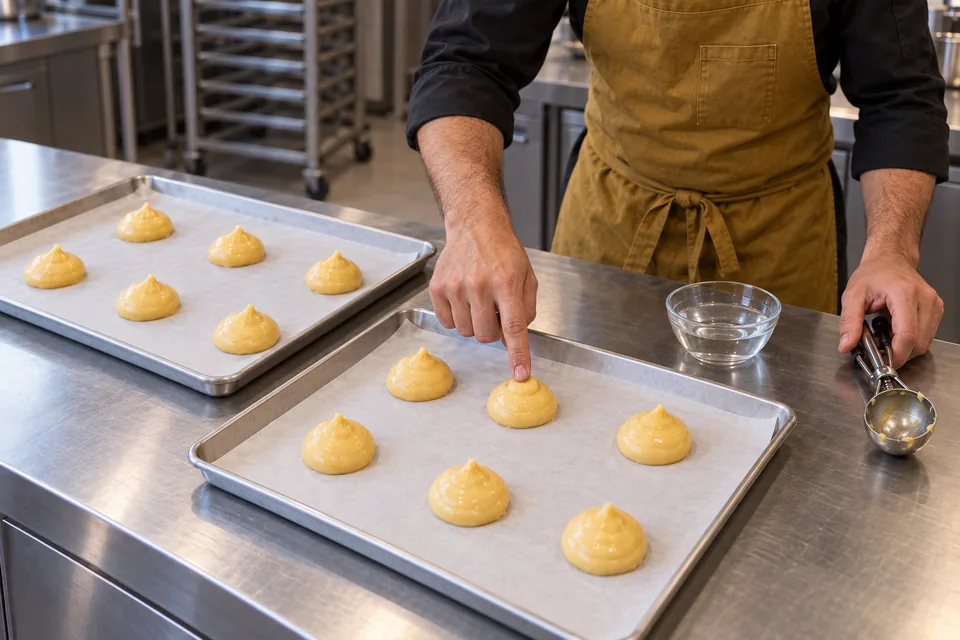
06 PortionScoop twelve spaced mounds and smooth any pointed tips with a damp finger. 07 · Bake and dry
45 min + coolingUse: Mounds
Bake 15 min at 220°C, then 25 min at 175°C without opening. Slit each shell; dry 5 min more. Cool on a rack.Ready when: Golden shells with dry interiors
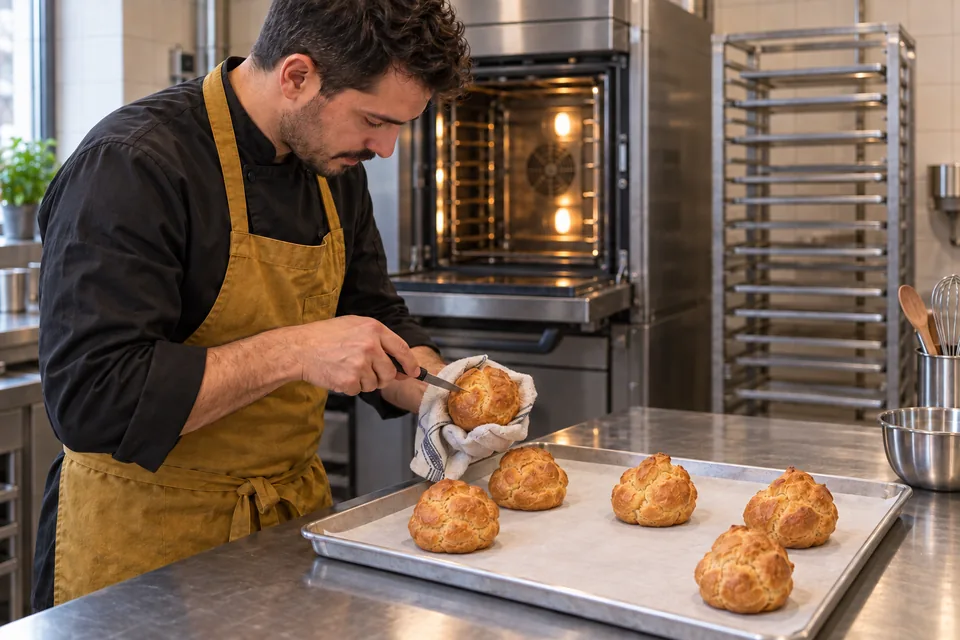
07 Bake and dryBake until golden, make small steam slits and dry the shells before cooling. 08 · Whip
A few minUse: Cream, sugar
Whip together until smooth peaks hold. Keep chilled.Ready when: Firm but not grainy
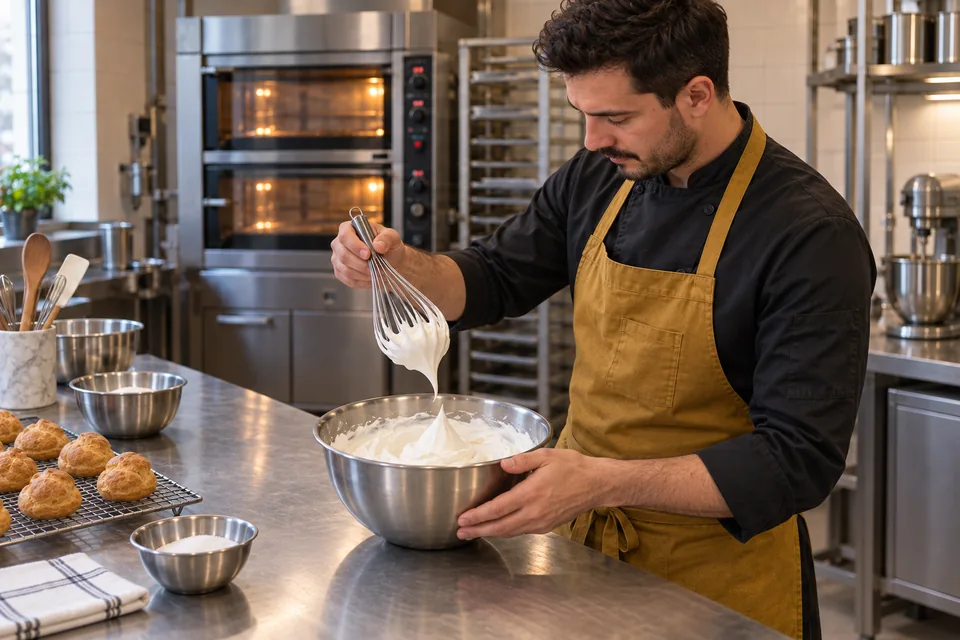
08 WhipWhip the cream and sugar until smooth peaks hold. 09 · Fill
Just before servingUse: Cold shells; whipped cream
Split, fill and serve. Refrigerate filled leftovers.Ready when: Shells completely cool
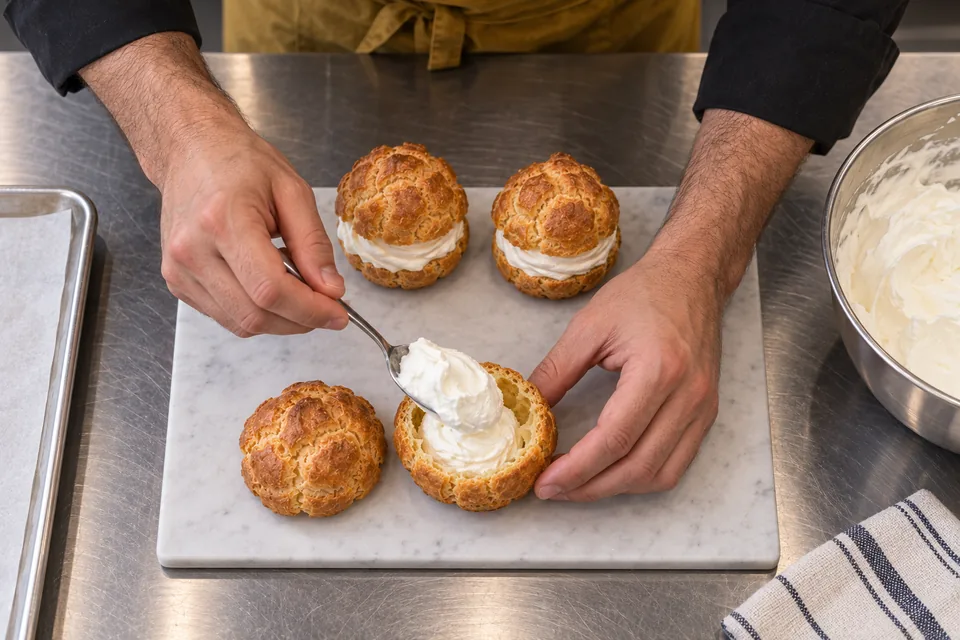
09 FillSplit the cold shells, fill with whipped cream and replace their matching tops.
What to look for
| Stage | Look / feel for | Needs attention |
|---|---|---|
| Egg addition | Paste is glossy and pipeable. | A puddle that cannot hold its mound. |
| Baking | Shell walls are browned and dry. | Pale, flexible walls. |
Troubleshooting
| If you see this | Likely cause | What to do now | Next time |
|---|---|---|---|
| Flat puffs | Too much egg or insufficiently cooked paste. | If still unbaked, stop adding egg. | Judge paste texture at the last addition. |
| Collapse | Walls or interior remain damp. | Dry fully baked shells longer if needed. | Keep the oven closed until walls set. |
| Soft filled shells | Moisture migrates from cream. | Fill a fresh batch shortly before eating. | Store shells and filling separately. |
Vanilla is omitted from the filling. Éclairs use the same pastry with different portioning and finishing.
Other approaches to this recipe
Hamel’s water-only dough supplies the base. McKenney’s milk-and-water recipe uses less flour and a different bake schedule; her texture check supports gradual egg addition, not a formula swap.
| Cook / recipe | Use | What differs |
|---|---|---|
| King Arthur Baking · PJ HamelCream Puffs and Éclairs | Working base | Water-only paste; hot start followed by drying; whipped-cream filling. |
| Sally’s Baking · Sally McKenneyChoux Pastry | Technique comparison | Milk-and-water dough; demonstrates holding back some beaten egg to obtain a pipeable paste. |
| King Arthur Baking · Susan ReidPâte à choux perfected | Related technique explanation | Same host as the base; an explanation of paste cooking, steam expansion and drying, not an independent test. |
The working ingredients and method form one recipe. Different formulas are compared without averaging their quantities or rise schedules.