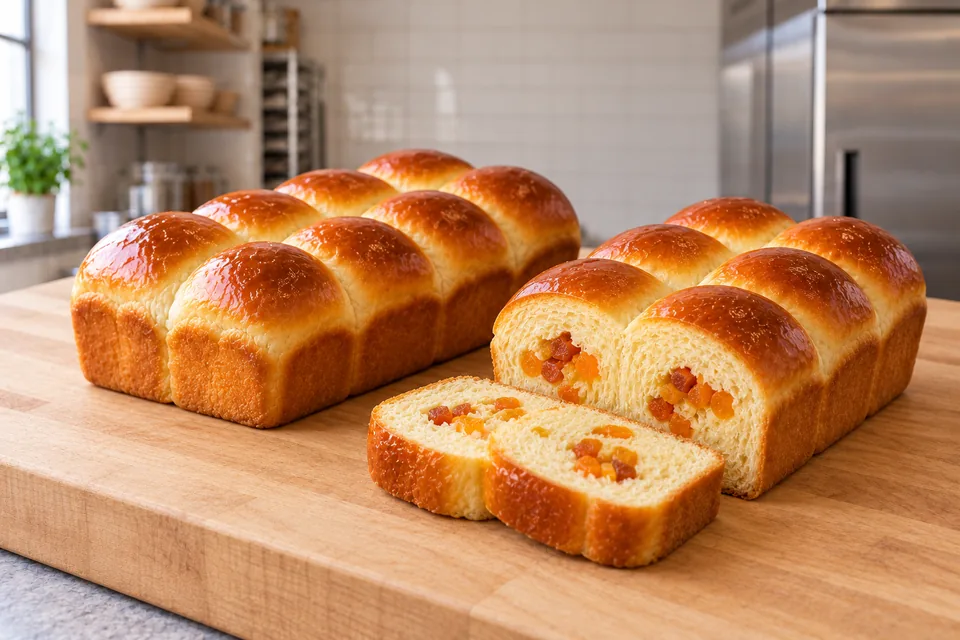
Apricot brioche loaves
Two small butter-rich loaves built from soft brioche balls with dried apricots inside. Start the dough the day before and shape it while cold.
Method
01 · Mix and develop the enriched dough
10–13 minUse: Strong white bread flour; Caster sugar; Instant dried yeast; Fine salt; Whole milk; Beaten whole egg
Mix the dough flour, sugar, yeast, salt, milk and dough egg in a stand-mixer bowl with the dough hook. Once combined, knead at the manufacturer’s recommended dough speed for 8–10 minutes, scraping the bowl as needed.Ready when: The dough pulls into an elastic mass and stretches before tearing.
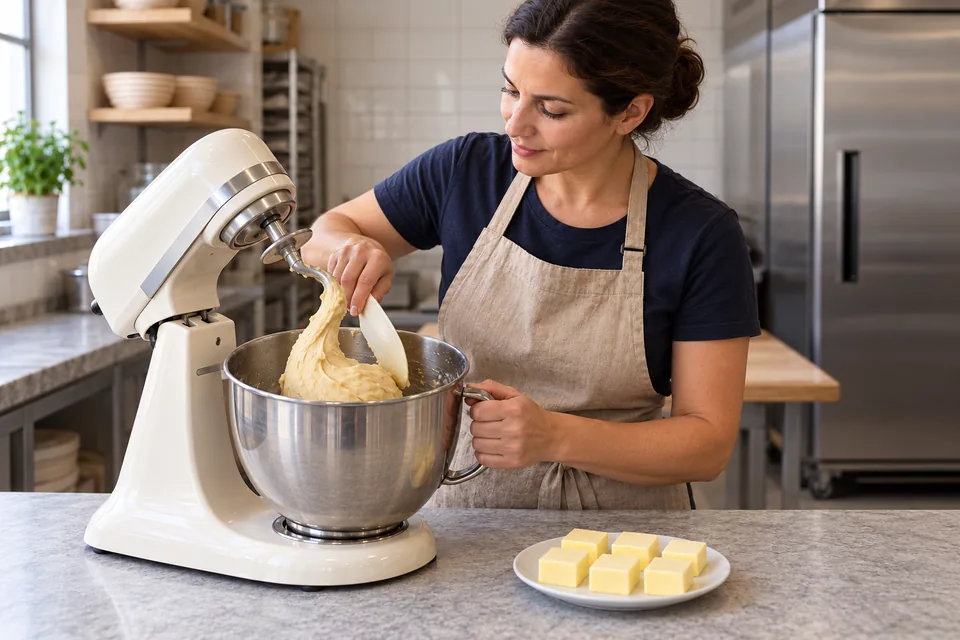
01 DevelopDevelop the dough before adding the butter. 02 · Work in the butter gradually
12–18 minUse: Unsalted butter
Add the 185 g butter gradually with the mixer running slowly, letting each piece disappear before adding the next. Allow 12–18 minutes for the addition and final mixing. If the bowl warms or the dough looks greasy, cover and chill for 15 minutes before continuing.Ready when: All butter is incorporated; the dough is glossy and can stretch into a thin patch.
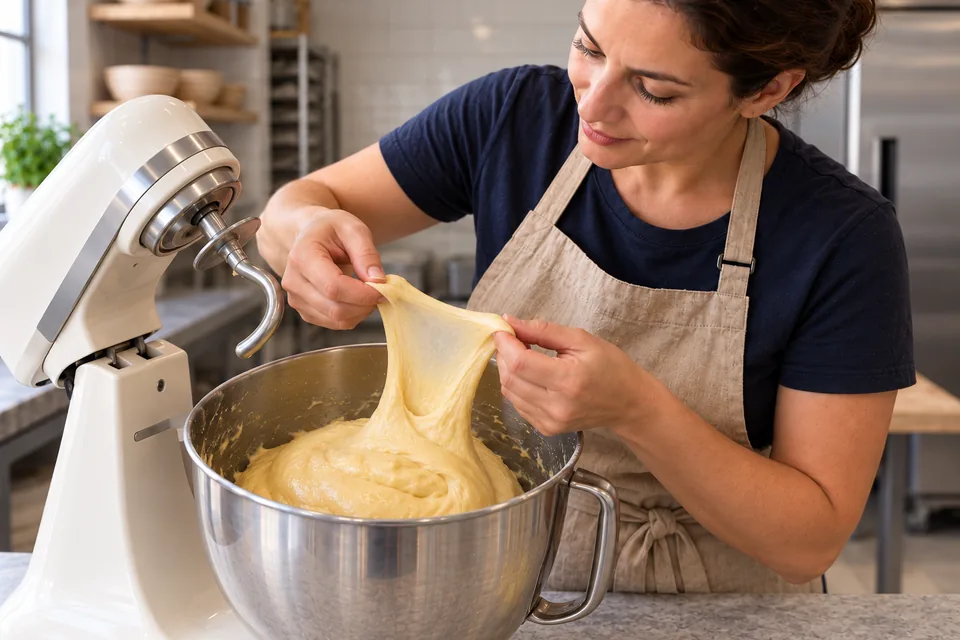
02 Add ButterWork in the butter until the dough stretches thinly. 03 · Let the dough rise
60 minUse:
Move the dough to a covered bowl with room for expansion. Leave at 22–24°C for about 1 hour.Ready when: The dough begins to swell and feels lighter, without needing to double yet.
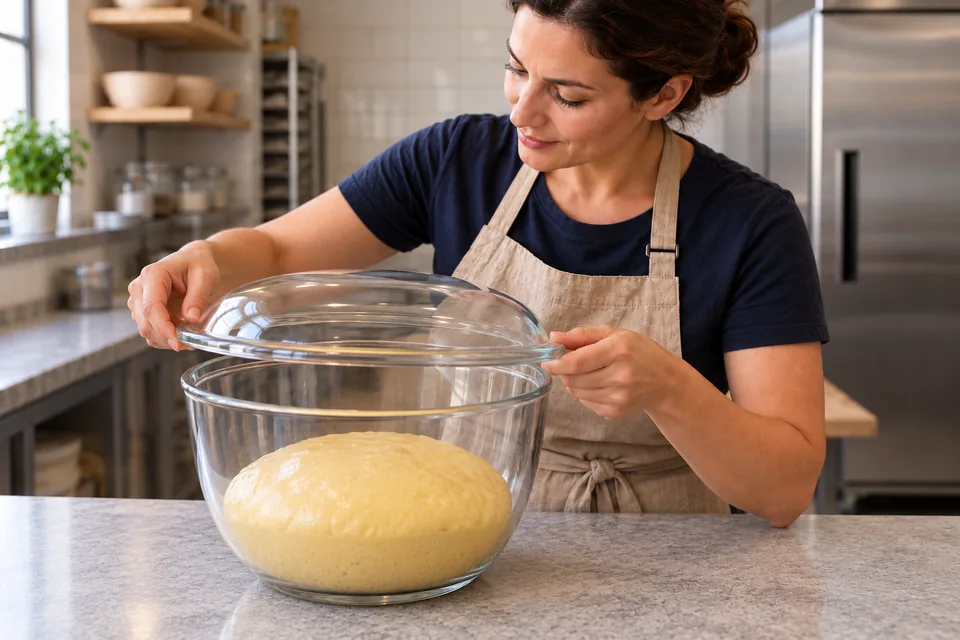
03 First RiseCover and let the dough begin to swell. 04 · Chill the rich dough overnight
480–720 minUse:
Press the dough down gently, cover well and refrigerate for 8–12 hours.Ready when: The dough is cold and firm enough to divide without smearing.
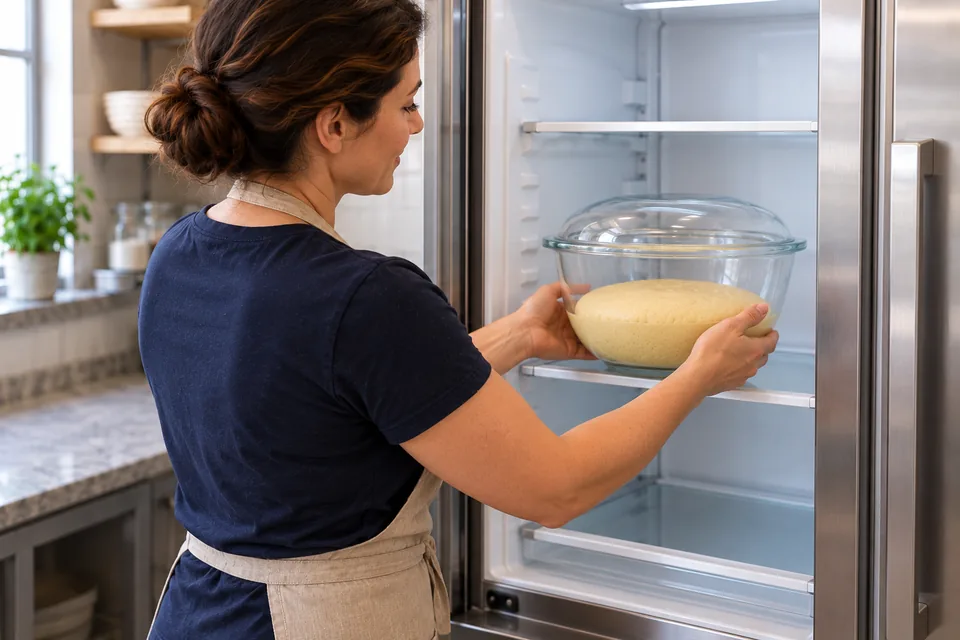
04 ChillCover well and refrigerate until cold and firm. 05 · Fill sixteen balls and arrange in two tins
20–25 minUse: Butter for the tins; Flour for shaping; Soft dried apricots
Grease two 20×10×7 cm loaf tins and line their bases with baking paper. On a lightly floured worktop, divide the cold dough into 16 equal pieces, about 52 g each. Divide all the diced apricots between them, about 9 g per piece. Flatten each dough piece, place its fruit in the centre, bring the edges together and pinch closed. Set eight balls seam-side down in each tin, in four rows of two.Ready when: Every ball encloses its apricots, with a closed seam. There are sixteen balls total and no remaining filling.
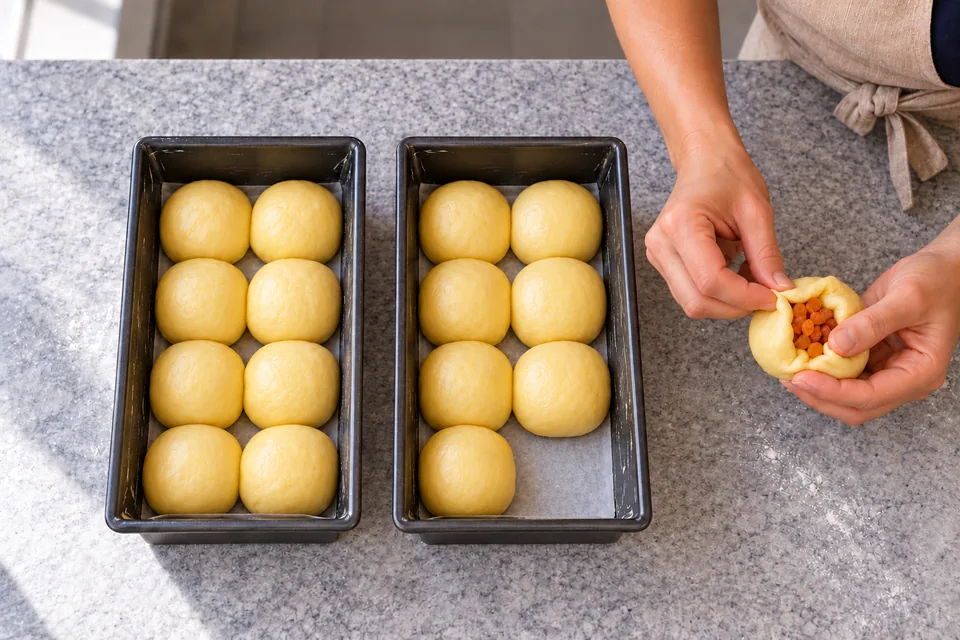
05 Fill ShapeEnclose the apricots and place eight balls in each tin. 06 · Proof slowly and heat the oven
150–240 minUse:
Cover loosely and leave at 24–26°C for 2½–4 hours. Keep away from direct heat. Heat the oven to 180°C conventional during the final 20 minutes.Ready when: The balls are puffy, touching and close to the tin rims. A light fingertip dent recovers slowly.
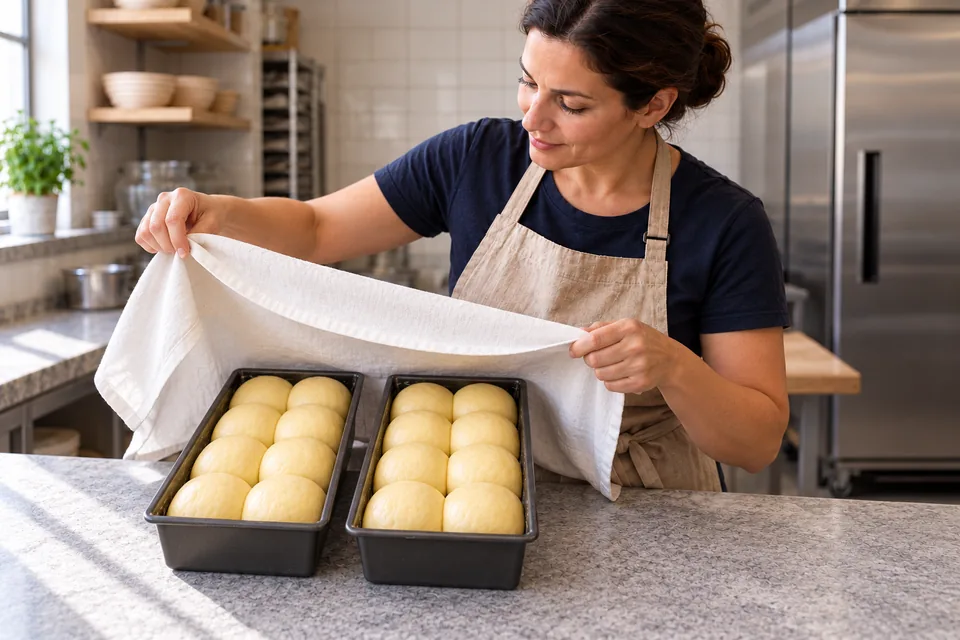
06 ProofLet both loaves rise until the balls are puffy and touching. 07 · Brush and bake both loaves
32–42 minUse: Beaten egg for brushing
Brush the tops lightly with the separate beaten wash egg. Bake both tins on the middle rack for 30–40 minutes. Cover loosely with foil if the tops brown before the centres cook. Check the bread in the middle of each loaf with a probe, avoiding a pocket of fruit.Ready when: The bread centre reads at least 88°C. The tops are deep golden and the sides feel set.
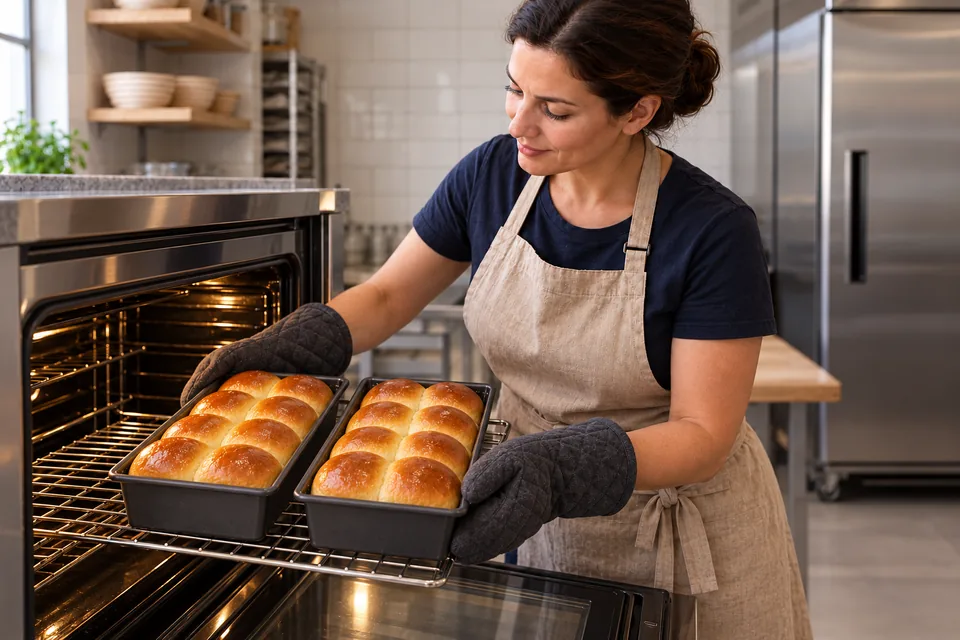
07 Wash BakeBrush lightly with egg and bake both loaves until deep golden. 08 · Cool before slicing
90 minUse:
Leave in the tins for 10 minutes, then turn out onto a rack. Cool for at least another 80 minutes before slicing or storing.Ready when: The loaves hold their shape and the crumb around the fruit is set.
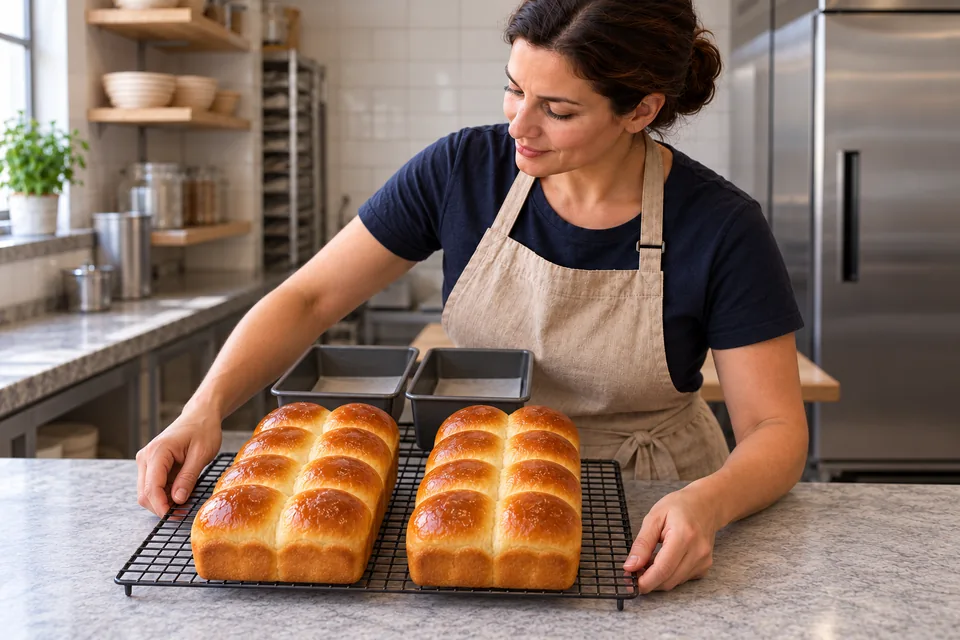
08 CoolTurn out and cool fully before cutting.
What to look for
| Stage | Look / feel for | Needs attention |
|---|---|---|
| Mix and develop the enriched dough | The dough pulls into an elastic mass and stretches before tearing. | |
| Work in the butter gradually | All butter is incorporated; the dough is glossy and can stretch into a thin patch. | |
| Let the dough rise | The dough begins to swell and feels lighter, without needing to double yet. | |
| Chill the rich dough overnight | The dough is cold and firm enough to divide without smearing. | |
| Fill sixteen balls and arrange in two tins | Every ball encloses its apricots, with a closed seam. There are sixteen balls total and no remaining filling. | |
| Proof slowly and heat the oven | The balls are puffy, touching and close to the tin rims. A light fingertip dent recovers slowly. | |
| Brush and bake both loaves | The bread centre reads at least 88°C. The tops are deep golden and the sides feel set. | |
| Cool before slicing | The loaves hold their shape and the crumb around the fruit is set. |
Troubleshooting
| If you see this | Likely cause | What to do now | Next time |
|---|---|---|---|
| Butter leaks while mixing. | The dough became too warm before the butter was fully absorbed. | Cover and chill briefly, then resume gently. | Use cool pliable butter and pause if the bowl warms. |
| Fruit escapes through a seam. | The apricot pieces reached the edge or the seam was not sealed. | Before proofing, pinch the dough closed around the fruit and place the seam underneath. | Divide the filling evenly and keep a clean border around each portion. |
| The top is dark but the middle is damp. | The rich dough browned before the loaf cooked through. | Tent loosely with foil and continue baking until the bread centre reaches the stated cue. | Use the loaf temperature and time rather than a small-bun schedule. |
Storage: Once completely cool, wrap and keep at room temperature for up to 2 days. Slice and toast older brioche. Freeze the wrapped loaves or slices for up to 2 months; thaw while wrapped before warming.; Contains: wheat, milk, egg, sulphites if present in the dried apricots.; This Nepedia version has not been kitchen-tested.
Other approaches to this recipe
| Cook / recipe | Use | What differs |
|---|
The working ingredients and method form one recipe. Different formulas are compared without averaging their quantities or rise schedules.