Nepedia

Yeast doughnuts

Soft, round doughnuts made from an egg-and-butter yeast dough. An overnight chill makes shaping easier; fry them in small batches and coat them with sugar while warm.

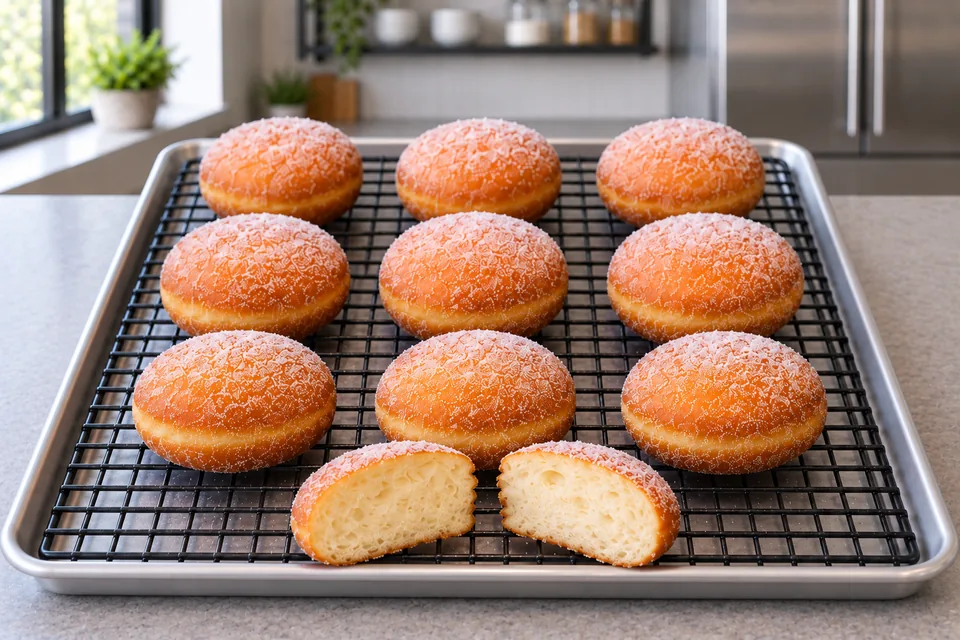
Nine sugar-coated round doughnuts and the two halves of the first test piece.
Makes
10 round doughnuts
Heat
180°C frying oil
Cooking time
About2 min per side,in small batches
Cuisine / style
United Kingdom

Allow the oil to return to180°C between batches. Frying is included in the75 min active work.

View

Sugar-coated yeast doughnuts

Makes
10 round doughnuts
Heat
180°C frying oil
Cooking time
About2 min per side,in small batches
Cuisine / style
United Kingdom

Allow the oil to return to180°C between batches. Frying is included in the75 min active work.

United Kingdom · Yeast doughnuts

Sugar-coated yeast doughnuts

Soft, round doughnuts made from an egg-and-butter yeast dough. An overnight chill makes shaping easier; fry them in small batches and coat them with sugar while warm.

Method

  1. 01 · Develop the dough

    10–12 min

    Use: Strong white bread flour; Caster sugar; Water; Beaten whole egg; Fine salt; Instant dried yeast; Lemon zest

    Combine the flour, dough sugar, water, egg, salt, yeast and lemon zest in a mixer bowl. Mix with a dough hook on low until combined, then knead at a moderate speed for about 8 minutes. Stop the mixer and let the dough rest for 1 minute.

    Ready when: The dough begins to gather around the hook and pull away from the bowl.
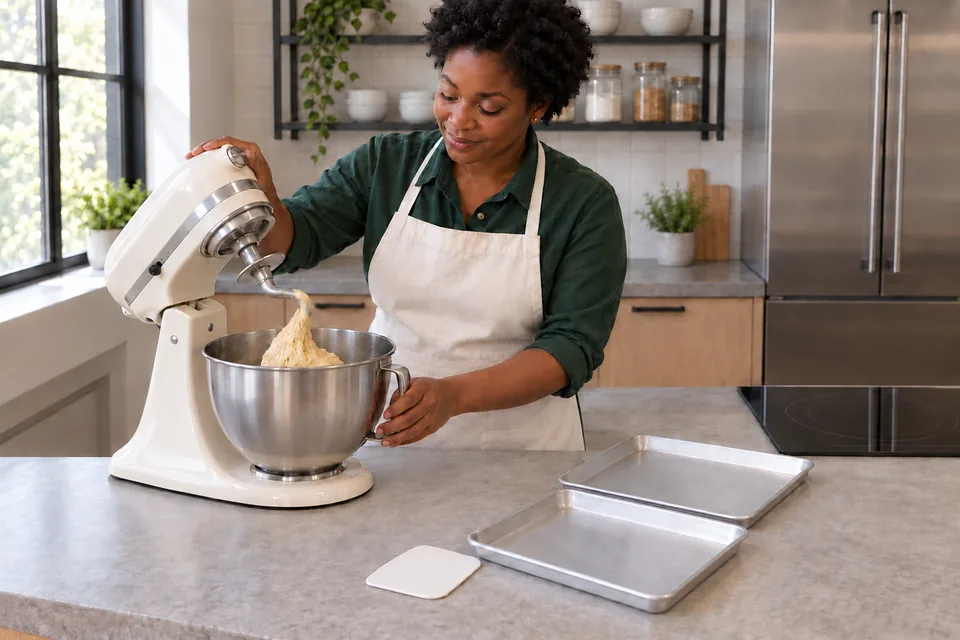
    Cook beside a stopped mixer with elastic egg dough gathered around the hook.
    01 Develop the egg doughDevelop the egg dough before adding the butter.
  2. 02 · Work in the butter

    10–15 min

    Use: Unsalted butter

    Restart at low speed. Add the soft butter in five portions, waiting for each to disappear into the dough before adding the next. Knead for another 5 minutes at a moderate speed once all the butter is incorporated.

    Ready when: The dough is smooth, glossy and elastic; a small piece stretches into a thin film.
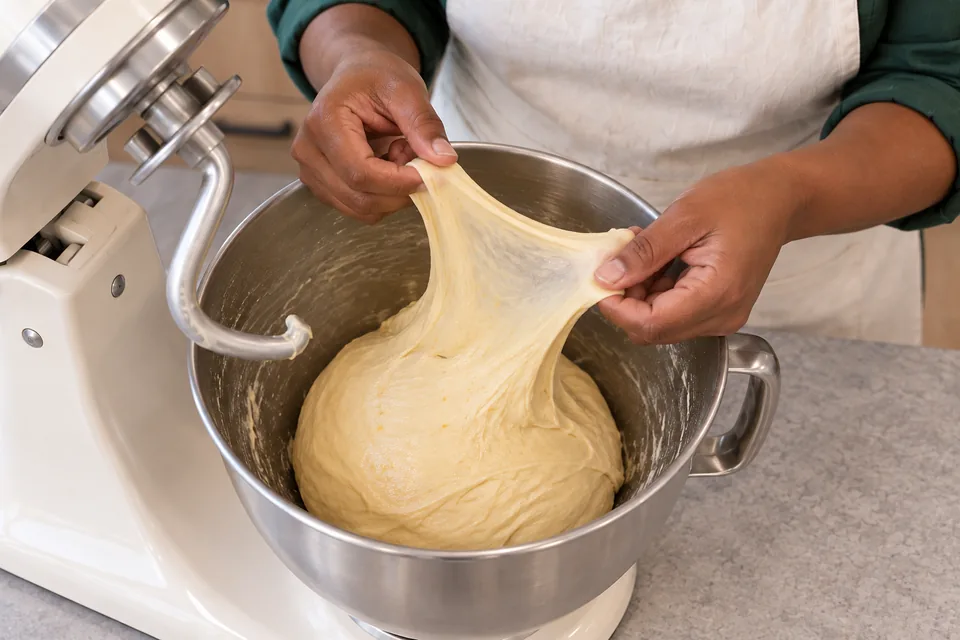
    Hands stretching a thin film from glossy dough in the mixer bowl.
    02 Incorporate and develop the butterIncorporate the butter in portions, then knead until smooth and elastic.
  3. 03 · Let rise,then chill overnight

    540–840 min

    Use:

    Cover the bowl and leave at about 24–26°C for 1–2 hours, until roughly doubled. Press down gently to release large gas pockets. Cover securely and refrigerate for 8–12 hours.

    Ready when: Before chilling the dough is aerated; after chilling it is cold and firm enough to handle.
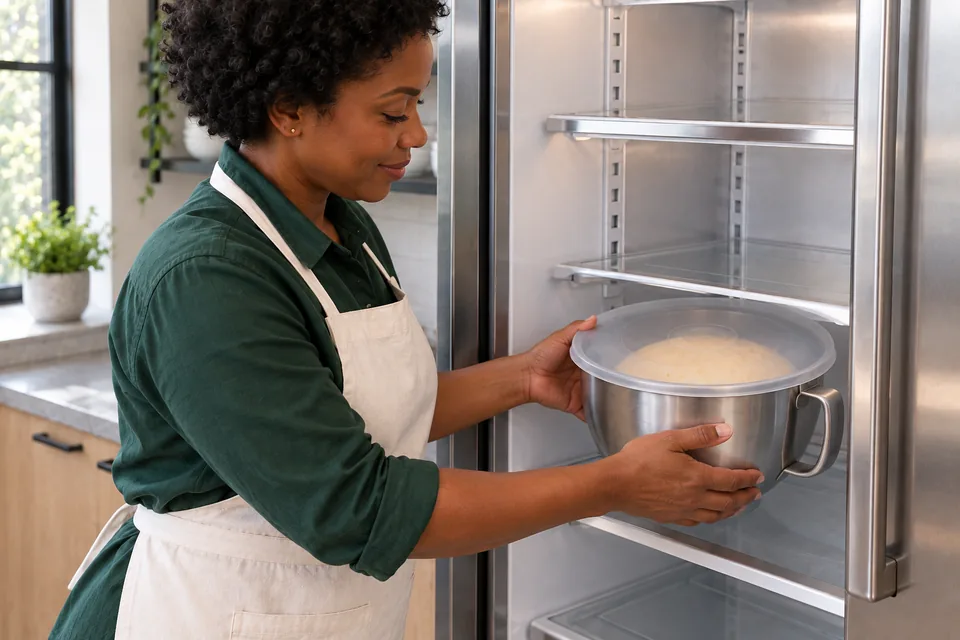
    Cook removing a covered bowl of cold enriched dough from the refrigerator.
    03 Rise and chill overnightLet the dough rise, release large gas pockets and chill overnight.
  4. 04 · Divide and round ten pieces

    10–15 min

    Use: Flour for shaping and trays

    Lightly flour two trays and the worktop. Divide the cold dough into ten equal pieces, about 53 g each. Cup each piece against the worktop to make a smooth ball, keeping the seam underneath. Place five on each tray with ample space between.

    Ready when: All ten balls have a smooth surface and closed underside; the pieces are similar in size.
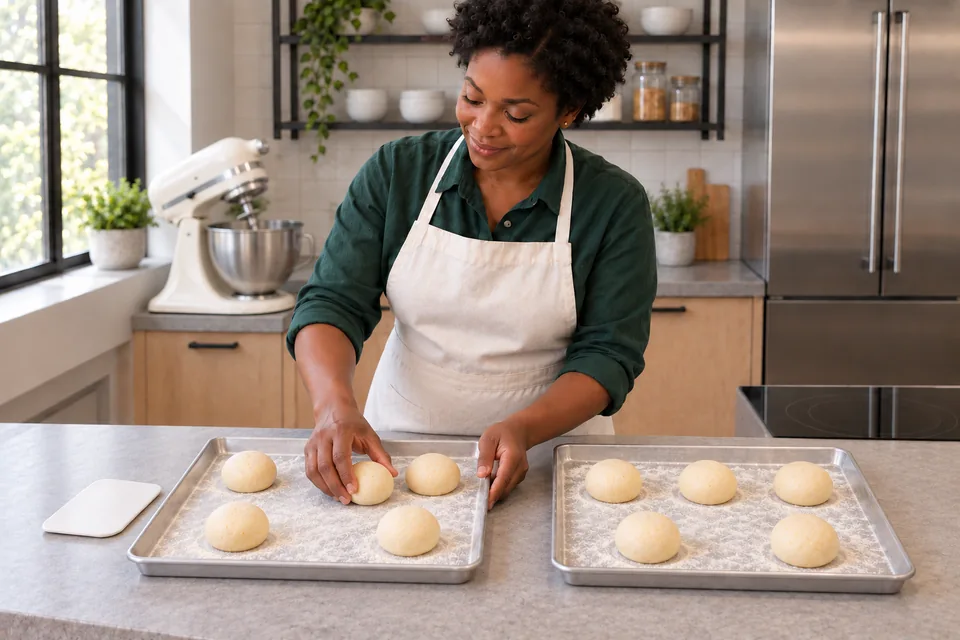
    Ten small raw doughnut balls spaced five on each of two trays.
    04 Divide and roundDivide into ten equal pieces and round with the seam underneath.
  5. 05 · Proof until puffy

    120–240 min

    Use:

    Cover loosely and leave at about 24–26°C for 2–4 hours, checking early in a warm room. Do not put the trays over direct heat.

    Ready when: The rounds are almost doubled, feel light and retain a shallow fingertip dent briefly. Their surfaces have not dried or collapsed.
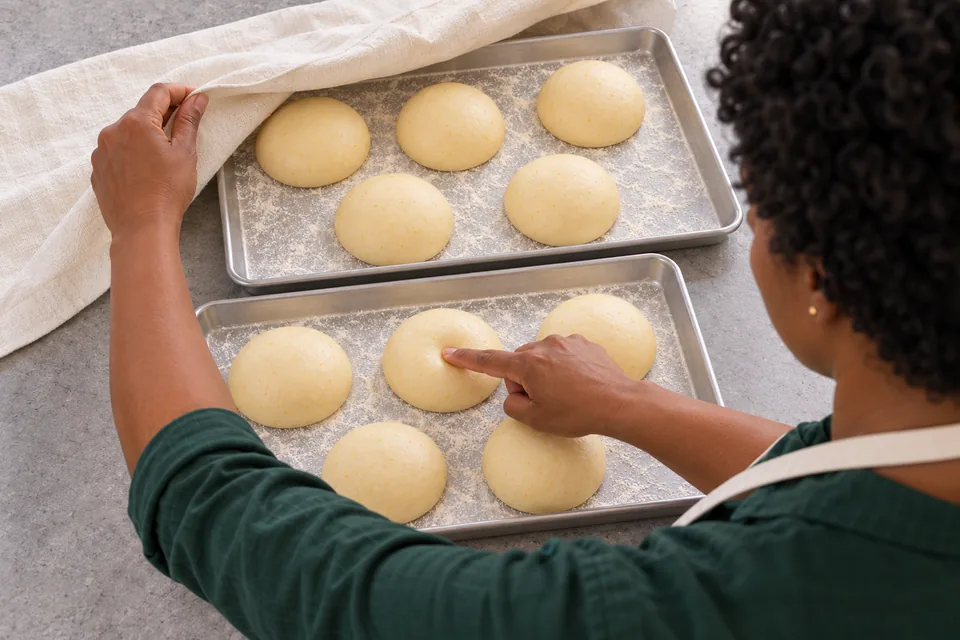
    Cook checking a puffy round among ten proofed doughnuts.
    05 Proof the roundsProof until the rounds are light and almost doubled.
  6. 06 · Prepare the frying oil and coating sugar

    8–12 min

    Use: Sunflower oil for frying; Caster sugar for coating

    Set a tall, heavy 5-litre pan securely on the hob. Add enough of the frying oil for about 4 cm depth, keeping the level at or below one-third of the pan. Attach a deep-frying thermometer and heat to 180°C. Set a rack over a tray and put the coating sugar in a shallow bowl.

    Ready when: The thermometer reads 180°C, the oil is calm and there is plenty of empty space above it.
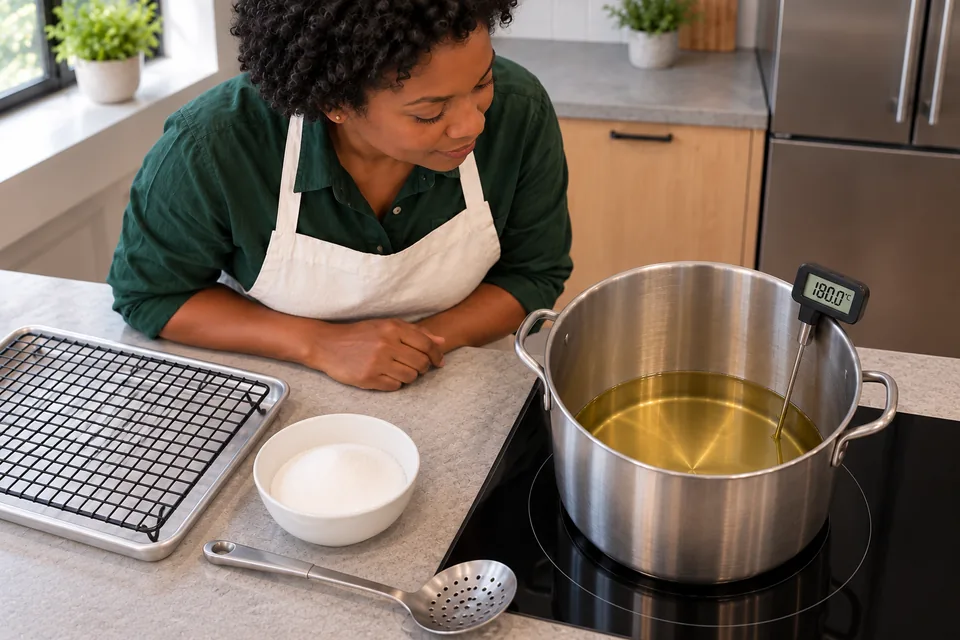
    A thermometer in a tall pan of calm oil with a rack and sugar bowl nearby.
    06 Heat the oilHeat the measured shallow oil and set up the draining and coating stations.
  7. 07 · Fry in small batches

    22–30 min

    Use: Sunflower oil for frying

    Use a lightly floured scraper to lift two or three rounds at a time and lower them carefully into the oil. Fry for about 2 minutes, turn with a slotted spoon and cook for about 2 minutes more. Lift out and drain on the rack. Let the oil return to 180°C between batches. Cut open the first cooked doughnut to check the centre before frying the rest.

    Ready when: Both sides are golden and the centre is set with no sticky raw dough. If the outside colours too quickly, check the oil temperature before continuing.
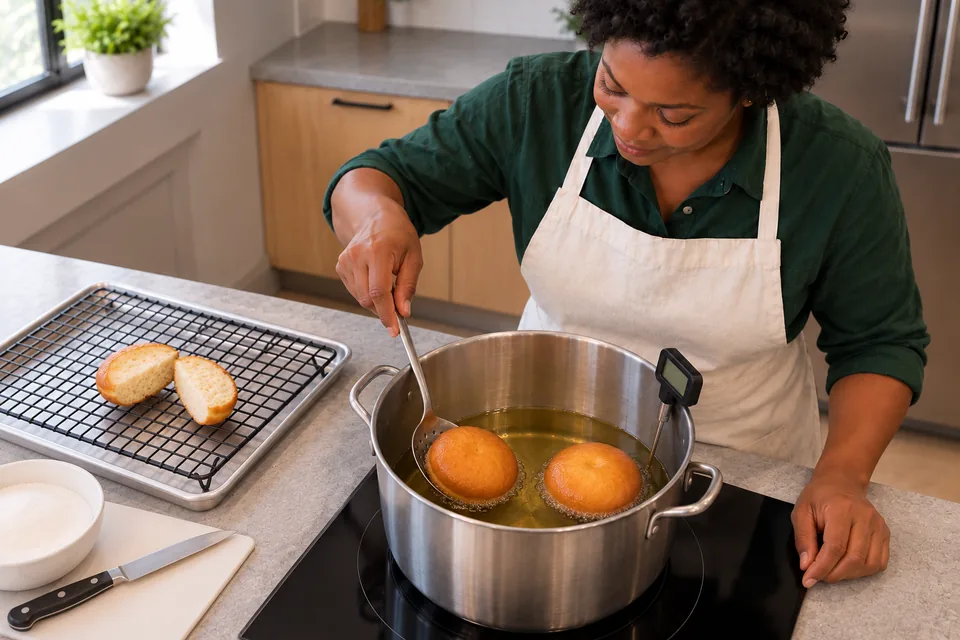
    Cook turning a doughnut in shallow frying oil, with the first split test piece on the rack.
    07 Fry and check the first centreFry in small batches and check the first cooked centre.
  8. 08 · Coat while warm and cool

    20–25 min

    Use: Caster sugar for coating

    As each batch drains, let it stand for 1–2 minutes, then turn the warm doughnuts in the coating sugar. Return them to the rack. Leave for about 20 minutes before eating; the first split test piece can be coated too.

    Ready when: A light sugar layer clings to the surface and the inside is warm rather than scalding.
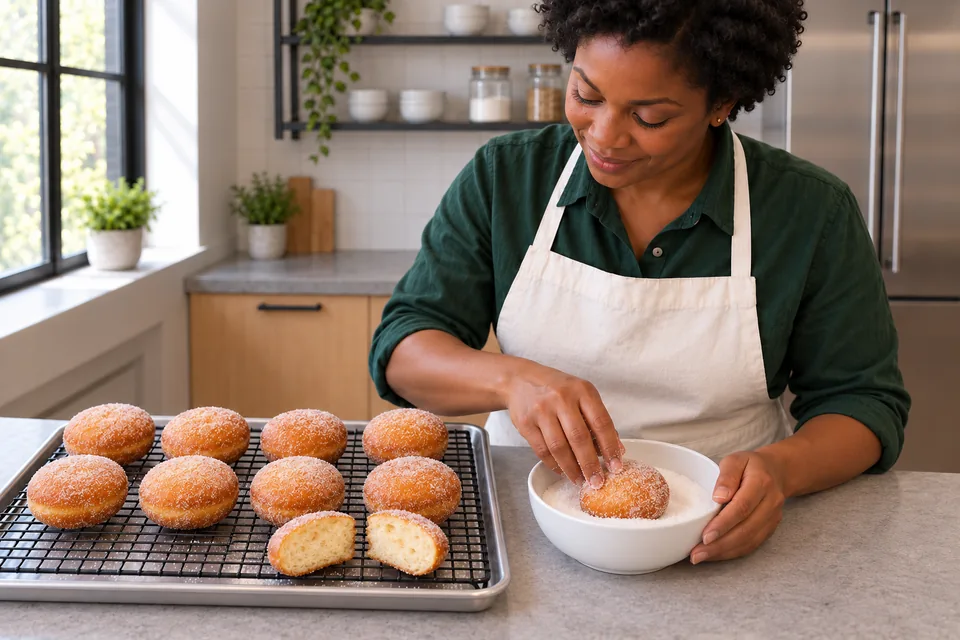
    Cook turning a warm doughnut in caster sugar beside the rest of the batch.
    08 Coat and coolCoat the drained doughnuts while warm, then let them cool.

What to look for

StageLook / feel forNeeds attention
Develop the doughThe dough begins to gather around the hook and pull away from the bowl.
Work in the butterThe dough is smooth, glossy and elastic; a small piece stretches into a thin film.
Let rise,then chill overnightBefore chilling the dough is aerated; after chilling it is cold and firm enough to handle.
Divide and round ten piecesAll ten balls have a smooth surface and closed underside; the pieces are similar in size.
Proof until puffyThe rounds are almost doubled, feel light and retain a shallow fingertip dent briefly. Their surfaces have not dried or collapsed.
Prepare the frying oil and coating sugarThe thermometer reads 180°C, the oil is calm and there is plenty of empty space above it.
Fry in small batchesBoth sides are golden and the centre is set with no sticky raw dough. If the outside colours too quickly, check the oil temperature before continuing.
Coat while warm and coolA light sugar layer clings to the surface and the inside is warm rather than scalding.

Troubleshooting

If you see thisLikely causeWhat to do nowNext time
The outside is dark but the middle is raw.The oil is too hot or the rounds are too large or insufficiently proved.Check the oil temperature and cut the first piece to check cooking before continuing. Cook any raw-centred pieces further at the correct temperature.Weigh equal portions, wait for the proof cue and maintain 180°C.
The doughnuts are greasy.The oil cooled too much during frying.Drain on the rack and let the oil recover before adding another batch.Use a thermometer and fry only two or three at once.
The rounds collapse when moved.They overproved or were handled roughly.Lift gently with a broad scraper; the affected pieces may fry flatter.Check before the longest proof time and keep each round supported when moving it.

Storage: Best eaten on the day. Once cool, keep in an airtight container at room temperature for up to 1 day. The sugar coating and fried crust soften during storage.; Contains: wheat, egg, milk.; This Nepedia version has not been kitchen-tested.

Ingredient choices & substitutions

No brand is specified.

Match the ingredient’s function and weight. See the flour, gluten, yeast and salt guide.

Other approaches to this recipe
Cook / recipeUseWhat differs

The working ingredients and method form one recipe. Different formulas are compared without averaging their quantities or rise schedules.

Nepedia

Recipe

Sugar-coated yeast doughnuts

Soft, round doughnuts made from an egg-and-butter yeast dough. An overnight chill makes shaping easier; fry them in small batches and coat them with sugar while warm.

How do I make it?

  1. Develop the dough

    10–12 min

    Combine the flour, dough sugar, water, egg, salt, yeast and lemon zest in a mixer bowl. Mix with a dough hook on low until combined, then knead at a moderate speed for about 8 minutes. Stop the mixer and let the dough rest for 1 minute.

    Cook beside a stopped mixer with elastic egg dough gathered around the hook.
    Develop the egg dough before adding the butter.

    Ready when: The dough begins to gather around the hook and pull away from the bowl.

  2. Work in the butter

    10–15 min

    Restart at low speed. Add the soft butter in five portions, waiting for each to disappear into the dough before adding the next. Knead for another 5 minutes at a moderate speed once all the butter is incorporated.

    Hands stretching a thin film from glossy dough in the mixer bowl.
    Incorporate the butter in portions, then knead until smooth and elastic.

    Ready when: The dough is smooth, glossy and elastic; a small piece stretches into a thin film.

  3. Let rise,then chill overnight

    540–840 min

    Cover the bowl and leave at about 24–26°C for 1–2 hours, until roughly doubled. Press down gently to release large gas pockets. Cover securely and refrigerate for 8–12 hours.

    Cook removing a covered bowl of cold enriched dough from the refrigerator.
    Let the dough rise, release large gas pockets and chill overnight.

    Ready when: Before chilling the dough is aerated; after chilling it is cold and firm enough to handle.

  4. Divide and round ten pieces

    10–15 min

    Lightly flour two trays and the worktop. Divide the cold dough into ten equal pieces, about 53 g each. Cup each piece against the worktop to make a smooth ball, keeping the seam underneath. Place five on each tray with ample space between.

    Ten small raw doughnut balls spaced five on each of two trays.
    Divide into ten equal pieces and round with the seam underneath.

    Ready when: All ten balls have a smooth surface and closed underside; the pieces are similar in size.

  5. Proof until puffy

    120–240 min

    Cover loosely and leave at about 24–26°C for 2–4 hours, checking early in a warm room. Do not put the trays over direct heat.

    Cook checking a puffy round among ten proofed doughnuts.
    Proof until the rounds are light and almost doubled.

    Ready when: The rounds are almost doubled, feel light and retain a shallow fingertip dent briefly. Their surfaces have not dried or collapsed.

  6. Prepare the frying oil and coating sugar

    8–12 min

    Set a tall, heavy 5-litre pan securely on the hob. Add enough of the frying oil for about 4 cm depth, keeping the level at or below one-third of the pan. Attach a deep-frying thermometer and heat to 180°C. Set a rack over a tray and put the coating sugar in a shallow bowl.

    A thermometer in a tall pan of calm oil with a rack and sugar bowl nearby.
    Heat the measured shallow oil and set up the draining and coating stations.

    Ready when: The thermometer reads 180°C, the oil is calm and there is plenty of empty space above it.

  7. Fry in small batches

    22–30 min

    Use a lightly floured scraper to lift two or three rounds at a time and lower them carefully into the oil. Fry for about 2 minutes, turn with a slotted spoon and cook for about 2 minutes more. Lift out and drain on the rack. Let the oil return to 180°C between batches. Cut open the first cooked doughnut to check the centre before frying the rest.

    Cook turning a doughnut in shallow frying oil, with the first split test piece on the rack.
    Fry in small batches and check the first cooked centre.

    Ready when: Both sides are golden and the centre is set with no sticky raw dough. If the outside colours too quickly, check the oil temperature before continuing.

  8. Coat while warm and cool

    20–25 min

    As each batch drains, let it stand for 1–2 minutes, then turn the warm doughnuts in the coating sugar. Return them to the rack. Leave for about 20 minutes before eating; the first split test piece can be coated too.

    Cook turning a warm doughnut in caster sugar beside the rest of the batch.
    Coat the drained doughnuts while warm, then let them cool.

    Ready when: A light sugar layer clings to the surface and the inside is warm rather than scalding.

What can go wrong, and how can I fix it?

What you noticeLikely causeWhat to do
The outside is dark but the middle is raw.The oil is too hot or the rounds are too large or insufficiently proved.Check the oil temperature and cut the first piece to check cooking before continuing. Cook any raw-centred pieces further at the correct temperature. Weigh equal portions, wait for the proof cue and maintain 180°C.
The doughnuts are greasy.The oil cooled too much during frying.Drain on the rack and let the oil recover before adding another batch. Use a thermometer and fry only two or three at once.
The rounds collapse when moved.They overproved or were handled roughly.Lift gently with a broad scraper; the affected pieces may fry flatter. Check before the longest proof time and keep each round supported when moving it.
Useful recipe notes

Storage: Best eaten on the day. Once cool, keep in an airtight container at room temperature for up to 1 day. The sugar coating and fried crust soften during storage.

Contains: wheat, egg, milk.

This Nepedia version has not been kitchen-tested.

See the detailed method and ratios in , or follow ingredients through the .

Ingredient proportions & recipe details

Sugar-coated yeast doughnuts at a glance

Makes
10 round doughnuts
Heat
180°C frying oil
Cooking time
About2 min per side,in small batches
Cuisine / style
United Kingdom
Leavening
Yeast
How do the ingredient proportions compare?

Percentages compare each listed weight with the combined flour weight (100%). These are ingredient ratios, not dough hydration; milk, eggs and fillings contain other ingredients as well as water.

Formula componentGramsFlour = 100%
Strong white bread flour250 g100%
Caster sugar30 g12%
Water75 g30%
Beaten whole egg100 g40%
Fine salt5 g2%
Instant dried yeast2.5 g1%
Lemon zest1 g0.4%
Unsalted butter62.5 g25%