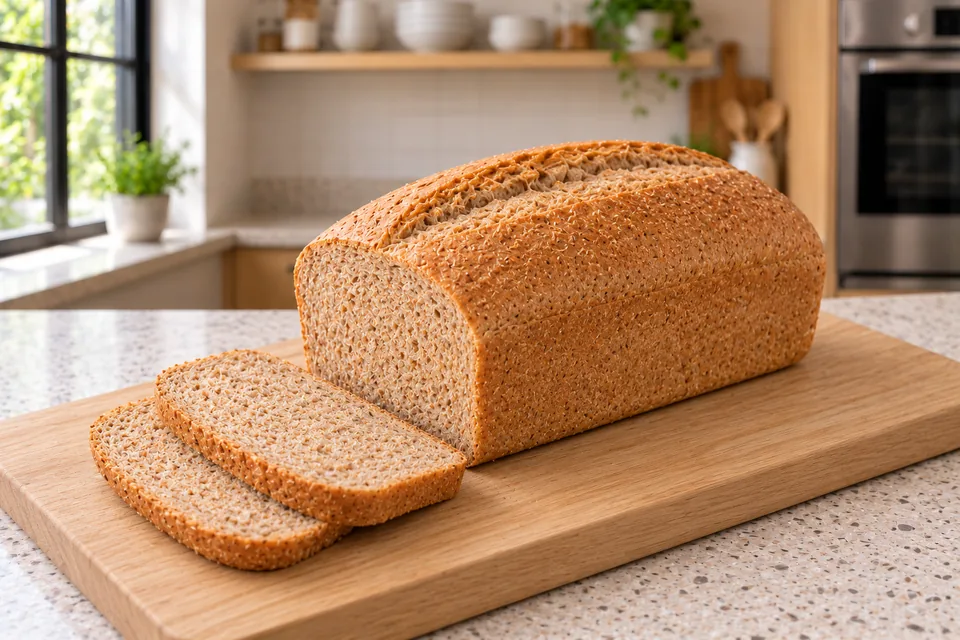
Wholemeal tin loaf
A mostly wholemeal sandwich loaf with a little white flour and butter for a softer crumb. Cool it fully before cutting.
Method
01 · Hydrate the flours and rest
23–25 minUse: Wholemeal bread flour; Strong white bread flour; Water
Combine both flours with the water until all the flour is damp. Cover and leave for 20 minutes to let the bran absorb moisture.Ready when: The mixture is evenly hydrated with no dry pockets; it becomes less rough during the rest.
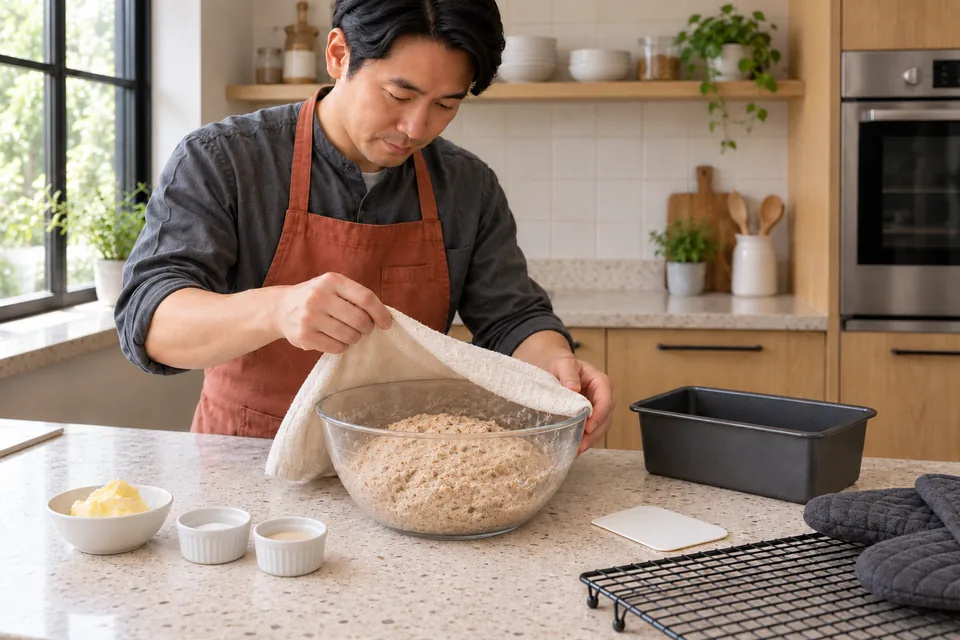
01 Hydrate the wholemeal flourMix the flours with the water and let the bran hydrate. 02 · Add seasoning, yeast and butter; develop the dough
10–14 minUse: Fine salt; Instant dried yeast; Unsalted butter
Add the salt, yeast and soft butter to the rested mixture. Work them in thoroughly, then knead for 8–12 minutes by hand or with a dough hook.Ready when: The dough feels soft and elastic, with bran flecks throughout. If it is stiff, work in a teaspoon of water at a time.
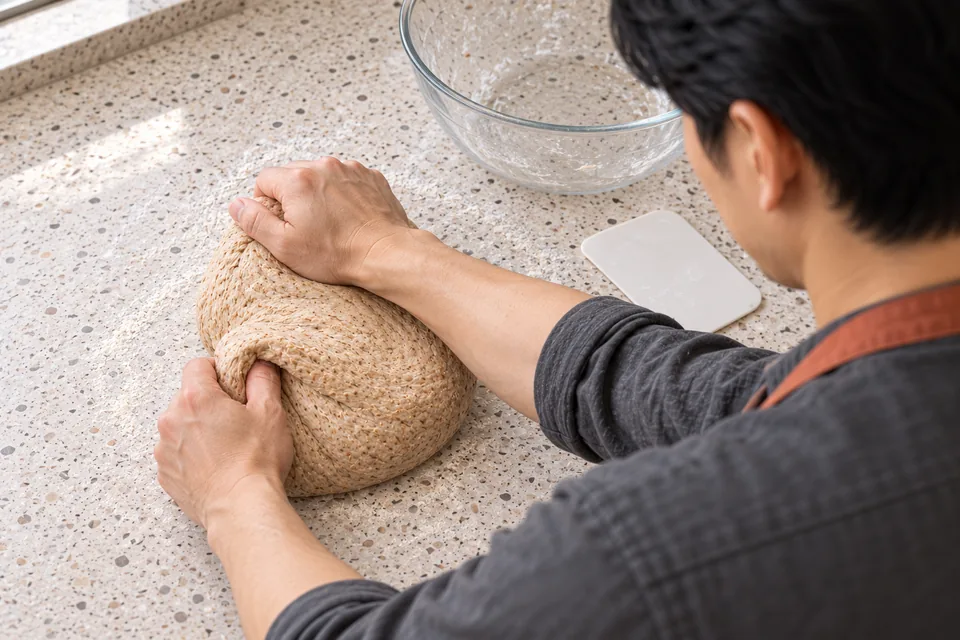
02 Develop the wholemeal doughWork in the salt, yeast and butter, then knead until elastic. 03 · Let the dough rise
60–90 minUse: Oil for the bowl and tin
Coat a bowl lightly with some of the handling oil, keeping the rest for the tin. Add the dough, cover and leave at about 24–26°C for 60–90 minutes.Ready when: The dough is aerated and roughly doubled; allow longer in a cool kitchen.
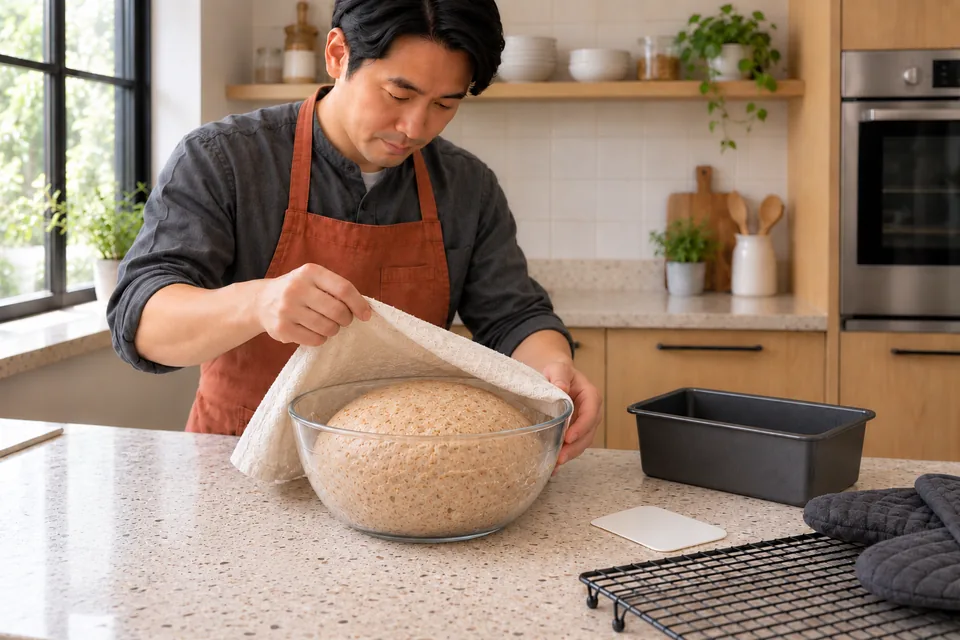
03 Let the dough riseLet the covered dough rise until aerated and roughly doubled. 04 · Shape and fill the loaf tin
5–8 minUse: Oil for the bowl and tin; Flour for shaping
Grease a 23×13×8 cm loaf tin with the remaining handling oil. Lightly dust the worktop. Press the dough gently to release large bubbles, pat it into a rectangle and roll into a firm log about 21 cm long. Pinch the seam closed and place it underneath in the tin.Ready when: The log sits evenly in the tin with no large trapped air pockets.
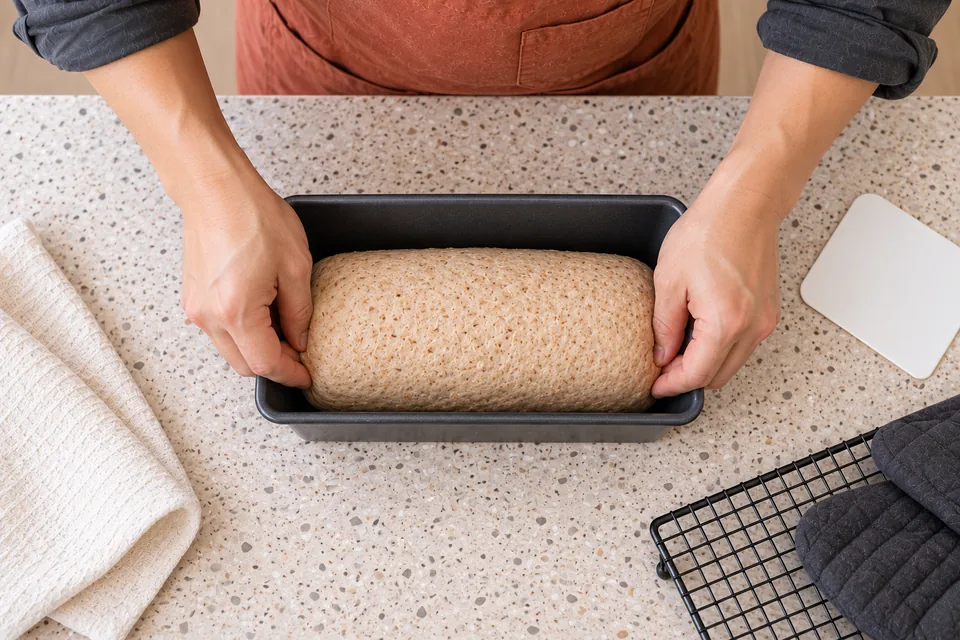
04 Shape a firm tin logShape a firm log and place it seam-side down in the greased tin. 05 · Proof and heat the oven
45–75 minUse:
Cover loosely and leave at about 24–26°C for 45–75 minutes. Heat the oven to 220°C conventional during the final 20 minutes.Ready when: The loaf is rounded and expanded, with its centre near or just above the rim. A light fingertip dent recovers slowly.
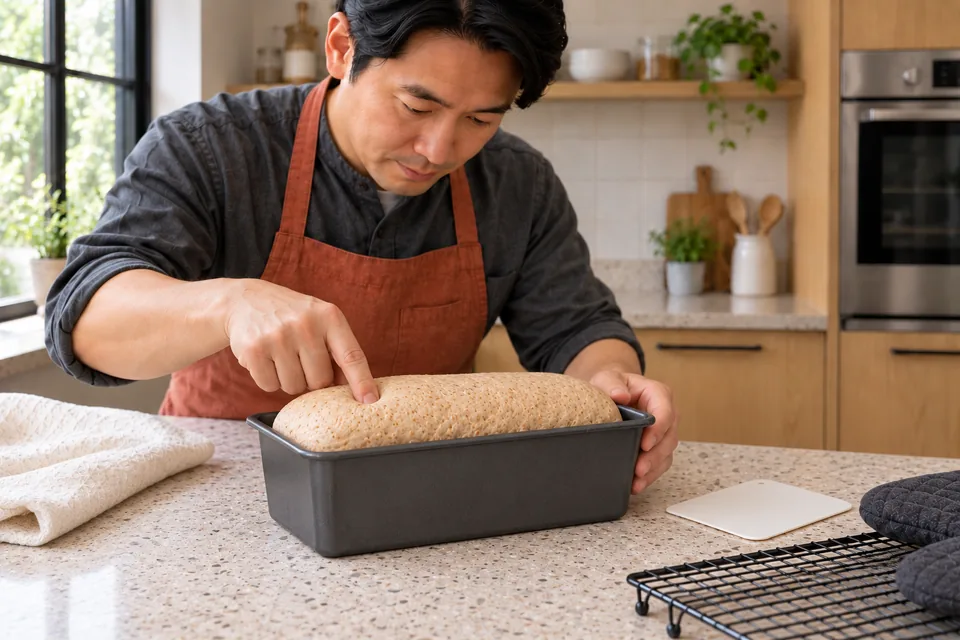
05 Check the final proofProof until the centre is near the rim and a dent returns slowly. 06 · Score and bake
40–50 minUse:
Make one shallow lengthways cut along the top with a sharp blade. Bake for 40–45 minutes. Turn out carefully and check the sides and base; if they still feel soft or pale, return the loaf directly to the rack for another 5 minutes.Ready when: The crust is golden-brown, the sides are firm and the centre reads about 95°C. The base sounds hollow when tapped.
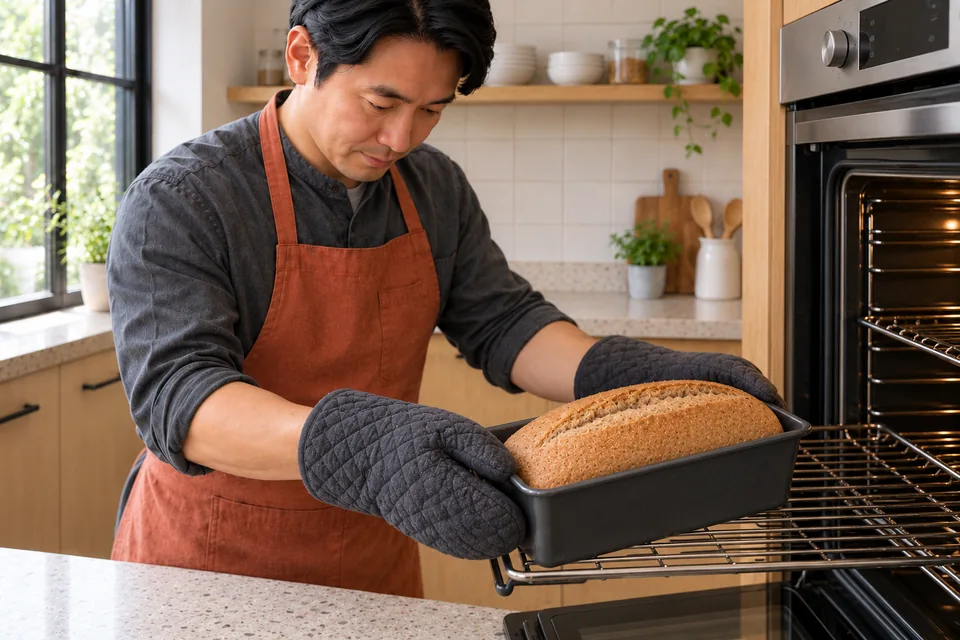
06 Score and bakeScore once lengthways and bake until the sides and centre are set. 07 · Cool fully before slicing
90 minUse:
Remove the loaf from its tin and cool on a rack for at least 90 minutes before slicing.Ready when: The inside is no longer steaming and slices hold together without a gummy band.
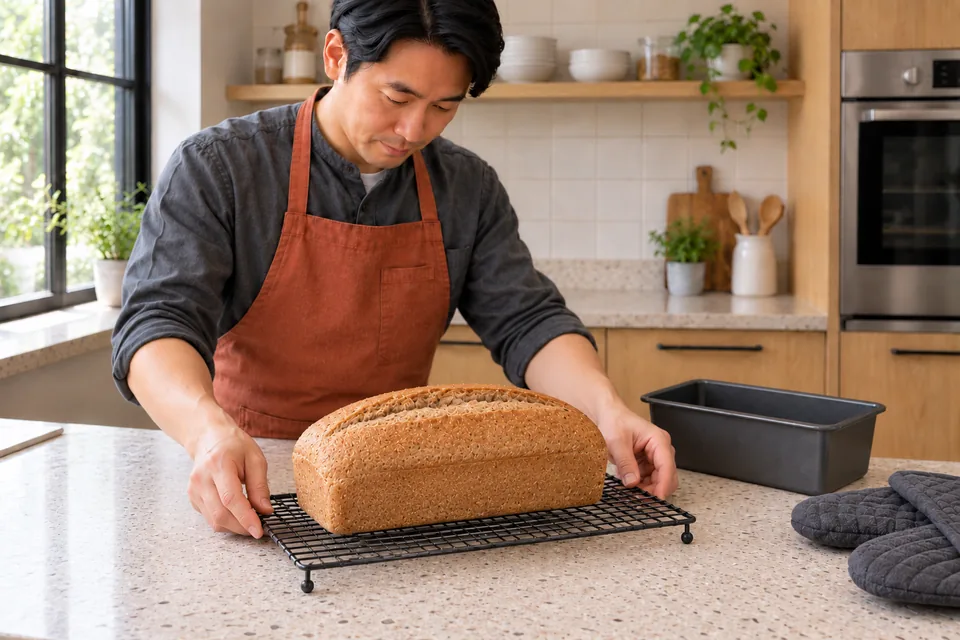
07 Cool fully before slicingCool the loaf fully on a rack before slicing.
What to look for
| Stage | Look / feel for | Needs attention |
|---|---|---|
| Hydrate the flours and rest | The mixture is evenly hydrated with no dry pockets; it becomes less rough during the rest. | |
| Add seasoning, yeast and butter; develop the dough | The dough feels soft and elastic, with bran flecks throughout. If it is stiff, work in a teaspoon of water at a time. | |
| Let the dough rise | The dough is aerated and roughly doubled; allow longer in a cool kitchen. | |
| Shape and fill the loaf tin | The log sits evenly in the tin with no large trapped air pockets. | |
| Proof and heat the oven | The loaf is rounded and expanded, with its centre near or just above the rim. A light fingertip dent recovers slowly. | |
| Score and bake | The crust is golden-brown, the sides are firm and the centre reads about 95°C. The base sounds hollow when tapped. | |
| Cool fully before slicing | The inside is no longer steaming and slices hold together without a gummy band. |
Troubleshooting
| If you see this | Likely cause | What to do now | Next time |
|---|---|---|---|
| The dough is stiff or cracks while shaping. | The flour absorbed more water than expected. | Work in a teaspoon of water at a time until soft. | Weigh ingredients and keep handling flour out of the mixing bowl. |
| A long gap appears under the top crust. | A large air pocket was trapped during shaping. | Slice and toast the loaf for use. | Press out large bubbles and roll a snug log with a sealed seam. |
| The lower crumb is gummy. | The loaf was underbaked or cut while hot. | If still whole and underbaked, return it to the oven; otherwise toast fully cooked slices. | Check the centre and allow the full cooling time. |
Storage: Once completely cool, wrap and keep at room temperature for up to 3 days. Toast older slices. Freeze sliced bread for up to 2 months and toast from frozen or thaw while wrapped.; Contains: wheat, milk.; This Nepedia version has not been kitchen-tested.
Other approaches to this recipe
| Cook / recipe | Use | What differs |
|---|
The working ingredients and method form one recipe. Different formulas are compared without averaging their quantities or rise schedules.