Nepedia

Wholemeal scones

Lightly sweet scones made with equal parts white and wholemeal flour. Their crumb is a little denser than the plain version, with a nutty flavour from the bran.

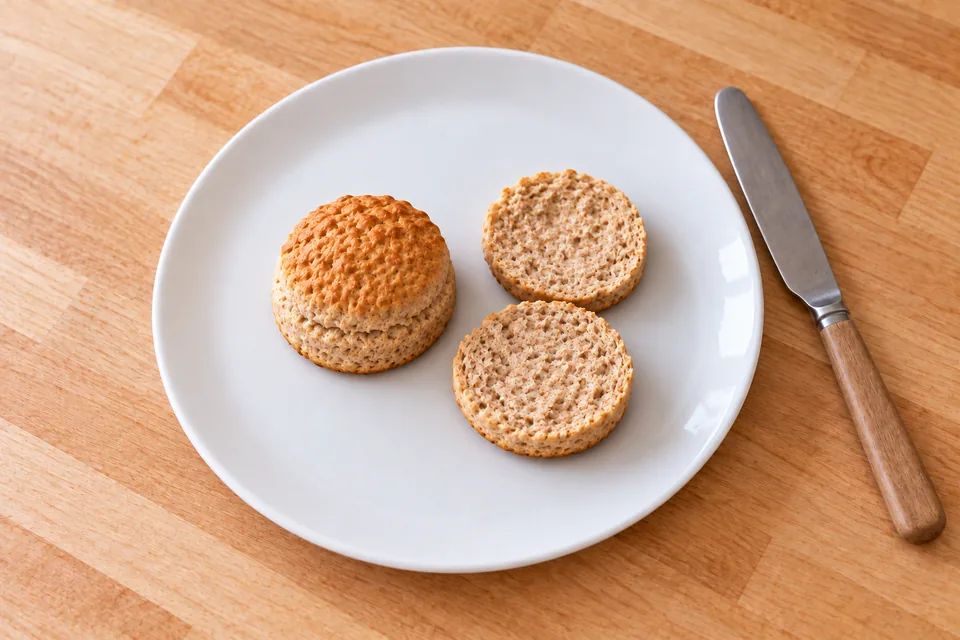
One small wholemeal scone and the two halves of a second sit on a white side plate beside a table knife.
Makes
8 scones, approximately
Heat
200°C conventional
Baking time
15–20 min
Cuisine / style
United Kingdom
Explore variations · 2 →Jump to ingredients & method ↓
View

Wholemeal scones

Makes
8 scones, approximately
Heat
200°C conventional
Baking time
15–20 min
Cuisine / style
United Kingdom
United Kingdom · British scones

Wholemeal scones

Lightly sweet scones made with equal parts white and wholemeal flour. Their crumb is a little denser than the plain version, with a nutty flavour from the bran.

Method

  1. 01 · Mix the dry ingredients and heat the oven

    3–5 min

    Use: Plain flour; Fine wholemeal wheat flour; Baking powder; Fine salt; Caster sugar

    Heat the oven to 200°C conventional and line a 30×40 cm tray with baking paper. Whisk both flours with the baking powder, salt and sugar. Break up lumps while keeping all the bran in the bowl.

    Ready when: The dry ingredients are evenly mixed, with bran distributed throughout.

    Baker whisks an evenly bran-speckled dry mixture in a cream bowl beside a lined tray.
    01 Wholemeal scones — step 1Mix the dry ingredients and retain the bran.
  2. 02 · Rub in the butter

    3–5 min

    Use: Unsalted butter

    Rub the cold butter into the dry mixture with your fingertips. Stop when most of the mixture resembles coarse crumbs; small butter flecks are fine.

    Ready when: There are no large butter cubes or greasy smears.
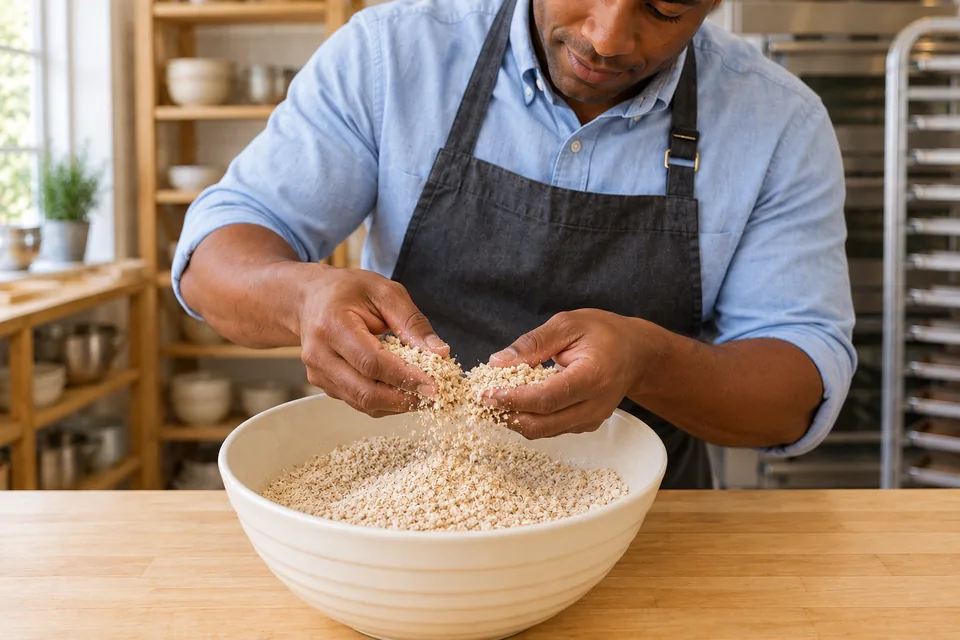
    Fingertips rub butter through a coarse bran-speckled mixture above the cream bowl.
    02 Wholemeal scones — step 2Rub in the cold butter until coarse crumbs form.
  3. 03 · Add egg and buttermilk; rest briefly

    5–7 min

    Use: Medium egg; Cultured buttermilk

    Beat the egg with the 100 ml buttermilk. Stir it through the crumbs with a fork or blunt knife, then press gently until a soft dough forms. Cover and wait 3 minutes so the bran can absorb moisture. If dry flour remains, add another 5 ml buttermilk at a time.

    Ready when: The dough holds together and feels soft, with only slight tackiness. Do not knead it smooth.
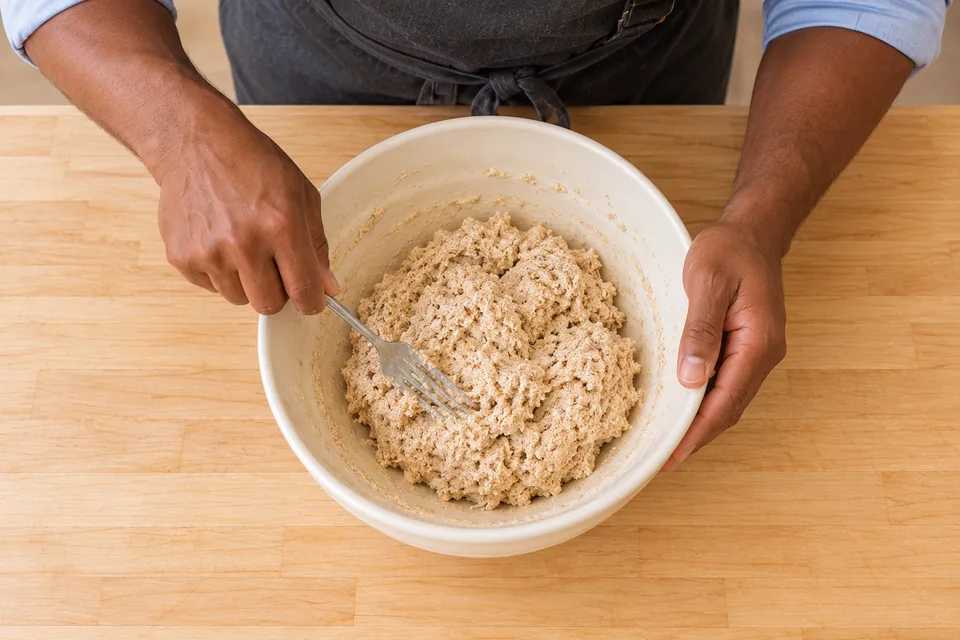
    Baker gathers a lightly textured wholemeal dough with a fork in the cream bowl.
    03 Wholemeal scones — step 3Bring together a soft dough and let the bran absorb moisture.
  4. 04 · Cut eight thick rounds

    5–8 min

    Use: Plain flour for shaping

    Lightly dust the worktop and a 5 cm round cutter. Pat the dough to 3 cm thick. Cut straight down without twisting. Bring the offcuts together once and cut again, aiming for about 8 scones. Space them on the tray.

    Ready when: The rounds have upright cut sides and similar thickness; the dough still looks lightly textured.
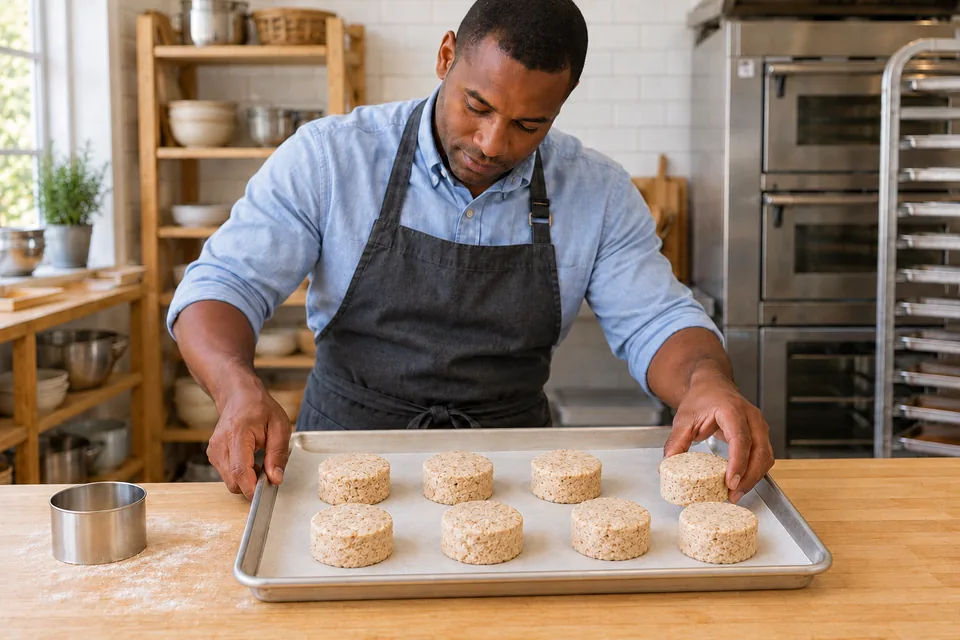
    Baker places the eighth thick raw wholemeal scone round on a lined tray beside the round cutter.
    04 Wholemeal scones — step 4Cut upright rounds and space them on the tray.
  5. 05 · Brush and bake

    16–22 min

    Use: Buttermilk for brushing

    Brush a little of the separate buttermilk wash over the tops, keeping it off the cut sides. Bake for 15–20 minutes.

    Ready when: The tops are browned, the sides feel set and a scone split through its centre has no damp dough line.
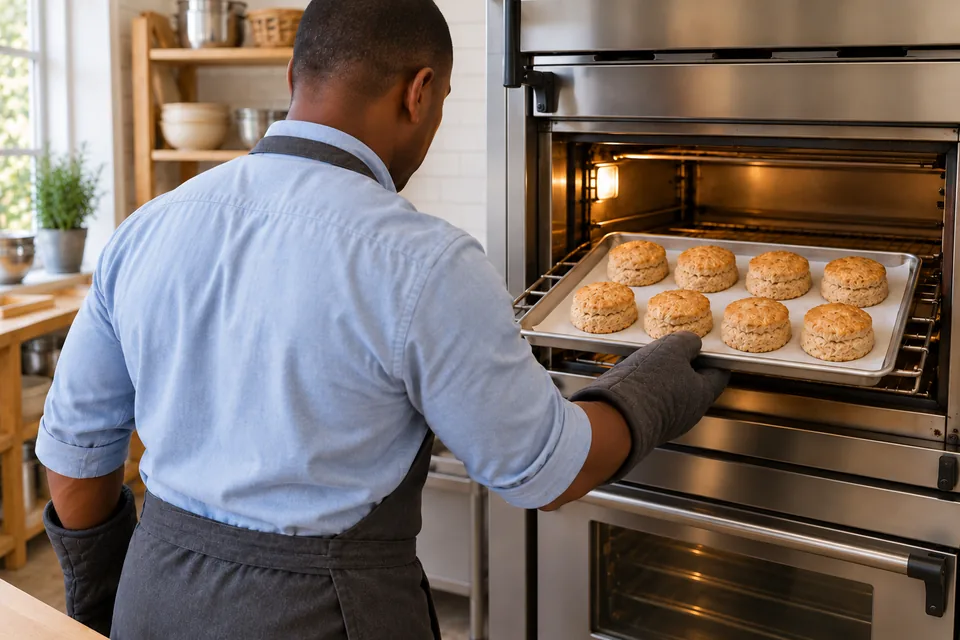
    Baker wearing oven mitts draws out a tray of eight browned wholemeal scones.
    05 Wholemeal scones — step 5Brush the tops and bake until browned and set.
  6. 06 · Cool briefly before serving

    10 min

    Use:

    Move the scones to a rack and leave for 10 minutes before splitting and serving.

    Ready when: The scones are warm rather than steaming, and the crumb separates without becoming gummy.
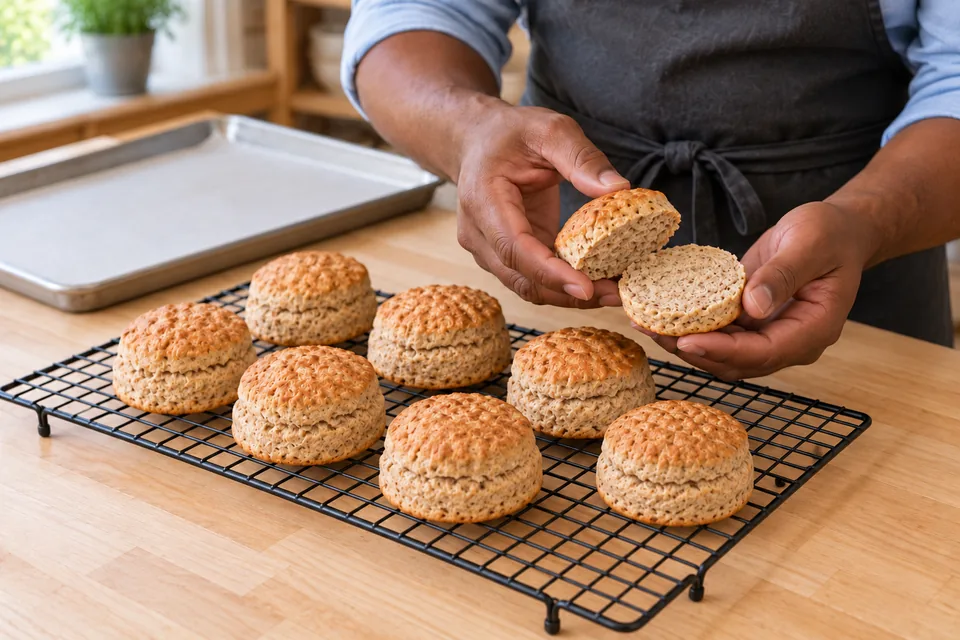
    Baker splits one wholemeal scone into two halves beside seven whole scones on a cooling rack.
    06 Wholemeal scones — step 6Cool briefly before splitting and serving.

What to look for

StageLook / feel forNeeds attention
Mix the dry ingredients and heat the ovenThe dry ingredients are evenly mixed, with bran distributed throughout.
Rub in the butterThere are no large butter cubes or greasy smears.
Add egg and buttermilk; rest brieflyThe dough holds together and feels soft, with only slight tackiness. Do not knead it smooth.
Cut eight thick roundsThe rounds have upright cut sides and similar thickness; the dough still looks lightly textured.
Brush and bakeThe tops are browned, the sides feel set and a scone split through its centre has no damp dough line.
Cool briefly before servingThe scones are warm rather than steaming, and the crumb separates without becoming gummy.

Troubleshooting

If you see thisLikely causeWhat to do nowNext time
The dough feels dry after resting.The wholemeal flour absorbs more liquid than expected.Fold in 5 ml buttermilk at a time until the dough holds softly.Use fine wholemeal and weigh the flour; keep the dusting allowance out of the bowl.
The scones are squat and tough.The dough was overworked or the baking powder is old.Split and toast them for serving.Mix briefly, use fresh baking powder and cut straight down.
The outside is brown but the middle is damp.The rounds are thicker than planned or the oven runs hot.Cover loosely with foil and bake a few minutes longer.Keep the dough around 3 cm thick and check one centre before removing the batch.

Storage: Best on the day. Cool fully and keep in an airtight container for up to 2 days, or freeze for up to 1 month. Thaw covered and warm at 160°C conventional for 5–8 minutes.; Contains: wheat, milk, egg.; This Nepedia version has not been kitchen-tested.

Ingredient choices & substitutions

No brand is specified.

Match the ingredient’s function and weight. See the flour, gluten, yeast and salt guide.

Other approaches to this recipe
Cook / recipeUseWhat differs

The working ingredients and method form one recipe. Different formulas are compared without averaging their quantities or rise schedules.

Nepedia
One small wholemeal scone and the two halves of a second sit on a white side plate beside a table knife.
Two wholemeal scones, one split to show its crumb.

Recipe

Wholemeal scones

Lightly sweet scones made with equal parts white and wholemeal flour. Their crumb is a little denser than the plain version, with a nutty flavour from the bran.

How do I make it?

  1. Mix the dry ingredients and heat the oven

    3–5 min

    Heat the oven to 200°C conventional and line a 30×40 cm tray with baking paper. Whisk both flours with the baking powder, salt and sugar. Break up lumps while keeping all the bran in the bowl.

    Baker whisks an evenly bran-speckled dry mixture in a cream bowl beside a lined tray.
    Mix the dry ingredients and retain the bran.

    Ready when: The dry ingredients are evenly mixed, with bran distributed throughout.

  2. Rub in the butter

    3–5 min

    Rub the cold butter into the dry mixture with your fingertips. Stop when most of the mixture resembles coarse crumbs; small butter flecks are fine.

    Fingertips rub butter through a coarse bran-speckled mixture above the cream bowl.
    Rub in the cold butter until coarse crumbs form.

    Ready when: There are no large butter cubes or greasy smears.

  3. Add egg and buttermilk; rest briefly

    5–7 min

    Beat the egg with the 100 ml buttermilk. Stir it through the crumbs with a fork or blunt knife, then press gently until a soft dough forms. Cover and wait 3 minutes so the bran can absorb moisture. If dry flour remains, add another 5 ml buttermilk at a time.

    Baker gathers a lightly textured wholemeal dough with a fork in the cream bowl.
    Bring together a soft dough and let the bran absorb moisture.

    Ready when: The dough holds together and feels soft, with only slight tackiness. Do not knead it smooth.

  4. Cut eight thick rounds

    5–8 min

    Lightly dust the worktop and a 5 cm round cutter. Pat the dough to 3 cm thick. Cut straight down without twisting. Bring the offcuts together once and cut again, aiming for about 8 scones. Space them on the tray.

    Baker places the eighth thick raw wholemeal scone round on a lined tray beside the round cutter.
    Cut upright rounds and space them on the tray.

    Ready when: The rounds have upright cut sides and similar thickness; the dough still looks lightly textured.

  5. Brush and bake

    16–22 min

    Brush a little of the separate buttermilk wash over the tops, keeping it off the cut sides. Bake for 15–20 minutes.

    Baker wearing oven mitts draws out a tray of eight browned wholemeal scones.
    Brush the tops and bake until browned and set.

    Ready when: The tops are browned, the sides feel set and a scone split through its centre has no damp dough line.

  6. Cool briefly before serving

    10 min

    Move the scones to a rack and leave for 10 minutes before splitting and serving.

    Baker splits one wholemeal scone into two halves beside seven whole scones on a cooling rack.
    Cool briefly before splitting and serving.

    Ready when: The scones are warm rather than steaming, and the crumb separates without becoming gummy.

What can go wrong, and how can I fix it?

What you noticeLikely causeWhat to do
The dough feels dry after resting.The wholemeal flour absorbs more liquid than expected.Fold in 5 ml buttermilk at a time until the dough holds softly. Use fine wholemeal and weigh the flour; keep the dusting allowance out of the bowl.
The scones are squat and tough.The dough was overworked or the baking powder is old.Split and toast them for serving. Mix briefly, use fresh baking powder and cut straight down.
The outside is brown but the middle is damp.The rounds are thicker than planned or the oven runs hot.Cover loosely with foil and bake a few minutes longer. Keep the dough around 3 cm thick and check one centre before removing the batch.
Useful recipe notes

Storage: Best on the day. Cool fully and keep in an airtight container for up to 2 days, or freeze for up to 1 month. Thaw covered and warm at 160°C conventional for 5–8 minutes.

Contains: wheat, milk, egg.

This Nepedia version has not been kitchen-tested.

See the detailed method and ratios in , or follow ingredients through the .

Ingredient proportions & recipe details

Wholemeal scones at a glance

Makes
8 scones, approximately
Heat
200°C conventional
Baking time
15–20 min
Cuisine / style
United Kingdom
How do the ingredient proportions compare?

Percentages compare each listed weight with the combined flour weight (100%). These are ingredient ratios, not dough hydration; milk, eggs and fillings contain other ingredients as well as water.

Formula componentGramsFlour = 100%
Plain flour125 g50%
Fine wholemeal wheat flour125 g50%
Baking powder12 g4.8%
Fine salt2 g0.8%
Caster sugar45 g18%
Unsalted butter50 g20%