Nepedia

White tin loaf

A simple butter-enriched white loaf baked in a tin for even sandwich slices. Cool it fully before cutting.

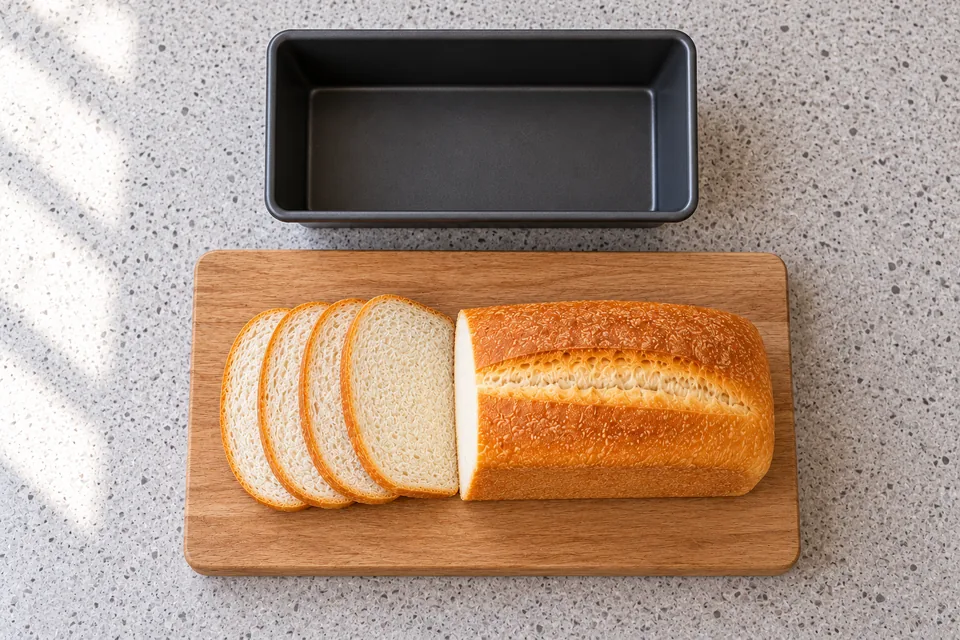
A shortened rectangular white loaf and four thin slices on a board, with its empty loaf tin above.
Makes
1 loaf, about 16 slices
Heat
220°C conventional
Baking time
35–40 min, plus 5 min if the sides need firming
Cuisine / style
United Kingdom
Explore variations · 12 →Jump to ingredients & method ↓
View

White tin loaf

Makes
1 loaf, about 16 slices
Heat
220°C conventional
Baking time
35–40 min, plus 5 min if the sides need firming
Cuisine / style
United Kingdom
United Kingdom · White bread

White tin loaf

A simple butter-enriched white loaf baked in a tin for even sandwich slices. Cool it fully before cutting.

Method

  1. 01 · Mix and develop the dough

    12–16 min

    Use: Strong white bread flour; Fine salt; Instant dried yeast; Unsalted butter; Water

    Mix the flour, salt and yeast. Rub in the soft butter, then add the water and bring everything together. Knead for 8–12 minutes by hand or with a dough hook.

    Ready when: The dough is smooth, elastic and slightly tacky. If dry flour remains, work in a teaspoon of water at a time.
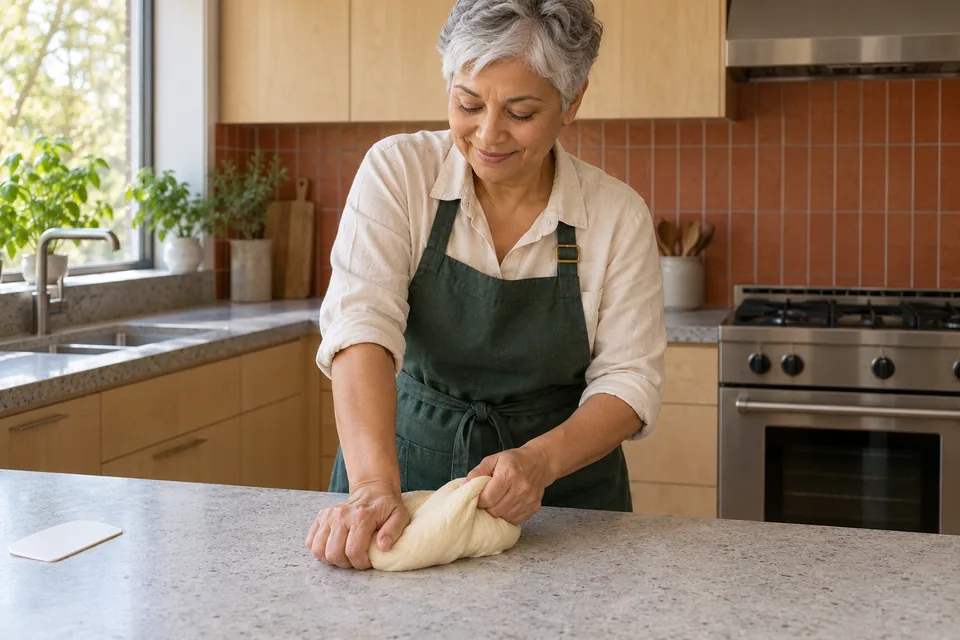
    The silver-haired cook stretches and folds one smooth pale dough on the counter.
    01 Mix KneadKnead until the dough is smooth and elastic.
  2. 02 · Let the dough rise

    60–90 min

    Use: Oil for the bowl and tin

    Coat a bowl lightly with some of the handling oil, keeping the rest for the tin. Add the dough, cover and leave at about 24–26°C for 60–90 minutes.

    Ready when: The dough is aerated and roughly doubled; allow longer in a cool kitchen.
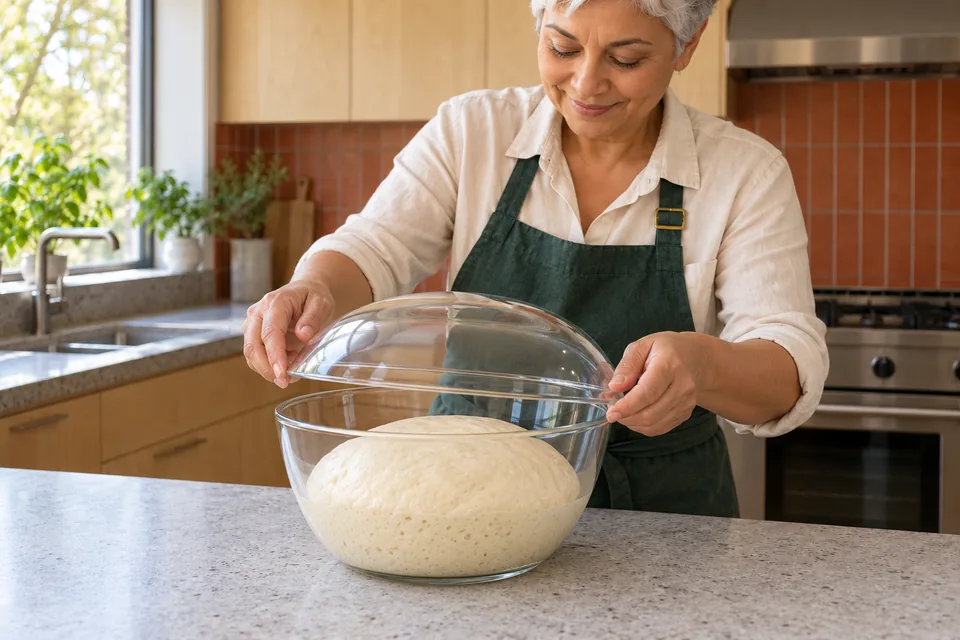
    The cook lowers a clear cover over a smoothly expanded pale dough in a glass bowl.
    02 BulkCover and let the dough roughly double.
  3. 03 · Shape and fill the loaf tin

    5–8 min

    Use: Oil for the bowl and tin; Flour for shaping

    Grease a 23×13×8 cm loaf tin with the remaining handling oil. Lightly dust the worktop. Press the dough gently to release large bubbles, pat it into a rectangle and roll into a firm log about 21 cm long. Pinch the seam closed and place it underneath in the tin.

    Ready when: The log sits evenly in the tin with no large trapped air pockets.
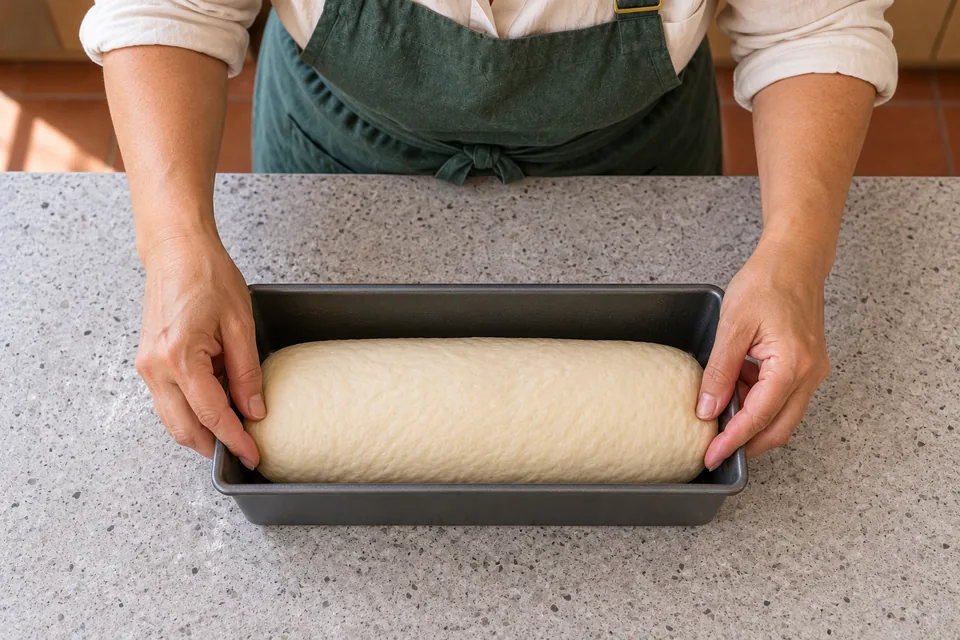
    The cook settles one smooth raw log below the rim of a dark metal loaf tin.
    03 ShapePlace the sealed log seam-side down in the tin.
  4. 04 · Proof and heat the oven

    45–75 min

    Use:

    Cover loosely and leave at about 24–26°C for 45–75 minutes. Heat the oven to 220°C conventional during the final 20 minutes.

    Ready when: The loaf is rounded and expanded, with its centre near or just above the rim. A light fingertip dent recovers slowly.
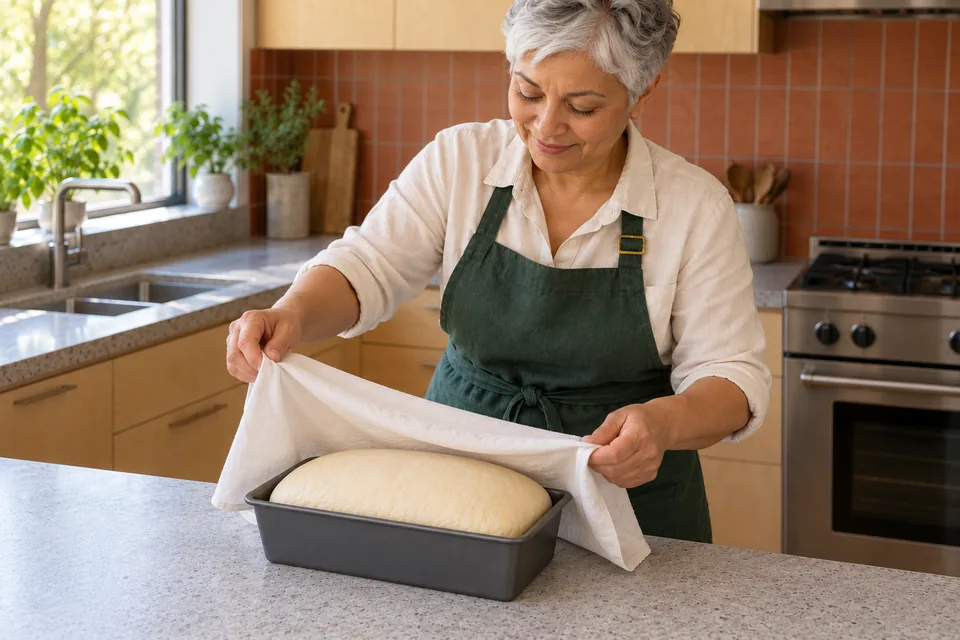
    The cook lifts a white cloth over one puffy pale loaf rounded just above the tin rim.
    04 ProofLet the loaf expand close to the rim.
  5. 05 · Score and bake

    35–45 min

    Use:

    Make one shallow lengthways cut along the top with a sharp blade. Bake for 35–40 minutes. Turn out carefully and check the sides and base; if they still feel soft or pale, return the loaf directly to the rack for another 5 minutes.

    Ready when: The crust is golden-brown, the sides are firm and the centre reads about 95°C. The base sounds hollow when tapped.
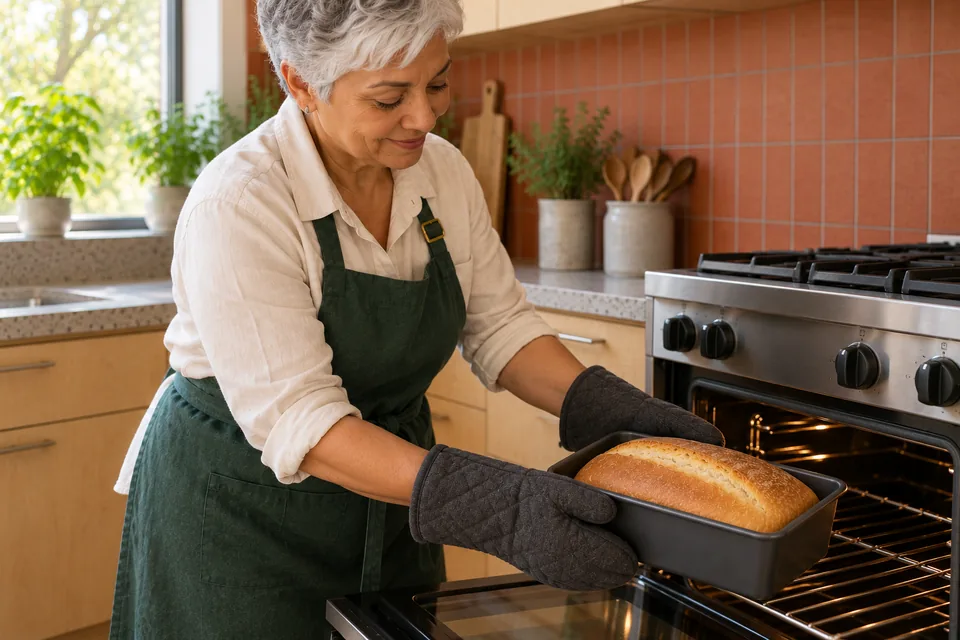
    Using two dark mitts, the cook holds one tin loaf with a golden crust and an opened lengthways cut.
    05 BakeMake one lengthways cut and bake until golden brown.
  6. 06 · Cool fully before slicing

    90 min

    Use:

    Remove the loaf from its tin and cool on a rack for at least 90 minutes before slicing.

    Ready when: The inside is no longer steaming and slices hold together without a gummy band.
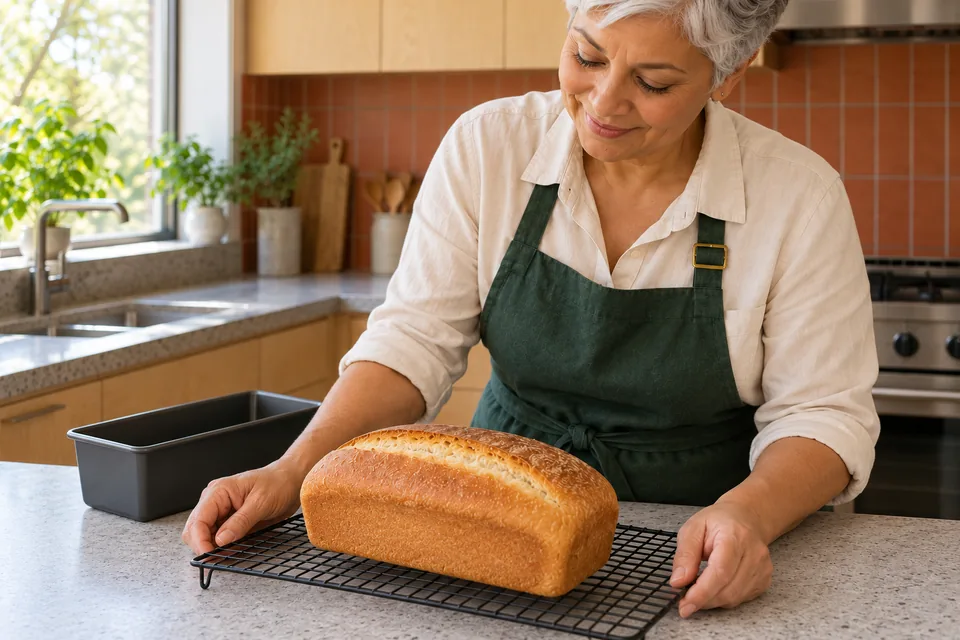
    One whole golden tin loaf rests on a black wire rack while the cook steadies the rack corners.
    06 CoolTurn out and cool fully on a rack before slicing.

What to look for

StageLook / feel forNeeds attention
Mix and develop the doughThe dough is smooth, elastic and slightly tacky. If dry flour remains, work in a teaspoon of water at a time.
Let the dough riseThe dough is aerated and roughly doubled; allow longer in a cool kitchen.
Shape and fill the loaf tinThe log sits evenly in the tin with no large trapped air pockets.
Proof and heat the ovenThe loaf is rounded and expanded, with its centre near or just above the rim. A light fingertip dent recovers slowly.
Score and bakeThe crust is golden-brown, the sides are firm and the centre reads about 95°C. The base sounds hollow when tapped.
Cool fully before slicingThe inside is no longer steaming and slices hold together without a gummy band.

Troubleshooting

If you see thisLikely causeWhat to do nowNext time
The dough is stiff or cracks while shaping.The flour absorbed more water than expected.Work in a teaspoon of water at a time until soft.Weigh ingredients and keep handling flour out of the mixing bowl.
A long gap appears under the top crust.A large air pocket was trapped during shaping.Slice and toast the loaf for use.Press out large bubbles and roll a snug log with a sealed seam.
The lower crumb is gummy.The loaf was underbaked or cut while hot.If still whole and underbaked, return it to the oven; otherwise toast fully cooked slices.Check the centre and allow the full cooling time.

Storage: Once completely cool, wrap and keep at room temperature for up to 3 days. Toast older slices. Freeze sliced bread for up to 2 months and toast from frozen or thaw while wrapped.; For an olive-oil loaf, replace the 50 g butter with 45 g mild olive oil and increase the dough water to 335 g. Mix the oil with the water, then follow the same shaping, baking and readiness cues. This makes a slightly softer dough.; For the wholemeal version, use the separately specified Wholemeal tin loaf recipe; its water amount and covered hydration rest are different.; Contains: wheat, milk.; This Nepedia version has not been kitchen-tested.

Ingredient choices & substitutions

No brand is specified.

Match the ingredient’s function and weight. See the flour, gluten, yeast and salt guide.

Other approaches to this recipe
Cook / recipeUseWhat differs

The working ingredients and method form one recipe. Different formulas are compared without averaging their quantities or rise schedules.

Nepedia
A shortened rectangular white loaf and four thin slices on a board, with its empty loaf tin above.
A soft white tin loaf with four thin slices.

Recipe

White tin loaf

A simple butter-enriched white loaf baked in a tin for even sandwich slices. Cool it fully before cutting.

How do I make it?

  1. Mix and develop the dough

    12–16 min

    Mix the flour, salt and yeast. Rub in the soft butter, then add the water and bring everything together. Knead for 8–12 minutes by hand or with a dough hook.

    The silver-haired cook stretches and folds one smooth pale dough on the counter.
    Knead until the dough is smooth and elastic.

    Ready when: The dough is smooth, elastic and slightly tacky. If dry flour remains, work in a teaspoon of water at a time.

  2. Let the dough rise

    60–90 min

    Coat a bowl lightly with some of the handling oil, keeping the rest for the tin. Add the dough, cover and leave at about 24–26°C for 60–90 minutes.

    The cook lowers a clear cover over a smoothly expanded pale dough in a glass bowl.
    Cover and let the dough roughly double.

    Ready when: The dough is aerated and roughly doubled; allow longer in a cool kitchen.

  3. Shape and fill the loaf tin

    5–8 min

    Grease a 23×13×8 cm loaf tin with the remaining handling oil. Lightly dust the worktop. Press the dough gently to release large bubbles, pat it into a rectangle and roll into a firm log about 21 cm long. Pinch the seam closed and place it underneath in the tin.

    The cook settles one smooth raw log below the rim of a dark metal loaf tin.
    Place the sealed log seam-side down in the tin.

    Ready when: The log sits evenly in the tin with no large trapped air pockets.

  4. Proof and heat the oven

    45–75 min

    Cover loosely and leave at about 24–26°C for 45–75 minutes. Heat the oven to 220°C conventional during the final 20 minutes.

    The cook lifts a white cloth over one puffy pale loaf rounded just above the tin rim.
    Let the loaf expand close to the rim.

    Ready when: The loaf is rounded and expanded, with its centre near or just above the rim. A light fingertip dent recovers slowly.

  5. Score and bake

    35–45 min

    Make one shallow lengthways cut along the top with a sharp blade. Bake for 35–40 minutes. Turn out carefully and check the sides and base; if they still feel soft or pale, return the loaf directly to the rack for another 5 minutes.

    Using two dark mitts, the cook holds one tin loaf with a golden crust and an opened lengthways cut.
    Make one lengthways cut and bake until golden brown.

    Ready when: The crust is golden-brown, the sides are firm and the centre reads about 95°C. The base sounds hollow when tapped.

  6. Cool fully before slicing

    90 min

    Remove the loaf from its tin and cool on a rack for at least 90 minutes before slicing.

    One whole golden tin loaf rests on a black wire rack while the cook steadies the rack corners.
    Turn out and cool fully on a rack before slicing.

    Ready when: The inside is no longer steaming and slices hold together without a gummy band.

What can go wrong, and how can I fix it?

What you noticeLikely causeWhat to do
The dough is stiff or cracks while shaping.The flour absorbed more water than expected.Work in a teaspoon of water at a time until soft. Weigh ingredients and keep handling flour out of the mixing bowl.
A long gap appears under the top crust.A large air pocket was trapped during shaping.Slice and toast the loaf for use. Press out large bubbles and roll a snug log with a sealed seam.
The lower crumb is gummy.The loaf was underbaked or cut while hot.If still whole and underbaked, return it to the oven; otherwise toast fully cooked slices. Check the centre and allow the full cooling time.
Useful recipe notes

Storage: Once completely cool, wrap and keep at room temperature for up to 3 days. Toast older slices. Freeze sliced bread for up to 2 months and toast from frozen or thaw while wrapped.

For an olive-oil loaf, replace the 50 g butter with 45 g mild olive oil and increase the dough water to 335 g. Mix the oil with the water, then follow the same shaping, baking and readiness cues. This makes a slightly softer dough.

For the wholemeal version, use the separately specified Wholemeal tin loaf recipe; its water amount and covered hydration rest are different.

Contains: wheat, milk.

This Nepedia version has not been kitchen-tested.

See the detailed method and ratios in , or follow ingredients through the .

Ingredient proportions & recipe details

White tin loaf at a glance

Makes
1 loaf, about 16 slices
Heat
220°C conventional
Baking time
35–40 min, plus 5 min if the sides need firming
Cuisine / style
United Kingdom
Leavening
Yeast
How do the ingredient proportions compare?

Percentages compare each listed weight with the combined flour weight (100%). These are ingredient ratios, not dough hydration; milk, eggs and fillings contain other ingredients as well as water.

Formula componentGramsFlour = 100%
Strong white bread flour500 g100%
Water325 g65%
Fine salt10 g2%
Instant dried yeast7 g1.4%
Unsalted butter50 g10%