Starter & maintenance
Store and revive a sourdough starter
A dormant-culture routine followed by two fresh feeds before mixing bread.
Method
01 · Store
Up to 1 month in the sourceUse: Store ingredients
Coat about 300 g mature culture with a thin water film. Place in a closed, nonperforated food-safe bag and refrigerate.Ready when: Culture protected from drying; no contamination.
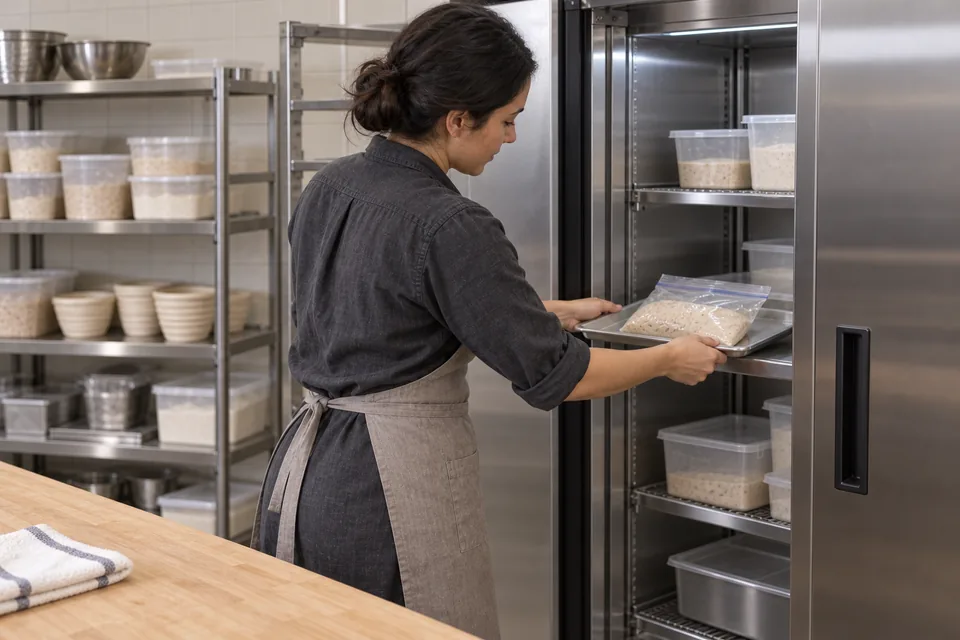
01 Refrigerate the cultureProtect the starter from drying and refrigerate it as directed. 02 · Refresh 1
30–60 min warm-up; then overnightUse: Refresh 1 ingredients
Two days before baking, keep 200 g refrigerated culture. If possible let it warm briefly. Mix with fresh flour and water; cover in a warm spot.Ready when: Renewed bubbles and expansion.
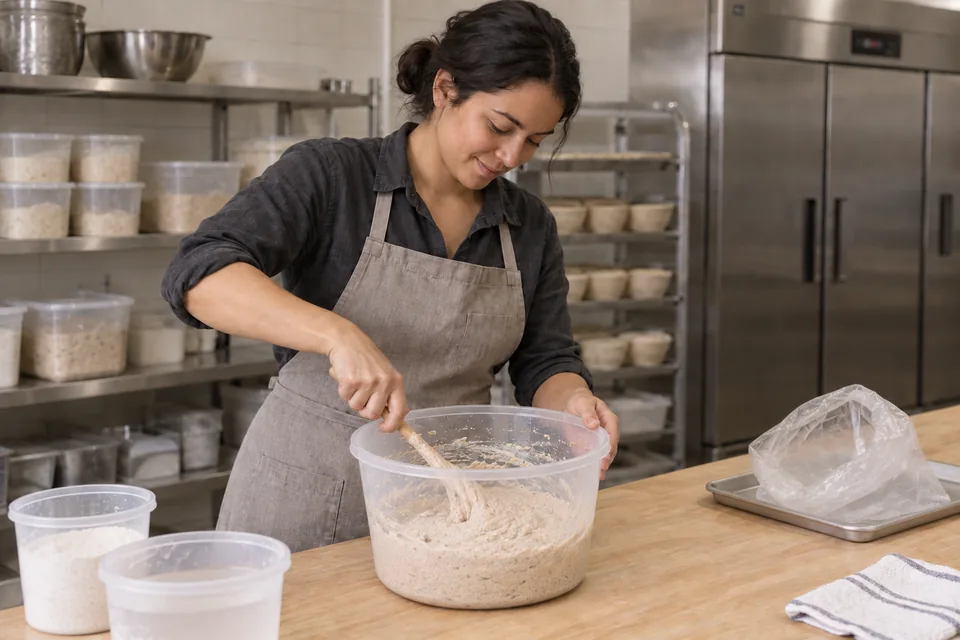
02 Refresh after refrigerationMix the retained cold culture with fresh flour and water and let it revive. 03 · Refresh 2
About 6–9 h, depending on dough recipeUse: Refresh 2 ingredients
Next morning retain only 100 g. Add flour and water; mix and cover. This is the recipe’s morning levain feed.Ready when: Vigorous, expanded and webbed culture.
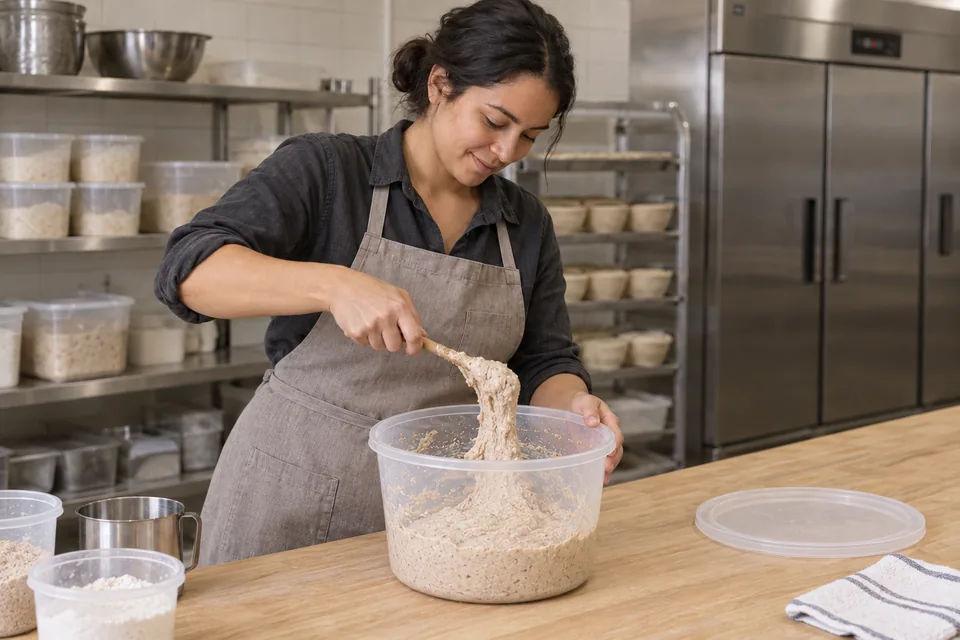
03 Feed with white and whole-wheat flourRetain the required portion and feed again; wait for vigorous activity before mixing dough. 04 · Mix dough
Bake the following day after the chosen bulk/proofUse: Ripe culture
Use the required portion in final dough later that day; retain a separate portion to continue the culture. If still weak, repeat regular feeds before baking.Ready when: Starter is active enough to raise the dough.
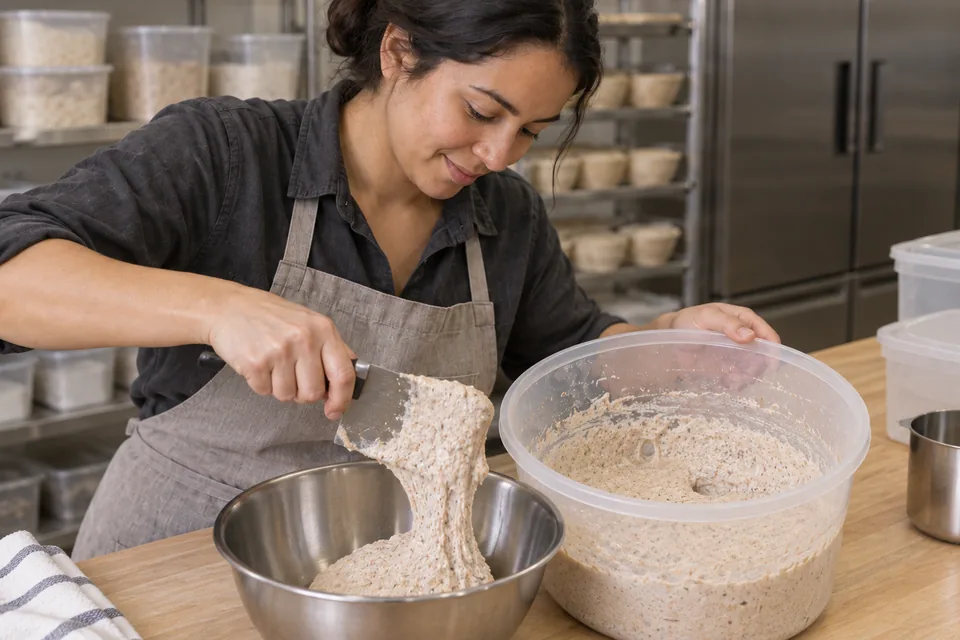
04 Use the ripe cultureTake the portion needed for dough when the culture is bubbly, expanded and webbed.
What to look for
| Stage | Look and feel | Needs attention |
|---|---|---|
| Activity | Feedings lead to repeatable expansion, bubbles and an internal web. | Calendar age alone does not show that a new culture can raise bread. |
Troubleshooting
| If you see | Likely cause | What to do now | Next time |
|---|---|---|---|
| Starter is not vigorous yet | A young or cool culture needs more development. | Continue regular feedings and wait for reliable activity before using in bread. | Keep feeding amounts and temperature consistent. |
| Pink/orange colour or fuzzy growth | The culture is contaminated. | Discard it and start again in clean equipment. | Keep the container covered and utensils clean. |
Recipe notes
- No commercial yeast, sugar, fruit, pork or added alcohol is used. Fermentation itself naturally produces small amounts of ethanol; this is not a guarantee of chemically zero alcohol.