Stone-baked pizza

A hot-stone pizza topped with tomato, mozzarella and fresh basil.

Finished margherita pizza on a wooden board, ready to serve.
Makes
One 30 cm pizza
Heat
274°C bake; 260°C if oven maximum; optional broil
Baking time
About 5 min bake + 2–3 min broil per pizza; longer at 260°C

Preheat the stone about 45 min. Watch broiling continuously and use rated equipment; without broiling, keep baking to doneness.

View

Pizza Margherita

Makes
One 30 cm pizza
Heat
274°C bake; 260°C if oven maximum; optional broil
Baking time
About 5 min bake + 2–3 min broil per pizza; longer at 260°C

Preheat the stone about 45 min. Watch broiling continuously and use rated equipment; without broiling, keep baking to doneness.

Stone pizza

Pizza Margherita

Pizza Margherita.

Prepare first · Same-day pizza dough · Smooth tomato sauce

Method

  1. 01 · Heat stone

    About 45 minutes total

    Use: Pizza stone and oven

    Set stone about 20 cm below broiler. Preheat to 274°C (or the oven’s lower maximum), then keep heating the stone 30 minutes more. If both oven and stone permit it, use broil for the final 3–5 minutes, then return to bake before loading.

    Ready when: Stone is thoroughly heated; use only equipment-rated settings.
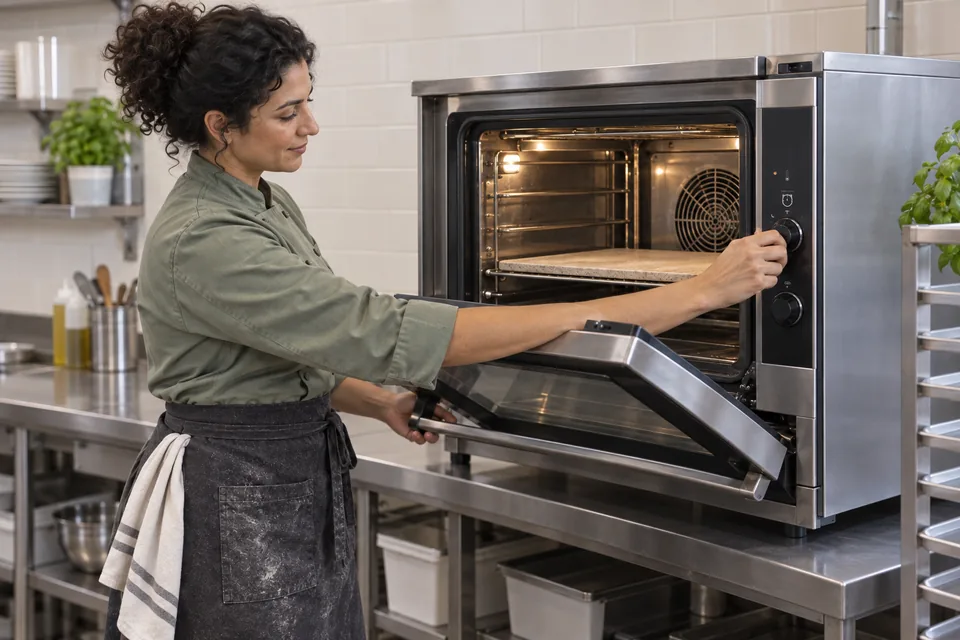
    Chef heating an empty pizza stone in a stainless electric oven.
    01 Heat stoneHeat the stone thoroughly before loading the pizza.
  2. 02 · Stretch cold dough

    A few minutes

    Use: Chilled dough, dusting flour

    Flour counter, peel and both faces of the dough. Press the centre while preserving a 2.5 cm rim. Lift at the rim, let gravity stretch, then rotate gently over closed fists to about 30 cm. Patch small tears. Lay on peel and test that it slides.

    Ready when: Thin, even centre with a continuous airy rim; no sticking.
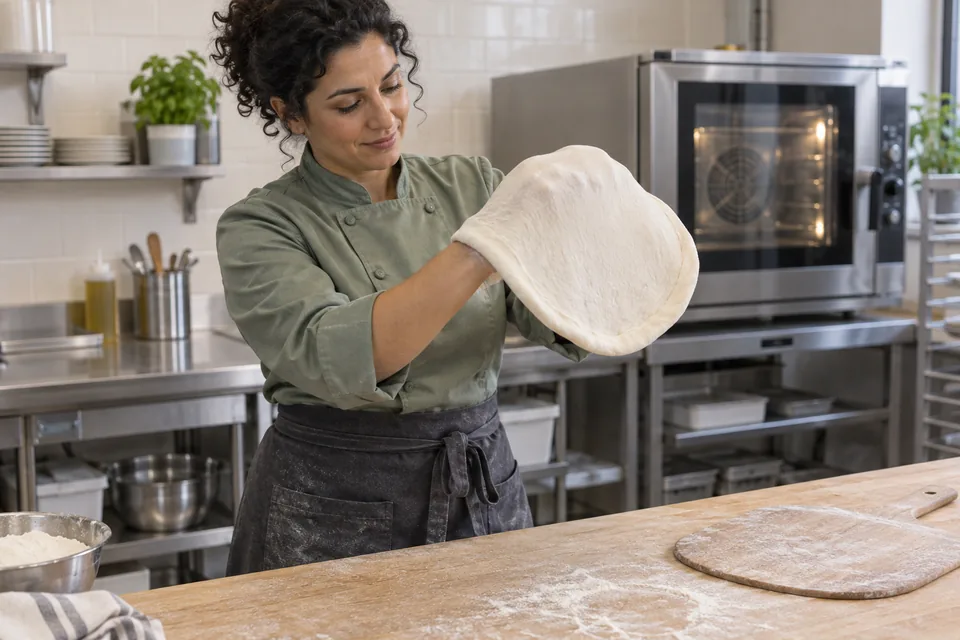
    Chef stretching raw pizza dough over closed fists, preserving a thicker rim.
    02 Stretch cold doughStretch gently, keeping the centre thin and the rim intact.
  3. 03 · Top

    Immediately before baking

    Use: Listed topping ingredients

    Spread sauce thinly, then distribute mozzarella and basil. Test sliding again.

    Ready when: Even coverage, leaving about 2.5 cm of rim.
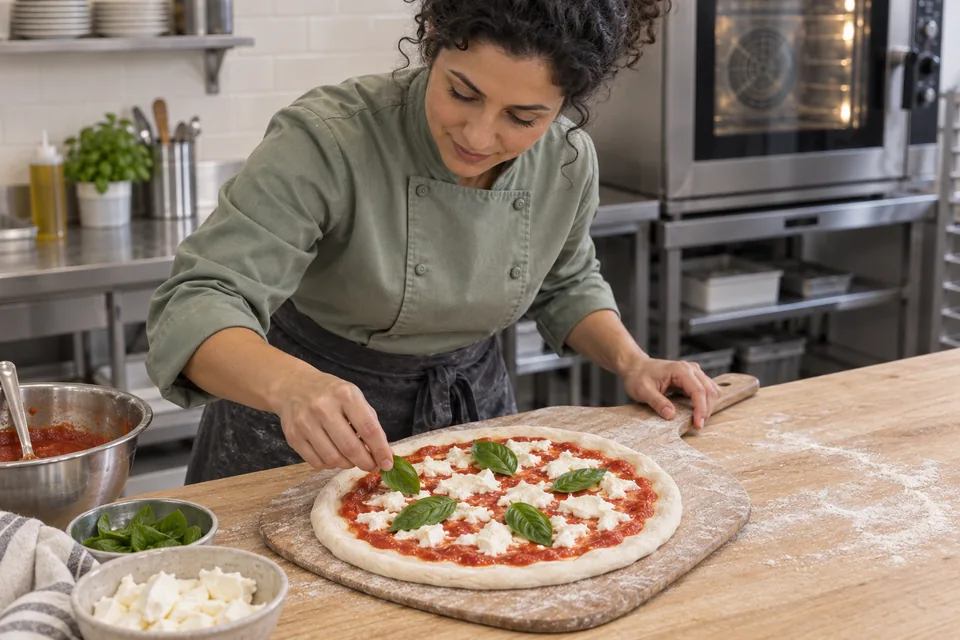
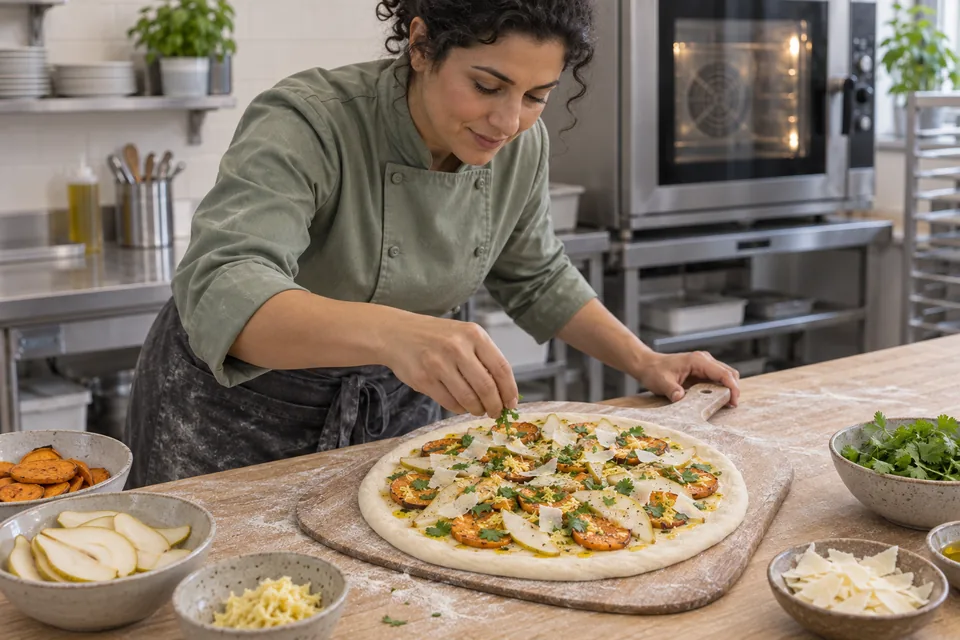
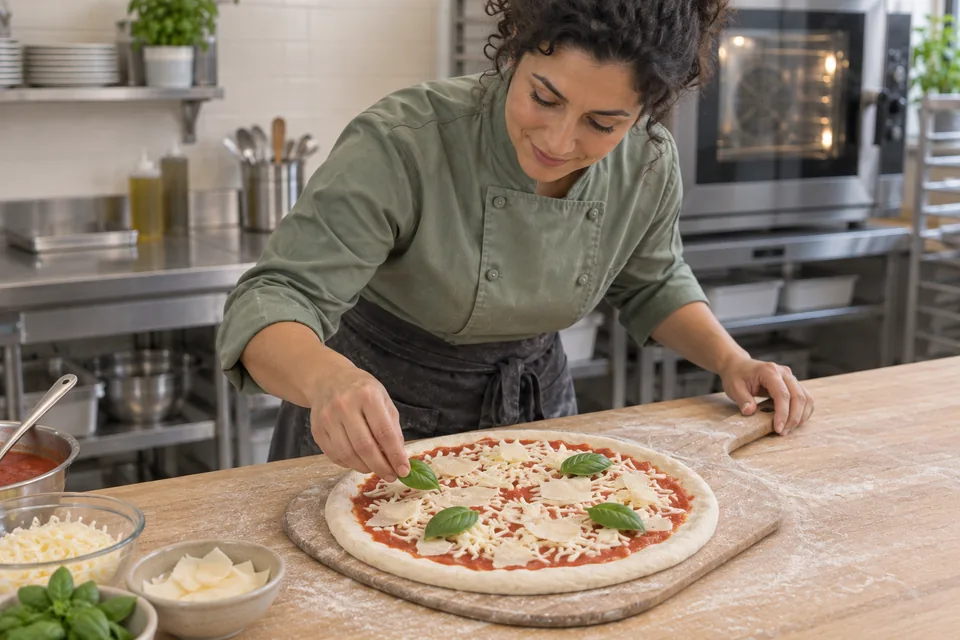
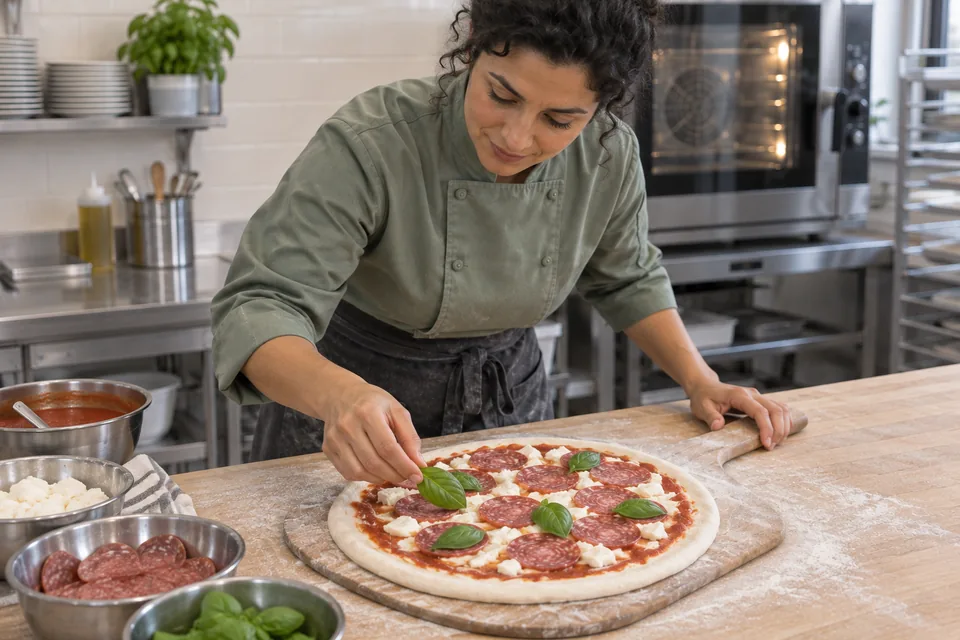
    Chef topping a raw margherita pizza on a floured wooden peel.
    03 TopUse a modest, even layer of toppings, keeping the raised rim clear.
  4. 04 · Bake + finish

    About 7–8 minutes at 274°C; longer at 260°C

    Use: Topped pizza

    Return oven to bake and slide pizza onto stone. Bake about 5 minutes, then, if allowed, broil 2–3 minutes while watching continuously. If broiling is unavailable, keep baking to the same visual endpoint. Lift to check the bottom.

    Ready when: Firm browned underside, coloured rim, toppings cooked; stop before burning.
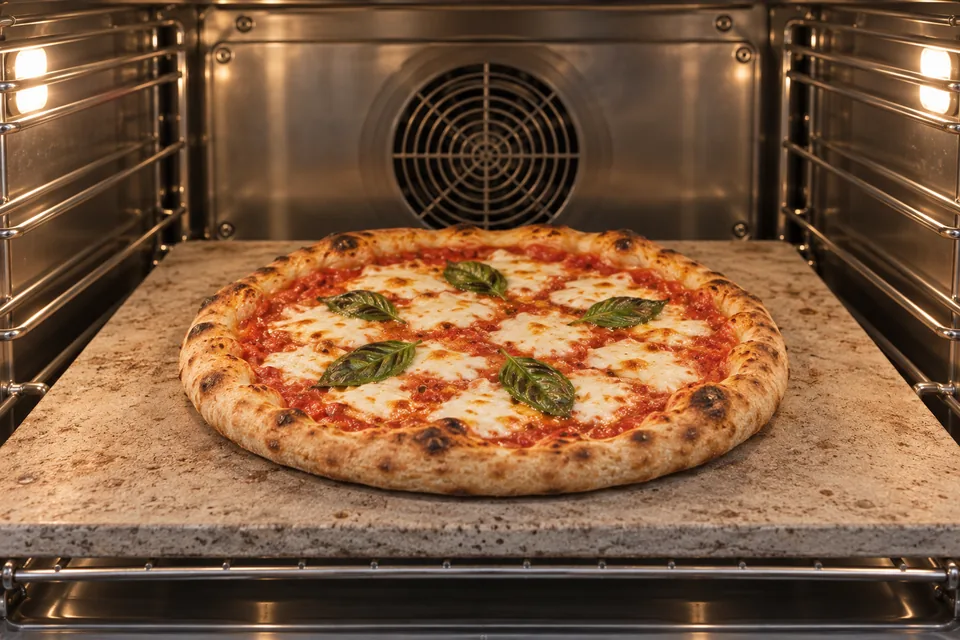
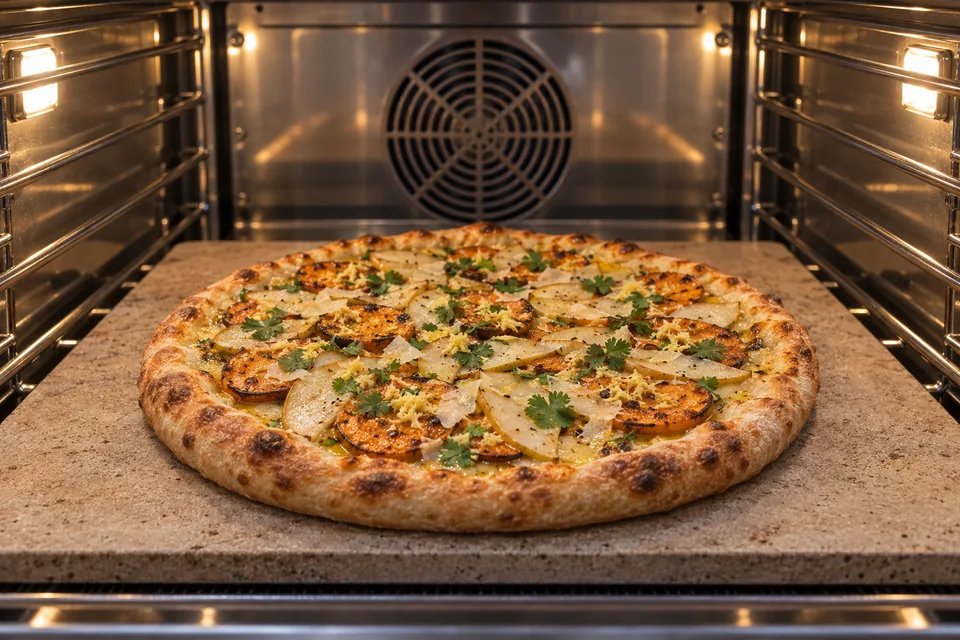
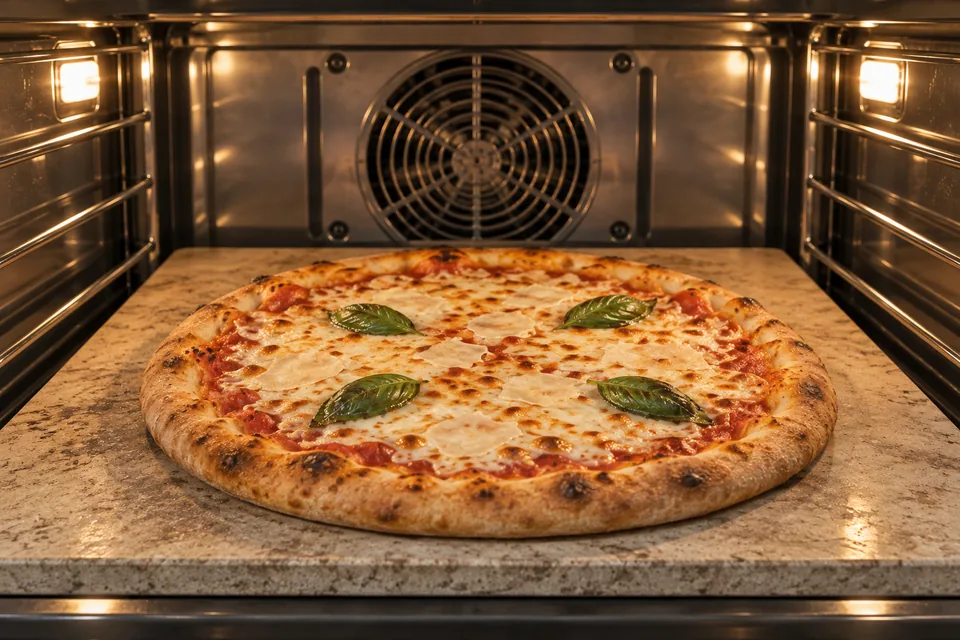
    A margherita pizza with browned rim baking directly on a heated pizza stone.
    04 Bake + finishBake until the rim is browned, the topping is cooked and the underside is firm.
  5. 05 · Serve

    Immediately

    Use: Baked pizza

    Transfer to board; drizzle optional oil, slice and serve with optional salt and chile flakes.

    Ready when: Cut on a wooden board; allow molten cheese to cool enough to eat.

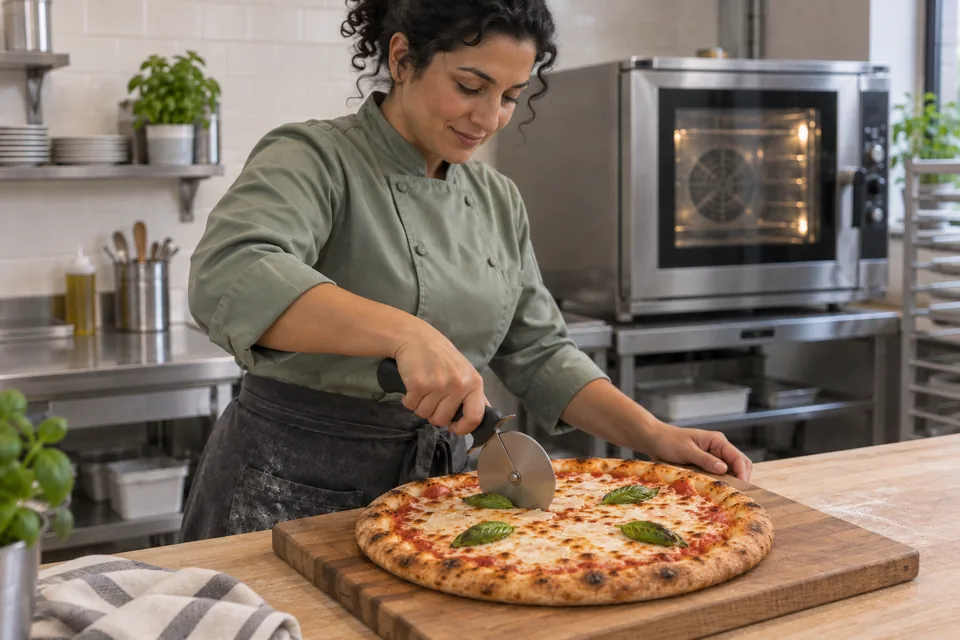
    Finished margherita pizza on a wooden board, ready to serve.
    05 ServeTransfer the baked pizza to a board, then slice and serve.

What to look for

StageLook and feelNeeds attention
Before launchPizza slides with a short peel shake; topping layer is light.A loaded pizza stuck to the peel.
FinishMozzarella just melted, rim browned, underside firm.Baking until mozzarella separates into pools of oil.

Troubleshooting

If you seeLikely causeWhat to do nowNext time
Pizza sticks to peelDamp dough, too little dusting, or too much time after toppingGently lift the sticking area and dust underneath; test sliding again before launching.Prepare toppings first, work quickly, and test the bare dough then the topped pizza.
Top burns before base setsStone underheated or broiler used too earlyStop broiling and continue baking while watching the bottom.Heat the stone thoroughly; finish the top only after the base begins to set.

Recipe notes

  • Adjust the bake to the oven temperature: at 316°C, total baking may be only 4–5 minutes and broiling may be unnecessary. Do not apply a fixed 5-minute bake plus 2-minute broil at that temperature. Follow the stone and oven manufacturer’s limits; the 274°C sequence is the working default.
Show ingredient flow

Recipe

Pizza Margherita

Start with the prepared, chilled pizza dough and sauce listed below. A pizza paddle, also called a peel, helps slide the pizza onto the hot stone.

Prepare first: Same-day pizza dough · Smooth tomato sauce

How do I make it?

  1. Heat the oven and stone

    About 45 minutes total

    Put the pizza stone about 20 cm below the top grill and heat the oven to 274°C, or its lower maximum; once the oven is hot, heat the stone for 30 minutes more. If the stone and oven are both suitable for grilling, turn on the top grill for the last 3–5 minutes, then switch back to bake before adding the pizza.

    Chef heating an empty pizza stone in a stainless electric oven.
    Heat the stone thoroughly before loading the pizza.

    Ready when: Stone is thoroughly heated; use only equipment-rated settings.

  2. Stretch the cold dough

    A few minutes

    Flour the counter, the pizza paddle and both sides of the dough; press the middle while leaving a 2.5 cm rim. Lift the dough by its edge so its weight stretches it, then turn it gently over closed fists until about 30 cm across, repairing small tears. Place it on the paddle and check that it slides freely.

    Chef stretching raw pizza dough over closed fists, preserving a thicker rim.
    Stretch gently, keeping the centre thin and the rim intact.

    Ready when: Thin, even centre with a continuous airy rim; no sticking.

  3. Add the toppings

    Immediately before baking

    Spread a thin layer of sauce over the dough, then add the mozzarella and basil evenly. Check again that the pizza slides on the paddle.

    Chef topping a raw margherita pizza on a floured wooden peel.
    Use a modest, even layer of toppings, keeping the raised rim clear.

    Ready when: Even coverage, leaving about 2.5 cm of rim.

  4. Bake the pizza

    About 7–8 minutes at 274°C; longer at 260°C

    With the oven back on bake, slide the pizza onto the stone and bake for about 5 minutes. If the equipment allows, switch to the top grill for 2–3 minutes and watch constantly; otherwise keep baking until it looks done. Lift an edge to check that the bottom is cooked.

    A margherita pizza with browned rim baking directly on a heated pizza stone.
    Bake until the rim is browned, the topping is cooked and the underside is firm.

    Ready when: Firm browned underside, coloured rim, toppings cooked; stop before burning.

  5. Cut and serve

    Immediately

    Move the pizza to a board, drizzle with oil if you like, then cut into slices. Offer the optional salt and chile flakes with it.

    Finished margherita pizza on a wooden board, ready to serve.
    Transfer the baked pizza to a board, then slice and serve.

    Ready when: Cut on a wooden board; allow molten cheese to cool enough to eat.

What can go wrong, and how can I fix it?

What you noticeLikely causeWhat to do
Pizza sticks to peelDamp dough, too little dusting, or too much time after toppingGently lift the sticking area and dust underneath; test sliding again before launching. Prepare toppings first, work quickly, and test the bare dough then the topped pizza.
Top burns before base setsStone underheated or broiler used too earlyStop broiling and continue baking while watching the bottom. Heat the stone thoroughly; finish the top only after the base begins to set.
Useful recipe notes

Adjust the bake to the oven temperature: at 316°C, total baking may be only 4–5 minutes and broiling may be unnecessary. Do not apply a fixed 5-minute bake plus 2-minute broil at that temperature. Follow the stone and oven manufacturer’s limits; the 274°C sequence is the working default.

See the detailed method and ratios in , or follow ingredients through the .

Ingredient proportions & recipe details

Pizza Margherita at a glance

Makes
One 30 cm pizza
Heat
274°C bake; 260°C if oven maximum; optional broil
Baking time
About 5 min bake + 2–3 min broil per pizza; longer at 260°C

Pizza Margherita with Arugula

Makes
One 30 cm pizza
Heat
274°C bake; 260°C if oven maximum; optional broil
Baking time
About 5 min bake + 2–3 min broil per pizza; longer at 260°C

Preheat the stone about 45 min. Watch broiling continuously and use rated equipment; without broiling, keep baking to doneness.

Stone pizza

Pizza Margherita with Arugula

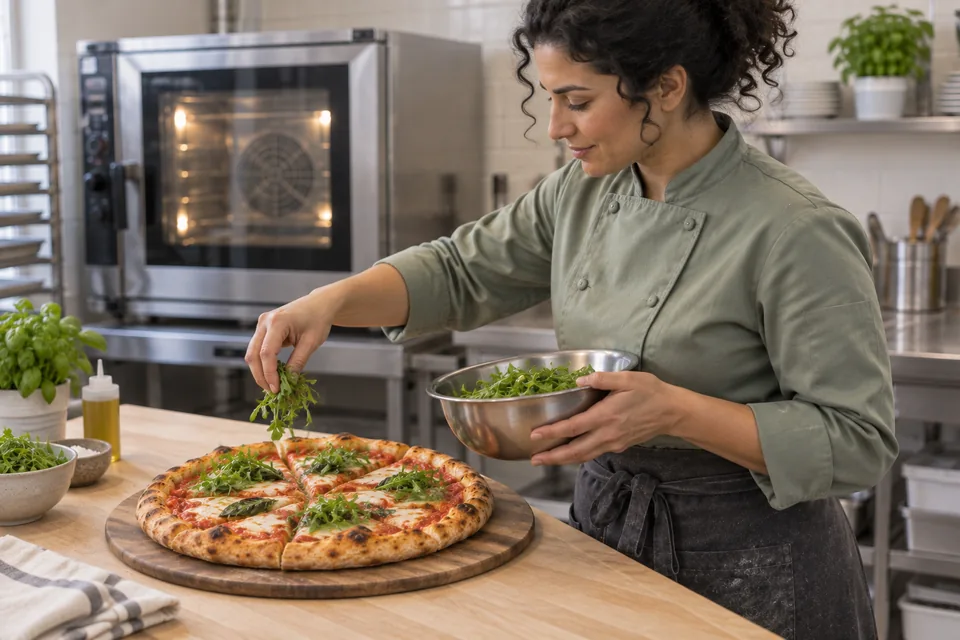
Margherita pizza finished with a handful of fresh arugula on each slice.

Prepare first · Same-day pizza dough · Smooth tomato sauce

Method

  1. 01 · Heat stone

    About 45 minutes total

    Use: Pizza stone and oven

    Set stone about 20 cm below broiler. Preheat to 274°C (or the oven’s lower maximum), then keep heating the stone 30 minutes more. If both oven and stone permit it, use broil for the final 3–5 minutes, then return to bake before loading.

    Ready when: Stone is thoroughly heated; use only equipment-rated settings.

    Chef heating an empty pizza stone in a stainless electric oven.
    01 Heat stoneHeat the stone thoroughly before loading the pizza.
  2. 02 · Stretch cold dough

    A few minutes

    Use: Chilled dough, dusting flour

    Flour counter, peel and both faces of the dough. Press the centre while preserving a 2.5 cm rim. Lift at the rim, let gravity stretch, then rotate gently over closed fists to about 30 cm. Patch small tears. Lay on peel and test that it slides.

    Ready when: Thin, even centre with a continuous airy rim; no sticking.

    Chef stretching raw pizza dough over closed fists, preserving a thicker rim.
    02 Stretch cold doughStretch gently, keeping the centre thin and the rim intact.
  3. 03 · Top

    Immediately before baking

    Use: Listed topping ingredients

    Spread sauce thinly, then distribute mozzarella and basil. Test sliding again.

    Ready when: Even coverage, leaving about 2.5 cm of rim.

    Chef topping a raw margherita pizza on a floured wooden peel.
    03 TopUse a modest, even layer of toppings, keeping the raised rim clear.
  4. 04 · Bake + finish

    About 7–8 minutes at 274°C; longer at 260°C

    Use: Topped pizza

    Return oven to bake and slide pizza onto stone. Bake about 5 minutes, then, if allowed, broil 2–3 minutes while watching continuously. If broiling is unavailable, keep baking to the same visual endpoint. Lift to check the bottom.

    Ready when: Firm browned underside, coloured rim, toppings cooked; stop before burning.

    A margherita pizza with browned rim baking directly on a heated pizza stone.
    04 Bake + finishBake until the rim is browned, the topping is cooked and the underside is firm.
  5. 05 · Serve

    Immediately

    Use: Baked pizza

    Transfer to board, drizzle optional olive oil and slice. Top each slice with a handful of arugula; serve with optional salt and chile flakes.

    Ready when: Cut on a wooden board; allow molten cheese to cool enough to eat.

    Fresh arugula added to the slices of a baked margherita pizza.
    05 ServeAdd the fresh arugula after baking, once the pizza is sliced.

What to look for

StageLook and feelNeeds attention
Before launchPizza slides with a short peel shake; topping layer is light.A loaded pizza stuck to the peel.
FinishMozzarella just melted, rim browned, underside firm.Baking until mozzarella separates into pools of oil.

Troubleshooting

If you seeLikely causeWhat to do nowNext time
Pizza sticks to peelDamp dough, too little dusting, or too much time after toppingGently lift the sticking area and dust underneath; test sliding again before launching.Prepare toppings first, work quickly, and test the bare dough then the topped pizza.
Top burns before base setsStone underheated or broiler used too earlyStop broiling and continue baking while watching the bottom.Heat the stone thoroughly; finish the top only after the base begins to set.

Recipe notes

  • Adjust the bake to the oven temperature: at 316°C, total baking may be only 4–5 minutes and broiling may be unnecessary. Do not apply a fixed 5-minute bake plus 2-minute broil at that temperature. Follow the stone and oven manufacturer’s limits; the 274°C sequence is the working default.
Show ingredient flow

Recipe

Pizza Margherita with Arugula

Start with the prepared, chilled pizza dough and sauce listed below. A pizza paddle, also called a peel, helps slide the pizza onto the hot stone.

Prepare first: Same-day pizza dough · Smooth tomato sauce

How do I make it?

  1. Heat the oven and stone

    About 45 minutes total

    Put the pizza stone about 20 cm below the top grill and heat the oven to 274°C, or its lower maximum; once the oven is hot, heat the stone for 30 minutes more. If the stone and oven are both suitable for grilling, turn on the top grill for the last 3–5 minutes, then switch back to bake before adding the pizza.

    Chef heating an empty pizza stone in a stainless electric oven.
    Heat the stone thoroughly before loading the pizza.

    Ready when: Stone is thoroughly heated; use only equipment-rated settings.

  2. Stretch the cold dough

    A few minutes

    Flour the counter, the pizza paddle and both sides of the dough; press the middle while leaving a 2.5 cm rim. Lift the dough by its edge so its weight stretches it, then turn it gently over closed fists until about 30 cm across, repairing small tears. Place it on the paddle and check that it slides freely.

    Chef stretching raw pizza dough over closed fists, preserving a thicker rim.
    Stretch gently, keeping the centre thin and the rim intact.

    Ready when: Thin, even centre with a continuous airy rim; no sticking.

  3. Add the toppings

    Immediately before baking

    Spread a thin layer of sauce over the dough, then add the mozzarella and basil evenly. Check again that the pizza slides on the paddle.

    Chef topping a raw margherita pizza on a floured wooden peel.
    Use a modest, even layer of toppings, keeping the raised rim clear.

    Ready when: Even coverage, leaving about 2.5 cm of rim.

  4. Bake the pizza

    About 7–8 minutes at 274°C; longer at 260°C

    With the oven back on bake, slide the pizza onto the stone and bake for about 5 minutes. If the equipment allows, switch to the top grill for 2–3 minutes and watch constantly; otherwise keep baking until it looks done. Lift an edge to check that the bottom is cooked.

    A margherita pizza with browned rim baking directly on a heated pizza stone.
    Bake until the rim is browned, the topping is cooked and the underside is firm.

    Ready when: Firm browned underside, coloured rim, toppings cooked; stop before burning.

  5. Add arugula and serve

    Immediately

    Move the pizza to a board, drizzle with olive oil if using and cut into slices. Put a handful of arugula on each slice and offer the optional salt and chile flakes.

    Fresh arugula added to the slices of a baked margherita pizza.
    Add the fresh arugula after baking, once the pizza is sliced.

    Ready when: Cut on a wooden board; allow molten cheese to cool enough to eat.

What can go wrong, and how can I fix it?

What you noticeLikely causeWhat to do
Pizza sticks to peelDamp dough, too little dusting, or too much time after toppingGently lift the sticking area and dust underneath; test sliding again before launching. Prepare toppings first, work quickly, and test the bare dough then the topped pizza.
Top burns before base setsStone underheated or broiler used too earlyStop broiling and continue baking while watching the bottom. Heat the stone thoroughly; finish the top only after the base begins to set.
Useful recipe notes

Adjust the bake to the oven temperature: at 316°C, total baking may be only 4–5 minutes and broiling may be unnecessary. Do not apply a fixed 5-minute bake plus 2-minute broil at that temperature. Follow the stone and oven manufacturer’s limits; the 274°C sequence is the working default.
See the detailed method and ratios in , or follow ingredients through the .

Ingredient proportions & recipe details

Pizza Margherita with Arugula at a glance

Makes
One 30 cm pizza
Heat
274°C bake; 260°C if oven maximum; optional broil
Baking time
About 5 min bake + 2–3 min broil per pizza; longer at 260°C

Mozzarella and provolone pizza

Makes
One 30 cm pizza
Heat
274°C bake; 260°C if oven maximum; optional broil
Baking time
About 5 min bake + 2–3 min broil per pizza; longer at 260°C

Preheat the stone about 45 min. Watch broiling continuously and use rated equipment; without broiling, keep baking to doneness.

Stone pizza

Mozzarella and provolone pizza

Mozzarella and provolone pizza.

Prepare first · Same-day pizza dough · Smooth tomato sauce

Method

  1. 01 · Heat stone

    About 45 minutes total

    Use: Pizza stone and oven

    Set stone about 20 cm below broiler. Preheat to 274°C (or the oven’s lower maximum), then keep heating the stone 30 minutes more. If both oven and stone permit it, use broil for the final 3–5 minutes, then return to bake before loading.

    Ready when: Stone is thoroughly heated; use only equipment-rated settings.

    Chef heating an empty pizza stone in a stainless electric oven.
    01 Heat stoneHeat the stone thoroughly before loading the pizza.
  2. 02 · Stretch cold dough

    A few minutes

    Use: Chilled dough, dusting flour

    Flour counter, peel and both faces of the dough. Press the centre while preserving a 2.5 cm rim. Lift at the rim, let gravity stretch, then rotate gently over closed fists to about 30 cm. Patch small tears. Lay on peel and test that it slides.

    Ready when: Thin, even centre with a continuous airy rim; no sticking.

    Chef stretching raw pizza dough over closed fists, preserving a thicker rim.
    02 Stretch cold doughStretch gently, keeping the centre thin and the rim intact.
  3. 03 · Top

    Immediately before baking

    Use: Listed topping ingredients

    Spread sauce, scatter both cheeses, and add optional basil. Test sliding again.

    Ready when: Even coverage, leaving about 2.5 cm of rim.

    Chef topping a raw two cheese pizza on a floured wooden peel.
    03 TopUse a modest, even layer of toppings, keeping the raised rim clear.
  4. 04 · Bake + finish

    About 7–8 minutes at 274°C; longer at 260°C

    Use: Topped pizza

    Return oven to bake and slide pizza onto stone. Bake about 5 minutes, then, if allowed, broil 2–3 minutes while watching continuously. If broiling is unavailable, keep baking to the same visual endpoint. Lift to check the bottom.

    Ready when: Firm browned underside, coloured rim, toppings cooked; stop before burning.

    A two cheese pizza with browned rim baking directly on a heated pizza stone.
    04 Bake + finishBake until the rim is browned, the topping is cooked and the underside is firm.
  5. 05 · Serve

    Immediately

    Use: Baked pizza

    Slice and serve with optional chile flakes.

    Ready when: Cut on a wooden board; allow molten cheese to cool enough to eat.

    Finished two cheese pizza on a wooden board, ready to serve.
    05 ServeTransfer the baked pizza to a board, then slice and serve.

What to look for

StageLook and feelNeeds attention
Before launchPizza slides with a short peel shake; topping layer is light.A loaded pizza stuck to the peel.
FinishBottom browned and set; rim expanded; cheese, when used, fully melted.Judging solely by a timer or by the top while the base is raw.

Troubleshooting

If you seeLikely causeWhat to do nowNext time
Pizza sticks to peelDamp dough, too little dusting, or too much time after toppingGently lift the sticking area and dust underneath; test sliding again before launching.Prepare toppings first, work quickly, and test the bare dough then the topped pizza.
Top burns before base setsStone underheated or broiler used too earlyStop broiling and continue baking while watching the bottom.Heat the stone thoroughly; finish the top only after the base begins to set.

Recipe notes

  • Adjust the bake to the oven temperature: at 316°C, total baking may be only 4–5 minutes and broiling may be unnecessary. Do not apply a fixed 5-minute bake plus 2-minute broil at that temperature. Follow the stone and oven manufacturer’s limits; the 274°C sequence is the working default.
Show ingredient flow

Recipe

Mozzarella and provolone pizza

Start with the prepared, chilled pizza dough and sauce listed below. A pizza paddle, also called a peel, helps slide the pizza onto the hot stone.

Prepare first: Same-day pizza dough · Smooth tomato sauce

How do I make it?

  1. Heat the oven and stone

    About 45 minutes total

    Put the pizza stone about 20 cm below the top grill and heat the oven to 274°C, or its lower maximum; once the oven is hot, heat the stone for 30 minutes more. If the stone and oven are both suitable for grilling, turn on the top grill for the last 3–5 minutes, then switch back to bake before adding the pizza.

    Chef heating an empty pizza stone in a stainless electric oven.
    Heat the stone thoroughly before loading the pizza.

    Ready when: Stone is thoroughly heated; use only equipment-rated settings.

  2. Stretch the cold dough

    A few minutes

    Flour the counter, the pizza paddle and both sides of the dough; press the middle while leaving a 2.5 cm rim. Lift the dough by its edge so its weight stretches it, then turn it gently over closed fists until about 30 cm across, repairing small tears. Place it on the paddle and check that it slides freely.

    Chef stretching raw pizza dough over closed fists, preserving a thicker rim.
    Stretch gently, keeping the centre thin and the rim intact.

    Ready when: Thin, even centre with a continuous airy rim; no sticking.

  3. Add the toppings

    Immediately before baking

    Spread the sauce over the dough, scatter on both cheeses and add basil if using. Check again that the pizza slides on the paddle.

    Chef topping a raw two cheese pizza on a floured wooden peel.
    Use a modest, even layer of toppings, keeping the raised rim clear.

    Ready when: Even coverage, leaving about 2.5 cm of rim.

  4. Bake the pizza

    About 7–8 minutes at 274°C; longer at 260°C

    With the oven back on bake, slide the pizza onto the stone and bake for about 5 minutes. If the equipment allows, switch to the top grill for 2–3 minutes and watch constantly; otherwise keep baking until it looks done. Lift an edge to check that the bottom is cooked.

    A two cheese pizza with browned rim baking directly on a heated pizza stone.
    Bake until the rim is browned, the topping is cooked and the underside is firm.

    Ready when: Firm browned underside, coloured rim, toppings cooked; stop before burning.

  5. Cut and serve

    Immediately

    Cut the pizza into slices and offer chile flakes if you like.

    Finished two cheese pizza on a wooden board, ready to serve.
    Transfer the baked pizza to a board, then slice and serve.

    Ready when: Cut on a wooden board; allow molten cheese to cool enough to eat.

What can go wrong, and how can I fix it?

What you noticeLikely causeWhat to do
Pizza sticks to peelDamp dough, too little dusting, or too much time after toppingGently lift the sticking area and dust underneath; test sliding again before launching. Prepare toppings first, work quickly, and test the bare dough then the topped pizza.
Top burns before base setsStone underheated or broiler used too earlyStop broiling and continue baking while watching the bottom. Heat the stone thoroughly; finish the top only after the base begins to set.
Useful recipe notes

Adjust the bake to the oven temperature: at 316°C, total baking may be only 4–5 minutes and broiling may be unnecessary. Do not apply a fixed 5-minute bake plus 2-minute broil at that temperature. Follow the stone and oven manufacturer’s limits; the 274°C sequence is the working default.
See the detailed method and ratios in , or follow ingredients through the .

Ingredient proportions & recipe details

Mozzarella and provolone pizza at a glance

Makes
One 30 cm pizza
Heat
274°C bake; 260°C if oven maximum; optional broil
Baking time
About 5 min bake + 2–3 min broil per pizza; longer at 260°C

Beef Salami Pizza

Makes
One 30 cm pizza
Heat
274°C bake; 260°C if oven maximum; optional broil
Baking time
About 5 min bake + 2–3 min broil per pizza; longer at 260°C

Preheat the stone about 45 min. Watch broiling continuously and use rated equipment; without broiling, keep baking to doneness.

Stone pizza

Beef Salami Pizza

Beef Salami Pizza.

Prepare first · Same-day pizza dough · Smooth tomato sauce

Method

  1. 01 · Heat stone

    About 45 minutes total

    Use: Pizza stone and oven

    Set stone about 20 cm below broiler. Preheat to 274°C (or the oven’s lower maximum), then keep heating the stone 30 minutes more. If both oven and stone permit it, use broil for the final 3–5 minutes, then return to bake before loading.

    Ready when: Stone is thoroughly heated; use only equipment-rated settings.

    Chef heating an empty pizza stone in a stainless electric oven.
    01 Heat stoneHeat the stone thoroughly before loading the pizza.
  2. 02 · Stretch cold dough

    A few minutes

    Use: Chilled dough, dusting flour

    Flour counter, peel and both faces of the dough. Press the centre while preserving a 2.5 cm rim. Lift at the rim, let gravity stretch, then rotate gently over closed fists to about 30 cm. Patch small tears. Lay on peel and test that it slides.

    Ready when: Thin, even centre with a continuous airy rim; no sticking.

    Chef stretching raw pizza dough over closed fists, preserving a thicker rim.
    02 Stretch cold doughStretch gently, keeping the centre thin and the rim intact.
  3. 03 · Top

    Immediately before baking

    Use: Listed topping ingredients

    Spread sauce; distribute mozzarella, beef salami and basil evenly. Test sliding again.

    Ready when: Even coverage, leaving about 2.5 cm of rim.

    Chef topping a raw beef salami pizza on a floured wooden peel.
    03 TopUse a modest, even layer of toppings, keeping the raised rim clear.
  4. 04 · Bake + finish

    About 7–8 minutes at 274°C; longer at 260°C

    Use: Topped pizza

    Return oven to bake and slide pizza onto stone. Bake about 5 minutes, then, if allowed, broil 2–3 minutes while watching continuously. If broiling is unavailable, keep baking to the same visual endpoint. Lift to check the bottom.

    Ready when: Firm browned underside, coloured rim, toppings cooked; stop before burning.

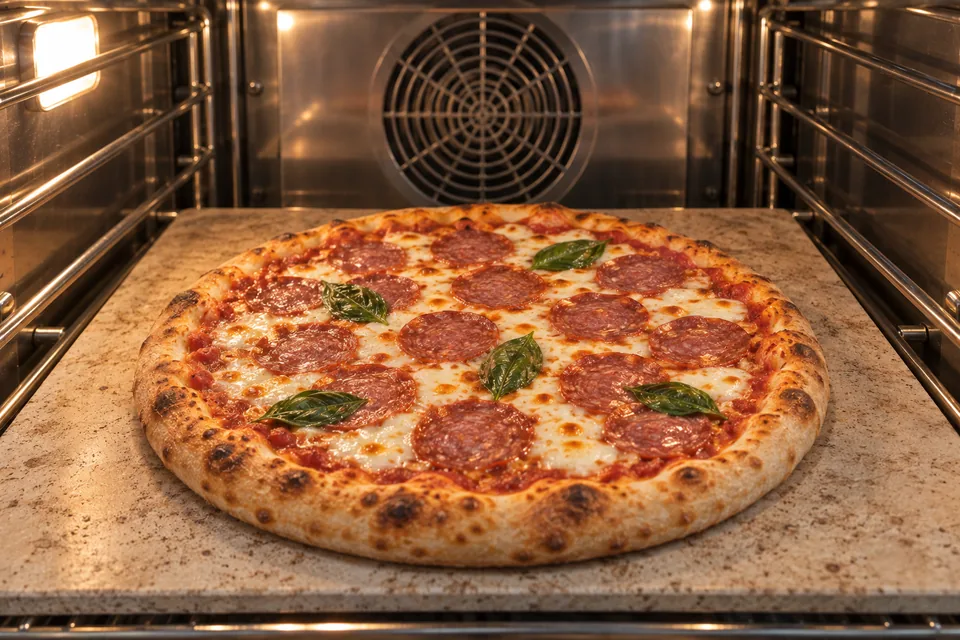
    A beef salami pizza with browned rim baking directly on a heated pizza stone.
    04 Bake + finishBake until the rim is browned, the topping is cooked and the underside is firm.
  5. 05 · Serve

    Immediately

    Use: Baked pizza

    Slice and serve with optional salt and chile flakes.

    Ready when: Cut on a wooden board; allow molten cheese to cool enough to eat.

    Finished beef salami pizza on a wooden board, ready to serve.
    05 ServeTransfer the baked pizza to a board, then slice and serve.

What to look for

StageLook and feelNeeds attention
Before launchPizza slides with a short peel shake; topping layer is light.A loaded pizza stuck to the peel.
FinishBottom browned and set; rim expanded; cheese, when used, fully melted.Judging solely by a timer or by the top while the base is raw.

Troubleshooting

If you seeLikely causeWhat to do nowNext time
Pizza sticks to peelDamp dough, too little dusting, or too much time after toppingGently lift the sticking area and dust underneath; test sliding again before launching.Prepare toppings first, work quickly, and test the bare dough then the topped pizza.
Top burns before base setsStone underheated or broiler used too earlyStop broiling and continue baking while watching the bottom.Heat the stone thoroughly; finish the top only after the base begins to set.

Recipe notes

  • Adjust the bake to the oven temperature: at 316°C, total baking may be only 4–5 minutes and broiling may be unnecessary. Do not apply a fixed 5-minute bake plus 2-minute broil at that temperature. Follow the stone and oven manufacturer’s limits; the 274°C sequence is the working default.
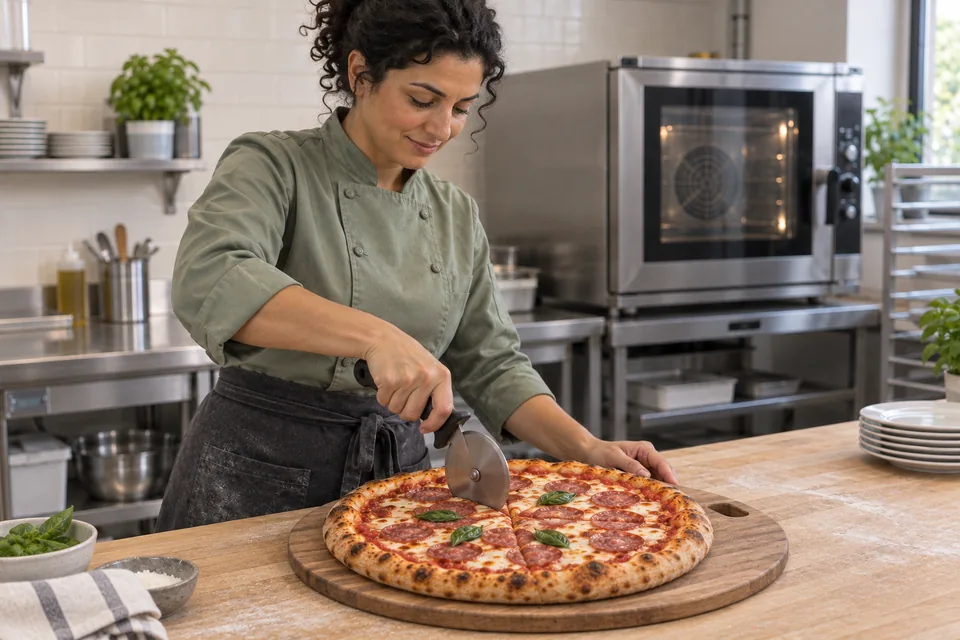
Show ingredient flow

Recipe

Beef Salami Pizza

Start with the prepared, chilled pizza dough and sauce listed below. A pizza paddle, also called a peel, helps slide the pizza onto the hot stone.

Prepare first: Same-day pizza dough · Smooth tomato sauce

How do I make it?

  1. Heat the oven and stone

    About 45 minutes total

    Put the pizza stone about 20 cm below the top grill and heat the oven to 274°C, or its lower maximum; once the oven is hot, heat the stone for 30 minutes more. If the stone and oven are both suitable for grilling, turn on the top grill for the last 3–5 minutes, then switch back to bake before adding the pizza.

    Chef heating an empty pizza stone in a stainless electric oven.
    Heat the stone thoroughly before loading the pizza.

    Ready when: Stone is thoroughly heated; use only equipment-rated settings.

  2. Stretch the cold dough

    A few minutes

    Flour the counter, the pizza paddle and both sides of the dough; press the middle while leaving a 2.5 cm rim. Lift the dough by its edge so its weight stretches it, then turn it gently over closed fists until about 30 cm across, repairing small tears. Place it on the paddle and check that it slides freely.

    Chef stretching raw pizza dough over closed fists, preserving a thicker rim.
    Stretch gently, keeping the centre thin and the rim intact.

    Ready when: Thin, even centre with a continuous airy rim; no sticking.

  3. Add the toppings

    Immediately before baking

    Spread sauce over the dough, then add the mozzarella, beef salami and basil evenly. Check again that the pizza slides on the paddle.

    Chef topping a raw beef salami pizza on a floured wooden peel.
    Use a modest, even layer of toppings, keeping the raised rim clear.

    Ready when: Even coverage, leaving about 2.5 cm of rim.

  4. Bake the pizza

    About 7–8 minutes at 274°C; longer at 260°C

    With the oven back on bake, slide the pizza onto the stone and bake for about 5 minutes. If the equipment allows, switch to the top grill for 2–3 minutes and watch constantly; otherwise keep baking until it looks done. Lift an edge to check that the bottom is cooked.

    A beef salami pizza with browned rim baking directly on a heated pizza stone.
    Bake until the rim is browned, the topping is cooked and the underside is firm.

    Ready when: Firm browned underside, coloured rim, toppings cooked; stop before burning.

  5. Cut and serve

    Immediately

    Cut the pizza into slices and offer the optional salt and chile flakes.

    Finished beef salami pizza on a wooden board, ready to serve.
    Transfer the baked pizza to a board, then slice and serve.

    Ready when: Cut on a wooden board; allow molten cheese to cool enough to eat.

What can go wrong, and how can I fix it?

What you noticeLikely causeWhat to do
Pizza sticks to peelDamp dough, too little dusting, or too much time after toppingGently lift the sticking area and dust underneath; test sliding again before launching. Prepare toppings first, work quickly, and test the bare dough then the topped pizza.
Top burns before base setsStone underheated or broiler used too earlyStop broiling and continue baking while watching the bottom. Heat the stone thoroughly; finish the top only after the base begins to set.
Useful recipe notes

Adjust the bake to the oven temperature: at 316°C, total baking may be only 4–5 minutes and broiling may be unnecessary. Do not apply a fixed 5-minute bake plus 2-minute broil at that temperature. Follow the stone and oven manufacturer’s limits; the 274°C sequence is the working default.
See the detailed method and ratios in , or follow ingredients through the .

Ingredient proportions & recipe details

Beef Salami Pizza at a glance

Makes
One 30 cm pizza
Heat
274°C bake; 260°C if oven maximum; optional broil
Baking time
About 5 min bake + 2–3 min broil per pizza; longer at 260°C

Golden beet and cooked duck pizza

Makes
One 30 cm pizza
Heat
274°C bake; 260°C if oven maximum; optional broil
Baking time
Pizza: about 5 min bake + 2–3 min broil; beet: about 30 min boiling

Boil the beet separately. Preheat stone about 45 min. Watch broiling continuously; use rated equipment, or keep baking. Allow longer at 260°C.

Stone pizza

Golden beet and cooked duck pizza

Golden beet and cooked duck pizza.

Prepare first · Same-day pizza dough

Method

  1. 01 · Heat stone

    About 45 minutes total

    Use: Pizza stone and oven

    Set stone about 20 cm below broiler. Preheat to 274°C (or the oven’s lower maximum), then keep heating the stone 30 minutes more. If both oven and stone permit it, use broil for the final 3–5 minutes, then return to bake before loading.

    Ready when: Stone is thoroughly heated; use only equipment-rated settings.

    Chef heating an empty pizza stone in a stainless electric oven.
    01 Heat stoneHeat the stone thoroughly before loading the pizza.
  2. 02 · Prepare beet

    About 30 minutes boiling + 5–10 minutes cooling

    Use: Beet, water

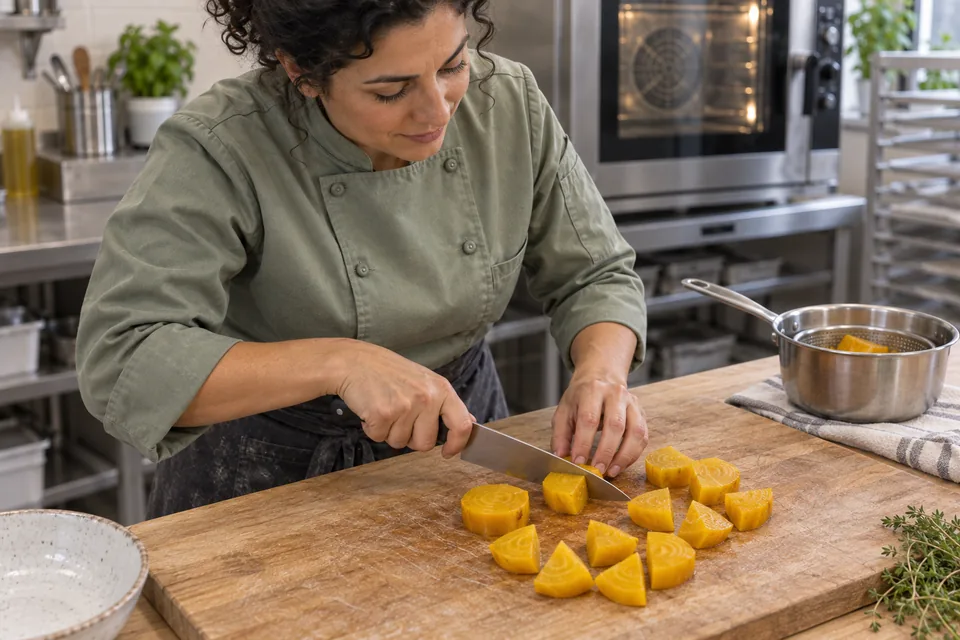
    Cover beet by 4 cm water; boil until just tender. Drain and cool enough to handle, trim, rub off skin, cut into 3 discs, then quarter each disc.

    Ready when: 12 bite-sized pieces, tender with slight knife resistance.

    A cooked golden beet cut into twelve bite-sized quarter-disc pieces.
    02 Prepare beetCut the cooked golden beet into small pieces that will heat evenly.
  3. 03 · Stretch cold dough

    A few minutes

    Use: Chilled dough, dusting flour

    Flour counter, peel and both faces of the dough. Press the centre while preserving a 2.5 cm rim. Lift at the rim, let gravity stretch, then rotate gently over closed fists to about 30 cm. Patch small tears. Lay on peel and test that it slides.

    Ready when: Thin, even centre with a continuous airy rim; no sticking.

    Chef stretching raw pizza dough over closed fists, preserving a thicker rim.
    03 Stretch cold doughStretch gently, keeping the centre thin and the rim intact.
  4. 04 · Top

    Immediately before baking

    Use: Listed topping ingredients

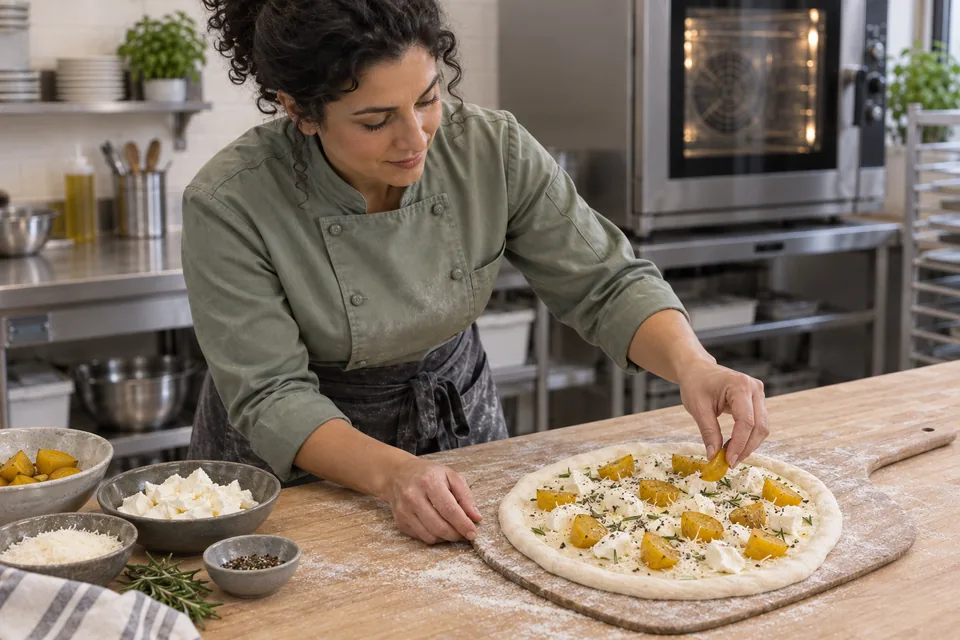
    Distribute cheeses, beet pieces and rosemary; grind pepper over the top. Test sliding again.

    Ready when: Even coverage, leaving about 2.5 cm of rim.

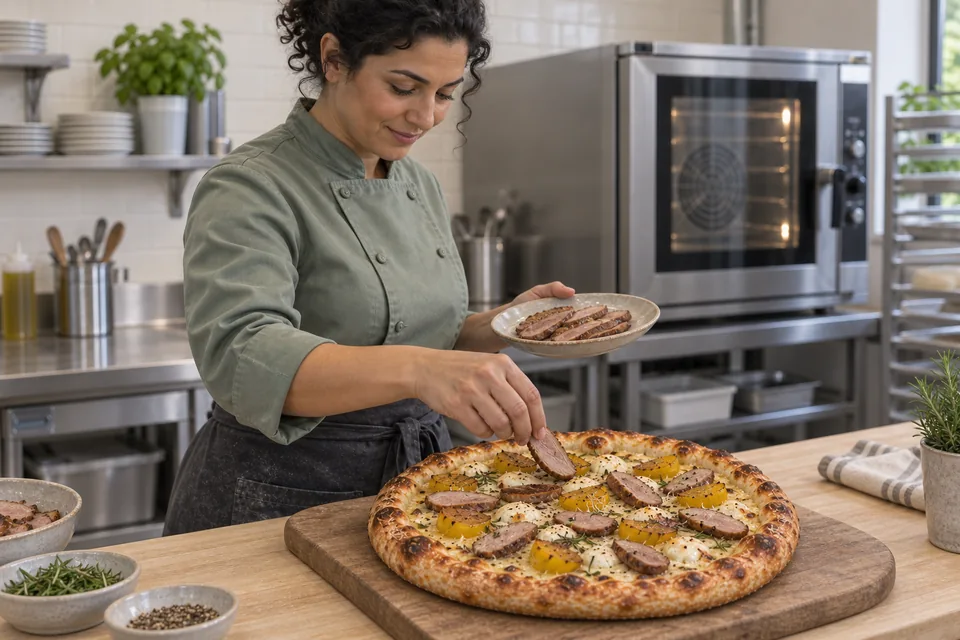
    Golden beet pieces and cheese on raw pizza dough; duck is reserved for after baking.
    04 TopUse a modest, even layer of toppings, keeping the raised rim clear.
  5. 05 · Bake + finish

    About 7–8 minutes at 274°C; longer at 260°C

    Use: Topped pizza

    Return oven to bake and slide pizza onto stone. Bake about 5 minutes, then, if allowed, broil 2–3 minutes while watching continuously. If broiling is unavailable, keep baking to the same visual endpoint. Lift to check the bottom.

    Ready when: Firm browned underside, coloured rim, toppings cooked; stop before burning.

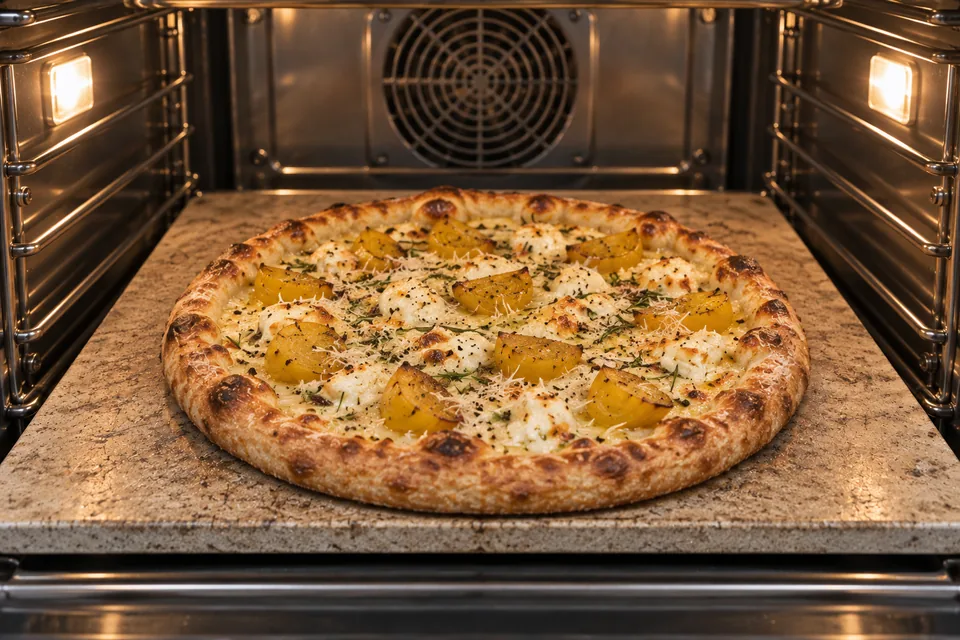
    Golden beet and cheese pizza baking on a stone, before the cooked duck is added.
    05 Bake + finishBake until the rim is browned, the topping is cooked and the underside is firm.
  6. 06 · Serve

    Immediately

    Use: Baked pizza

    Top baked pizza with the ready-to-eat cooked duck, slice and serve.

    Ready when: Cut on a wooden board; allow molten cheese to cool enough to eat.

    Finished beet duck pizza on a wooden board, ready to serve.
    06 ServeAdd thin slices of fully cooked duck to the hot baked beet pizza.

What to look for

StageLook and feelNeeds attention
Before launchPizza slides with a short peel shake; topping layer is light.A loaded pizza stuck to the peel.
FinishBottom browned and set; rim expanded; cheese, when used, fully melted.Judging solely by a timer or by the top while the base is raw.

Troubleshooting

If you seeLikely causeWhat to do nowNext time
Pizza sticks to peelDamp dough, too little dusting, or too much time after toppingGently lift the sticking area and dust underneath; test sliding again before launching.Prepare toppings first, work quickly, and test the bare dough then the topped pizza.
Top burns before base setsStone underheated or broiler used too earlyStop broiling and continue baking while watching the bottom.Heat the stone thoroughly; finish the top only after the base begins to set.

Recipe notes

  • Adjust the bake to the oven temperature: at 316°C, total baking may be only 4–5 minutes and broiling may be unnecessary. Do not apply a fixed 5-minute bake plus 2-minute broil at that temperature. Follow the stone and oven manufacturer’s limits; the 274°C sequence is the working default.
Show ingredient flow

Recipe

Golden beet and cooked duck pizza

Start with the prepared, chilled pizza dough and sauce listed below. A pizza paddle, also called a peel, helps slide the pizza onto the hot stone. Add the cooked duck after baking.

Prepare first: Same-day pizza dough

How do I make it?

  1. Heat the oven and stone

    About 45 minutes total

    Put the pizza stone about 20 cm below the top grill and heat the oven to 274°C, or its lower maximum; once the oven is hot, heat the stone for 30 minutes more. If the stone and oven are both suitable for grilling, turn on the top grill for the last 3–5 minutes, then switch back to bake before adding the pizza.

    Chef heating an empty pizza stone in a stainless electric oven.
    Heat the stone thoroughly before loading the pizza.

    Ready when: Stone is thoroughly heated; use only equipment-rated settings.

  2. Cook the beet

    About 30 minutes boiling + 5–10 minutes cooling

    Put the beet in a pan with enough water to cover it by 4 cm and boil until just tender. Drain, let it cool enough to handle, then trim it and rub off the skin; cut it into 3 discs and each disc into quarters.

    A cooked golden beet cut into twelve bite-sized quarter-disc pieces.
    Cut the cooked golden beet into small pieces that will heat evenly.

    Ready when: 12 bite-sized pieces, tender with slight knife resistance.

  3. Stretch the cold dough

    A few minutes

    Flour the counter, the pizza paddle and both sides of the dough; press the middle while leaving a 2.5 cm rim. Lift the dough by its edge so its weight stretches it, then turn it gently over closed fists until about 30 cm across, repairing small tears. Place it on the paddle and check that it slides freely.

    Chef stretching raw pizza dough over closed fists, preserving a thicker rim.
    Stretch gently, keeping the centre thin and the rim intact.

    Ready when: Thin, even centre with a continuous airy rim; no sticking.

  4. Add cheese and beet

    Immediately before baking

    Spread the cheeses, beet pieces and rosemary evenly over the dough, then grind pepper over them. Check again that the pizza slides on the paddle.

    Golden beet pieces and cheese on raw pizza dough; duck is reserved for after baking.
    Use a modest, even layer of toppings, keeping the raised rim clear.

    Ready when: Even coverage, leaving about 2.5 cm of rim.

  5. Bake the pizza

    About 7–8 minutes at 274°C; longer at 260°C

    With the oven back on bake, slide the pizza onto the stone and bake for about 5 minutes. If the equipment allows, switch to the top grill for 2–3 minutes and watch constantly; otherwise keep baking until it looks done. Lift an edge to check that the bottom is cooked.

    Golden beet and cheese pizza baking on a stone, before the cooked duck is added.
    Bake until the rim is browned, the topping is cooked and the underside is firm.

    Ready when: Firm browned underside, coloured rim, toppings cooked; stop before burning.

  6. Add duck and serve

    Immediately

    Put the ready-to-eat cooked duck on the baked pizza, then cut it into slices and serve.

    Finished beet duck pizza on a wooden board, ready to serve.
    Add thin slices of fully cooked duck to the hot baked beet pizza.

    Ready when: Cut on a wooden board; allow molten cheese to cool enough to eat.

What can go wrong, and how can I fix it?

What you noticeLikely causeWhat to do
Pizza sticks to peelDamp dough, too little dusting, or too much time after toppingGently lift the sticking area and dust underneath; test sliding again before launching. Prepare toppings first, work quickly, and test the bare dough then the topped pizza.
Top burns before base setsStone underheated or broiler used too earlyStop broiling and continue baking while watching the bottom. Heat the stone thoroughly; finish the top only after the base begins to set.
Useful recipe notes

Adjust the bake to the oven temperature: at 316°C, total baking may be only 4–5 minutes and broiling may be unnecessary. Do not apply a fixed 5-minute bake plus 2-minute broil at that temperature. Follow the stone and oven manufacturer’s limits; the 274°C sequence is the working default.
See the detailed method and ratios in , or follow ingredients through the .

Ingredient proportions & recipe details

Golden beet and cooked duck pizza at a glance

Makes
One 30 cm pizza
Heat
274°C bake; 260°C if oven maximum; optional broil
Baking time
Pizza: about 5 min bake + 2–3 min broil; beet: about 30 min boiling

Sweet Potato and Pear Pizza

Makes
One 30 cm pizza
Heat
205°C sweet potato; 274°C pizza (260°C if maximum); optional broil
Baking time
Sweet potato: 12–15 min; pizza: about 5 min bake + 2–3 min broil

Roast potato first, then raise the oven setting and heat the stone. Watch broiling continuously; use rated equipment, or keep baking. Allow longer at 260°C.

Stone pizza

Sweet Potato and Pear Pizza

Sweet Potato and Pear Pizza.

Prepare first · Same-day pizza dough

Method

  1. 01 · Pre-roast sweet potato

    12–15 minutes after preheating

    Use: Sweet potato, first 14.8 mL oil, pinch salt

    Place stone in oven and preheat to 205°C. Toss potato with its oil and salt, spread in an ovenproof skillet and roast until cooked but still firm. Remove skillet; now raise oven temperature and follow the stone-heating step.

    Ready when: Tender slices that retain their shape.

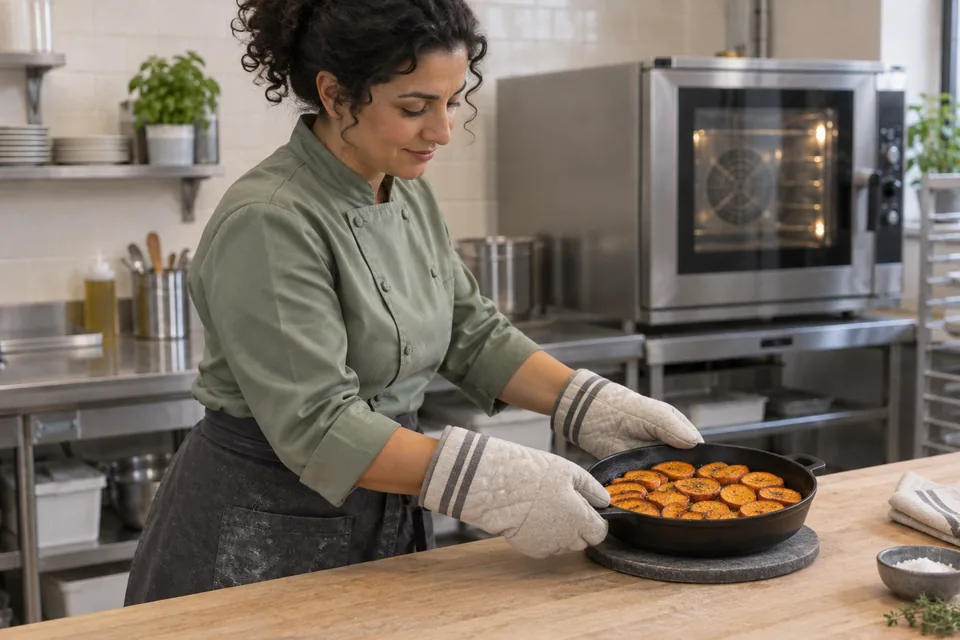
    Thin sweet potato rounds roasted until tender but still holding their shape.
    01 Pre-roast sweet potatoRoast thin sweet potato slices until tender but still holding their shape.
  2. 02 · Heat stone

    About 45 minutes total

    Use: Pizza stone and oven

    Set stone about 20 cm below broiler. Preheat to 274°C (or the oven’s lower maximum), then keep heating the stone 30 minutes more. If both oven and stone permit it, use broil for the final 3–5 minutes, then return to bake before loading.

    Ready when: Stone is thoroughly heated; use only equipment-rated settings.

    Chef heating an empty pizza stone in a stainless electric oven.
    02 Heat stoneHeat the stone thoroughly before loading the pizza.
  3. 03 · Stretch cold dough

    A few minutes

    Use: Chilled dough, dusting flour

    Flour counter, peel and both faces of the dough. Press the centre while preserving a 2.5 cm rim. Lift at the rim, let gravity stretch, then rotate gently over closed fists to about 30 cm. Patch small tears. Lay on peel and test that it slides.

    Ready when: Thin, even centre with a continuous airy rim; no sticking.

    Chef stretching raw pizza dough over closed fists, preserving a thicker rim.
    03 Stretch cold doughStretch gently, keeping the centre thin and the rim intact.
  4. 04 · Top

    Immediately before baking

    Use: Listed topping ingredients

    Spread the second 14.8 mL portion of oil over dough; arrange sweet potato and pear. Add cheese, cilantro, ginger, optional chopped chiles and black pepper. Test sliding again.

    Ready when: Even coverage, leaving about 2.5 cm of rim.

    Chef topping a raw sweet potato pear pizza on a floured wooden peel.
    04 TopUse a modest, even layer of toppings, keeping the raised rim clear.
  5. 05 · Bake + finish

    About 7–8 minutes at 274°C; longer at 260°C

    Use: Topped pizza

    Return oven to bake and slide pizza onto stone. Bake about 5 minutes, then, if allowed, broil 2–3 minutes while watching continuously. If broiling is unavailable, keep baking to the same visual endpoint. Lift to check the bottom.

    Ready when: Firm browned underside, coloured rim, toppings cooked; stop before burning.

    A sweet potato pear pizza with browned rim baking directly on a heated pizza stone.
    05 Bake + finishBake until the rim is browned, the topping is cooked and the underside is firm.
  6. 06 · Serve

    Immediately

    Use: Baked pizza

    Slice and serve.

    Ready when: Cut on a wooden board; allow molten cheese to cool enough to eat.

    Finished sweet potato pear pizza on a wooden board, ready to serve.
    06 ServeTransfer the baked pizza to a board, then slice and serve.

What to look for

StageLook and feelNeeds attention
Before launchPizza slides with a short peel shake; topping layer is light.A loaded pizza stuck to the peel.
FinishBottom browned and set; rim expanded; cheese, when used, fully melted.Judging solely by a timer or by the top while the base is raw.

Troubleshooting

If you seeLikely causeWhat to do nowNext time
Pizza sticks to peelDamp dough, too little dusting, or too much time after toppingGently lift the sticking area and dust underneath; test sliding again before launching.Prepare toppings first, work quickly, and test the bare dough then the topped pizza.
Top burns before base setsStone underheated or broiler used too earlyStop broiling and continue baking while watching the bottom.Heat the stone thoroughly; finish the top only after the base begins to set.

Recipe notes

  • Adjust the bake to the oven temperature: at 316°C, total baking may be only 4–5 minutes and broiling may be unnecessary. Do not apply a fixed 5-minute bake plus 2-minute broil at that temperature. Follow the stone and oven manufacturer’s limits; the 274°C sequence is the working default.
Show ingredient flow

Recipe

Sweet Potato and Pear Pizza

Start with the prepared, chilled pizza dough and sauce listed below. A pizza paddle, also called a peel, helps slide the pizza onto the hot stone.

Prepare first: Same-day pizza dough

How do I make it?

  1. Roast the sweet potato

    12–15 minutes after preheating

    Put the stone in the oven and heat to 205°C. Toss the sweet potato with the first 14.8 mL oil and a pinch of salt, spread it in an ovenproof skillet and roast until cooked but still firm. Take out the skillet, then raise the oven temperature for the next step.

    Thin sweet potato rounds roasted until tender but still holding their shape.
    Roast thin sweet potato slices until tender but still holding their shape.

    Ready when: Tender slices that retain their shape.

  2. Heat the oven and stone

    About 45 minutes total

    Put the pizza stone about 20 cm below the top grill and heat the oven to 274°C, or its lower maximum; once the oven is hot, heat the stone for 30 minutes more. If the stone and oven are both suitable for grilling, turn on the top grill for the last 3–5 minutes, then switch back to bake before adding the pizza.

    Chef heating an empty pizza stone in a stainless electric oven.
    Heat the stone thoroughly before loading the pizza.

    Ready when: Stone is thoroughly heated; use only equipment-rated settings.

  3. Stretch the cold dough

    A few minutes

    Flour the counter, the pizza paddle and both sides of the dough; press the middle while leaving a 2.5 cm rim. Lift the dough by its edge so its weight stretches it, then turn it gently over closed fists until about 30 cm across, repairing small tears. Place it on the paddle and check that it slides freely.

    Chef stretching raw pizza dough over closed fists, preserving a thicker rim.
    Stretch gently, keeping the centre thin and the rim intact.

    Ready when: Thin, even centre with a continuous airy rim; no sticking.

  4. Add the toppings

    Immediately before baking

    Spread the second 14.8 mL oil over the dough, then arrange the sweet potato and pear on top. Add cheese, cilantro, ginger, any chopped chiles you are using and black pepper, then check that the pizza slides on the paddle.

    Chef topping a raw sweet potato pear pizza on a floured wooden peel.
    Use a modest, even layer of toppings, keeping the raised rim clear.

    Ready when: Even coverage, leaving about 2.5 cm of rim.

  5. Bake the pizza

    About 7–8 minutes at 274°C; longer at 260°C

    With the oven back on bake, slide the pizza onto the stone and bake for about 5 minutes. If the equipment allows, switch to the top grill for 2–3 minutes and watch constantly; otherwise keep baking until it looks done. Lift an edge to check that the bottom is cooked.

    A sweet potato pear pizza with browned rim baking directly on a heated pizza stone.
    Bake until the rim is browned, the topping is cooked and the underside is firm.

    Ready when: Firm browned underside, coloured rim, toppings cooked; stop before burning.

  6. Cut and serve

    Immediately

    Cut the pizza into slices and bring it to the table.

    Finished sweet potato pear pizza on a wooden board, ready to serve.
    Transfer the baked pizza to a board, then slice and serve.

    Ready when: Cut on a wooden board; allow molten cheese to cool enough to eat.

What can go wrong, and how can I fix it?

What you noticeLikely causeWhat to do
Pizza sticks to peelDamp dough, too little dusting, or too much time after toppingGently lift the sticking area and dust underneath; test sliding again before launching. Prepare toppings first, work quickly, and test the bare dough then the topped pizza.
Top burns before base setsStone underheated or broiler used too earlyStop broiling and continue baking while watching the bottom. Heat the stone thoroughly; finish the top only after the base begins to set.
Useful recipe notes

Adjust the bake to the oven temperature: at 316°C, total baking may be only 4–5 minutes and broiling may be unnecessary. Do not apply a fixed 5-minute bake plus 2-minute broil at that temperature. Follow the stone and oven manufacturer’s limits; the 274°C sequence is the working default.
See the detailed method and ratios in , or follow ingredients through the .

Ingredient proportions & recipe details

Sweet Potato and Pear Pizza at a glance

Makes
One 30 cm pizza
Heat
205°C sweet potato; 274°C pizza (260°C if maximum); optional broil
Baking time
Sweet potato: 12–15 min; pizza: about 5 min bake + 2–3 min broil