Pizza dough
Same-day pizza dough
Morning mixing and evening pizza.
Method
01 · Hydrate yeast + autolyse
20–30 minutesUse: Flour, water, yeast
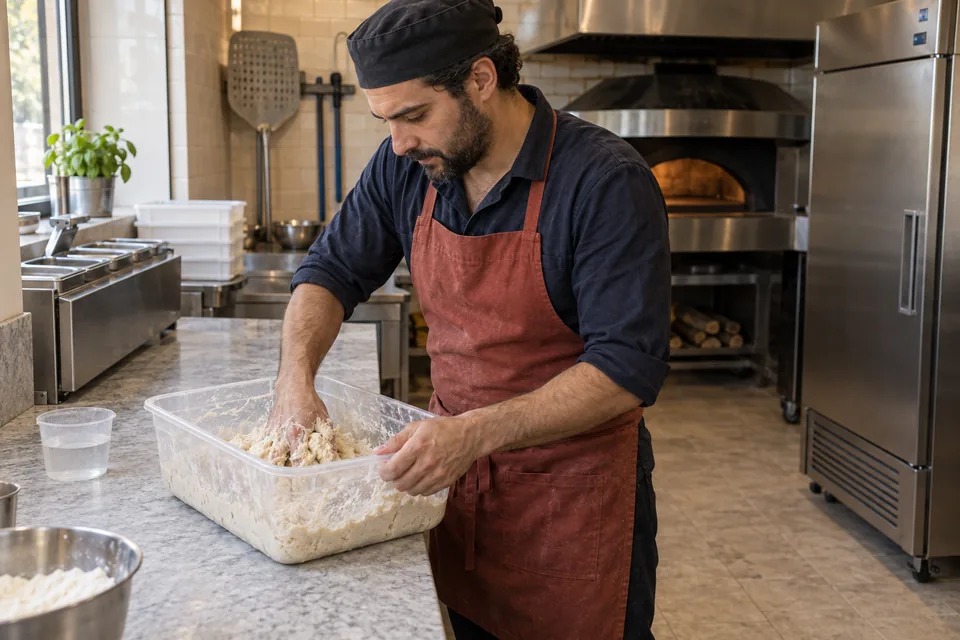
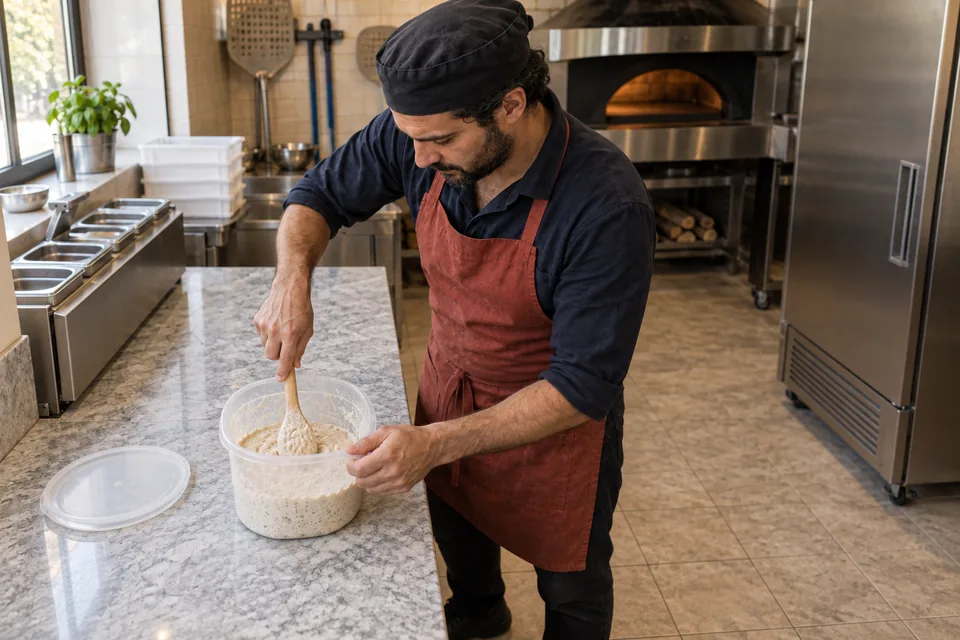
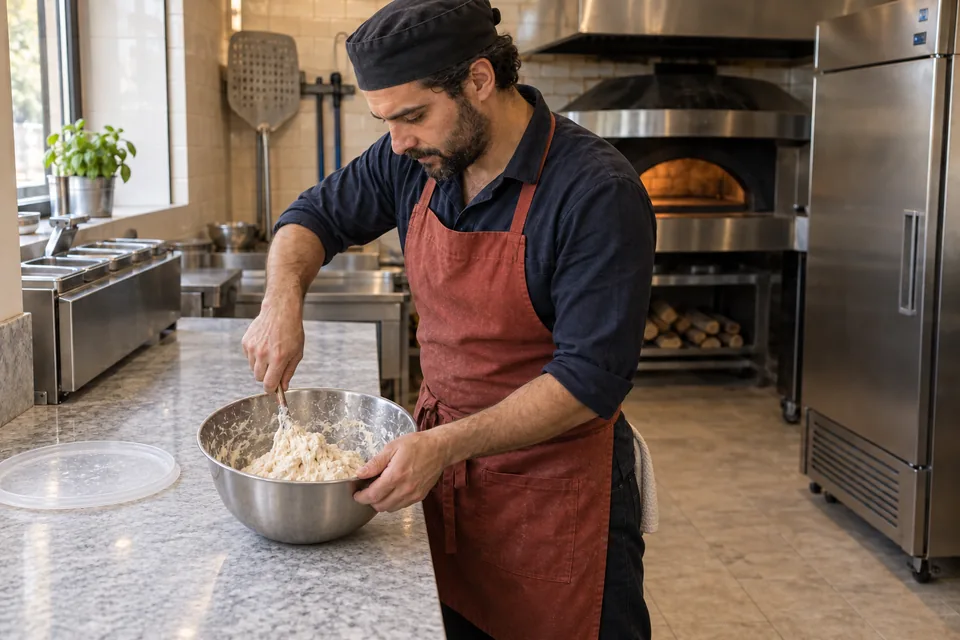
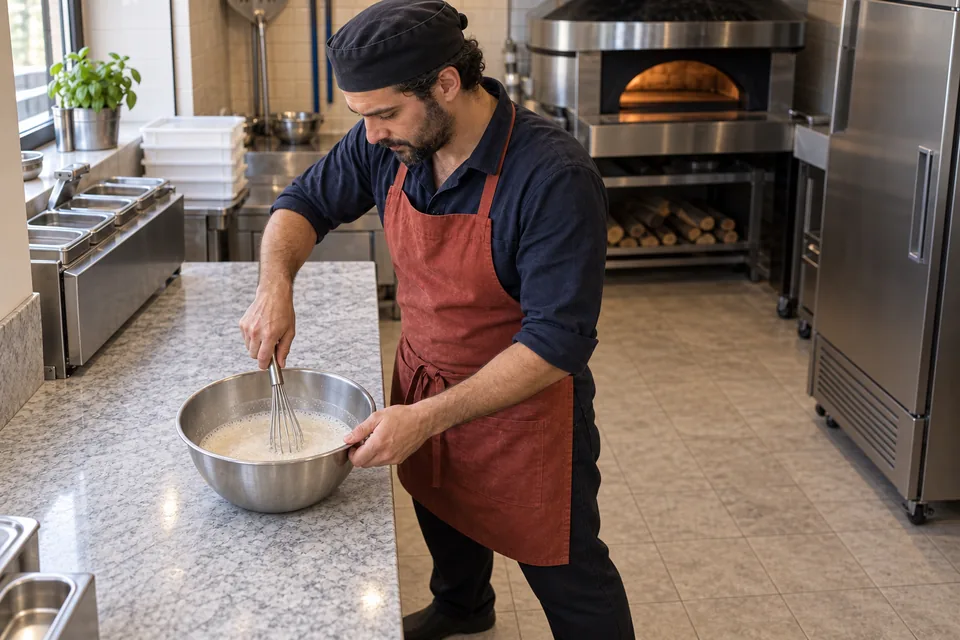
Stir yeast into the reserved measured water. Mix flour with remaining water until no dry flour remains; cover.Ready when: Rough, fully moistened dough.
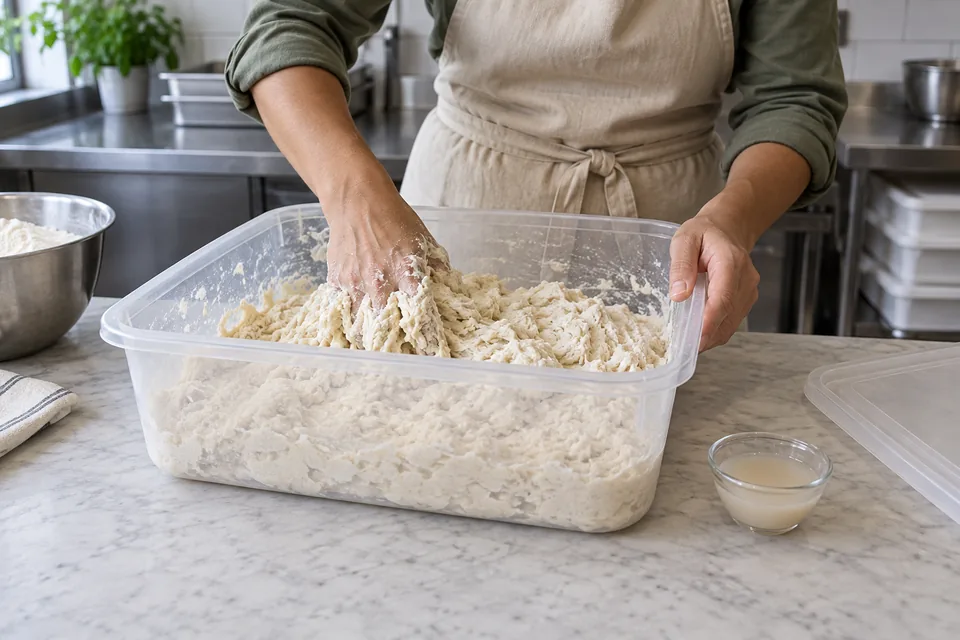
01 Rest the flour and waterMix the flour with the main portion of water; keep the yeast water separate for the next step. 02 · Final mix
Until fully combinedUse: Autolysed dough, salt, yeast water
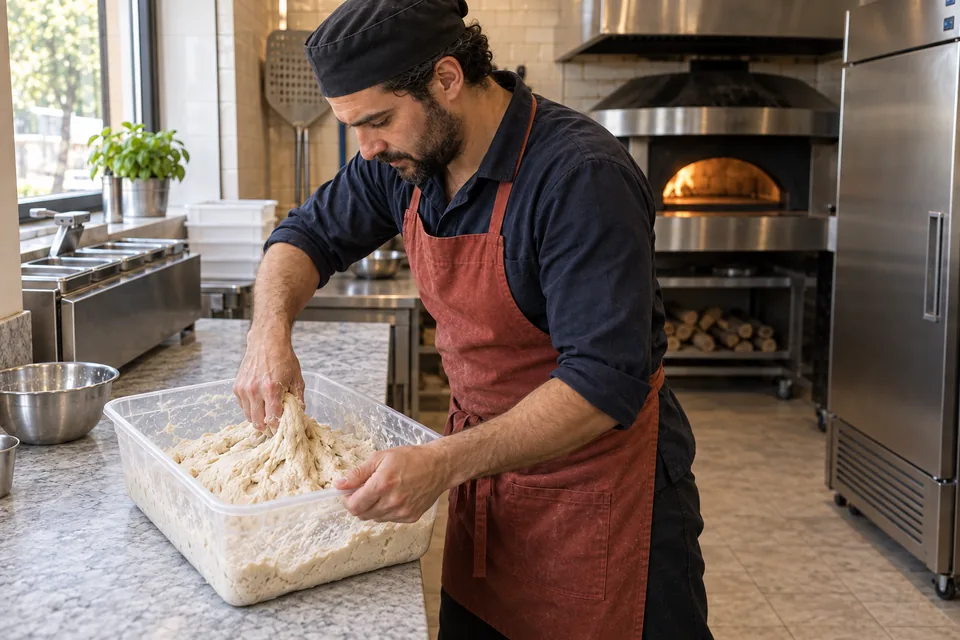
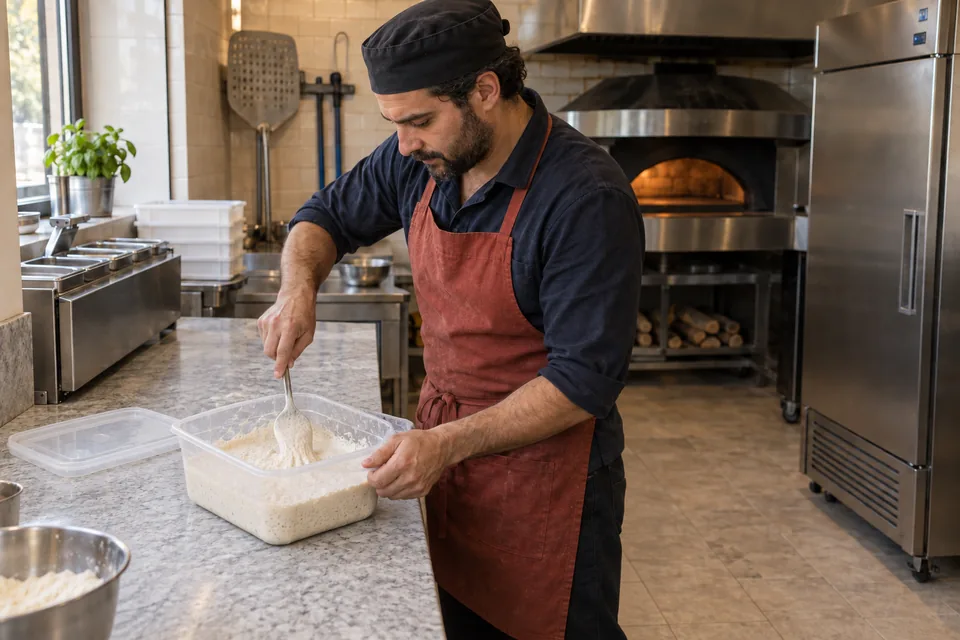
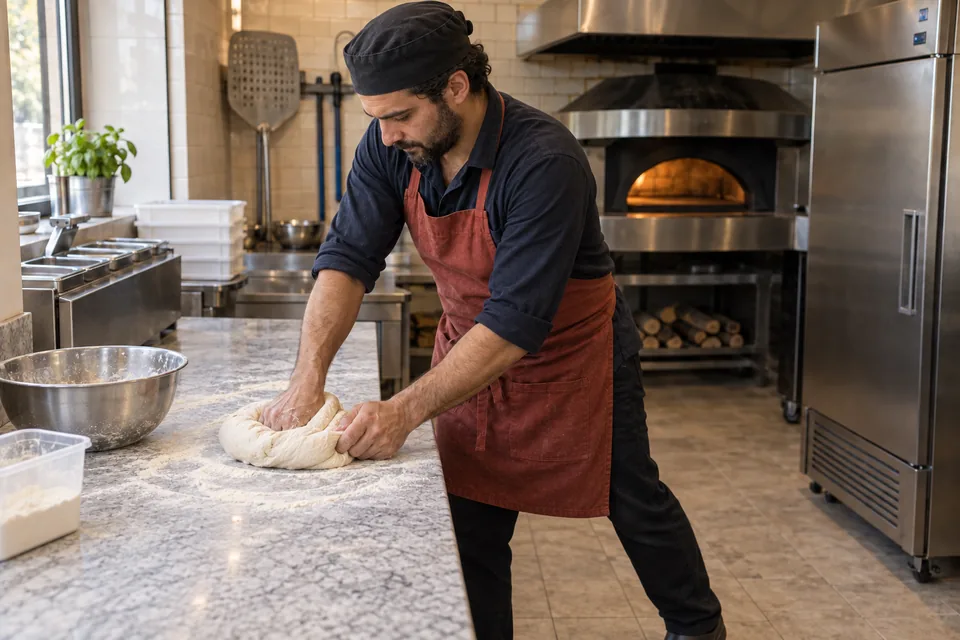
Scatter salt, add all yeast water, and fold the dough over them. Pinch across the dough with thumb and forefinger, then fold repeatedly until uniform. Wet your hand sparingly.Ready when: Final dough 25–26°C; no separate salty or yeast streaks.
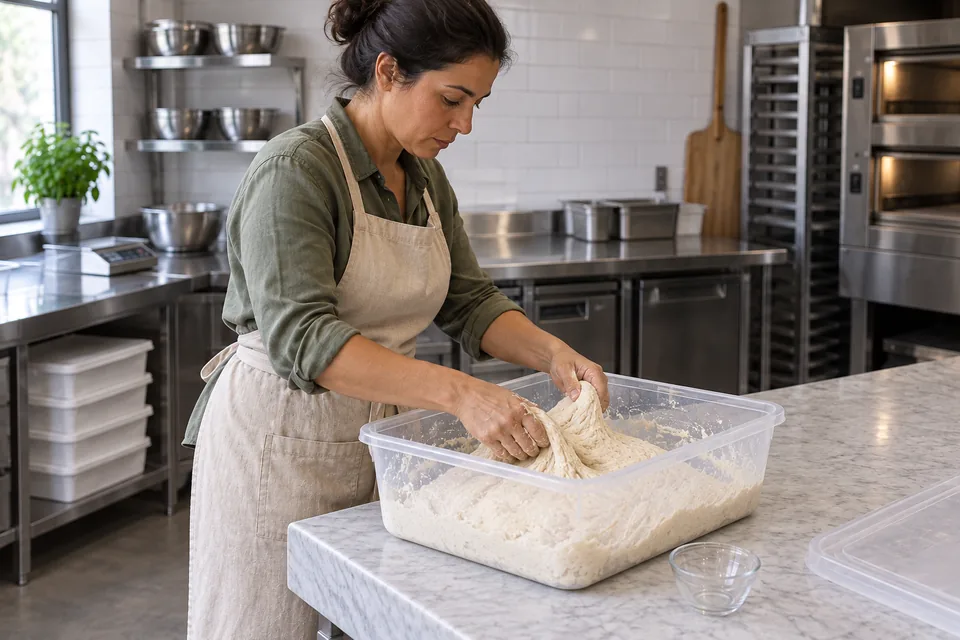
02 Mix in the salt and yeastPinch and fold until the salt and yeast water are mixed through. 03 · Fold + bulk
about 6 hours from mixingUse: Mixed dough
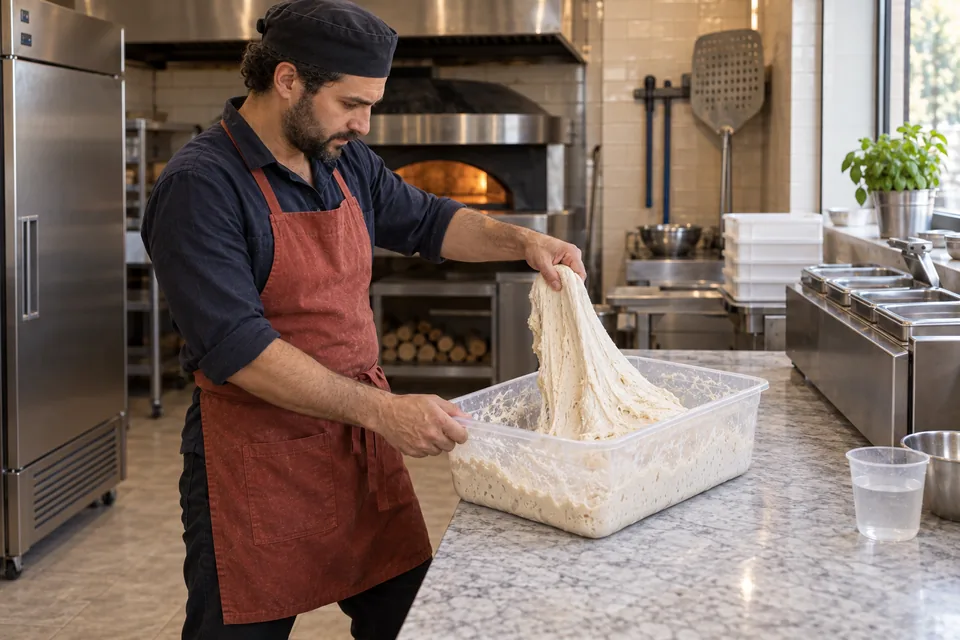
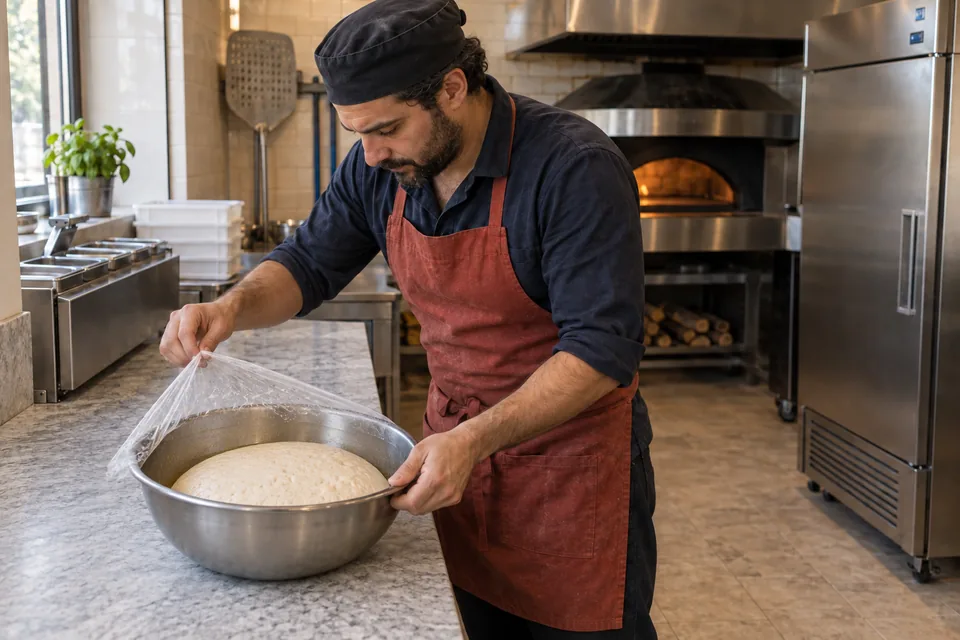
With a wet hand, lift one side until it resists and fold across the dough; repeat around all four sides. Stop before tearing. Cover again. Apply 1 fold at 30–60 minutes. After the final fold, lightly oil the dough and tub. Let rise covered.Ready when: about doubled.
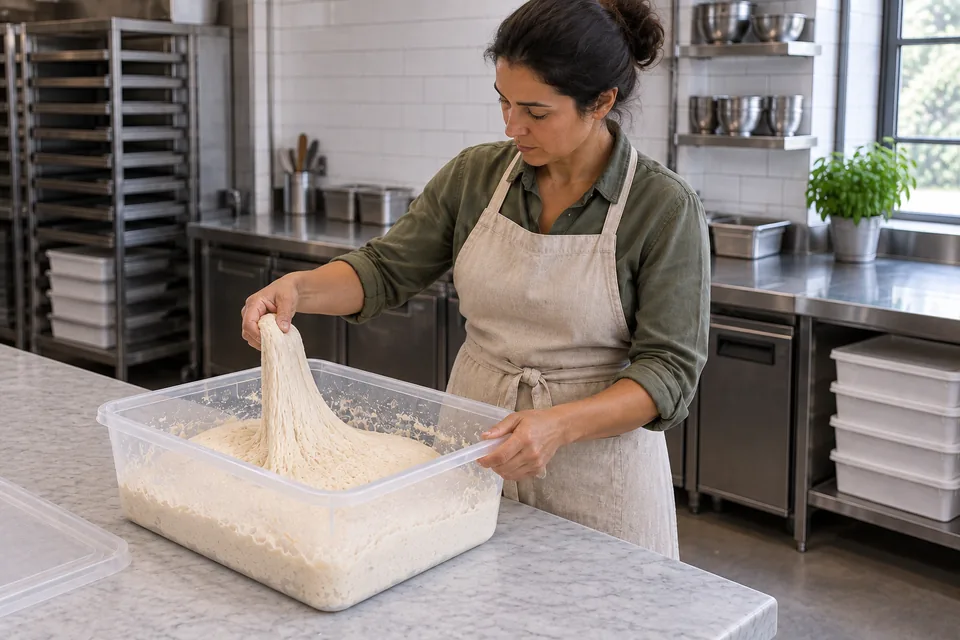
03 Fold and let riseLift an edge gently, fold it across, then cover the dough again. 04 · Divide + round
About 15 minutesUse: Fermented dough
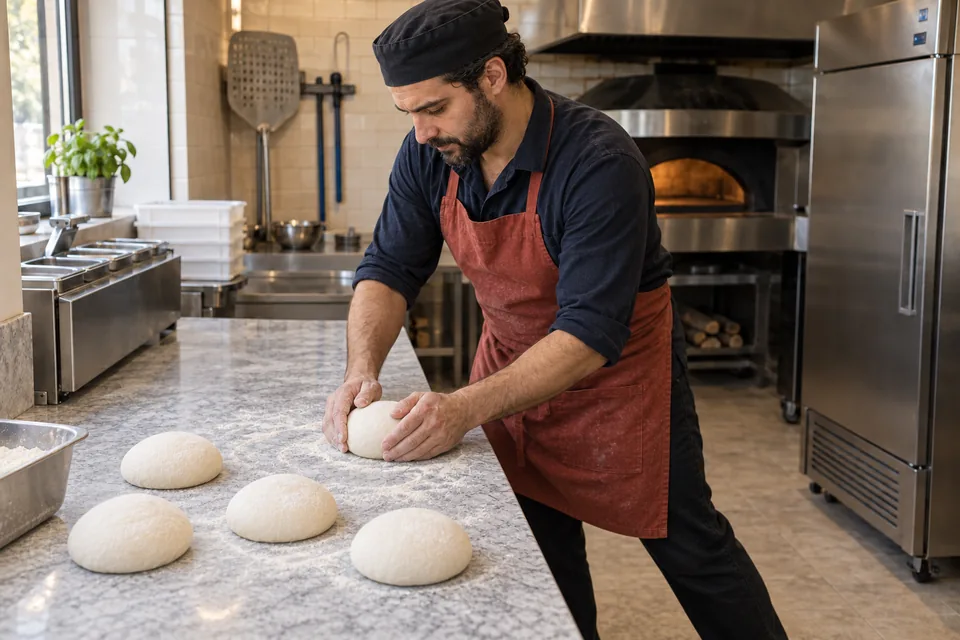
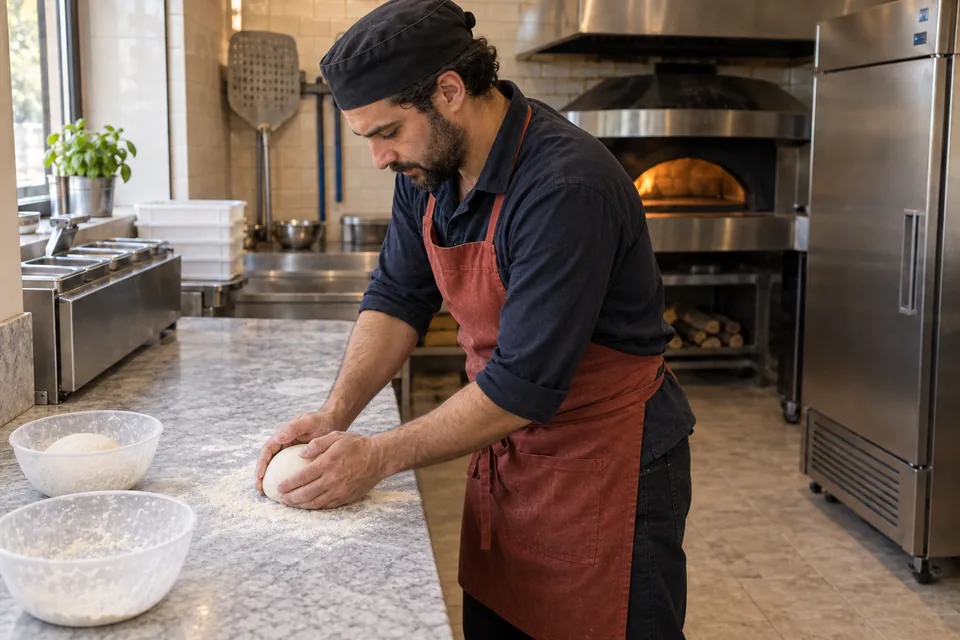
Gently ease onto a floured counter and divide equally. Fold each piece’s edges into its centre; turn seam down, cup and drag on a flour-free patch, rotating 2–3 times, to make a medium-tight ball. Preserve internal gas.Ready when: Five balls of about 344.4 g; tensioned but not squeezed flat.
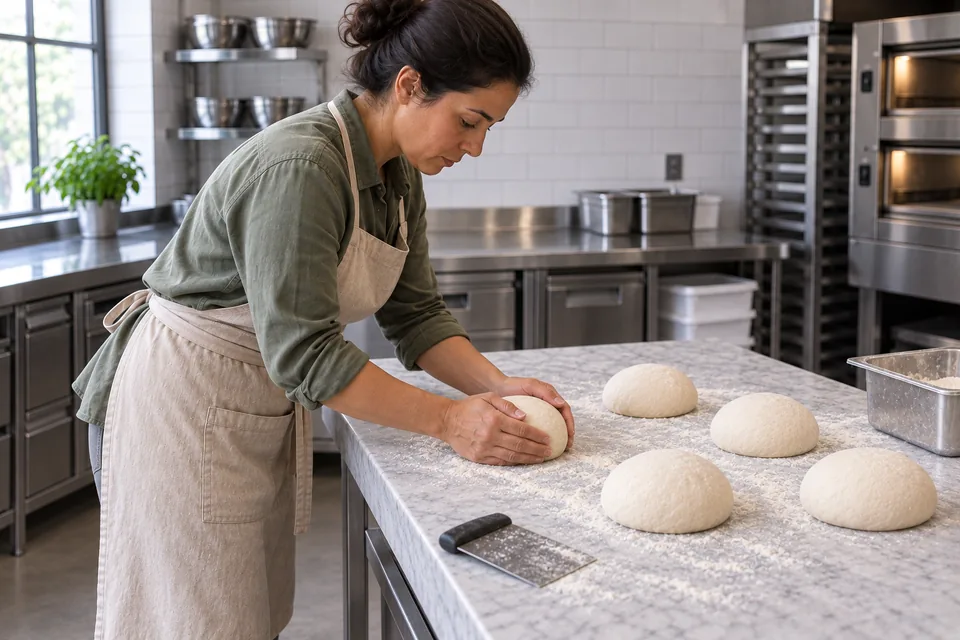
04 Shape five dough ballsCup and draw each portion gently to make a smooth ball without squeezing out the air. 05 · Relax + chill
At least 1½ hoursUse: Dough balls
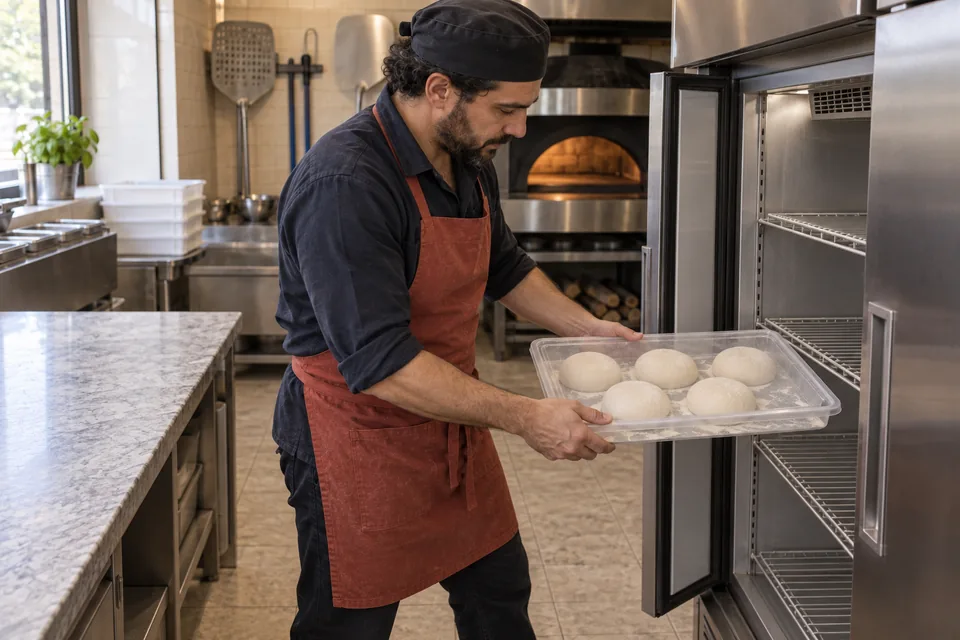
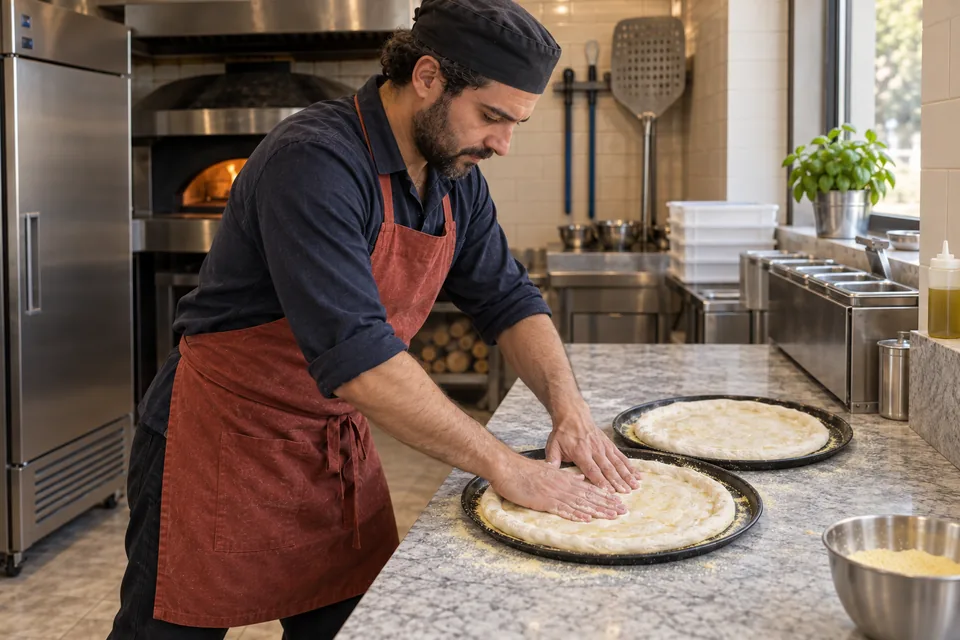
Space on a lightly floured tray; lightly oil or flour tops and cover. Rest covered 60 minutes at room temperature, then refrigerate at least 30 minutes.Ready when: Relaxed, cold balls ready to stretch. Refrigerate unused dough up to 2 days.
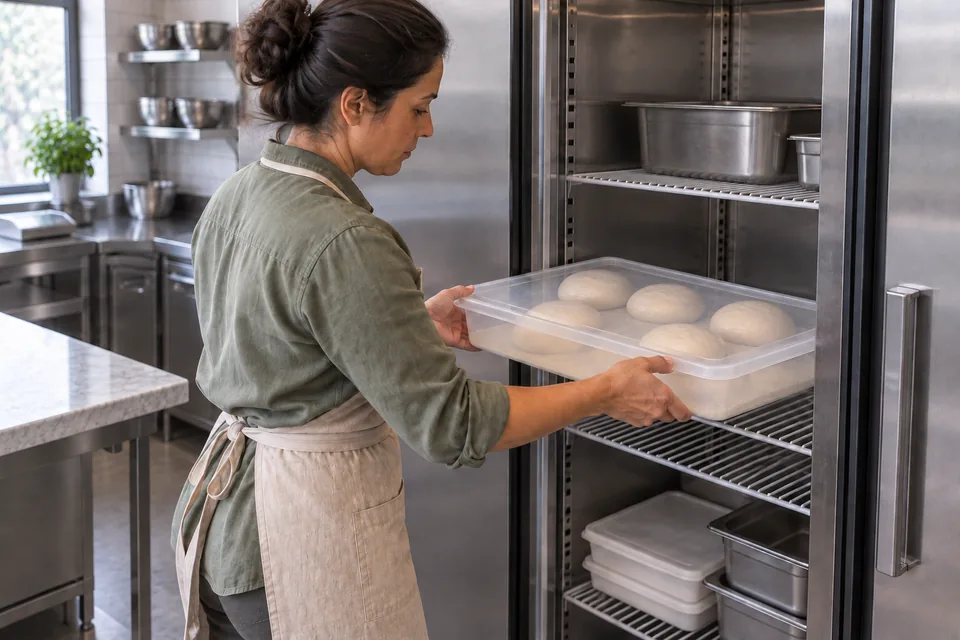
05 Cover, rest and chillKeep the five balls covered as they rest, then refrigerate until ready to stretch.
What to look for
| Stage | Look and feel | Needs attention |
|---|---|---|
| End of bulk | about doubled; gas is visible and dough feels aerated. | Dividing only because the clock elapsed. |
| After chilling | Soft and extensible yet able to keep a skin. | A wet, collapsing mass or a dry uncovered crust. |
Troubleshooting
| If you see | Likely cause | What to do now | Next time |
|---|---|---|---|
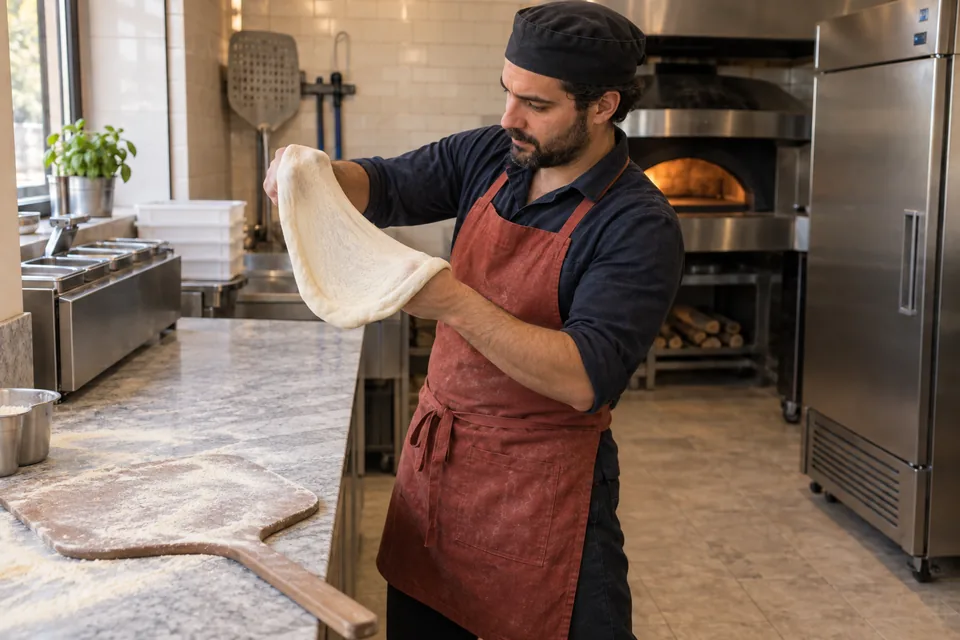
| Dough tears while stretching | It is too warm, under-relaxed, or stretched too thin | Patch a small tear; rest a resisting ball briefly, or chill a soft one; stretch over fists without tossing. | Complete folds, refrigerate before shaping, and keep toppings modest. |
| Bulk rise is slower than the schedule | Cool dough or weak leavening | Wait for the stated volume and bubbles; use a moderately warmer spot. | Measure dough temperature and verify active yeast or a reliably rising levain. |
Recipe notes
- Adjust water temperature for the flour and room to reach the stated final dough temperature. Divide the whole batch equally; portion sizes are approximate. Use 200 g for a thin 23 cm skillet pizza and about 340–350 g for a thick skillet pizza or a 30 cm stone pizza. Finish with a pizza or focaccia recipe.