Nepedia

Pepper, onion and basil loaves

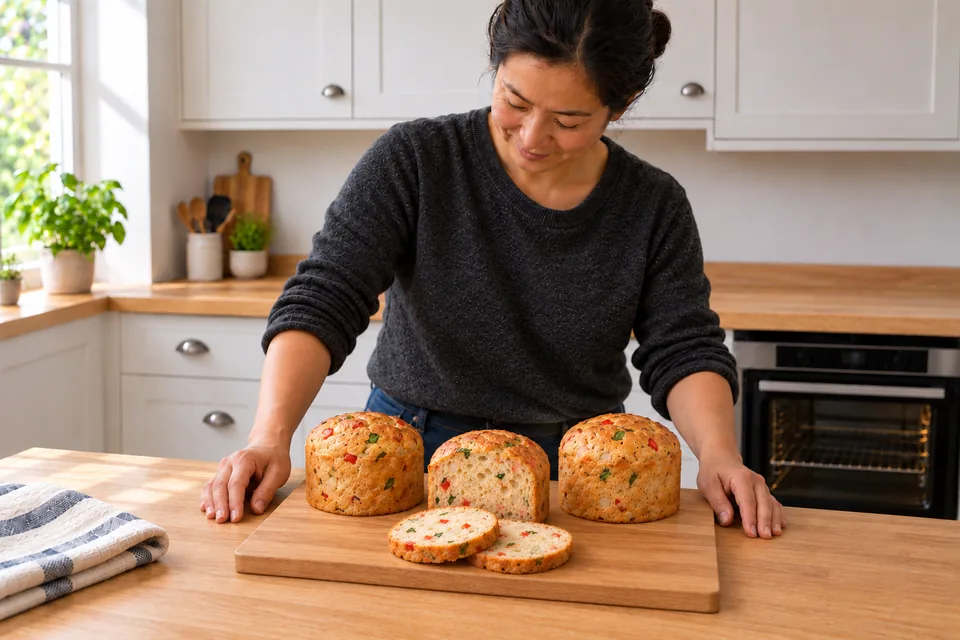
Three small round loaves with cooked red pepper, onion and fresh basil. Cool the vegetables before folding them into the developed butter dough.

Two whole golden cylindrical vegetable loaves stand behind a third cut loaf and two matching slices showing red pepper, onion and basil through the crumb.
Makes
3 small loaves, about 18 slices total
Heat
200°C conventional
Baking time
35–45 min
Cuisine / style
International

200°C conventional; three food-safe moulds on one tray.

Explore variations · 16 →Jump to ingredients & method ↓
View

Pepper, onion and basil loaves

Makes
3 small loaves, about 18 slices total
Heat
200°C conventional
Baking time
35–45 min
Cuisine / style
International

200°C conventional; three food-safe moulds on one tray.

International · White bread

Pepper, onion and basil loaves

Three small round loaves with cooked red pepper, onion and fresh basil. Cool the vegetables before folding them into the developed butter dough.

Method

  1. 01 · Mix and knead the butter-enriched dough

    15–20 min

    Use: Strong white bread flour; Water; Fine salt; Instant dried yeast; Unsalted butter

    Mix the flour, water, salt and yeast until evenly moistened. Work in the softened butter and knead for 8–10 minutes by hand or with a dough hook at the machine’s recommended speed.

    Ready when: The dough becomes smooth and elastic, with all butter incorporated.
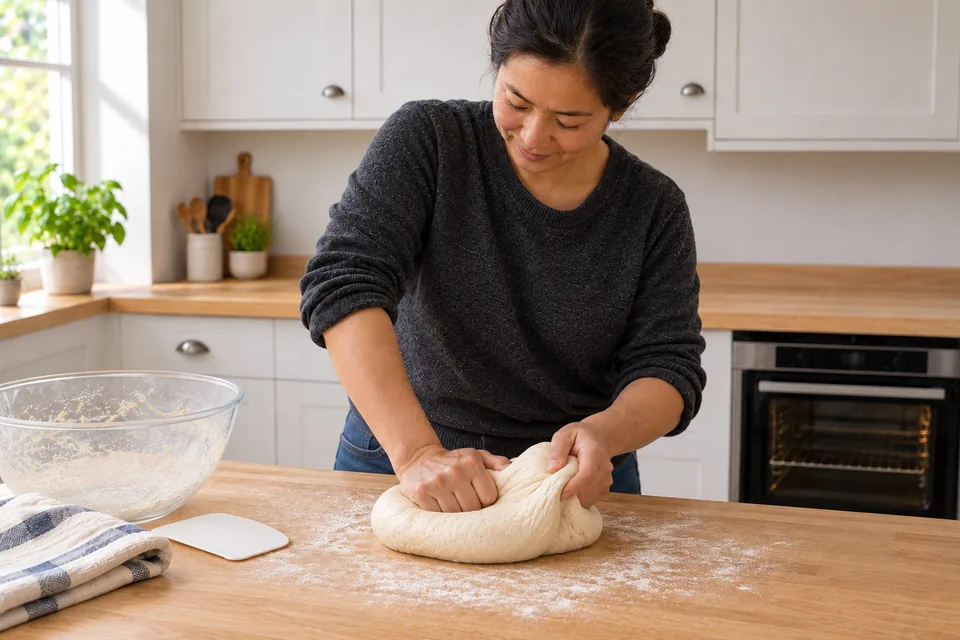
    The cook kneads one smooth pale dough on the oak counter, with no vegetables or herbs added yet.
    01 Mix KneadKnead until the butter dough is smooth and elastic.
  2. 02 · Let the dough rise while preparing the vegetables

    60–90 min

    Use:

    Cover and leave at 22–24°C for 60–90 minutes. Prepare and cool the vegetables in the next step during this rise.

    Ready when: The dough is aerated and roughly doubled.
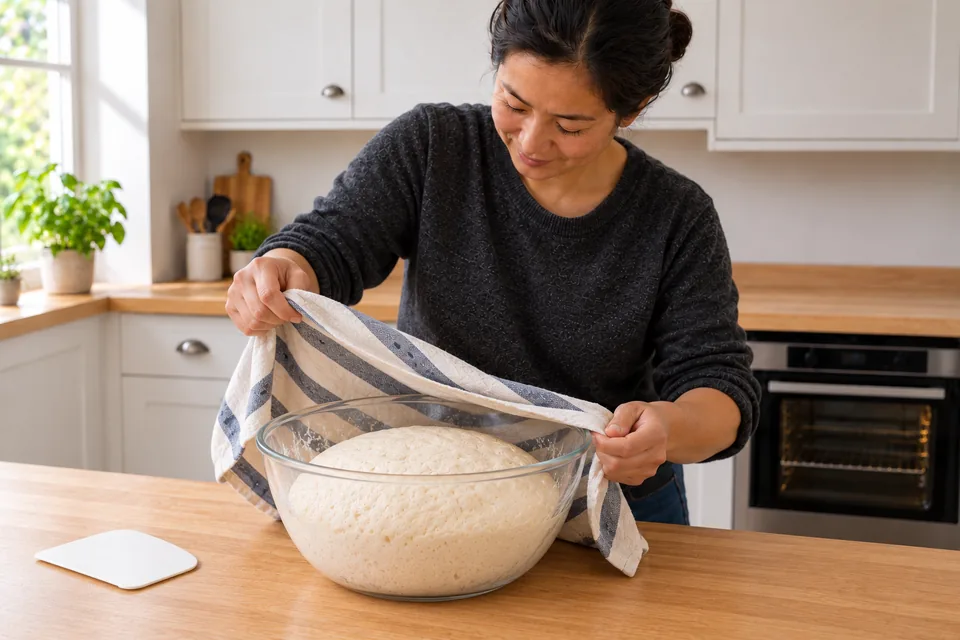
    The cook lifts the striped cloth from an aerated mound of plain dough in a clear bowl.
    02 Bulk RiseCover and let the plain dough rise until aerated and roughly doubled.
  3. 03 · Cook and cool vegetables; prepare basil separately

    40–55 min

    Use: Peeled onion; Red pepper; Olive oil for the vegetables; Fresh basil leaves

    Heat the 15 g olive oil in a wide frying pan over medium heat. Add the chopped onion and pepper and cook for 12–18 minutes, stirring often, until tender and no free liquid remains. Spread in a shallow dish and cool completely for 20–30 minutes. Wash, dry and chop the basil while they cool.

    Ready when: The vegetables are tender and dry on the surface, with no pooled liquid; they are cool before touching the dough.
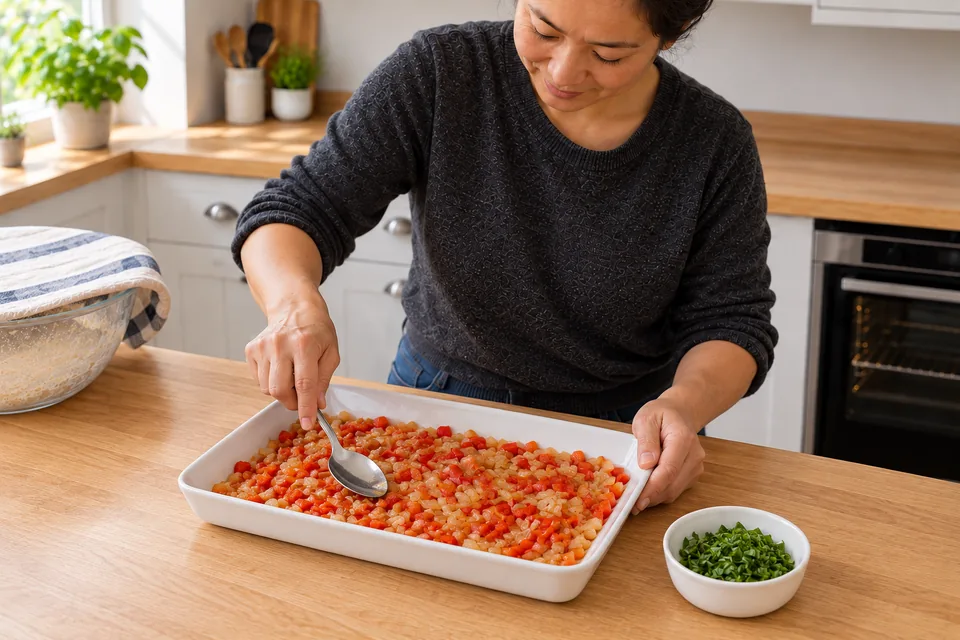
    Tender diced red pepper and onion lie spread in a shallow dish, with chopped basil in a separate small dish.
    03 Cook Cool VegetablesCook the diced vegetables until tender and dry, then cool them with the basil held separately.
  4. 04 · Fold cooled vegetables and basil into the dough

    8–10 min

    Use: Peeled onion; Red pepper; Olive oil for the vegetables; Fresh basil leaves

    Gently spread the risen dough into a thick rectangle. Add all the cooled vegetables and basil, fold the edges over and work with a scraper until evenly dispersed.

    Ready when: The dough holds the additions without wet pockets or loose piles of vegetables.
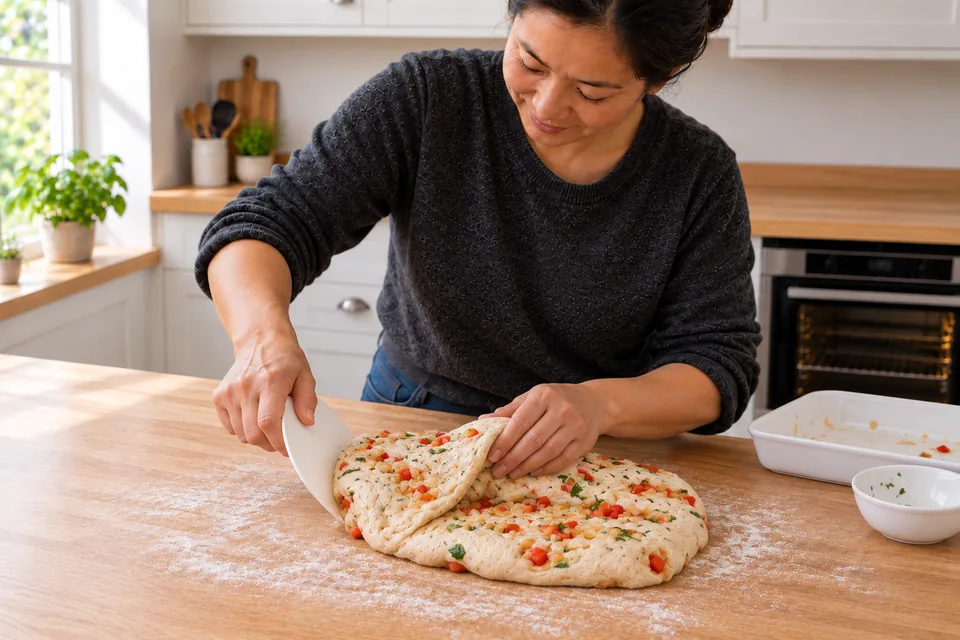
    The cook folds the cooked red pepper, onion and chopped basil through the pale dough with a scraper.
    04 IncorporateFold all the cooled vegetables and chopped basil into the risen dough.
  5. 05 · Weigh and divide into three lined metal moulds

    12–15 min

    Use: Butter for the moulds; Flour for shaping

    Butter and line three food-safe round metal bread moulds, each 12 cm internal diameter and 10 cm high. Use the shaping flour sparingly. Weigh the finished dough and divide into three equal pieces. Gather each into a round and place seam-side down in a mould. Set the moulds on a 30×40 cm tray in a two-plus-one arrangement with gaps.

    Ready when: Each mould contains one equal portion with clear space above for expansion.
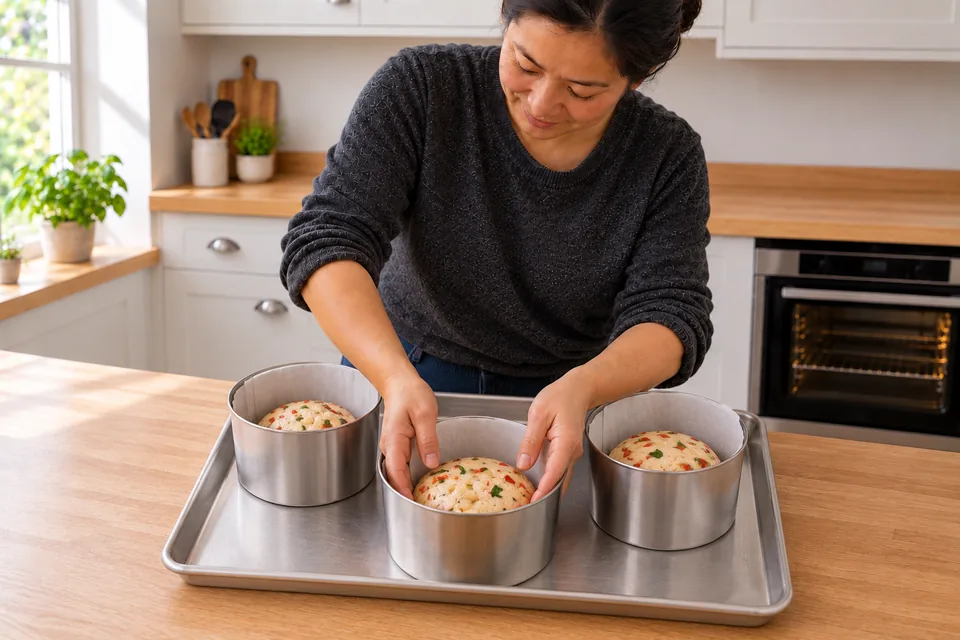
    Three metal moulds each hold one low round portion of vegetable and basil dough on a single tray.
    05 ShapeDivide the assembled dough equally between three lined metal moulds.
  6. 06 · Proof and heat the oven

    60–90 min

    Use:

    Cover loosely and leave at 22–24°C for 60–90 minutes. Heat the oven to 200°C conventional during the final 20 minutes.

    Ready when: All three portions are puffy and a light fingertip dent returns slowly; the dough remains below the rims.
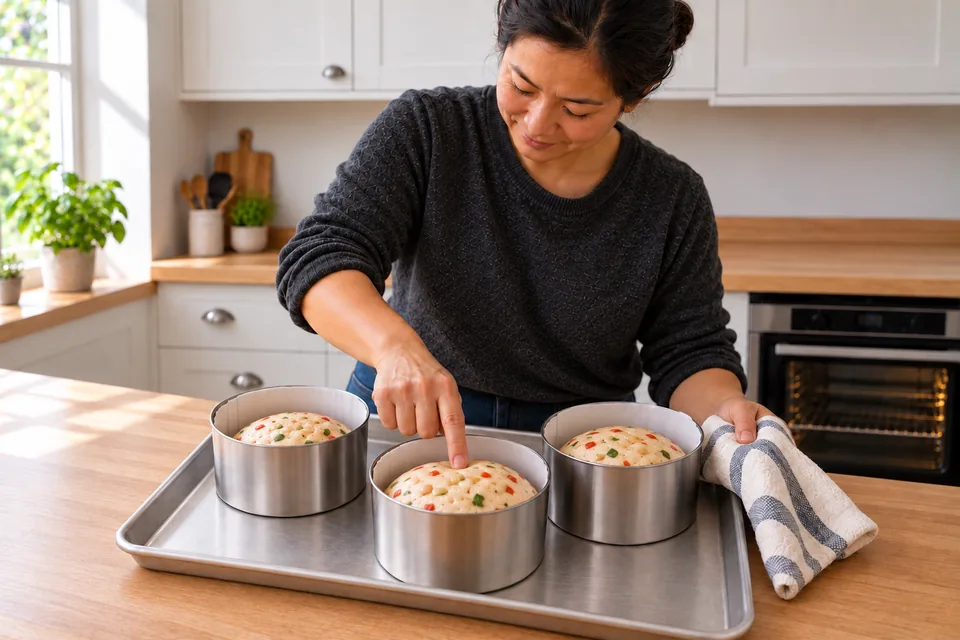
    The cook checks three puffy raw loaves below the rims of their lined metal moulds.
    06 ProofLet all three portions become puffy while remaining below the rims.
  7. 07 · Bake the three moulds together

    35–45 min

    Use:

    Bake the tray on a lower-middle rack for 35–45 minutes. Cover loosely with foil if exposed herbs colour early. Probe the thickest bread in each loaf, away from a vegetable piece.

    Ready when: The tops and bases are browned and firm, and all bread centres reach about 95°C.
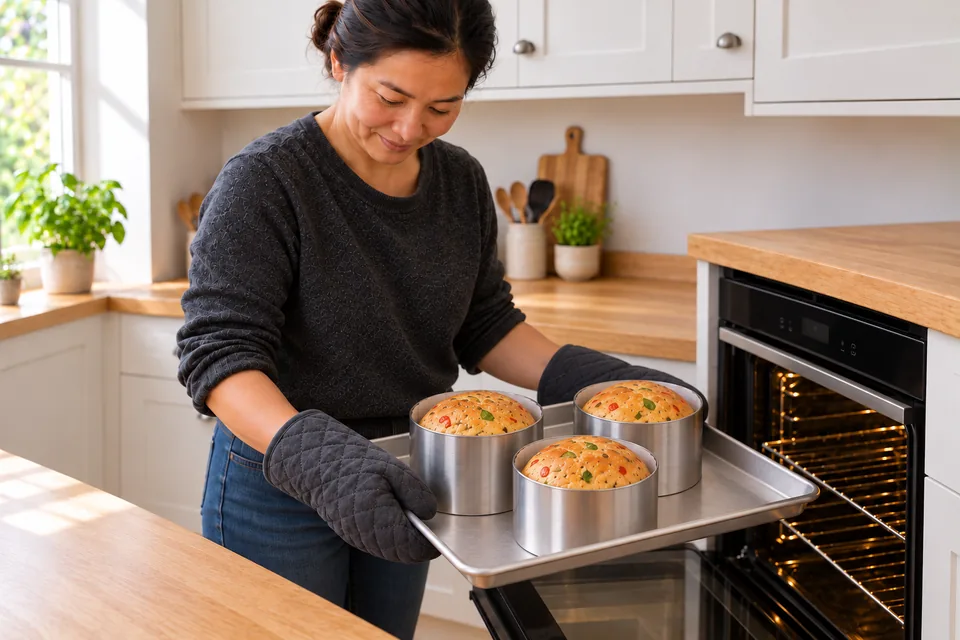
    Wearing oven mitts, the cook holds one tray of three golden loaves in round metal moulds beside the oven.
    07 BakeBake all three loaves until browned and cooked through.
  8. 08 · Release and cool fully

    90 min

    Use:

    Leave in the moulds for 10 minutes, then turn out, remove the paper and cool on a rack for at least 80 minutes more.

    Ready when: The crumb is set and cool enough to slice cleanly.
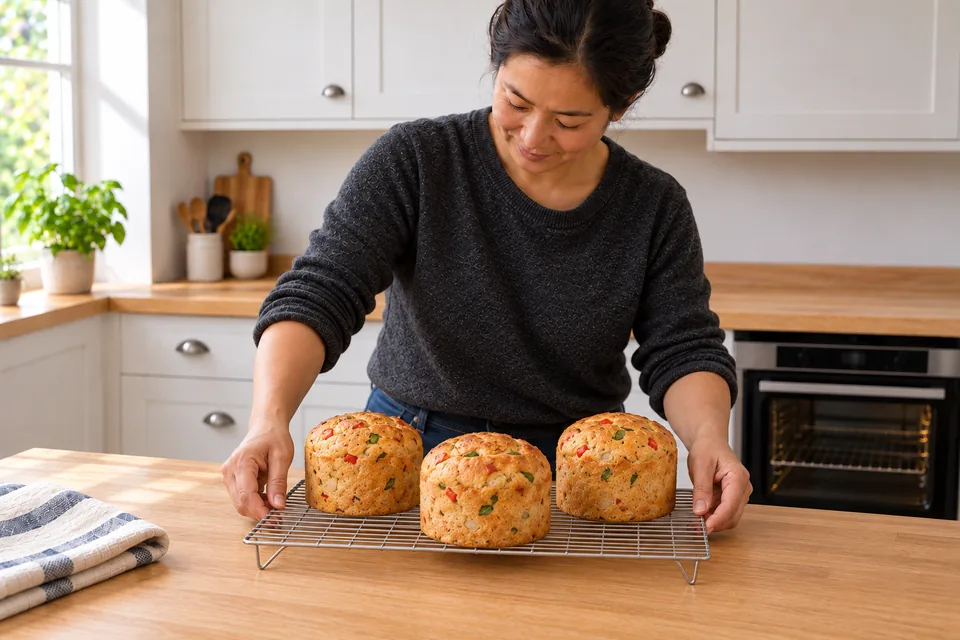
    Three whole golden vegetable loaves stand without paper or moulds on a raised cooling rack.
    08 CoolRemove the moulds and paper, then cool the loaves on a rack.

What to look for

StageLook / feel forNeeds attention
Mix and knead the butter-enriched doughThe dough becomes smooth and elastic, with all butter incorporated.
Let the dough rise while preparing the vegetablesThe dough is aerated and roughly doubled.
Cook and cool vegetables; prepare basil separatelyThe vegetables are tender and dry on the surface, with no pooled liquid; they are cool before touching the dough.
Fold cooled vegetables and basil into the doughThe dough holds the additions without wet pockets or loose piles of vegetables.
Weigh and divide into three lined metal mouldsEach mould contains one equal portion with clear space above for expansion.
Proof and heat the ovenAll three portions are puffy and a light fingertip dent returns slowly; the dough remains below the rims.
Bake the three moulds togetherThe tops and bases are browned and firm, and all bread centres reach about 95°C.
Release and cool fullyThe crumb is set and cool enough to slice cleanly.

Troubleshooting

If you see thisLikely causeWhat to do nowNext time
The dough turns slippery after adding vegetables.The vegetables were wet or still warm.Let the dough rest briefly, then fold gently with a scraper; avoid adding large amounts of flour.Cook away free liquid and cool the vegetables completely.
One loaf is less cooked than the others.The moulds have uneven oven exposure or unequal portions.Remove cooked loaves and continue baking the remaining loaf to the bread-centre cue.Weigh equal portions, leave gaps and check all three centres.

Storage: Cool promptly and refrigerate wrapped leftovers within 2 hours of baking. Use within 2 days or freeze for up to 1 month. Reheat until hot through.; Contains: wheat, milk.; This Nepedia version has not been kitchen-tested.

Ingredient choices & substitutions

No brand is specified.

Match the ingredient’s function and weight. See the flour, gluten, yeast and salt guide.

Other approaches to this recipe
Cook / recipeUseWhat differs

The working ingredients and method form one recipe. Different formulas are compared without averaging their quantities or rise schedules.

Nepedia
Two whole golden cylindrical vegetable loaves stand behind a third cut loaf and two matching slices showing red pepper, onion and basil through the crumb.
Three pepper, onion and basil loaves, with two slices cut from one.

Recipe

Pepper, onion and basil loaves

Three small round loaves with cooked red pepper, onion and fresh basil. Cool the vegetables before folding them into the developed butter dough.

How do I make it?

  1. Mix and knead the butter-enriched dough

    15–20 min

    Mix the flour, water, salt and yeast until evenly moistened. Work in the softened butter and knead for 8–10 minutes by hand or with a dough hook at the machine’s recommended speed.

    The cook kneads one smooth pale dough on the oak counter, with no vegetables or herbs added yet.
    Knead until the butter dough is smooth and elastic.

    Ready when: The dough becomes smooth and elastic, with all butter incorporated.

  2. Let the dough rise while preparing the vegetables

    60–90 min

    Cover and leave at 22–24°C for 60–90 minutes. Prepare and cool the vegetables in the next step during this rise.

    The cook lifts the striped cloth from an aerated mound of plain dough in a clear bowl.
    Cover and let the plain dough rise until aerated and roughly doubled.

    Ready when: The dough is aerated and roughly doubled.

  3. Cook and cool vegetables; prepare basil separately

    40–55 min

    Heat the 15 g olive oil in a wide frying pan over medium heat. Add the chopped onion and pepper and cook for 12–18 minutes, stirring often, until tender and no free liquid remains. Spread in a shallow dish and cool completely for 20–30 minutes. Wash, dry and chop the basil while they cool.

    Tender diced red pepper and onion lie spread in a shallow dish, with chopped basil in a separate small dish.
    Cook the diced vegetables until tender and dry, then cool them with the basil held separately.

    Ready when: The vegetables are tender and dry on the surface, with no pooled liquid; they are cool before touching the dough.

  4. Fold cooled vegetables and basil into the dough

    8–10 min

    Gently spread the risen dough into a thick rectangle. Add all the cooled vegetables and basil, fold the edges over and work with a scraper until evenly dispersed.

    The cook folds the cooked red pepper, onion and chopped basil through the pale dough with a scraper.
    Fold all the cooled vegetables and chopped basil into the risen dough.

    Ready when: The dough holds the additions without wet pockets or loose piles of vegetables.

  5. Weigh and divide into three lined metal moulds

    12–15 min

    Butter and line three food-safe round metal bread moulds, each 12 cm internal diameter and 10 cm high. Use the shaping flour sparingly. Weigh the finished dough and divide into three equal pieces. Gather each into a round and place seam-side down in a mould. Set the moulds on a 30×40 cm tray in a two-plus-one arrangement with gaps.

    Three metal moulds each hold one low round portion of vegetable and basil dough on a single tray.
    Divide the assembled dough equally between three lined metal moulds.

    Ready when: Each mould contains one equal portion with clear space above for expansion.

  6. Proof and heat the oven

    60–90 min

    Cover loosely and leave at 22–24°C for 60–90 minutes. Heat the oven to 200°C conventional during the final 20 minutes.

    The cook checks three puffy raw loaves below the rims of their lined metal moulds.
    Let all three portions become puffy while remaining below the rims.

    Ready when: All three portions are puffy and a light fingertip dent returns slowly; the dough remains below the rims.

  7. Bake the three moulds together

    35–45 min

    Bake the tray on a lower-middle rack for 35–45 minutes. Cover loosely with foil if exposed herbs colour early. Probe the thickest bread in each loaf, away from a vegetable piece.

    Wearing oven mitts, the cook holds one tray of three golden loaves in round metal moulds beside the oven.
    Bake all three loaves until browned and cooked through.

    Ready when: The tops and bases are browned and firm, and all bread centres reach about 95°C.

  8. Release and cool fully

    90 min

    Leave in the moulds for 10 minutes, then turn out, remove the paper and cool on a rack for at least 80 minutes more.

    Three whole golden vegetable loaves stand without paper or moulds on a raised cooling rack.
    Remove the moulds and paper, then cool the loaves on a rack.

    Ready when: The crumb is set and cool enough to slice cleanly.

What can go wrong, and how can I fix it?

What you noticeLikely causeWhat to do
The dough turns slippery after adding vegetables.The vegetables were wet or still warm.Let the dough rest briefly, then fold gently with a scraper; avoid adding large amounts of flour. Cook away free liquid and cool the vegetables completely.
One loaf is less cooked than the others.The moulds have uneven oven exposure or unequal portions.Remove cooked loaves and continue baking the remaining loaf to the bread-centre cue. Weigh equal portions, leave gaps and check all three centres.
Useful recipe notes

Storage: Cool promptly and refrigerate wrapped leftovers within 2 hours of baking. Use within 2 days or freeze for up to 1 month. Reheat until hot through.

Contains: wheat, milk.

This Nepedia version has not been kitchen-tested.

See the detailed method and ratios in , or follow ingredients through the .

Ingredient proportions & recipe details

Pepper, onion and basil loaves at a glance

Makes
3 small loaves, about 18 slices total
Heat
200°C conventional
Baking time
35–45 min
Cuisine / style
International
Leavening
Yeast
Bulk fermentation (including folding)
60–90 min · The dough is aerated and roughly doubled.
How do the ingredient proportions compare?

Percentages compare each listed weight with the combined flour weight (100%). These are ingredient ratios, not dough hydration; milk, eggs and fillings contain other ingredients as well as water.

Formula componentGramsFlour = 100%
Strong white bread flour500 g100%
Water300 g60%
Unsalted butter50 g10%
Fine salt10 g2%
Instant dried yeast7 g1.4%