Nepedia

Peanut yeast bread

Two soft yeast-raised coils with crunchy peanut butter and small pieces of peanut brittle. The nut butter is kneaded into developed dough before the brittle is folded through.

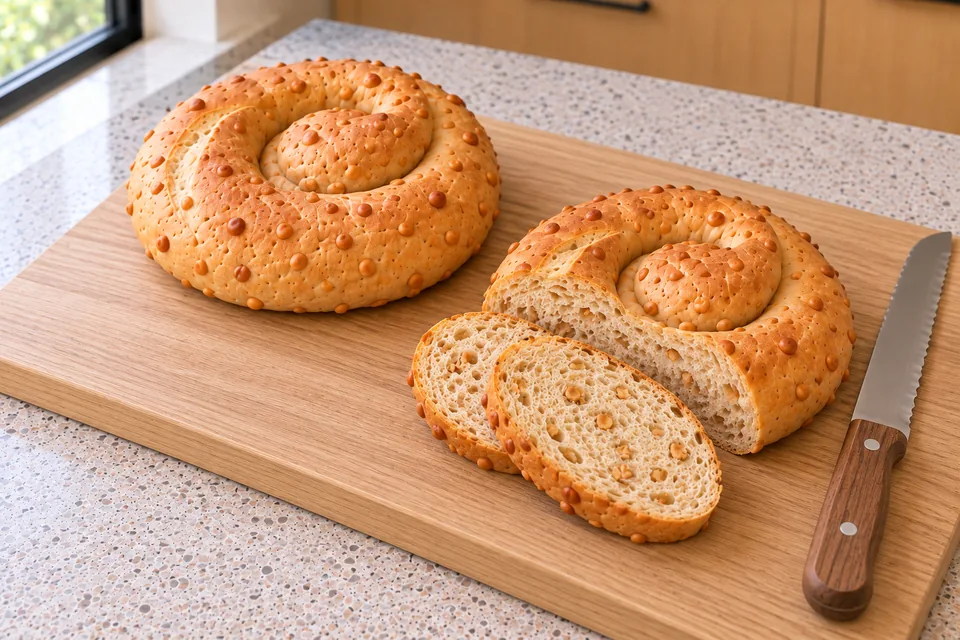
One whole peanut bread coil beside a second loaf cut into two slices, revealing the tan crumb.
Makes
2 coiled loaves, about 16 slices total
Heat
180°C conventional
Baking time
40–45 min
Cuisine / style
International

180°C conventional; swap racks and turn trays after 20 minutes.

Explore variations · 7 →Jump to ingredients & method ↓
View

Peanut yeast bread

Makes
2 coiled loaves, about 16 slices total
Heat
180°C conventional
Baking time
40–45 min
Cuisine / style
International

180°C conventional; swap racks and turn trays after 20 minutes.

International · Enriched fruit bread

Peanut yeast bread

Two soft yeast-raised coils with crunchy peanut butter and small pieces of peanut brittle. The nut butter is kneaded into developed dough before the brittle is folded through.

Method

  1. 01 · Stir peanut butter and prepare the separate brittle

    8–10 min

    Use: Unsalted crunchy peanut butter; Prepared peanut brittle

    Stir the peanut butter until any separated oil is evenly mixed, then weigh 150 g. Chop the brittle into 3–5 mm pieces, remove long sharp shards, then weigh 100 g of usable pieces.

    Ready when: The peanut butter is uniform and the brittle is in small usable pieces.
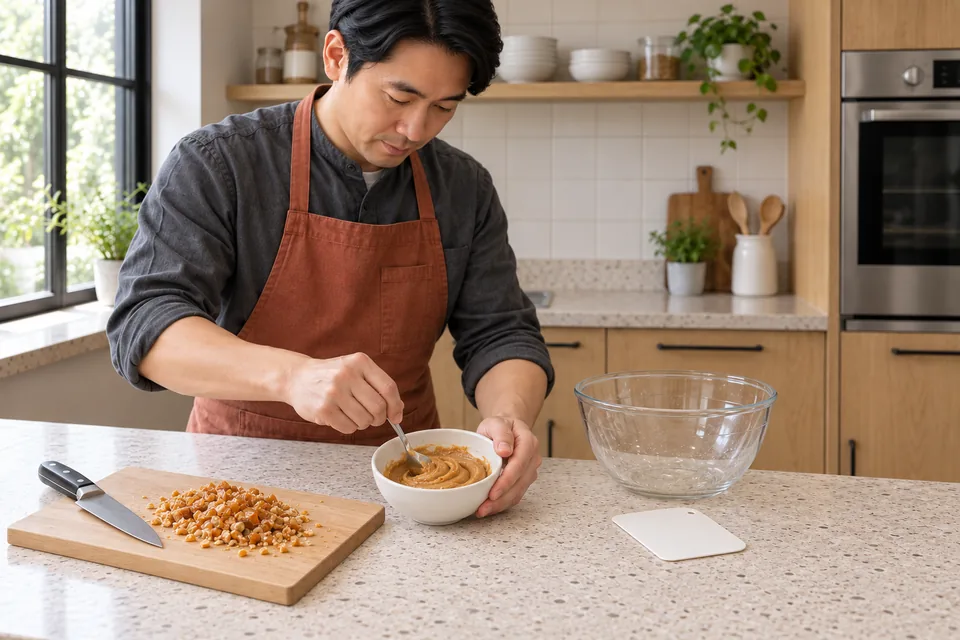
    The cook stirs peanut butter beside a small pile of chopped peanut brittle.
    01 Peanut yeast breadStir the peanut butter and prepare small pieces of brittle.
  2. 02 · Develop the dough, adding peanut butter in portions

    15–20 min

    Use: Strong white bread flour; Water; Fine salt; Instant dried yeast; Unsalted crunchy peanut butter

    Mix the flour, water, salt and instant yeast. Knead until the dough starts to stretch, then add the peanut butter in three portions, kneading each in before the next. Continue by hand or with a dough hook at the machine’s recommended speed until cohesive, about 12–15 minutes after mixing.

    Ready when: The dough becomes elastic and evenly coloured; there is no loose oil or unmixed nut-butter pocket.
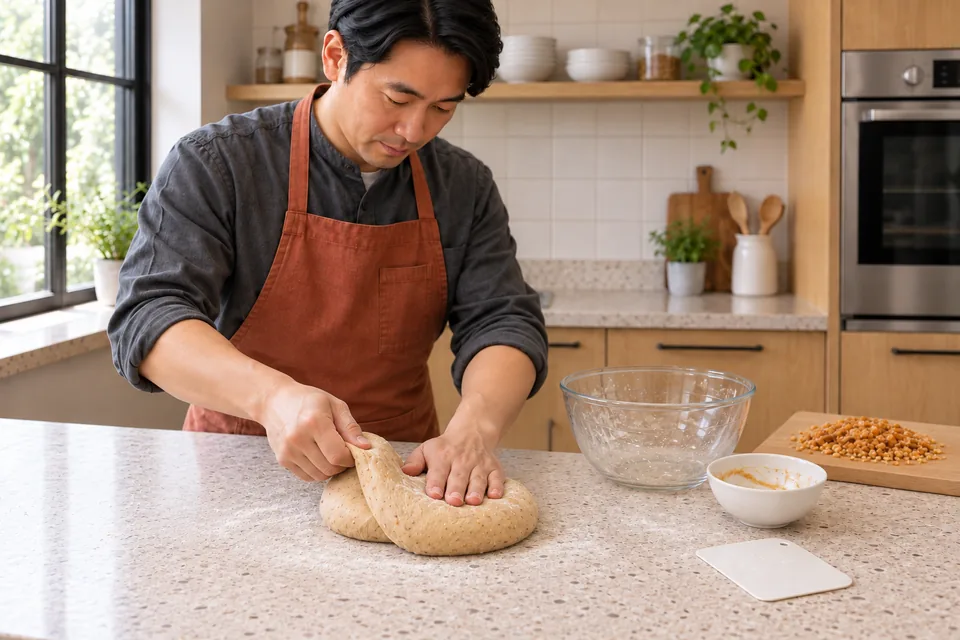
    The cook folds and kneads one modest batch of peanut dough, with brittle kept separate.
    02 Peanut yeast breadDevelop an elastic dough with the peanut butter fully incorporated.
  3. 03 · Let the dough rise

    90–120 min

    Use:

    Cover and leave at 22–24°C for 90–120 minutes.

    Ready when: The dough is aerated and roughly doubled.
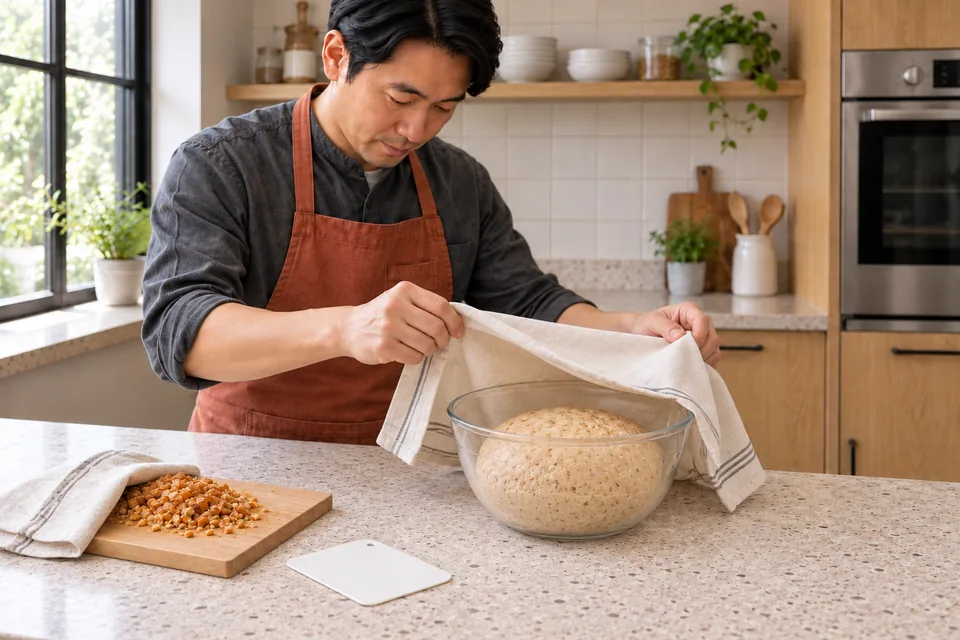
    The cook lifts a cloth from risen peanut dough while chopped brittle remains separate.
    03 Peanut yeast breadLet the dough rise until aerated and roughly doubled.
  4. 04 · Fold in the held chopped brittle

    5–10 min

    Use: Prepared peanut brittle

    Spread the dough into a thick rectangle. Add all the chopped brittle and fold gently until dispersed. Use a scraper rather than more unmeasured chips or flour.

    Ready when: Small brittle pieces are distributed without long tears.
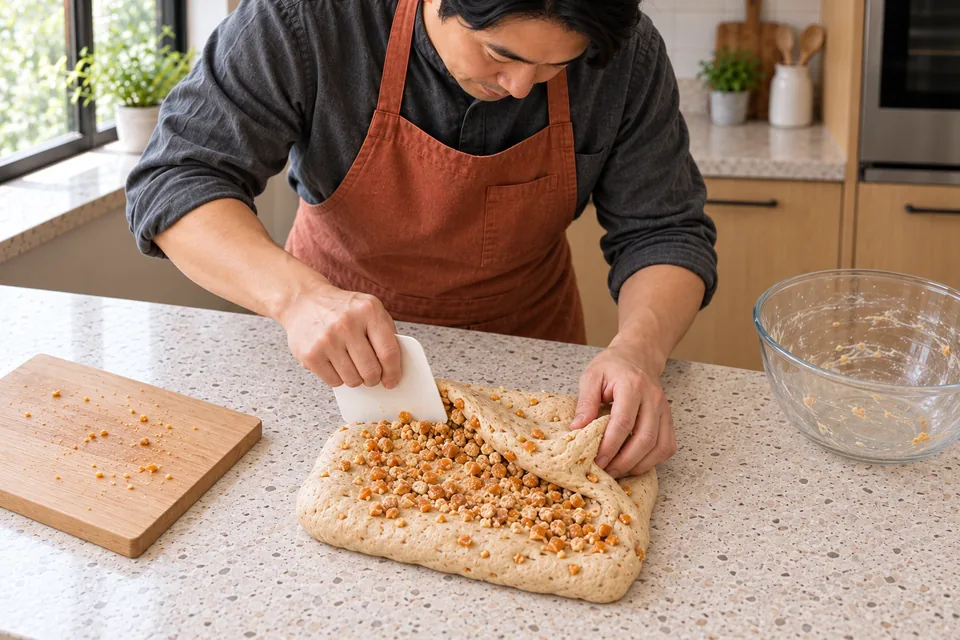
    The cook folds small chopped peanut-brittle pieces into the peanut dough with a scraper.
    04 Peanut yeast breadFold the chopped brittle through the dough.
  5. 05 · Divide and shape two loose coils

    20–25 min

    Use: Flour for shaping

    Line two 30×40 cm trays with baking paper. Use the shaping flour sparingly. Divide into two 545 g pieces, cover and rest 10 minutes. Roll each into a rope about 35 cm long, curl into a loose coil about 14–16 cm across, and tuck the outer tip underneath. Place one coil on each tray.

    Ready when: Both coils are evenly shaped without a tight high centre or loose end.
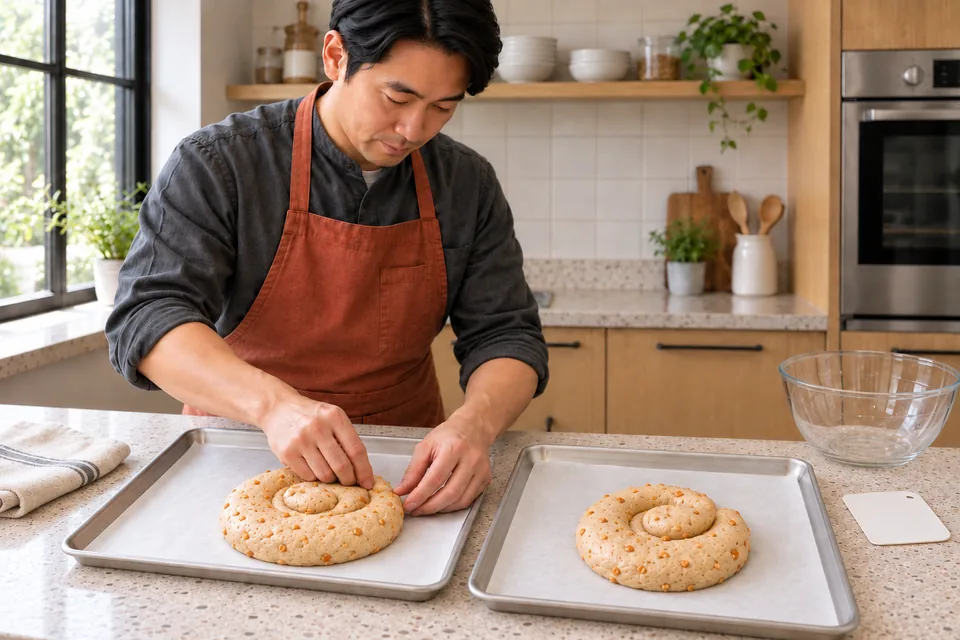
    Shaping two small peanut bread coils, each on its own lined tray.
    05 Peanut yeast breadCoil each rested rope loosely, tuck the end underneath and leave space for the dough to rise.
  6. 06 · Proof and heat the oven

    60–90 min

    Use:

    Cover loosely and leave at 22–24°C for 60–90 minutes. During the final 20 minutes, heat the oven to 180°C conventional with two racks around the middle.

    Ready when: The coils are puffy and a light fingertip dent returns slowly.
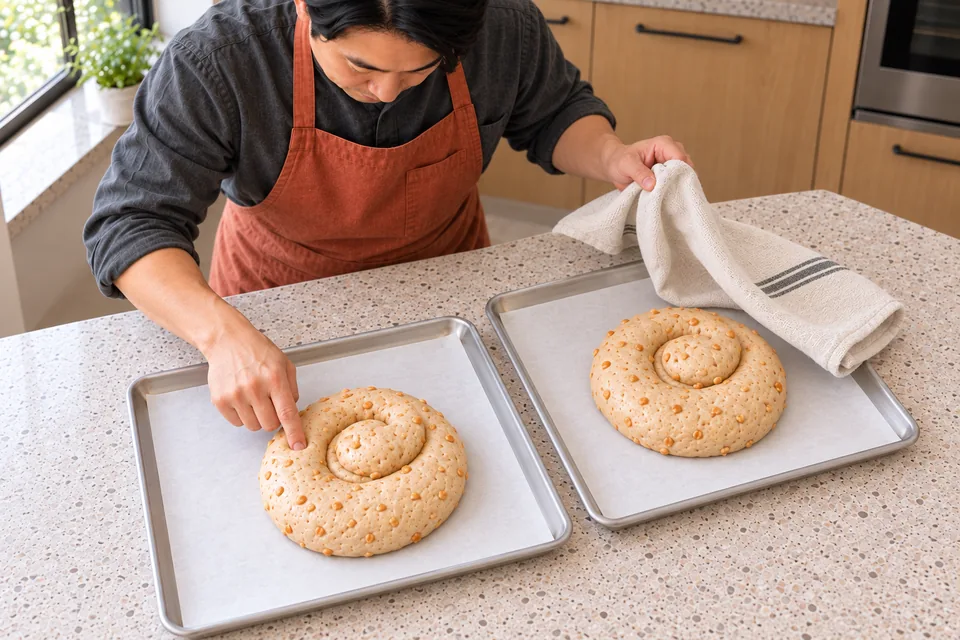
    Checking the rise of two peanut bread coils on separate trays.
    06 Peanut yeast breadThe coils should look puffy, and a light fingertip dent should return slowly.
  7. 07 · Score and bake both trays

    40–45 min

    Use:

    Make one shallow curved score about 5 mm deep along the top of each coil. Bake both trays together for 20 minutes, then swap rack positions and turn the trays front to back. Bake for 20–25 minutes more. Shield dark brittle pieces with foil as needed. Probe the thickest bread away from a nut or caramel pocket.

    Ready when: The bases are firm and browned and the bread centres reach about 93°C.
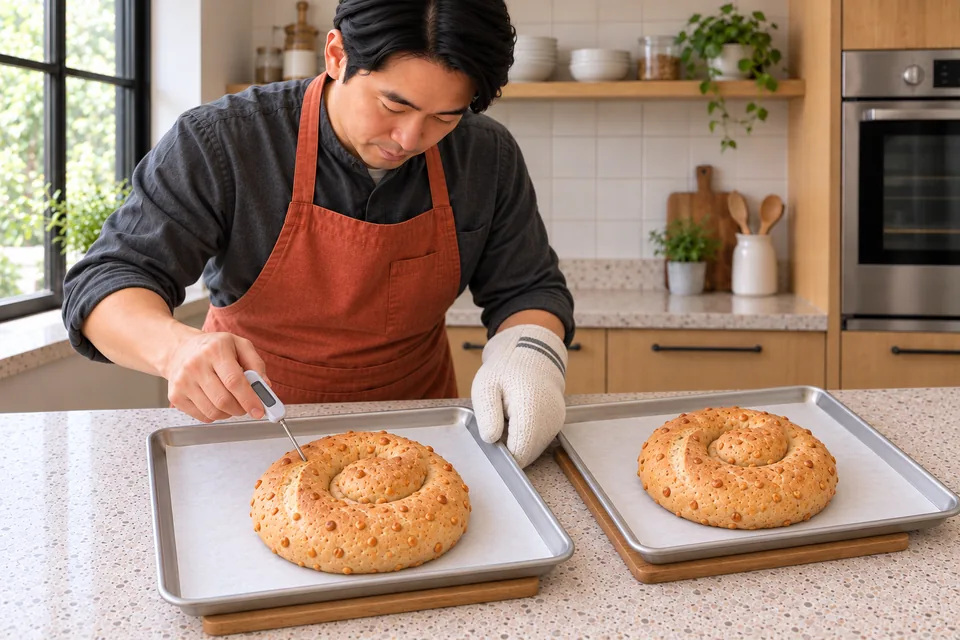
    Checking the centre of a baked peanut loaf with a thermometer while the second loaf rests on its tray.
    07 Peanut yeast breadCheck the thickest bread away from a nut or caramel pocket; the centre should reach about 93°C.
  8. 08 · Cool fully before slicing

    90 min

    Use:

    Transfer carefully to racks and cool for at least 90 minutes. Let caramel pieces cool fully before slicing.

    Ready when: The crumb is set and caramel is no longer molten.
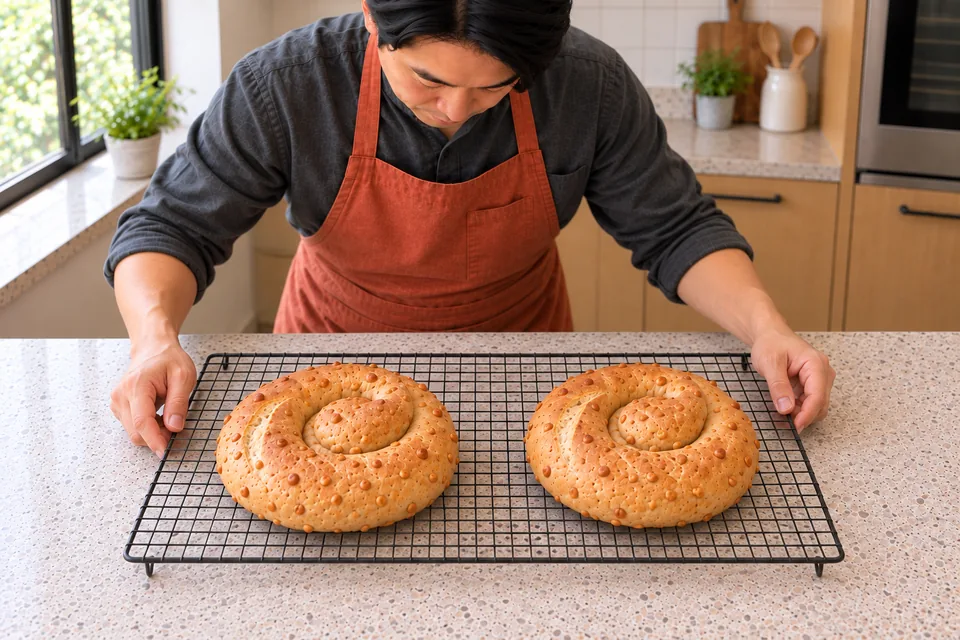
    Two baked peanut bread coils cooling side by side on a wire rack.
    08 Peanut yeast breadCool both loaves fully on a rack before slicing so the crumb sets and the caramel pieces are no longer hot.

What to look for

StageLook / feel forNeeds attention
Stir peanut butter and prepare the separate brittleThe peanut butter is uniform and the brittle is in small usable pieces.
Develop the dough, adding peanut butter in portionsThe dough becomes elastic and evenly coloured; there is no loose oil or unmixed nut-butter pocket.
Let the dough riseThe dough is aerated and roughly doubled.
Fold in the held chopped brittleSmall brittle pieces are distributed without long tears.
Divide and shape two loose coilsBoth coils are evenly shaped without a tight high centre or loose end.
Proof and heat the ovenThe coils are puffy and a light fingertip dent returns slowly.
Score and bake both traysThe bases are firm and browned and the bread centres reach about 93°C.
Cool fully before slicingThe crumb is set and caramel is no longer molten.

Troubleshooting

If you see thisLikely causeWhat to do nowNext time
The dough is sticky during shaping.Peanut butter is greasy before it is fully worked into the dough.Use a scraper and the measured handling allowance; cover and rest briefly if the dough tears.Keep the stated ingredient weights and develop the dough rather than adding unmeasured cereal or flour.
The outside colours before the centre is cooked.The sweetened crust or exposed additions brown faster than thick bread.Shield loosely with foil and continue until the bread centre and base meet the stated cues.Use the specified portions, shape and temperature; probe away from inclusions.

Storage: Cool promptly, then refrigerate wrapped leftovers within 2 hours of baking and use within 2 days. Freeze slices for up to 1 month. Toast or warm before serving.; Contains: wheat, peanut.; This Nepedia version has not been kitchen-tested.

Ingredient choices & substitutions

No brand is specified.

Match the ingredient’s function and weight. See the flour, gluten, yeast and salt guide.

Other approaches to this recipe
Cook / recipeUseWhat differs

The working ingredients and method form one recipe. Different formulas are compared without averaging their quantities or rise schedules.

Nepedia
One whole peanut bread coil beside a second loaf cut into two slices, revealing the tan crumb.
Peanut yeast bread with a soft tan crumb and small peanut-brittle pieces.

Recipe

Peanut yeast bread

Two soft yeast-raised coils with crunchy peanut butter and small pieces of peanut brittle. The nut butter is kneaded into developed dough before the brittle is folded through.

How do I make it?

  1. Stir peanut butter and prepare the separate brittle

    8–10 min

    Stir the peanut butter until any separated oil is evenly mixed, then weigh 150 g. Chop the brittle into 3–5 mm pieces, remove long sharp shards, then weigh 100 g of usable pieces.

    The cook stirs peanut butter beside a small pile of chopped peanut brittle.
    Stir the peanut butter and prepare small pieces of brittle.

    Ready when: The peanut butter is uniform and the brittle is in small usable pieces.

  2. Develop the dough, adding peanut butter in portions

    15–20 min

    Mix the flour, water, salt and instant yeast. Knead until the dough starts to stretch, then add the peanut butter in three portions, kneading each in before the next. Continue by hand or with a dough hook at the machine’s recommended speed until cohesive, about 12–15 minutes after mixing.

    The cook folds and kneads one modest batch of peanut dough, with brittle kept separate.
    Develop an elastic dough with the peanut butter fully incorporated.

    Ready when: The dough becomes elastic and evenly coloured; there is no loose oil or unmixed nut-butter pocket.

  3. Let the dough rise

    90–120 min

    Cover and leave at 22–24°C for 90–120 minutes.

    The cook lifts a cloth from risen peanut dough while chopped brittle remains separate.
    Let the dough rise until aerated and roughly doubled.

    Ready when: The dough is aerated and roughly doubled.

  4. Fold in the held chopped brittle

    5–10 min

    Spread the dough into a thick rectangle. Add all the chopped brittle and fold gently until dispersed. Use a scraper rather than more unmeasured chips or flour.

    The cook folds small chopped peanut-brittle pieces into the peanut dough with a scraper.
    Fold the chopped brittle through the dough.

    Ready when: Small brittle pieces are distributed without long tears.

  5. Divide and shape two loose coils

    20–25 min

    Line two 30×40 cm trays with baking paper. Use the shaping flour sparingly. Divide into two 545 g pieces, cover and rest 10 minutes. Roll each into a rope about 35 cm long, curl into a loose coil about 14–16 cm across, and tuck the outer tip underneath. Place one coil on each tray.

    Shaping two small peanut bread coils, each on its own lined tray.
    Coil each rested rope loosely, tuck the end underneath and leave space for the dough to rise.

    Ready when: Both coils are evenly shaped without a tight high centre or loose end.

  6. Proof and heat the oven

    60–90 min

    Cover loosely and leave at 22–24°C for 60–90 minutes. During the final 20 minutes, heat the oven to 180°C conventional with two racks around the middle.

    Checking the rise of two peanut bread coils on separate trays.
    The coils should look puffy, and a light fingertip dent should return slowly.

    Ready when: The coils are puffy and a light fingertip dent returns slowly.

  7. Score and bake both trays

    40–45 min

    Make one shallow curved score about 5 mm deep along the top of each coil. Bake both trays together for 20 minutes, then swap rack positions and turn the trays front to back. Bake for 20–25 minutes more. Shield dark brittle pieces with foil as needed. Probe the thickest bread away from a nut or caramel pocket.

    Checking the centre of a baked peanut loaf with a thermometer while the second loaf rests on its tray.
    Check the thickest bread away from a nut or caramel pocket; the centre should reach about 93°C.

    Ready when: The bases are firm and browned and the bread centres reach about 93°C.

  8. Cool fully before slicing

    90 min

    Transfer carefully to racks and cool for at least 90 minutes. Let caramel pieces cool fully before slicing.

    Two baked peanut bread coils cooling side by side on a wire rack.
    Cool both loaves fully on a rack before slicing so the crumb sets and the caramel pieces are no longer hot.

    Ready when: The crumb is set and caramel is no longer molten.

What can go wrong, and how can I fix it?

What you noticeLikely causeWhat to do
The dough is sticky during shaping.Peanut butter is greasy before it is fully worked into the dough.Use a scraper and the measured handling allowance; cover and rest briefly if the dough tears. Keep the stated ingredient weights and develop the dough rather than adding unmeasured cereal or flour.
The outside colours before the centre is cooked.The sweetened crust or exposed additions brown faster than thick bread.Shield loosely with foil and continue until the bread centre and base meet the stated cues. Use the specified portions, shape and temperature; probe away from inclusions.
Useful recipe notes

Storage: Cool promptly, then refrigerate wrapped leftovers within 2 hours of baking and use within 2 days. Freeze slices for up to 1 month. Toast or warm before serving.

Contains: wheat, peanut.

This Nepedia version has not been kitchen-tested.

See the detailed method and ratios in , or follow ingredients through the .

Ingredient proportions & recipe details

Peanut yeast bread at a glance

Makes
2 coiled loaves, about 16 slices total
Heat
180°C conventional
Baking time
40–45 min
Cuisine / style
International
Leavening
Yeast
Bulk fermentation (including folding)
90–120 min · The dough is aerated and roughly doubled.
How do the ingredient proportions compare?

Percentages compare each listed weight with the combined flour weight (100%). These are ingredient ratios, not dough hydration; milk, eggs and fillings contain other ingredients as well as water.

Formula componentGramsFlour = 100%
Strong white bread flour500 g100%
Water325 g65%
Fine salt10 g2%
Instant dried yeast5 g1%
Unsalted crunchy peanut butter150 g30%
Prepared peanut brittle100 g20%