Nepedia

Savarin

A yeast-raised ring cake soaked in vanilla syrup and served with warm chocolate custard. The syrup keeps the crumb moist; the dough itself is only lightly sweetened.

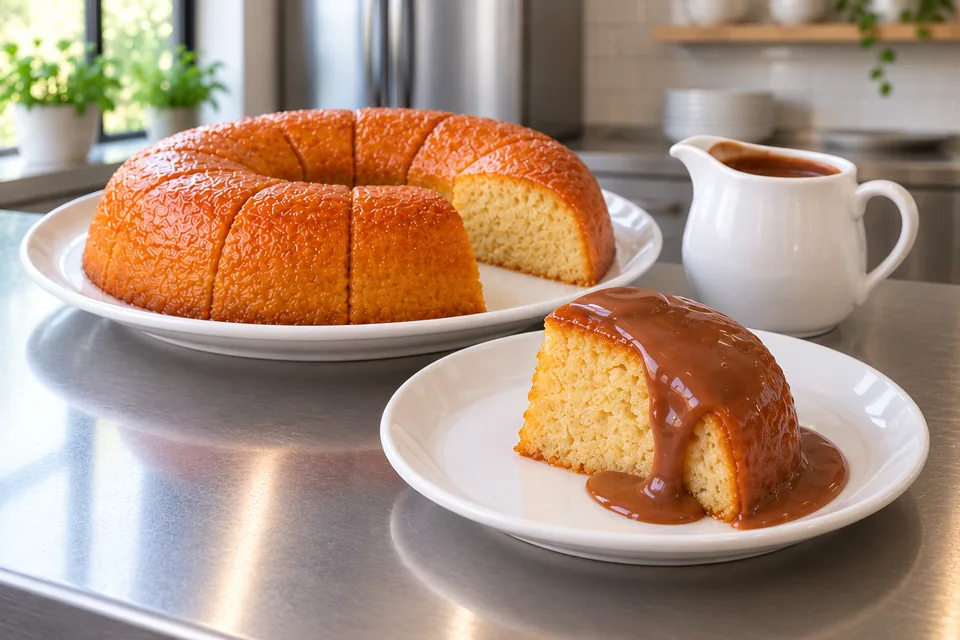
A moist savarin slice with chocolate custard beside the remaining ring cake.
Makes
8 servings from one ring
Heat
180°C conventional
Baking time
25–30 min baking
Cuisine / style
International

Syrup preparation and oven preheating overlap proof. Warm the chocolate custard gently without boiling near serving time.

View

Savarin with chocolate custard

Makes
8 servings from one ring
Heat
180°C conventional
Baking time
25–30 min baking
Cuisine / style
International

Syrup preparation and oven preheating overlap proof. Warm the chocolate custard gently without boiling near serving time.

International · Savarin

Savarin with chocolate custard

A yeast-raised ring cake soaked in vanilla syrup and served with warm chocolate custard. The syrup keeps the crumb moist; the dough itself is only lightly sweetened.

Method

  1. 01 · Develop the savarin mixture

    15–20 min

    Use: Plain flour; Caster sugar; Fine salt; Instant dried yeast; Whole milk; Beaten whole eggs; Unsalted butter

    Mix the flour, sugar, salt and instant yeast in a stand-mixer bowl. Add the milk and beaten eggs. Beat with a paddle on a suitable medium setting for 8–10 minutes until the mixture becomes stretchy. Add the soft butter a few pieces at a time and continue for 4–6 minutes, until it is fully absorbed.

    Ready when: The mixture is glossy, sticky and elastic. It falls from the paddle in a thick stretching ribbon rather than pouring like thin batter.
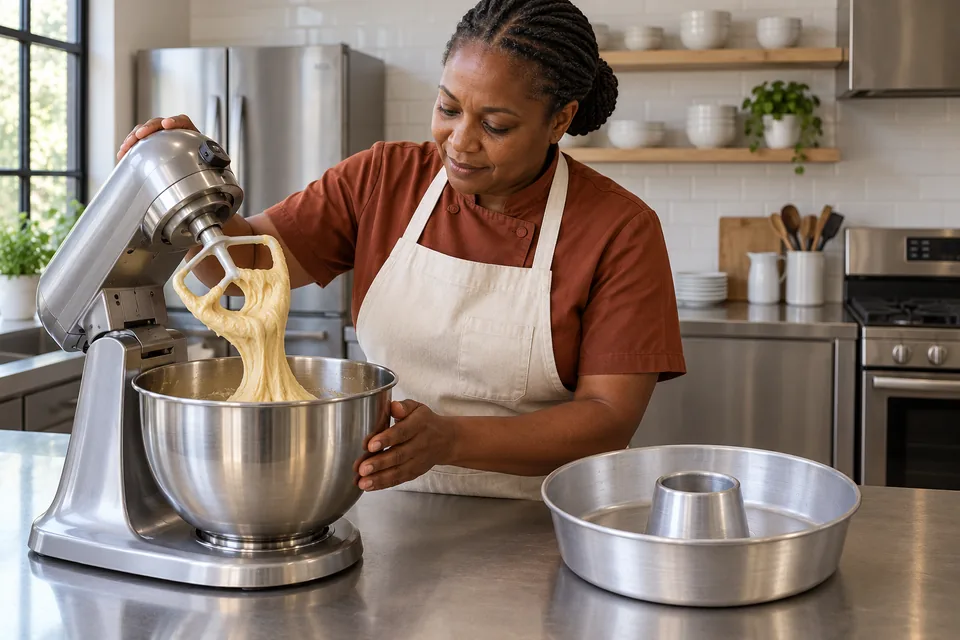
    A thick ribbon of enriched yeast dough falling from a raised mixer paddle into its bowl.
    01 Develop the enriched mixtureDevelop a glossy, elastic mixture before the first rise.
  2. 02 · Let the mixture rise

    60–90 min

    Use:

    Scrape the bowl down, cover it and leave at 24–26°C for 60–90 minutes.

    Ready when: The mixture has roughly doubled and shows bubbles beneath its surface.
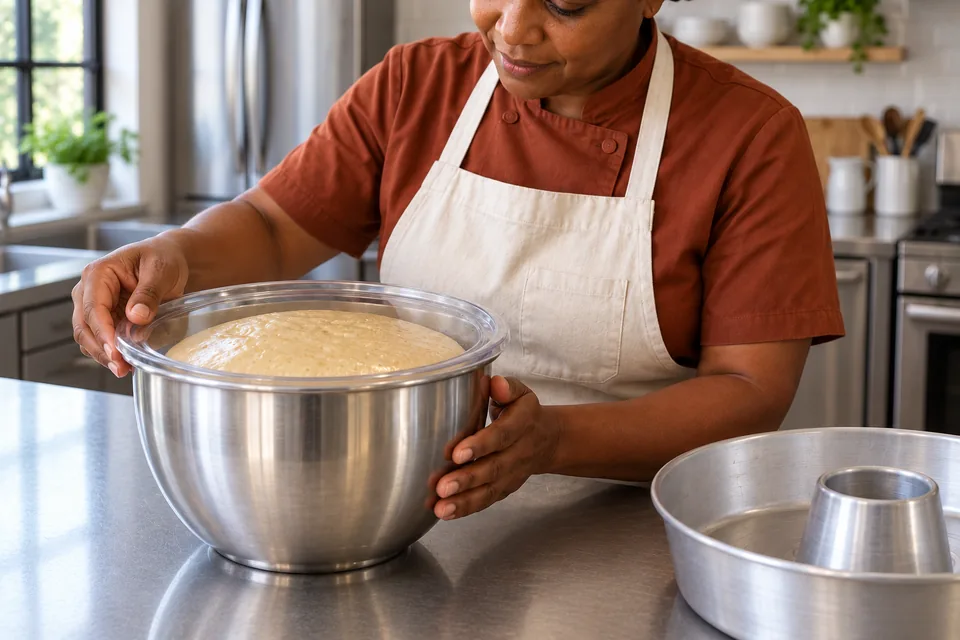
    Aerated savarin mixture in a covered mixer bowl.
    02 Let the mixture riseCover the bowl and let the mixture become aerated.
  3. 03 · Fill and proof the ring

    50–80 min

    Use: Butter for the mould

    Grease a 24 cm savarin ring with a capacity of 1.5–1.8 litres, including its central tube. Stir the risen mixture briefly to release large bubbles, then spoon it evenly into the mould and smooth the surface. It should fill no more than half the mould. Cover loosely and leave at 24–26°C for 45–75 minutes.

    Ready when: The mixture rises to about three-quarters of the mould height and looks light; it has not reached or spilled over the rim.
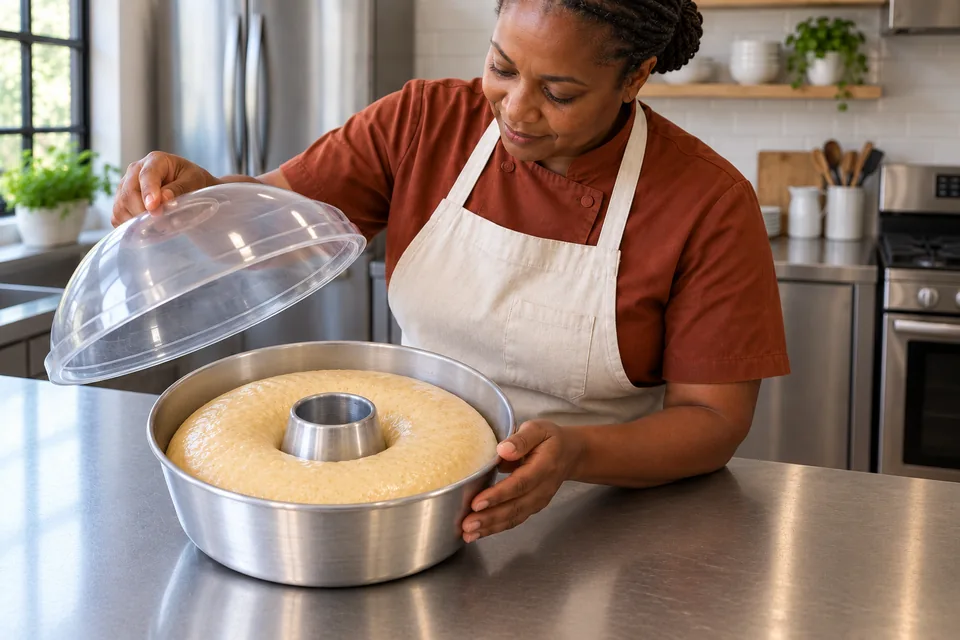
    Pale risen savarin dough around the centre tube below the mould rim.
    03 Proof in the ring mouldProof the ring with space left below the rim.
  4. 04 · Make the vanilla syrup and heat the oven

    7–10 min

    Use: Water; Caster sugar; Vanilla pod

    While the ring is proving, put the syrup water, syrup sugar and split vanilla pod in a saucepan. Stir over low heat until the sugar dissolves, then simmer for 2 minutes. Remove from the heat and leave to cool until just warm. Heat the oven to 180°C conventional during the final 20 minutes of proof.

    Ready when: The syrup is clear, with no sugar grains. It is warm enough to soak in but no longer steaming strongly.
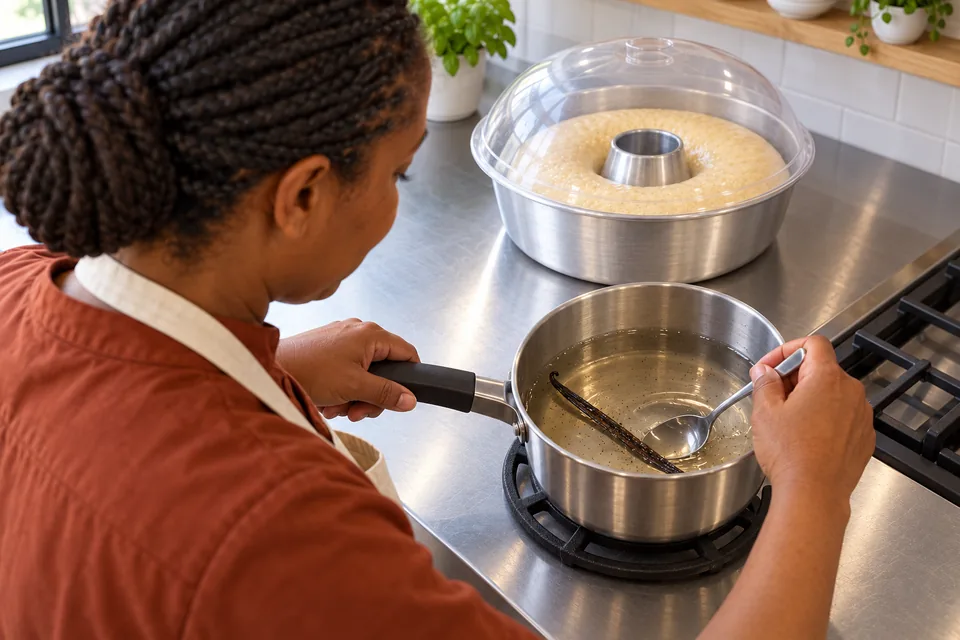
    A spoon stirring clear vanilla syrup with a split vanilla pod in a saucepan.
    04 Prepare the vanilla syrupMake a clear vanilla syrup and let it cool until just warm.
  5. 05 · Bake and unmould

    30–40 min

    Use:

    Remove the cover and bake the ring on the middle shelf for 25–30 minutes. Leave it in the mould for 5–10 minutes, then loosen the edges gently and turn it out onto a rack.

    Ready when: The cake is golden, springs back when pressed lightly, and a skewer inserted into its thickest part comes out without wet dough.
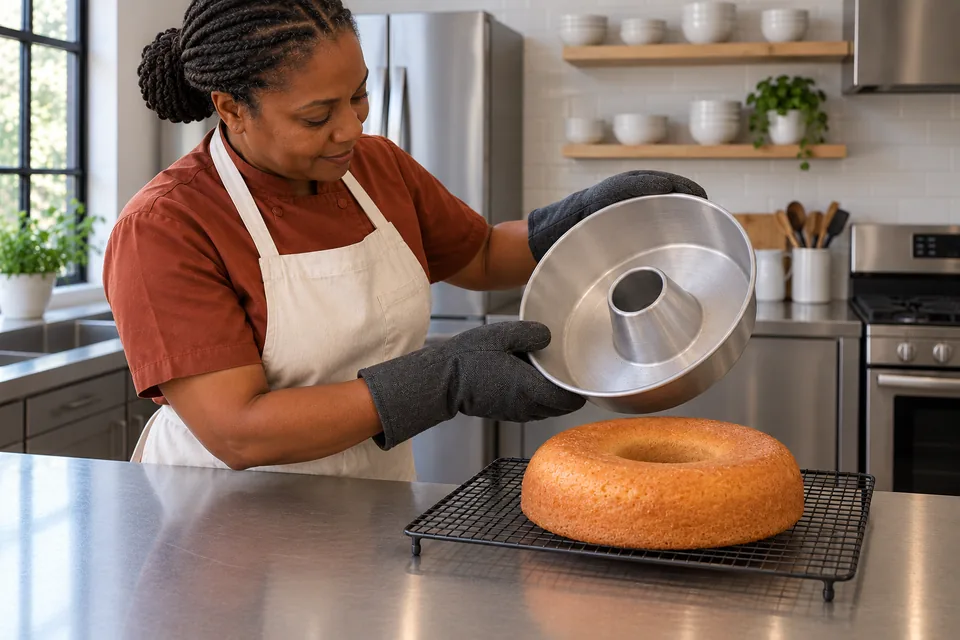
    A golden savarin ring on a rack beside its empty smooth mould.
    05 Bake and unmould the ringBake until golden, then unmould the warm ring onto a rack.
  6. 06 · Soak the warm ring and let it settle

    35 min

    Use: Water; Caster sugar; Vanilla pod

    Remove the vanilla pod from the syrup. Put the warm cake back into its clean mould. Spoon the warm syrup over it in several additions, pausing as each addition sinks in. Leave for 10–15 minutes. Stop adding syrup if the cake is thoroughly moist and a puddle no longer absorbs; you may not need every drop. Carefully turn the ring onto a rimmed serving plate and let it settle for 20 minutes.

    Ready when: The ring feels heavier and evenly moist while still holding its shape. It is not floating in syrup.
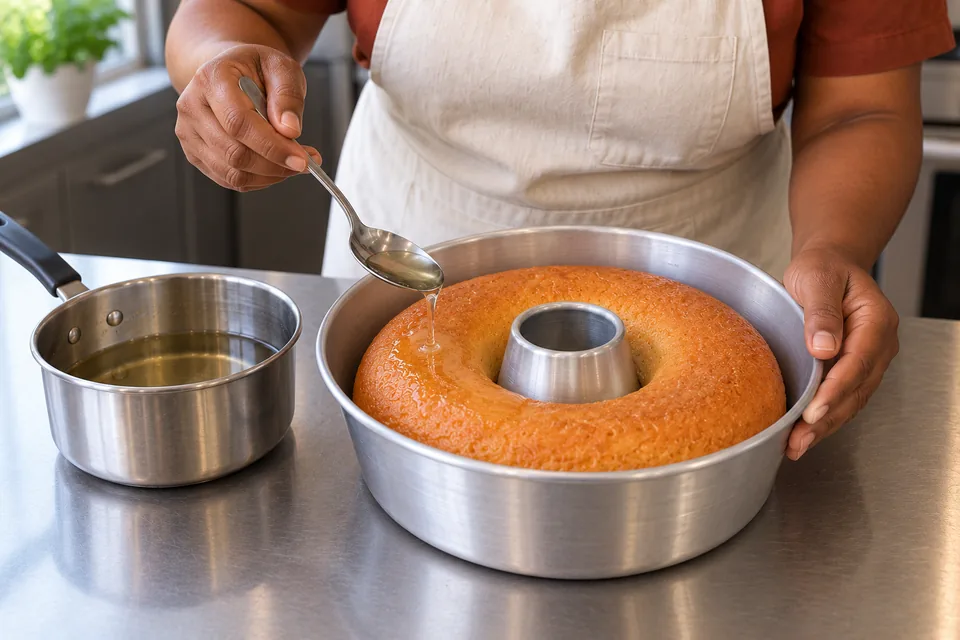
    A spoon adding clear syrup to the golden savarin in its ring mould.
    06 Soak with vanilla syrupSpoon in the warm syrup in stages as it absorbs.
  7. 07 · Make the warm chocolate custard

    8–10 min

    Use: Ready-to-eat vanilla custard; Plain milk chocolate

    During the last few minutes of the cake’s settling time, put the custard in a clean saucepan and warm gently, stirring, until hot but not boiling. Take the pan off the heat, add the chopped chocolate and stir until smooth. If small pieces remain, warm very gently while stirring.

    Ready when: The sauce is glossy and smooth enough to pour, without chocolate lumps or a curdled texture.
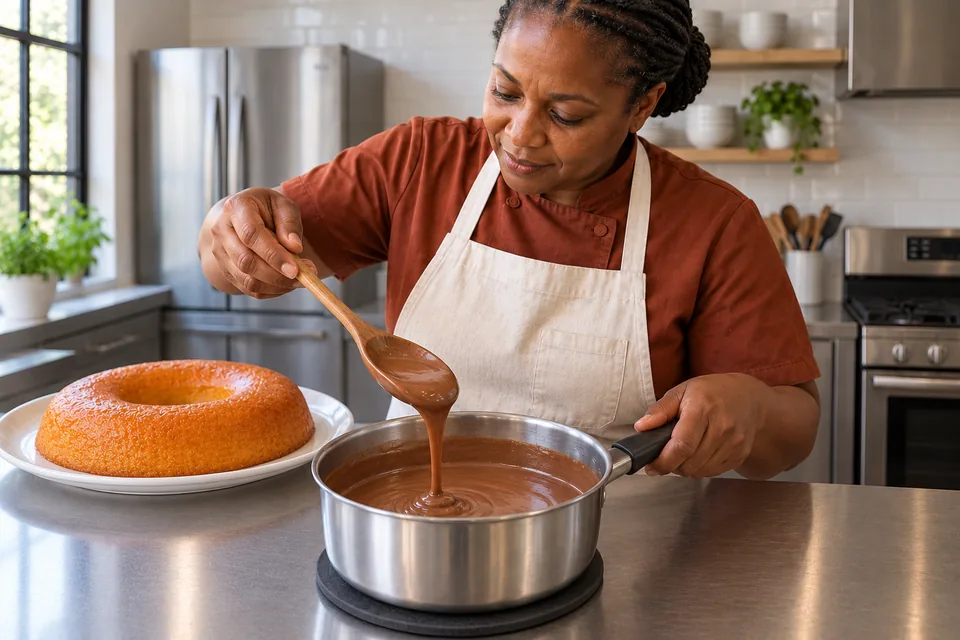
    Smooth chocolate custard in a saucepan, with the plain savarin ring separate behind it.
    07 Make the chocolate custardStir the chocolate into warm custard until smooth.
  8. 08 · Serve eight portions

    3–5 min

    Use:

    Cut the settled ring into eight portions and spoon the warm chocolate custard over each serving. Serve immediately.

    Ready when: The slices hold together and show an evenly moistened crumb; the sauce coats them without a pool of unabsorbed syrup.
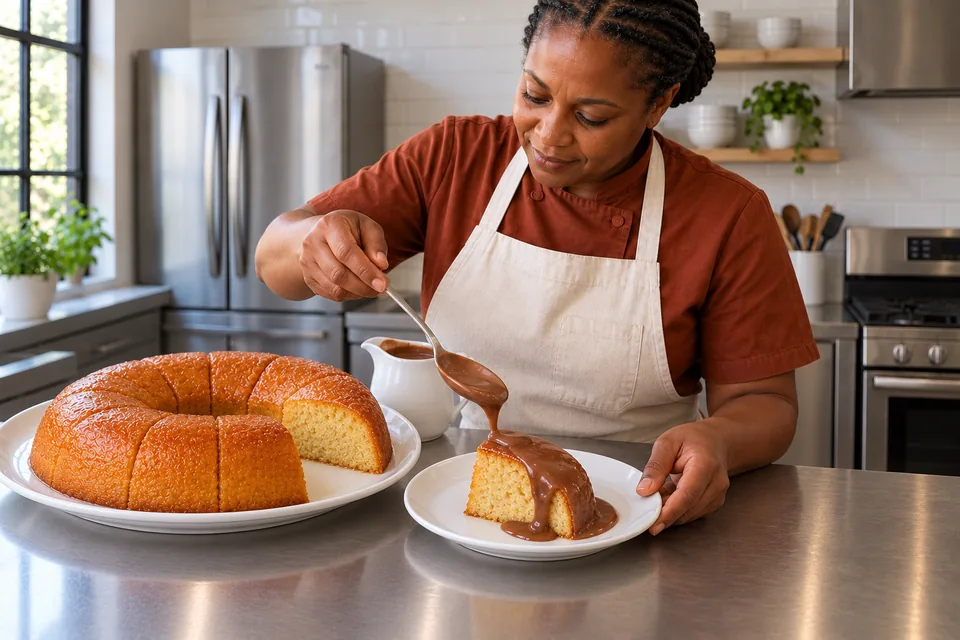
    Chocolate custard being spooned over a savarin slice beside the remaining cut ring.
    08 Serve with chocolate custardServe eight portions with warm chocolate custard.

What to look for

StageLook / feel forNeeds attention
Develop the savarin mixtureThe mixture is glossy, sticky and elastic. It falls from the paddle in a thick stretching ribbon rather than pouring like thin batter.
Let the mixture riseThe mixture has roughly doubled and shows bubbles beneath its surface.
Fill and proof the ringThe mixture rises to about three-quarters of the mould height and looks light; it has not reached or spilled over the rim.
Make the vanilla syrup and heat the ovenThe syrup is clear, with no sugar grains. It is warm enough to soak in but no longer steaming strongly.
Bake and unmouldThe cake is golden, springs back when pressed lightly, and a skewer inserted into its thickest part comes out without wet dough.
Soak the warm ring and let it settleThe ring feels heavier and evenly moist while still holding its shape. It is not floating in syrup.
Make the warm chocolate custardThe sauce is glossy and smooth enough to pour, without chocolate lumps or a curdled texture.
Serve eight portionsThe slices hold together and show an evenly moistened crumb; the sauce coats them without a pool of unabsorbed syrup.

Troubleshooting

If you see thisLikely causeWhat to do nowNext time
The mixture looks curdled while adding butter.The butter was too cold or added too quickly.Pause additions and beat until the mixture becomes smooth before continuing.Use soft butter and add it in small pieces after developing the mixture.
The ring rises over the mould rim.The tin was too small or the final proof went too far.Bake promptly if the mixture is still contained.Check mould capacity and stop proofing at about three-quarters height.
The cake breaks during soaking.It was handled roughly or absorbed syrup too quickly.Serve the pieces in bowls with the sauce.Support the ring in its mould and add syrup gradually.
The sauce is too thick to pour.The custard was very thick or the chocolate cooled.Warm gently while stirring.Use a pouring custard and serve the sauce warm.

Storage: Refrigerate leftover soaked cake and chocolate custard separately in covered containers and use within 2 days. Warm individual portions gently before serving. The unsoaked cake can be frozen, well wrapped, for up to 1 month; thaw fully before adding warm syrup.; Contains: wheat, milk, egg.; This Nepedia version has not been kitchen-tested.

Ingredient choices & substitutions

No brand is specified.

Match the ingredient’s function and weight. See the flour, gluten, yeast and salt guide.

Other approaches to this recipe
Cook / recipeUseWhat differs

The working ingredients and method form one recipe. Different formulas are compared without averaging their quantities or rise schedules.

Nepedia

Recipe

Savarin with chocolate custard

A yeast-raised ring cake soaked in vanilla syrup and served with warm chocolate custard. The syrup keeps the crumb moist; the dough itself is only lightly sweetened.

How do I make it?

  1. Develop the savarin mixture

    15–20 min

    Mix the flour, sugar, salt and instant yeast in a stand-mixer bowl. Add the milk and beaten eggs. Beat with a paddle on a suitable medium setting for 8–10 minutes until the mixture becomes stretchy. Add the soft butter a few pieces at a time and continue for 4–6 minutes, until it is fully absorbed.

    A thick ribbon of enriched yeast dough falling from a raised mixer paddle into its bowl.
    Develop a glossy, elastic mixture before the first rise.

    Ready when: The mixture is glossy, sticky and elastic. It falls from the paddle in a thick stretching ribbon rather than pouring like thin batter.

  2. Let the mixture rise

    60–90 min

    Scrape the bowl down, cover it and leave at 24–26°C for 60–90 minutes.

    Aerated savarin mixture in a covered mixer bowl.
    Cover the bowl and let the mixture become aerated.

    Ready when: The mixture has roughly doubled and shows bubbles beneath its surface.

  3. Fill and proof the ring

    50–80 min

    Grease a 24 cm savarin ring with a capacity of 1.5–1.8 litres, including its central tube. Stir the risen mixture briefly to release large bubbles, then spoon it evenly into the mould and smooth the surface. It should fill no more than half the mould. Cover loosely and leave at 24–26°C for 45–75 minutes.

    Pale risen savarin dough around the centre tube below the mould rim.
    Proof the ring with space left below the rim.

    Ready when: The mixture rises to about three-quarters of the mould height and looks light; it has not reached or spilled over the rim.

  4. Make the vanilla syrup and heat the oven

    7–10 min

    While the ring is proving, put the syrup water, syrup sugar and split vanilla pod in a saucepan. Stir over low heat until the sugar dissolves, then simmer for 2 minutes. Remove from the heat and leave to cool until just warm. Heat the oven to 180°C conventional during the final 20 minutes of proof.

    A spoon stirring clear vanilla syrup with a split vanilla pod in a saucepan.
    Make a clear vanilla syrup and let it cool until just warm.

    Ready when: The syrup is clear, with no sugar grains. It is warm enough to soak in but no longer steaming strongly.

  5. Bake and unmould

    30–40 min

    Remove the cover and bake the ring on the middle shelf for 25–30 minutes. Leave it in the mould for 5–10 minutes, then loosen the edges gently and turn it out onto a rack.

    A golden savarin ring on a rack beside its empty smooth mould.
    Bake until golden, then unmould the warm ring onto a rack.

    Ready when: The cake is golden, springs back when pressed lightly, and a skewer inserted into its thickest part comes out without wet dough.

  6. Soak the warm ring and let it settle

    35 min

    Remove the vanilla pod from the syrup. Put the warm cake back into its clean mould. Spoon the warm syrup over it in several additions, pausing as each addition sinks in. Leave for 10–15 minutes. Stop adding syrup if the cake is thoroughly moist and a puddle no longer absorbs; you may not need every drop. Carefully turn the ring onto a rimmed serving plate and let it settle for 20 minutes.

    A spoon adding clear syrup to the golden savarin in its ring mould.
    Spoon in the warm syrup in stages as it absorbs.

    Ready when: The ring feels heavier and evenly moist while still holding its shape. It is not floating in syrup.

  7. Make the warm chocolate custard

    8–10 min

    During the last few minutes of the cake’s settling time, put the custard in a clean saucepan and warm gently, stirring, until hot but not boiling. Take the pan off the heat, add the chopped chocolate and stir until smooth. If small pieces remain, warm very gently while stirring.

    Smooth chocolate custard in a saucepan, with the plain savarin ring separate behind it.
    Stir the chocolate into warm custard until smooth.

    Ready when: The sauce is glossy and smooth enough to pour, without chocolate lumps or a curdled texture.

  8. Serve eight portions

    3–5 min

    Cut the settled ring into eight portions and spoon the warm chocolate custard over each serving. Serve immediately.

    Chocolate custard being spooned over a savarin slice beside the remaining cut ring.
    Serve eight portions with warm chocolate custard.

    Ready when: The slices hold together and show an evenly moistened crumb; the sauce coats them without a pool of unabsorbed syrup.

What can go wrong, and how can I fix it?

What you noticeLikely causeWhat to do
The mixture looks curdled while adding butter.The butter was too cold or added too quickly.Pause additions and beat until the mixture becomes smooth before continuing. Use soft butter and add it in small pieces after developing the mixture.
The ring rises over the mould rim.The tin was too small or the final proof went too far.Bake promptly if the mixture is still contained. Check mould capacity and stop proofing at about three-quarters height.
The cake breaks during soaking.It was handled roughly or absorbed syrup too quickly.Serve the pieces in bowls with the sauce. Support the ring in its mould and add syrup gradually.
The sauce is too thick to pour.The custard was very thick or the chocolate cooled.Warm gently while stirring. Use a pouring custard and serve the sauce warm.
Useful recipe notes

Storage: Refrigerate leftover soaked cake and chocolate custard separately in covered containers and use within 2 days. Warm individual portions gently before serving. The unsoaked cake can be frozen, well wrapped, for up to 1 month; thaw fully before adding warm syrup.

Contains: wheat, milk, egg.

This Nepedia version has not been kitchen-tested.

See the detailed method and ratios in , or follow ingredients through the .

Ingredient proportions & recipe details

Savarin with chocolate custard at a glance

Makes
8 servings from one ring
Heat
180°C conventional
Baking time
25–30 min baking
Cuisine / style
International
Leavening
Yeast
How do the ingredient proportions compare?

Percentages compare each listed weight with the combined flour weight (100%). These are ingredient ratios, not dough hydration; milk, eggs and fillings contain other ingredients as well as water.

Formula componentGramsFlour = 100%
Plain flour300 g100%
Beaten whole eggs150 g50%
Whole milk120 g40%
Unsalted butter80 g26.7%
Caster sugar10 g3.3%
Fine salt5 g1.7%
Instant dried yeast5 g1.7%