Nepedia

Overnight White, Whole Wheat & Rye Bread

The overnight white bread method with a 70:20:10 blend of white wheat, whole wheat and rye.

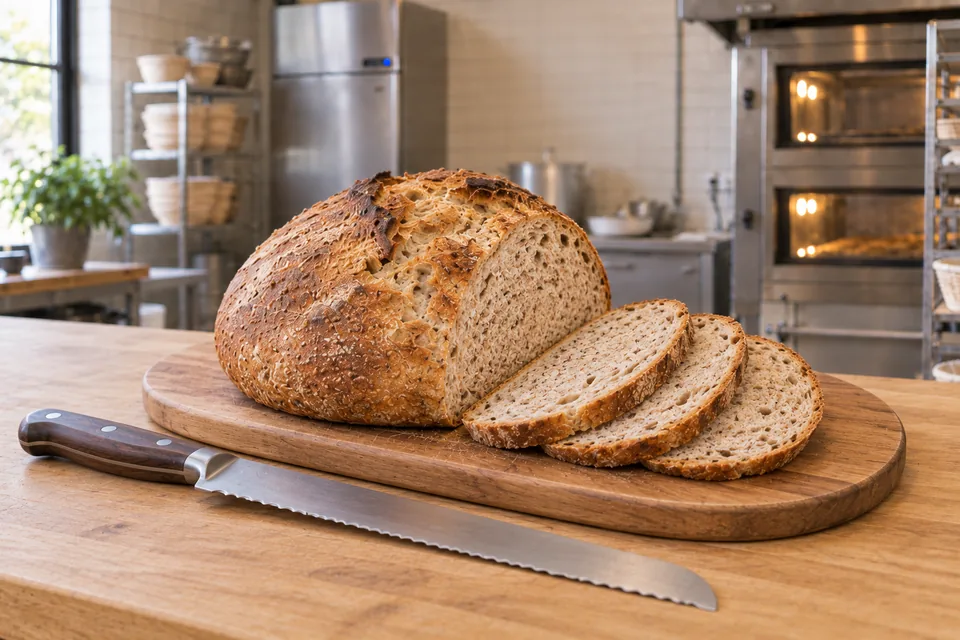
One shortened mixed-grain round with three matching thin slices and a serrated knife on an oval board.
Makes
2 loaves
Heat
245°C
Baking time
30 min covered + 20–30 min uncovered

Preheat covered pots for at least 45 min. Check the crust after 15 min uncovered.

View

Overnight White, Whole Wheat & Rye Bread

Makes
2 loaves
Heat
245°C
Baking time
30 min covered + 20–30 min uncovered

Preheat covered pots for at least 45 min. Check the crust after 15 min uncovered.

Straight yeast bread

Overnight White, Whole Wheat & Rye Bread

The overnight white bread method with a 70:20:10 blend of white wheat, whole wheat and rye.

Method

  1. 01 · Autolyse

    20–30 minutes

    Use: A

    Mix flours and water until no dry pockets remain; cover.

    Ready when: Evenly moistened, shaggy dough.
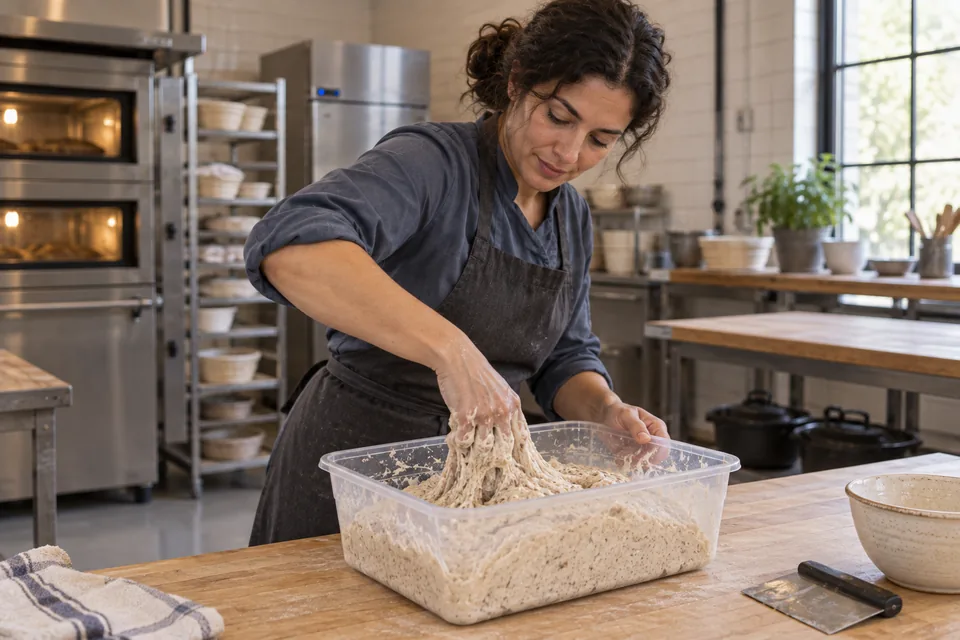
    A baker combines rough light-beige, finely flecked flour-and-water dough in a clear tub.
    01 Rest the flour and waterMoisten the flour blend evenly, leaving no dry pockets, then cover and rest.
  2. 02 · Mix

    3–6 minutes

    Use: A + B

    With a damp hand, fold edges over the additions; pinch through the mass with thumb and forefinger 5–6 times. Alternate pinching and folding until uniformly mixed, about 3–6 minutes. Rest briefly, then fold again.

    Ready when: Uniform salt/yeast distribution.
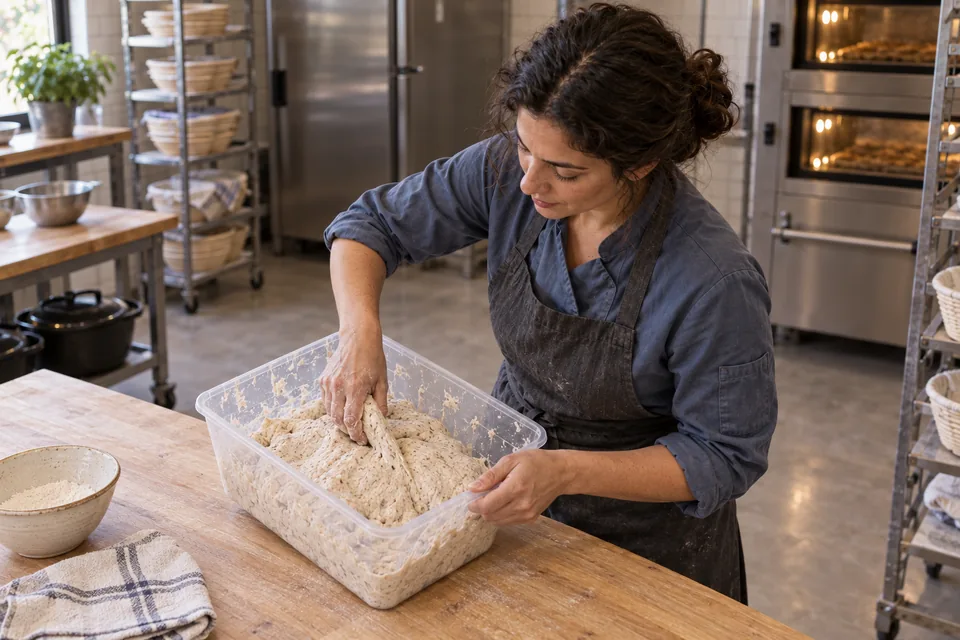
    Viewed from above, a baker pinches through uniform light-beige dough with fine wholegrain flecks.
    02 MixPinch and fold until the additions are evenly distributed through the flecked dough.
  3. 03 · Fold & bulk

    2–3 sets in first 1½ h; bulk 12–14 h

    Use: Mixed dough

    With a damp hand, stretch one edge until resistance, then fold across the dough. Repeat around 4–5 sides; turn the bundle seam down. Cover between sets; let it relax before the next set. Do not tear it or fold during the last bulk hour.

    Ready when: About 2½–3× starting volume.
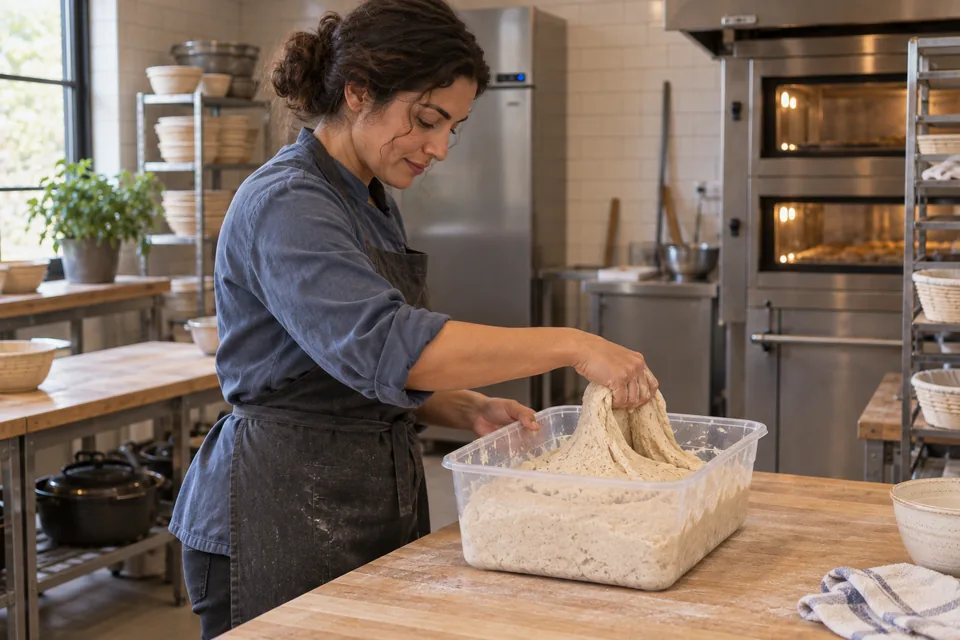
    A side-on baker lifts a connected edge of light-beige flecked dough in a tub.
    03 Fold and bulkFold gently to build strength while keeping the dough connected and untorn.
  4. 04 · Divide & shape

    After bulk

    Use: Fermented dough

    Gently tip onto a lightly floured counter and divide equally. Fold each perimeter inward; turn seam down. Cup and drag on an unfloured patch, rotating, until the surface holds tension without tearing. Place seam DOWN in floured baskets; cover.

    Ready when: Two medium-tight rounds, preserving gas.
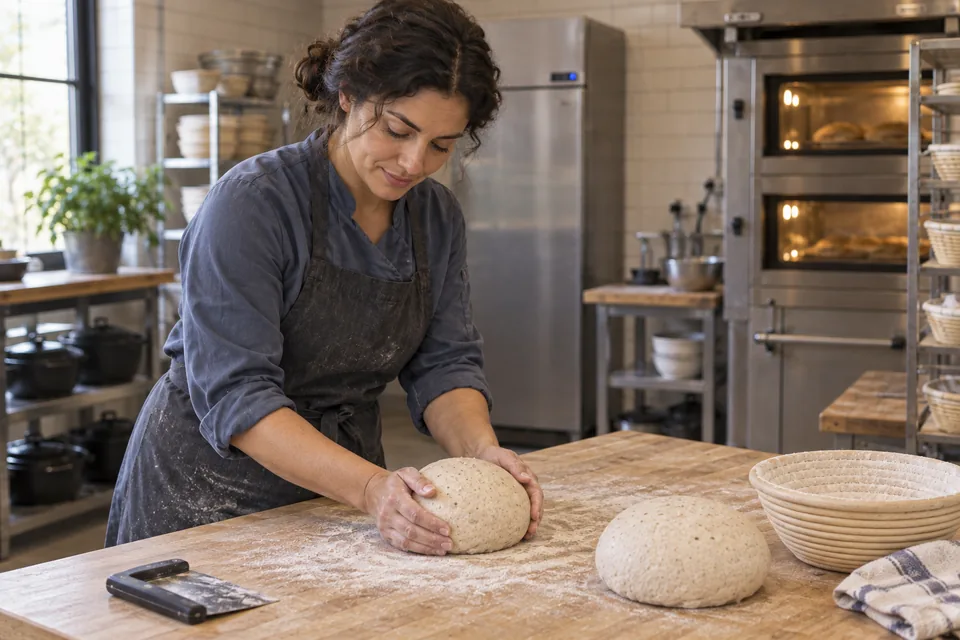
    A baker shapes one light-beige, finely flecked dough round with a second round beside it.
    04 Divide and shapeDivide evenly and cup the two rounds until their surfaces hold gentle tension.
  5. 05 · Proof

    About 1¼ hours

    Use: Covered baskets

    Proof at about 21°C. Gently press the loaf with a floured fingertip to make a small dent.

    Ready when: Dent returns slowly and incompletely.
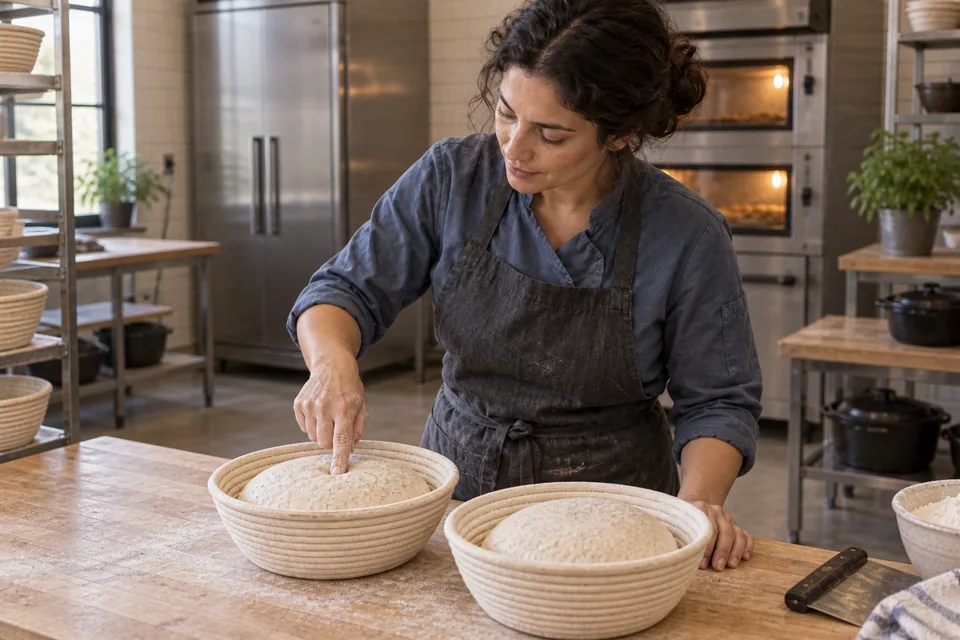
    A baker presses a small dent into one of two light-beige mixed-grain rounds in baskets.
    05 ProofThe rounds should expand without losing their shape; check with a gentle floured fingertip.
  6. 06 · Preheat

    At least 45 minutes during proof

    Use: Oven + covered pots

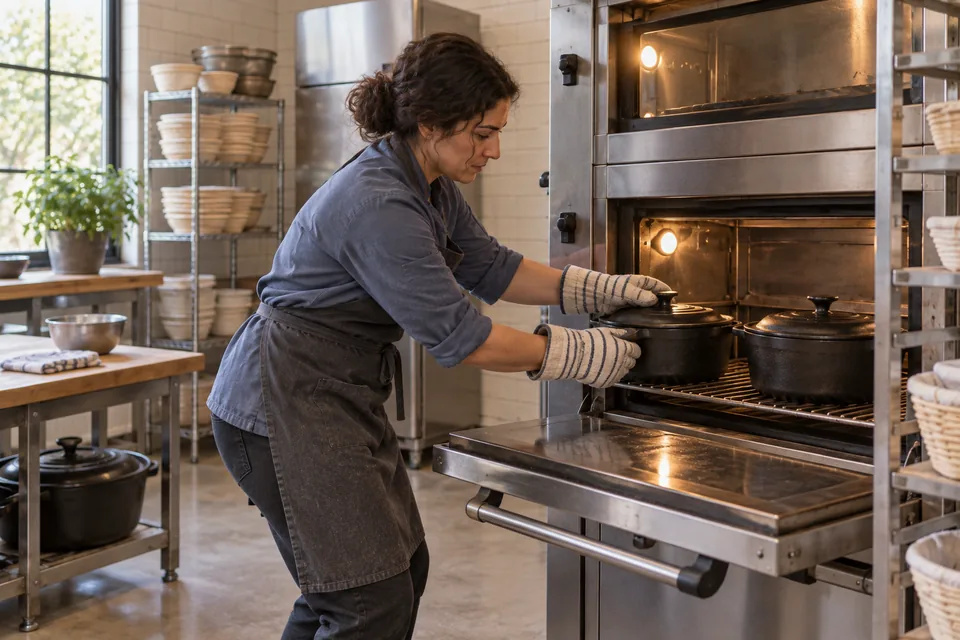
    Heat covered Dutch ovens on middle rack at 245°C.

    Ready when: Pots thoroughly heated.

    A baker wearing oven mitts positions two lidded black Dutch ovens on an oven rack.
    06 PreheatHeat the covered pots thoroughly while the loaves finish proofing.
  7. 07 · Bake

    30 min covered + 20–30 min uncovered

    Use: Proofed loaves

    Invert; carefully load seam UP into hot pots. Cover 30 minutes, then uncover to finish.

    Ready when: Dark brown crust; inspect after 15 min uncovered.
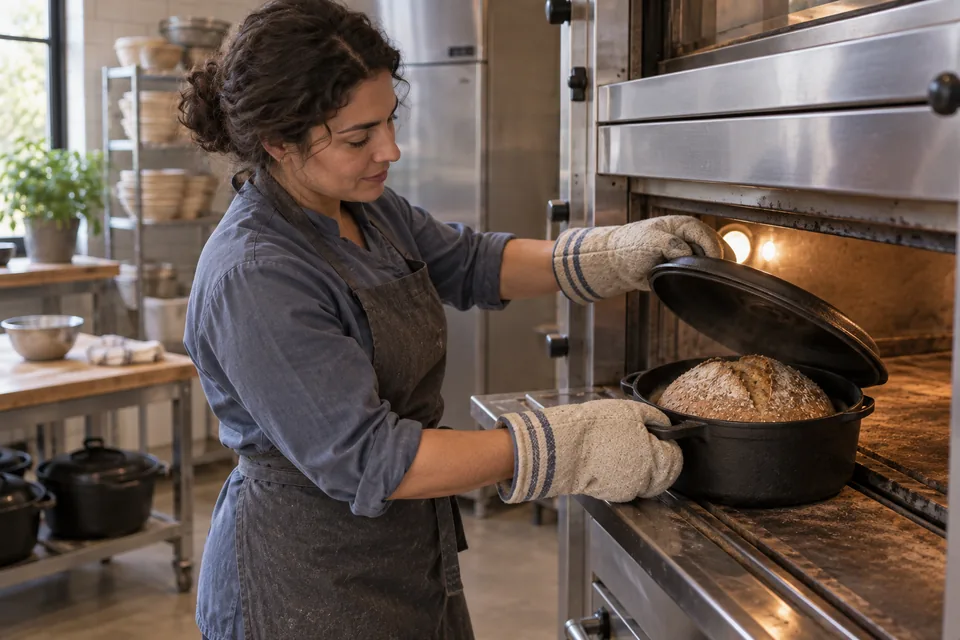
    A baker uses oven mitts to uncover a mixed-grain round loaf in a black Dutch oven.
    07 BakeAfter the covered stage, lift the lid with mitts and let the naturally opened crust brown.
  8. 08 · Cool

    At least 20 minutes; longer preferred

    Use: Loaves

    Remove from pots to a rack before slicing.

    Ready when: Crumb sets and excess steam dissipates.
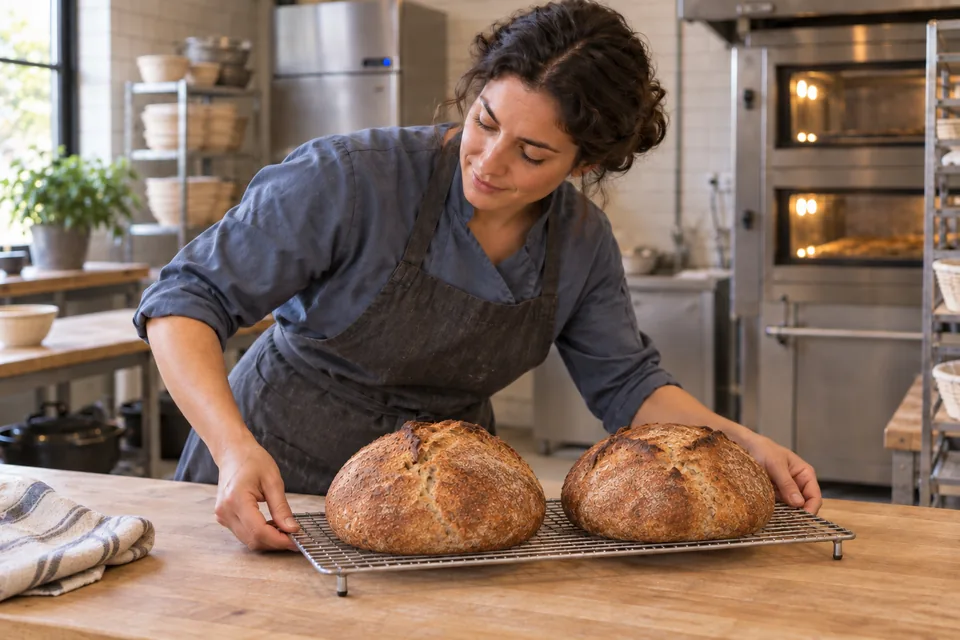
    A baker positions two intact mixed-grain round loaves with plain, naturally split crusts on a wire rack.
    08 CoolLet both loaves cool with air underneath so the crumb can set.

What to look for

StageLook and feelNeeds attention
BulkDough is gassy and expanded, with elastic edges.Do not keep waiting for the clock if the dough is collapsing.

Troubleshooting

If you seeLikely causeWhat to do nowNext time
Sticky or spreading doughRye feels stickier; it may also be too warm or overfermented.Use floured hands gently and bake at maturity.Keep room temperature in mind and do the early folds.

Recipe notes

  • Use the Overnight White Bread method and the flour blend listed here. Rye type and room temperature can shift the timeline.
Show ingredient flow
One shortened mixed-grain round with three matching thin slices and a serrated knife on an oval board.
Overnight white, whole-wheat and rye bread.

Recipe

Overnight White, Whole Wheat & Rye Bread

The overnight white bread method with a 70:20:10 blend of white wheat, whole wheat and rye.

How do I make it?

  1. Rest the flour and water

    20–30 minutes

    Mix the flours and water until every bit of flour is wet. Cover and let the mixture rest.

    A baker combines rough light-beige, finely flecked flour-and-water dough in a clear tub.
    Moisten the flour blend evenly, leaving no dry pockets, then cover and rest.

    Ready when: Rough dough with all the flour evenly wet.

  2. Mix the dough

    3–6 minutes

    Add the remaining group B ingredients to the rested dough, then wet your hand and fold the outer edges over them. Pinch through the dough with your thumb and forefinger 5–6 times, alternating with folds until evenly mixed, about 3–6 minutes. Rest briefly, fold again and aim for a dough temperature of 25–26°C.

    Viewed from above, a baker pinches through uniform light-beige dough with fine wholegrain flecks.
    Pinch and fold until the additions are evenly distributed through the flecked dough.

    Ready when: Salt and yeast are evenly mixed through the dough.

  3. Fold and let rise

    2–3 folding rounds in first 1½ h; first rise 12–14 h

    Wet your hand, lift one edge of the dough just until it resists, then fold it across; work around 4–5 sides and turn the dough folded-side down. Keep it covered and let it relax between rounds of folding. Avoid tearing the dough, and leave it untouched for the last hour of this first rise.

    A side-on baker lifts a connected edge of light-beige flecked dough in a tub.
    Fold gently to build strength while keeping the dough connected and untorn.

    Ready when: About 2½–3× its starting size.

  4. Shape the loaves

    After the first rise

    Gently tip the dough onto a lightly floured counter and divide it equally. Fold each piece’s edges into the middle, turn the folded side down onto a patch without flour, then cup and gently pull it toward you while turning until the surface is firm without tearing. Put the rounds folded-side DOWN in floured rising baskets and cover, keeping as much air in the dough as possible.

    A baker shapes one light-beige, finely flecked dough round with a second round beside it.
    Divide evenly and cup the two rounds until their surfaces hold gentle tension.

    Ready when: Two moderately firm rounds that still contain air bubbles.

  5. Let the loaves rise

    About 1¼ hours

    Let the covered loaves rise at about 21°C. Gently press a loaf with a floured fingertip to make a small dent.

    A baker presses a small dent into one of two light-beige mixed-grain rounds in baskets.
    The rounds should expand without losing their shape; check with a gentle floured fingertip.

    Ready when: The finger dent slowly rises partway back.

  6. Heat the oven

    At least 45 minutes while the shaped loaves rise

    Put the heavy lidded pots on the middle rack and heat them with the oven at 245°C.

    A baker wearing oven mitts positions two lidded black Dutch ovens on an oven rack.
    Heat the covered pots thoroughly while the loaves finish proofing.

    Ready when: The pots are fully hot.

  7. Bake

    30 min covered + 20–30 min uncovered

    Turn the loaves out and carefully put them folded-side UP into the hot pots. Bake with the lids on for 30 minutes, then remove the lids to finish baking.

    A baker uses oven mitts to uncover a mixed-grain round loaf in a black Dutch oven.
    After the covered stage, lift the lid with mitts and let the naturally opened crust brown.

    Ready when: A dark brown crust; check after 15 min without the lid.

  8. Let it cool

    At least 20 minutes; longer preferred

    Take the loaves out of the pots and let them cool on a rack before slicing.

    A baker positions two intact mixed-grain round loaves with plain, naturally split crusts on a wire rack.
    Let both loaves cool with air underneath so the crumb can set.

    Ready when: The inside is firming up as extra steam escapes.

What can go wrong, and how can I fix it?

What you noticeLikely causeWhat to do
Sticky or spreading doughRye feels stickier; it may also be too warm or overfermented.Use floured hands gently and bake at maturity. Keep room temperature in mind and do the early folds.
Useful recipe notes

Use the Overnight White Bread method and the flour blend listed here. Rye type and room temperature can shift the timeline.

See the detailed method and ratios in , or follow ingredients through the .

Ingredient proportions & recipe details

Overnight White, Whole Wheat & Rye Bread at a glance

Makes
2 loaves
Heat
245°C
Baking time
30 min covered + 20–30 min uncovered
Dough hydration
78%
Prefermented flour
0% of total flour
Leavening
Yeast
Bulk fermentation
2–3 sets in first 1½ h; bulk 12–14 h · About 2½–3× starting volume.
How do the ingredient proportions compare?

Core dough totals include the flour and water in the portion of starter or preferment used. Do not add them again. Toppings, fillings and dusting flour are separate.

Formula componentGramsFlour = 100%
Total flour1000 g100%
Total water780 g78%
Salt22 g2.2%
Instant yeast0.8 g0.1%