Nepedia

No-knead white bread

Larger batch with refrigerated dough storage.

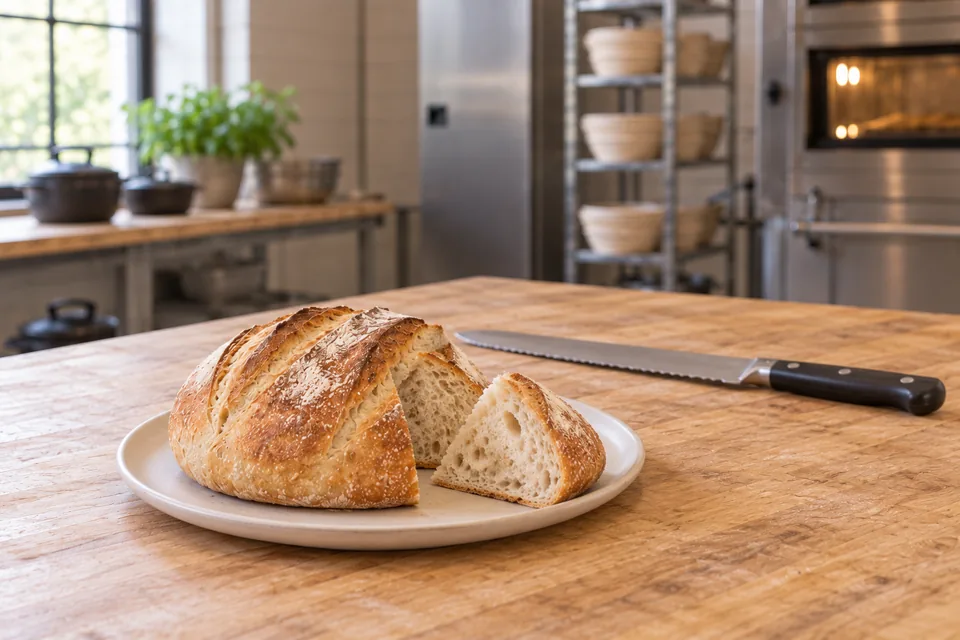
A small scored round loaf and its removed wedge on a plain plate beside a bread knife.
Makes
Three or four small loaves
Heat
230°C
Baking time
25–35 min
View

No-knead white bread

Makes
Three or four small loaves
Heat
230°C
Baking time
25–35 min
King Arthur Baking · reference variation

No-knead white bread

Method

  1. 01 · Mix

    1 min

    Use: Dough

    Stir in a covered 5.7 L container.

    Ready when: Rough, sticky

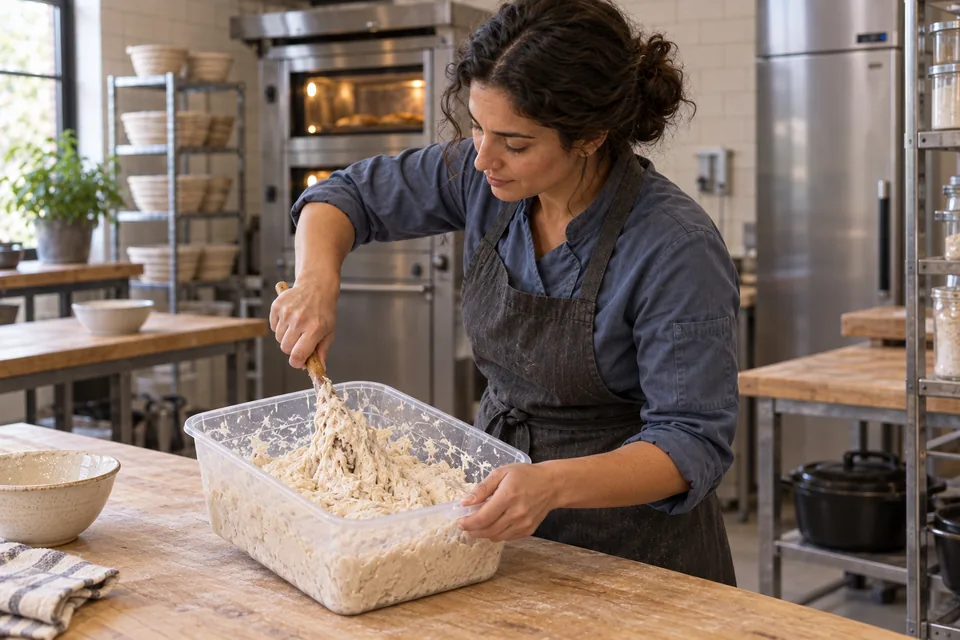
    A baker stirs sticky ivory dough in a clear tub with a wooden spoon.
    01 MixStir until the flour is fully moistened; the dough should remain rough and sticky.
  2. 02 · Rise

    2 h + at least 2 h chilled

    Use: Dough

    Keep at room temperature, then refrigerate.

    Ready when: Rises then settles

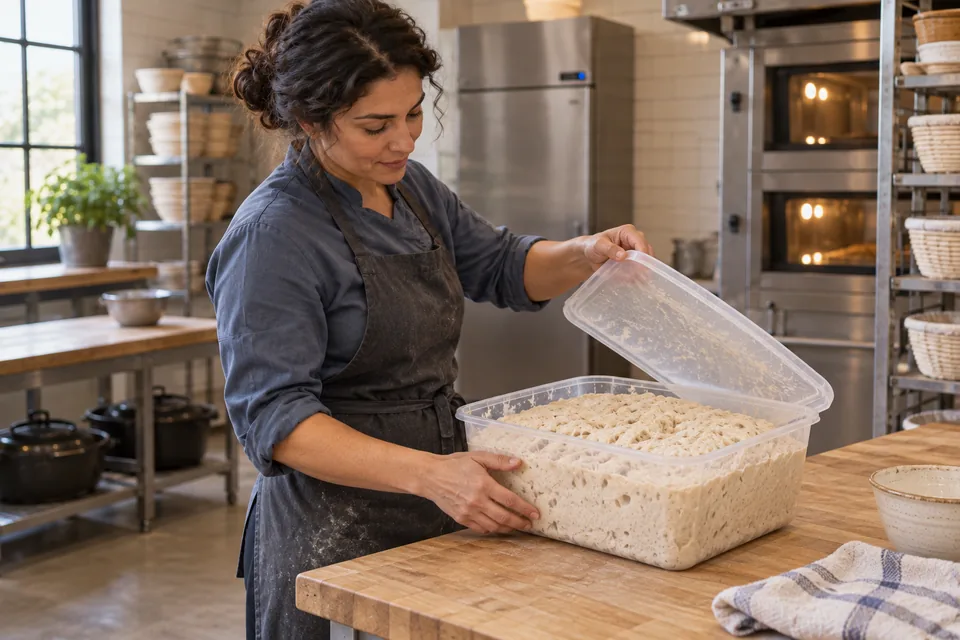
    A baker lifts a lid to inspect a tub of expanded ivory dough dotted with bubbles.
    02 RiseLet the covered batch rise at room temperature, then refrigerate before taking out a portion to shape.
  3. 03 · Shape

    —

    Use: Dough

    Remove 400–540 g; round on floured surface using oiled hands. Cover on tray.

    Ready when: Loose ball

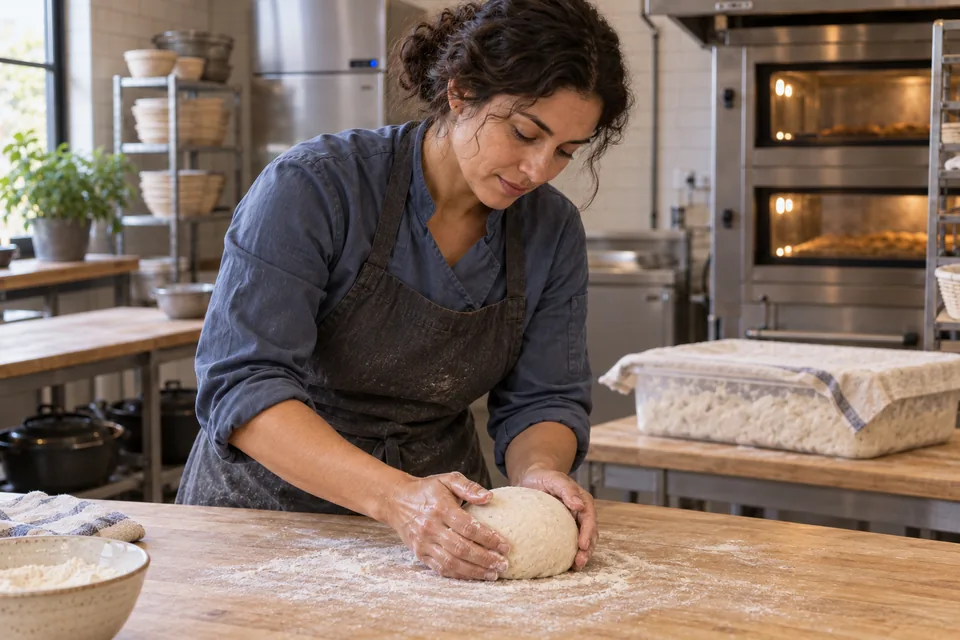
    A baker cups one small round dough portion on a floured bench, with the covered bulk container behind.
    03 ShapeTake only one portion from the chilled batch and round it gently with oiled hands.
  4. 04 · Proof

    1–2 h

    Use: Loaf

    Dust and cover. Preheat oven/steam pan at 230°C.

    Ready when: Expanded

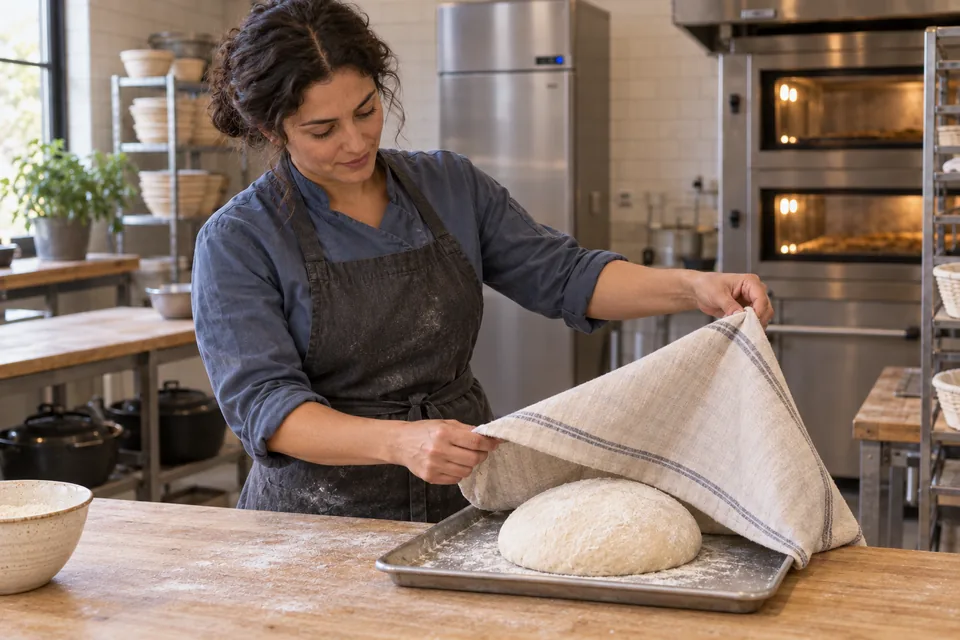
    A baker lifts a cloth from one expanded, unscored white dough round on a metal tray.
    04 ProofDust the small loaf, cover it on a tray and allow it to become puffy.
  5. 05 · Bake

    25–35 min

    Use: Loaf + steam

    Slash 13 mm deep; load loaf. Carefully pour hot water into lower metal pan.

    Ready when: Deep golden

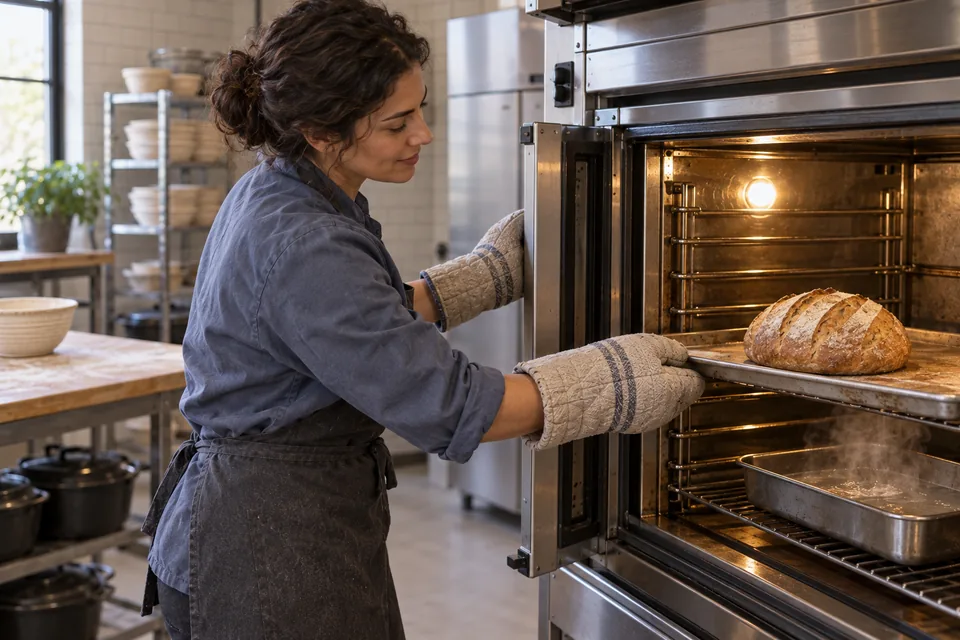
    A baker with oven mitts checks one diagonally scored round loaf above a separate metal steam pan.
    05 BakeSlash before baking and use a separate metal pan for steam. Look for a deep golden crust.
  6. 06 · Cool

    Until cool

    Use: Bread

    Cool on rack.

    Ready when: Set crumb

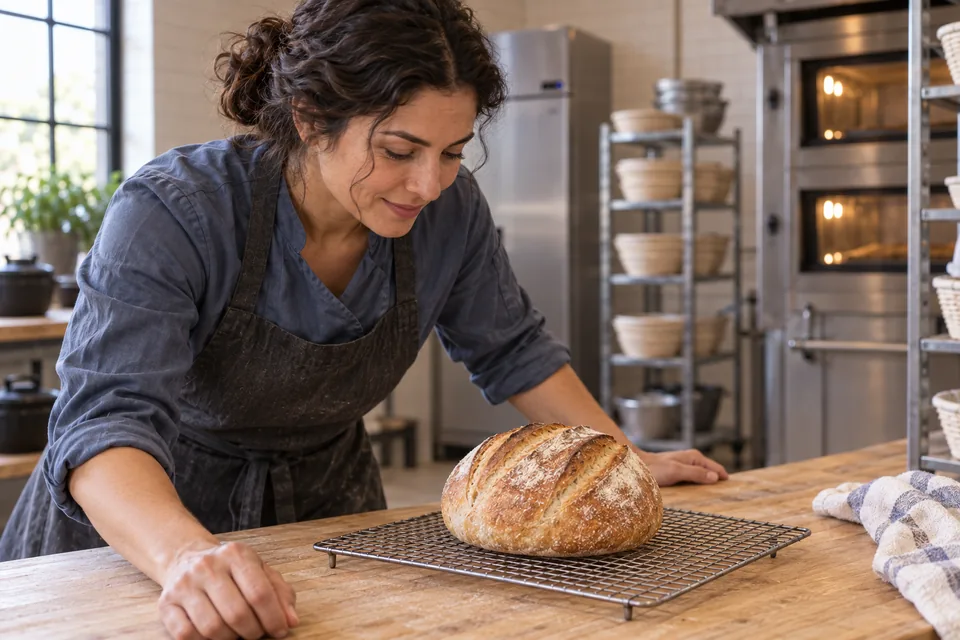
    A baker leans toward one intact, diagonally scored golden round loaf on a cooling rack.
    06 CoolLeave the loaf on a rack until the crumb is cool and set.

What to look for

StageLook / feel forNeeds attention
RefrigerationRise followed by settlingTreating settling as failure

Troubleshooting

If you see thisLikely causeWhat to do nowNext time
Very slow proofCold doughAllow longerFollow expansion

Refrigerate dough up to seven days. Steam pan: metal, never glass.

Ingredient choices & substitutions
IngredientSpecified typeBrandStatus
FlourUnbleached all-purpose, 11.7% proteinKing Arthurnamed formulation; matching type is the practical alternative
YeastInstant or active dryNot specifiedspecified in recipe
IngredientAlternative / ratioAdjust handlingLikely outcome
All-purpose flourBread flour1:1 by weightWatch consistency; stronger flour absorbs more liquid.May be stronger and chewier.

Match the ingredient’s function and weight. See the flour, gluten, yeast and salt guide.

King Arthur Baking
A small scored round loaf and its removed wedge on a plain plate beside a bread knife.
One small loaf from the batch, with a wedge removed.

Recipe

No-knead white bread

How do I make it?

  1. Mix a rough dough

    1 min

    Stir the dough ingredients together in a 5.7 L container until you have a rough, sticky dough, then cover it.

    A baker stirs sticky ivory dough in a clear tub with a wooden spoon.
    Stir until the flour is fully moistened; the dough should remain rough and sticky.

    Ready when: Rough, sticky

  2. Let it rise, then chill

    2 h + at least 2 h chilled

    Keep the dough covered at room temperature for 2 hours, then refrigerate it for at least 2 hours.

    A baker lifts a lid to inspect a tub of expanded ivory dough dotted with bubbles.
    Let the covered batch rise at room temperature, then refrigerate before taking out a portion to shape.

    Ready when: Rises then settles

  3. Take enough for one loaf

    —

    Take 400–540 g of dough from the container. Lightly oil your hands, shape it into a loose ball on a floured surface and put it on a tray, covered.

    A baker cups one small round dough portion on a floured bench, with the covered bulk container behind.
    Take only one portion from the chilled batch and round it gently with oiled hands.

    Ready when: Loose ball

  4. Let the loaf puff up

    1–2 h

    Dust the loaf with flour and cover it while it rises. Heat the oven and a separate metal steam pan to 230°C.

    A baker lifts a cloth from one expanded, unscored white dough round on a metal tray.
    Dust the small loaf, cover it on a tray and allow it to become puffy.

    Ready when: Expanded

  5. Cut the top and bake

    25–35 min

    Cut a 13 mm-deep slash in the loaf and put it in the oven. Carefully pour the hot water into the separate metal pan on a lower rack to make steam, then bake.

    A baker with oven mitts checks one diagonally scored round loaf above a separate metal steam pan.
    Slash before baking and use a separate metal pan for steam. Look for a deep golden crust.

    Ready when: Deep golden

  6. Cool before slicing

    Until cool

    Put the baked loaf on a rack and let it cool so the inside can set.

    A baker leans toward one intact, diagonally scored golden round loaf on a cooling rack.
    Leave the loaf on a rack until the crumb is cool and set.

    Ready when: Set crumb

What can go wrong, and how can I fix it?

What you noticeLikely causeWhat to do
Very slow proofCold doughAllow longer Follow expansion
Useful recipe notes

Refrigerate dough up to seven days. Steam pan: metal, never glass.

See the detailed method and ratios in , or follow ingredients through the .

Ingredient proportions & recipe details

No-knead white bread at a glance

Makes
Three or four small loaves
Heat
230°C
Baking time
25–35 min
Leavening
Yeast
How do the ingredient proportions compare?

Percentages compare each listed weight with the combined flour weight (100%). These are ingredient ratios, not dough hydration; milk, eggs and fillings contain other ingredients as well as water.

Formula componentGramsFlour = 100%
Unbleached all-purpose flour900 g100%
Water680 g75.6%
Table salt18 g2%
Instant yeast14 g1.6%