Nepedia

Mushroom and smoked paprika sourdough

A savoury overnight levain bread with cooked mushrooms and olive oil.

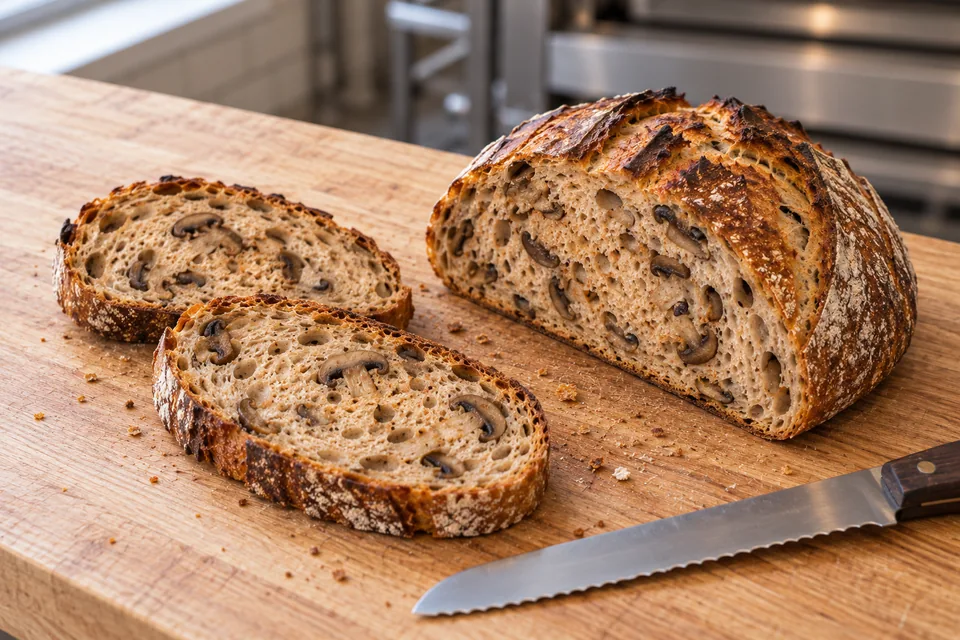
A cut round sourdough and two slices show roasted mushrooms in a warm beige crumb on the wooden bench.
Makes
2 loaves
Heat
245°C bread; 205°C mushrooms
Baking time
Bread: 30 min covered + 20–25 min uncovered; mushrooms: about 25–40 min

Roast mushrooms separately until surface-dry, then cool. Preheat covered pots for at least 45 min; check bread after 15 min uncovered.

Explore variations · 13 →Jump to ingredients & method ↓
View

Mushroom and smoked paprika sourdough

Makes
2 loaves
Heat
245°C bread; 205°C mushrooms
Baking time
Bread: 30 min covered + 20–25 min uncovered; mushrooms: about 25–40 min

Roast mushrooms separately until surface-dry, then cool. Preheat covered pots for at least 45 min; check bread after 15 min uncovered.

Pure levain bread

Mushroom and smoked paprika sourdough

A savoury overnight levain bread with cooked mushrooms and olive oil.

Method

  1. 01 · Feed

    9–10 hours

    Use: A

    Keep only 100 g mature levain. Mix in the feed flour and water; cover at room temperature.

    Ready when: Bubbly, expanded and webbed inside; pleasantly fermented.
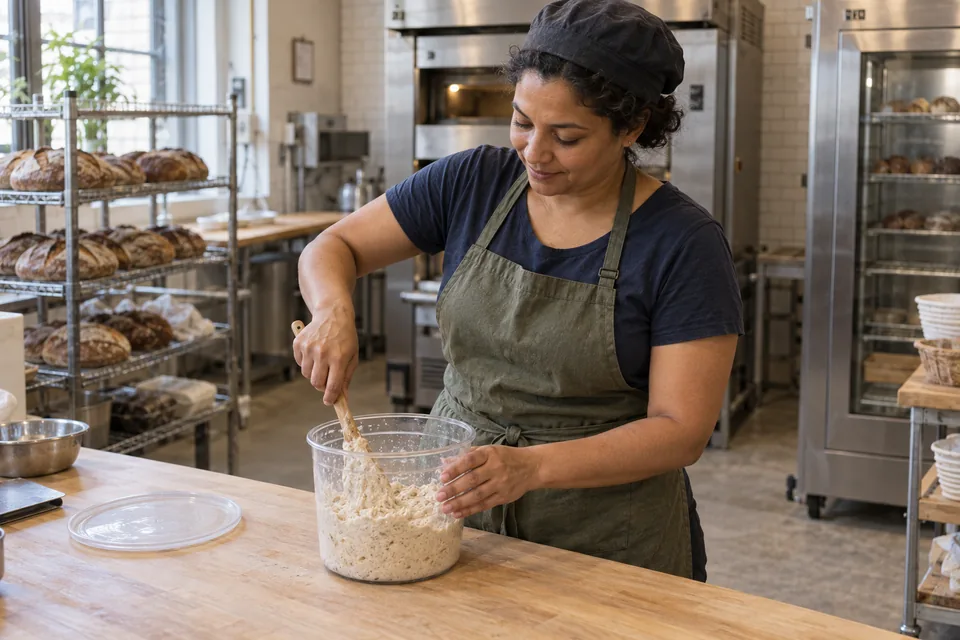
    Baker stirs a thick, softly flecked levain in a clear container.
    01 FeedMix the retained starter with its feed flour and water, then cover and let it expand.
  2. 02 · Prepare mushrooms

    About 25–40 minutes, depending on moisture

    Use: C mushrooms

    Spread sliced mushrooms on parchment. Roast at 205°C until deeply browned and surface-dry, stirring as needed. Cool promptly, then weigh 225 g; refrigerate if made ahead.

    Ready when: No free liquid; mushrooms are cool before adding.
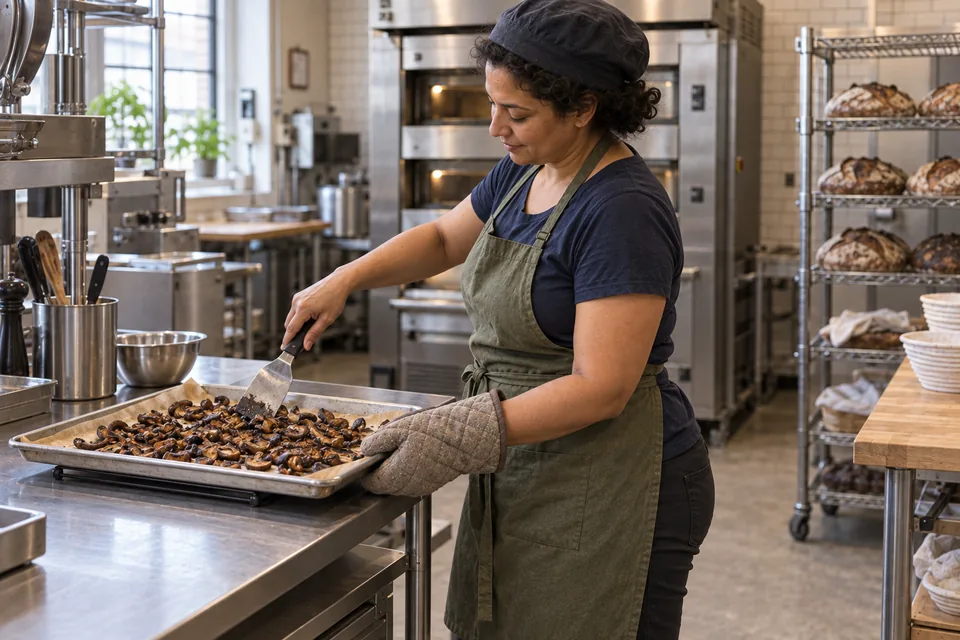
    Sliced mushrooms are roasted until browned and surface-dry.
    02 Prepare mushroomsRoast the sliced mushrooms until browned and surface-dry, then cool them before weighing and adding.
  3. 03 · Autolyse

    20–30 minutes

    Use: B flour + B water

    Near the end of the feed, mix the final-dough flours and water only. Cover. Keep salt, yeast and levain aside.

    Ready when: All flour moistened; no dry pockets.
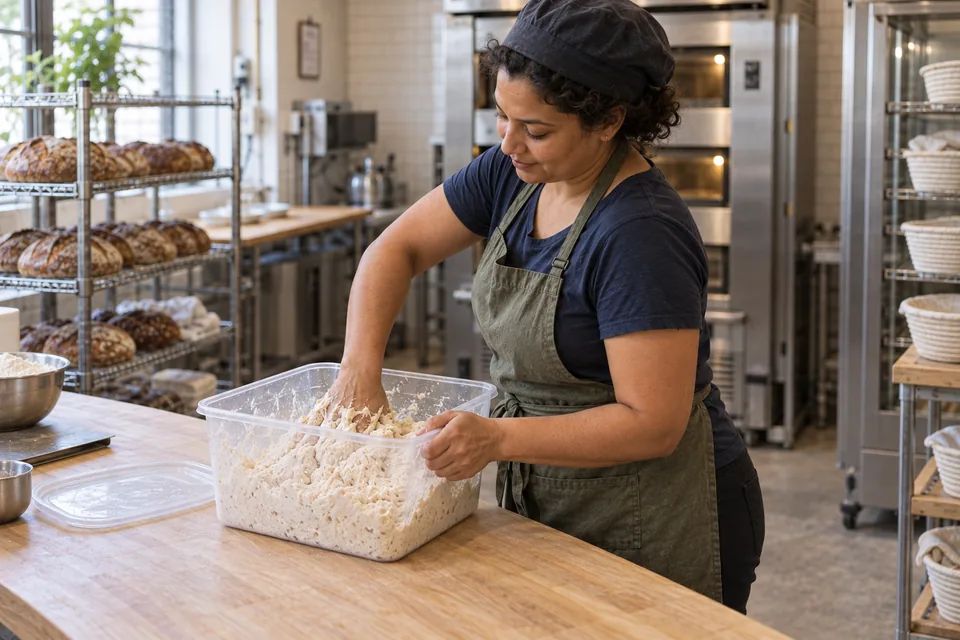
    Seen from the side, the baker mixes rough pale wheat dough by hand in a clear rectangular tub.
    03 AutolyseMoisten all the final-dough flour with the final water, then cover and rest.
  4. 04 · Mix

    3–6 minutes

    Use: Autolysed dough + remaining B

    With a damp hand, fold edges over the additions; pinch through the mass with thumb and forefinger 5–6 times. Alternate pinching and folding until uniformly mixed, about 3–6 minutes. Rest briefly, then fold again.

    Ready when: Uniform dough, no streaks of levain or salt.
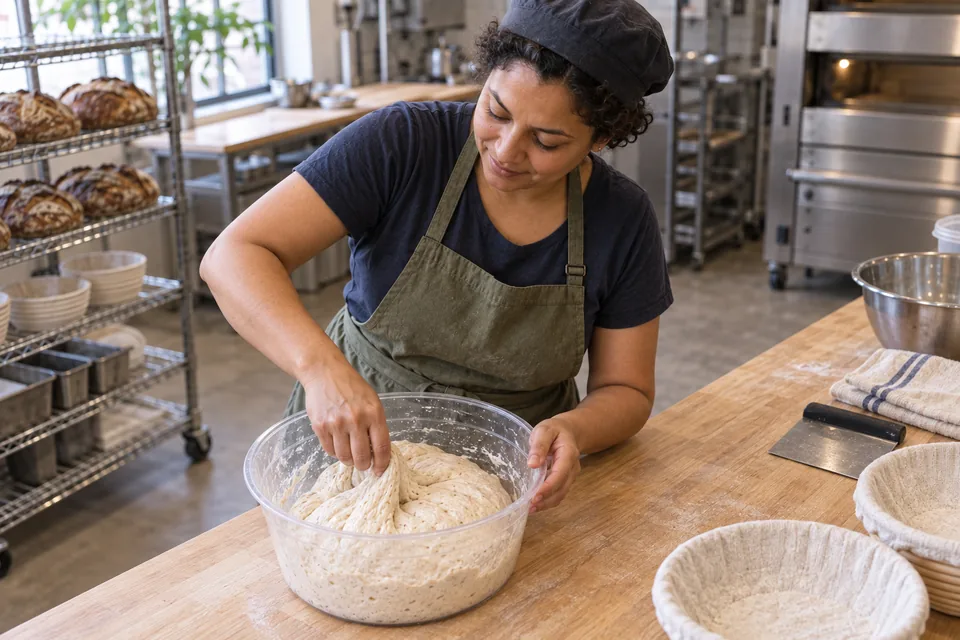
    From an elevated angle, the baker pinches and folds cohesive pale wheat dough in a clear tub.
    04 MixUse a damp hand to pinch and fold the levain, salt and any listed yeast evenly into the dough.
  5. 05 · Add savoury mixture

    10-minute rest, then incorporate

    Use: Mixed dough + C

    Rest 10 minutes, then fold in the cooled mushrooms, olive oil and paprika until distributed.

    Ready when: Even pieces and no oily streaks.
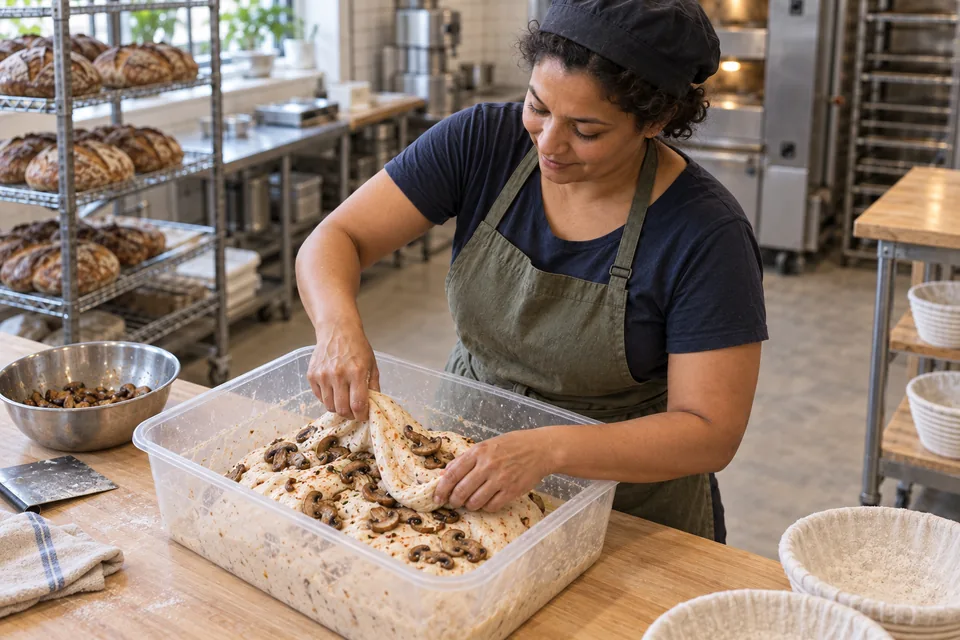
    Cooled mushrooms, olive oil and smoked paprika are folded into the dough.
    05 Add savoury mixtureFold in the cooled mushrooms, olive oil and smoked paprika until there are no oily streaks.
  6. 06 · Fold & bulk

    3–4 sets in first 1½–2 h; total bulk about 12 hours; judge the dough

    Use: Mixed dough

    With a damp hand, stretch one edge until resistance, then fold across the dough. Repeat around 4–5 sides; turn the bundle seam down. Cover between sets; let it relax before the next set. Do not tear it or fold during the last bulk hour.

    Ready when: Nearly 3× starting volume; possibly less in a cool kitchen.
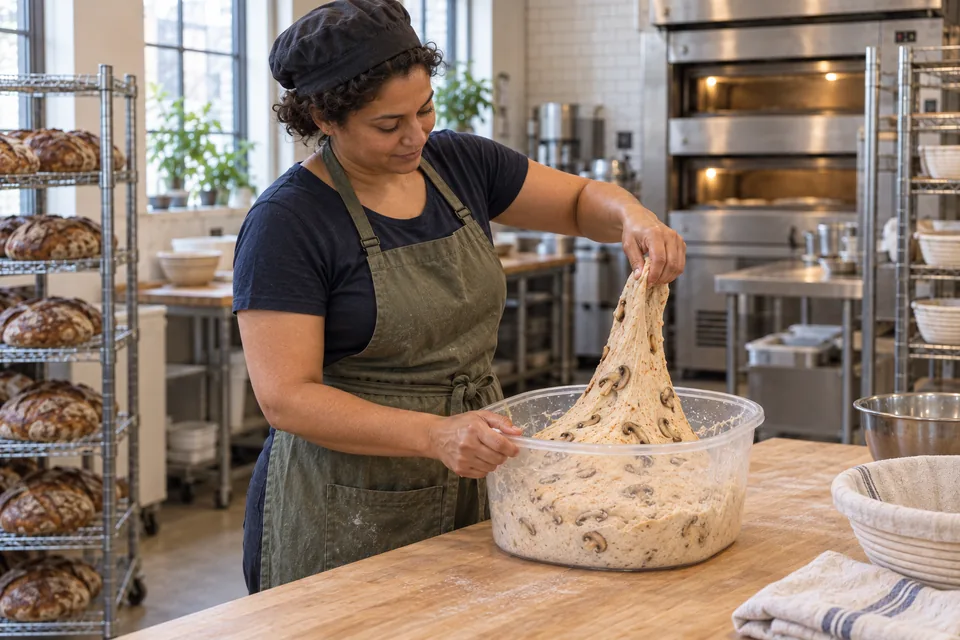
    The baker lifts a short elastic flap of mushroom-studded dough, ready to fold it back across the mass.
    06 Fold & bulkLift an edge gently, fold it across, then let the dough relax before the next set.
  7. 07 · Divide & shape

    After bulk

    Use: Fermented dough

    Gently tip onto a lightly floured counter and divide equally. Fold each perimeter inward; turn seam down. Cup and drag on an unfloured patch, rotating, until the surface holds tension without tearing. Place seam DOWN in floured baskets; cover.

    Ready when: Medium-tight rounds; preserve visible gas.
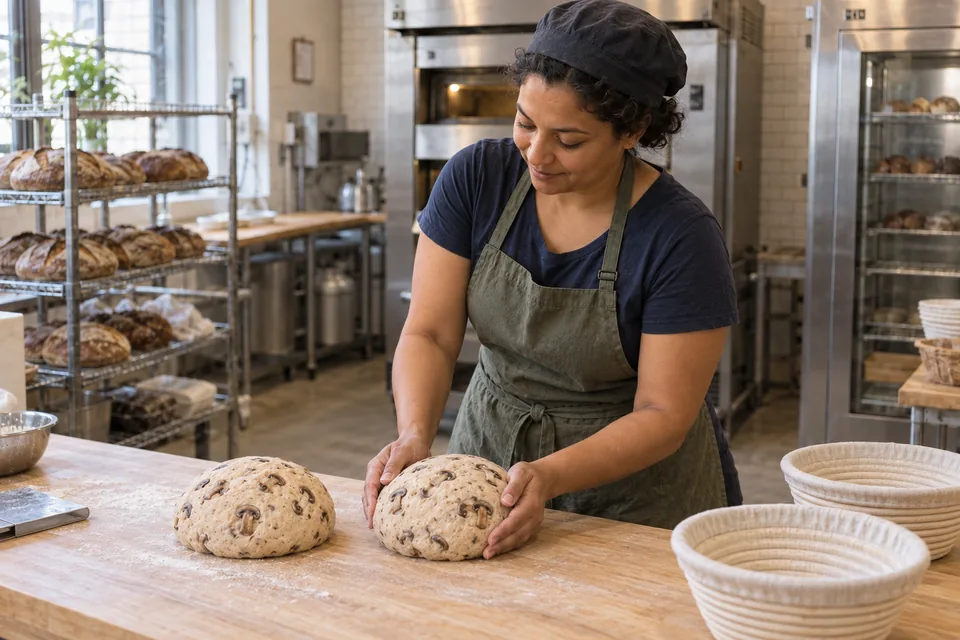
    The baker cups one mushroom-studded dough round with a second equally sized round beside it.
    07 Divide & shapeDivide equally and cup each piece into a smooth round, then place seam down in floured baskets.
  8. 08 · Proof

    3½–4 hours

    Use: Covered baskets

    Leave at about 21°C. Gently press the loaf with a floured fingertip to make a small dent. The dent should slowly rise partway back.

    Ready when: Slow, partial rebound; loaf feels aerated.
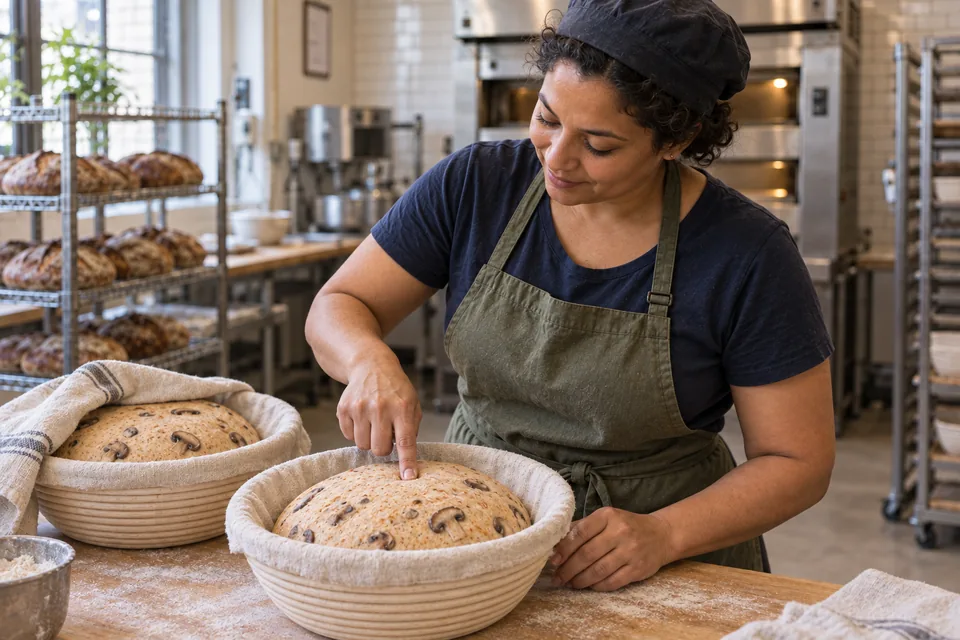
    A floured fingertip gently checks one of two puffy mushroom-studded dough rounds in cloth-lined baskets.
    08 ProofLook for a puffy loaf and a small fingertip dent that slowly rises partway back.
  9. 09 · Preheat

    At least 45 minutes, overlapping final proof

    Use: Oven + covered Dutch ovens

    Put covered pots on a middle rack. Preheat thoroughly to 245°C.

    Ready when: Oven and pot fully heated.

    Two covered cast-iron pots heat on the middle oven rack.
    09 PreheatHeat the covered Dutch ovens thoroughly while the loaves finish proofing.
  10. 10 · Bake

    30 min covered + 20–25 min uncovered

    Use: Proofed loaves

    Invert onto a lightly floured counter and carefully lower into hot pot seam UP. Cover for 30 minutes, then uncover to finish. Use dry oven mitts; keep skin clear of hot iron.

    Ready when: Deep brown crust; check 15 min after uncovering.
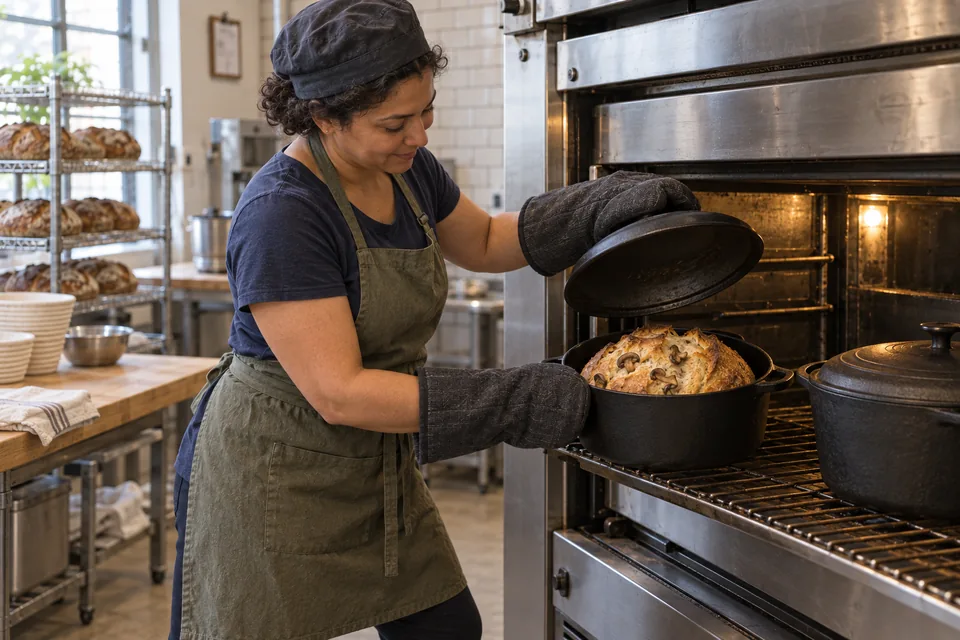
    Using dry oven mitts, the baker lifts a lid to reveal a naturally split mushroom-studded loaf, with a second covered pot nearby.
    10 BakeUse dry mitts to remove the lid after the covered bake, then finish uncovered until the crust is deep brown.
  11. 11 · Cool

    At least 20 minutes; longer for cleaner slices

    Use: Baked loaves

    Lift out of pots and cool on a rack before cutting.

    Ready when: Steam has subsided; crumb no longer tears when cut.
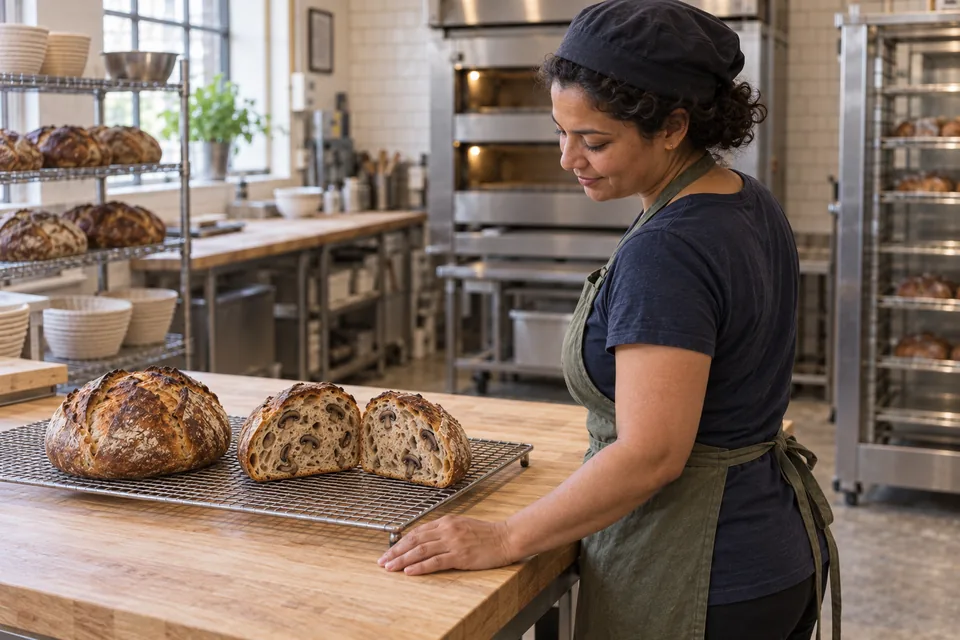
    One whole mushroom-studded loaf and both halves of a second cool on a raised rack beside the baker.
    11 CoolCool the loaves on a rack before cutting so the crumb can set without tearing.

What to look for

StageLook and feelNeeds attention
Mix & foldsSticky but cohesive dough gains height and elasticity after each fold.A puddle that never gains strength, or a dry dough tearing under a gentle stretch.
ProofUse volume and dough feel alongside the schedule. At room temperature, a poke returns slowly and partly.Immediate rebound suggests more proof; collapse or a lasting deep dent suggests excess proof.

Troubleshooting

If you seeLikely causeWhat to do nowNext time
Dough is slow to expandCool dough or weak levain.Keep covered in a mildly warmer spot; wait for the volume cue.Confirm the starter is vigorous; log dough and room temperatures.
Loaf spreads or collapsesFermentation went too far or shaping left little tension.Handle gently and bake promptly; expect a lower loaf.Use the volume cue; shape with surface tension and shorten the next warm hold.
Sticky crumb when slicedThe loaf was cut warm or insufficiently baked.Let it cool fully before judging.Bake to an even deep crust colour and allow a longer cooling rest.

Recipe notes

  • Formula totals describe the final dough, not all flour used for feeding. Use only the stated levain portion. An established culture at 80% hydration with an 80:20 white-to-whole-wheat flour blend maintains that composition. After a change of feed, traces of the previous flour blend and hydration remain.
  • Keep unused levain separately for the next feeding; do not return salted dough to the starter. For one Dutch oven, chill the waiting loaf and reheat the empty pot for 5 minutes before the second bake.
  • Nominal hydration excludes water retained in the cooked mushrooms.
Show ingredient flow
A cut round sourdough and two slices show roasted mushrooms in a warm beige crumb on the wooden bench.
Two slices and the remaining body of one mushroom-and-smoked-paprika sourdough loaf.

Recipe

Mushroom and smoked paprika sourdough

A savoury overnight levain bread with cooked mushrooms and olive oil.

How do I make it?

  1. Prepare the starter

    9–10 hours

    Prepare the starter: keep only 100 g of ripe, active starter and mix in the flour and water listed for this feed. Aim for 26–27°C just after mixing, then cover and leave at room temperature. This prepared starter is the levain used later in the dough.

    Baker stirs a thick, softly flecked levain in a clear container.
    Mix the retained starter with its feed flour and water, then cover and let it expand.

    Ready when: The starter has grown, is bubbly and shows fine stretchy strands inside, with a pleasant fermented smell.

  2. Roast and cool the mushrooms

    About 25–40 minutes, depending on moisture

    Spread sliced mushrooms on baking parchment and roast at 205°C until deeply browned and dry on the surface, stirring when needed. Cool them promptly, then weigh out 225 g for the dough. Refrigerate them if preparing them ahead of time.

    Sliced mushrooms are roasted until browned and surface-dry.
    Roast the sliced mushrooms until browned and surface-dry, then cool them before weighing and adding.

    Ready when: The mushrooms are cool, with no liquid pooling around them.

  3. Rest the flour and water

    20–30 minutes

    As the prepared starter nears readiness, mix only the flour and water listed for the final dough. Cover and let it rest, keeping the salt, yeast and prepared starter separate for now.

    Seen from the side, the baker mixes rough pale wheat dough by hand in a clear rectangular tub.
    Moisten all the final-dough flour with the final water, then cover and rest.

    Ready when: All the flour is wet, with no dry patches.

  4. Mix the dough

    3–6 minutes

    Add the remaining group B ingredients to the rested dough, then wet your hand and fold the outer edges over them. Pinch through the dough with your thumb and forefinger 5–6 times, alternating with folds until evenly mixed, about 3–6 minutes. Rest briefly, fold again and aim for a dough temperature of 25–26°C.

    From an elevated angle, the baker pinches and folds cohesive pale wheat dough in a clear tub.
    Use a damp hand to pinch and fold the levain, salt and any listed yeast evenly into the dough.

    Ready when: The dough looks even, with no streaks of starter or salt.

  5. Mix in the mushrooms and seasoning

    10-minute rest, then incorporate

    Let the dough rest for 10 minutes. Fold in the cooled mushrooms, olive oil and paprika until spread evenly throughout.

    Cooled mushrooms, olive oil and smoked paprika are folded into the dough.
    Fold in the cooled mushrooms, olive oil and smoked paprika until there are no oily streaks.

    Ready when: The mushrooms are spread evenly, with no streaks of oil.

  6. Fold and let rise

    3–4 folding rounds in first 1½–2 h; total first rise about 12 hours; judge the dough

    Wet your hand, lift one edge of the dough just until it resists, then fold it across; work around 4–5 sides and turn the dough folded-side down. Keep it covered and let it relax between rounds of folding. Avoid tearing the dough, and leave it untouched for the last hour of this first rise.

    The baker lifts a short elastic flap of mushroom-studded dough, ready to fold it back across the mass.
    Lift an edge gently, fold it across, then let the dough relax before the next set.

    Ready when: Nearly 3× its starting size, though it may rise less in a cool kitchen.

  7. Shape the loaves

    After the first rise

    Gently tip the dough onto a lightly floured counter and divide it equally. Fold each piece’s edges into the middle, turn the folded side down onto a patch without flour, then cup and gently pull it toward you while turning until the surface is firm without tearing. Put the rounds folded-side DOWN in floured rising baskets and cover, keeping as much air in the dough as possible.

    The baker cups one mushroom-studded dough round with a second equally sized round beside it.
    Divide equally and cup each piece into a smooth round, then place seam down in floured baskets.

    Ready when: Moderately firm rounds that still have air bubbles inside.

  8. Let the loaves rise

    3½–4 hours

    Let the covered loaves rise at about 21°C. Gently press a loaf with a floured fingertip to make a small dent: it is ready when the dent slowly rises partway back and leaves a slight mark.

    A floured fingertip gently checks one of two puffy mushroom-studded dough rounds in cloth-lined baskets.
    Look for a puffy loaf and a small fingertip dent that slowly rises partway back.

    Ready when: A finger dent slowly rises partway back, and the loaf feels airy.

  9. Heat the oven

    At least 45 minutes, overlapping the last rise

    Put the heavy lidded pots on the middle rack. Heat the oven and pots thoroughly to 245°C.

    Two covered cast-iron pots heat on the middle oven rack.
    Heat the covered Dutch ovens thoroughly while the loaves finish proofing.

    Ready when: The oven and pot are fully hot.

  10. Bake

    30 min covered + 20–25 min uncovered

    Turn each loaf out onto a lightly floured counter and carefully lower it folded-side UP into a hot pot. Bake with the lid on for 30 minutes, then remove the lid to finish baking. Use dry oven mitts and keep your hands clear of the hot metal.

    Using dry oven mitts, the baker lifts a lid to reveal a naturally split mushroom-studded loaf, with a second covered pot nearby.
    Use dry mitts to remove the lid after the covered bake, then finish uncovered until the crust is deep brown.

    Ready when: A deep brown crust; start checking 15 min after removing the lid.

  11. Let it cool

    At least 20 minutes; longer for cleaner slices

    Take the loaves out of the pots and leave them on a rack to cool before slicing.

    One whole mushroom-studded loaf and both halves of a second cool on a raised rack beside the baker.
    Cool the loaves on a rack before cutting so the crumb can set without tearing.

    Ready when: Most steam has escaped and the inside no longer tears when sliced.

What can go wrong, and how can I fix it?

What you noticeLikely causeWhat to do
Dough is slow to expandCool dough or weak levain.Keep covered in a mildly warmer spot; wait for the volume cue. Confirm the starter is vigorous; log dough and room temperatures.
Loaf spreads or collapsesFermentation went too far or shaping left little tension.Handle gently and bake promptly; expect a lower loaf. Use the volume cue; shape with surface tension and shorten the next warm hold.
Sticky crumb when slicedThe loaf was cut warm or insufficiently baked.Let it cool fully before judging. Bake to an even deep crust colour and allow a longer cooling rest.
Useful recipe notes

Formula totals describe the final dough, not all flour used for feeding. Use only the stated levain portion. An established culture at 80% hydration with an 80:20 white-to-whole-wheat flour blend maintains that composition. After a change of feed, traces of the previous flour blend and hydration remain.

Keep unused levain separately for the next feeding; do not return salted dough to the starter. For one Dutch oven, chill the waiting loaf and reheat the empty pot for 5 minutes before the second bake.

Nominal hydration excludes water retained in the cooked mushrooms.

See the detailed method and ratios in , or follow ingredients through the .

Ingredient proportions & recipe details

Mushroom and smoked paprika sourdough at a glance

Makes
2 loaves
Heat
245°C bread; 205°C mushrooms
Baking time
Bread: 30 min covered + 20–25 min uncovered; mushrooms: about 25–40 min
Dough hydration
78%
Prefermented flour
12% of total flour
Bulk fermentation
3–4 sets in first 1½–2 h; total bulk about 12 hours; judge the dough · Nearly 3× starting volume; possibly less in a cool kitchen.
How do the ingredient proportions compare?

Core dough totals include the flour and water in the portion of starter or preferment used. Do not add them again. Toppings, fillings and dusting flour are separate.

Formula componentGramsFlour = 100%
Total flour1000 g100%
Total water780 g78%
Salt20 g2%
Instant yeast0 g0%