Pure levain bread
Large round sourdough loaf
One large loaf from the entire Overnight wheat and rye sourdough dough; the same shaping and baking variation also applies to White and whole-wheat sourdough.
Method
01 · Feed
7–9 hoursUse: A
Keep only 100 g mature levain. Mix in the feed flour and water; cover at room temperature.Ready when: Bubbly, expanded and webbed inside; pleasantly fermented.
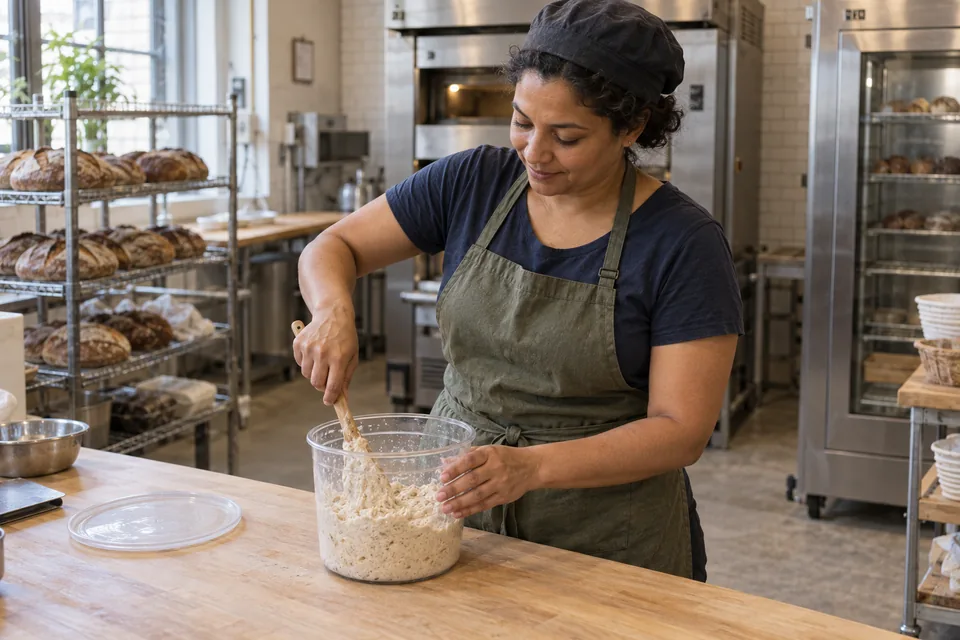
01 FeedMix the retained starter with its feed flour and water, then cover and let it expand. 02 · Autolyse
20–30 minutesUse: B flour + B water
Near the end of the feed, mix the final-dough flours and water only. Cover. Keep salt, yeast and levain aside.Ready when: All flour moistened; no dry pockets.
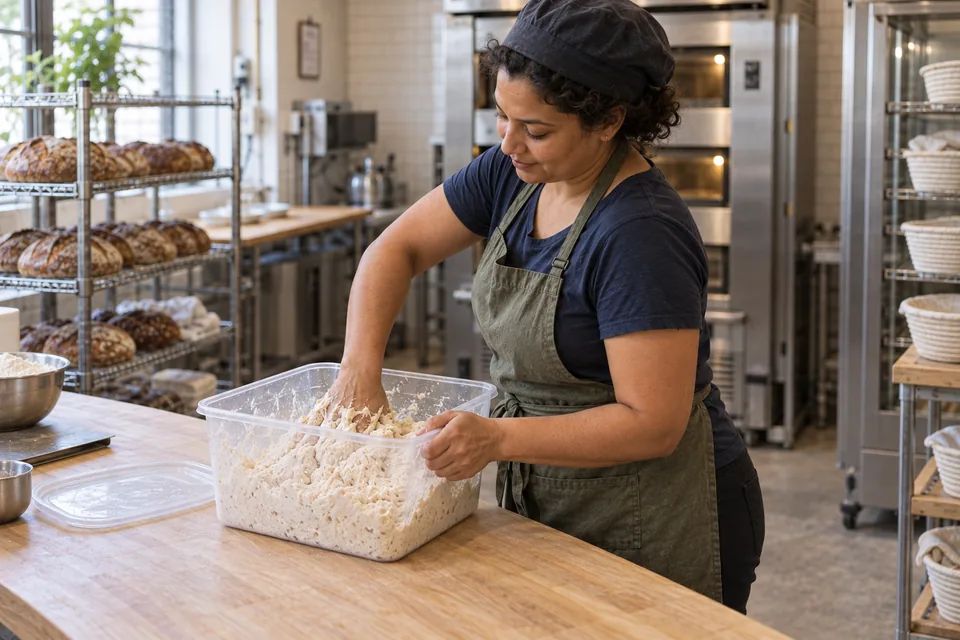
02 AutolyseMoisten all the final-dough flour with the final water, then cover and rest. 03 · Mix
3–6 minutesUse: Autolysed dough + remaining B
With a damp hand, fold edges over the additions; pinch through the mass with thumb and forefinger 5–6 times. Alternate pinching and folding until uniformly mixed, about 3–6 minutes. Rest briefly, then fold again.Ready when: Uniform dough, no streaks of levain or salt.
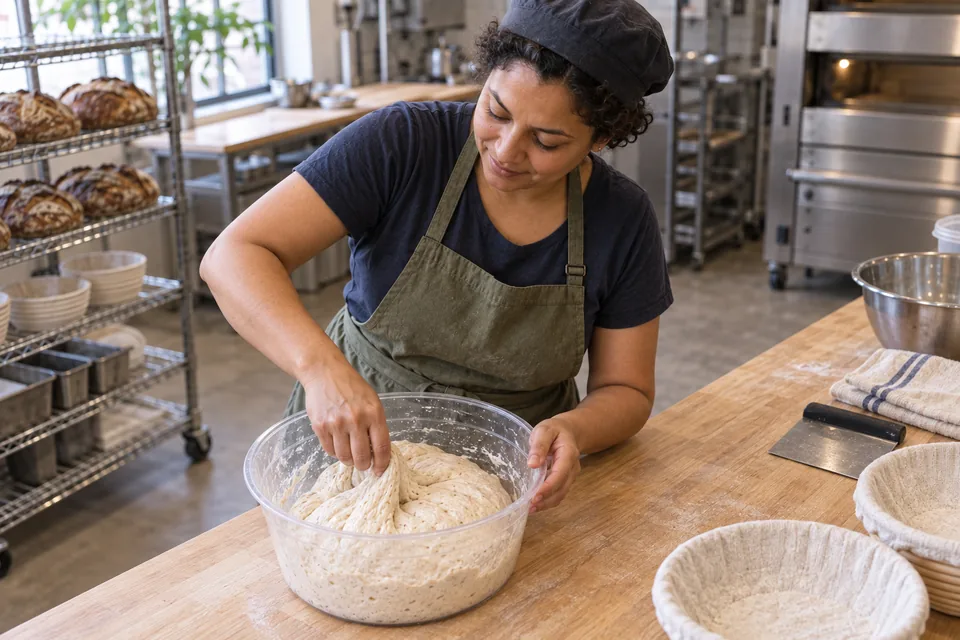
03 MixUse a damp hand to pinch and fold the levain, salt and any listed yeast evenly into the dough. 04 · Fold & bulk
3–4 sets before bed; total bulk 12–15 hUse: Mixed dough
With a damp hand, stretch one edge until resistance, then fold across the dough. Repeat around 4–5 sides; turn the bundle seam down. Cover between sets; let it relax before the next set. Do not tear it or fold during the last bulk hour. The slow dough can take its last fold later in the evening.Ready when: Nearly 3× starting volume; possibly less in a cool kitchen.
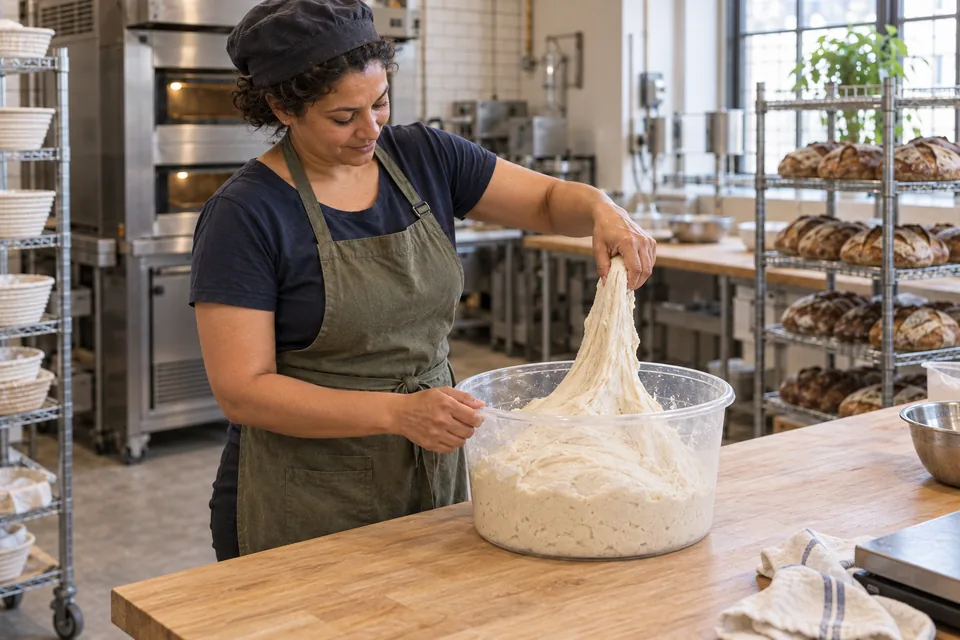
04 Fold & bulkLift an edge gently, fold it across, then let the dough relax before the next set. 05 · Shape one loaf
After bulkUse: All fermented dough
Keep the dough whole. Fold the perimeter inward; turn seam down and cup/drag to form one round. Set seam DOWN on a floured lint-free cloth; overlap cloth loosely, leaving about 2.5 cm expansion room.Ready when: A taut round with enough cloth slack to rise.
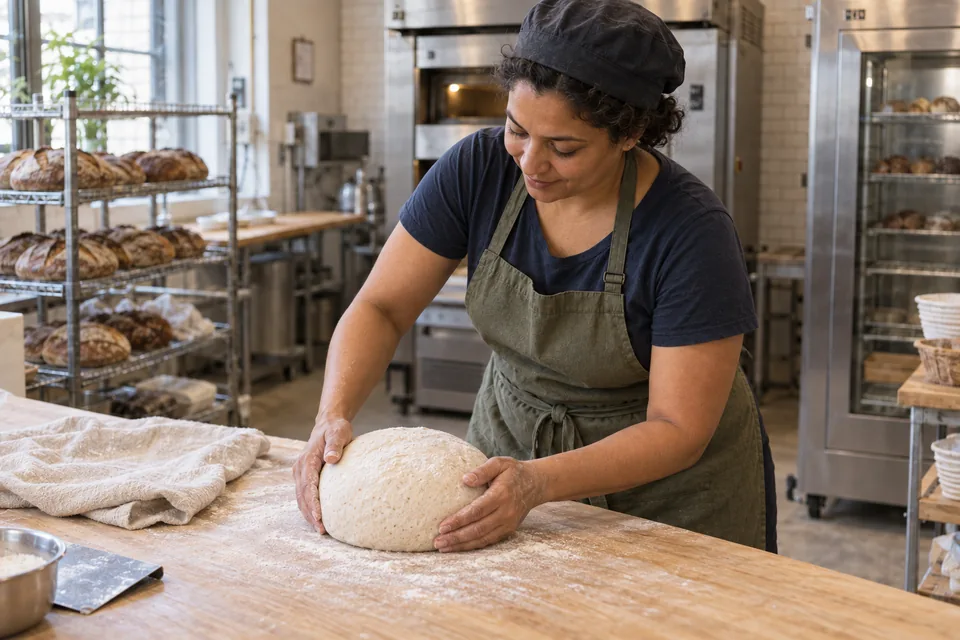
05 Shape one loafKeep the whole batch together and cup it into one large round; do not divide it. 06 · Proof
4½–5 hoursUse: Covered large loaf
Leave at about 21°C until aerated; use a gentle floured-finger dent alongside volume.Ready when: Slow, partial rebound; loaf holds its rounded form.
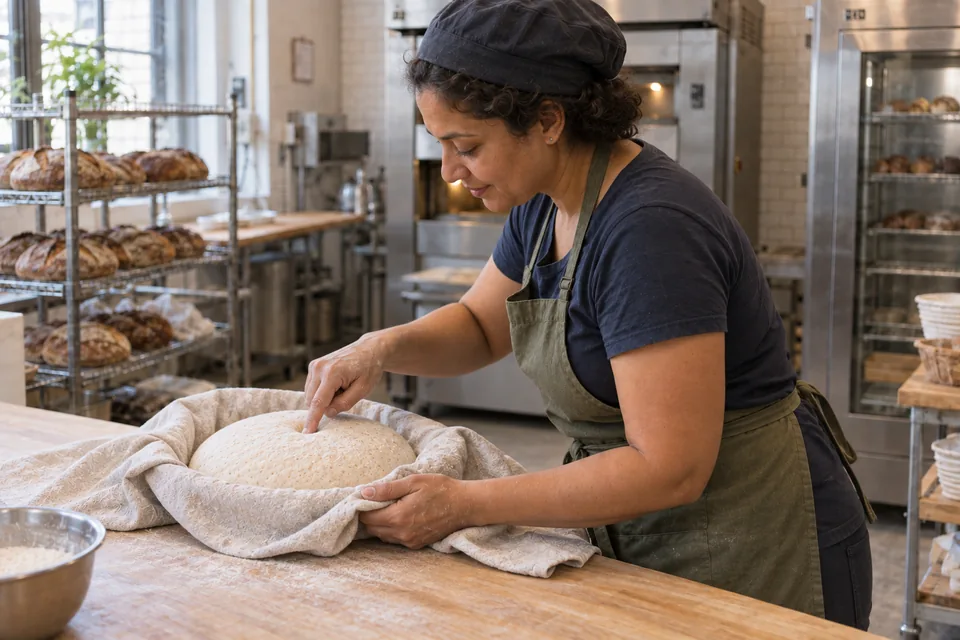
06 ProofLeave the large round room to expand inside its loosely folded cloth; check it with a gentle fingertip dent. 07 · Preheat
At least 45 minutesUse: Stone + empty metal steam tray
Put stone on middle rack and a sturdy metal tray below. Preheat to 260°C; keep the stone dry.Ready when: Stone and oven fully heated.
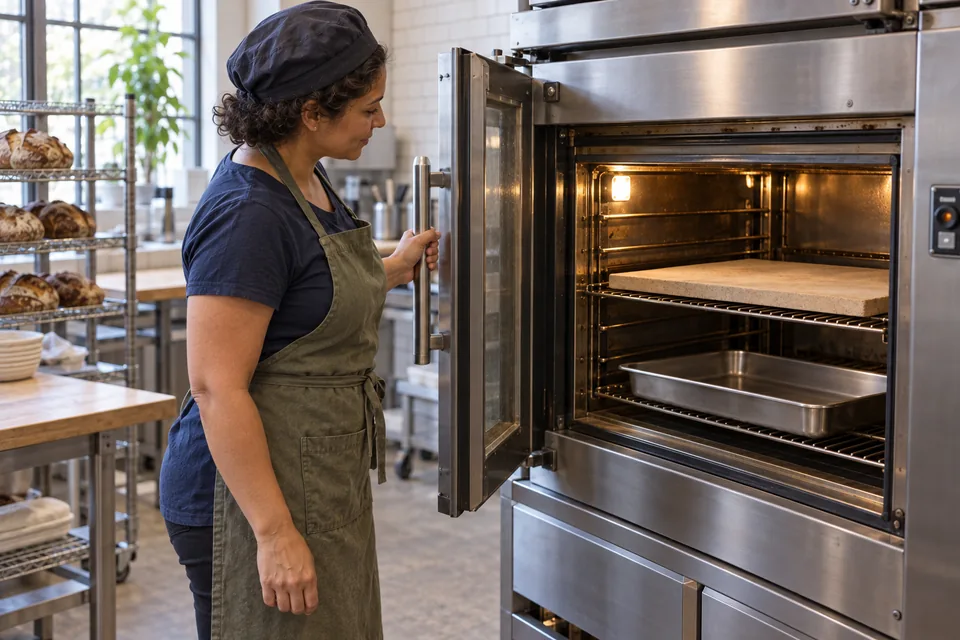
07 PreheatHeat the dry stone on the middle rack with a separate empty metal steam tray below. 08 · Load & bake
5 min at 260°C, then 35–40 min at 245°C; extend if neededUse: Proofed loaf + steam water
Turn seam UP onto a floured peel; optionally score an overlapping square around the perimeter. Slide onto stone. Carefully add boiling water to the metal tray, keeping hands away from steam. After 5 minutes lower to 245°C.Ready when: Deep brown crust, set sides and a fully baked centre; check colour early at 30 min.
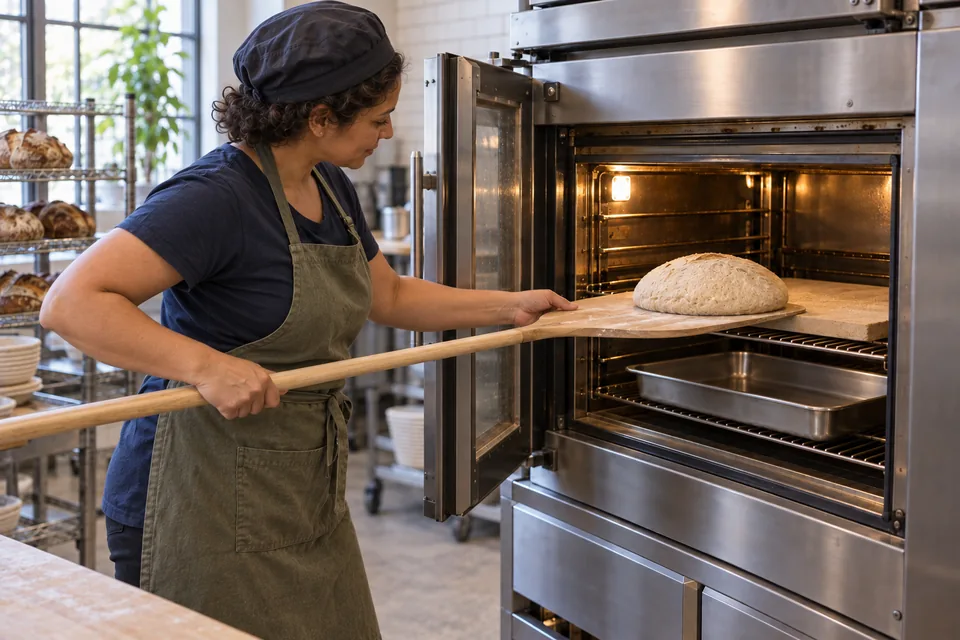
08 Load & bakeSlide the single loaf onto the hot stone. Add the steam water to the separate metal tray as directed. 09 · Set crust & cool
A few minutes in oven; several hours coolingUse: Baked loaf
Turn oven off, leave door ajar for a few minutes, then cool completely on a rack before slicing.Ready when: Crumb sets throughout this larger loaf.
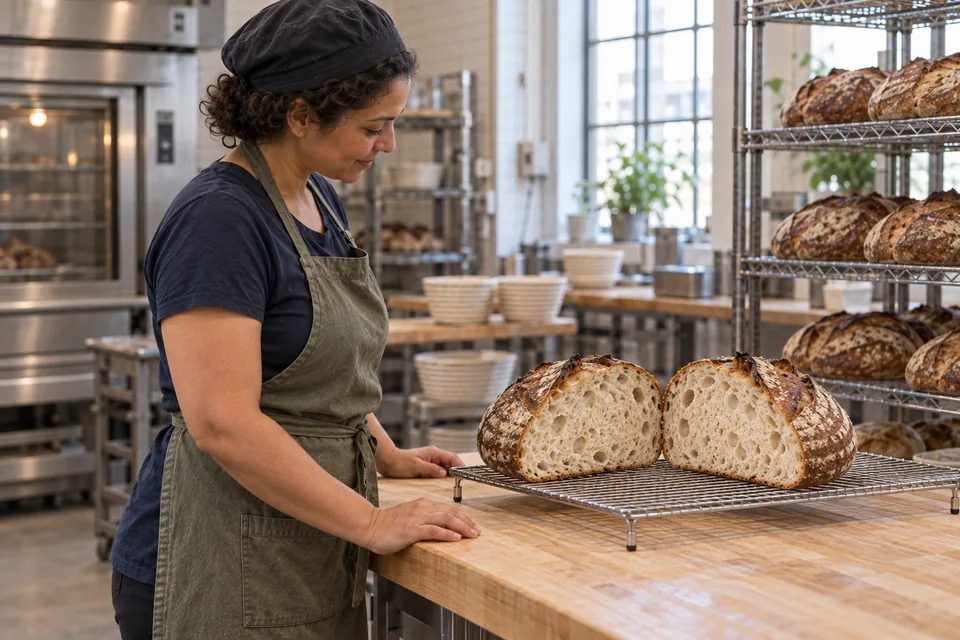
09 Set crust & coolLet the large loaf cool completely on a rack before slicing so its centre has time to set.
What to look for
| Stage | Look and feel | Needs attention |
|---|---|---|
| Mix & folds | Sticky but cohesive dough gains height and elasticity after each fold. | A puddle that never gains strength, or a dry dough tearing under a gentle stretch. |
| Proof | Use volume and dough feel alongside the schedule. At room temperature, a poke returns slowly and partly. | Immediate rebound suggests more proof; collapse or a lasting deep dent suggests excess proof. |
Troubleshooting
| If you see | Likely cause | What to do now | Next time |
|---|---|---|---|
| Dough is slow to expand | Cool dough or weak levain. | Keep covered in a mildly warmer spot; wait for the volume cue. | Confirm the starter is vigorous; log dough and room temperatures. |
| Loaf spreads or collapses | Fermentation went too far or shaping left little tension. | Handle gently and bake promptly; expect a lower loaf. | Use the volume cue; shape with surface tension and shorten the next warm hold. |
| Sticky crumb when sliced | The loaf was cut warm or insufficiently baked. | Let it cool fully before judging. | Bake to an even deep crust colour and allow a longer cooling rest. |
Recipe notes
- Formula totals describe the final dough, not all flour used for feeding. Use only the stated levain portion. An established culture at 80% hydration with an 80:20 white-to-whole-wheat flour blend maintains that composition. After a change of feed, traces of the previous flour blend and hydration remain.
- Below 21°C, allow extra time. Keep the 216 g levain portion: adding more changes the flour and water totals.