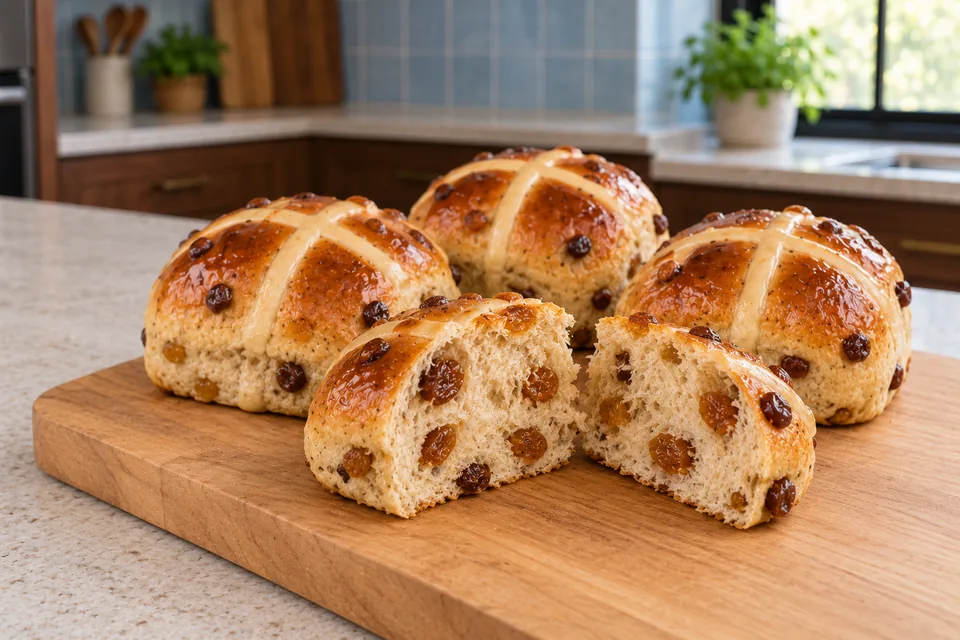
Hot cross buns
Soft spiced buns with sultanas and orange zest, finished with a baked cross and a thin apricot glaze. Arrange them close together so the sides join as they rise.
Method
01 · Develop the spiced fruit dough
15–20 minUse: Strong white bread flour; Caster sugar; Instant dried yeast; Fine salt; Ground cinnamon; Ground allspice; Whole milk; Unsalted butter; Beaten whole egg; Orange zest; Sultanas
Combine the dough flour, sugar, yeast, salt and spices. Add the lukewarm milk, cooled melted butter, egg and orange zest. Mix until no dry flour remains, then knead by hand or with a dough hook for 8–10 minutes. Fold in the sultanas gently at the end.Ready when: The dough is elastic and slightly tacky, with fruit dispersed throughout. It should not be stiff or floury.
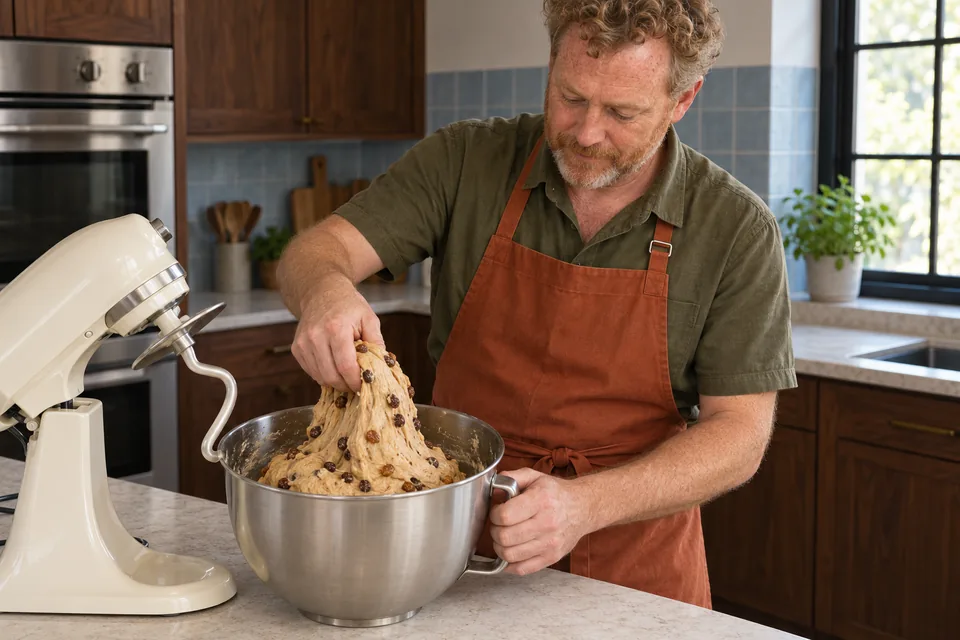
01 Mix DevelopDevelop the soft dough, then fold in the sultanas. 02 · Let the dough rise
60–90 minUse:
Put the dough in a bowl, cover and leave at about 24–26°C for 60–90 minutes.Ready when: The dough has roughly doubled and feels aerated. Allow more time if it remains dense.
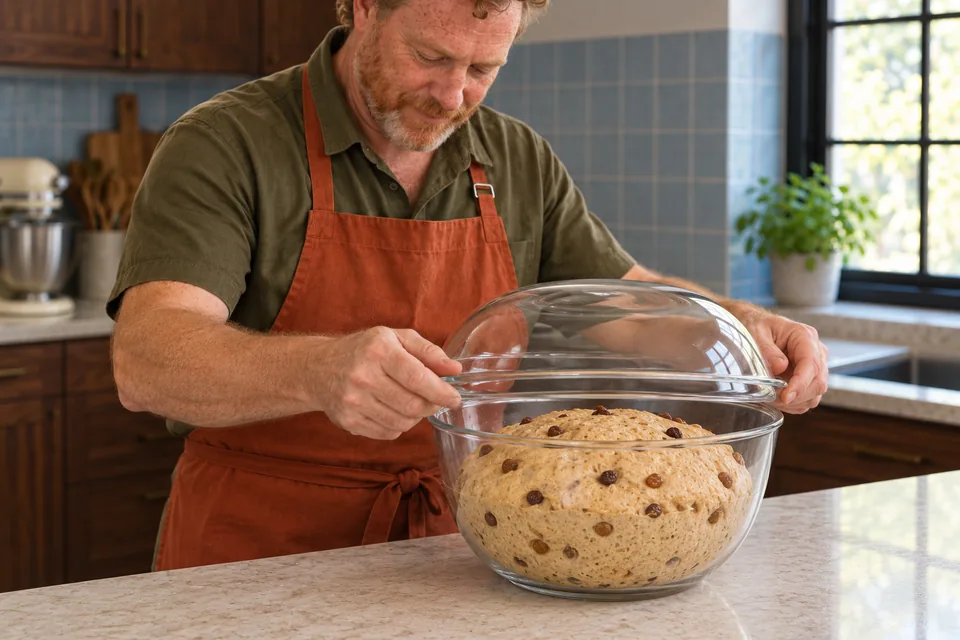
02 BulkCover and let the fruit dough roughly double. 03 · Divide and round twelve buns
10–15 minUse: Flour for shaping
Line a 23×33 cm pan with baking paper, leaving enough overhang to lift the buns later. Lightly dust the worktop and turn out the dough. Divide into twelve equal pieces, roughly 122 g each. Fold each piece inward and cup it against the worktop to make a smooth ball. Arrange in three rows of four, seam-sides down.Ready when: The twelve balls are evenly sized and have space to expand into one another.
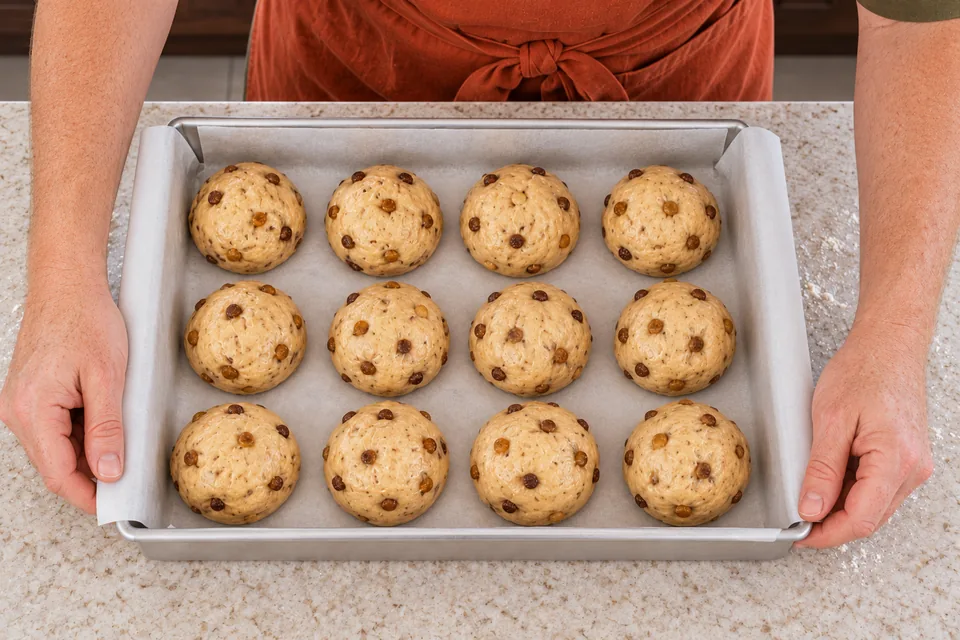
03 ShapeArrange twelve evenly sized buns in three rows of four. 04 · Proof and heat the oven
30–45 minUse:
Cover loosely and leave at about 24–26°C for 30–45 minutes, until clearly puffy. Heat the oven to 180°C conventional during the final 20 minutes.Ready when: The buns have expanded toward one another and a light fingertip dent returns slowly.
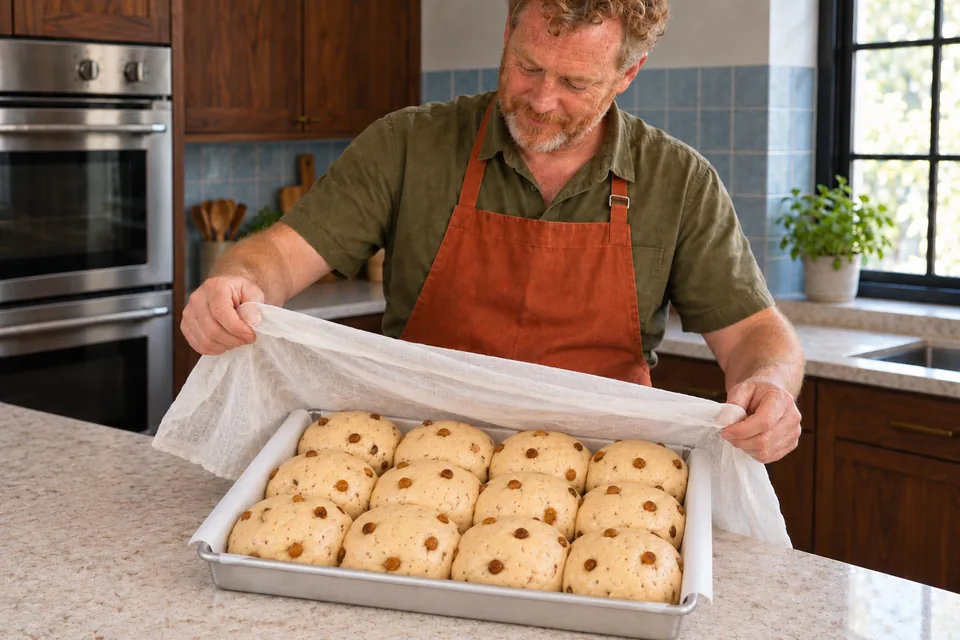
04 ProofLet the buns become puffy and expand toward one another. 05 · Mix and pipe twelve crosses
5–8 minUse: Plain flour for the crosses; Water for the crosses
Stir the cross flour and cross water into a smooth paste. If it will not pipe, add water a teaspoon at a time. Put it into a piping bag with a small 3 mm opening. Pipe one continuous line along the centre of each row, then across each column, making one cross on every bun.Ready when: The paste makes narrow continuous lines that sit on the dough without spreading into a puddle.
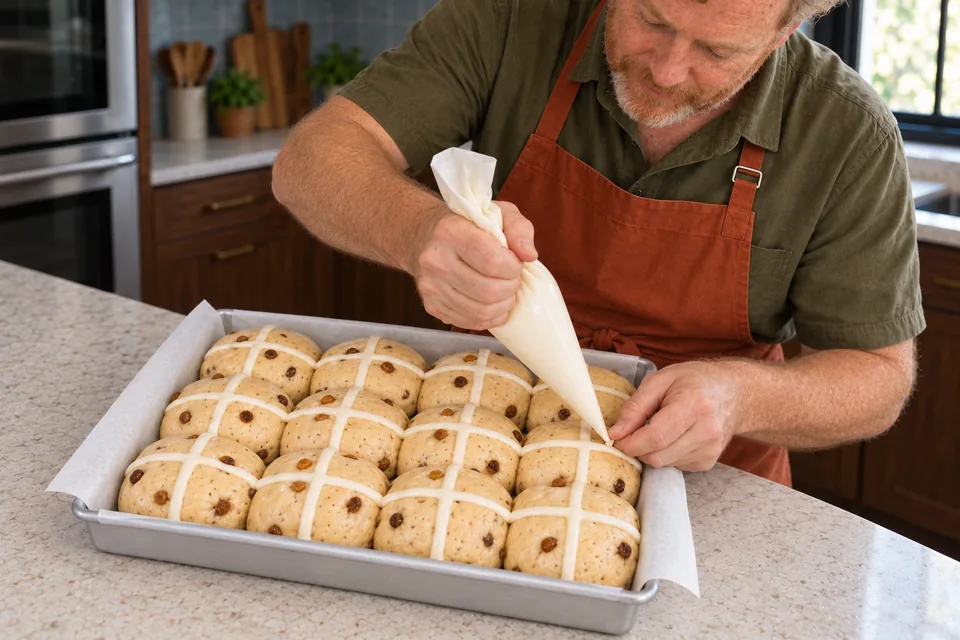
05 Pipe CrossesPipe narrow continuous lines to make one cross on each bun. 06 · Bake and prepare the glaze
22–28 minUse: Smooth apricot jam; Water for the glaze
Bake for 22–28 minutes. During the last few minutes, warm the jam with the glaze water in a small pan, stirring until smooth.Ready when: The buns are deep golden, the crosses are set and a centre bun reads about 93°C on a probe.
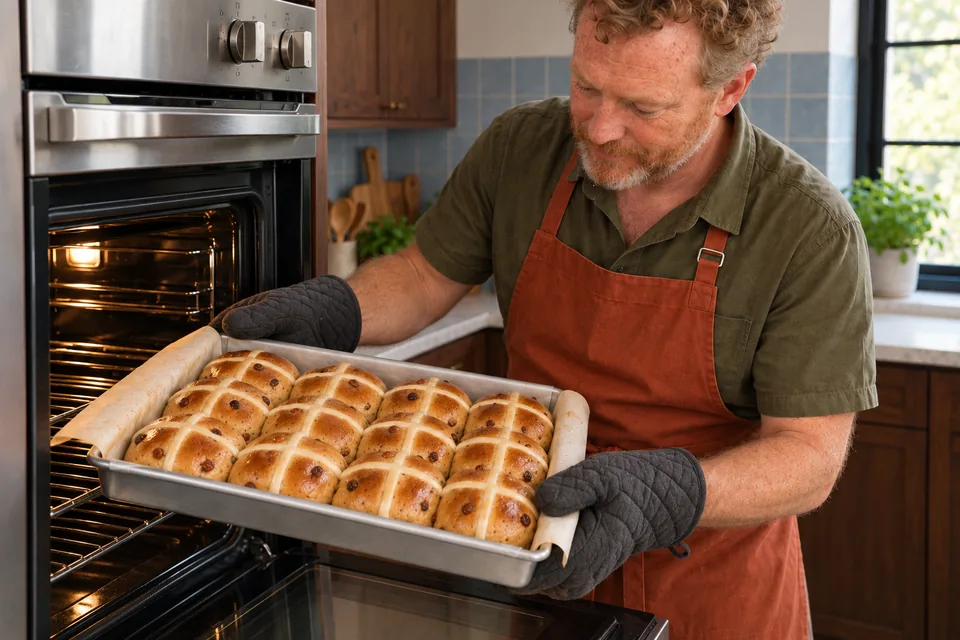
06 BakeBake until the joined buns are deep golden. 07 · Glaze and cool
30–33 minUse: Smooth apricot jam; Water for the glaze
Brush the warm buns with a thin layer of the warm jam glaze. Leave for 5 minutes, then use the paper to lift them onto a rack. Cool for a further 25 minutes before pulling apart.Ready when: The surface has a light sheen and the crumb is set rather than gummy. The crosses remain clearly visible.
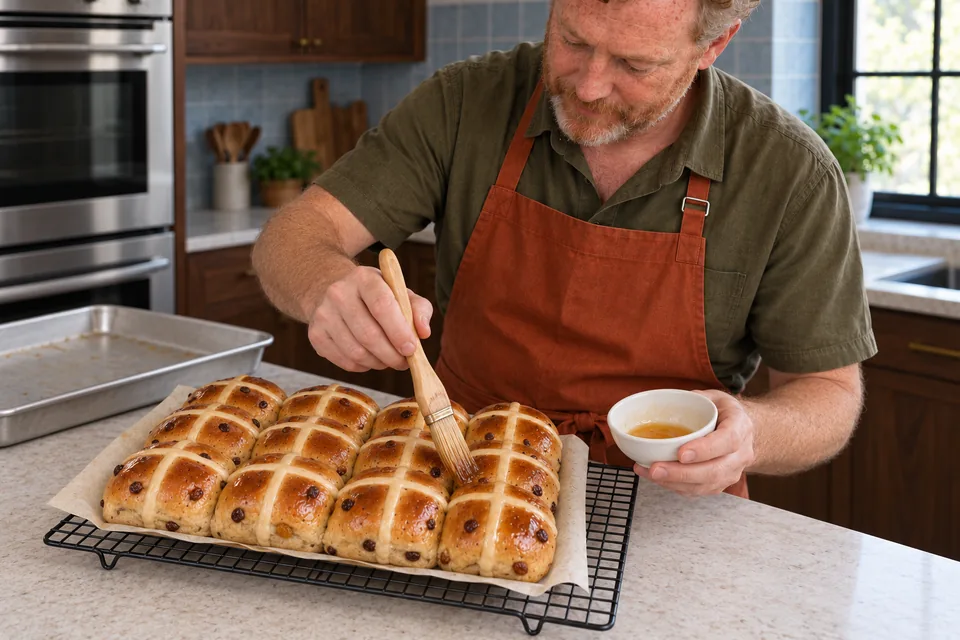
07 Glaze CoolBrush with a thin glaze, then cool on a rack.
What to look for
| Stage | Look / feel for | Needs attention |
|---|---|---|
| Develop the spiced fruit dough | The dough is elastic and slightly tacky, with fruit dispersed throughout. It should not be stiff or floury. | |
| Let the dough rise | The dough has roughly doubled and feels aerated. Allow more time if it remains dense. | |
| Divide and round twelve buns | The twelve balls are evenly sized and have space to expand into one another. | |
| Proof and heat the oven | The buns have expanded toward one another and a light fingertip dent returns slowly. | |
| Mix and pipe twelve crosses | The paste makes narrow continuous lines that sit on the dough without spreading into a puddle. | |
| Bake and prepare the glaze | The buns are deep golden, the crosses are set and a centre bun reads about 93°C on a probe. | |
| Glaze and cool | The surface has a light sheen and the crumb is set rather than gummy. The crosses remain clearly visible. |
Troubleshooting
| If you see this | Likely cause | What to do now | Next time |
|---|---|---|---|
| The buns are heavy. | The dough was made too dry or did not finish proving. | If unbaked, allow more time for the expansion cue. | Keep handling flour separate and wait until the buns are puffy. |
| The crosses spread or break. | The paste is too thin or too stiff. | Adjust with small amounts of flour or water until it pipes smoothly. | Test a short line before piping the tray. |
| The tops brown before the centre cooks. | The oven runs hot or the buns need longer in their close arrangement. | Shield loosely with foil and continue until the centre is cooked. | Use the stated pan and check a centre bun rather than only the outside colour. |
Storage: Best on the day. Cool completely and keep airtight for up to 2 days, or freeze for up to 2 months. Split and toast older buns, or warm covered at 160°C for 8–10 minutes.; Contains: wheat, milk, egg, sulphites if present in the dried fruit.; This Nepedia version has not been kitchen-tested.
Other approaches to this recipe
| Cook / recipe | Use | What differs |
|---|
The working ingredients and method form one recipe. Different formulas are compared without averaging their quantities or rise schedules.