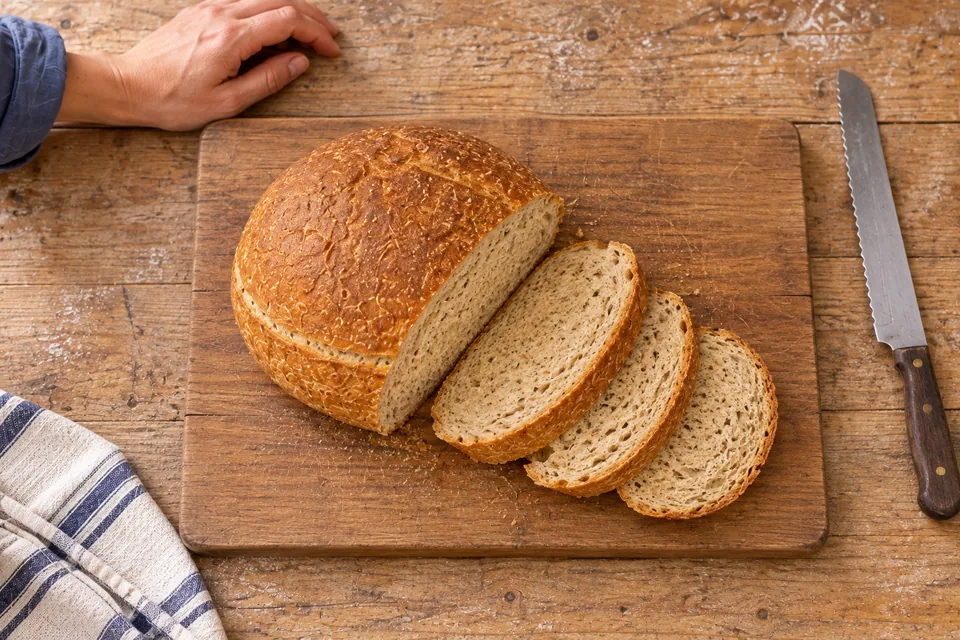
Honey and saffron loaf
A half-wholemeal yeast loaf with a firm preferment, runny honey and a measured saffron infusion. All infusion water comes from the dough allowance.
Method
01 · Mix the firm four-hour preferment
245 minUse: Strong white bread flour for the preferment; Wholemeal bread flour for the preferment; Water for the preferment; Instant dried yeast for the preferment
Mix the two preferment flours, 150 g preferment water and 0.6 g instant yeast into a firm dough. Cover and leave at 22–24°C for 4 hours.Ready when: The preferment has expanded and shows small bubbles when pulled apart; it is not collapsed.
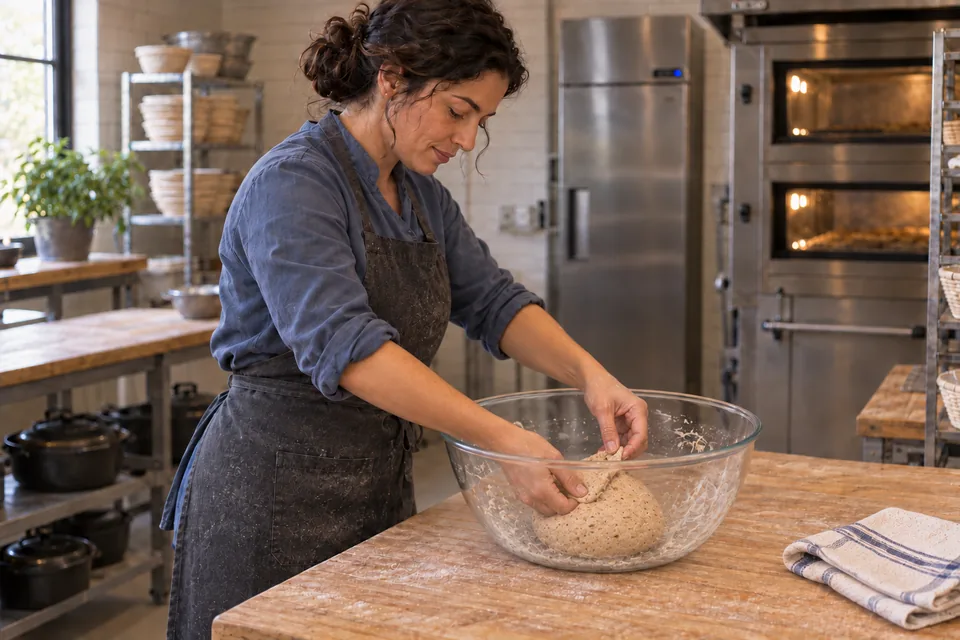
01 Honey and saffron loafLet the firm preferment expand before mixing the final dough. 02 · Infuse saffron using a reserved part of the final water
25–30 minUse: Water for the final dough; Saffron threads
During the final 30 minutes of the preferment rest, crush the saffron lightly. Take 30 g from the measured 175 g final-dough water, heat that small portion until hot, and pour it over the threads in a heatproof cup. Cover for 20–30 minutes, then let it cool below 30°C. Keep the remaining 145 g water separate.Ready when: The infusion is coloured and cool enough for dough mixing; all final water is accounted for.
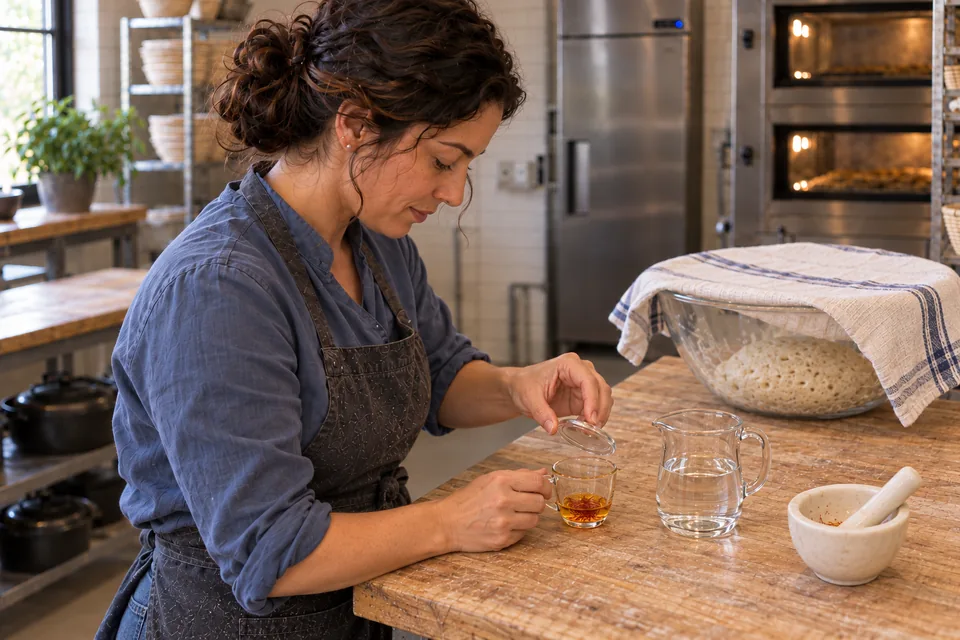
02 Honey and saffron loafInfuse the saffron using part of the measured water. 03 · Combine the mature preferment and final dough
15–20 minUse: Strong white bread flour; Wholemeal bread flour; Water for the final dough; Saffron threads; Runny honey; Fine salt; Instant dried yeast for the final dough
Tear the mature preferment into small pieces. Mix with both final flours, the remaining 145 g water, all the cooled saffron infusion and threads, honey, salt and 4.4 g final instant yeast. Knead by hand or with a dough hook at the machine’s recommended speed for 10–12 minutes after mixing.Ready when: The dough is cohesive and elastic with a light golden colour; no dry preferment lumps remain.
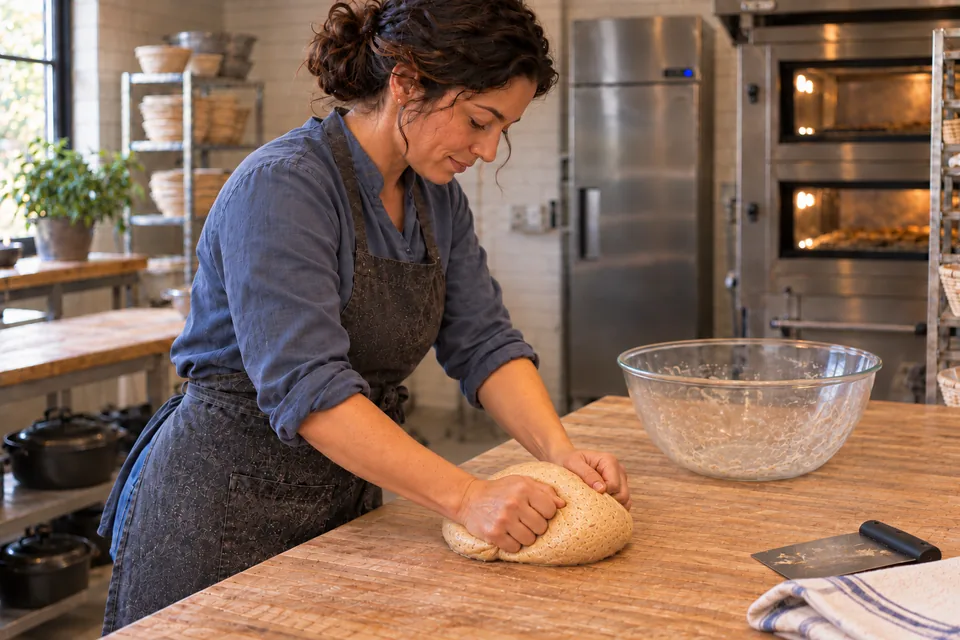
03 Honey and saffron loafKnead until the dough is cohesive and lightly golden. 04 · Let the final dough rise
45–75 minUse:
Cover and leave at 22–24°C for 45–75 minutes.Ready when: The dough is aerated and visibly fuller; it does not need to triple.
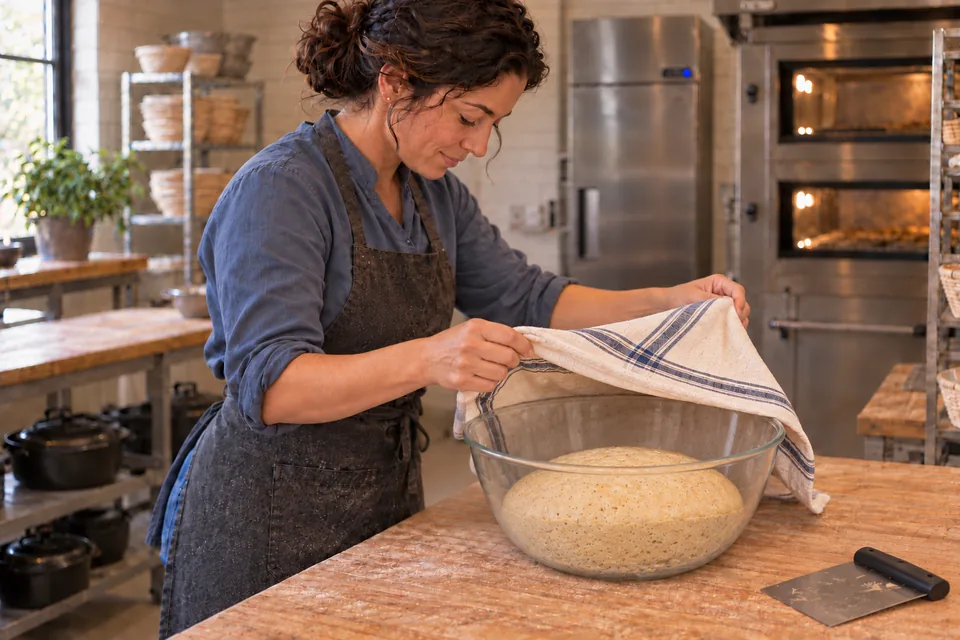
04 Honey and saffron loafLet the dough become aerated and visibly fuller. 05 · Shape one round loaf
8–10 minUse: Flour for shaping
Line a 30×40 cm tray with baking paper. Dust the bench sparingly with the shaping flour. Gather the dough edges underneath and shape a round about 20 cm across and 4 cm high. Place seam-side down on the tray.Ready when: One even round holds a gently tensioned surface without tearing.
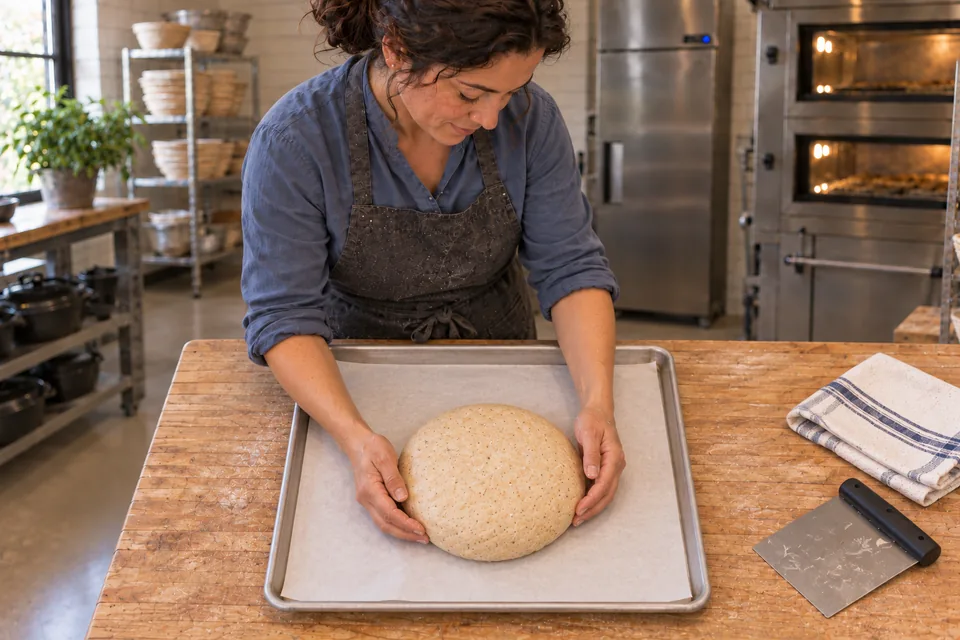
05 Honey and saffron loafShape one even round on the lined tray. 06 · Proof and heat the oven
45–75 minUse:
Cover loosely and leave at 22–24°C for 45–75 minutes. During the final 20 minutes, heat the oven to 200°C conventional.Ready when: The loaf is puffy and a light fingertip dent returns slowly.
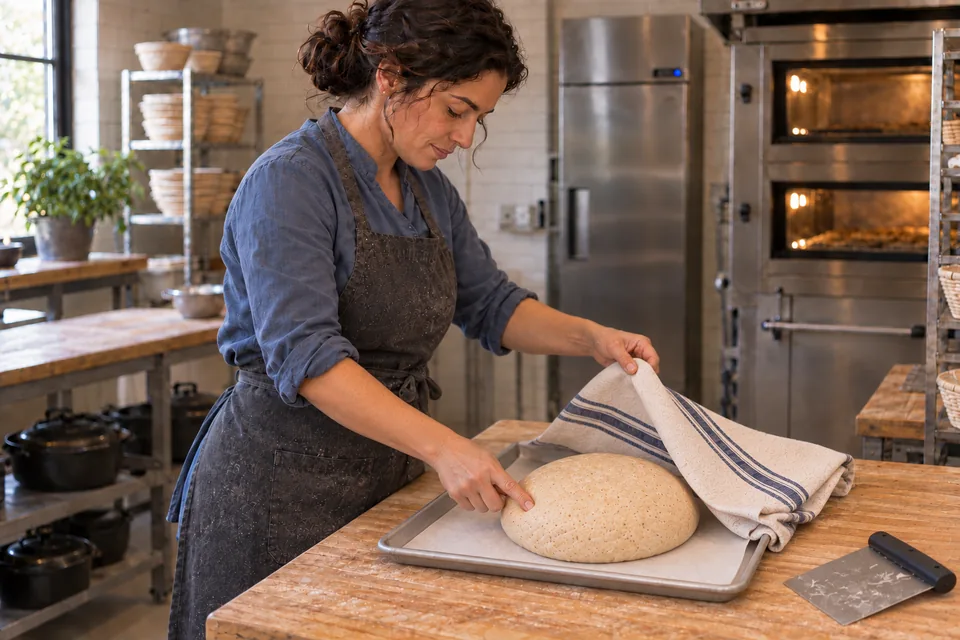
06 Honey and saffron loafLeave the round to rise until puffy. 07 · Score and bake the honey loaf
40–50 minUse:
Make a shallow cut about 5 mm deep around the middle of the loaf. Bake for 40–50 minutes. Shield loosely with foil if the honey-darkened crust colours early. Check the base and probe the thick bread centre.Ready when: The base is firm and browned and the bread centre reaches about 95°C.
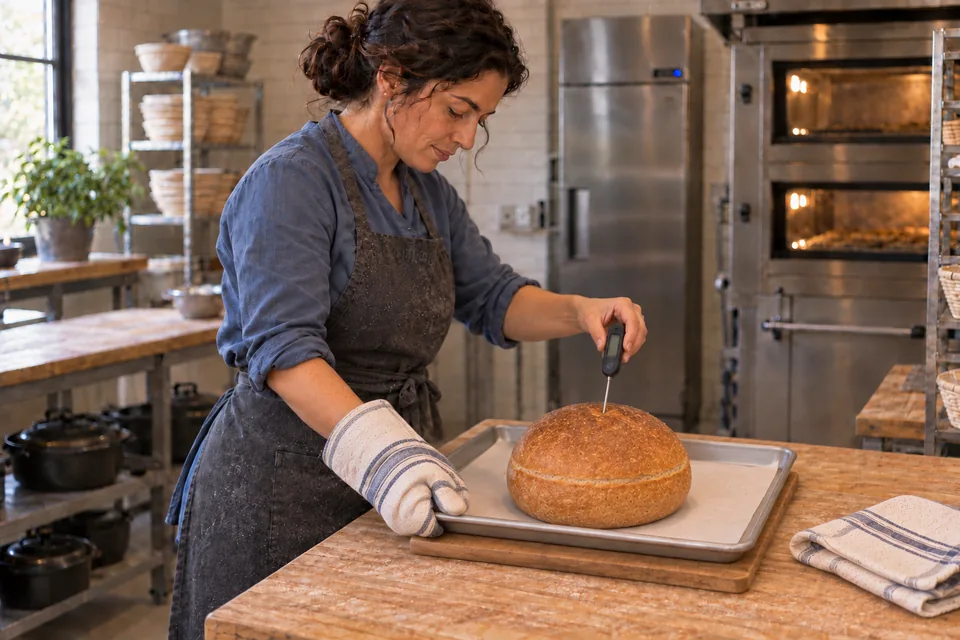
07 Honey and saffron loafBake until the centre is set and the base is firm. 08 · Cool fully before slicing
120 minUse:
Move to a rack and cool for at least 120 minutes before slicing.Ready when: The mixed-grain crumb is set and no longer tacky from cutting warm.
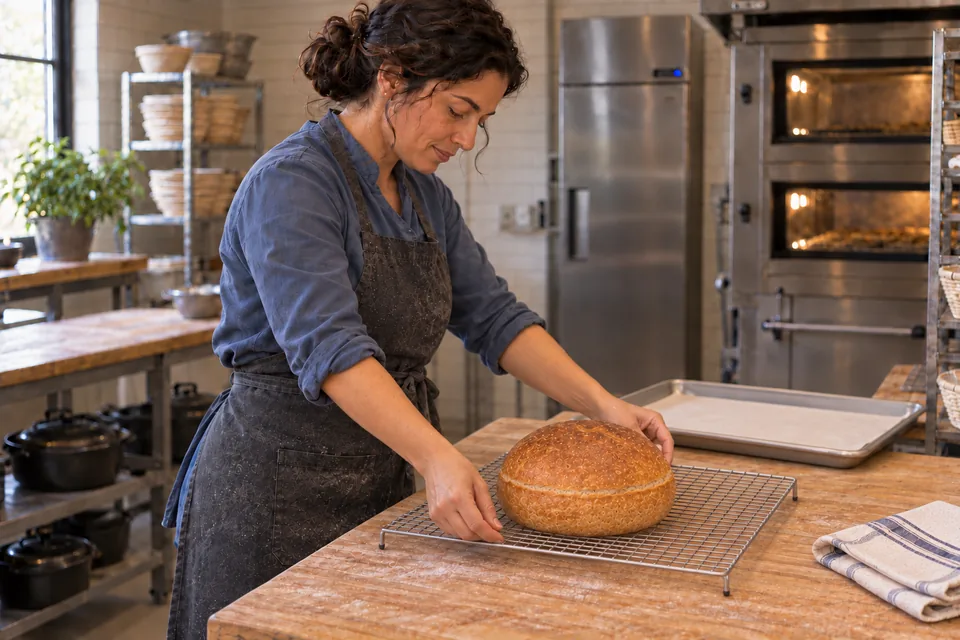
08 Honey and saffron loafCool the loaf fully before slicing.
What to look for
| Stage | Look / feel for | Needs attention |
|---|---|---|
| Mix the firm four-hour preferment | The preferment has expanded and shows small bubbles when pulled apart; it is not collapsed. | |
| Infuse saffron using a reserved part of the final water | The infusion is coloured and cool enough for dough mixing; all final water is accounted for. | |
| Combine the mature preferment and final dough | The dough is cohesive and elastic with a light golden colour; no dry preferment lumps remain. | |
| Let the final dough rise | The dough is aerated and visibly fuller; it does not need to triple. | |
| Shape one round loaf | One even round holds a gently tensioned surface without tearing. | |
| Proof and heat the oven | The loaf is puffy and a light fingertip dent returns slowly. | |
| Score and bake the honey loaf | The base is firm and browned and the bread centre reaches about 95°C. | |
| Cool fully before slicing | The mixed-grain crumb is set and no longer tacky from cutting warm. |
Troubleshooting
| If you see this | Likely cause | What to do now | Next time |
|---|---|---|---|
| The dough is sticky during shaping. | Honey and wholemeal flour can leave the dough slightly tacky. | Use a scraper and the measured handling allowance; cover and rest briefly if the dough tears. | Keep the stated ingredient weights and develop the dough rather than adding unmeasured cereal or flour. |
| The outside colours before the centre is cooked. | The sweetened crust or exposed additions brown faster than thick bread. | Shield loosely with foil and continue until the bread centre and base meet the stated cues. | Use the specified portions, shape and temperature; probe away from inclusions. |
Storage: Cool promptly, then refrigerate wrapped leftovers within 2 hours of baking and use within 2 days. Freeze slices for up to 1 month. Toast or warm before serving.; Contains: wheat.; This Nepedia version has not been kitchen-tested.
Other approaches to this recipe
| Cook / recipe | Use | What differs |
|---|
The working ingredients and method form one recipe. Different formulas are compared without averaging their quantities or rise schedules.