Nepedia

Dutch Oven Bread

About 26% whole wheat with refrigerated fermentation.

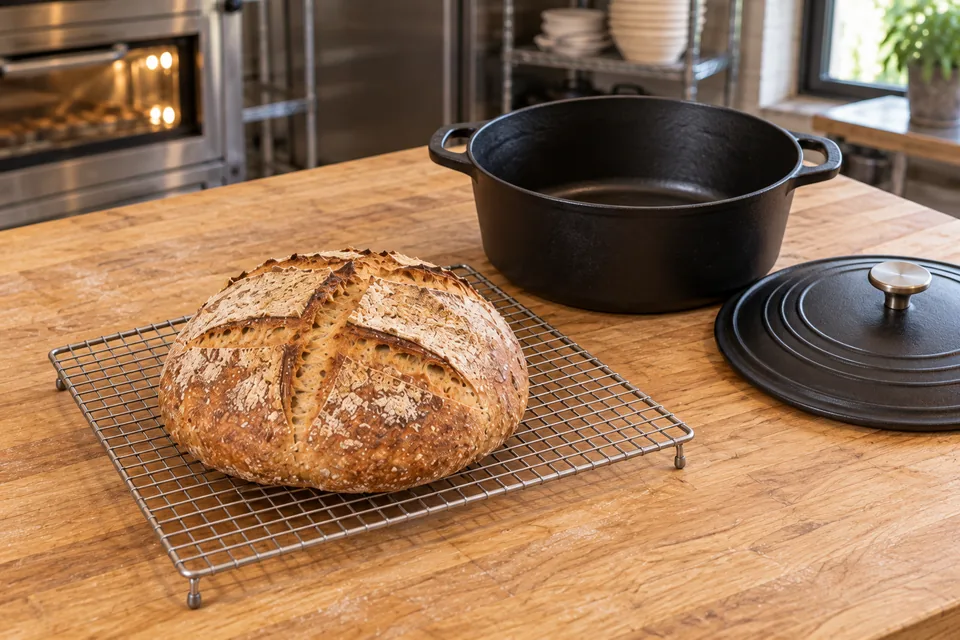
One cooled cross-scored round on a wire rack beside its larger empty Dutch oven and lid.
Makes
1 loaf
Heat
220°C bake; preheat 260°C
Baking time
45–55 min

Reduce on loading; 25 min covered, then 20–30 min uncovered.

Explore variations · 12 →Jump to ingredients & method ↓
View

Dutch Oven Bread

Makes
1 loaf
Heat
220°C bake; preheat 260°C
Baking time
45–55 min

Reduce on loading; 25 min covered, then 20–30 min uncovered.

Bake from Scratch · reference variation

Dutch Oven Bread

Method

  1. 01 · Mix

    30 sec

    Use:

    Combine dough ingredients with paddle on low.

    Ready when: Sticky

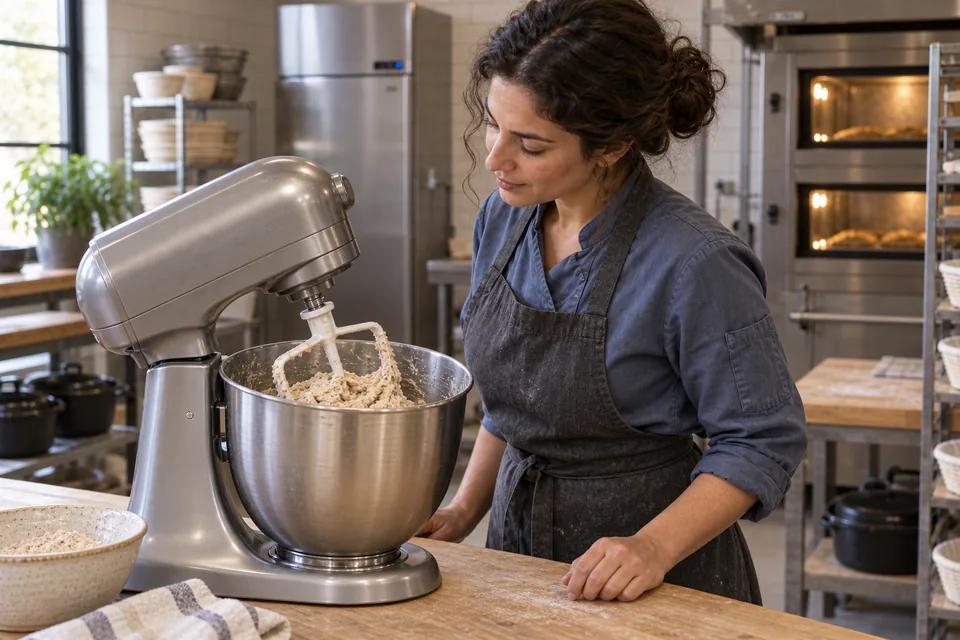
    A baker inspects a stopped stand mixer with its head raised and a paddle holding sticky flecked dough.
    01 MixMix briefly on low with the paddle; stop the mixer before checking the sticky dough.
  2. 02 · Rise

    90–120 min + chill

    Use:

    Transfer to a sprayed bowl; cover at 24°C until doubled. Refrigerate at least 2 hours, preferably overnight.

    Ready when: Doubled

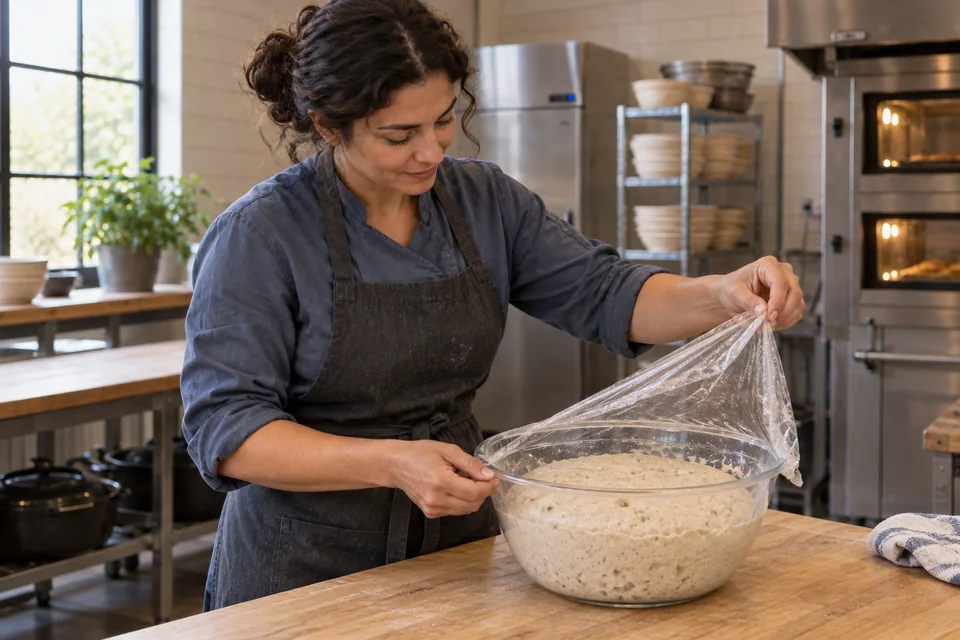
    A baker lifts the cover from an expanded, bubbly light-beige dough in a clear round bowl.
    02 RiseLet the dough double in the lightly oiled bowl, then chill it as directed.
  3. 03 · Shape

    Use:

    Flour surface; flatten 2.5 cm thick. Fold four sides inward; round taut.

    Ready when: Smooth boule

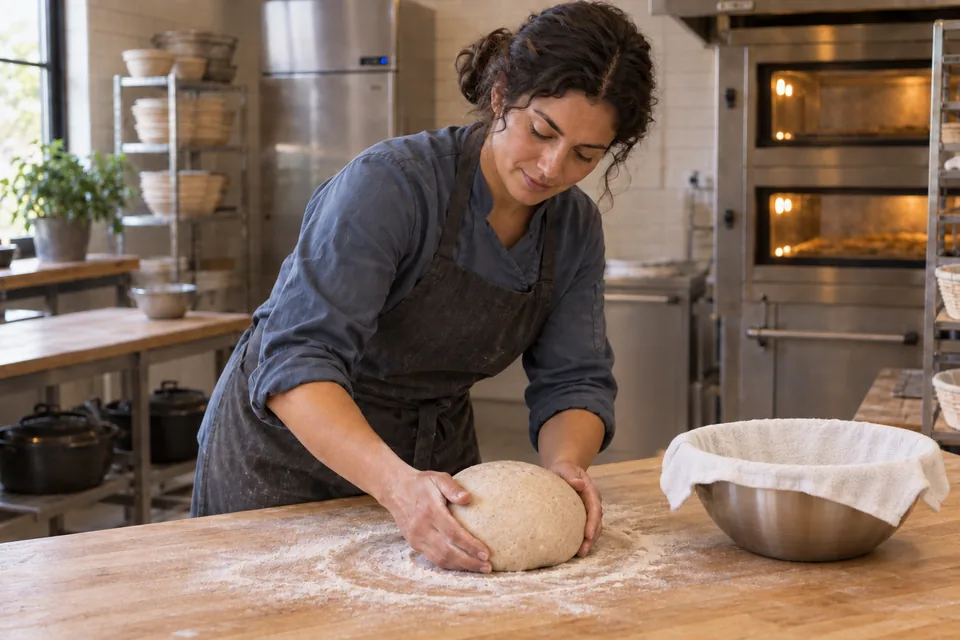
    A baker cups one large flecked dough round beside an empty metal bowl lined with a white towel.
    03 ShapeFold the edges inward, then cup the dough into one taut round.
  4. 04 · Proof

    60–90 min

    Use:

    Place seam-up in floured, towel-lined bowl; cover at 24°C.

    Ready when: Puffy

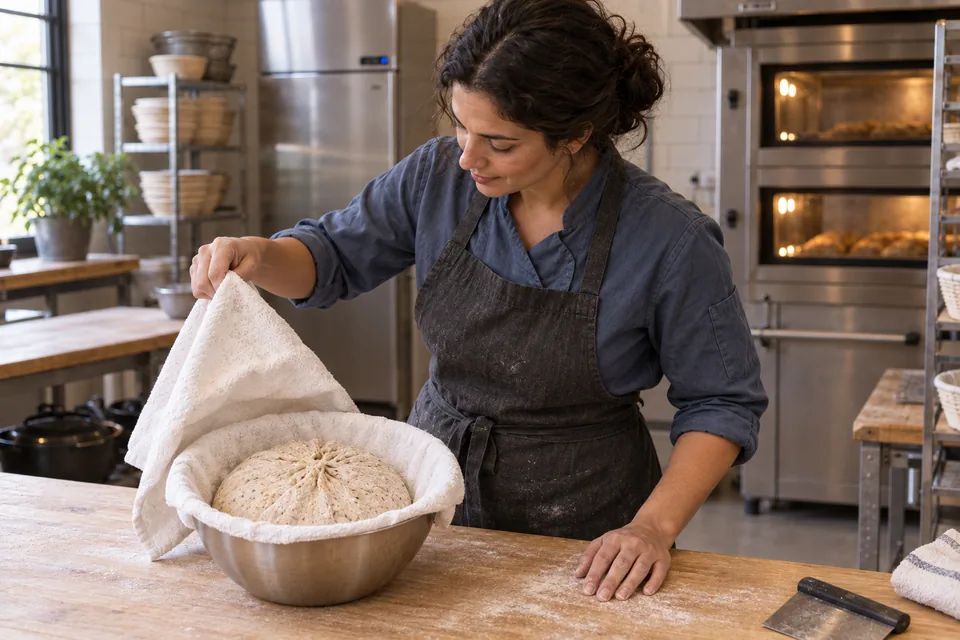
    A baker lifts a white towel from a metal bowl containing one risen dough round with its gathered seam facing up.
    04 ProofProof the round seam-side up in the floured towel-lined bowl until puffy.
  5. 05 · Preheat

    30 min

    Use:

    Heat lidded Dutch oven at 260°C during final 30 minutes of proof.

    Ready when:

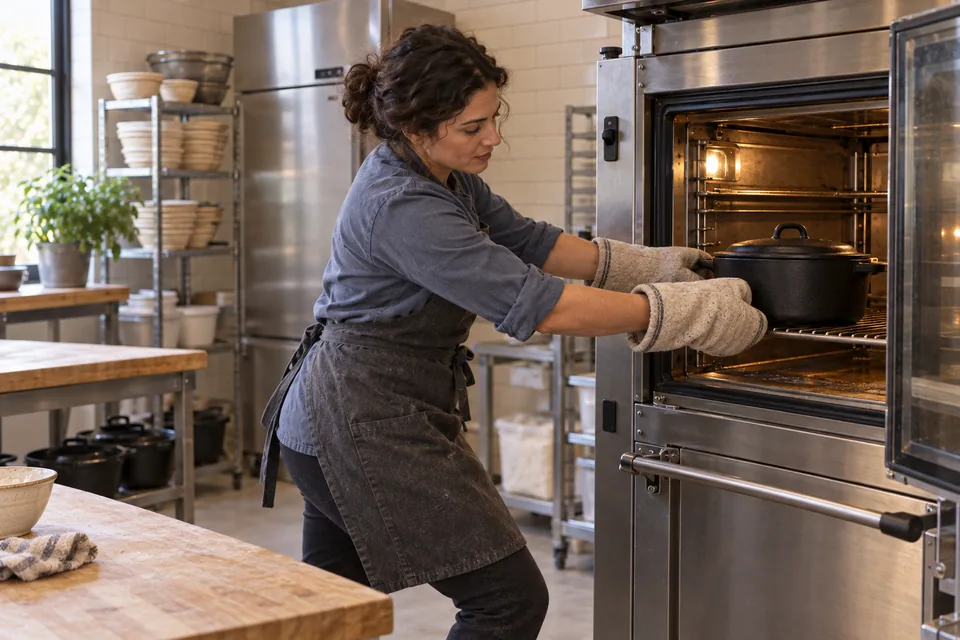
    A baker in a staggered stance uses oven mitts to position one covered Dutch oven on the oven rack.
    05 PreheatHeat the lidded pot thoroughly during the last part of proofing.
  6. 06 · Bake

    45–55 min

    Use:

    Invert onto semolina-dusted parchment; score. Transfer to hot pot. Reduce to 220°C; cover 25 minutes, uncover 20–30.

    Ready when: Centre 93°C

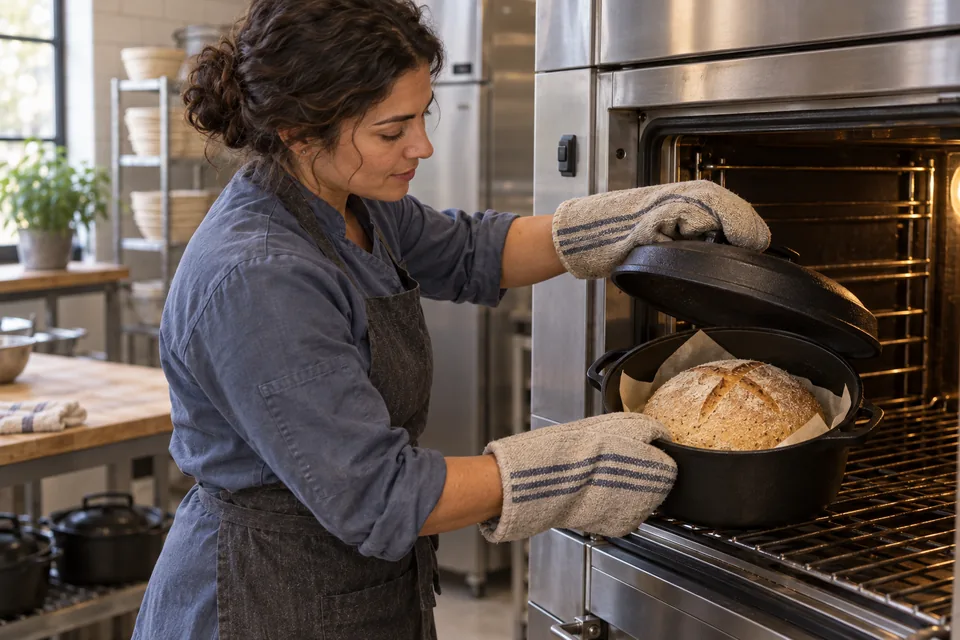
    A baker lifts the lid from one Dutch oven containing a cross-scored loaf on parchment.
    06 BakeInvert onto semolina-dusted parchment and score before loading. Reduce the oven temperature as directed, then uncover after the covered stage.
  7. 07 · Cool

    Use:

    Remove immediately; cool completely on rack.

    Ready when:

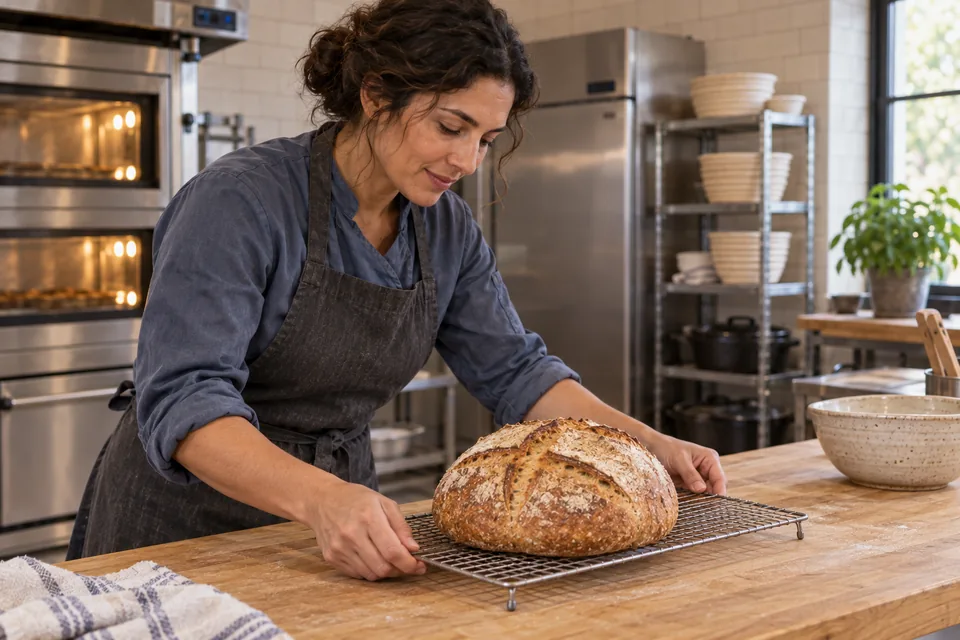
    A baker arranges one intact golden-brown round loaf with a cross score on a wire rack.
    07 CoolRemove from the pot and cool completely on a rack.

What to look for

StageLook / feel forNeeds attention
ProofPuffyDry skin

Troubleshooting

If you see thisLikely causeWhat to do nowNext time
Gummy slicesWarm cuttingCool fully.Rack-cool.

Ingredient choices & substitutions
IngredientSpecified typeBrandStatus
FloursArtisan Bread; Stone Ground Whole Wheat; SemolinaBob’s Red MillAcademy partner/tested
IngredientAlternative / ratioAdjust handlingLikely outcome
Semolina dustingCornmealSame thin dustingNoneGrittier underside.

Match the ingredient’s function and weight. See the flour, gluten, yeast and salt guide.

Bake from Scratch
One cooled cross-scored round on a wire rack beside its larger empty Dutch oven and lid.
Dutch-oven bread with a cross-scored crust.

Recipe

Dutch Oven Bread

A Dutch oven is the heavy, lidded ovenproof pot used to trap steam around this loaf.

How do I make it?

  1. Mix the dough

    30 sec

    Use a stand mixer with its flat paddle on low speed to combine the dough ingredients for 30 seconds; the dough will be sticky.

    A baker inspects a stopped stand mixer with its head raised and a paddle holding sticky flecked dough.
    Mix briefly on low with the paddle; stop the mixer before checking the sticky dough.

    Ready when: Sticky

  2. Rise, then refrigerate

    90–120 min + chill

    Put the dough in a bowl coated with oil spray, cover and leave at 24°C until doubled. Refrigerate it for at least 2 hours, or preferably overnight.

    A baker lifts the cover from an expanded, bubbly light-beige dough in a clear round bowl.
    Let the dough double in the lightly oiled bowl, then chill it as directed.

    Ready when: Doubled

  3. Shape a round loaf

    Flour the counter and press the dough into a piece about 2.5 cm thick. Fold its four sides into the middle, then shape it into a round loaf with a smooth, tightened outside.

    A baker cups one large flecked dough round beside an empty metal bowl lined with a white towel.
    Fold the edges inward, then cup the dough into one taut round.

    Ready when: Smooth boule

  4. Let it puff up

    60–90 min

    Line a bowl with a towel and flour it. Put the dough in with its joined edges facing upward, cover and leave at 24°C until puffy.

    A baker lifts a white towel from a metal bowl containing one risen dough round with its gathered seam facing up.
    Proof the round seam-side up in the floured towel-lined bowl until puffy.

    Ready when: Puffy

  5. Heat the pot

    30 min

    During the last 30 minutes of the dough’s rise, heat the lidded Dutch oven at 260°C.

    A baker in a staggered stance uses oven mitts to position one covered Dutch oven on the oven rack.
    Heat the lidded pot thoroughly during the last part of proofing.
  6. Bake in the pot

    45–55 min

    Turn the loaf onto baking paper dusted with semolina, then cut a slash in the top. Carefully move it into the hot pot, lower the oven to 220°C and bake covered for 25 minutes. Remove the lid and bake for 20–30 minutes more.

    A baker lifts the lid from one Dutch oven containing a cross-scored loaf on parchment.
    Invert onto semolina-dusted parchment and score before loading. Reduce the oven temperature as directed, then uncover after the covered stage.

    Ready when: Centre 93°C

  7. Cool the loaf

    Take the bread out of the pot straight away and leave it on a rack until completely cool.

    A baker arranges one intact golden-brown round loaf with a cross score on a wire rack.
    Remove from the pot and cool completely on a rack.

What can go wrong, and how can I fix it?

What you noticeLikely causeWhat to do
Gummy slicesWarm cuttingCool fully. Rack-cool.

See the detailed method and ratios in , or follow ingredients through the .

Ingredient proportions & recipe details

Dutch Oven Bread at a glance

Makes
1 loaf
Heat
220°C bake; preheat 260°C
Baking time
45–55 min
Leavening
Yeast
How do the ingredient proportions compare?

Percentages compare each listed weight with the combined flour weight (100%). These are ingredient ratios, not dough hydration; milk, eggs and fillings contain other ingredients as well as water.

Formula componentGramsFlour = 100%
Bread flour445 g74%
Whole wheat flour156 g26%
Coarse salt12 g2%
Instant yeast7 g1.2%
Water480 g79.9%