Nepedia

Date and fig bread

Two small wholemeal loaves with soft dates, figs and a little dark treacle. The fruit is folded into the developed dough before shaping.

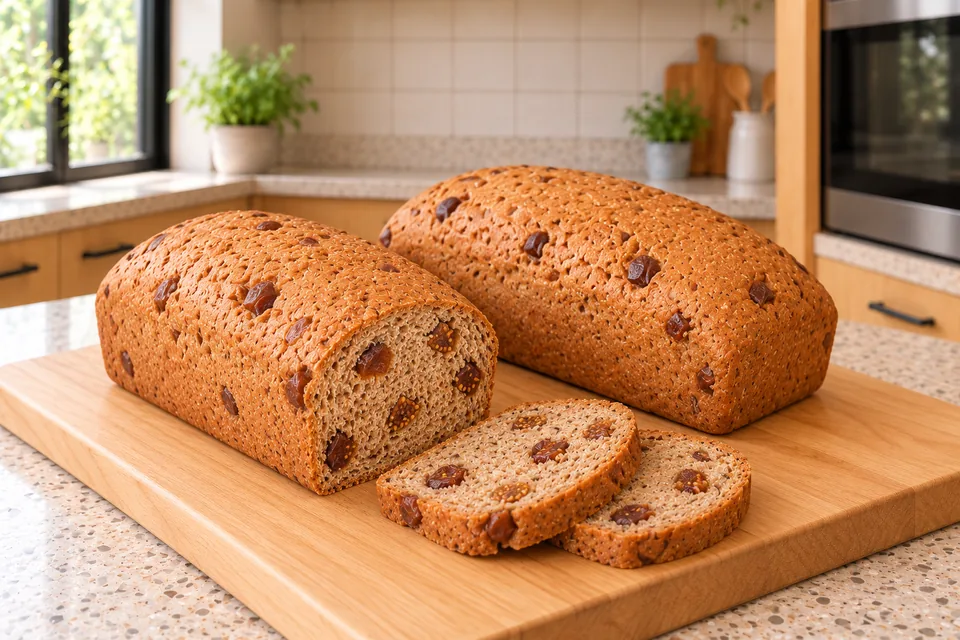
Two small loaves and two slices show dates and figs in a wholemeal crumb.
Makes
2 small loaves, about 20 slices total
Heat
200°C conventional
Baking time
30–40 min
Cuisine / style
International
View

Date and fig bread

Makes
2 small loaves, about 20 slices total
Heat
200°C conventional
Baking time
30–40 min
Cuisine / style
International
International · Wholegrain bread

Date and fig bread

Two small wholemeal loaves with soft dates, figs and a little dark treacle. The fruit is folded into the developed dough before shaping.

Method

  1. 01 · Hydrate the flours and rest

    22–25 min

    Use: Strong wholemeal wheat flour; Strong white bread flour; Water; Fine salt; Instant dried yeast; Black treacle

    Mix both dough flours with the water, salt and yeast and treacle until evenly moistened. Cover and leave for 20 minutes.

    Ready when: No dry flour remains and the wholemeal dough begins to soften.
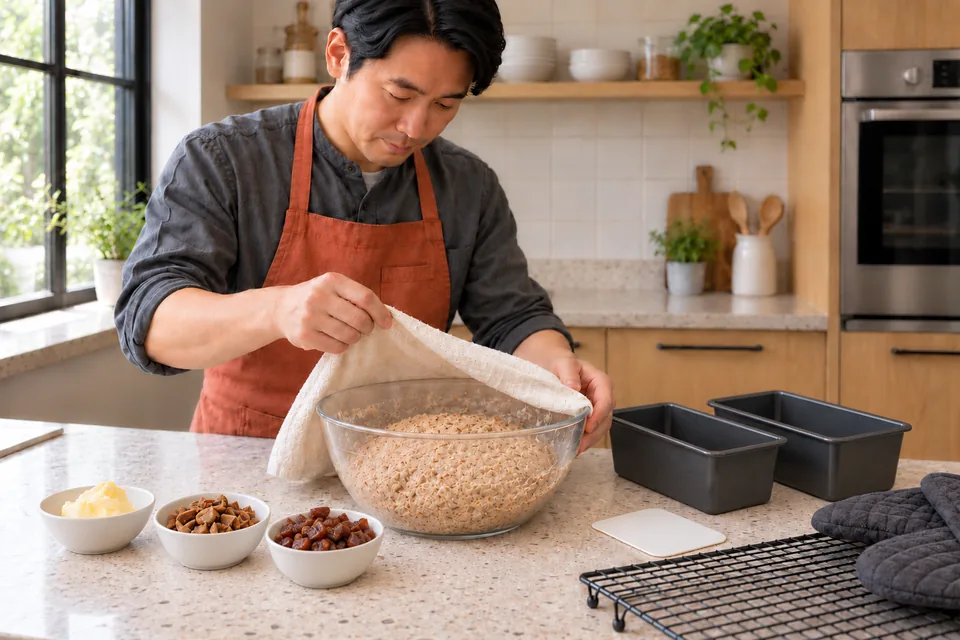
    The cook uncovers a rough wholemeal dough beside butter and chopped dates and figs.
    01 Date and fig breadRest the mixed wholemeal dough.
  2. 02 · Develop the dough with its measured fats

    10–13 min

    Use: Unsalted butter

    Work the softened butter into the dough. Knead for 8–10 minutes by hand or with a dough hook at the machine’s recommended speed.

    Ready when: The dough becomes smooth and stretches before tearing.
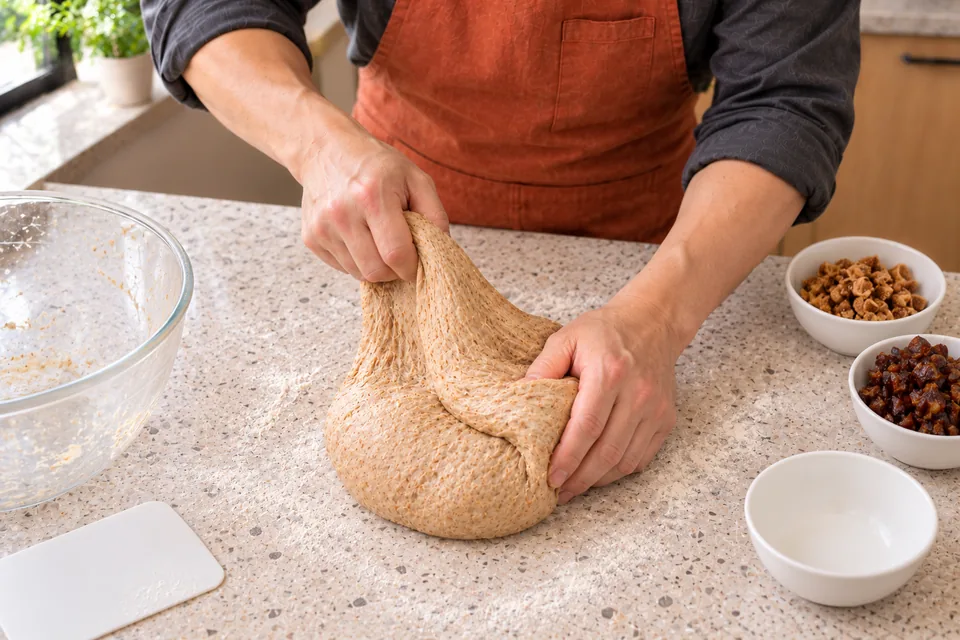
    Hands stretch an elastic wholemeal dough before fruit is added.
    02 Date and fig breadKnead the butter into the dough.
  3. 03 · Let the dough rise

    60–90 min

    Use:

    Cover the bowl and leave at 22–24°C for 60–90 minutes.

    Ready when: The dough looks aerated and has roughly doubled in volume.
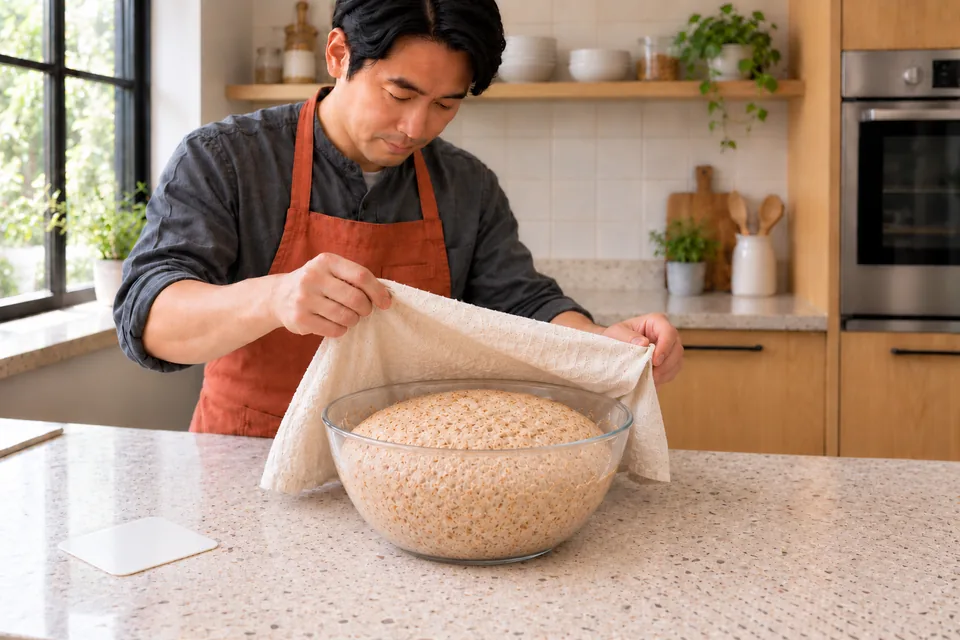
    The risen wholemeal dough has roughly doubled in volume.
    03 Date and fig breadLet the dough rise until airy.
  4. 04 · Fold in dates and figs

    4–6 min

    Use: Soft dried figs; Soft dried dates

    Press the dough gently into a thick rectangle. Scatter the chopped figs and dates over it. Fold the edges over the additions and knead gently for 2–3 minutes.

    Ready when: The additions are distributed throughout the dough, without a dense fruit pocket.
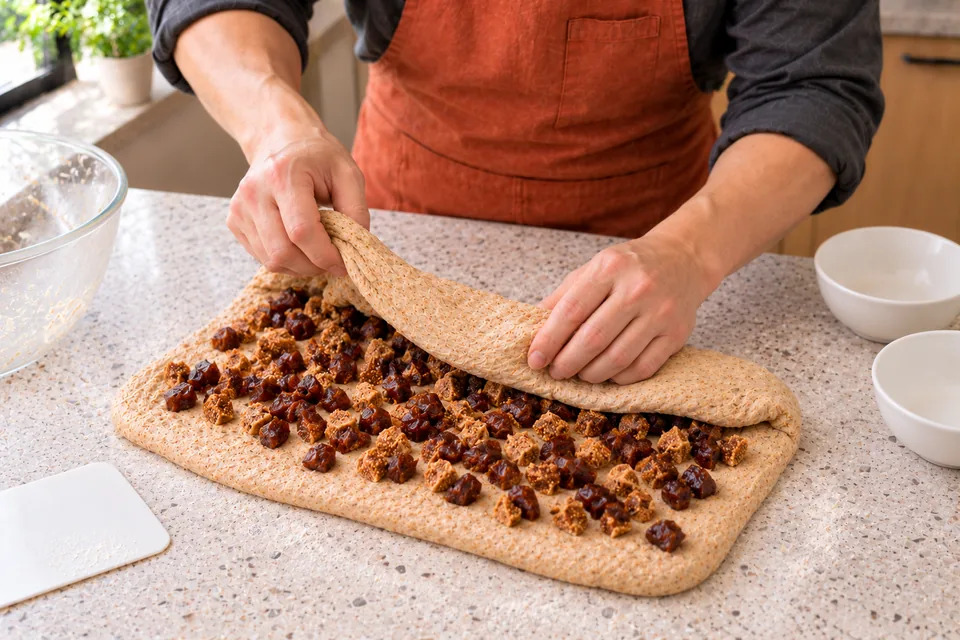
    Hands distribute small pieces of dates and figs through the dough.
    04 Date and fig breadFold in the chopped dates and figs.
  5. 05 · Divide and shape two tin loaves

    8–12 min

    Use: Flour for shaping; Butter for the tins

    Grease two 20×10×7 cm loaf tins with the separate butter. Use the shaping flour sparingly. Divide the dough into two equal pieces, about 544 g each. Pat each into a short rectangle, roll into a log and pinch the seam closed. Place seam-side down in the tins.

    Ready when: Both tins contain one evenly shaped log.
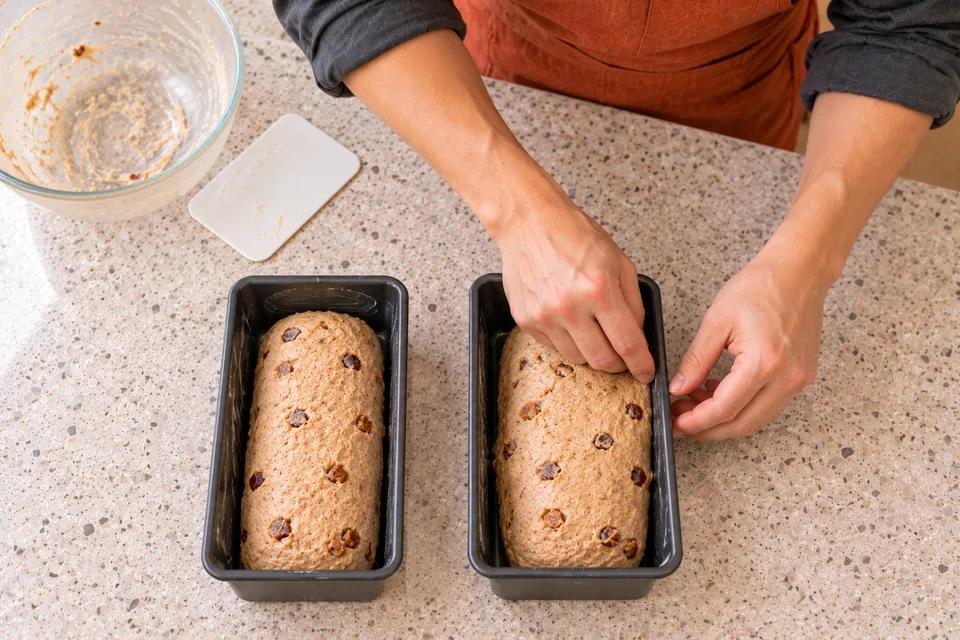
    Two small tins each contain one fruit-studded dough log.
    05 Date and fig breadDivide and shape two small loaves.
  6. 06 · Proof and heat the oven

    45–75 min

    Use:

    Cover loosely and leave at 22–24°C for 45–75 minutes. Heat the oven to 200°C conventional during the final 20 minutes.

    Ready when: The dough is puffy and a light fingertip dent recovers slowly.
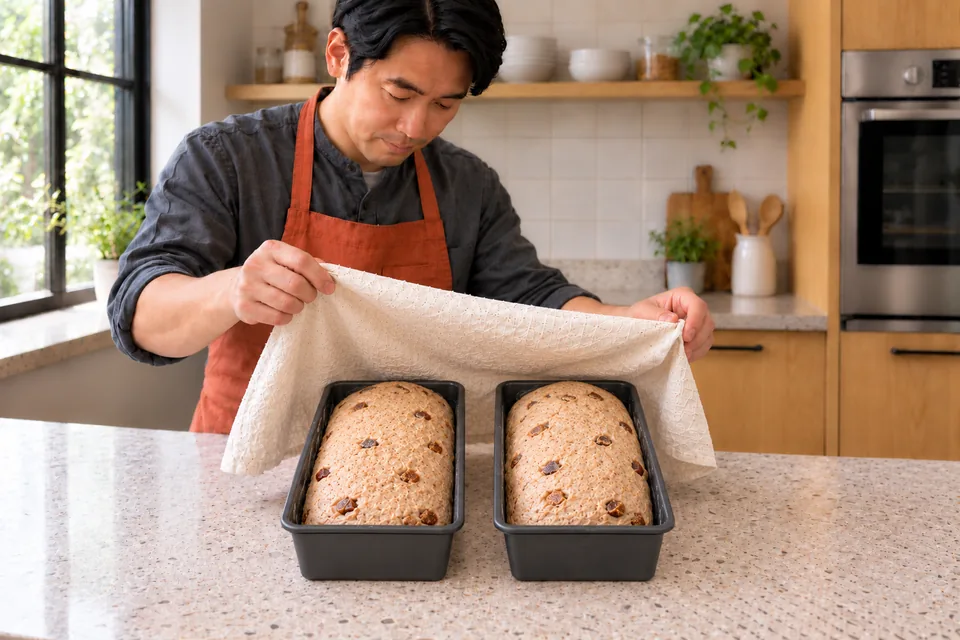
    Two risen fruit loaves are ready for the oven.
    06 Date and fig breadProof until both loaves are puffy.
  7. 07 · Bake until the bread centre is set

    30–40 min

    Use:

    Bake both tins together for 30–40 minutes. Cover loosely with foil if the surface darkens early. Check the bread in the thickest part with a probe, avoiding fruit.

    Ready when: The bread centre reaches about 95°C and the base is firm and browned.
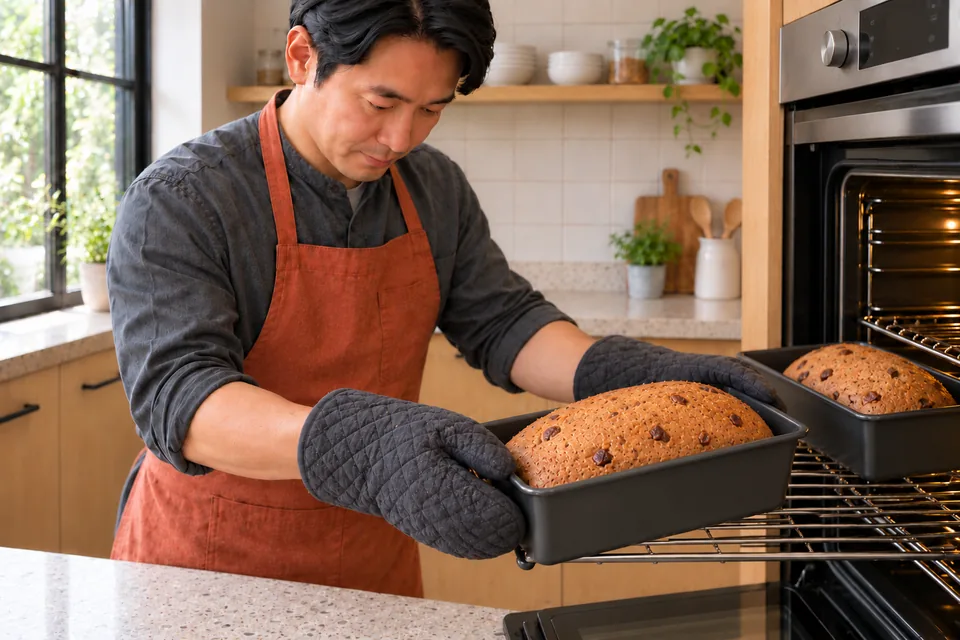
    Two browned fruit loaves finish baking in their tins.
    07 Date and fig breadBake both loaves until their centres are set.
  8. 08 · Cool fully before slicing

    90 min

    Use:

    Leave the loaves in their tins for 10 minutes, then turn out onto a rack for at least 80 minutes more. Slice only when the centre is cool.

    Ready when: The crumb holds together around the additions.
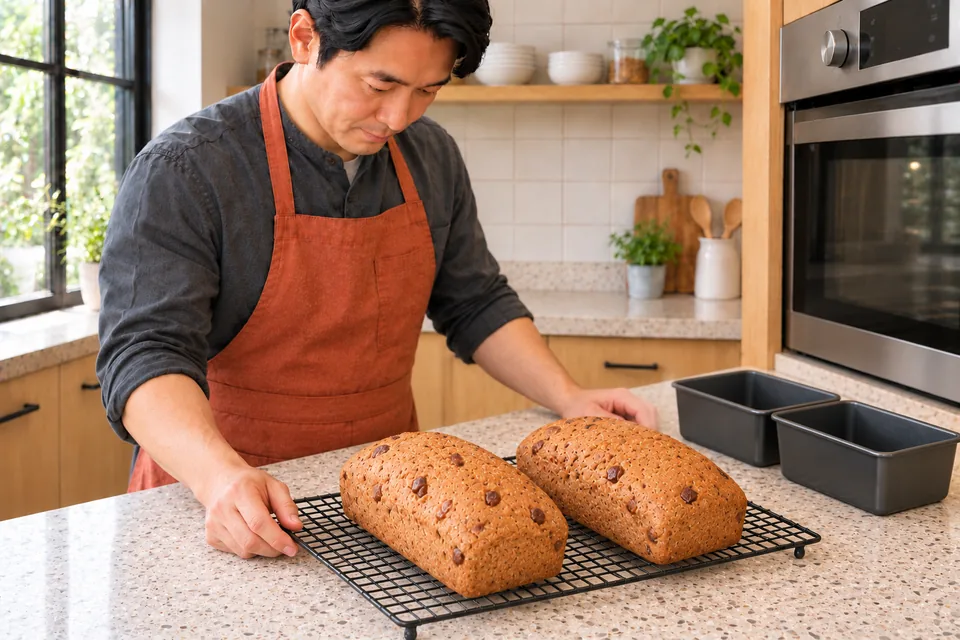
    Two small date and fig loaves cool on a wire rack.
    08 Date and fig breadTurn out and cool fully.

What to look for

StageLook / feel forNeeds attention
Hydrate the flours and restNo dry flour remains and the wholemeal dough begins to soften.
Develop the dough with its measured fatsThe dough becomes smooth and stretches before tearing.
Let the dough riseThe dough looks aerated and has roughly doubled in volume.
Fold in dates and figsThe additions are distributed throughout the dough, without a dense fruit pocket.
Divide and shape two tin loavesBoth tins contain one evenly shaped log.
Proof and heat the ovenThe dough is puffy and a light fingertip dent recovers slowly.
Bake until the bread centre is setThe bread centre reaches about 95°C and the base is firm and browned.
Cool fully before slicingThe crumb holds together around the additions.

Troubleshooting

If you see thisLikely causeWhat to do nowNext time
The dough tears around the additions.Large pieces or forceful mixing damage the developed dough.Tuck loose pieces inside and pinch small tears closed.Chop the additions into small pieces and fold them in gently.
The surface browns while the centre is still soft.Exposed additions cook faster than the bread centre.Cover loosely with foil and continue to the centre-temperature and base cues.Check from the lower stated bake time and keep most additions inside the dough.

Storage: Wrap once fully cool and keep in a cool dry place for up to 3 days. Freeze wrapped slices for up to 2 months.; Contains: wheat, milk, sulphites if present in the dried fruit.; This Nepedia version has not been kitchen-tested.

Ingredient choices & substitutions

No brand is specified.

Match the ingredient’s function and weight. See the flour, gluten, yeast and salt guide.

Other approaches to this recipe
Cook / recipeUseWhat differs

The working ingredients and method form one recipe. Different formulas are compared without averaging their quantities or rise schedules.

Nepedia
Two small loaves and two slices show dates and figs in a wholemeal crumb.
Date and fig bread, ready to slice.

Recipe

Date and fig bread

Two small wholemeal loaves with soft dates, figs and a little dark treacle. The fruit is folded into the developed dough before shaping.

How do I make it?

  1. Hydrate the flours and rest

    22–25 min

    Mix both dough flours with the water, salt and yeast and treacle until evenly moistened. Cover and leave for 20 minutes.

    The cook uncovers a rough wholemeal dough beside butter and chopped dates and figs.
    Rest the mixed wholemeal dough.

    Ready when: No dry flour remains and the wholemeal dough begins to soften.

  2. Develop the dough with its measured fats

    10–13 min

    Work the softened butter into the dough. Knead for 8–10 minutes by hand or with a dough hook at the machine’s recommended speed.

    Hands stretch an elastic wholemeal dough before fruit is added.
    Knead the butter into the dough.

    Ready when: The dough becomes smooth and stretches before tearing.

  3. Let the dough rise

    60–90 min

    Cover the bowl and leave at 22–24°C for 60–90 minutes.

    The risen wholemeal dough has roughly doubled in volume.
    Let the dough rise until airy.

    Ready when: The dough looks aerated and has roughly doubled in volume.

  4. Fold in dates and figs

    4–6 min

    Press the dough gently into a thick rectangle. Scatter the chopped figs and dates over it. Fold the edges over the additions and knead gently for 2–3 minutes.

    Hands distribute small pieces of dates and figs through the dough.
    Fold in the chopped dates and figs.

    Ready when: The additions are distributed throughout the dough, without a dense fruit pocket.

  5. Divide and shape two tin loaves

    8–12 min

    Grease two 20×10×7 cm loaf tins with the separate butter. Use the shaping flour sparingly. Divide the dough into two equal pieces, about 544 g each. Pat each into a short rectangle, roll into a log and pinch the seam closed. Place seam-side down in the tins.

    Two small tins each contain one fruit-studded dough log.
    Divide and shape two small loaves.

    Ready when: Both tins contain one evenly shaped log.

  6. Proof and heat the oven

    45–75 min

    Cover loosely and leave at 22–24°C for 45–75 minutes. Heat the oven to 200°C conventional during the final 20 minutes.

    Two risen fruit loaves are ready for the oven.
    Proof until both loaves are puffy.

    Ready when: The dough is puffy and a light fingertip dent recovers slowly.

  7. Bake until the bread centre is set

    30–40 min

    Bake both tins together for 30–40 minutes. Cover loosely with foil if the surface darkens early. Check the bread in the thickest part with a probe, avoiding fruit.

    Two browned fruit loaves finish baking in their tins.
    Bake both loaves until their centres are set.

    Ready when: The bread centre reaches about 95°C and the base is firm and browned.

  8. Cool fully before slicing

    90 min

    Leave the loaves in their tins for 10 minutes, then turn out onto a rack for at least 80 minutes more. Slice only when the centre is cool.

    Two small date and fig loaves cool on a wire rack.
    Turn out and cool fully.

    Ready when: The crumb holds together around the additions.

What can go wrong, and how can I fix it?

What you noticeLikely causeWhat to do
The dough tears around the additions.Large pieces or forceful mixing damage the developed dough.Tuck loose pieces inside and pinch small tears closed. Chop the additions into small pieces and fold them in gently.
The surface browns while the centre is still soft.Exposed additions cook faster than the bread centre.Cover loosely with foil and continue to the centre-temperature and base cues. Check from the lower stated bake time and keep most additions inside the dough.
Useful recipe notes

Storage: Wrap once fully cool and keep in a cool dry place for up to 3 days. Freeze wrapped slices for up to 2 months.

Contains: wheat, milk, sulphites if present in the dried fruit.

This Nepedia version has not been kitchen-tested.

See the detailed method and ratios in , or follow ingredients through the .

Ingredient proportions & recipe details

Date and fig bread at a glance

Makes
2 small loaves, about 20 slices total
Heat
200°C conventional
Baking time
30–40 min
Cuisine / style
International
Leavening
Yeast
Bulk fermentation (including folding)
60–90 min · The dough looks aerated and has roughly doubled in volume.
How do the ingredient proportions compare?

Percentages compare each listed weight with the combined flour weight (100%). These are ingredient ratios, not dough hydration; milk, eggs and fillings contain other ingredients as well as water.

Formula componentGramsFlour = 100%
Strong wholemeal wheat flour400 g80%
Strong white bread flour100 g20%
Water350 g70%
Fine salt10 g2%
Instant dried yeast7 g1.4%
Unsalted butter50 g10%
Black treacle20 g4%
Soft dried figs75 g15%
Soft dried dates75 g15%