Nepedia

Daily sourdough starter feeding

Maintain an established culture at 80% hydration with an 80:20 white-to-whole-wheat flour blend.

Makes
About 1000 g fed culture
Heat
No oven needed
Cooking time
No baking in this starter recipe

Use the active starter in a final dough and follow that recipe for baking.

Maintain the regular starter quantity.

Explore variations · 4 →Jump to ingredients & method ↓
View

Daily sourdough starter feeding

Makes
About 1000 g fed culture
Heat
No oven needed
Cooking time
No baking in this starter recipe

Use the active starter in a final dough and follow that recipe for baking.

Starter & maintenance

Daily sourdough starter feeding

Maintain an established culture at 80% hydration with an 80:20 white-to-whole-wheat flour blend.

Method

  1. 01 · Retain & feed

    Once each morning

    Use: All listed ingredients

    About 24 h after the last feed, keep only 100 g culture. Mix in fresh flour and water; cover at room temperature.

    Ready when: Immediately after mixing: 26–27°C.
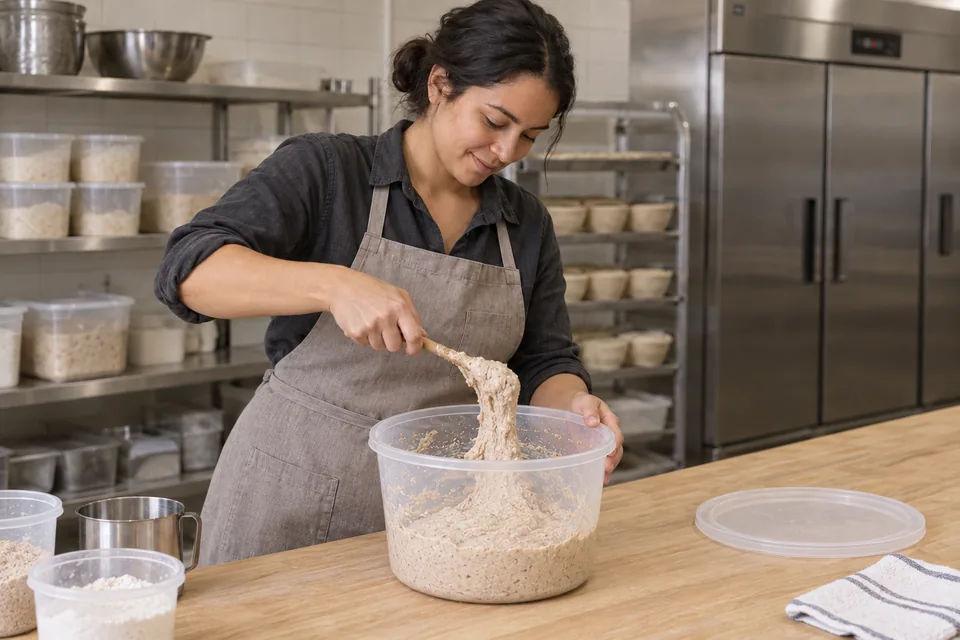
    Baker finishing a starter feed made with white and whole-wheat flour.
    01 Feed with white and whole-wheat flourMix the retained culture with fresh flour and water, then cover.
  2. 02 · Use

    Usually 6–9 h after feeding; follow recipe

    Use: Ripe culture

    Take only the amount your recipe needs once the culture is bubbly, expanded and webbed. Keep the remaining culture separate.

    Ready when: Mature enough for dough, before prolonged collapse.
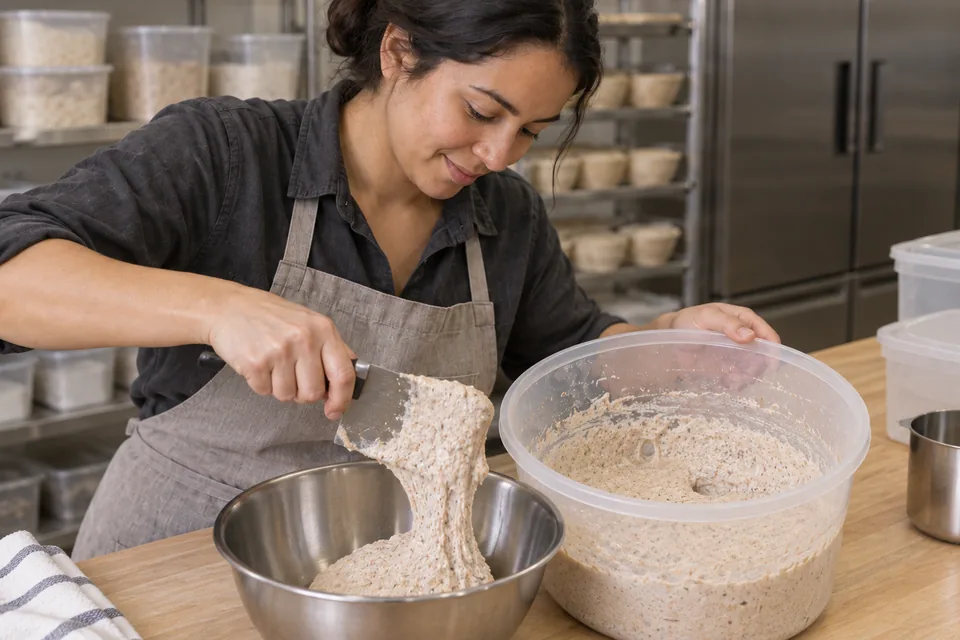
    Baker transferring a webbed, bubbly portion of ripe starter into a separate bowl.
    02 Use the ripe cultureTake the portion needed for dough when the culture is bubbly, expanded and webbed.
  3. 03 · Repeat or store

    Daily, or refrigerate after use

    Use: Remaining culture

    Repeat the retain-and-feed routine next morning, or use the refrigeration and restoration protocol.

    Ready when: A retained seed remains available for the next bake.
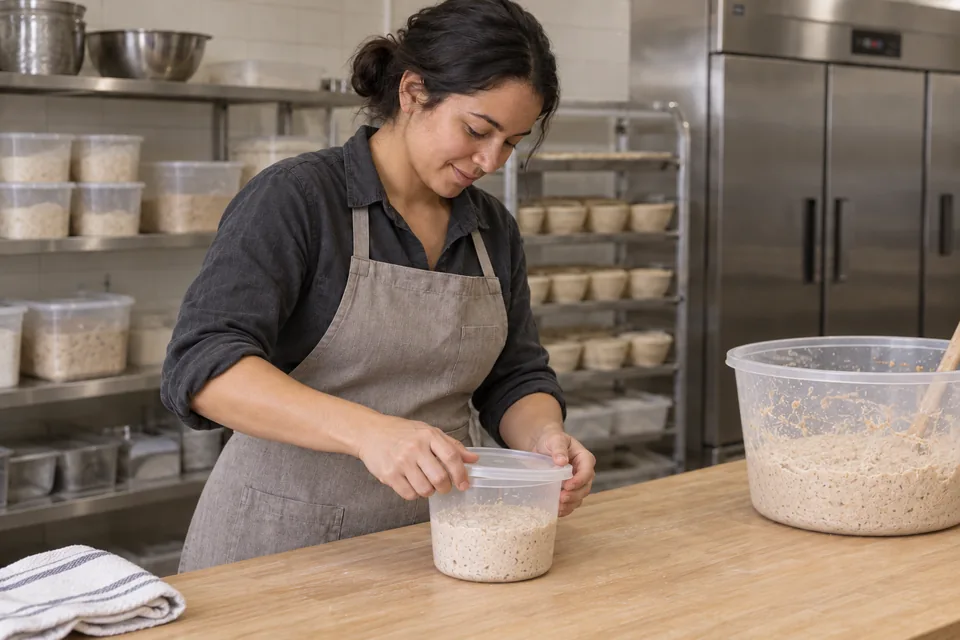
    Baker covering a small retained seed culture in its own clean container.
    03 Keep a separate seed cultureKeep a separate portion available for the next feeding.

What to look for

StageLook and feelNeeds attention
ActivityFeedings lead to repeatable expansion, bubbles and an internal web.Calendar age alone does not show that a new culture can raise bread.

Troubleshooting

If you seeLikely causeWhat to do nowNext time
Starter is not vigorous yetA young or cool culture needs more development.Continue regular feedings and wait for reliable activity before using in bread.Keep feeding amounts and temperature consistent.
Pink/orange colour or fuzzy growthThe culture is contaminated.Discard it and start again in clean equipment.Keep the container covered and utensils clean.

Recipe notes

  • No commercial yeast, sugar, fruit, pork or added alcohol is used. Fermentation itself naturally produces small amounts of ethanol; this is not a guarantee of chemically zero alcohol.
Show ingredient flow

Recipe

Daily sourdough starter feeding

Maintain an established culture at 80% hydration with an 80:20 white-to-whole-wheat flour blend.

How do I make it?

  1. Keep a portion and feed it

    Once each morning

    About 24 hours after the last feed, weigh out 100 g starter and remove the rest. Mix in the fresh flour and water listed for the feed, then cover and leave at room temperature.

    Baker finishing a starter feed made with white and whole-wheat flour.
    Mix the retained culture with fresh flour and water, then cover.

    Ready when: 26–27°C just after mixing.

  2. Take the starter you need

    Usually 6–9 h after feeding; follow recipe

    Once the starter has risen and looks bubbly with fine strands inside, take only the amount your recipe needs. Keep the remaining starter separate.

    Baker transferring a webbed, bubbly portion of ripe starter into a separate bowl.
    Take the portion needed for dough when the culture is bubbly, expanded and webbed.

    Ready when: The starter is ready to raise dough; do not leave it long after it has sunk back down.

  3. Feed again or refrigerate

    Daily, or refrigerate after use

    Next morning, keep the listed small portion of starter and feed it again with fresh flour and water. If you are not feeding it daily, follow the storage and restarting guide instead.

    Baker covering a small retained seed culture in its own clean container.
    Keep a separate portion available for the next feeding.

    Ready when: Some starter is kept separate for the next bake.

What can go wrong, and how can I fix it?

What you noticeLikely causeWhat to do
Starter is not vigorous yetA young or cool culture needs more development.Continue regular feedings and wait for reliable activity before using in bread. Keep feeding amounts and temperature consistent.
Pink/orange colour or fuzzy growthThe culture is contaminated.Discard it and start again in clean equipment. Keep the container covered and utensils clean.
Useful recipe notes

No commercial yeast, sugar, fruit, pork or added alcohol is used. Fermentation itself naturally produces small amounts of ethanol; this is not a guarantee of chemically zero alcohol.

See the detailed method and ratios in , or follow ingredients through the .

Ingredient proportions & recipe details

Daily sourdough starter feeding at a glance

Makes
About 1000 g fed culture
Heat
No oven needed
Cooking time
No baking in this starter recipe
Dough hydration
80%
How do the ingredient proportions compare?

Core dough totals include the flour and water in the portion of starter or preferment used. Do not add them again. Toppings, fillings and dusting flour are separate.

Formula componentGramsFlour = 100%
Total flour555.6 g100%
Total water444.4 g80%
Salt0 g0%
Instant yeast0 g0%

Small-batch sourdough starter feeding

Makes
About 500 g fed culture
Heat
No oven needed
Cooking time
No baking in this starter recipe

Use the active starter in a final dough and follow that recipe for baking.

Starter & maintenance

Small-batch sourdough starter feeding

Maintain an established culture at 80% hydration with an 80:20 white-to-whole-wheat flour blend.

Method

  1. 01 · Retain & feed

    Once each morning

    Use: All listed ingredients

    About 24 h after the last feed, keep only 50 g culture. Mix in fresh flour and water; cover at room temperature.

    Ready when: Immediately after mixing: 26–27°C.

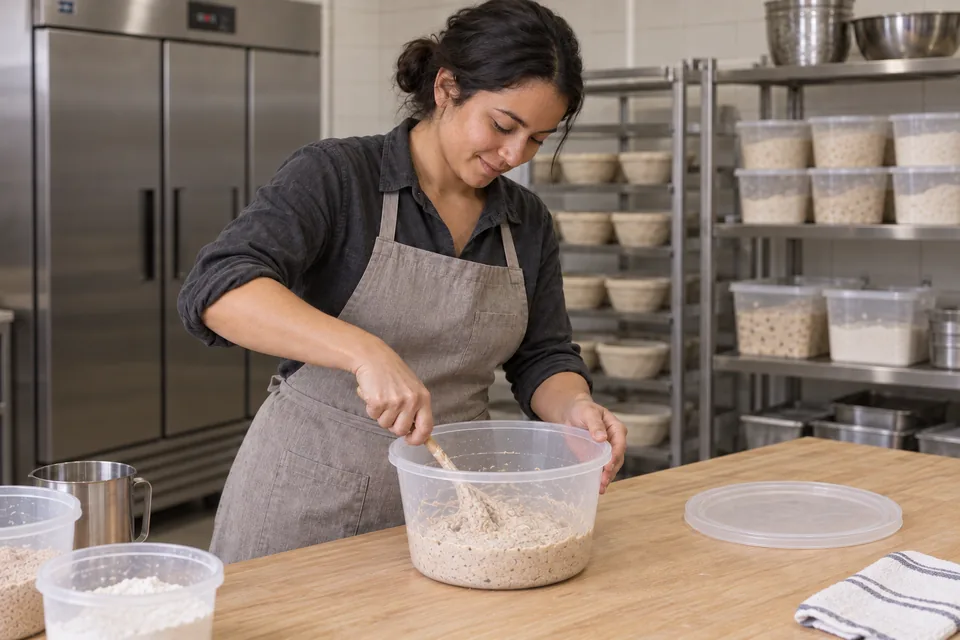
    Baker mixing a smaller starter feed in a clear tub with plenty of empty space above it.
    01 Feed a smaller batchFeed the retained culture, keeping the smaller batch proportions.
  2. 02 · Use

    Usually 6–9 h after feeding; follow recipe

    Use: Ripe culture

    Take only the amount your recipe needs once the culture is bubbly, expanded and webbed. Keep the remaining culture separate.

    Ready when: Mature enough for dough, before prolonged collapse.

    Baker transferring a webbed, bubbly portion of ripe starter into a separate bowl.
    02 Use the ripe cultureTake the portion needed for dough when the culture is bubbly, expanded and webbed.
  3. 03 · Repeat or store

    Daily, or refrigerate after use

    Use: Remaining culture

    Repeat the retain-and-feed routine next morning, or use the refrigeration and restoration protocol.

    Ready when: A retained seed remains available for the next bake.

    Baker covering a small retained seed culture in its own clean container.
    03 Keep a separate seed cultureKeep a separate portion available for the next feeding.

What to look for

StageLook and feelNeeds attention
ActivityFeedings lead to repeatable expansion, bubbles and an internal web.Calendar age alone does not show that a new culture can raise bread.

Troubleshooting

If you seeLikely causeWhat to do nowNext time
Starter is not vigorous yetA young or cool culture needs more development.Continue regular feedings and wait for reliable activity before using in bread.Keep feeding amounts and temperature consistent.
Pink/orange colour or fuzzy growthThe culture is contaminated.Discard it and start again in clean equipment.Keep the container covered and utensils clean.

Recipe notes

  • No commercial yeast, sugar, fruit, pork or added alcohol is used. Fermentation itself naturally produces small amounts of ethanol; this is not a guarantee of chemically zero alcohol.
  • At 500 g total, this feed is insufficient for a recipe needing 540 g levain plus retained culture. Use the full feed or scale all feed ingredients consistently.
Show ingredient flow

Recipe

Small-batch sourdough starter feeding

Maintain an established culture at 80% hydration with an 80:20 white-to-whole-wheat flour blend.

How do I make it?

  1. Keep a portion and feed it

    Once each morning

    About 24 hours after the last feed, weigh out 50 g starter and remove the rest. Mix in the fresh flour and water listed for the feed, then cover and leave at room temperature.

    Baker mixing a smaller starter feed in a clear tub with plenty of empty space above it.
    Feed the retained culture, keeping the smaller batch proportions.

    Ready when: 26–27°C just after mixing.

  2. Take the starter you need

    Usually 6–9 h after feeding; follow recipe

    Once the starter has risen and looks bubbly with fine strands inside, take only the amount your recipe needs. Keep the remaining starter separate.

    Baker transferring a webbed, bubbly portion of ripe starter into a separate bowl.
    Take the portion needed for dough when the culture is bubbly, expanded and webbed.

    Ready when: The starter is ready to raise dough; do not leave it long after it has sunk back down.

  3. Feed again or refrigerate

    Daily, or refrigerate after use

    Next morning, keep the listed small portion of starter and feed it again with fresh flour and water. If you are not feeding it daily, follow the storage and restarting guide instead.

    Baker covering a small retained seed culture in its own clean container.
    Keep a separate portion available for the next feeding.

    Ready when: Some starter is kept separate for the next bake.

What can go wrong, and how can I fix it?

What you noticeLikely causeWhat to do
Starter is not vigorous yetA young or cool culture needs more development.Continue regular feedings and wait for reliable activity before using in bread. Keep feeding amounts and temperature consistent.
Pink/orange colour or fuzzy growthThe culture is contaminated.Discard it and start again in clean equipment. Keep the container covered and utensils clean.
Useful recipe notes

No commercial yeast, sugar, fruit, pork or added alcohol is used. Fermentation itself naturally produces small amounts of ethanol; this is not a guarantee of chemically zero alcohol.

At 500 g total, this feed is insufficient for a recipe needing 540 g levain plus retained culture. Use the full feed or scale all feed ingredients consistently.

See the detailed method and ratios in , or follow ingredients through the .

Ingredient proportions & recipe details

Small-batch sourdough starter feeding at a glance

Makes
About 500 g fed culture
Heat
No oven needed
Cooking time
No baking in this starter recipe
Dough hydration
80%
How do the ingredient proportions compare?

Core dough totals include the flour and water in the portion of starter or preferment used. Do not add them again. Toppings, fillings and dusting flour are separate.

Formula componentGramsFlour = 100%
Total flour277.8 g100%
Total water222.2 g80%
Salt0 g0%
Instant yeast0 g0%