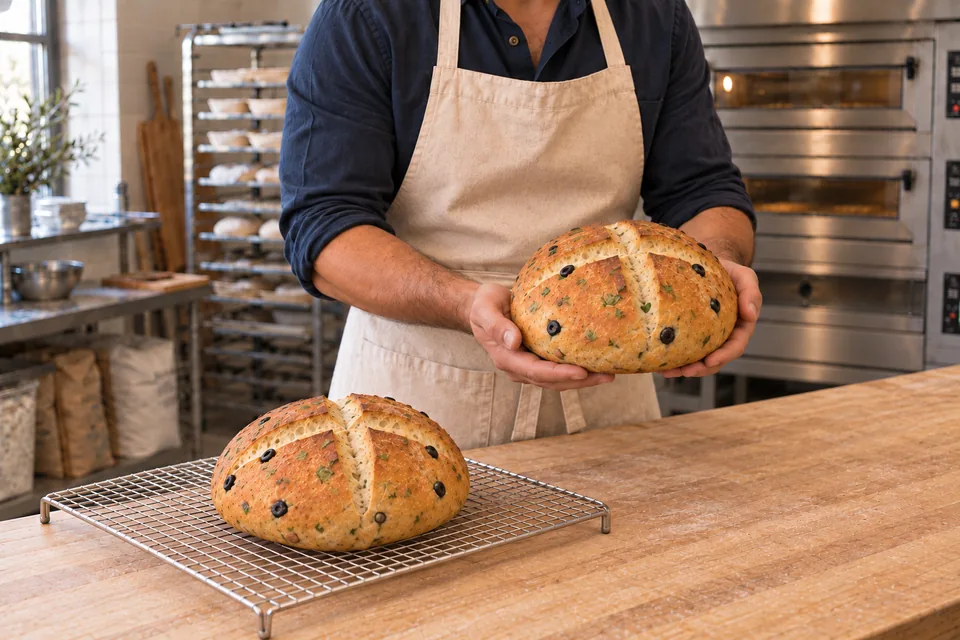
Cypriot-style olive and coriander bread
Two small round olive breads with finely chopped onion and fresh coriander. The additions are folded into developed dough before shaping.
Method
01 · Mix and knead the dough
12–15 minUse: Strong white bread flour; Water; Olive oil; Fine salt; Instant dried yeast
Mix the flour, water, oil, salt and instant yeast until combined. Knead by hand or with a dough hook at the machine’s recommended speed for 8–10 minutes.Ready when: The dough is soft, cohesive and elastic with no dry flour.
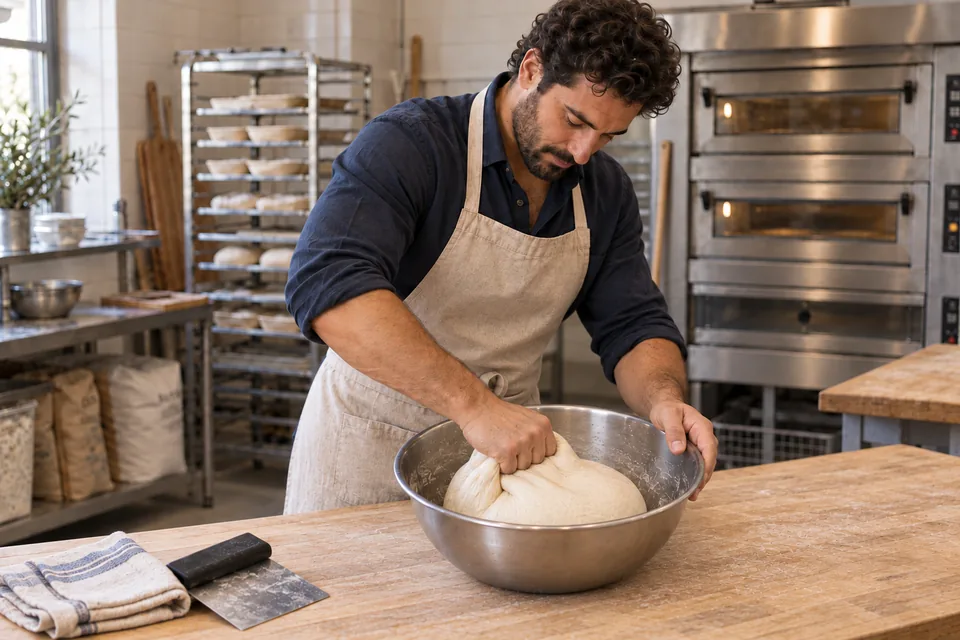
01 Knead the plain olive-oil doughKnead a soft, cohesive dough. 02 · Let the dough rise
60–90 minUse:
Cover and leave at 22–24°C for 60–90 minutes. Prepare the additions in the next step during this rise.Ready when: The dough is aerated and roughly doubled.
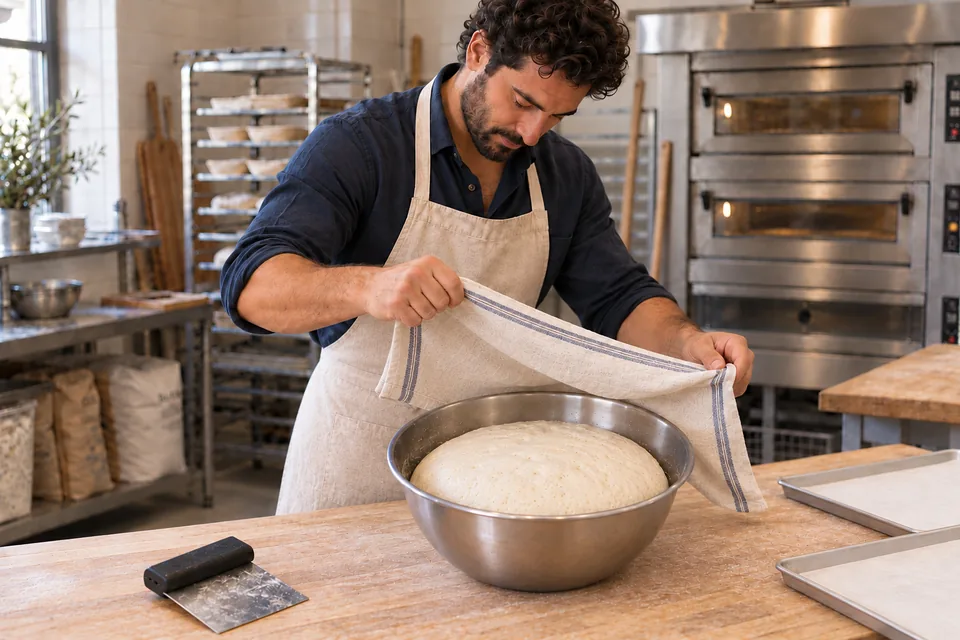
02 Let the plain dough riseLet the dough become airy and roughly doubled. 03 · Prepare and hold the measured additions
10–15 minUse: Pitted black olives; Peeled onion; Fresh coriander leaves
Drain and pat the olives dry, weigh the stated amount and chop into 5–8 mm pieces. Finely mince the peeled onion into pieces no larger than 2 mm. Wash, dry and chop the coriander leaves.Ready when: The additions are evenly chopped with no loose brine or oil pooling around them.
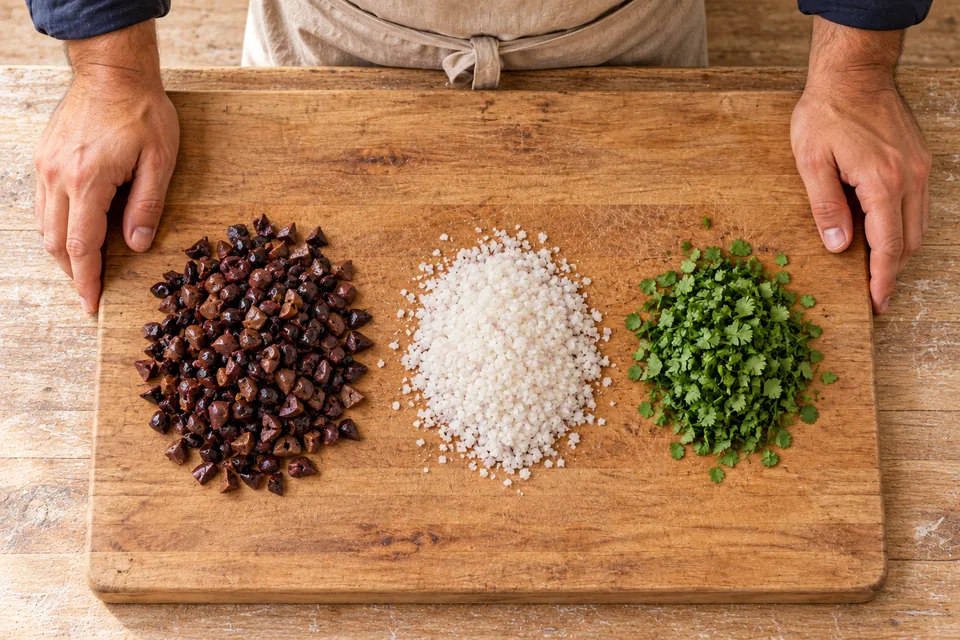
03 Prepare the olives, onion and corianderDrain, dry and finely chop the additions. 04 · Fold the additions into the risen dough
5–8 minUse: Pitted black olives; Peeled onion; Fresh coriander leaves
Gently spread the risen dough into a thick rectangle. Scatter all the prepared additions over it, fold the edges over and work gently with a scraper until evenly dispersed. Avoid crushing the pieces or kneading in extra flour.Ready when: The dough holds together and the additions are spread through it without a wet pocket.
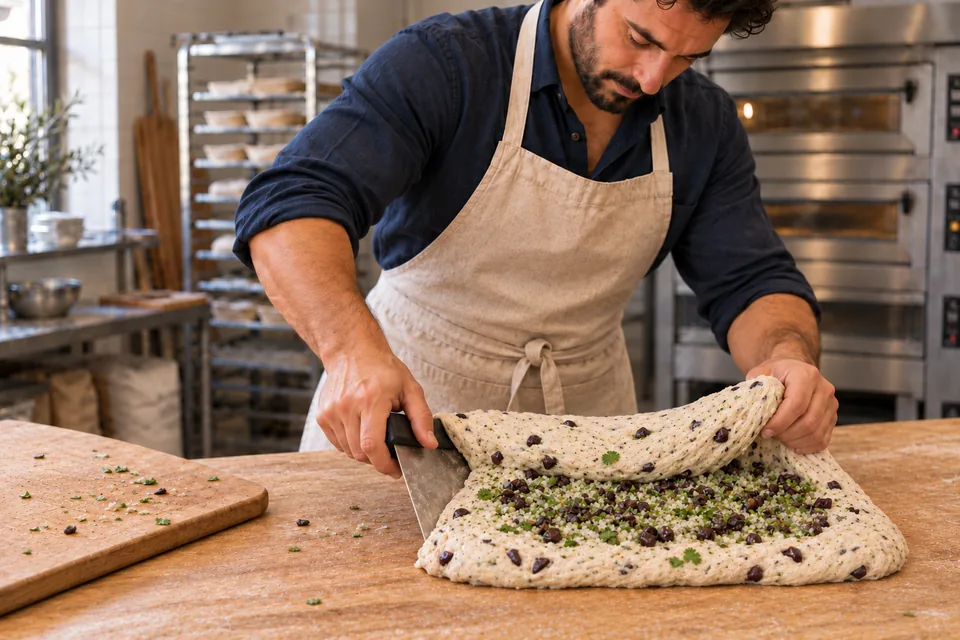
04 Fold the additions through the doughGently fold in all the prepared additions. 05 · Divide and shape two loaves
8–10 minUse: Flour for shaping
Line two 30×40 cm trays with baking paper. Use the shaping flour sparingly. Divide the dough into two equal pieces, about 552.5 g each. Gather each piece into a round with its seam underneath, then press gently to about 14 cm across and 3–4 cm high. Put one loaf on each tray. Tuck large exposed pieces into the dough.Ready when: Two even rounds have room to expand on separate trays.
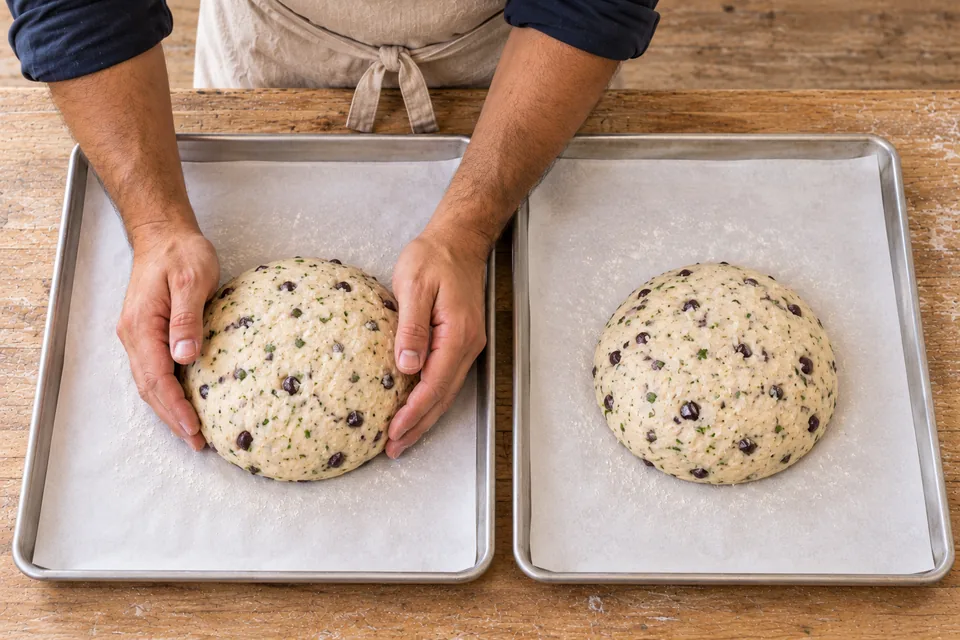
05 Shape two small roundsPut one round on each tray. 06 · Proof and heat the oven
45–75 minUse:
Cover loosely and leave at 22–24°C for 45–75 minutes. During the final 20 minutes, heat the oven to 220°C conventional and place two racks around the middle with space for the trays.Ready when: Both loaves are puffy and a light fingertip dent returns slowly.
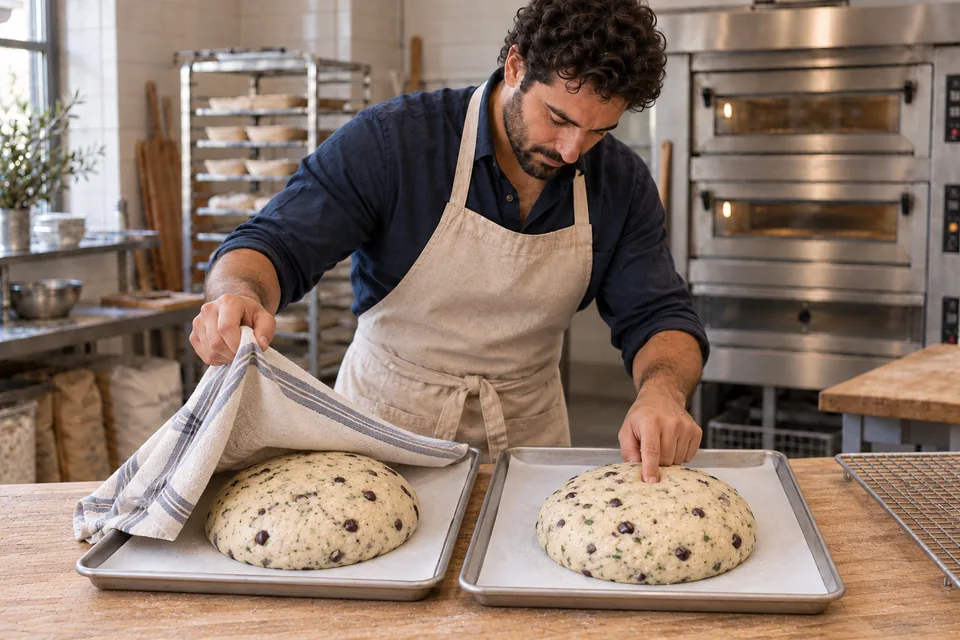
06 Proof both roundsLeave both loaves until puffy. 07 · Score and bake
35–40 minUse:
Cut a shallow cross about 5 mm deep in each loaf. Bake both trays together at 220°C conventional for 15 minutes. Swap their rack positions, turn each tray front to back and reduce to 200°C. Bake for 20–25 minutes more. Shield dark inclusions loosely with foil if needed. Check each base and probe each bread centre away from an olive.Ready when: The base is browned and firm and the bread centre reaches about 95°C with no sticky raw dough. The tiny onion pieces are tender, not a raw crunchy layer.
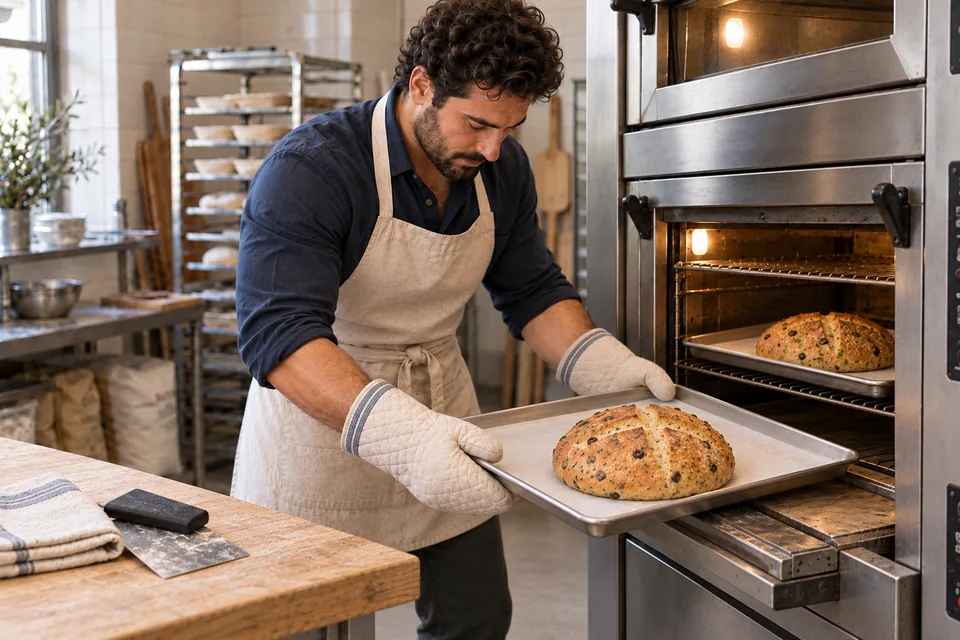
07 Bake the cross-scored loavesBake both trays, swapping their rack positions. 08 · Cool before slicing
90 minUse:
Transfer to a rack and cool for at least 90 minutes before slicing.Ready when: The crumb is set and slices do not squash into a wet line.
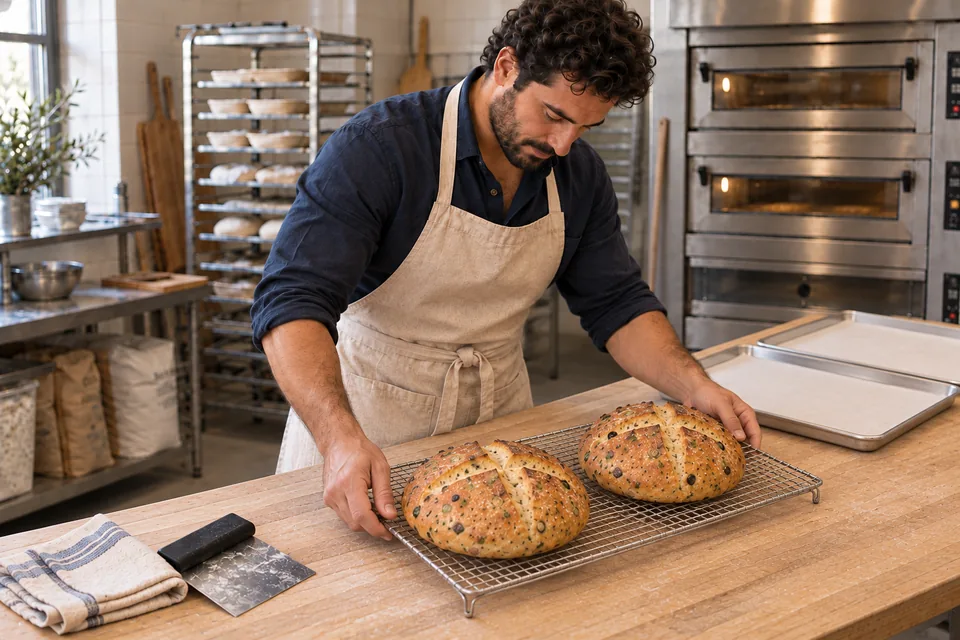
08 Cool both loaves fullyCool for at least 90 minutes before slicing.
What to look for
| Stage | Look / feel for | Needs attention |
|---|---|---|
| Mix and knead the dough | The dough is soft, cohesive and elastic with no dry flour. | |
| Let the dough rise | The dough is aerated and roughly doubled. | |
| Prepare and hold the measured additions | The additions are evenly chopped with no loose brine or oil pooling around them. | |
| Fold the additions into the risen dough | The dough holds together and the additions are spread through it without a wet pocket. | |
| Divide and shape two loaves | Two even rounds have room to expand on separate trays. | |
| Proof and heat the oven | Both loaves are puffy and a light fingertip dent returns slowly. | |
| Score and bake | The base is browned and firm and the bread centre reaches about 95°C with no sticky raw dough. The tiny onion pieces are tender, not a raw crunchy layer. | |
| Cool before slicing | The crumb is set and slices do not squash into a wet line. |
Troubleshooting
| If you see this | Likely cause | What to do now | Next time |
|---|---|---|---|
| The inclusions tear the dough during shaping. | The dough is tight or the pieces are too large. | Cover and rest for 5 minutes, then shape gently with a scraper. | Develop the base dough first and keep additions at the stated size. |
| The outside browns before the bread centre cooks. | Dark inclusions or topping colour faster than the thick bread. | Cover loosely with foil and keep baking until the bread centre and base meet the stated cues. | Use the stated shape and measure bread away from melted cheese or wet inclusions. |
Storage: Cool promptly and refrigerate wrapped leftovers within 2 hours of baking; use within 2 days. Reheat portions until hot through. Freeze wrapped portions for up to 1 month.; Contains: wheat.; This Nepedia version has not been kitchen-tested.
Other approaches to this recipe
| Cook / recipe | Use | What differs |
|---|
The working ingredients and method form one recipe. Different formulas are compared without averaging their quantities or rise schedules.