Nepedia

Cottage loaf

A lightly buttered white dough shaped into two stacked rounds. A firm dough and a secure centre join help the smaller top stay in place.

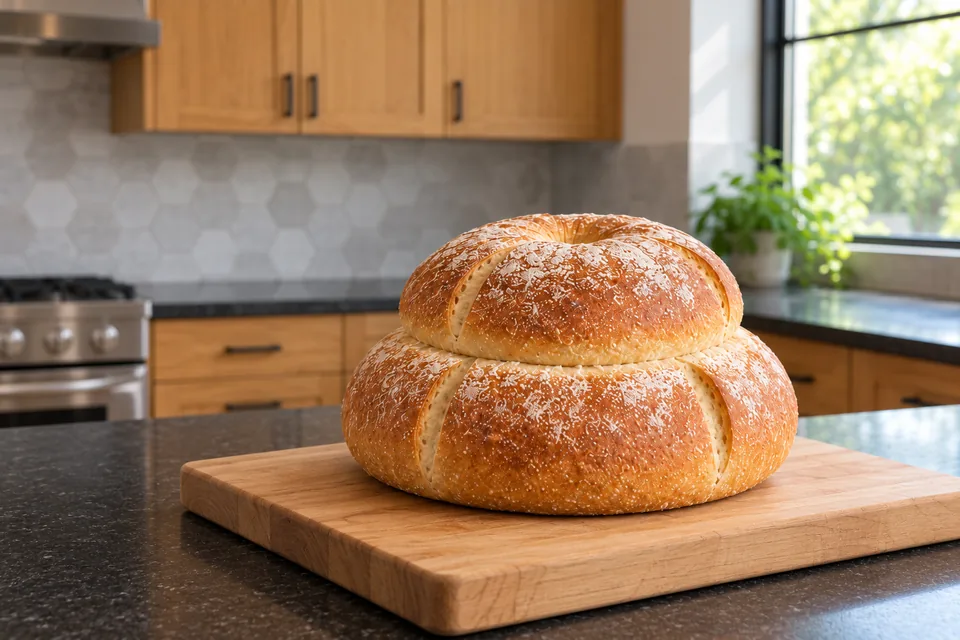
One golden cottage loaf has a broad smaller top centred above its larger base, a small central join and opened vertical side cuts.
Makes
1 loaf, about 16 slices
Heat
220°C conventional
Baking time
35–45 min
Cuisine / style
United Kingdom
View

Cottage loaf

Makes
1 loaf, about 16 slices
Heat
220°C conventional
Baking time
35–45 min
Cuisine / style
United Kingdom
United Kingdom · White bread

Cottage loaf

A lightly buttered white dough shaped into two stacked rounds. A firm dough and a secure centre join help the smaller top stay in place.

Method

  1. 01 · Mix and develop the dough

    12–16 min

    Use: Strong white bread flour; Water; Unsalted butter; Fine salt; Instant dried yeast

    Combine the flour, salt and yeast in a bowl. Rub in the soft butter, add the water and gather into a dough. Knead for 8–12 minutes by hand or with a dough hook.

    Ready when: The dough feels smooth and firm but pliable. If dry flour remains, work in water a teaspoon at a time; avoid making the dough loose.
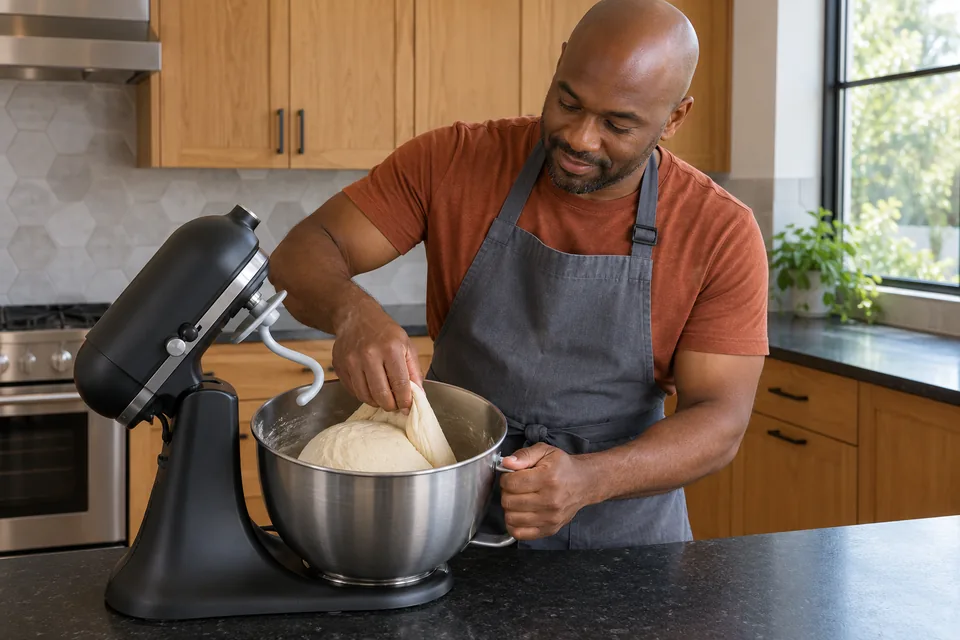
    The cook folds a short flap of smooth pale dough into the steel bowl of a stopped mixer.
    01 Mix KneadKnead until the dough is smooth, firm and pliable.
  2. 02 · Let the dough rise

    60–90 min

    Use: Oil for the bowl

    Lightly oil a bowl, add the dough and cover. Leave at about 24–26°C for 60–90 minutes.

    Ready when: The dough has roughly doubled and feels aerated. A cooler room may need more time.
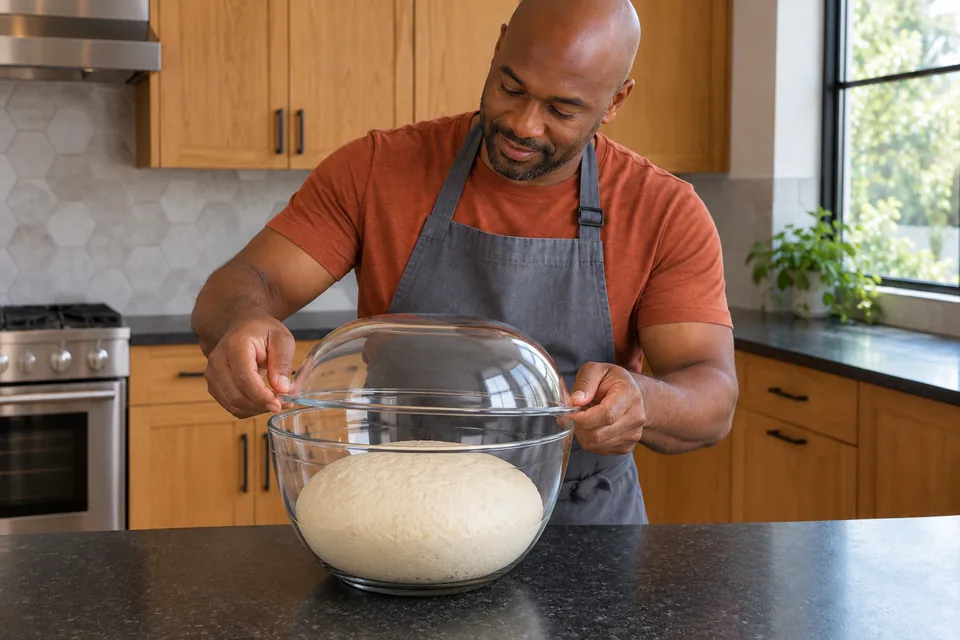
    The cook lowers a clear cover over a smoothly domed pale dough in a glass bowl.
    02 BulkCover and let the dough roughly double.
  3. 03 · Divide two-to-one and relax

    15–18 min

    Use: Flour for shaping and dusting

    Lightly flour the worktop and release the dough from its bowl. Press out large bubbles. Weigh and divide into one piece of about 571 g and another of about 286 g. Shape each into a taut round, cover and rest for 10 minutes.

    Ready when: There are exactly two smooth balls; the larger contains twice the mass of the smaller.
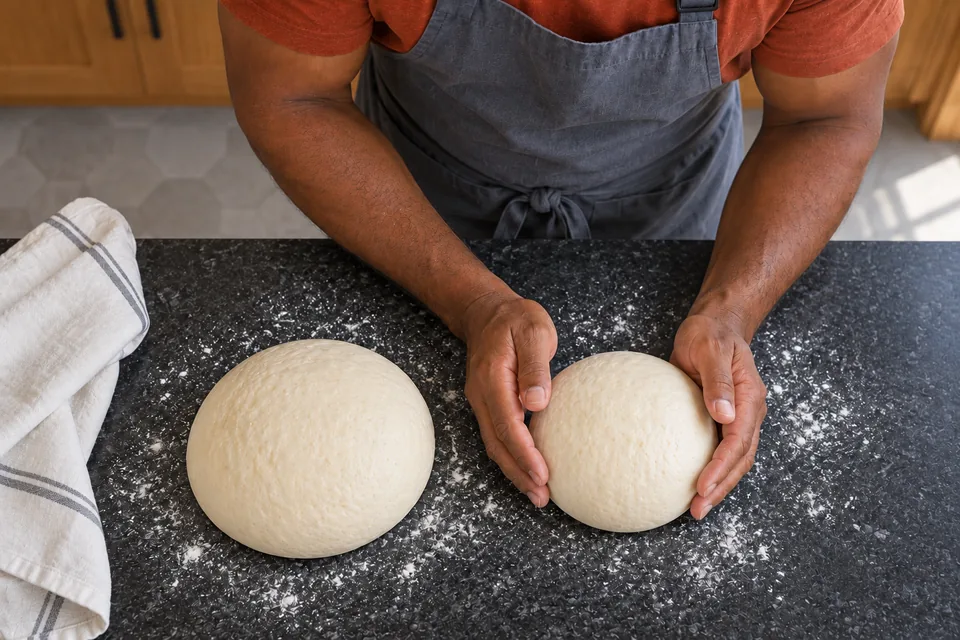
    Two smooth pale rounds sit side by side, the smaller cupped by the cook and the larger modestly wider.
    03 Divide RestMake two rounds with twice the dough in the larger one.
  4. 04 · Stack and anchor the rounds

    3–5 min

    Use: Flour for shaping and dusting

    Line a 30×40 cm baking tray with baking paper. Place the larger round centrally and set the smaller directly on top. Dust a finger lightly with flour and press down through the centre of both pieces until it reaches the tray. Withdraw it carefully.

    Ready when: The rounds are joined through the centre, with the smaller one sitting level and securely above the larger.
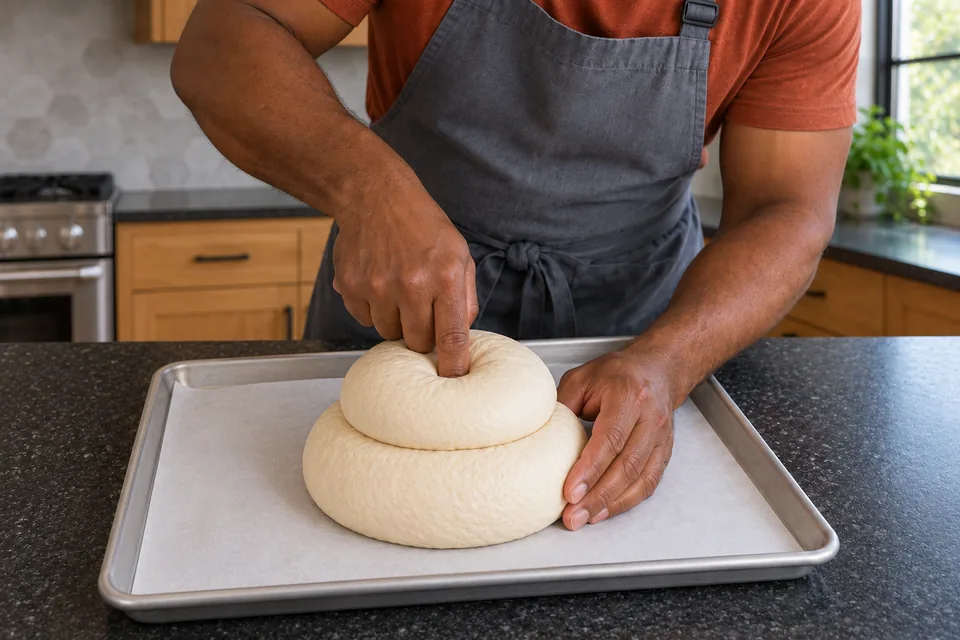
    The cook presses one finger into the centre of a smaller dough round stacked level on a larger round.
    04 StackStack the rounds and press through the centre to join them.
  5. 05 · Proof and heat the oven

    40–60 min

    Use:

    Cover loosely without pressing on the top. Leave at about 24–26°C for 40–60 minutes. Heat the oven to 220°C conventional during the final 20 minutes.

    Ready when: Both rounds look expanded and puffy while still holding their stacked shape. A gentle fingertip dent slowly recovers.
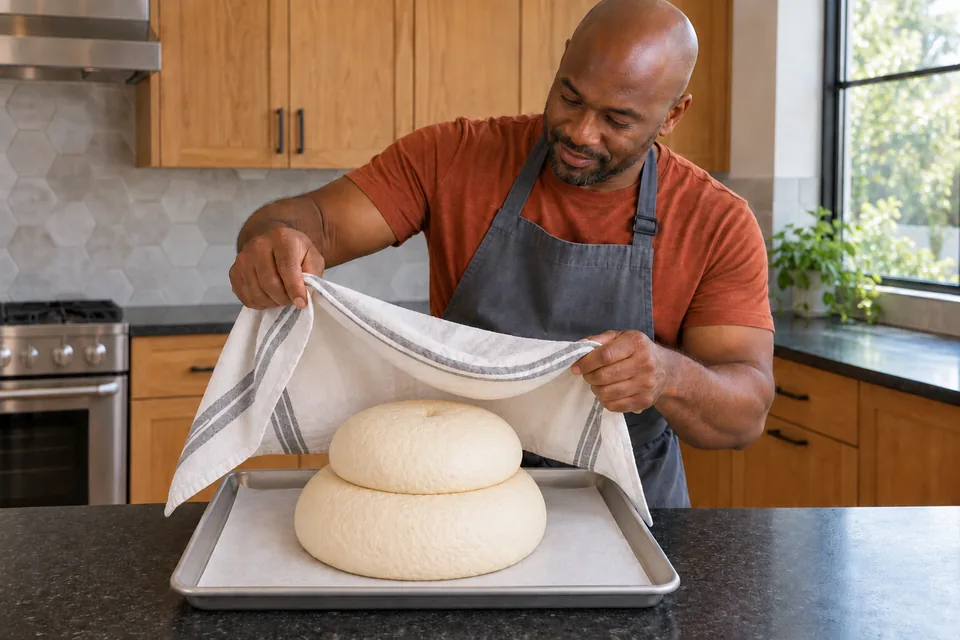
    The cook lifts a striped white cloth above an expanded two-tier loaf with a broad, centred upper round.
    05 ProofLet both rounds become puffy while holding their stacked shape.
  6. 06 · Score and bake

    37–47 min

    Use: Flour for shaping and dusting

    Dust lightly with flour. With a sharp blade, make four shallow vertical cuts spaced around each round, keeping the cuts separate from the central join. Bake for 35–45 minutes. If the small top browns early, cover it loosely with foil while the lower part finishes.

    Ready when: The crust is golden-brown, the base is firm and the centre of the lower round reads about 95°C. A tap underneath sounds hollow.
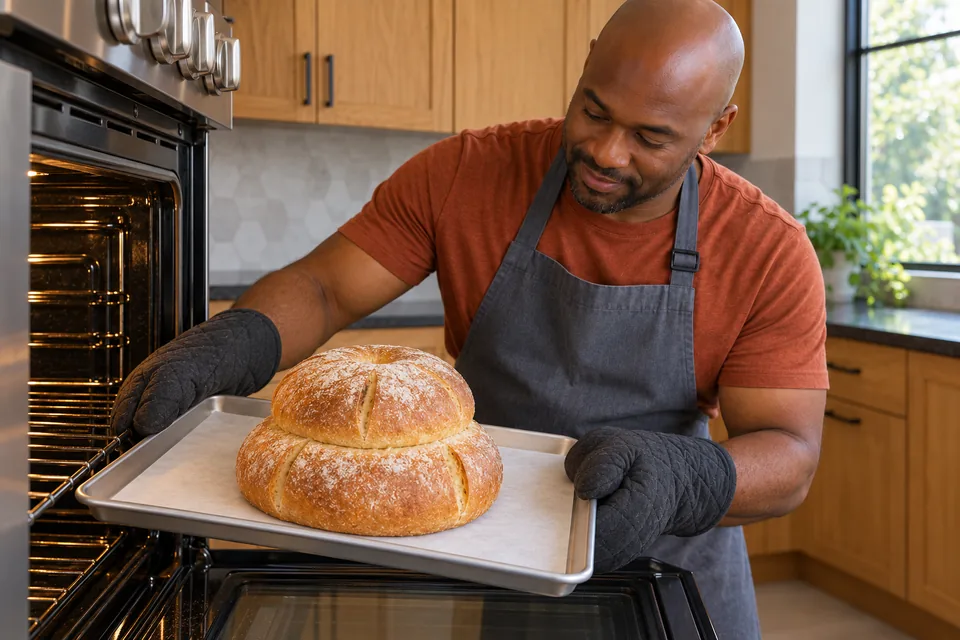
    Using two oven mitts, the cook holds a tray with one golden two-tier loaf, a centred top and opened vertical side cuts.
    06 Score BakeScore each round and bake until golden brown.
  7. 07 · Cool fully before slicing

    90 min

    Use:

    Transfer the loaf carefully to a rack. Cool for at least 90 minutes before slicing.

    Ready when: The crumb no longer releases steam and cuts without a gummy centre.
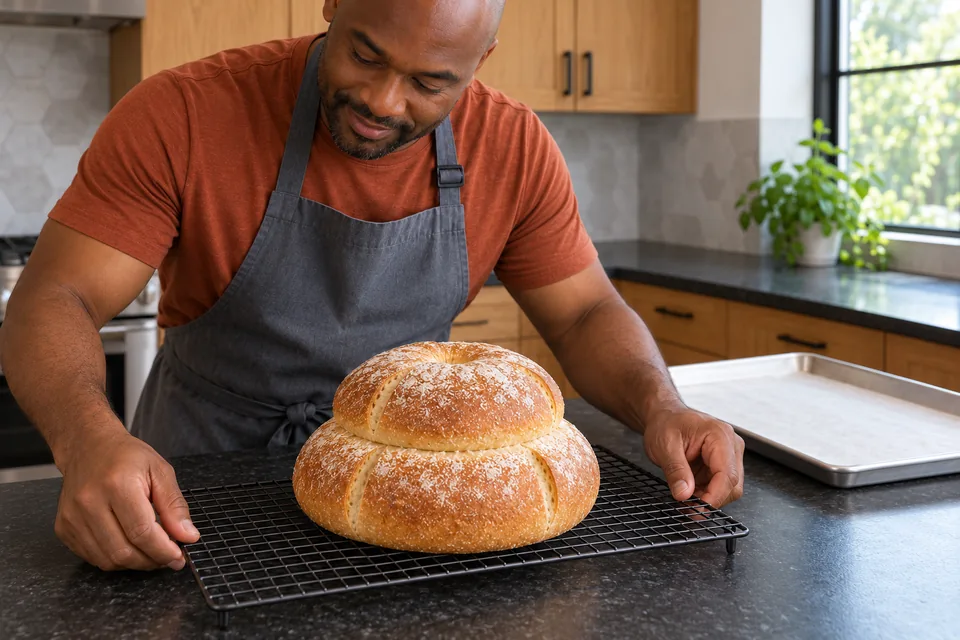
    The cook steadies a wire rack holding one whole golden two-tier cottage loaf beside its empty tray.
    07 CoolCool the loaf fully on a rack before slicing.

What to look for

StageLook / feel forNeeds attention
Mix and develop the doughThe dough feels smooth and firm but pliable. If dry flour remains, work in water a teaspoon at a time; avoid making the dough loose.
Let the dough riseThe dough has roughly doubled and feels aerated. A cooler room may need more time.
Divide two-to-one and relaxThere are exactly two smooth balls; the larger contains twice the mass of the smaller.
Stack and anchor the roundsThe rounds are joined through the centre, with the smaller one sitting level and securely above the larger.
Proof and heat the ovenBoth rounds look expanded and puffy while still holding their stacked shape. A gentle fingertip dent slowly recovers.
Score and bakeThe crust is golden-brown, the base is firm and the centre of the lower round reads about 95°C. A tap underneath sounds hollow.
Cool fully before slicingThe crumb no longer releases steam and cuts without a gummy centre.

Troubleshooting

If you see thisLikely causeWhat to do nowNext time
The small top leans or slips.It was off-centre or the join was shallow.If still unproved, gently centre it and press through both pieces again. Avoid forcing a fully risen loaf.Use a firm dough, two-to-one weighed pieces and a join that reaches the tray.
The upper round darkens before the lower one is baked.The smaller section heats through sooner.Cover only the top loosely with foil and continue until the lower centre is set.Use the stated conventional temperature and check colour before the end of baking.
The crumb feels gummy when sliced.The centre was underbaked or the loaf was cut hot.If the loaf is still whole and underbaked, return it to the oven.Check the lower round’s centre and allow the full cooling time.

Storage: Wrap only when completely cool. Keep at room temperature for up to 3 days and toast older slices. Freeze sliced bread for up to 2 months; thaw while wrapped or toast from frozen.; Contains: wheat, milk.; This Nepedia version has not been kitchen-tested.

Ingredient choices & substitutions

No brand is specified.

Match the ingredient’s function and weight. See the flour, gluten, yeast and salt guide.

Other approaches to this recipe
Cook / recipeUseWhat differs

The working ingredients and method form one recipe. Different formulas are compared without averaging their quantities or rise schedules.

Nepedia
One golden cottage loaf has a broad smaller top centred above its larger base, a small central join and opened vertical side cuts.
Cottage loaf with two joined rounds.

Recipe

Cottage loaf

A lightly buttered white dough shaped into two stacked rounds. A firm dough and a secure centre join help the smaller top stay in place.

How do I make it?

  1. Mix and develop the dough

    12–16 min

    Combine the flour, salt and yeast in a bowl. Rub in the soft butter, add the water and gather into a dough. Knead for 8–12 minutes by hand or with a dough hook.

    The cook folds a short flap of smooth pale dough into the steel bowl of a stopped mixer.
    Knead until the dough is smooth, firm and pliable.

    Ready when: The dough feels smooth and firm but pliable. If dry flour remains, work in water a teaspoon at a time; avoid making the dough loose.

  2. Let the dough rise

    60–90 min

    Lightly oil a bowl, add the dough and cover. Leave at about 24–26°C for 60–90 minutes.

    The cook lowers a clear cover over a smoothly domed pale dough in a glass bowl.
    Cover and let the dough roughly double.

    Ready when: The dough has roughly doubled and feels aerated. A cooler room may need more time.

  3. Divide two-to-one and relax

    15–18 min

    Lightly flour the worktop and release the dough from its bowl. Press out large bubbles. Weigh and divide into one piece of about 571 g and another of about 286 g. Shape each into a taut round, cover and rest for 10 minutes.

    Two smooth pale rounds sit side by side, the smaller cupped by the cook and the larger modestly wider.
    Make two rounds with twice the dough in the larger one.

    Ready when: There are exactly two smooth balls; the larger contains twice the mass of the smaller.

  4. Stack and anchor the rounds

    3–5 min

    Line a 30×40 cm baking tray with baking paper. Place the larger round centrally and set the smaller directly on top. Dust a finger lightly with flour and press down through the centre of both pieces until it reaches the tray. Withdraw it carefully.

    The cook presses one finger into the centre of a smaller dough round stacked level on a larger round.
    Stack the rounds and press through the centre to join them.

    Ready when: The rounds are joined through the centre, with the smaller one sitting level and securely above the larger.

  5. Proof and heat the oven

    40–60 min

    Cover loosely without pressing on the top. Leave at about 24–26°C for 40–60 minutes. Heat the oven to 220°C conventional during the final 20 minutes.

    The cook lifts a striped white cloth above an expanded two-tier loaf with a broad, centred upper round.
    Let both rounds become puffy while holding their stacked shape.

    Ready when: Both rounds look expanded and puffy while still holding their stacked shape. A gentle fingertip dent slowly recovers.

  6. Score and bake

    37–47 min

    Dust lightly with flour. With a sharp blade, make four shallow vertical cuts spaced around each round, keeping the cuts separate from the central join. Bake for 35–45 minutes. If the small top browns early, cover it loosely with foil while the lower part finishes.

    Using two oven mitts, the cook holds a tray with one golden two-tier loaf, a centred top and opened vertical side cuts.
    Score each round and bake until golden brown.

    Ready when: The crust is golden-brown, the base is firm and the centre of the lower round reads about 95°C. A tap underneath sounds hollow.

  7. Cool fully before slicing

    90 min

    Transfer the loaf carefully to a rack. Cool for at least 90 minutes before slicing.

    The cook steadies a wire rack holding one whole golden two-tier cottage loaf beside its empty tray.
    Cool the loaf fully on a rack before slicing.

    Ready when: The crumb no longer releases steam and cuts without a gummy centre.

What can go wrong, and how can I fix it?

What you noticeLikely causeWhat to do
The small top leans or slips.It was off-centre or the join was shallow.If still unproved, gently centre it and press through both pieces again. Avoid forcing a fully risen loaf. Use a firm dough, two-to-one weighed pieces and a join that reaches the tray.
The upper round darkens before the lower one is baked.The smaller section heats through sooner.Cover only the top loosely with foil and continue until the lower centre is set. Use the stated conventional temperature and check colour before the end of baking.
The crumb feels gummy when sliced.The centre was underbaked or the loaf was cut hot.If the loaf is still whole and underbaked, return it to the oven. Check the lower round’s centre and allow the full cooling time.
Useful recipe notes

Storage: Wrap only when completely cool. Keep at room temperature for up to 3 days and toast older slices. Freeze sliced bread for up to 2 months; thaw while wrapped or toast from frozen.

Contains: wheat, milk.

This Nepedia version has not been kitchen-tested.

See the detailed method and ratios in , or follow ingredients through the .

Ingredient proportions & recipe details

Cottage loaf at a glance

Makes
1 loaf, about 16 slices
Heat
220°C conventional
Baking time
35–45 min
Cuisine / style
United Kingdom
Leavening
Yeast
How do the ingredient proportions compare?

Percentages compare each listed weight with the combined flour weight (100%). These are ingredient ratios, not dough hydration; milk, eggs and fillings contain other ingredients as well as water.

Formula componentGramsFlour = 100%
Strong white bread flour500 g100%
Water300 g60%
Unsalted butter40 g8%
Fine salt10 g2%
Instant dried yeast7 g1.4%