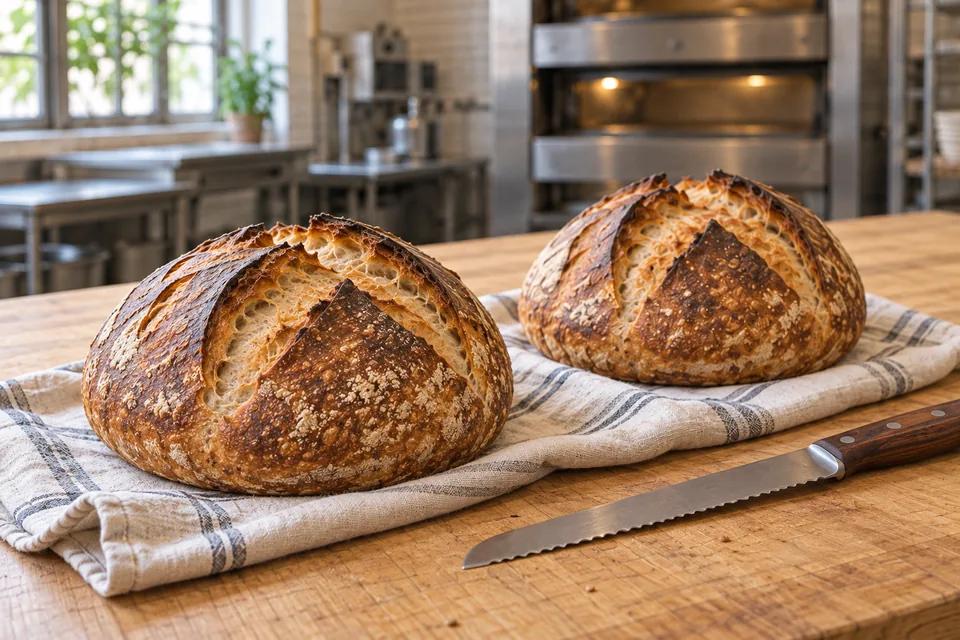
Hybrid levain bread
Bread with a twice-fed sourdough starter
Two short, warm levain feeds precede the final dough and overnight cold proof.
Method
01 · First feed
3 hoursUse: A
Retain 50 g active levain, mix in flour and water; cover at room temperature.Ready when: Even mixture, beginning to aerate.
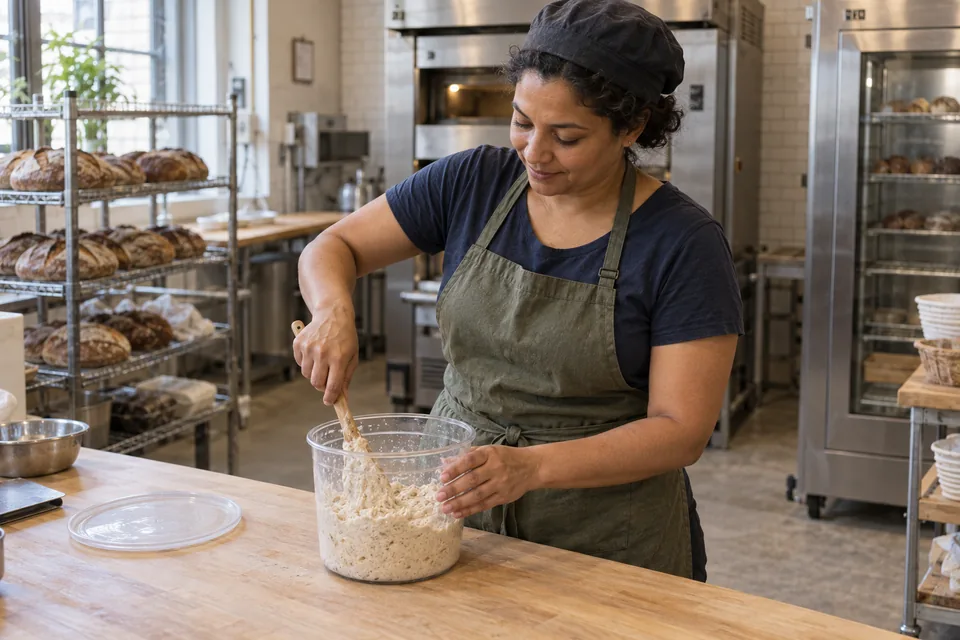
01 First feedMix the retained starter with its first feed flour and water; cover and let it begin to aerate. 02 · Second feed
4–5 hoursUse: A2
Keep only 250 g from the first feed. Add fresh flour and water; mix and cover. Start autolyse 20–30 minutes before this feed is ready.Ready when: Young, aerated levain with a mild fermented smell.
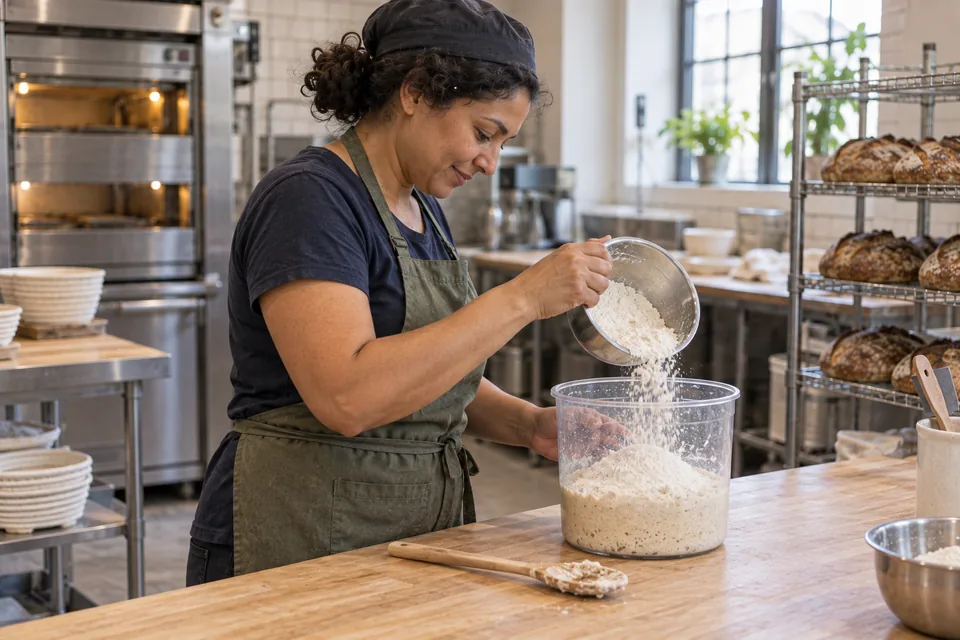
02 Second feedKeep the listed portion of the first feed, add fresh flour and water, then mix and cover. 03 · Autolyse
20–30 minutesUse: B flour + B water
Near the end of the feed, mix the final-dough flours and water only. Cover. Keep salt, yeast and levain aside.Ready when: All flour moistened; no dry pockets.
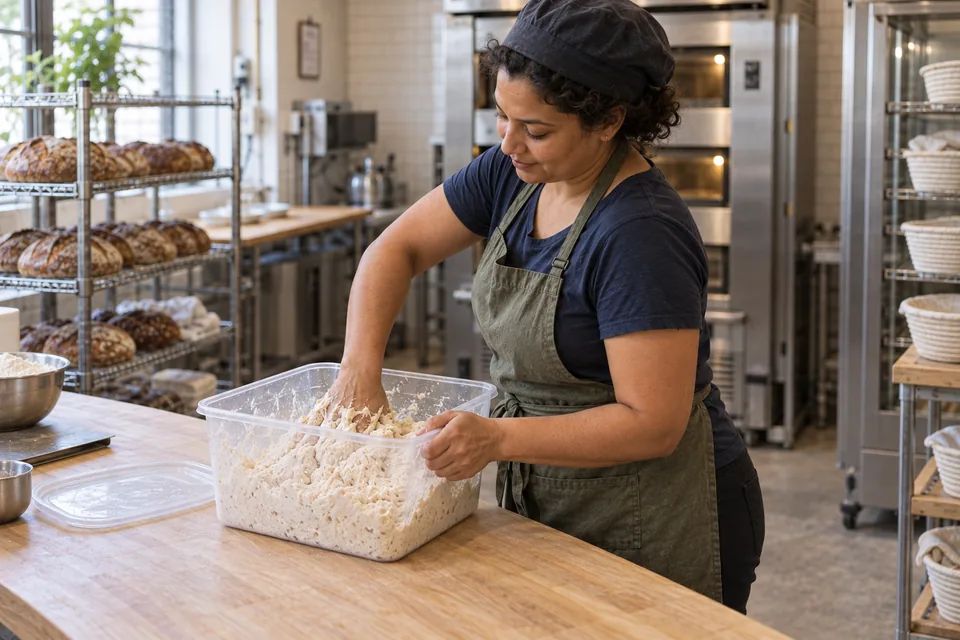
03 AutolyseMoisten all the final-dough flour with the final water, then cover and rest. 04 · Mix
3–6 minutesUse: Autolysed dough + remaining B
With a damp hand, fold edges over the additions; pinch through the mass with thumb and forefinger 5–6 times. Alternate pinching and folding until uniformly mixed, about 3–6 minutes. Rest briefly, then fold again.Ready when: Uniform dough, no streaks of levain or salt.
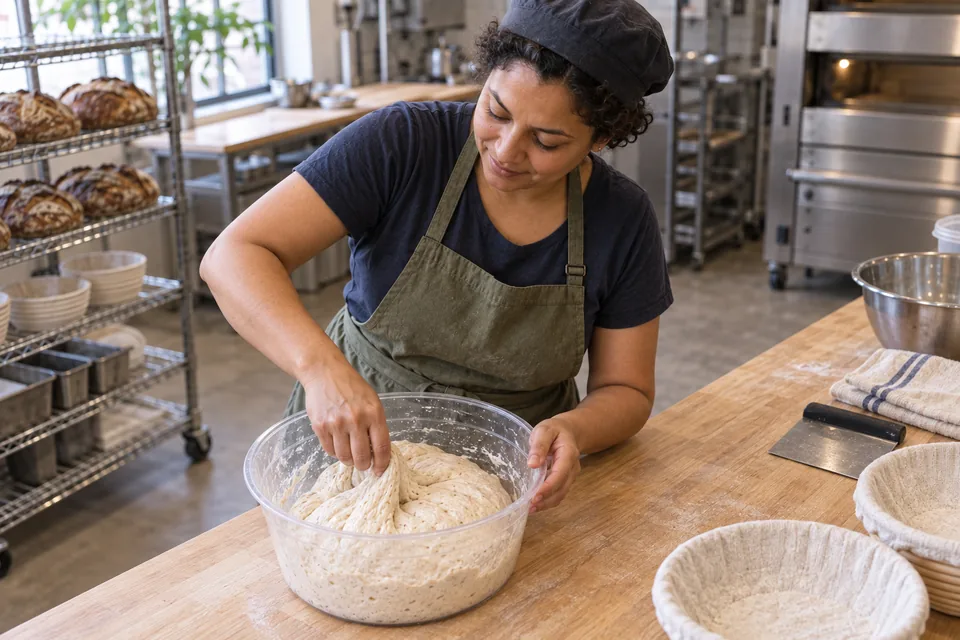
04 MixUse a damp hand to pinch and fold the levain, salt and any listed yeast evenly into the dough. 05 · Fold & bulk
4 sets in first 1½–2 h; total bulk about 5 hoursUse: Mixed dough
With a damp hand, stretch one edge until resistance, then fold across the dough. Repeat around 4–5 sides; turn the bundle seam down. Cover between sets; let it relax before the next set. Do not tear it or fold during the last bulk hour.Ready when: About 2½× starting volume, aerated and elastic.
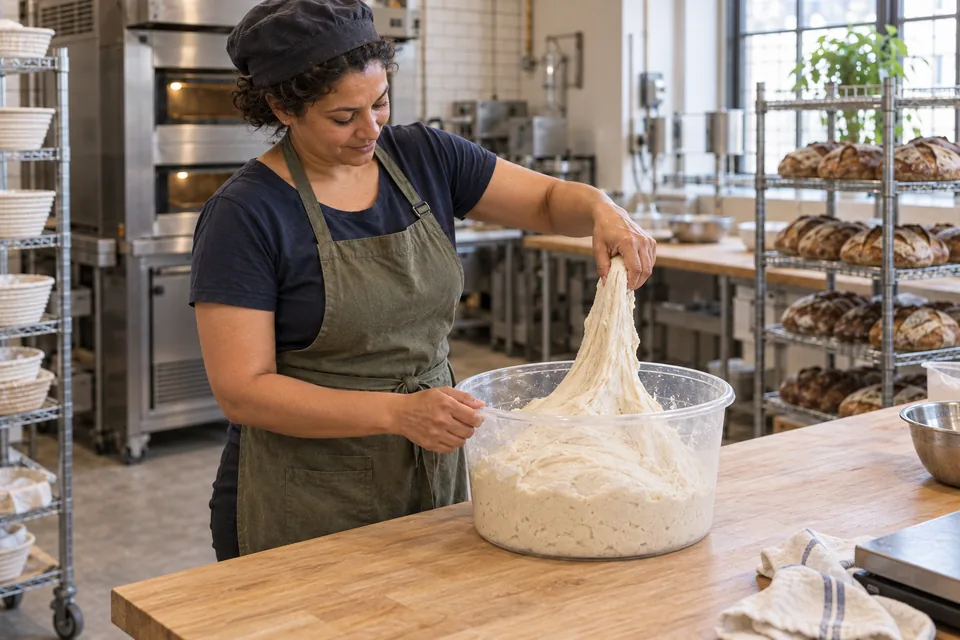
05 Fold & bulkLift an edge gently, fold it across, then let the dough relax before the next set. 06 · Divide & shape
After bulkUse: Fermented dough
Gently tip onto a lightly floured counter and divide equally. Fold each perimeter inward; turn seam down. Cup and drag on an unfloured patch, rotating, until the surface holds tension without tearing. Place seam DOWN in floured baskets; cover.Ready when: Medium-tight rounds; preserve visible gas.
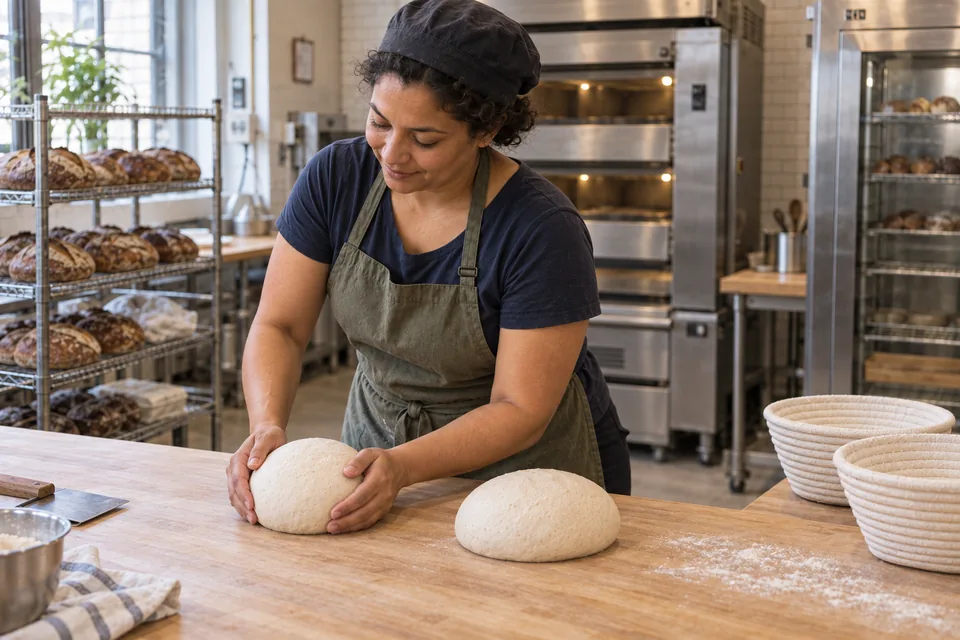
06 Divide & shapeDivide equally and cup each piece into a smooth round, then place seam down in floured baskets. 07 · Proof
12–14 hoursUse: Covered baskets
Refrigerate in closed bags overnight. Bake directly from the fridge; no warm-up is needed.Ready when: Expanded, aerated loaves; firm enough to lift while cold.
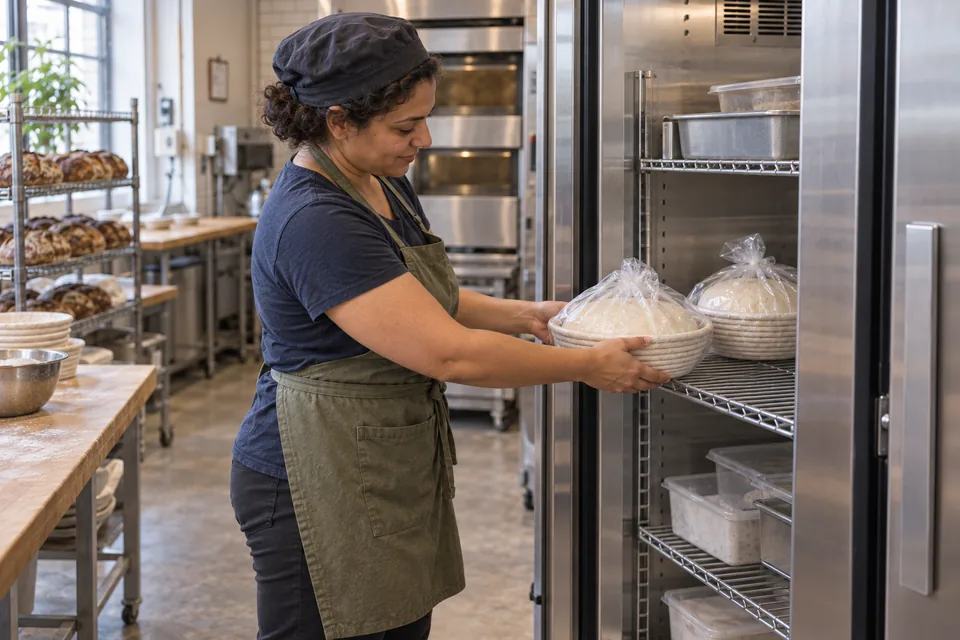
07 ProofEnclose the baskets in closed bags and refrigerate overnight. Bake the loaves directly from the fridge. 08 · Preheat
At least 45 minutes, overlapping final proofUse: Oven + covered Dutch ovens
Put covered pots on a middle rack. Preheat thoroughly to 245°C.Ready when: Oven and pot fully heated.
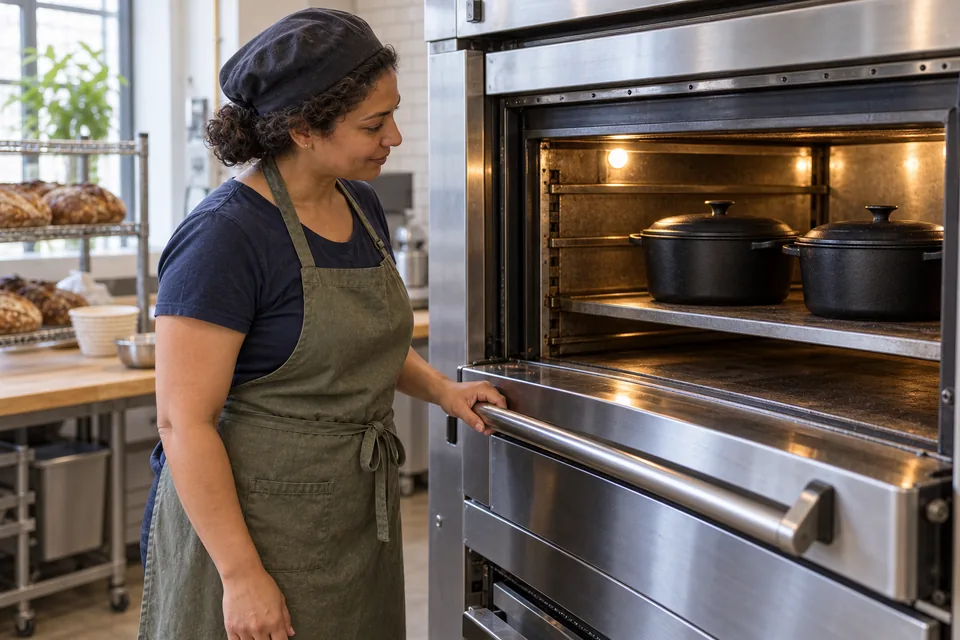
08 PreheatHeat the covered Dutch ovens thoroughly while the loaves finish proofing. 09 · Bake
30 min covered + 20–25 min uncoveredUse: Proofed loaves
Invert onto a lightly floured counter and carefully lower into hot pot seam UP. Cover for 30 minutes, then uncover to finish. Use dry oven mitts; keep skin clear of hot iron.Ready when: Deep brown crust; check 15 min after uncovering.
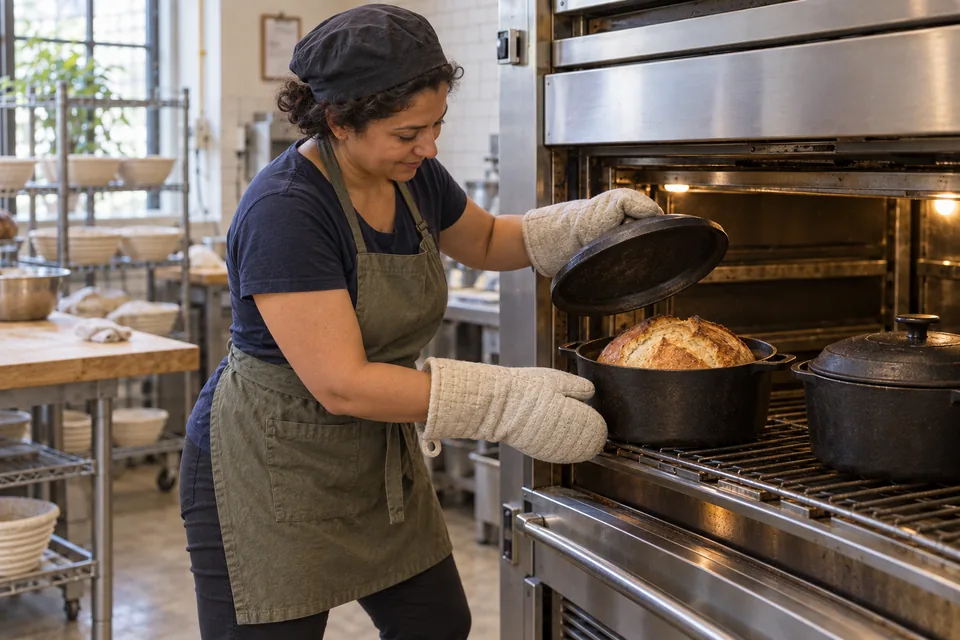
09 BakeUse dry mitts to remove the lid after the covered bake, then finish uncovered until the crust is deep brown. 10 · Cool
At least 20 minutes; longer for cleaner slicesUse: Baked loaves
Lift out of pots and cool on a rack before cutting.Ready when: Steam has subsided; crumb no longer tears when cut.
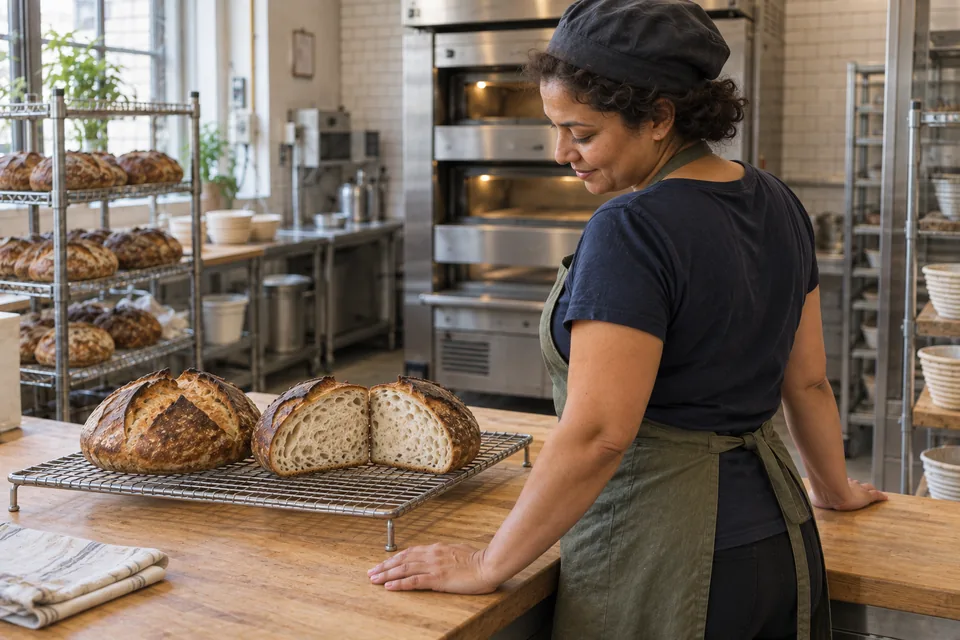
10 CoolCool the loaves on a rack before cutting so the crumb can set without tearing.
What to look for
| Stage | Look and feel | Needs attention |
|---|---|---|
| Mix & folds | Sticky but cohesive dough gains height and elasticity after each fold. | A puddle that never gains strength, or a dry dough tearing under a gentle stretch. |
| Proof | Use volume and dough feel alongside the schedule. At room temperature, a poke returns slowly and partly. | Immediate rebound suggests more proof; collapse or a lasting deep dent suggests excess proof. |
Troubleshooting
| If you see | Likely cause | What to do now | Next time |
|---|---|---|---|
| Dough is slow to expand | Cool dough or weak levain. | Keep covered in a mildly warmer spot; wait for the volume cue. | Confirm the starter is vigorous; log dough and room temperatures. |
| Loaf spreads or collapses | Fermentation went too far or shaping left little tension. | Handle gently and bake promptly; expect a lower loaf. | Use the volume cue; shape with surface tension and shorten the next warm hold. |
| Sticky crumb when sliced | The loaf was cut warm or insufficiently baked. | Let it cool fully before judging. | Bake to an even deep crust colour and allow a longer cooling rest. |
Recipe notes
- Formula totals describe the final dough, not all flour used for feeding. Use only the stated levain portion. An established culture at 80% hydration with an 80:20 white-to-whole-wheat flour blend maintains that composition. After a change of feed, traces of the previous flour blend and hydration remain.
- Keep unused levain separately for the next feeding; do not return salted dough to the starter. For one Dutch oven, chill the waiting loaf and reheat the empty pot for 5 minutes before the second bake.