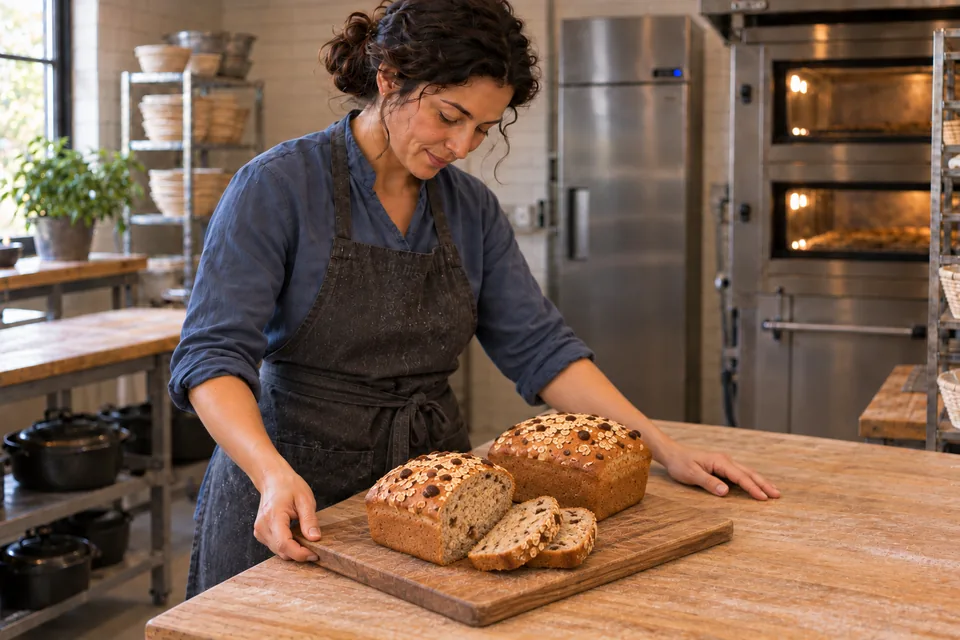
Banana and muesli yeast bread
Two small wholemeal yeast loaves with measured banana and a simple oat-and-sultana muesli inside and on top. Loaf tins support the soft fruit dough.
Method
01 · Mash banana and separate the two oat-sultana mixtures
10–15 minUse: Ripe banana flesh; Rolled oats for the dough; Soft sultanas for the dough; Rolled oats for coating; Soft sultanas for coating
Mash the weighed banana until no large lumps remain. Mix the 60 g dough oats with the 20 g dough sultanas. Separately mix the 30 g coating oats and 10 g coating sultanas; keep that smaller bowl aside.Ready when: Both simple muesli mixtures are measured separately; banana flesh is evenly mashed.
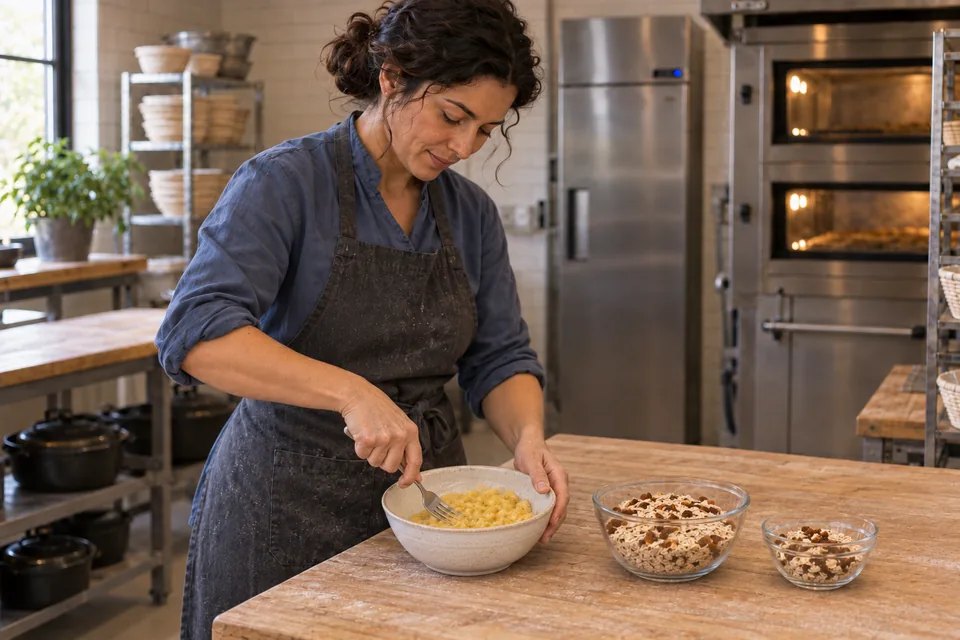
01 Banana and muesli yeast breadMash the banana and measure the two muesli mixtures separately. 02 · Hydrate flour with banana, water and the interior mixture
25–35 minUse: Strong wholemeal bread flour; Water; Ripe banana flesh; Rolled oats for the dough; Soft sultanas for the dough
Mix the wholemeal flour, water, mashed banana and all the 80 g dough-muesli mix. Cover and leave for 20–30 minutes.Ready when: The bran and oats are moistened; no dry flour remains.
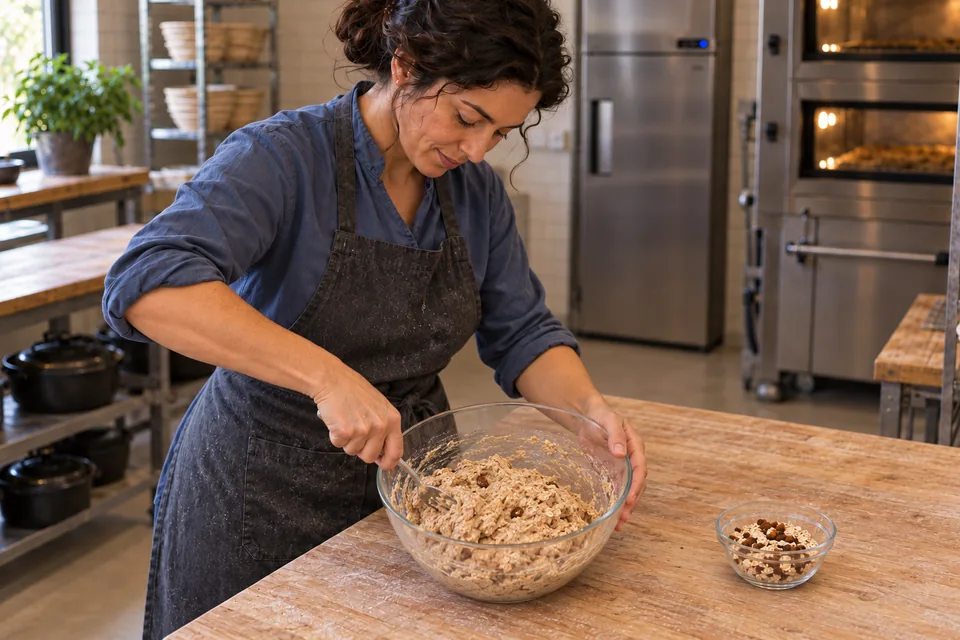
02 Banana and muesli yeast breadMix the wholemeal flour, water, banana and dough muesli, then rest. 03 · Add salt, yeast and butter; develop the dough
12–15 minUse: Fine salt; Instant dried yeast; Unsalted butter
Add the salt and instant yeast. Knead by hand or with a dough hook at the machine’s recommended speed, working in the soft butter in small pieces. Continue for 8–10 minutes until cohesive. Use a scraper; do not add more muesli to dry the dough.Ready when: The dough stretches before tearing but remains slightly tacky and textured from the bran and oats.
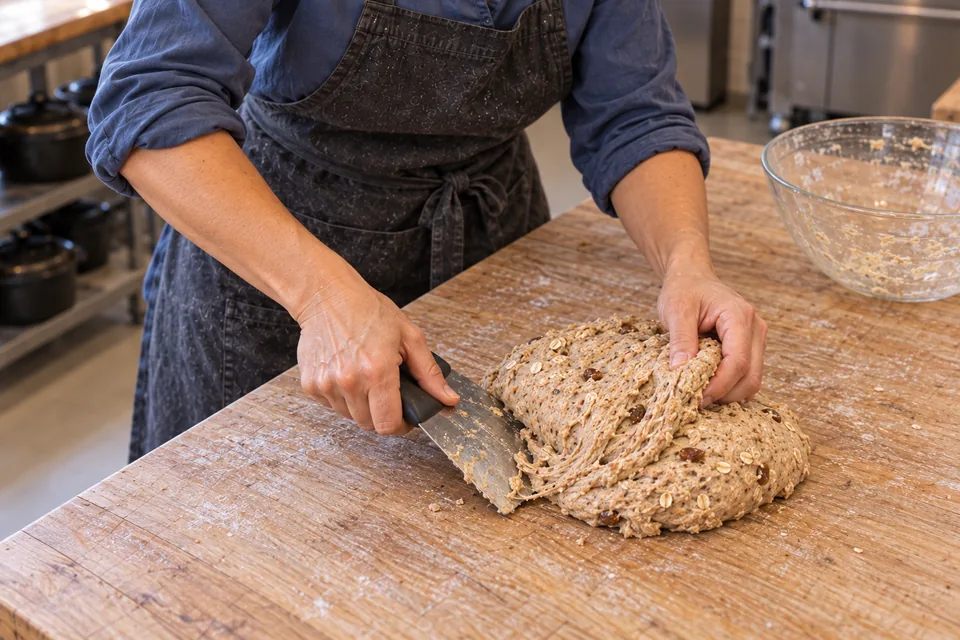
03 Banana and muesli yeast breadWork in the salt, yeast and butter until the dough is cohesive. 04 · Let the yeast dough rise
90–120 minUse:
Cover and leave at 22–24°C for 90–120 minutes.Ready when: The dough is aerated and has grown to roughly twice its starting volume.
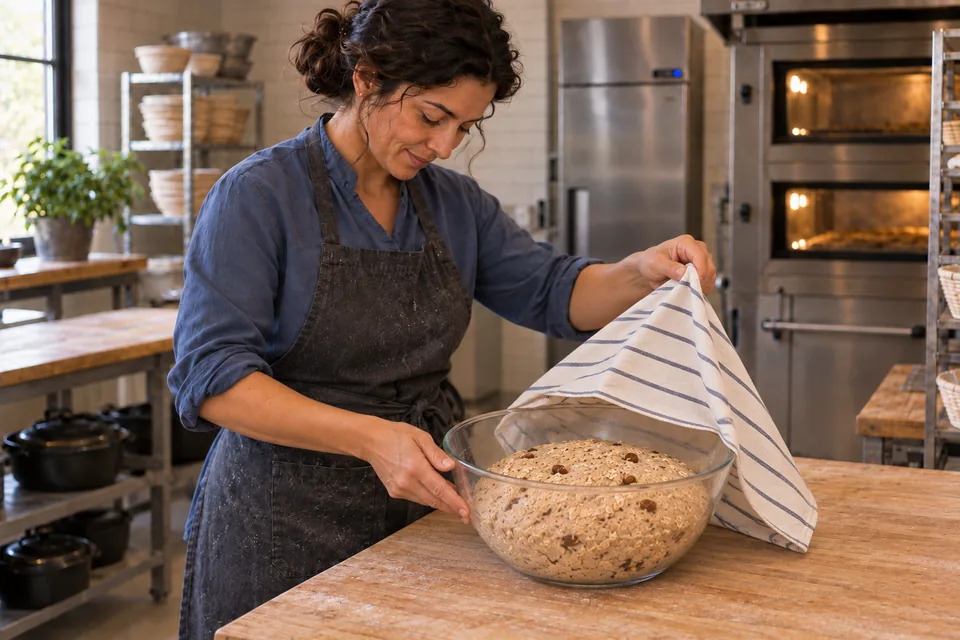
04 Banana and muesli yeast breadLet the dough become aerated and roughly double. 05 · Divide between two small tins
10–15 minUse: Butter for the tins; Wholemeal flour for shaping
Butter two 20×10×7 cm loaf tins with 5 g tin butter each. Use the shaping flour sparingly. Divide the dough into two equal pieces, about 554 g each. Gently pat each into a rectangle, roll into a short log and place seam-side down in a tin.Ready when: Two even logs sit within the tins without torn seams.
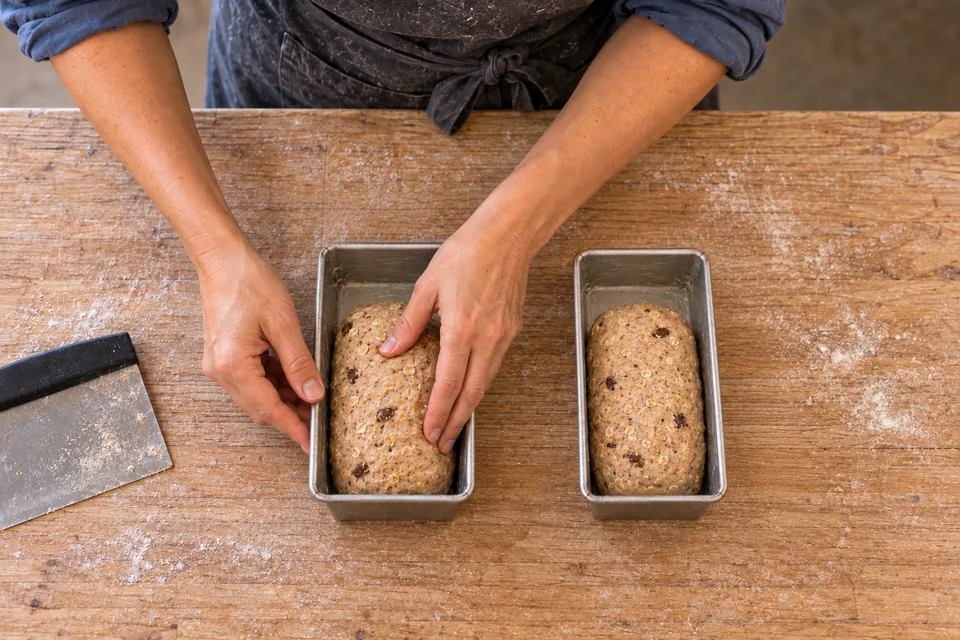
05 Banana and muesli yeast breadDivide the dough equally between two small buttered tins. 06 · Apply the separate coating and proof
50–95 minUse: Water for coating; Rolled oats for coating; Soft sultanas for coating
Brush each top with 5 g coating water. Divide the 40 g coating mixture evenly over the two tops and press lightly to attach. Cover loosely and leave at 22–24°C for 45–90 minutes. During the final 20 minutes, heat the oven to 180°C conventional.Ready when: The loaves are puffy and a light fingertip dent returns slowly; the coating adheres.
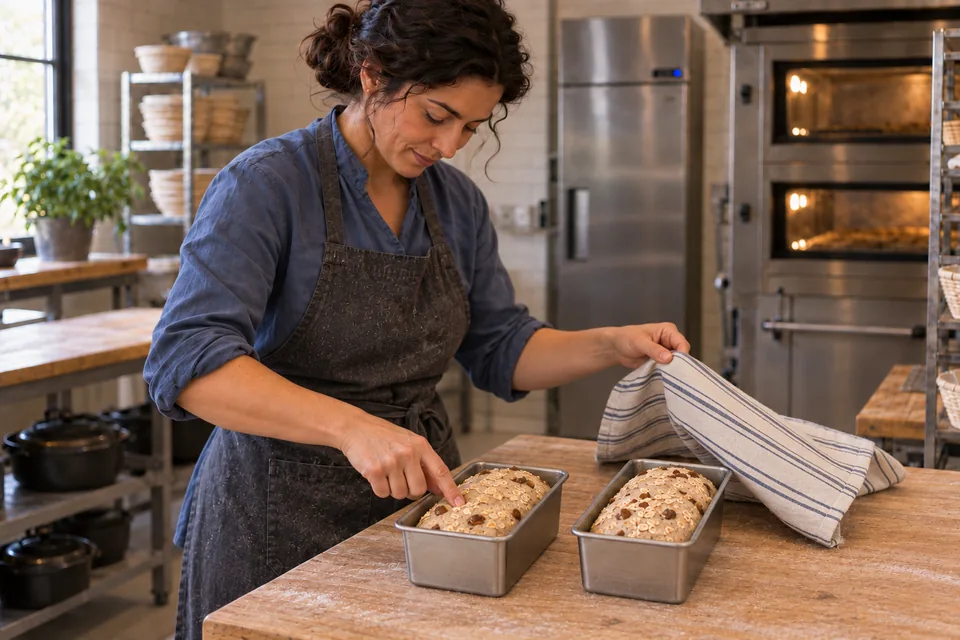
06 Banana and muesli yeast breadAttach the measured coating, then let both loaves become puffy. 07 · Bake both tins together
45–55 minUse:
Set both tins side by side on the middle rack, leaving space between them. Bake for 45–55 minutes, turning their positions after 25 minutes. Shield the tops loosely with foil if the sultanas colour early. Probe each thick bread centre.Ready when: The bread reaches about 95°C and has a firm base, with no sticky raw dough.
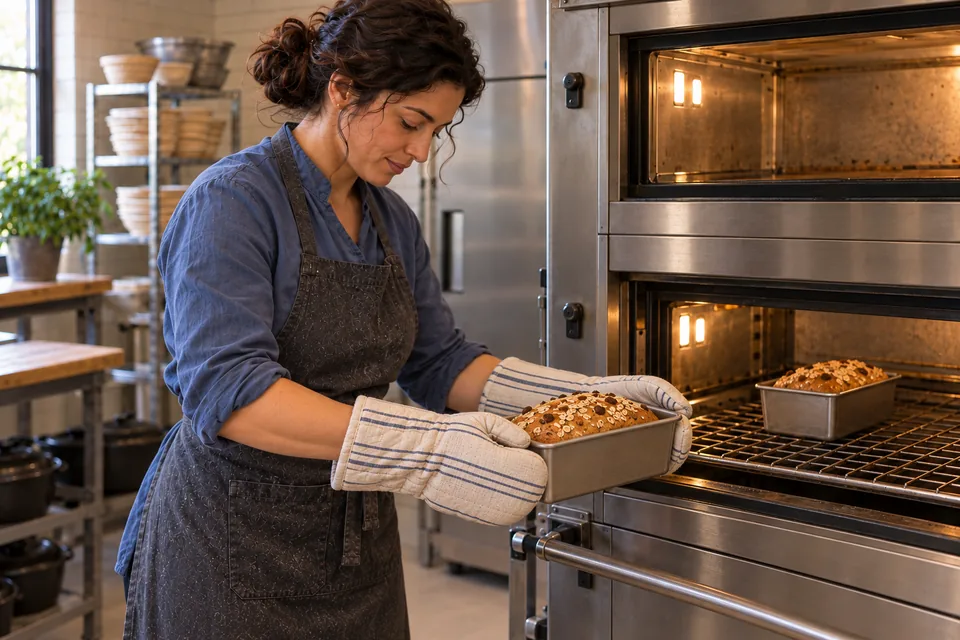
07 Banana and muesli yeast breadBake both tins until the bread centres are cooked through. 08 · Cool fully before slicing
120 minUse:
Leave in the tins for 10 minutes, then turn out onto racks for at least 110 minutes more. Slice only when the centre is cool.Ready when: The moist crumb holds together without smearing.
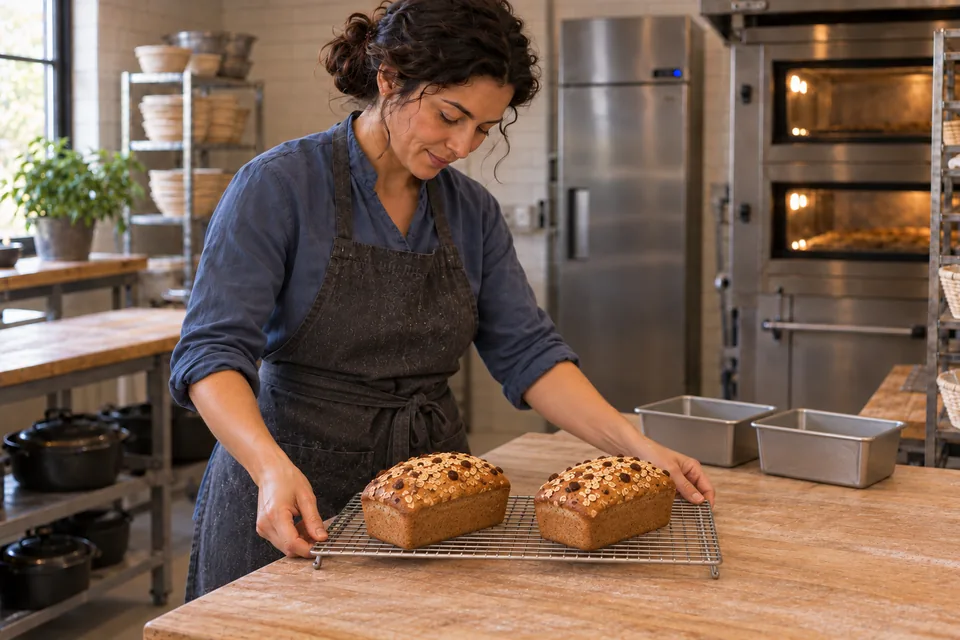
08 Banana and muesli yeast breadTurn out both loaves and cool fully before slicing.
What to look for
| Stage | Look / feel for | Needs attention |
|---|---|---|
| Mash banana and separate the two oat-sultana mixtures | Both simple muesli mixtures are measured separately; banana flesh is evenly mashed. | |
| Hydrate flour with banana, water and the interior mixture | The bran and oats are moistened; no dry flour remains. | |
| Add salt, yeast and butter; develop the dough | The dough stretches before tearing but remains slightly tacky and textured from the bran and oats. | |
| Let the yeast dough rise | The dough is aerated and has grown to roughly twice its starting volume. | |
| Divide between two small tins | Two even logs sit within the tins without torn seams. | |
| Apply the separate coating and proof | The loaves are puffy and a light fingertip dent returns slowly; the coating adheres. | |
| Bake both tins together | The bread reaches about 95°C and has a firm base, with no sticky raw dough. | |
| Cool fully before slicing | The moist crumb holds together without smearing. |
Troubleshooting
| If you see this | Likely cause | What to do now | Next time |
|---|---|---|---|
| The dough is sticky during shaping. | Mashed banana, warm butter or incomplete development keeps the dough tacky. | Use a scraper and the measured handling allowance; cover and rest briefly if the dough tears. | Keep the stated ingredient weights and develop the dough rather than adding unmeasured cereal or flour. |
| The outside colours before the centre is cooked. | The sweetened crust or exposed additions brown faster than thick bread. | Shield loosely with foil and continue until the bread centre and base meet the stated cues. | Use the specified portions, shape and temperature; probe away from inclusions. |
Storage: Cool promptly, then refrigerate wrapped leftovers within 2 hours of baking and use within 2 days. Freeze slices for up to 1 month. Toast or warm before serving.; Contains: wheat, oats, milk, sulphites if present in sultanas.; This Nepedia version has not been kitchen-tested.
Other approaches to this recipe
| Cook / recipe | Use | What differs |
|---|
The working ingredients and method form one recipe. Different formulas are compared without averaging their quantities or rise schedules.