Nepedia

Rosemary focaccia with a sponge

A preferment, folds and round pans.

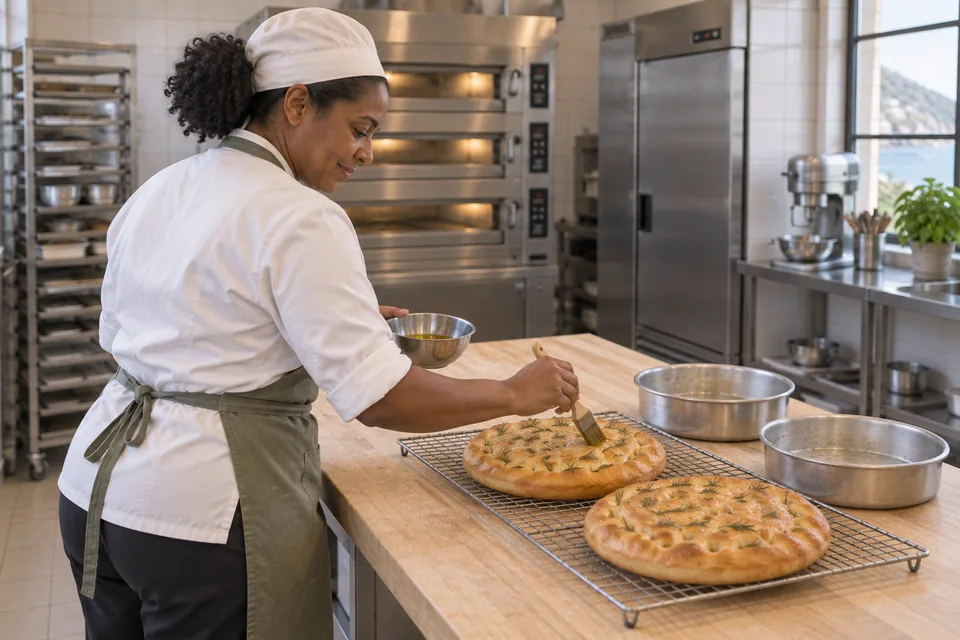
Baker brushing oil on two whole round focaccias cooling on a rack.
Makes
Two 23 cm rounds
Heat
230°C bake; preheat 260°C
Baking time
25–30 min

Reduce on loading; rotate halfway.

Explore variations · 15 →Jump to ingredients & method ↓
View

Rosemary focaccia with a sponge

Makes
Two 23 cm rounds
Heat
230°C bake; preheat 260°C
Baking time
25–30 min

Reduce on loading; rotate halfway.

America's Test Kitchen · reference variation

Rosemary focaccia with a sponge

Method

  1. 01 · Sponge

    6–24 h

    Use: Sponge

    Mix; cover.

    Ready when: Risen, beginning to fall

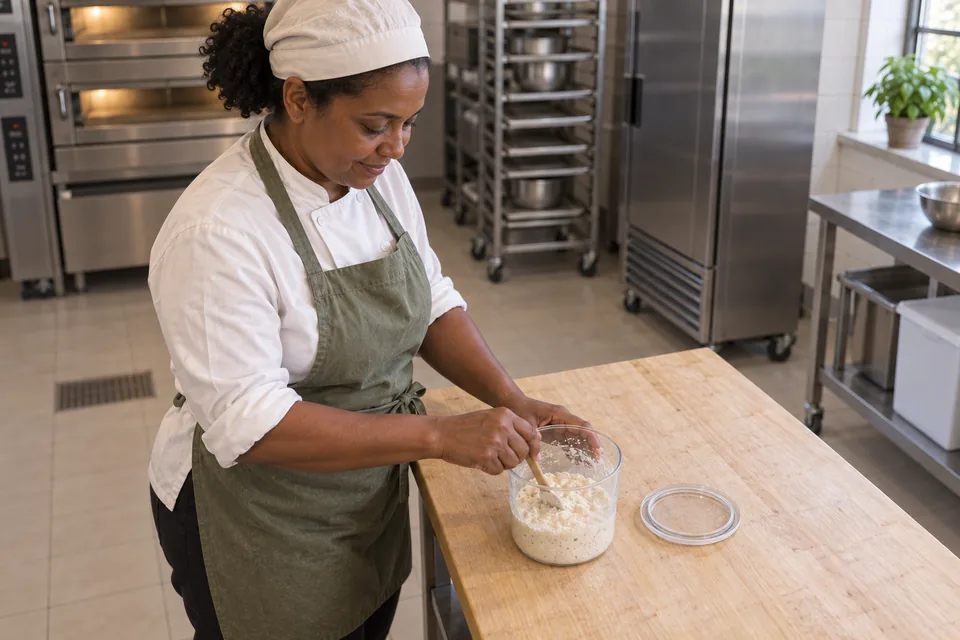
    Baker stirring a small bubbly white sponge in a clear container.
    01 SpongeMix and cover the sponge; wait until it has risen and begins to fall.
  2. 02 · Mix

    15 min + 30 min rest

    Use: Sponge + dough

    Mix except salt; rest. Add salt; mix one minute.

    Ready when: Combined

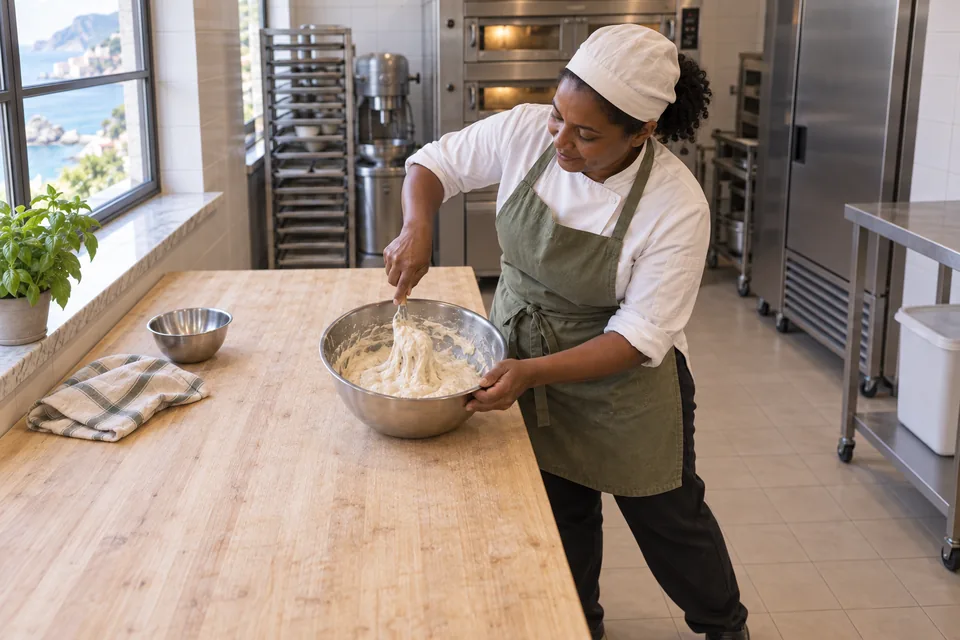
    Very loose sticky white dough stretching off a spoon into a steel bowl.
    02 MixMix the loose dough, rest it, then work in the salt.
  3. 03 · Fold

    30 min between; final 30–60 min

    Use: Dough

    Fold inward eight times; rest. Repeat twice.

    Ready when: Nearly doubled

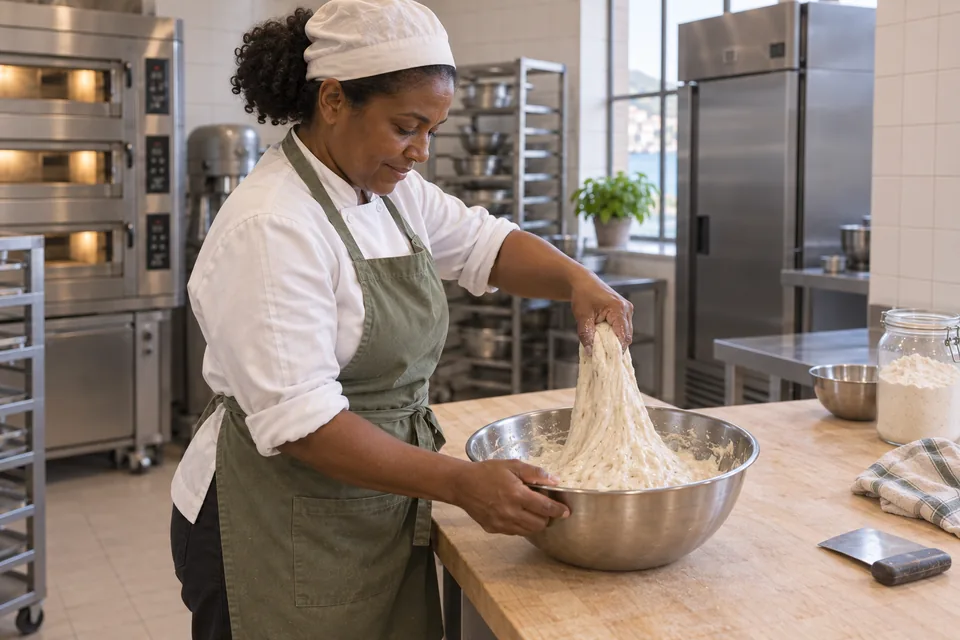
    Baker folding a broad connected sheet of glossy wet dough.
    03 FoldFold the wet dough inward without tearing its connected sheet.
  4. 04 · Heat

    1 h

    Use: Oven

    Preheat stone; oil and salt pans.

    Ready when: Hot

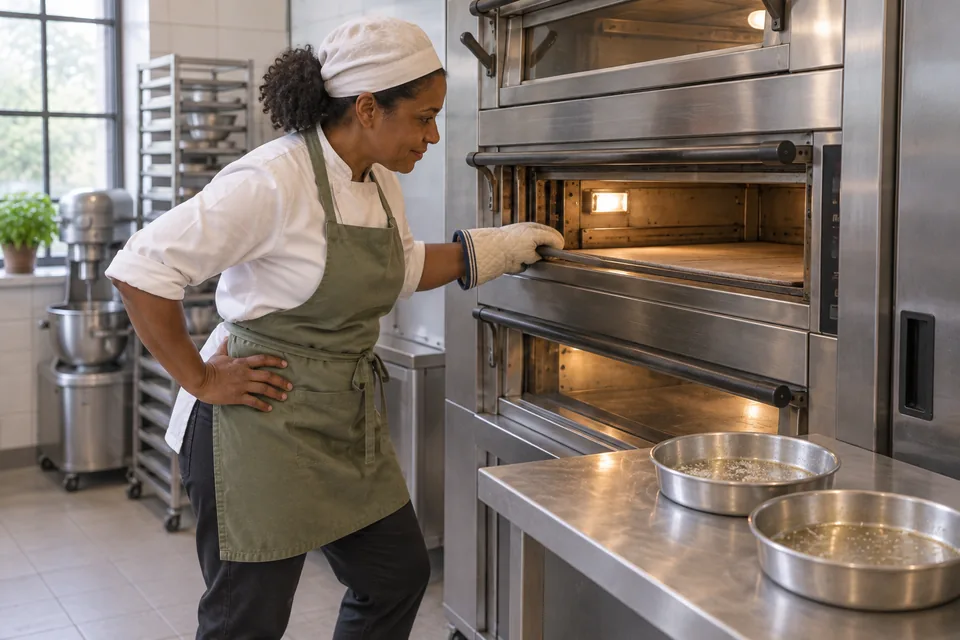
    Baker checking an empty oven stone with two prepared round pans nearby.
    04 HeatPreheat the stone and prepare the two oiled, salted round pans.
  5. 05 · Pan

    5 min + 10 min

    Use: Dough

    Halve; round; coat in pan oil. Rest, stretch, fork-prick 25–30 times; add rosemary.

    Ready when: Slightly bubbly

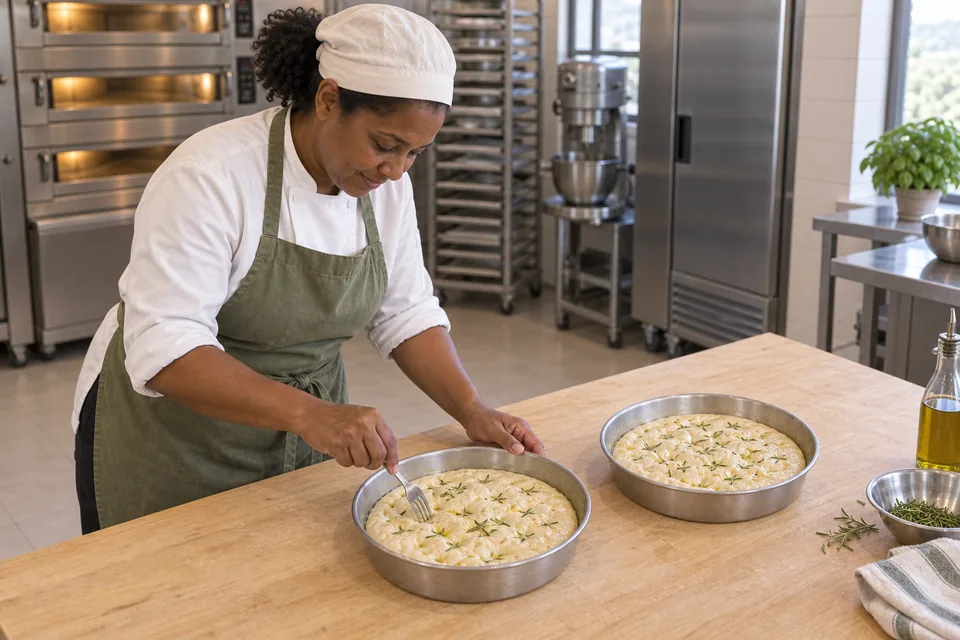
    Two round raw rosemary focaccias, one being pricked with a fork.
    05 PanSpread the two portions in their pans, prick with a fork and add rosemary.
  6. 06 · Bake

    25–30 min

    Use: Dough

    Load on stone; reduce to 230°C. Rotate halfway.

    Ready when: Golden

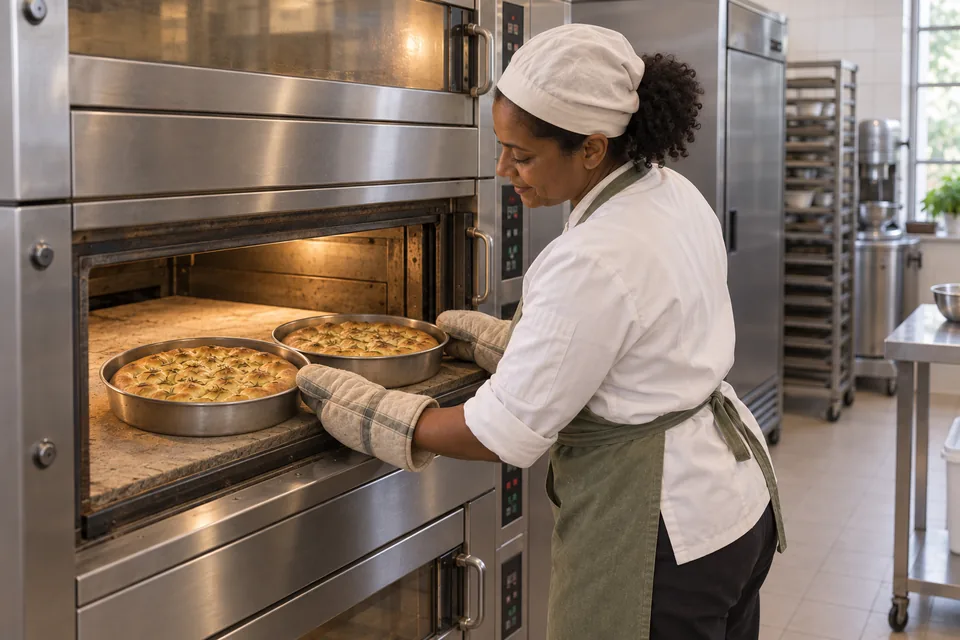
    Two golden rosemary focaccias in round pans on an oven stone.
    06 BakeBake both rounds on the stone until golden, rotating as directed.
  7. 07 · Cool

    30 min

    Use: Bread

    Rest five minutes; unmould. Brush with pan oil; cool.

    Ready when: Set

    Baker brushing oil on two whole round focaccias cooling on a rack.
    07 CoolUnmould both rounds, brush with pan oil and cool on a rack.

What to look for

StageLook / feel forNeeds attention
SpongeFalling surfaceUnrisen

Troubleshooting

If you see thisLikely causeWhat to do nowNext time
RetractionTensionRest 5–10 minStretch gently

Hydration is approximate because water is converted from US cups. Measure small ingredients by the listed volumes where a weight is unavailable.

Ingredient choices & substitutions
IngredientSpecified typeBrandStatus
FlourAll-purpose; brand unspecifiedNot specifiedspecified in recipe
SaltCoarse; brand unspecifiedNot specifiedspecified in recipe
YeastInstant or rapid-riseNot specifiedspecified in recipe
IngredientAlternative / ratioAdjust handlingLikely outcome
Coarse saltDifferent coarse brandMatch mass, not spoon volumeSource does not identify brand: 10 ml can weigh about 5.3–10.7 g across Diamond Crystal/Morton.Salt percentage cannot be uniquely verified.
All-purpose flourBread flour1:1 by weightCheck dough feel.Potentially stronger, chewier dough; not a tested substitution in this card.

Match the ingredient’s function and weight. See the flour, gluten, yeast and salt guide.

America's Test Kitchen
Source and measurement notes

Water volume converted from US cups; hydration is approximate. Spoon-only minor ingredients remain metric volumes when mass is unverified.

Recipe

Rosemary focaccia with a sponge

The sponge is a small flour, water and yeast mixture that rises before you mix the main dough.

How do I make it?

  1. Start the flour mixture

    6–24 h

    Mix the flour, water and yeast listed for the sponge, then cover it. This starter mixture is ready when it has risen and is just beginning to sink.

    Baker stirring a small bubbly white sponge in a clear container.
    Mix and cover the sponge; wait until it has risen and begins to fall.

    Ready when: Risen, beginning to fall

  2. Mix the dough

    15 min + 30 min rest

    Mix the sponge with the dough flour, water and yeast, keeping the dough salt aside, then let it rest. Add that salt and mix for one minute.

    Very loose sticky white dough stretching off a spoon into a steel bowl.
    Mix the loose dough, rest it, then work in the salt.

    Ready when: Combined

  3. Fold and rest

    30 min between; final 30–60 min

    Lift the dough’s edges and fold them into the middle eight times, then let it rest. Do two more sets, leaving 30 minutes between sets, then give it a final 30–60 minute rest.

    Baker folding a broad connected sheet of glossy wet dough.
    Fold the wet dough inward without tearing its connected sheet.

    Ready when: Nearly doubled

  4. Heat the oven and prepare pans

    1 h

    Heat the oven and stone to 260°C for 1 hour. Divide the pan oil and pan salt between the two pans.

    Baker checking an empty oven stone with two prepared round pans nearby.
    Preheat the stone and prepare the two oiled, salted round pans.

    Ready when: Hot

  5. Shape the focaccia

    5 min + 10 min

    Divide the dough in half, shape each piece into a ball, put one in each pan and turn to coat in the oil. Rest for 5 minutes, stretch it outward, then let it rest for 10 minutes. Prick each piece with a fork 25–30 times and add the rosemary.

    Two round raw rosemary focaccias, one being pricked with a fork.
    Spread the two portions in their pans, prick with a fork and add rosemary.

    Ready when: Slightly bubbly

  6. Bake until golden

    25–30 min

    Put the pans on the hot stone and lower the oven to 230°C. Turn the pans halfway through baking so they brown evenly.

    Two golden rosemary focaccias in round pans on an oven stone.
    Bake both rounds on the stone until golden, rotating as directed.

    Ready when: Golden

  7. Cool the bread

    30 min

    Leave the bread in the pans for five minutes, then take it out. Brush it with the oil left in the pans and let it cool.

    Baker brushing oil on two whole round focaccias cooling on a rack.
    Unmould both rounds, brush with pan oil and cool on a rack.

    Ready when: Set

What can go wrong, and how can I fix it?

What you noticeLikely causeWhat to do
RetractionTensionRest 5–10 min Stretch gently
Useful recipe notes

Hydration is approximate because water is converted from US cups. Measure small ingredients by the listed volumes where a weight is unavailable.

See the detailed method and ratios in , or follow ingredients through the .

Ingredient proportions & recipe details

Rosemary focaccia with a sponge at a glance

Makes
Two 23 cm rounds
Heat
230°C bake; preheat 260°C
Baking time
25–30 min
Leavening
Yeast
How do the ingredient proportions compare?

Percentages compare each listed weight with the combined flour weight (100%). These are ingredient ratios, not dough hydration; milk, eggs and fillings contain other ingredients as well as water.

Formula componentGramsFlour = 100%
All-purpose flour70.9 g16.7%
Instant yeast0.8 g0.2%
All-purpose flour354.4 g83.3%
Instant yeast3 g0.7%