Nepedia

Roman-Style Focaccia

Very wet dough developed with a mixer.

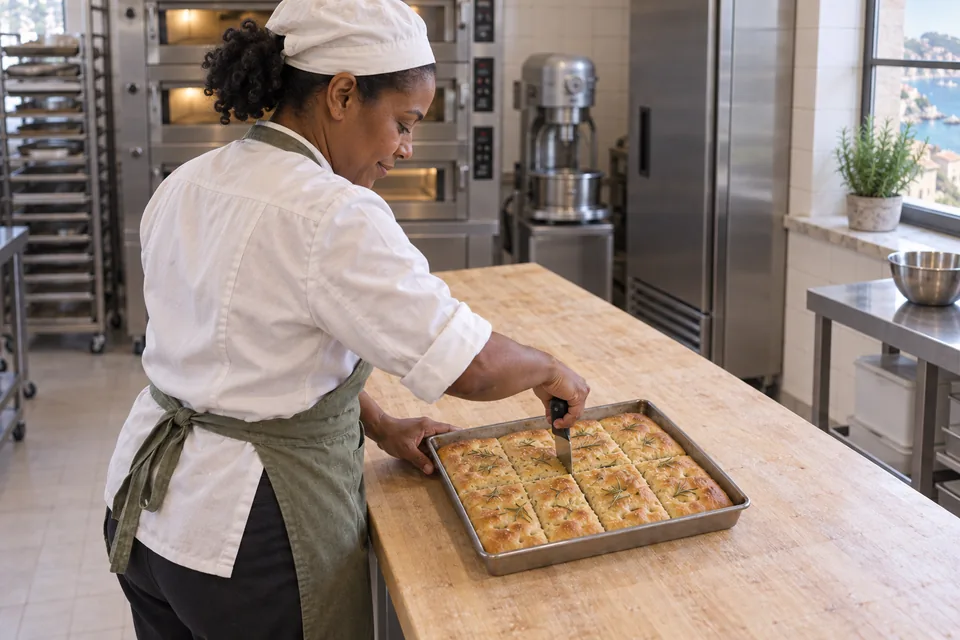
Eight portions of rosemary focaccia cut in a two-by-four grid in the pan.
Makes
Eight portions
Heat
230°C
Baking time
20–25 min
Explore variations · 15 →Jump to ingredients & method ↓
View

Roman-Style Focaccia

Makes
Eight portions
Heat
230°C
Baking time
20–25 min
America's Test Kitchen · reference variation

Roman-Style Focaccia

Method

  1. 01 · Mix

    3–4 min + 10 min rest

    Use: Flour, yeast, sugar, water

    Paddle on low; pause.

    Ready when: No dry flour

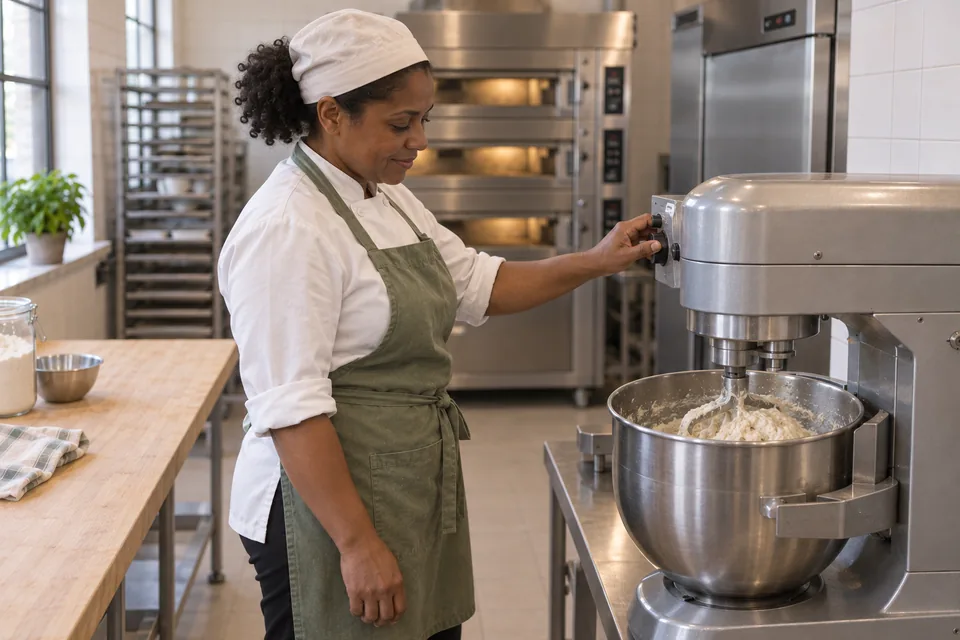
    Wet white dough under a paddle in a stainless mixer bowl.
    01 MixUse the paddle to moisten all the flour before the short rest.
  2. 02 · Develop

    8 min

    Use: Dough salt

    Mix low 30 seconds, then medium-high.

    Ready when: Shiny, batter-like

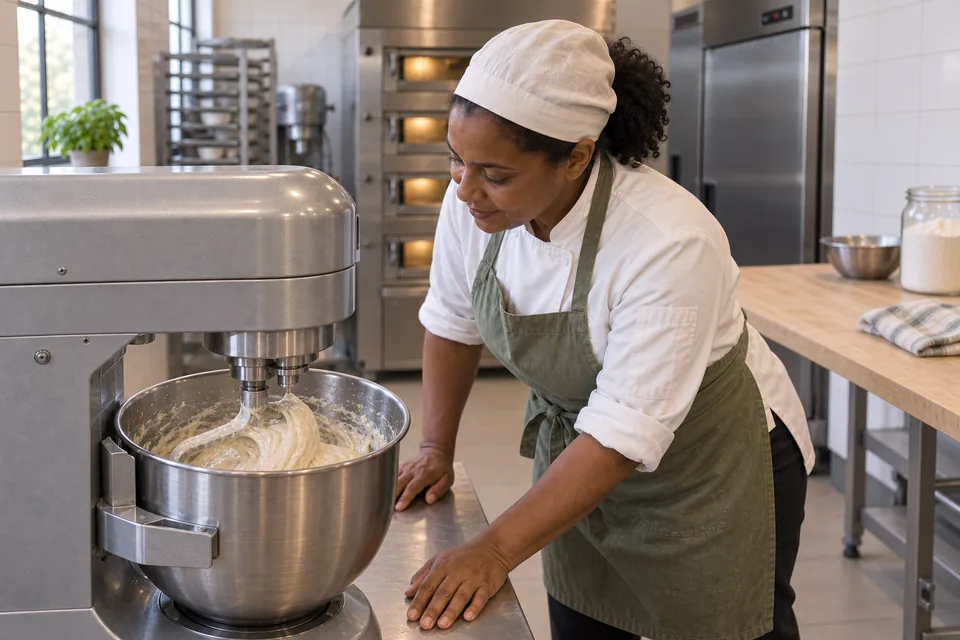
    Shiny batter-like dough developing in the paddle mixer.
    02 DevelopContinue mixing until the dough becomes shiny and batter-like.
  3. 03 · Rise

    2–2½ h

    Use: Bowl oil

    Oil bowl; transfer, flip and cover dough. Preheat to 230°C.

    Ready when: Bubbly, nearly tripled

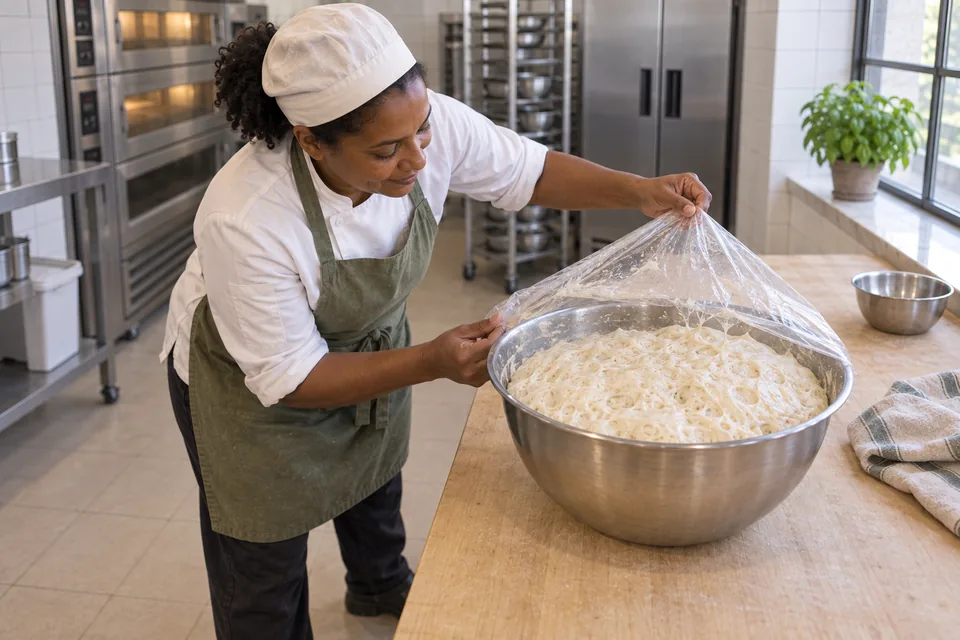
    Baker uncovering a very bubbly loose dough in an oiled bowl.
    03 RiseCover the oiled bowl and let the loose dough become very bubbly.
  4. 04 · Pan

    Rest 10 min if retracting

    Use: Pan oil + spray

    Spray/oil pan. Transfer and stretch dough.

    Ready when: Reaches corners

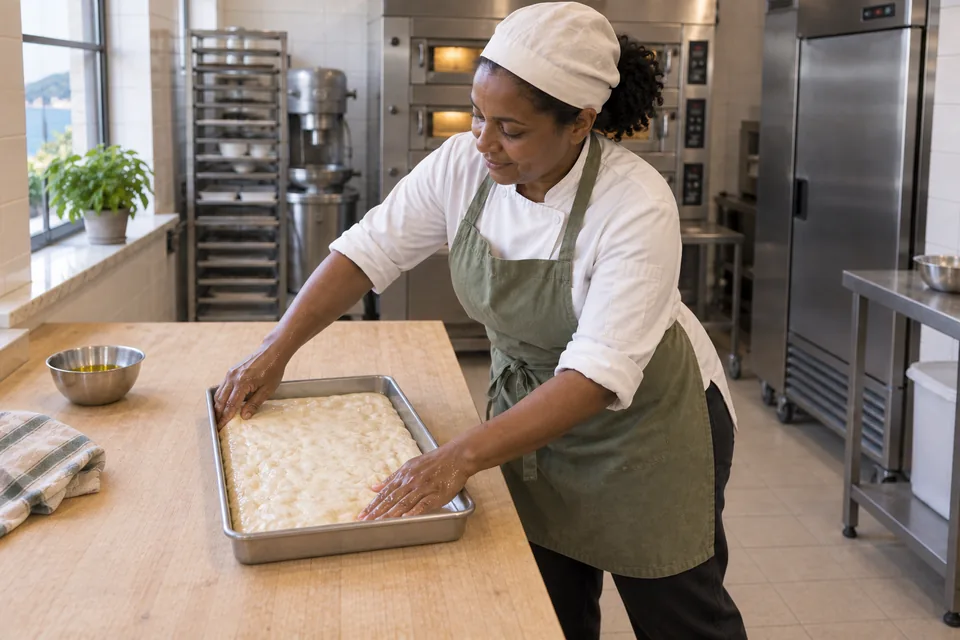
    Baker spreading loose dough toward the corners of an unlined rectangular pan.
    04 PanEase the soft dough into the oiled rectangular pan and toward its corners.
  5. 05 · Finish

    10 min

    Use: Rosemary + top salt

    Rest; fork-prick twenty times. Add toppings.

    Ready when: Aerated

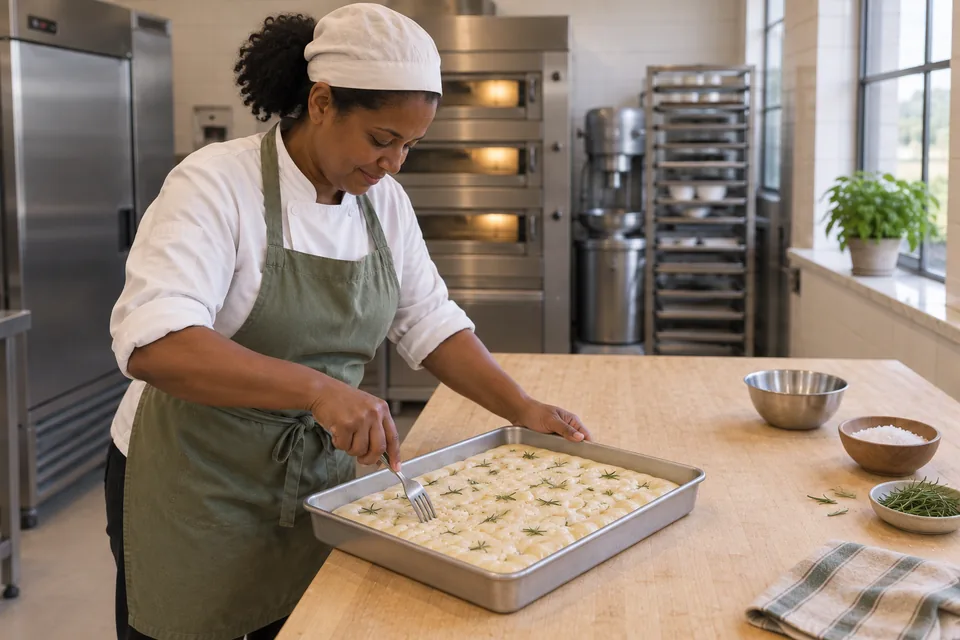
    A fork making small punctures in rectangular rosemary focaccia dough.
    05 FinishRest, prick with a fork and add the rosemary and salt.
  6. 06 · Bake

    20–25 min

    Use: Dough

    Bake on middle rack at 230°C.

    Ready when: Golden

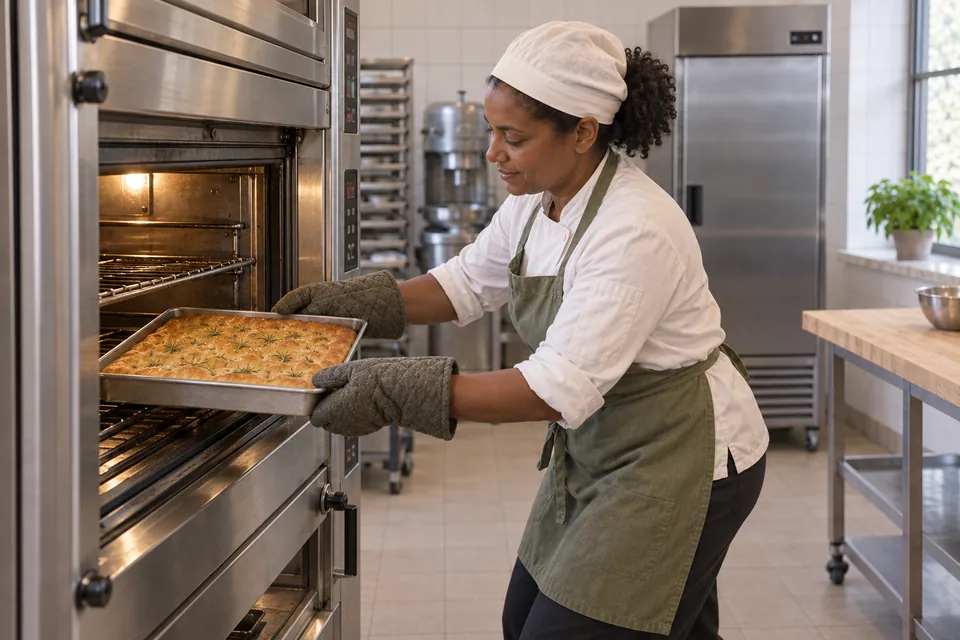
    Baker removing one golden rectangular rosemary focaccia in its pan.
    06 BakeBake on the middle rack until the surface is golden.
  7. 07 · Cool

    15 min

    Use: Bread

    Cool in pan; cut.

    Ready when: Set

    Eight portions of rosemary focaccia cut in a two-by-four grid in the pan.
    07 CoolLet the focaccia set in its pan before cutting into portions.

What to look for

StageLook / feel forNeeds attention
After mixingGlossy, extremely loose doughAdding flour to make a firm ball

Troubleshooting

If you see thisLikely causeWhat to do nowNext time
Snaps backTight doughRest ten minutesGentle stretching

Ingredient choices & substitutions
IngredientSpecified typeBrandStatus
FlourAll-purpose; brand unspecifiedNot specifiedspecified in recipe
SaltCoarse; brand unspecifiedNot specifiedspecified in recipe
YeastInstant or rapid-riseNot specifiedspecified in recipe
IngredientAlternative / ratioAdjust handlingLikely outcome
Coarse saltDifferent coarse brandMatch mass, not spoon volumeSource brand is unknown: 7.5 ml may weigh about 4–8 g across Diamond Crystal/Morton.Do not report a single verified salt percentage.
All-purpose flourBread flour1:1 by weightExpect greater water absorption.Could yield more chew and structure; editorial alternative.

Match the ingredient’s function and weight. See the flour, gluten, yeast and salt guide.

America's Test Kitchen

Recipe

Roman-Style Focaccia

How do I make it?

  1. Mix and pause

    3–4 min + 10 min rest

    Use a stand mixer with its flat paddle on low speed to mix the flour, yeast, sugar and water for 3–4 minutes. Let the mixture rest for 10 minutes.

    Wet white dough under a paddle in a stainless mixer bowl.
    Use the paddle to moisten all the flour before the short rest.

    Ready when: No dry flour

  2. Beat in the salt

    8 min

    Add the dough salt and mix on low for 30 seconds, then on medium-high for 8 minutes. The dough will look shiny and loose, more like thick batter.

    Shiny batter-like dough developing in the paddle mixer.
    Continue mixing until the dough becomes shiny and batter-like.

    Ready when: Shiny, batter-like

  3. Let it rise

    2–2½ h

    Coat a bowl with the bowl oil, add the dough, turn it over to coat and cover. Let it rise until nearly tripled, and heat the oven to 230°C.

    Baker uncovering a very bubbly loose dough in an oiled bowl.
    Cover the oiled bowl and let the loose dough become very bubbly.

    Ready when: Bubbly, nearly tripled

  4. Spread into the pan

    Rest 10 min if retracting

    Spray the pan and add the pan oil, then move in the dough and stretch it into the corners. If it pulls back, let it rest for 10 minutes before trying again.

    Baker spreading loose dough toward the corners of an unlined rectangular pan.
    Ease the soft dough into the oiled rectangular pan and toward its corners.

    Ready when: Reaches corners

  5. Add rosemary and salt

    10 min

    Rest the dough for 10 minutes, then prick it with a fork twenty times. Add the rosemary and top salt.

    A fork making small punctures in rectangular rosemary focaccia dough.
    Rest, prick with a fork and add the rosemary and salt.

    Ready when: Aerated

  6. Bake the focaccia

    20–25 min

    Put the pan on the middle rack and bake at 230°C until golden.

    Baker removing one golden rectangular rosemary focaccia in its pan.
    Bake on the middle rack until the surface is golden.

    Ready when: Golden

  7. Rest before cutting

    15 min

    Leave the focaccia in the pan to cool for 15 minutes, then cut it into pieces.

    Eight portions of rosemary focaccia cut in a two-by-four grid in the pan.
    Let the focaccia set in its pan before cutting into portions.

    Ready when: Set

What can go wrong, and how can I fix it?

What you noticeLikely causeWhat to do
Snaps backTight doughRest ten minutes Gentle stretching

See the detailed method and ratios in , or follow ingredients through the .

Ingredient proportions & recipe details

Roman-Style Focaccia at a glance

Makes
Eight portions
Heat
230°C
Baking time
20–25 min
Leavening
Yeast
How do the ingredient proportions compare?

Percentages compare each listed weight with the combined flour weight (100%). These are ingredient ratios, not dough hydration; milk, eggs and fillings contain other ingredients as well as water.

Formula componentGramsFlour = 100%
All-purpose flour425.2 g100%
Instant yeast4.5 g1.1%
Sugar6.2 g1.5%
Water382.7 g90%