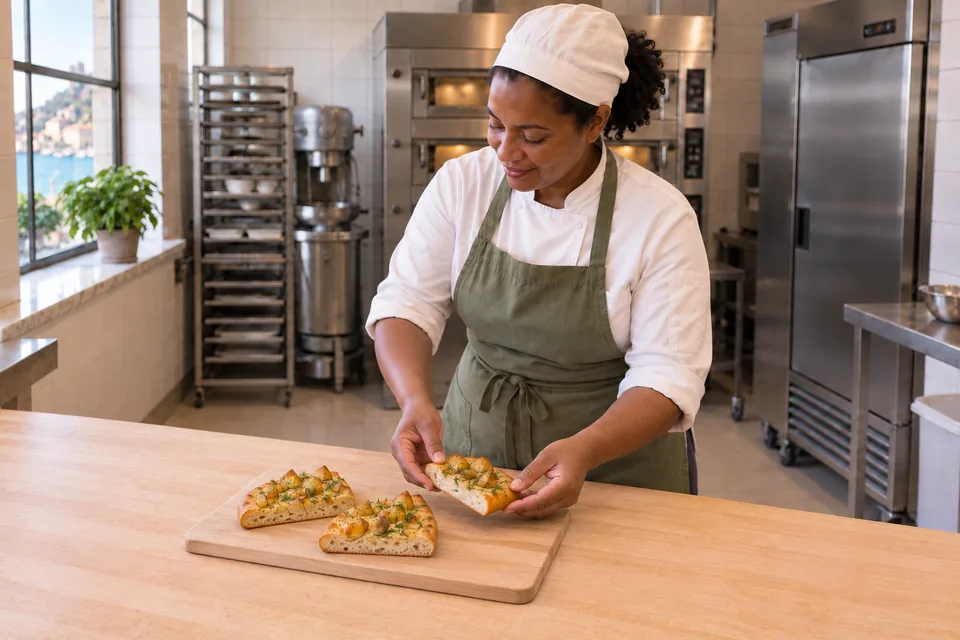
Potato and dill flatbread
Two overnight yeast flatbreads topped with browned new potatoes, garlic and dill. The potatoes are cooked and cooled before they go onto the dough.
Method
01 · Mix, knead and rest the lean dough
40–45 minUse: Strong white bread flour; Water; Fine salt; Instant dried yeast
Mix the flour, dough water, salt and instant yeast. Knead for 8–10 minutes after mixing, then cover and leave at 22–24°C for 30 minutes.Ready when: The dough is elastic and beginning to relax; it need not double before chilling.
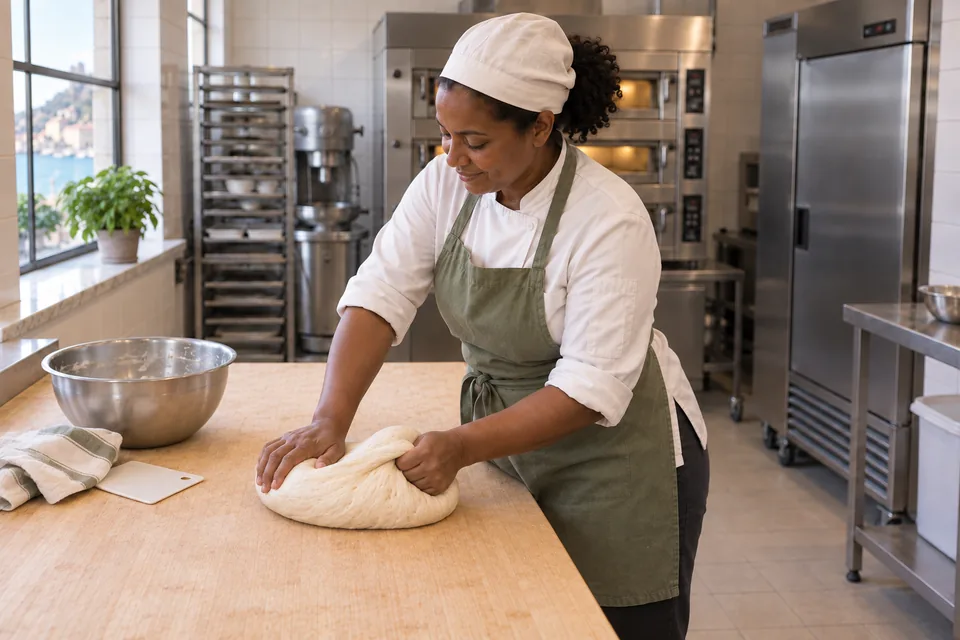
01 Mix RestKnead the lean dough, then give it a short covered rest. 02 · Refrigerate the dough overnight
480–720 minUse:
Put the covered bowl in the refrigerator at 4°C or below for 8–12 hours. Leave room in the bowl for the dough to expand.Ready when: The chilled dough shows small bubbles and some expansion, without collapsing.
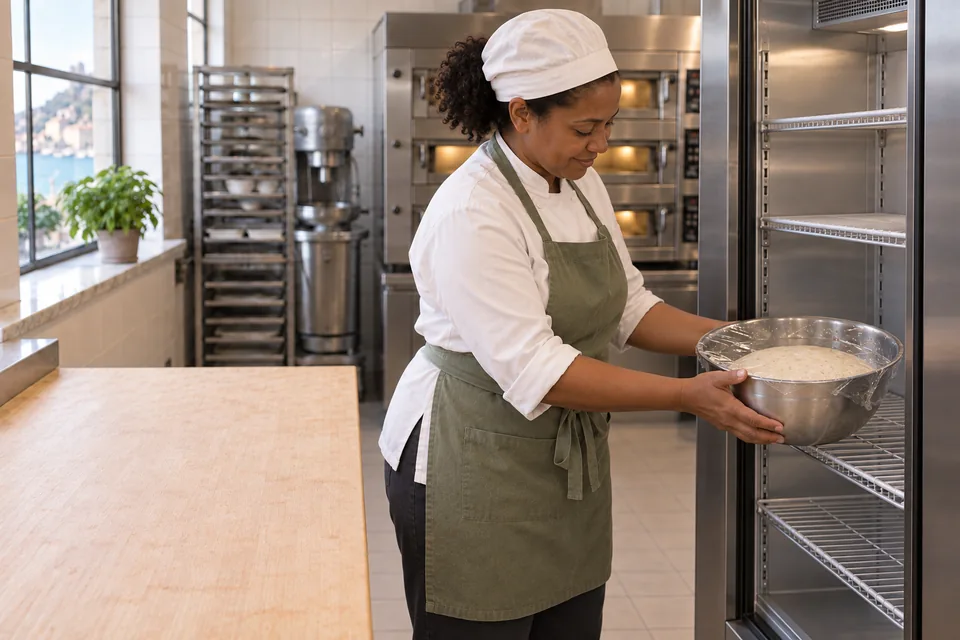
02 ChillRefrigerate the covered dough overnight, leaving room to expand. 03 · Warm the dough while cooking and cooling potatoes
60 minUse: New potatoes; Water for boiling the potatoes; Unsalted butter; Olive oil for frying; Garlic; Fresh dill for baking; Fresh dill for finishing
Take the covered dough out for 60 minutes while preparing the topping. Put the 2 cm potato pieces in a saucepan with the measured cooking water, bring to a boil and simmer for 10–15 minutes until a knife passes through the centres. Drain and let steam escape for 5 minutes. Heat the butter and frying oil in a wide pan over medium heat; add potatoes and fry for 8–10 minutes until lightly browned. Add garlic during the final minute. Spread in a shallow dish and cool to room temperature. Keep both measured dill portions separate.Ready when: The dough is less cold; the potatoes are cooked through, dry on the surface and cool before topping.
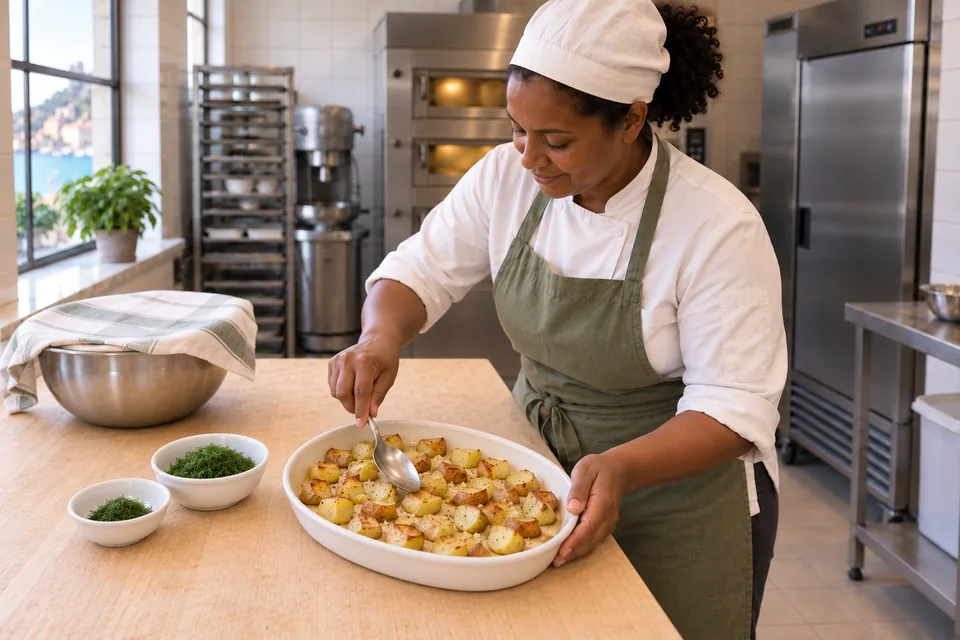
03 Warm Cook ToppingWarm the dough while cooking and cooling the potatoes; keep the dill portions separate. 04 · Shape two ovals on separately oiled trays
15–20 minUse: Olive oil for the trays; Flour for shaping
Line two 30×40 cm trays with baking paper and spread 5 g tray oil over each lined base. Use the shaping flour sparingly. Divide the dough into two equal pieces, about 431 g each. Ease each into an oval about 25×18 cm and 1 cm thick. If it resists, cover and rest 5 minutes before continuing.Ready when: Each tray holds one evenly spread oval without torn patches.
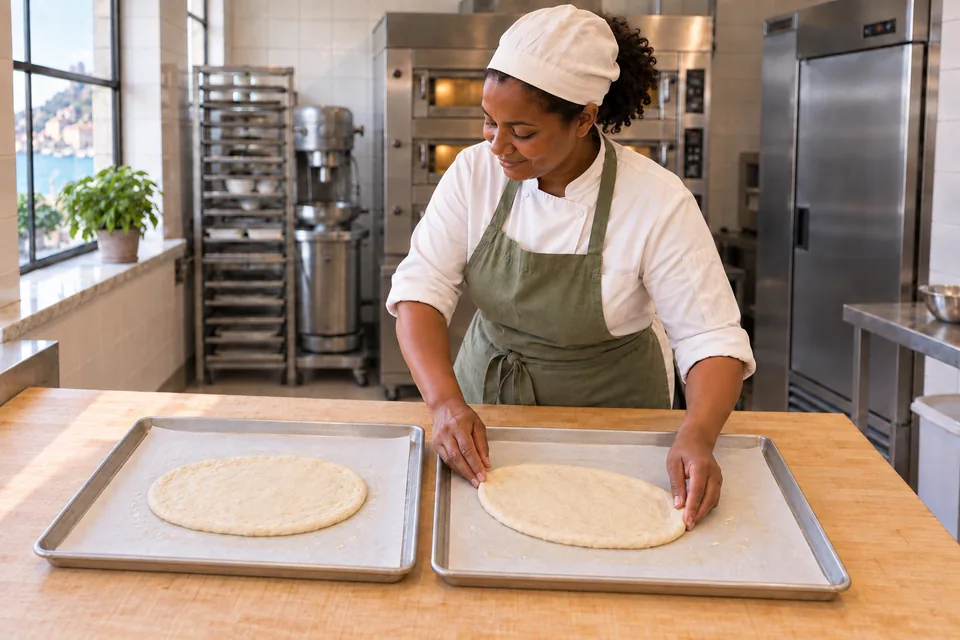
04 ShapeShape two thin ovals, one on each lined and oiled tray. 05 · Proof the ovals and heat the oven
60–90 minUse:
Cover loosely and leave at 22–24°C for 60–90 minutes. During the final 20 minutes, heat the oven to 220°C conventional with two racks around the middle.Ready when: The ovals are puffy and a light fingertip dent returns slowly.
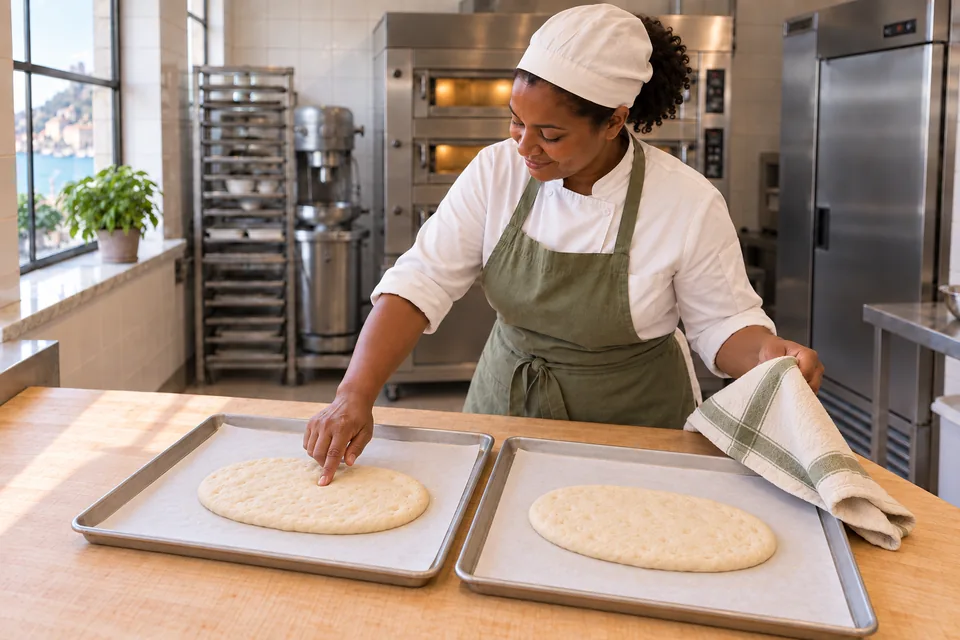
05 ProofLet both plain ovals become puffy before adding the topping. 06 · Add the cooled potato topping and baking dill
5–10 minUse: New potatoes; Garlic; Unsalted butter; Olive oil for frying; Fresh dill for baking
Mix the 5 g baking dill with the cooled potatoes. Divide the complete potato mixture equally between the two ovals, spreading it in a single layer with gaps. Press pieces lightly into the surface without flattening the dough underneath. Keep the 10 g finishing dill aside.Ready when: The potato pieces sit securely on the dough with exposed bread between them.
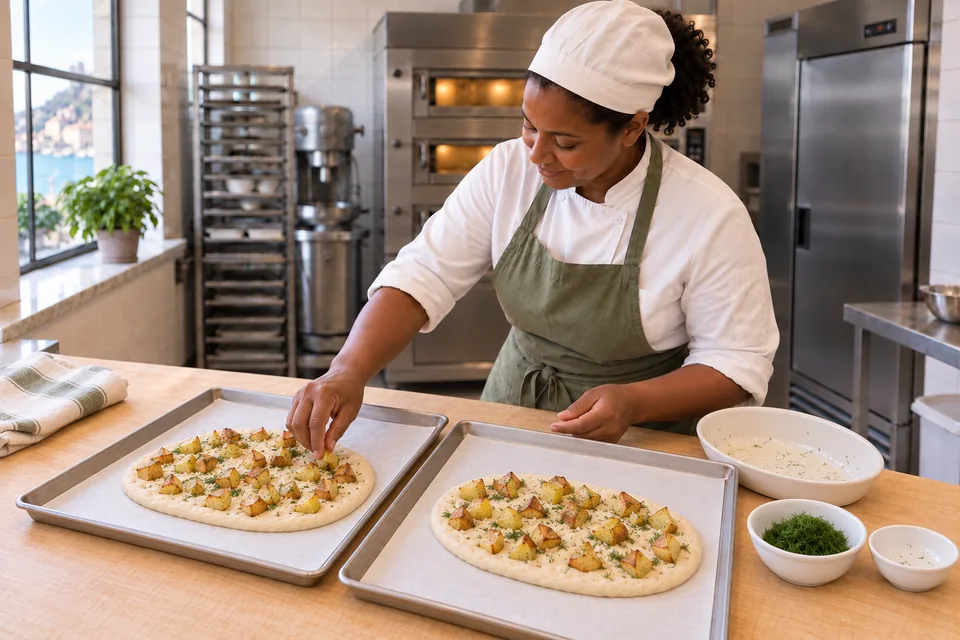
06 TopAdd the potatoes and baking dill in one layer, leaving exposed dough between pieces. 07 · Bake both trays, swapping halfway
30–35 minUse:
Bake both trays together for 15 minutes, then swap their rack positions and turn them front to back. Bake for 15–20 minutes more. Cover loosely with foil if the potatoes brown too quickly. Check a thick bread area away from potato pieces.Ready when: The bread base is firm and browned, the centre reaches about 95°C, and there is no wet dough beneath the potatoes.
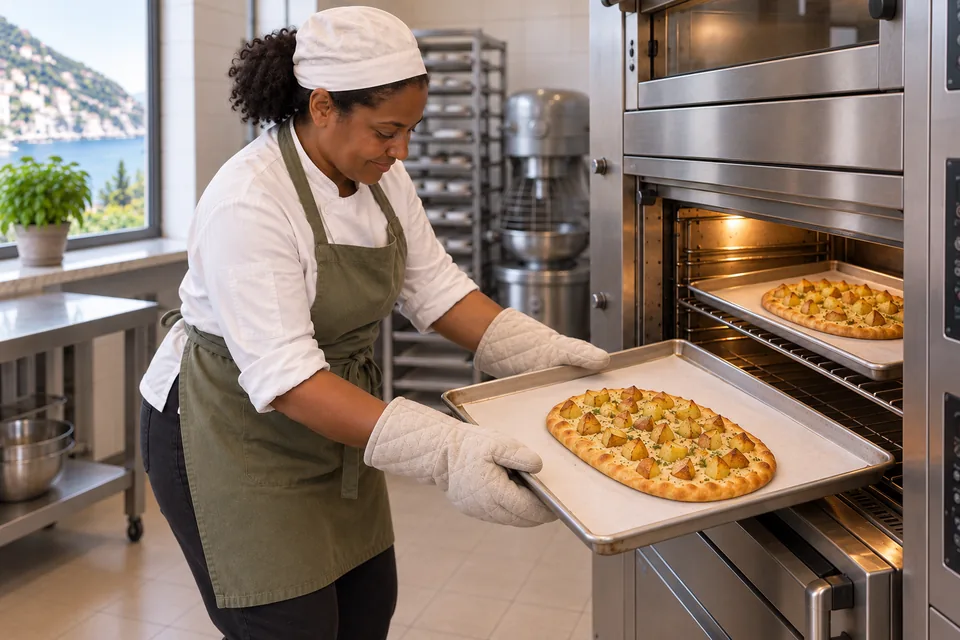
07 BakeBake both trays, swapping their positions partway through. 08 · Add finishing dill during cooling
30 minUse: Fresh dill for finishing
Move the breads onto racks. After 15 minutes, scatter the remaining 10 g dill evenly over both breads. Leave for 15 minutes more before cutting into twelve serving pieces in total.Ready when: The bread has set and the potatoes are warm enough to eat.
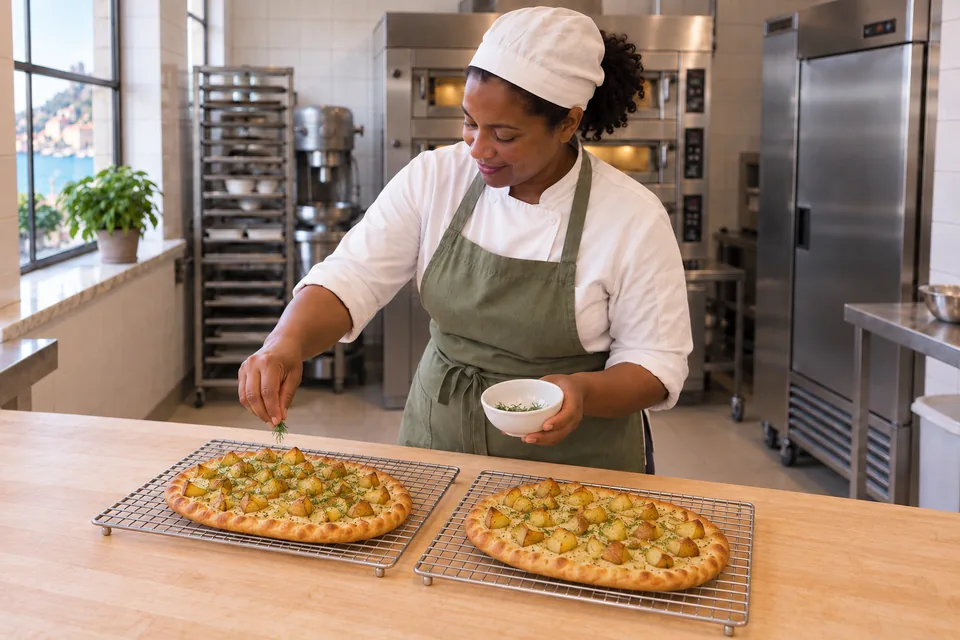
08 Finish CoolFinish both breads with the reserved dill, then let them set before cutting.
What to look for
| Stage | Look / feel for | Needs attention |
|---|---|---|
| Mix, knead and rest the lean dough | The dough is elastic and beginning to relax; it need not double before chilling. | |
| Refrigerate the dough overnight | The chilled dough shows small bubbles and some expansion, without collapsing. | |
| Warm the dough while cooking and cooling potatoes | The dough is less cold; the potatoes are cooked through, dry on the surface and cool before topping. | |
| Shape two ovals on separately oiled trays | Each tray holds one evenly spread oval without torn patches. | |
| Proof the ovals and heat the oven | The ovals are puffy and a light fingertip dent returns slowly. | |
| Add the cooled potato topping and baking dill | The potato pieces sit securely on the dough with exposed bread between them. | |
| Bake both trays, swapping halfway | The bread base is firm and browned, the centre reaches about 95°C, and there is no wet dough beneath the potatoes. | |
| Add finishing dill during cooling | The bread has set and the potatoes are warm enough to eat. |
Troubleshooting
| If you see this | Likely cause | What to do now | Next time |
|---|---|---|---|
| Bread under the potatoes remains wet. | The topping was wet or crowded, or baking ended too soon. | Cover the top loosely and continue baking until the base and centre are cooked. | Drain and cool the cooked potatoes, and leave gaps between the pieces. |
| The dough is tight after refrigeration. | The dough remains cold or needs a shaping rest. | Keep it covered while it warms and use the short shaping rest. | Allow the full warm-up interval and avoid forcing the dough into thin torn areas. |
Storage: Refrigerate covered leftovers within 2 hours of baking and use within 2 days. Reheat until hot through. Freeze portions for up to 1 month.; Contains: wheat, milk.; This Nepedia version has not been kitchen-tested.
Other approaches to this recipe
| Cook / recipe | Use | What differs |
|---|
The working ingredients and method form one recipe. Different formulas are compared without averaging their quantities or rise schedules.