Pavlova
A crisp meringue shell with a soft centre, finished with cream and fruit.
Method
01 · Prepare
5 minUse: Oven; sheet
Preheat to 175°C. Mark a 22 cm circle on parchment, then turn paper over.Ready when: Ungreased surface
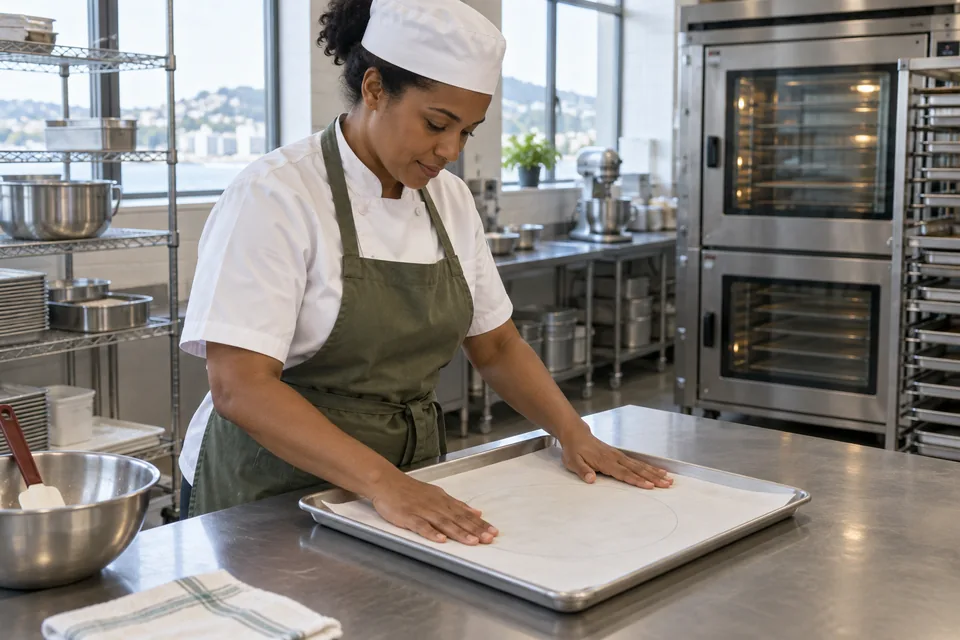
01 PrepareTurn the marked parchment over and lay it flat on the ungreased tray. 02 · Whip
About 5 minUse: Egg whites
Whip until soft peaks appear.Ready when: Tips bend
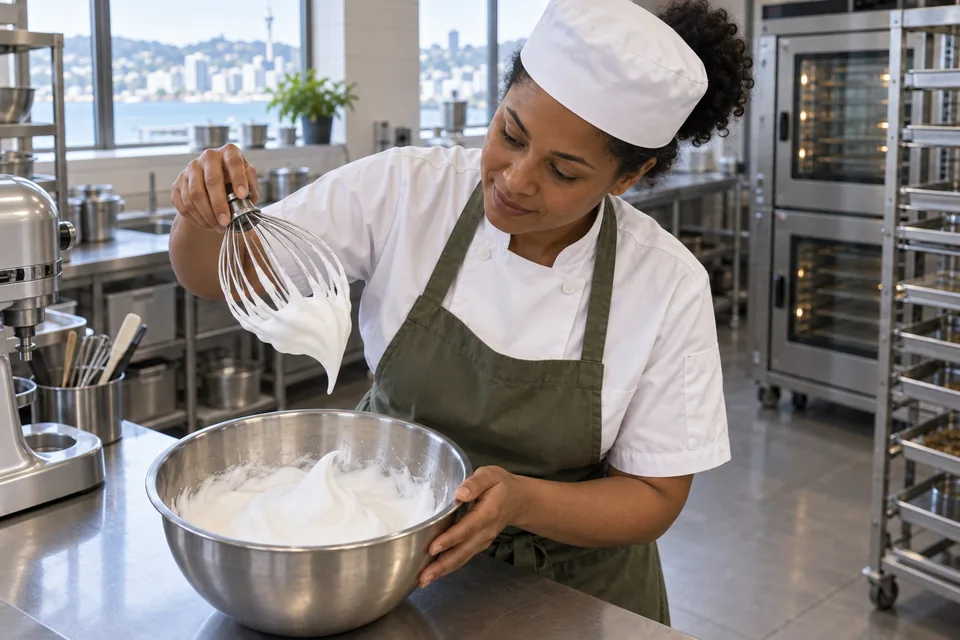
02 WhipWhip the egg whites until a soft peak bends over at its tip. 03 · Stabilize
A few minUse: Sugar; whipped whites
Beat in sugar in two additions, then continue to firm, glossy peaks.Ready when: Sugar feels dissolved
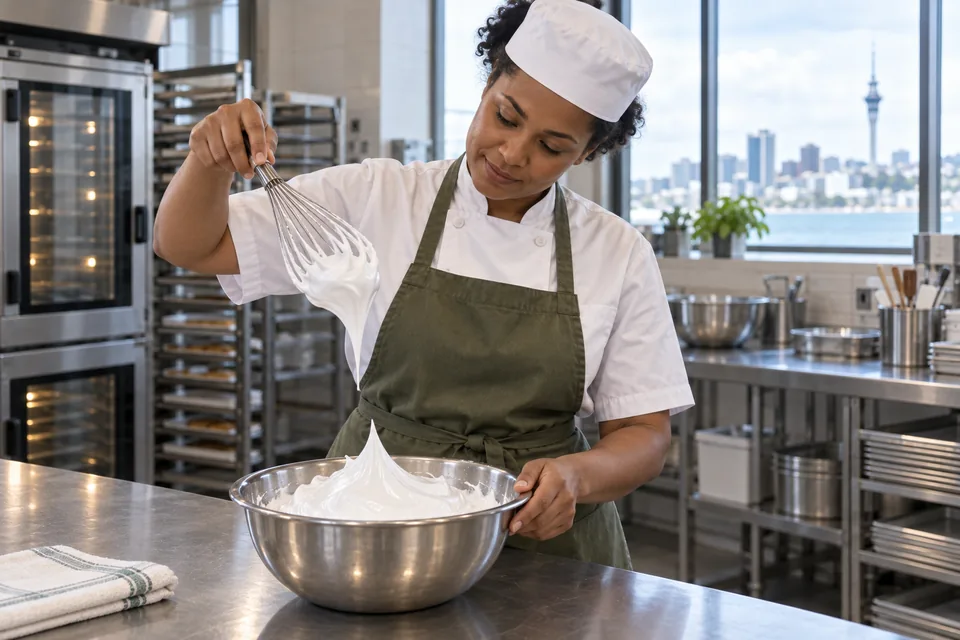
03 StabilizeBeat in the sugar until the meringue holds firm, glossy peaks. 04 · Fold
BrieflyUse: Cream of tartar, starch
Fold both through without flattening the foam.Ready when: Even, firm foam
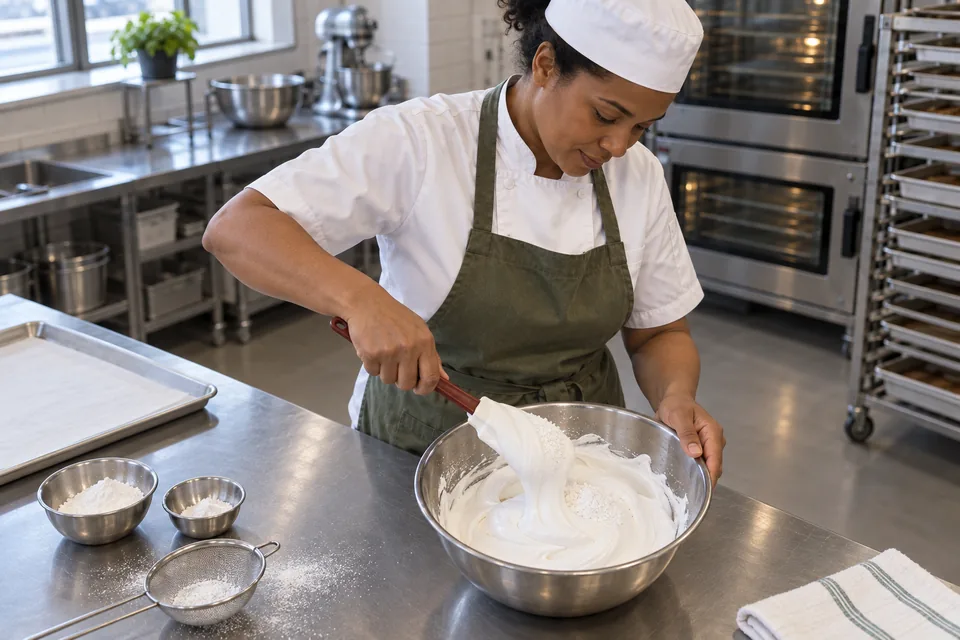
04 FoldFold the cream of tartar and starch through gently, keeping the foam full of air. 05 · Shape
A few minUse: Meringue
Mound inside the circle, leaving a shallow centre for the topping.Ready when: Edges support the centre
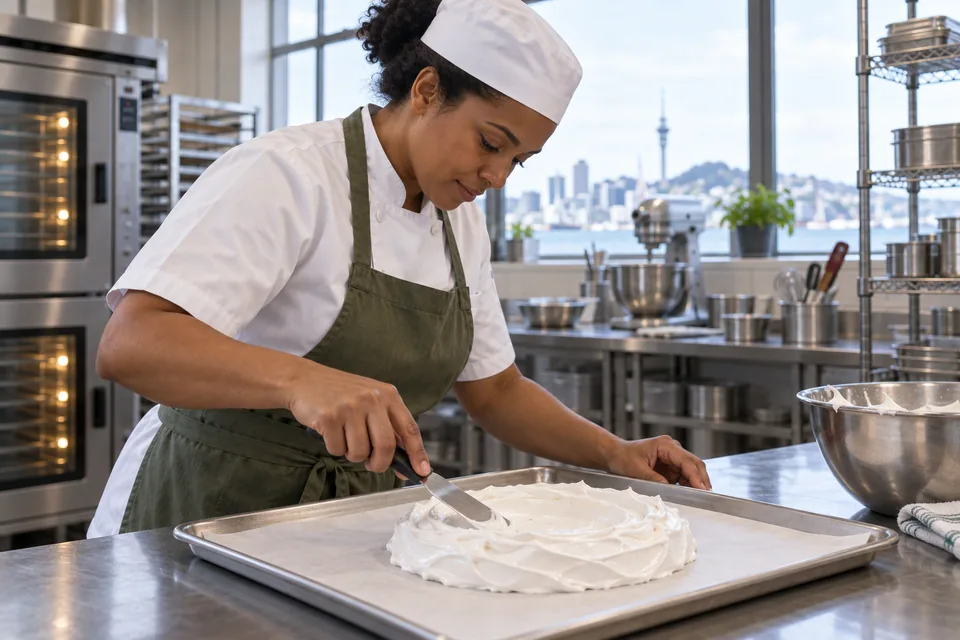
05 ShapeShape one broad mound with raised edges and a shallow hollow for the topping. 06 · Bake and cool
About 90 min + several hours coolingUse: Meringue
Put in oven and immediately reduce to 95°C. Bake until dry; turn oven off and cool inside.Ready when: Dry exterior; shell holds its shape
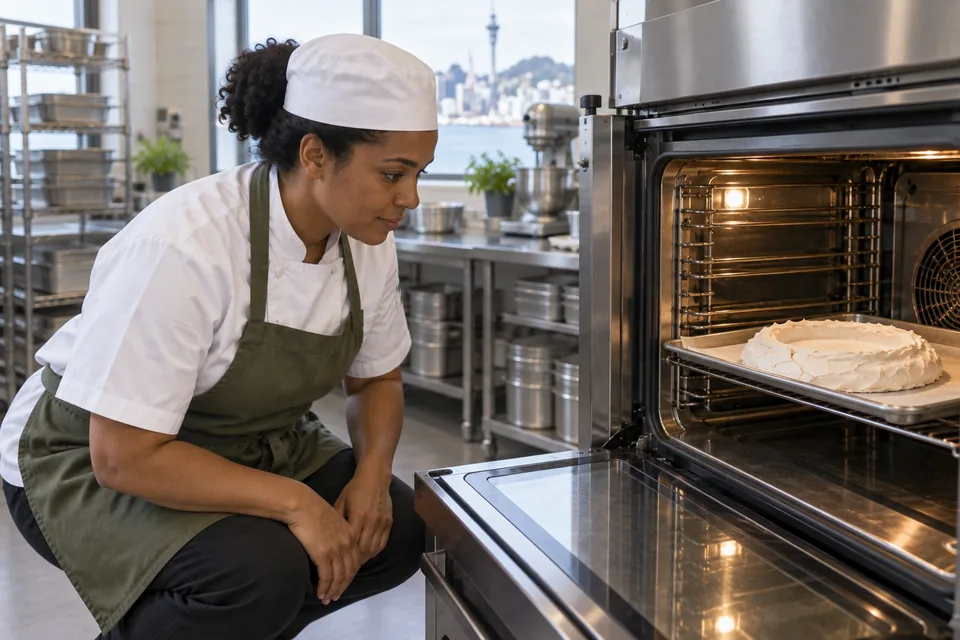
06 Bake and coolAfter the low bake, leave the dry shell in the switched-off oven to cool completely. 07 · Finish
5 minUse: Cream; cooled shell; fruit
Whip cream to soft peaks. Top the cold shell with cream and fruit just before serving.Ready when: Cream smooth; fruit not dripping
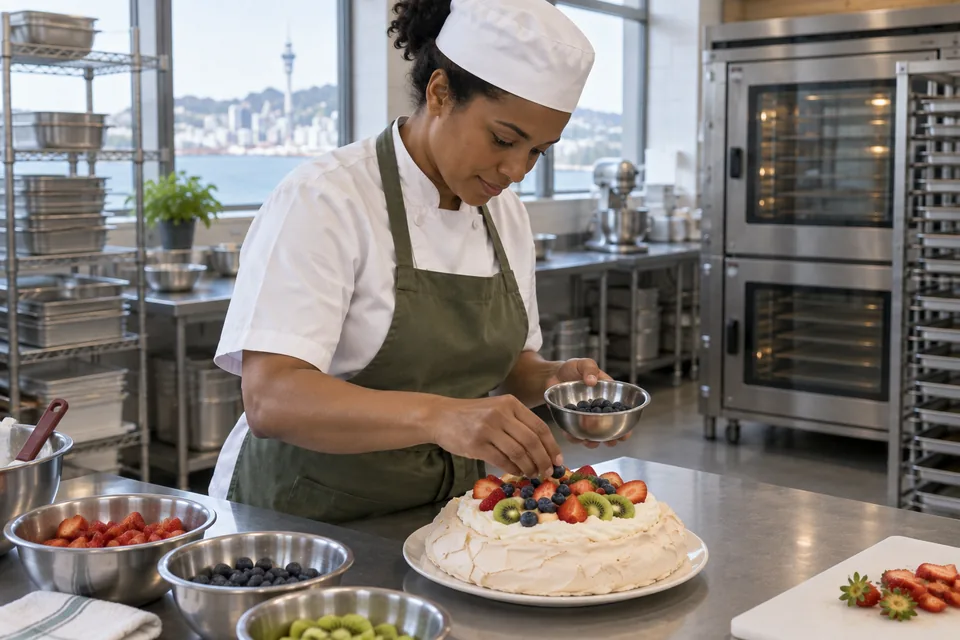
07 FinishTop the completely cold shell with softly whipped cream and dry prepared fruit just before serving.
What to look for
| Stage | Look / feel for | Needs attention |
|---|---|---|
| Foam | Stiff peaks and no obvious sugar grit. | Grease, yolk or a loose foam. |
| Cooling | Minor cracks are acceptable. | A sudden move from hot oven to cold air. |
Troubleshooting
| If you see this | Likely cause | What to do now | Next time |
|---|---|---|---|
| Beads or sticky surface | Sugar remains undissolved or humidity is high. | Serve soon after assembling. | Use fine sugar and check it before baking. |
| Foam will not stiffen | Grease or yolk contamination. | Restart with a clean bowl and fresh whites. | Separate eggs one at a time. |
| Large collapse | Abrupt cooling or a wet shell. | Serve broken pieces with cream and fruit. | Cool gradually and use the dry-shell cue. |
Vanilla is omitted. Cream and fruit are serving quantities; choose fruit to taste.
Other approaches to this recipe
McKenney’s four-white, 200 g sugar formula is the base. Chelsea’s six-white version uses 450 g sugar and a constant 110°C oven. Those ratios and schedules are materially different and remain separate evidence.
| Cook / recipe | Use | What differs |
|---|---|---|
| Sally’s Baking · Sally McKenneyPavlova | Working base | Credits reader Laurel for the base recipe; McKenney reports her own trials of acid choices and starch levels. |
| Chelsea Sugar · developer not namedPerfect Pavlova | Comparison and serving guidance | Six whites, substantially more sugar and a different oven schedule; specified brands are commercial product references. |
| RecipeTin Eats · Nagi MaehashiPavlova | Texture and cooling comparison | Also uses a hot preheat followed by a low bake, but with different egg and starch quantities. |
The working ingredients and method form one recipe. Different formulas are compared without averaging their quantities or rise schedules.