Lamingtons
Light sponge squares receive chocolate icing and a coconut coating.
Method
01 · Prepare
5 minUse: Oven; tin
Heat oven. Grease tin and line its base.Ready when: Tin ready
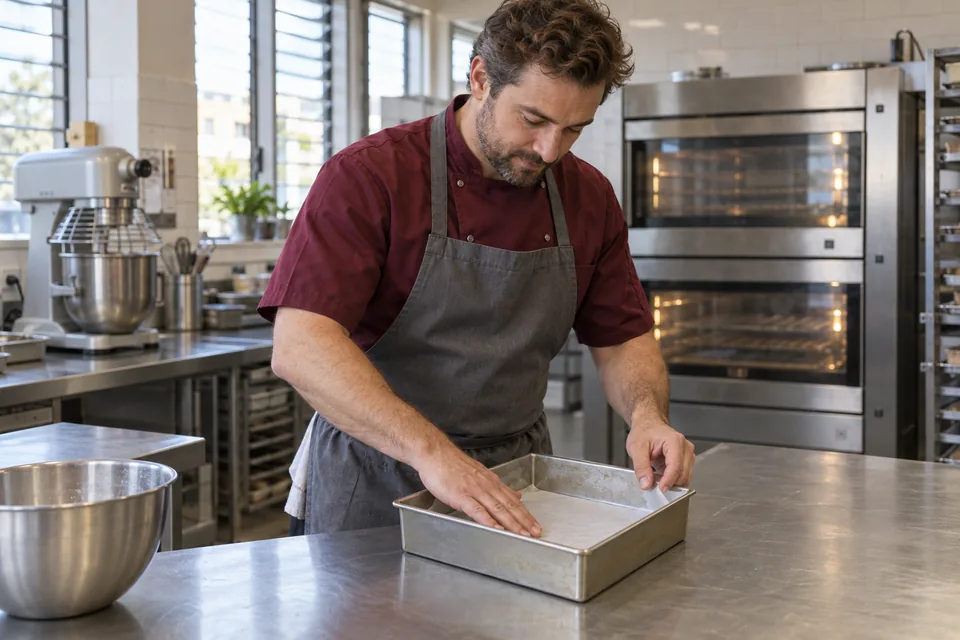
01 PrepareGrease the square tin and line its base before mixing the sponge. 02 · Whip
5–10 minUse: Eggs, sugar, salt
Whip until thick enough that a ribbon remains briefly on top.Ready when: Pale, voluminous foam
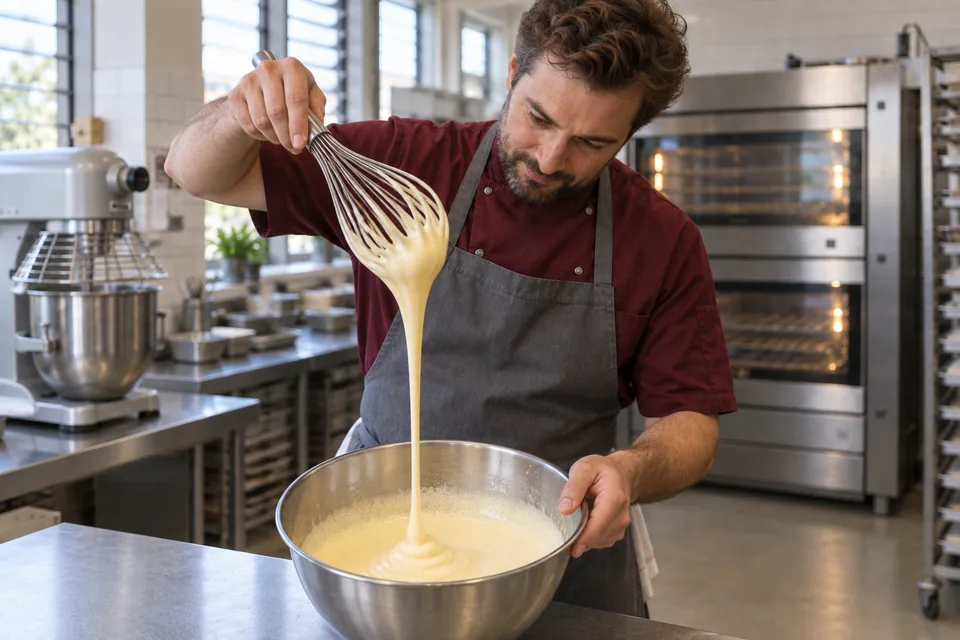
02 WhipWhip the eggs, sugar and salt until a thick ribbon rests briefly on the foam. 03 · Fold
BrieflyUse: Flour; melted butter
Sift flour over foam while folding; fold in butter without leaving streaks.Ready when: Aeration retained
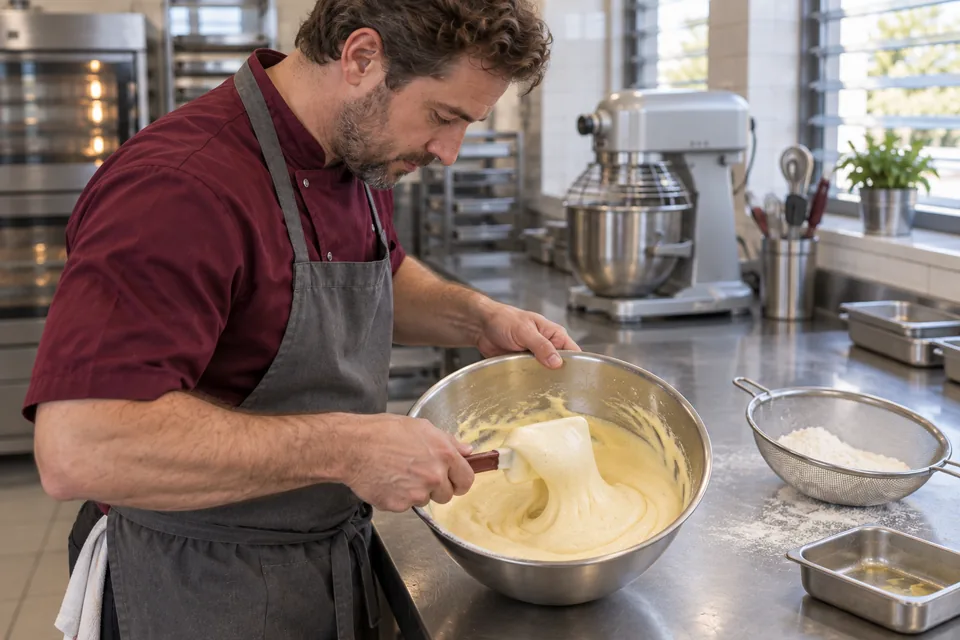
03 FoldFold in the sifted flour and cooled melted butter gently, keeping the batter airy. 04 · Bake and cool
About 30 min + coolingUse: Batter
Bake in prepared tin; cool fully, remove paper and split cake horizontally.Ready when: Cake pulls slightly from the sides
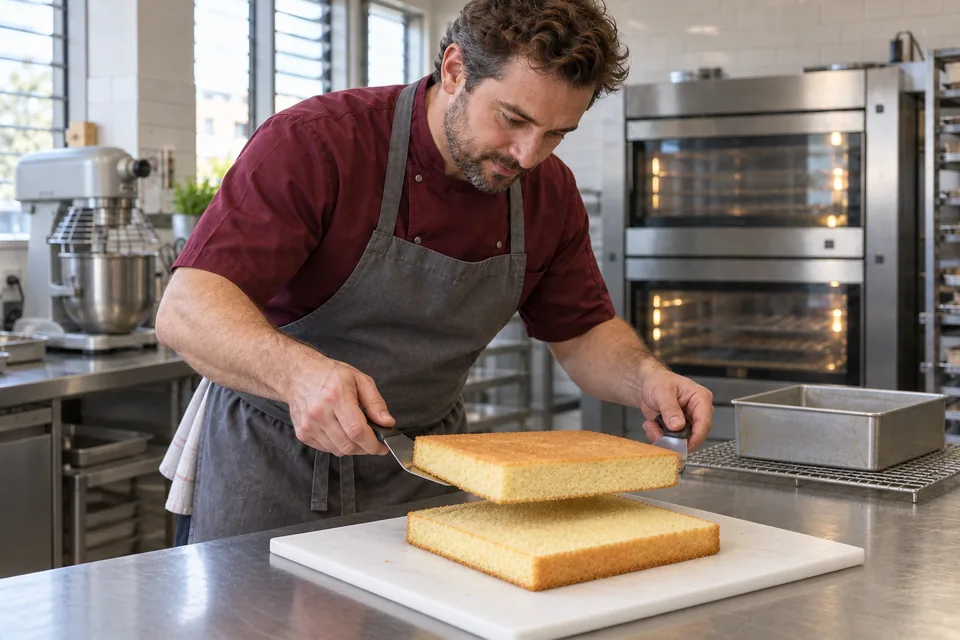
04 Bake and coolOnce the sponge is completely cool, remove the paper and split it into two matching layers. 05 · Make icing
A few minUse: Chocolate, icing butter, milk; sugar, cocoa
Melt chocolate, butter and milk over barely simmering water. Off heat, whisk in sugar and cocoa.Ready when: Smooth coating
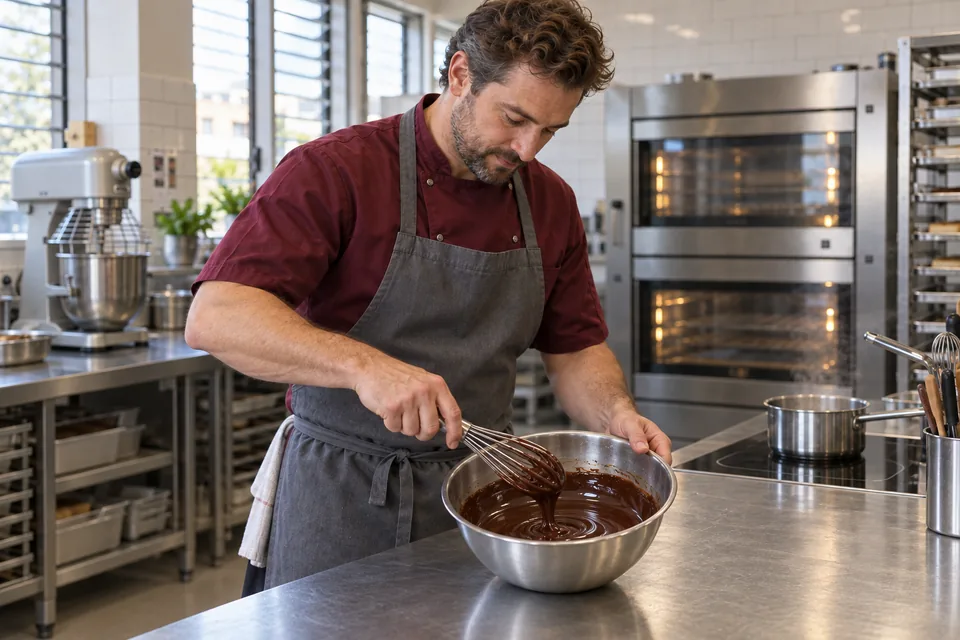
05 Make icingOff the heat, whisk the icing sugar and cocoa into the melted chocolate mixture until smooth. 06 · Fill
5 minUse: Cake; some icing
Spread about 125 mL icing between the cake layers. Cut into 16 squares.Ready when: Layers aligned
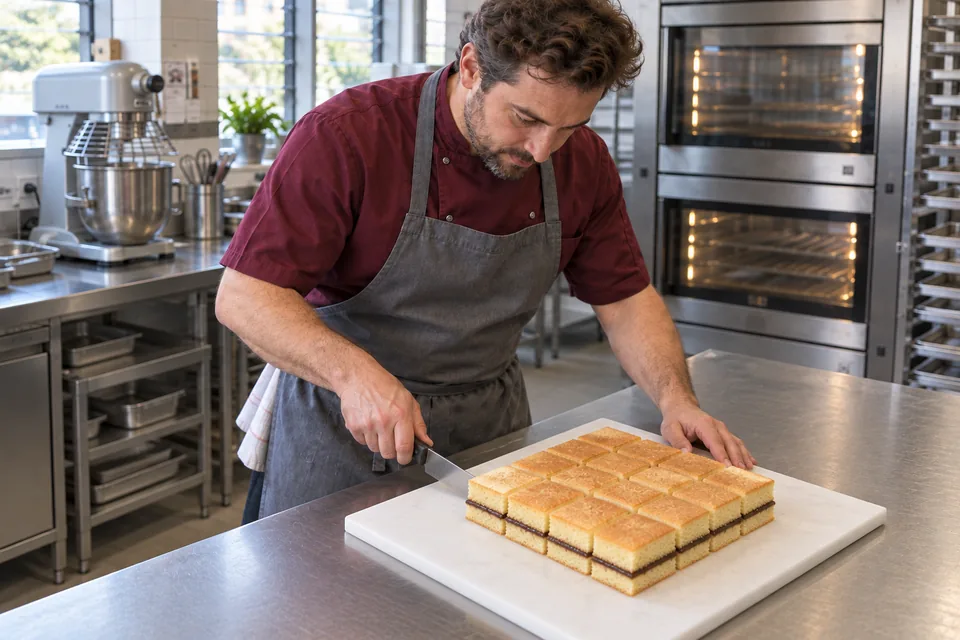
06 FillSpread the reserved icing between the sponge layers, then cut the filled cake into 16 squares. 07 · Coat
15–20 minUse: Remaining icing; water; coconut
Thin remaining icing with the boiling water. Dip each square, drain excess and roll in coconut.Ready when: Even coating, no bare sides
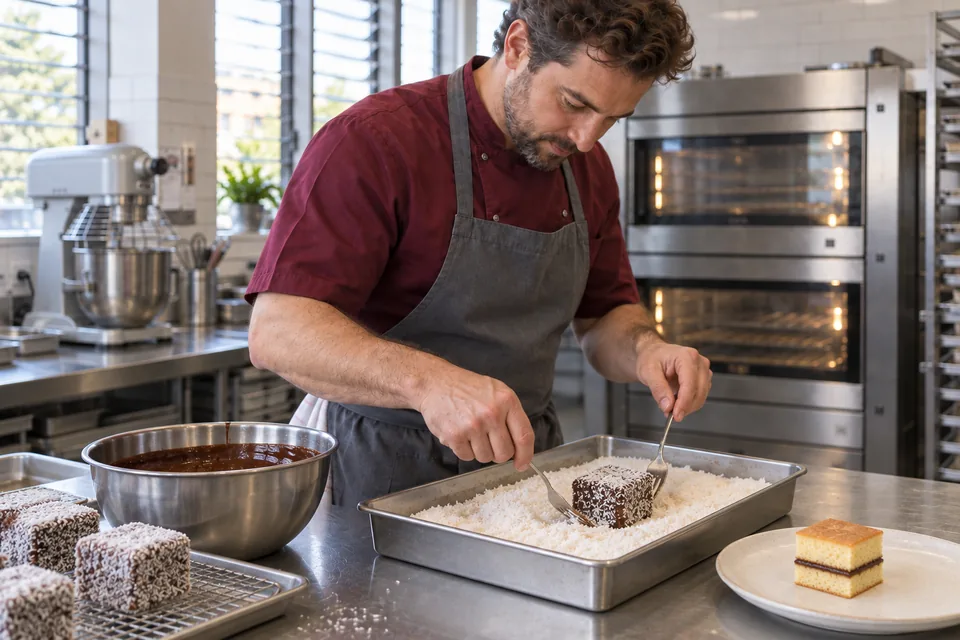
07 CoatDip each filled square in the thinned icing, drain it, then coat all sides with coconut. 08 · Set
Until setUse: Coated squares
Place on a rack until icing firms.Ready when: Squares can be lifted cleanly
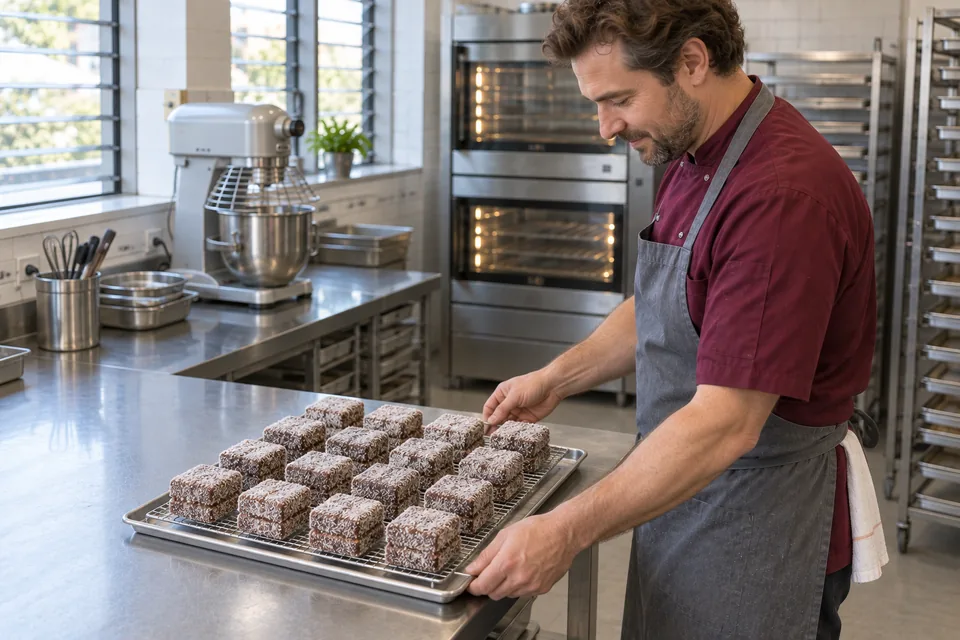
08 SetLet all 16 coated squares stand on the rack until the icing firms.
What to look for
| Stage | Look / feel for | Needs attention |
|---|---|---|
| Sponge | A ribbon rests on the egg foam before sinking. | Thin eggs that lose their trail instantly. |
| Icing | Coats the cake without tearing it. | Very hot or thick icing. |
Troubleshooting
| If you see this | Likely cause | What to do now | Next time |
|---|---|---|---|
| Dense sponge | Foam lost during folding. | Cut small portions for serving. | Fold lightly and stop when combined. |
| Cake breaks during dipping | Cake is warm or very fragile. | Chill cut portions to firm them. | Cool completely before handling. |
| Icing becomes too stiff | Chocolate mixture cooled. | Warm gently over water. | Keep it fluid without overheating. |
Vanilla is omitted. The two butter amounts have different uses. The icing is divided between the filling and coating; the listed water thins only the remaining coating.
Other approaches to this recipe
Lebovitz’s egg-foam sponge and chocolate icing supply the complete base. Maehashi’s version is a creamed butter cake with cocoa icing, adapted from Taste; its useful chilling method is a handling comparison, not a second test of this sponge.
| Cook / recipe | Use | What differs |
|---|---|---|
| David Lebovitz · David LebovitzLamingtons | Working base | Author describes developing the recipe and consulting Matt Rothman about icing. |
| RecipeTin Eats · Nagi MaehashiLamingtons | Comparison and coating technique | Credits a Taste recipe for the formula; uses a different cake and cocoa icing, with chilled cake pieces for handling. |
The working ingredients and method form one recipe. Different formulas are compared without averaging their quantities or rise schedules.