Nepedia

Overnight sourdough pizza dough

Naturally leavened pizza with a modest 10% prefermented flour share.

Makes
5 equal dough balls; 344 g each
Heat
Set by the final pizza or focaccia recipe
Cooking time
No baking in this dough recipe

Prepare the dough here, then follow the chosen pizza or focaccia finish.

View

Overnight sourdough pizza dough

Makes
5 equal dough balls; 344 g each
Heat
Set by the final pizza or focaccia recipe
Cooking time
No baking in this dough recipe

Prepare the dough here, then follow the chosen pizza or focaccia finish.

Pizza dough

Overnight sourdough pizza dough

Naturally leavened pizza with a modest 10% prefermented flour share.

Method

  1. 01 · Build levain

    8–10 hours

    Use: Levain-build ingredients

    About 24 hours after the previous feeding, retain 50 g mature levain and mix with its listed flour and water. Cover.

    Ready when: Expanded, bubbly, active levain. Build totals 500 g; only 180 g enters final dough.
    Pizza cook stirring a small bubbly sourdough build in a clear container.
    01 Build levainMix the levain build and cover; let it become expanded and bubbly.
  2. 02 · Autolyse

    20–30 minutes

    Use: Final flour + 620 g water

    Mix until uniformly moistened, then cover.

    Ready when: No dry flour remains.

    Pizza cook mixing a rough white dough in a clear tub.
    02 AutolyseWet all the flour before covering the dough for its rest.
  3. 03 · Mix

    Until combined

    Use: Autolysed dough, 20 g salt, 180 g ripe levain

    Weigh levain in a clean tared container and scrape it into the dough. Sprinkle salt, fold to enclose, then alternate pinching and folding until uniform.

    Ready when: Final dough 25–26°C.

    A damp hand pinching and folding white pizza dough in a tub.
    03 MixPinch and fold the weighed levain and salt evenly into the dough.
  4. 04 · Fold + bulk

    12–14 hours from mixing

    Use: Dough

    With a wet hand, lift one side until it resists and fold across the dough; repeat around all four sides. Stop before tearing. Cover again. Give 1–2 folds; first at 30–60 minutes. After the last, lightly oil dough and tub. Keep covered.

    Ready when: 2–2½ times starting volume.
    Pizza cook lifting one connected edge of elastic dough to fold it.
    04 Fold + bulkGive the dough gentle folds early in the rise, then leave it covered.
  5. 05 · Divide + round

    About 15 minutes

    Use: Fermented dough

    Gently ease onto a floured counter and divide equally. Fold each piece’s edges into its centre; turn seam down, cup and drag on a flour-free patch, rotating 2–3 times, to make a medium-tight ball. Preserve internal gas.

    Ready when: Five 344 g balls, or portion for your pan.
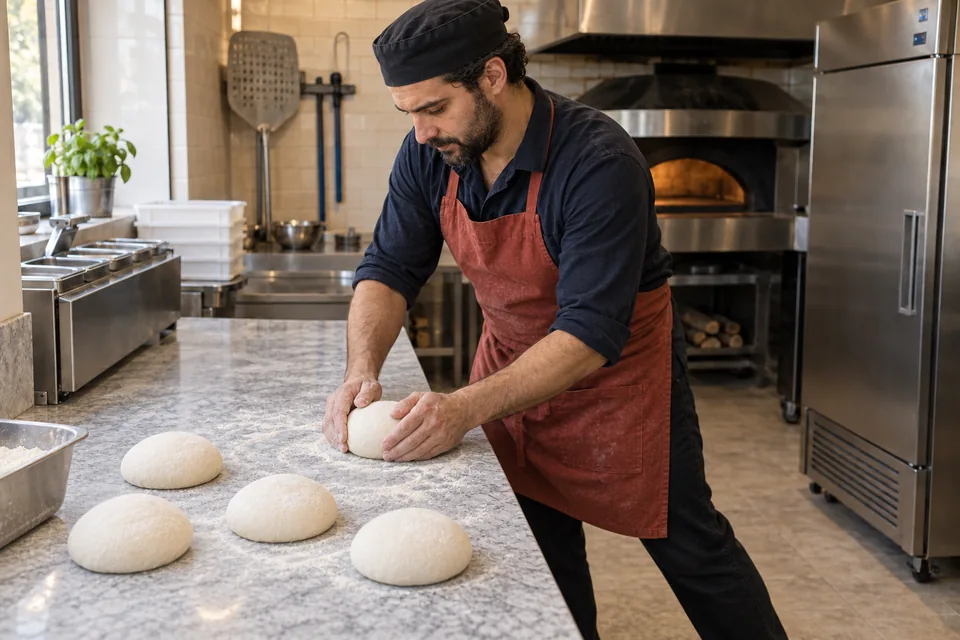
    Five white pizza-dough balls, with the cook rounding one of them.
    05 Divide + roundMake five smooth, medium-tight balls without squeezing out all the gas.
  6. 06 · Proof + chill

    At least 6 hours preferred

    Use: Balls

    Space on floured tray, oil/flour tops, cover and refrigerate at least 6 hours. Faster option: 1 hour at room temperature then at least 30 minutes cold.

    Ready when: Cold, relaxed dough ready to stretch; refrigerate unused dough 2–3 days.
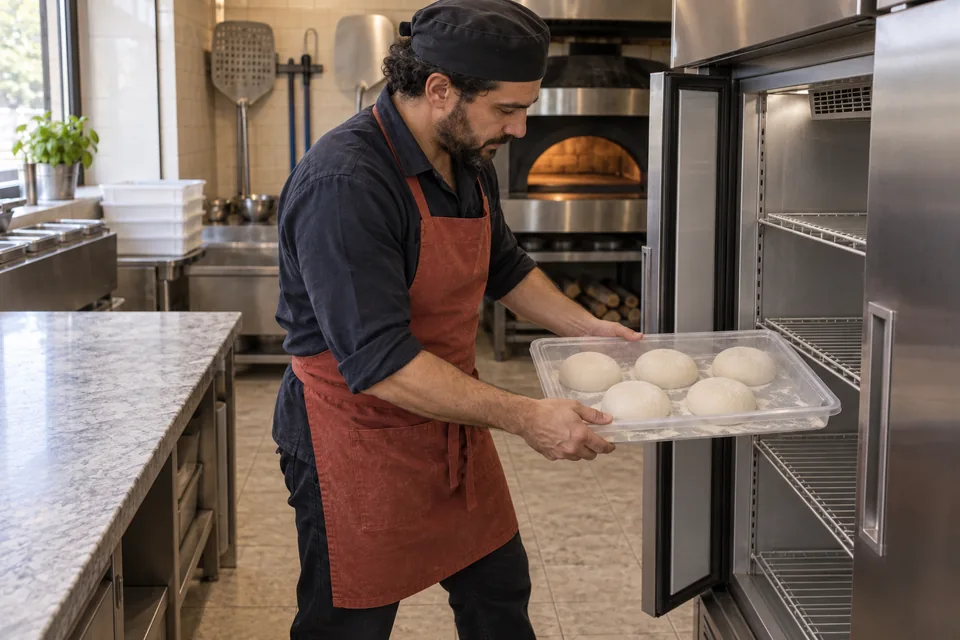
    Cook holding a covered tray of five dough balls beside an open refrigerator.
    06 Proof + chillCover the separated balls and chill until cold and easy to stretch.

What to look for

StageLook and feelNeeds attention
LevainReliable rise after feeding; bubbles throughout.Using a dormant unfed starter on the same schedule.
Bulk2–2½-fold expansion; aerated but still coherent.Waiting through collapse in a warm room.

Troubleshooting

If you seeLikely causeWhat to do nowNext time
Dough tears while stretchingIt is too warm, under-relaxed, or stretched too thinPatch a small tear; rest a resisting ball briefly, or chill a soft one; stretch over fists without tossing.Complete folds, refrigerate before shaping, and keep toppings modest.
Bulk rise is slower than the scheduleCool dough or weak leaveningWait for the stated volume and bubbles; use a moderately warmer spot.Measure dough temperature and verify active yeast or a reliably rising levain.

Recipe notes

  • Adjust water temperature for the flour and room to reach the stated final dough temperature. Divide the whole batch equally; portion sizes are approximate. Use 200 g for a thin 23 cm skillet pizza and about 340–350 g for a thick skillet pizza or a 30 cm stone pizza. Finish with a pizza or focaccia recipe. The levain build makes 500 g. Take only 180 g for this dough; 320 g remains. Retain and feed what is needed for maintenance. Allow more time in a cool kitchen rather than increasing levain without adjusting the flour and water totals.
Show ingredient flow

Recipe

Overnight sourdough pizza dough

This dough uses sourdough starter, also called levain. Prepare the starter first; only the stated portion goes into the dough.

How do I make it?

  1. Feed the starter

    8–10 hours

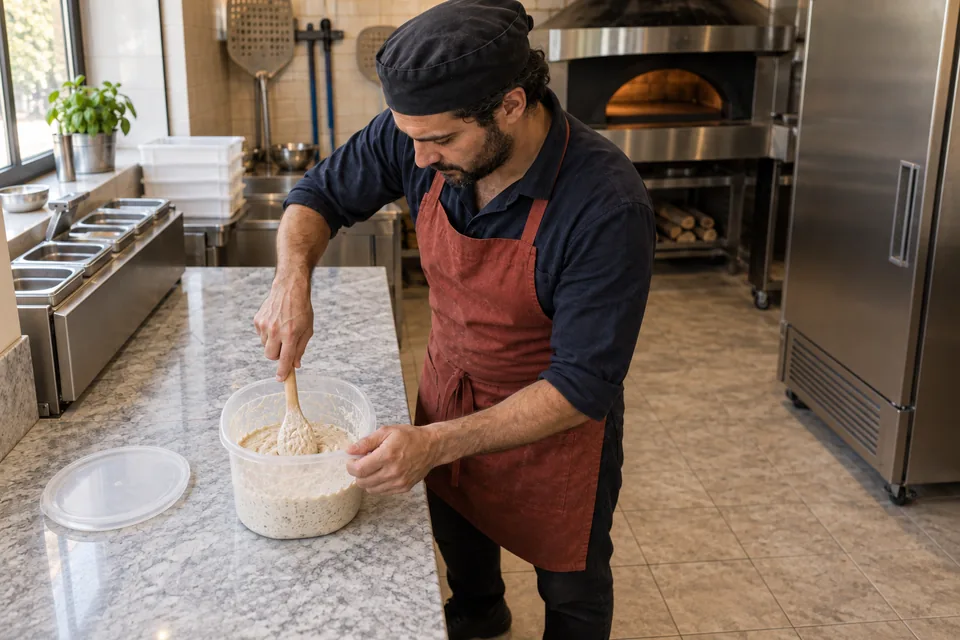
    About 24 hours after its last feeding, keep 50 g of mature sourdough starter and mix in the flour and water listed for the starter build. Cover and leave it to become bubbly; you are making 500 g but will use only 180 g in the pizza dough.

    Pizza cook stirring a small bubbly sourdough build in a clear container.
    Mix the levain build and cover; let it become expanded and bubbly.

    Ready when: Expanded, bubbly, active levain. Build totals 500 g; only 180 g enters final dough.

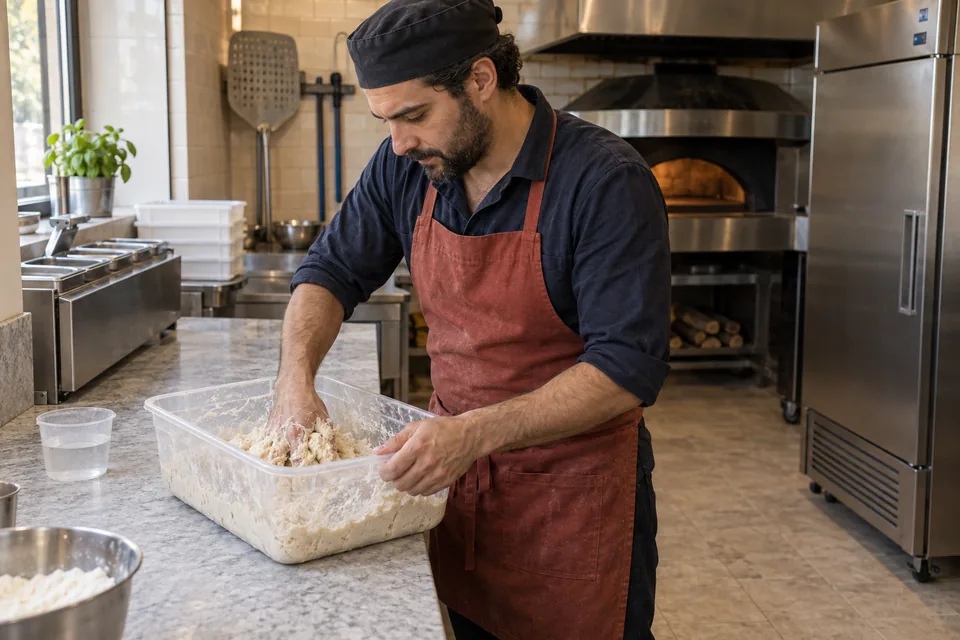
  2. Mix flour and water

    20–30 minutes

    Mix the final-dough flour with 620 g water until all the flour is wet, then cover and let it rest.

    Pizza cook mixing a rough white dough in a clear tub.
    Wet all the flour before covering the dough for its rest.

    Ready when: No dry flour remains.

  3. Add starter and salt

    Until combined

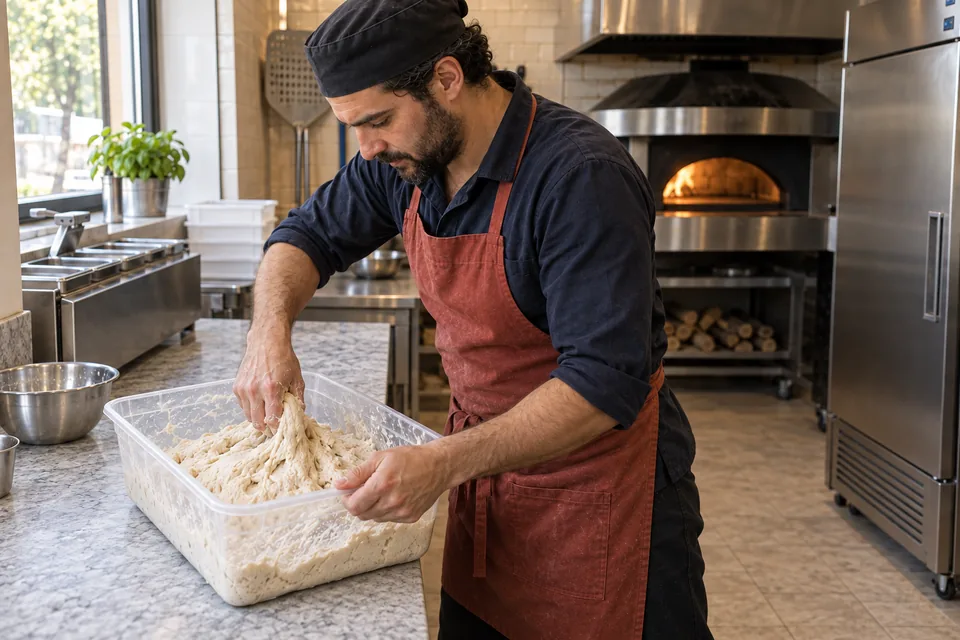
    Zero the scale with a clean container on it, weigh 180 g of the bubbly starter and scrape it into the dough. Add 20 g salt, fold the dough over it, then keep pinching and folding until it is evenly mixed.

    A damp hand pinching and folding white pizza dough in a tub.
    Pinch and fold the weighed levain and salt evenly into the dough.

    Ready when: Final dough 25–26°C.

  4. Fold and let rise

    12–14 hours from mixing

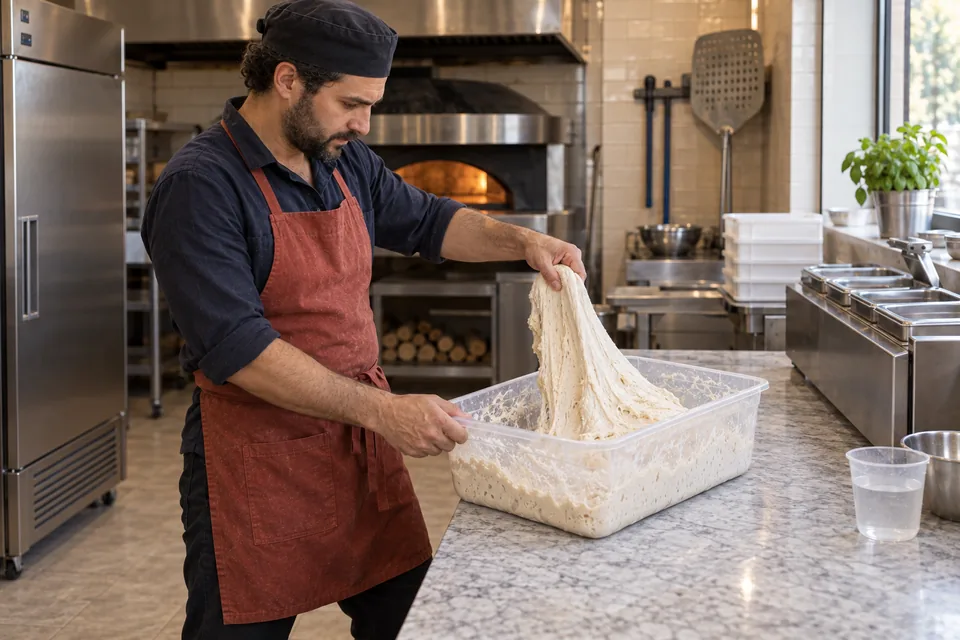
    Wet your hand, lift one side of the dough until it starts to resist, then fold it across the top; do this on all four sides without tearing it. Do 1–2 sets of folds, with the first set 30–60 minutes after mixing. After the last set, lightly oil the dough and container and cover again.

    Pizza cook lifting one connected edge of elastic dough to fold it.
    Give the dough gentle folds early in the rise, then leave it covered.

    Ready when: 2–2½ times starting volume.

  5. Make dough balls

    About 15 minutes

    Gently tip the dough onto a floured counter and divide it equally, keeping the air bubbles inside. Fold each piece’s edges into the middle, turn the join underneath, then cup your hands around it and gently drag and rotate it 2–3 times on an unfloured spot to make a lightly tightened ball.

    Five white pizza-dough balls, with the cook rounding one of them.
    Make five smooth, medium-tight balls without squeezing out all the gas.

    Ready when: Five 344 g balls, or portion for your pan.

  6. Chill the balls

    At least 6 hours preferred

    Space the balls on a floured tray, lightly oil or flour the tops, cover and refrigerate for at least 6 hours. For a faster option, leave them at room temperature for 1 hour, then chill for at least 30 minutes.

    Cook holding a covered tray of five dough balls beside an open refrigerator.
    Cover the separated balls and chill until cold and easy to stretch.

    Ready when: Cold, relaxed dough ready to stretch; refrigerate unused dough 2–3 days.

What can go wrong, and how can I fix it?

What you noticeLikely causeWhat to do
Dough tears while stretchingIt is too warm, under-relaxed, or stretched too thinPatch a small tear; rest a resisting ball briefly, or chill a soft one; stretch over fists without tossing. Complete folds, refrigerate before shaping, and keep toppings modest.
Bulk rise is slower than the scheduleCool dough or weak leaveningWait for the stated volume and bubbles; use a moderately warmer spot. Measure dough temperature and verify active yeast or a reliably rising levain.
Useful recipe notes

Adjust water temperature for the flour and room to reach the stated final dough temperature. Divide the whole batch equally; portion sizes are approximate. Use 200 g for a thin 23 cm skillet pizza and about 340–350 g for a thick skillet pizza or a 30 cm stone pizza. Finish with a pizza or focaccia recipe. The levain build makes 500 g. Take only 180 g for this dough; 320 g remains. Retain and feed what is needed for maintenance. Allow more time in a cool kitchen rather than increasing levain without adjusting the flour and water totals.

See the detailed method and ratios in , or follow ingredients through the .

Ingredient proportions & recipe details

Overnight sourdough pizza dough at a glance

Makes
5 equal dough balls; 344 g each
Heat
Set by the final pizza or focaccia recipe
Cooking time
No baking in this dough recipe
Dough hydration
70%
Prefermented flour
10% of total flour
Bulk fermentation
12–14 hours from mixing · 2–2½ times starting volume.
How do the ingredient proportions compare?

Core dough totals include the flour and water in the portion of starter or preferment used. Do not add them again. Toppings, fillings and dusting flour are separate.

Formula componentGramsFlour = 100%
Total flour1000 g100%
Total water700 g70%
Salt20 g2%
Instant yeast0 g0%