Pizza dough
Overnight Pizza Dough with Poolish
A 75% hydration pizza dough with half its flour prefermented in poolish.
Method
01 · Mix poolish
12–14 hoursUse: Poolish ingredients
Mix flour and yeast, add water and combine fully. Cover at 18–21°C.Ready when: About tripled; surface bubbles pop repeatedly. Use at peak, before collapse.
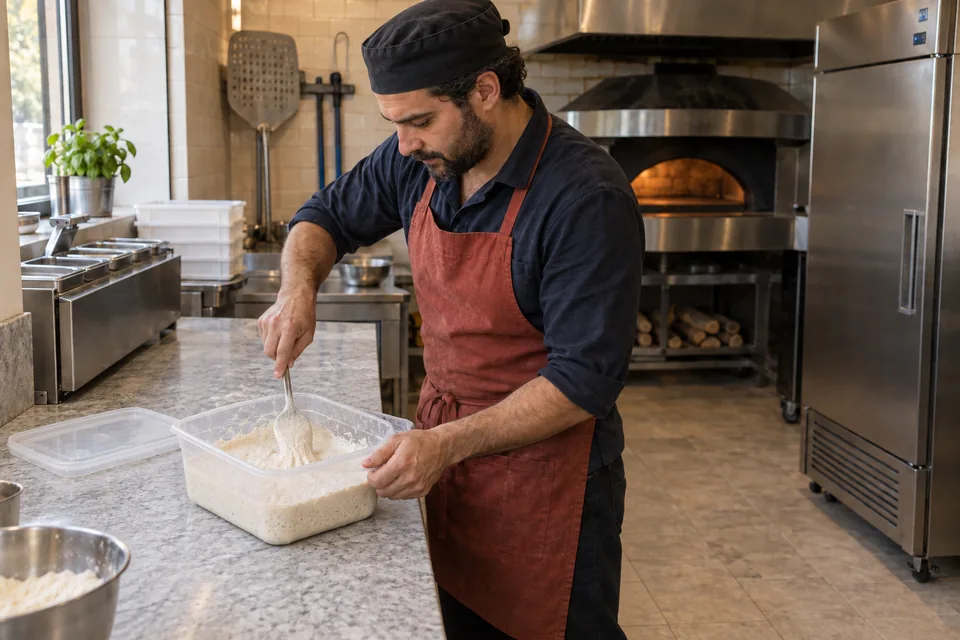
01 Mix poolishMix the wet poolish thoroughly; use it when risen and actively bubbling. 02 · Mix final dough
Until combinedUse: Final flour, salt, final water, all poolish
Mix flour with salt. Pour the 250 g warm water around the poolish to loosen it; add the entire contents to flour. Alternate pinching and folding with a wet hand.Ready when: Uniform dough, about 24°C.
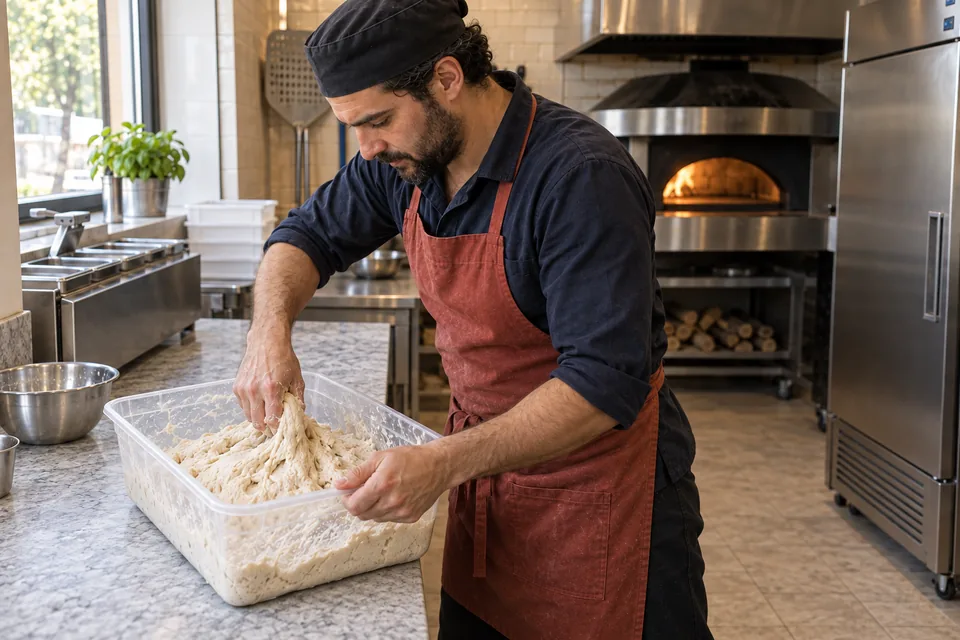
02 Mix final doughWork the loosened poolish into the final flour and salt until uniform. 03 · Fold + bulk
About 6 hours from final mixUse: Dough
With a wet hand, lift one side until it resists and fold across the dough; repeat around all four sides. Stop before tearing. Cover again. Repeat for 2 folds within the first hour. After the second, oil dough and tub lightly. Cover.Ready when: About 2½ times its original volume.
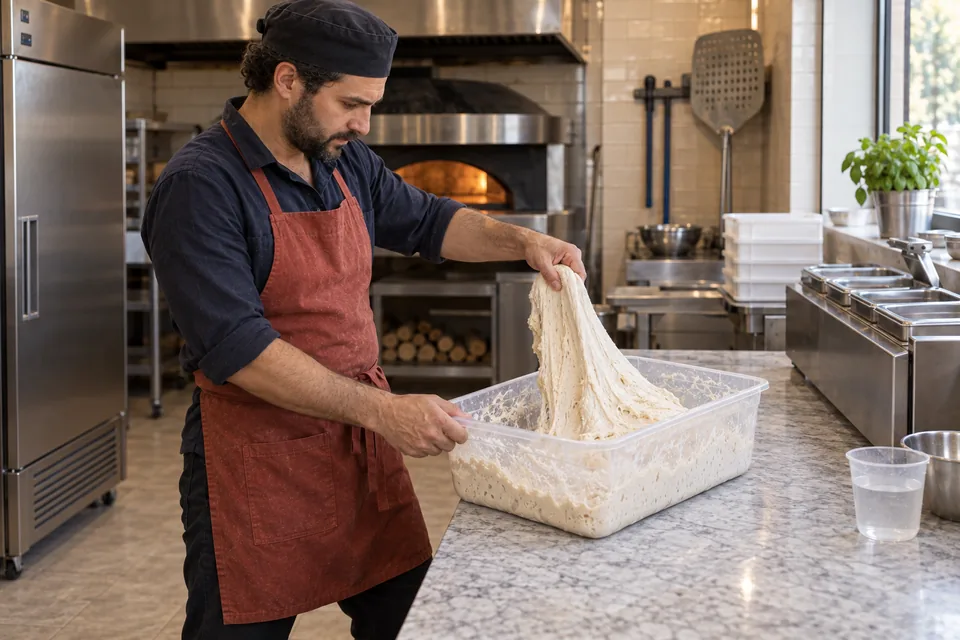
03 Fold + bulkLift and fold a connected edge, keeping this soft dough intact. 04 · Divide + round
About 15 minutesUse: Fermented dough
Gently ease onto a floured counter and divide equally. Fold each piece’s edges into its centre; turn seam down, cup and drag on a flour-free patch, rotating 2–3 times, to make a medium-tight ball. Preserve internal gas.Ready when: Five equal balls, about 354 g each; very soft but coherent.
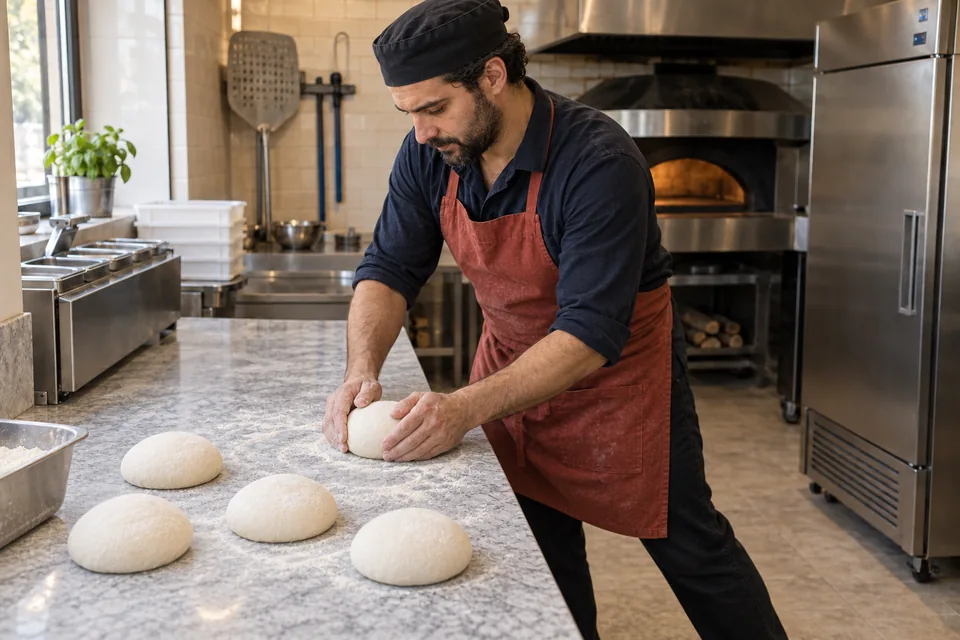
04 Divide + roundDivide into five equal balls and round gently on a clear patch of counter. 05 · Relax + chill
At least 1½ hoursUse: Balls
Space on a floured tray, oil/flour tops, cover. Rest 60 minutes at room temperature, then refrigerate at least 30 minutes.Ready when: Cold and relaxed. Use fists, without tossing, to stretch. Refrigerate unused dough up to 2 days.
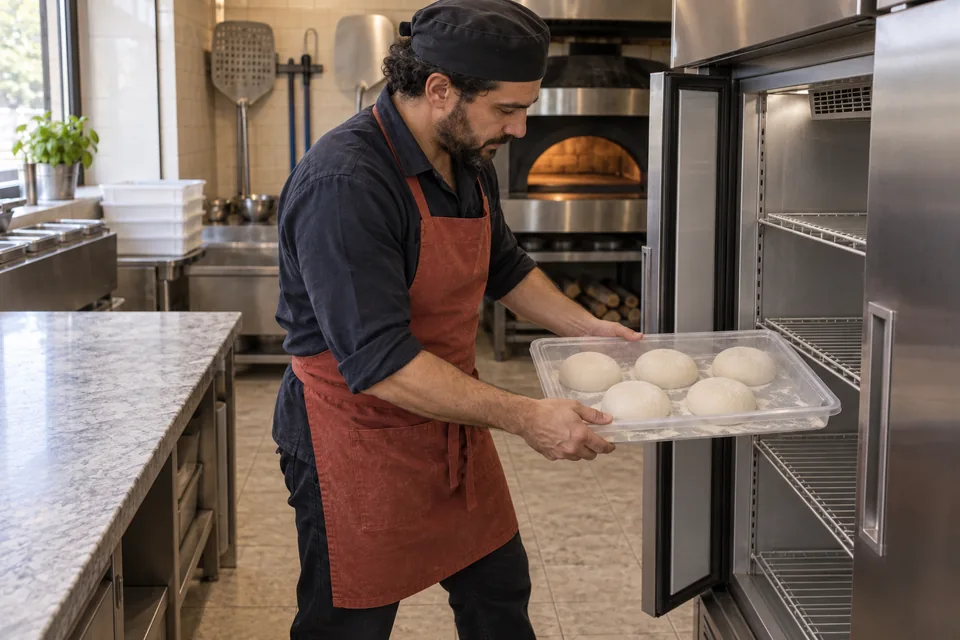
05 Relax + chillKeep the five balls covered during their rest and refrigeration.
What to look for
| Stage | Look and feel | Needs attention |
|---|---|---|
| Poolish peak | Tripled, aerated, and actively bubbling. | Long-collapsed poolish; peak lasts less time in a warm kitchen. |
| Shaping | Thin centre supported by a continuous rim. | Heavy toppings or warm dough that tears on the peel. |
Troubleshooting
| If you see | Likely cause | What to do now | Next time |
|---|---|---|---|
| Dough tears while stretching | It is too warm, under-relaxed, or stretched too thin | Patch a small tear; rest a resisting ball briefly, or chill a soft one; stretch over fists without tossing. | Complete folds, refrigerate before shaping, and keep toppings modest. |
| Bulk rise is slower than the schedule | Cool dough or weak leavening | Wait for the stated volume and bubbles; use a moderately warmer spot. | Measure dough temperature and verify active yeast or a reliably rising levain. |
Recipe notes
- Adjust water temperature for the flour and room to reach the stated final dough temperature. Divide the whole batch equally; portion sizes are approximate. Use 200 g for a thin 23 cm skillet pizza and about 340–350 g for a thick skillet pizza or a 30 cm stone pizza. Finish with a pizza or focaccia recipe. For easier handling, reduce final-mix water by 40–50 g to 200–210 g, giving about 70–71% hydration. Keep the poolish unchanged.