Nepedia

Chocolate-orange croissant rolls

Rectangular laminated pastries filled with dark chocolate and flavoured with orange zest. Plan for two long refrigerator rests before shaping.

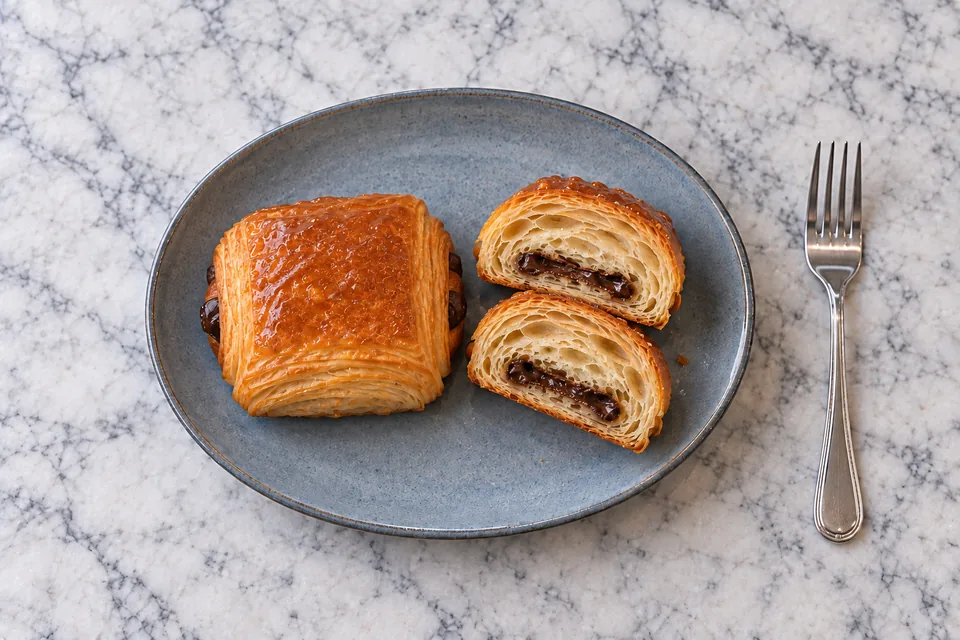
One whole chocolate roll and two matching halves show flaky pastry and a dark chocolate centre.
Makes
12 pastries
Heat
200°C conventional
Baking time
22–25 min per tray; 44–50 min total
Cuisine / style
France

200°C conventional; bake six rolls at a time and keep the second ready tray refrigerated.

Explore variations · 1 →Jump to ingredients & method ↓
View

Chocolate-orange croissant rolls

Makes
12 pastries
Heat
200°C conventional
Baking time
22–25 min per tray; 44–50 min total
Cuisine / style
France

200°C conventional; bake six rolls at a time and keep the second ready tray refrigerated.

France · Laminated butter croissants

Chocolate-orange croissant rolls

Rectangular laminated pastries filled with dark chocolate and flavoured with orange zest. Plan for two long refrigerator rests before shaping.

Method

  1. 01 · Mix the dough and leave for one hour

    68–75 min

    Use: Plain flour; Water; Granulated sugar; Fine salt; Instant dried yeast; Unsalted butter for the dough; Finely grated orange zest; Oil for the bowl

    Mix the dough flour, water, sugar, salt, yeast, 38 g softened butter and orange zest until combined. Knead gently for 3–5 minutes, just until smooth. Put in a bowl lightly coated with the separate oil, cover and leave at 22–24°C for 60 minutes.

    Ready when: The dough is cohesive and puffy; it need not reach full gluten development.
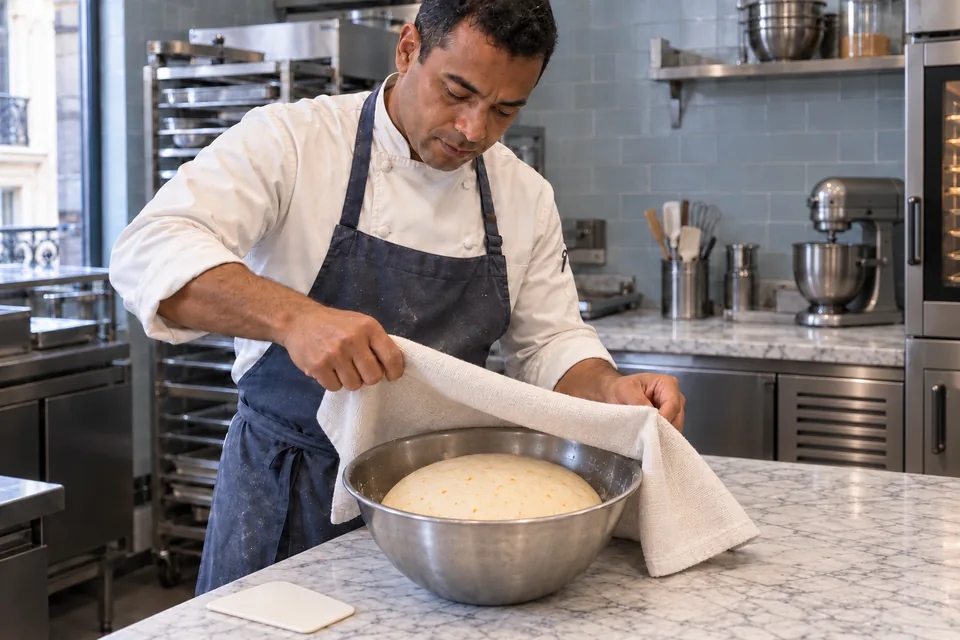
    The pastry chef lifts a cover from one modest orange-zest dough batch in a steel bowl.
    01 Chocolate-orange croissant rollsMix the orange-zest dough and leave it covered until puffy.
  2. 02 · Chill the dough for the first 8–12 hours

    480–720 min

    Use:

    Gently flatten the dough into a thick square, wrap and refrigerate at 4°C or below for 8–12 hours.

    Ready when: The dough is cold throughout and firm enough to roll.
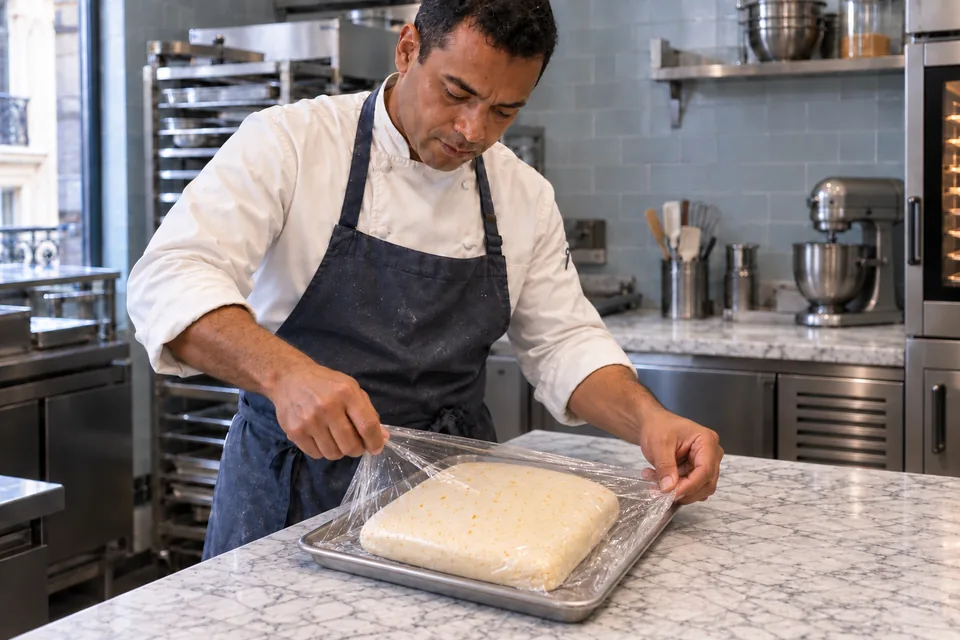
    One thick unlaminated dough square is enclosed in clear wrap.
    02 Chocolate-orange croissant rollsFlatten, wrap and chill the dough square.
  3. 03 · Enclose butter; make one letter and one book fold

    30–45 min

    Use: Unsalted butter for layering; Flour for rolling

    Pound the 227 g layering butter between sheets of baking paper into a 16 cm square. It should bend without cracking or greasiness. Lightly flour the worktop and roll the dough to a 24 cm square. Set the butter diagonally in the centre, fold the dough corners over it and seal. Roll to 20×40 cm, brush off flour and fold the short ends in thirds like a letter. Turn 90 degrees and roll to 20×40 cm again. Bring both short edges to the middle without overlapping, then close the packet in half like a book. Chill briefly if butter starts to soften or crack.

    Ready when: One butter block remains enclosed; the packet has exactly one letter fold and one book fold.
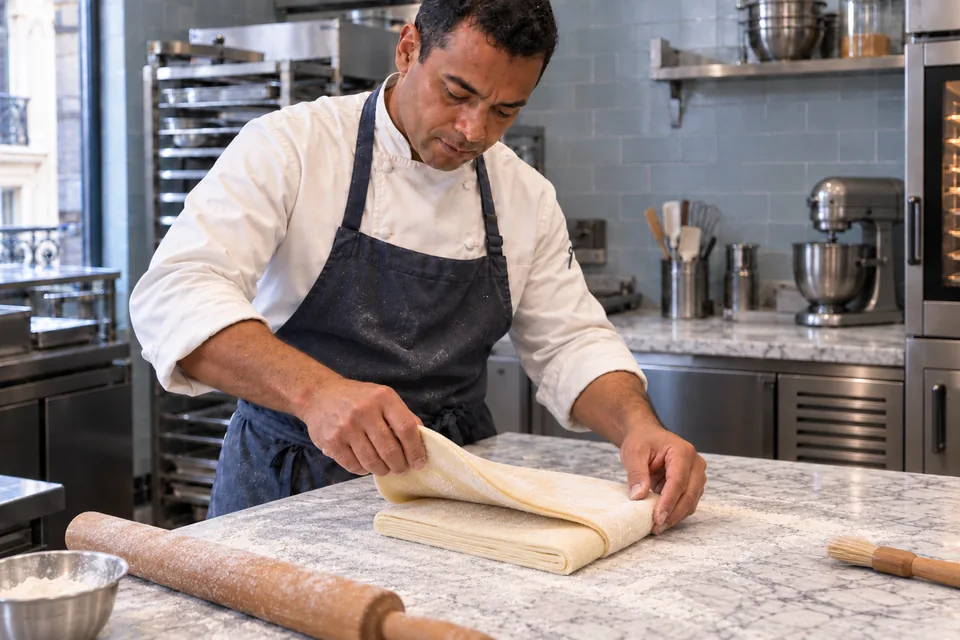
    The chef closes the book fold of one cool laminated packet.
    03 Chocolate-orange croissant rollsEnclose the butter, then complete one letter fold and one book fold.
  4. 04 · Chill the folded packet for another 8–12 hours

    480–720 min

    Use:

    Wrap the packet and refrigerate at 4°C or below for another 8–12 hours.

    Ready when: The layers are cold and the dough is relaxed before final rolling.
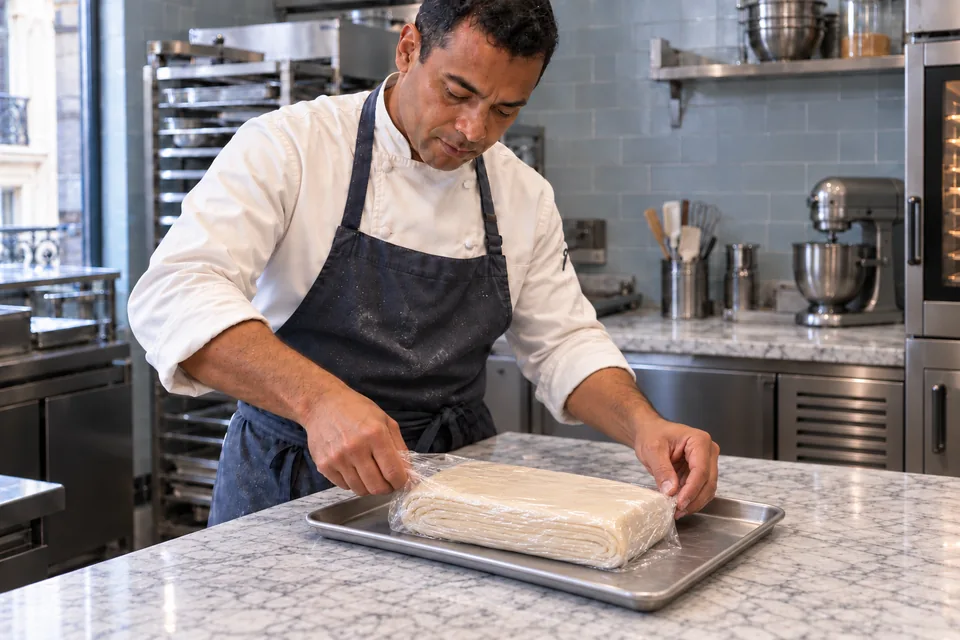
    One cool folded laminated packet is wrapped on a small steel tray.
    04 Chocolate-orange croissant rollsWrap the laminated packet and chill again.
  5. 05 · Cut twelve rectangles and enclose chocolate

    25–30 min

    Use: Flour for rolling; Dark chocolate

    Line two 30×40 cm trays. Roll the cold dough to 32×45 cm, about 5–6 mm thick, using light flour dustings. Cut into four columns by three rows to make twelve 8×15 cm rectangles. Divide the chocolate into twelve 15 g portions. Place a portion in a narrow strip near one 8 cm edge of each rectangle, leaving 1 cm clear at both ends. Roll toward the opposite short edge and place seam-side down, six per tray.

    Ready when: There are 12 neat rectangular rolls, each with an equal chocolate filling and a secured bottom seam.
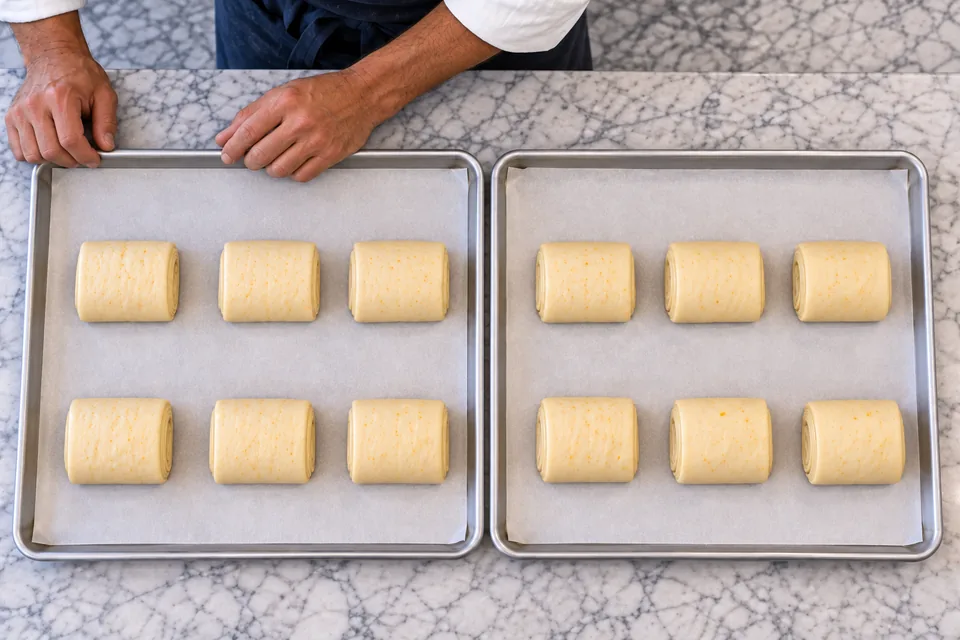
    Twelve small rectangular chocolate rolls are arranged six per lined tray.
    05 Chocolate-orange croissant rollsCut twelve rectangles, fill equally with chocolate and roll seam-side down.
  6. 06 · Proof; hold the second ready tray cold

    90–150 min

    Use:

    Cover loosely and leave at 20–24°C for 90–150 minutes, away from direct heat. Heat the oven to 200°C conventional during the final 20 minutes. When both trays are ready, refrigerate the second while the first bakes.

    Ready when: The rolls are visibly puffy and tremble slightly when the tray is nudged; butter is not leaking.
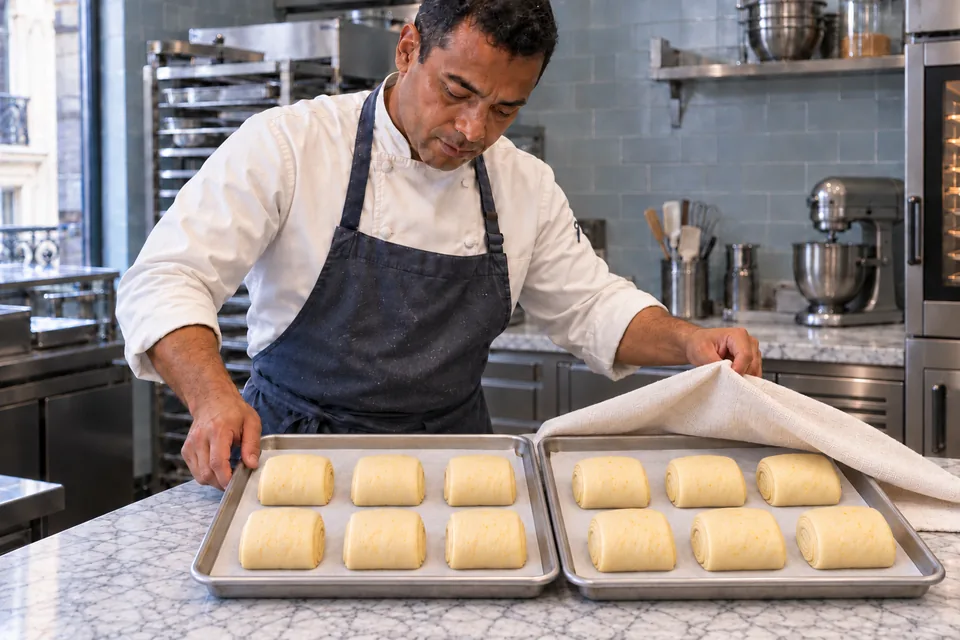
    The chef checks two trays of puffy rectangular rolls before sequential baking.
    06 Chocolate-orange croissant rollsProof until puffy and hold the second tray cool while the first bakes.
  7. 07 · Brush and bake the two trays sequentially

    44–50 min

    Use: Beaten egg for brushing; Water for the egg wash

    Mix the wash egg and water. Brush the tops lightly, keeping wash off the cut layered edges. Bake the first tray for 22–25 minutes, then bake the second for the same range. Lift a roll carefully to check its base.

    Ready when: The tops and bases are golden brown and the visible pastry layers are dry and separated, with no pale dough seam.
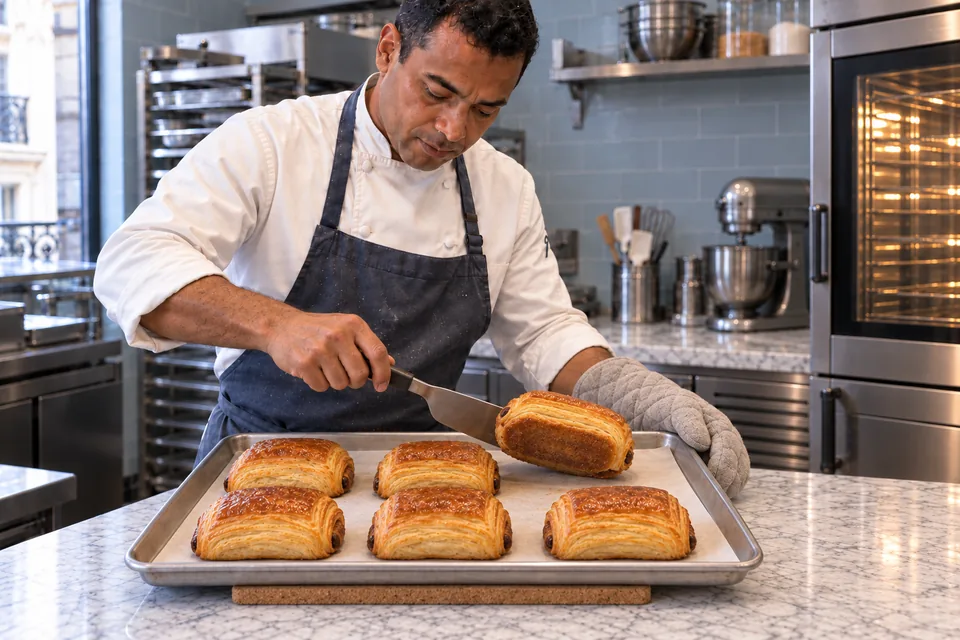
    One of six golden rolls is lifted to check its baked base; the second tray is held cool off camera.
    07 Chocolate-orange croissant rollsBake each tray until the layers and bases are golden.
  8. 08 · Glaze lightly and cool

    33–35 min

    Use: Smooth apricot jam; Water for the glaze

    Warm the apricot jam with its water until smooth. Brush a thin layer over the warm rolls and transfer to racks. Cool for at least 30 minutes before serving.

    Ready when: The glaze is thin and clear; the layers have set and the chocolate is no longer scalding.
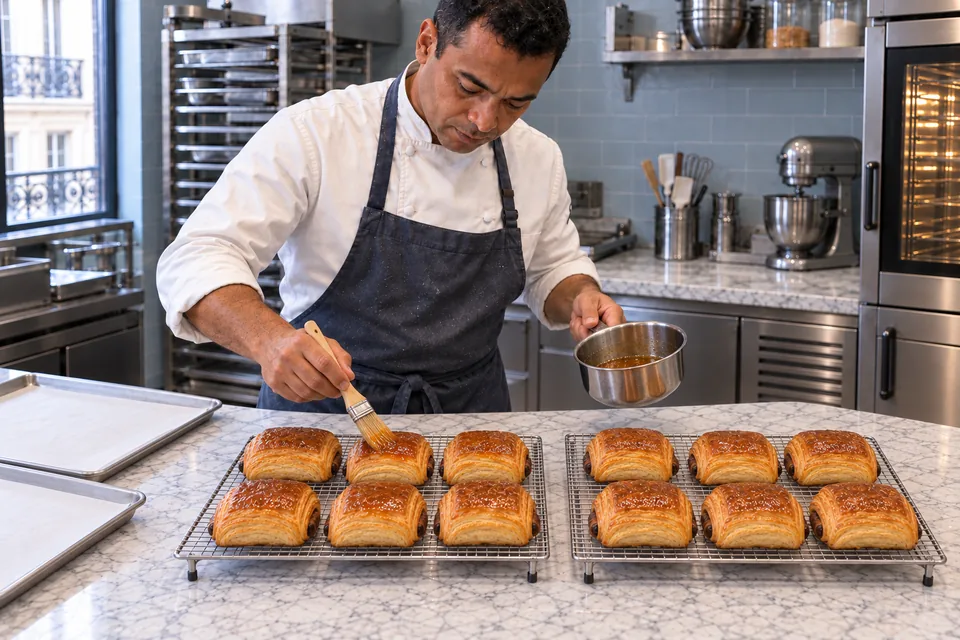
    Twelve golden rectangular pastries are lightly glazed on two cooling racks.
    08 Chocolate-orange croissant rollsBrush a thin apricot glaze over the warm rolls, then cool.

What to look for

StageLook / feel forNeeds attention
Mix the dough and leave for one hourThe dough is cohesive and puffy; it need not reach full gluten development.
Chill the dough for the first 8–12 hoursThe dough is cold throughout and firm enough to roll.
Enclose butter; make one letter and one book foldOne butter block remains enclosed; the packet has exactly one letter fold and one book fold.
Chill the folded packet for another 8–12 hoursThe layers are cold and the dough is relaxed before final rolling.
Cut twelve rectangles and enclose chocolateThere are 12 neat rectangular rolls, each with an equal chocolate filling and a secured bottom seam.
Proof; hold the second ready tray coldThe rolls are visibly puffy and tremble slightly when the tray is nudged; butter is not leaking.
Brush and bake the two trays sequentiallyThe tops and bases are golden brown and the visible pastry layers are dry and separated, with no pale dough seam.
Glaze lightly and coolThe glaze is thin and clear; the layers have set and the chocolate is no longer scalding.

Troubleshooting

If you see thisLikely causeWhat to do nowNext time
Butter squeezes out during rolling.The butter is too warm or the packet is being forced.Stop, wrap and chill until cool and pliable again.Keep butter and dough at similar firmness and roll gradually.
The baked centres have a dense pale seam.The rolls were underproofed or baking stopped too early.Return pale pastries to the oven until their bases and seams are cooked.Wait for the puffy proof cue and inspect a base near the end of baking.

Storage: Keep covered in a cool dry place for up to 2 days, or freeze for up to 1 month. Reheat briefly in a moderate oven to crisp the layers.; Contains: wheat, milk, egg, soy or nuts if present in the chocolate.; This Nepedia version has not been kitchen-tested.

Ingredient choices & substitutions

No brand is specified.

Match the ingredient’s function and weight. See the flour, gluten, yeast and salt guide.

Other approaches to this recipe
Cook / recipeUseWhat differs

The working ingredients and method form one recipe. Different formulas are compared without averaging their quantities or rise schedules.

Nepedia
One whole chocolate roll and two matching halves show flaky pastry and a dark chocolate centre.
Chocolate-orange croissant rolls, cooled and lightly glazed.

Recipe

Chocolate-orange croissant rolls

Rectangular laminated pastries filled with dark chocolate and flavoured with orange zest. Plan for two long refrigerator rests before shaping.

How do I make it?

  1. Mix the dough and leave for one hour

    68–75 min

    Mix the dough flour, water, sugar, salt, yeast, 38 g softened butter and orange zest until combined. Knead gently for 3–5 minutes, just until smooth. Put in a bowl lightly coated with the separate oil, cover and leave at 22–24°C for 60 minutes.

    The pastry chef lifts a cover from one modest orange-zest dough batch in a steel bowl.
    Mix the orange-zest dough and leave it covered until puffy.

    Ready when: The dough is cohesive and puffy; it need not reach full gluten development.

  2. Chill the dough for the first 8–12 hours

    480–720 min

    Gently flatten the dough into a thick square, wrap and refrigerate at 4°C or below for 8–12 hours.

    One thick unlaminated dough square is enclosed in clear wrap.
    Flatten, wrap and chill the dough square.

    Ready when: The dough is cold throughout and firm enough to roll.

  3. Enclose butter; make one letter and one book fold

    30–45 min

    Pound the 227 g layering butter between sheets of baking paper into a 16 cm square. It should bend without cracking or greasiness. Lightly flour the worktop and roll the dough to a 24 cm square. Set the butter diagonally in the centre, fold the dough corners over it and seal. Roll to 20×40 cm, brush off flour and fold the short ends in thirds like a letter. Turn 90 degrees and roll to 20×40 cm again. Bring both short edges to the middle without overlapping, then close the packet in half like a book. Chill briefly if butter starts to soften or crack.

    The chef closes the book fold of one cool laminated packet.
    Enclose the butter, then complete one letter fold and one book fold.

    Ready when: One butter block remains enclosed; the packet has exactly one letter fold and one book fold.

  4. Chill the folded packet for another 8–12 hours

    480–720 min

    Wrap the packet and refrigerate at 4°C or below for another 8–12 hours.

    One cool folded laminated packet is wrapped on a small steel tray.
    Wrap the laminated packet and chill again.

    Ready when: The layers are cold and the dough is relaxed before final rolling.

  5. Cut twelve rectangles and enclose chocolate

    25–30 min

    Line two 30×40 cm trays. Roll the cold dough to 32×45 cm, about 5–6 mm thick, using light flour dustings. Cut into four columns by three rows to make twelve 8×15 cm rectangles. Divide the chocolate into twelve 15 g portions. Place a portion in a narrow strip near one 8 cm edge of each rectangle, leaving 1 cm clear at both ends. Roll toward the opposite short edge and place seam-side down, six per tray.

    Twelve small rectangular chocolate rolls are arranged six per lined tray.
    Cut twelve rectangles, fill equally with chocolate and roll seam-side down.

    Ready when: There are 12 neat rectangular rolls, each with an equal chocolate filling and a secured bottom seam.

  6. Proof; hold the second ready tray cold

    90–150 min

    Cover loosely and leave at 20–24°C for 90–150 minutes, away from direct heat. Heat the oven to 200°C conventional during the final 20 minutes. When both trays are ready, refrigerate the second while the first bakes.

    The chef checks two trays of puffy rectangular rolls before sequential baking.
    Proof until puffy and hold the second tray cool while the first bakes.

    Ready when: The rolls are visibly puffy and tremble slightly when the tray is nudged; butter is not leaking.

  7. Brush and bake the two trays sequentially

    44–50 min

    Mix the wash egg and water. Brush the tops lightly, keeping wash off the cut layered edges. Bake the first tray for 22–25 minutes, then bake the second for the same range. Lift a roll carefully to check its base.

    One of six golden rolls is lifted to check its baked base; the second tray is held cool off camera.
    Bake each tray until the layers and bases are golden.

    Ready when: The tops and bases are golden brown and the visible pastry layers are dry and separated, with no pale dough seam.

  8. Glaze lightly and cool

    33–35 min

    Warm the apricot jam with its water until smooth. Brush a thin layer over the warm rolls and transfer to racks. Cool for at least 30 minutes before serving.

    Twelve golden rectangular pastries are lightly glazed on two cooling racks.
    Brush a thin apricot glaze over the warm rolls, then cool.

    Ready when: The glaze is thin and clear; the layers have set and the chocolate is no longer scalding.

What can go wrong, and how can I fix it?

What you noticeLikely causeWhat to do
Butter squeezes out during rolling.The butter is too warm or the packet is being forced.Stop, wrap and chill until cool and pliable again. Keep butter and dough at similar firmness and roll gradually.
The baked centres have a dense pale seam.The rolls were underproofed or baking stopped too early.Return pale pastries to the oven until their bases and seams are cooked. Wait for the puffy proof cue and inspect a base near the end of baking.
Useful recipe notes

Storage: Keep covered in a cool dry place for up to 2 days, or freeze for up to 1 month. Reheat briefly in a moderate oven to crisp the layers.

Contains: wheat, milk, egg, soy or nuts if present in the chocolate.

This Nepedia version has not been kitchen-tested.

See the detailed method and ratios in , or follow ingredients through the .

Ingredient proportions & recipe details

Chocolate-orange croissant rolls at a glance

Makes
12 pastries
Heat
200°C conventional
Baking time
22–25 min per tray; 44–50 min total
Cuisine / style
France
Leavening
Yeast
How do the ingredient proportions compare?

Percentages compare each listed weight with the combined flour weight (100%). These are ingredient ratios, not dough hydration; milk, eggs and fillings contain other ingredients as well as water.

Formula componentGramsFlour = 100%
Plain flour360 g100%
Water227 g63.1%
Granulated sugar33 g9.2%
Fine salt7 g1.9%
Instant dried yeast5 g1.4%
Unsalted butter for the dough38 g10.6%
Finely grated orange zest4 g1.1%
Unsalted butter for layering227 g63.1%