Nepedia

Cheese straws

Crisp, flaky pastry twists with Parmesan and a little paprika. Keep the pastry cold as you work so its layers can lift in the oven.

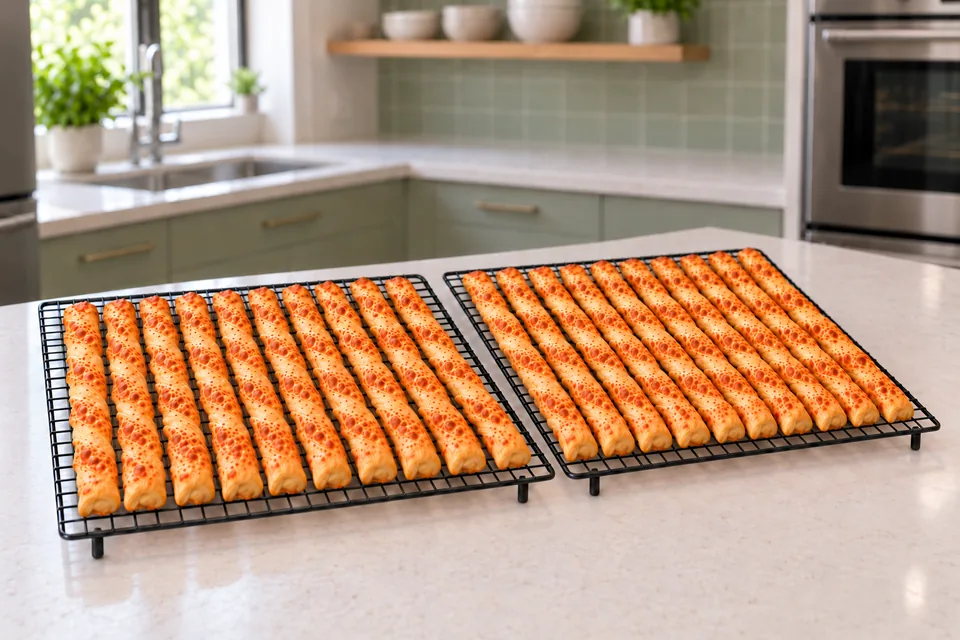
Twenty long golden Parmesan twists on two wire racks.
Makes
20 long twists
Heat
200°C conventional
Baking time
18–25 min per tray; 36–50 min for two trays
Cuisine / style
International
View

Parmesan puff-pastry twists

Makes
20 long twists
Heat
200°C conventional
Baking time
18–25 min per tray; 36–50 min for two trays
Cuisine / style
International
International · Cheese straws

Parmesan puff-pastry twists

Crisp, flaky pastry twists with Parmesan and a little paprika. Keep the pastry cold as you work so its layers can lift in the oven.

Method

  1. 01 · Roll the cold pastry

    5–8 min

    Use: All-butter puff pastry; Plain flour for rolling

    Line two 30×40 cm baking trays with baking paper. Lightly flour the worktop and roll the cold pastry into a 30×40 cm rectangle about 3 mm thick. Keep the corners as square as practical.

    Ready when: The pastry is cool and flexible, with straight edges and no greasy patches.
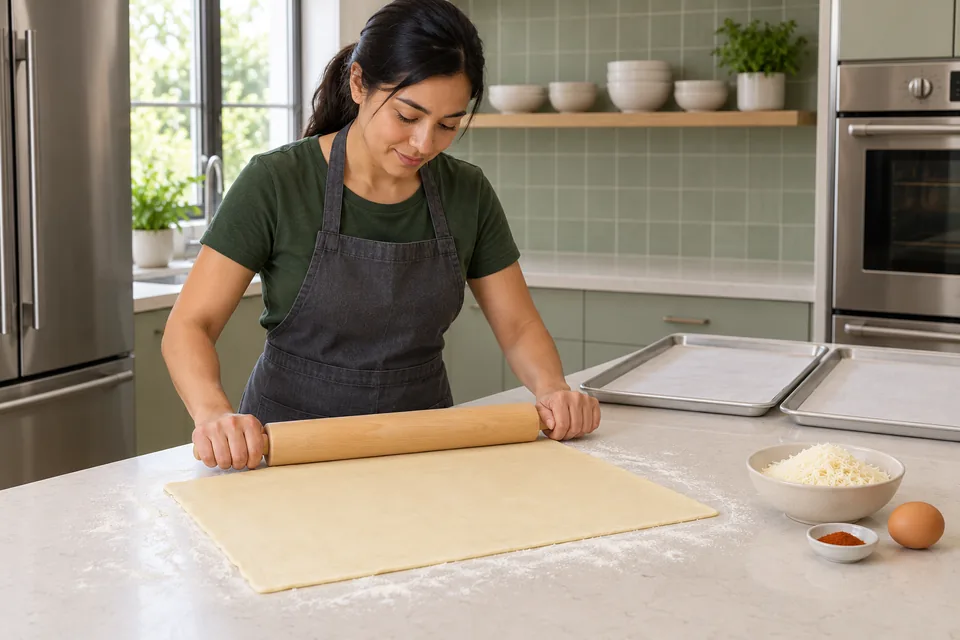
    Cook rolling a thin rectangular sheet of puff pastry beside two lined baking trays.
    01 Roll the cold pastryRoll the cold pastry into a thin rectangle.
  2. 02 · Add the egg wash, cheese and paprika

    3–5 min

    Use: Medium egg; Parmesan; Sweet paprika

    Beat the egg in a small bowl. Brush the pastry with a thin, even coating, then discard any unused egg. Mix the Parmesan and paprika and scatter them across the sheet. Press lightly with the rolling pin so the topping sticks without crushing the layers.

    Ready when: Cheese covers the surface evenly; there are no pools of egg or thick paprika clumps.
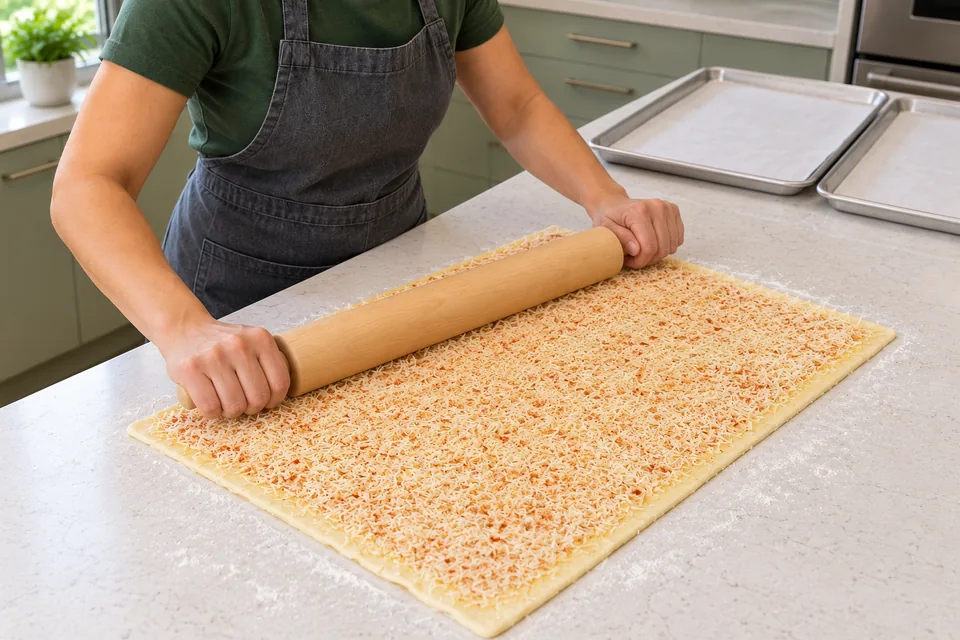
    A rolling pin lightly pressing grated Parmesan and a little paprika onto a pastry sheet.
    02 Add the Parmesan toppingCoat with a thin wash, then lightly press in the cheese topping.
  3. 03 · Cut and twist twenty strips

    8–12 min

    Use: All-butter puff pastry; Parmesan; Sweet paprika

    Cut the 40 cm edge at 2 cm intervals to make 20 strips, each about 30 cm long. Lift one strip at a time and twist its ends in opposite directions three or four times. Arrange ten twists on each tray, leaving space between them.

    Ready when: The strips form loose spirals about 25–30 cm long; their layers remain visible.
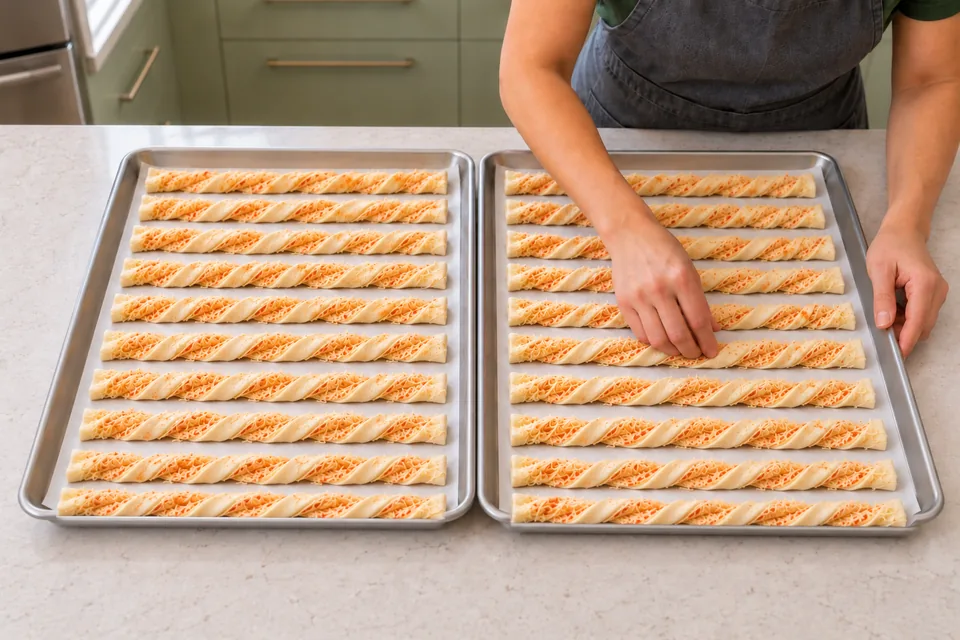
    Twenty raw pastry twists arranged in two parchment-lined trays, ten in each.
    03 Cut and twist twenty stripsCut and twist twenty strips, ten for each tray.
  4. 04 · Chill the twists and heat the oven

    30 min

    Use:

    Refrigerate both trays for 30 minutes, until the twists are firm. Heat the oven to 200°C conventional during the last 20 minutes, with a shelf in the middle.

    Ready when: The pastry holds its spirals when the tray moves and feels cold and firm to a light touch.
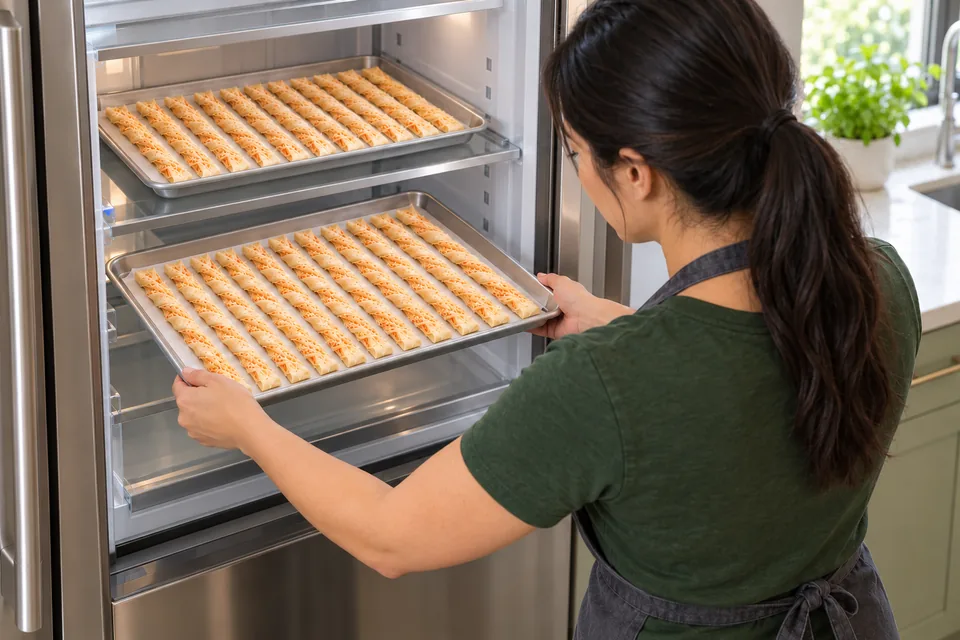
    Cook placing a tray of raw pastry twists into a refrigerator with the second tray inside.
    04 Chill both traysChill both trays until the twists hold their spirals.
  5. 05 · Bake one tray at a time

    36–50 min

    Use:

    Bake one tray at a time for 18–25 minutes. Keep the second tray refrigerated until its turn. Turn the baking tray around if it colours unevenly.

    Ready when: The twists have expanded layers, golden-brown surfaces and dry centres with no grey, raw-looking pastry seam.
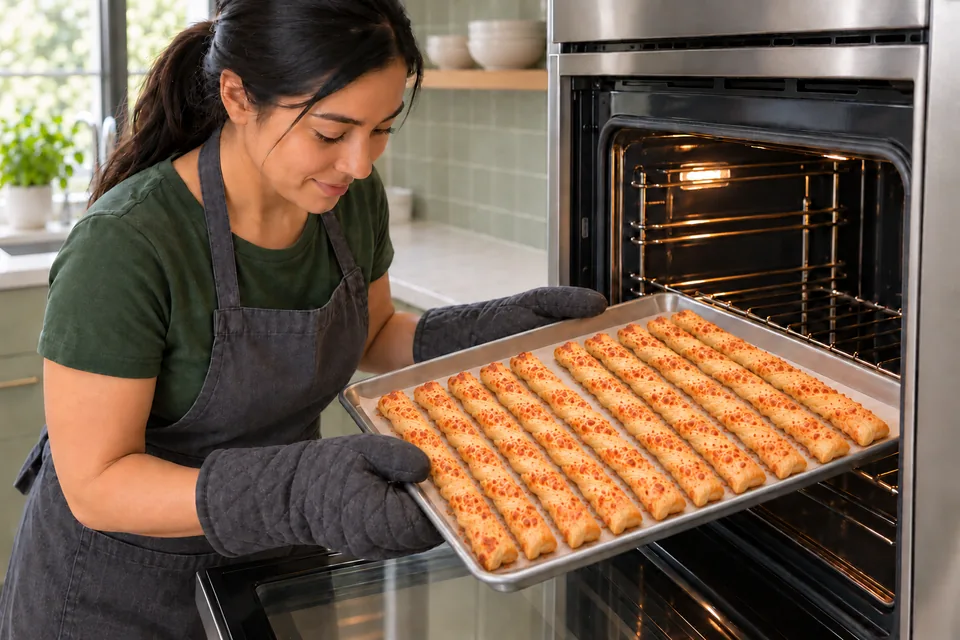
    Cook drawing a tray of ten golden puff-pastry twists from the oven with gloves.
    05 Bake one tray at a timeBake one tray at a time until puffed and golden.
  6. 06 · Cool until crisp

    20 min

    Use:

    Leave the twists on their trays for 5 minutes, then move them carefully to a rack. Cool for at least 15 minutes before serving or packing.

    Ready when: The layers are crisp and the twists lift without bending or shedding wet pastry.
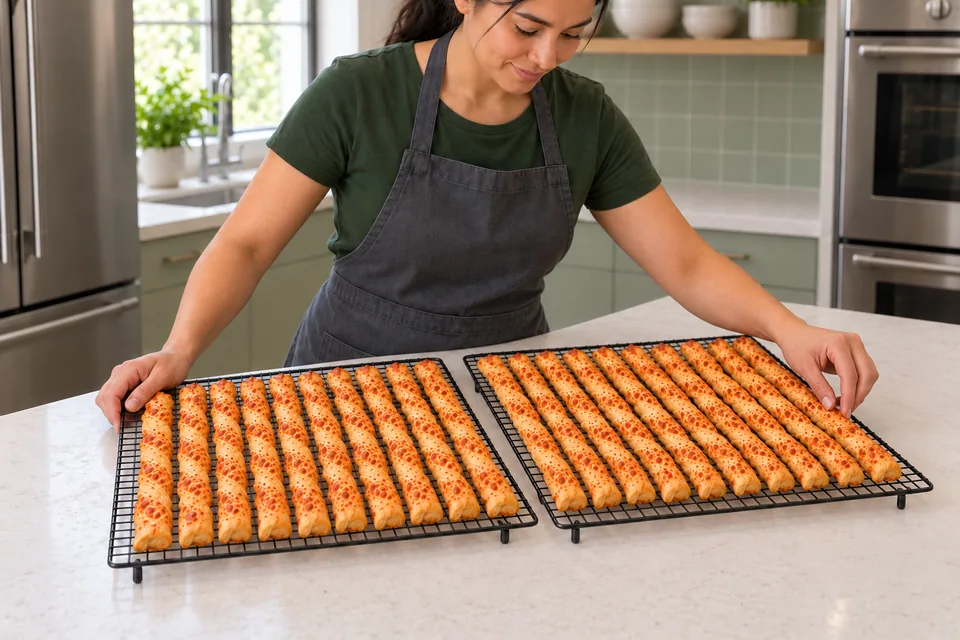
    Twenty golden pastry twists on two cooling racks, ten in each group.
    06 Cool the twists on racksLet the twists cool on racks before serving.

What to look for

StageLook / feel forNeeds attention
Roll the cold pastryThe pastry is cool and flexible, with straight edges and no greasy patches.
Add the egg wash, cheese and paprikaCheese covers the surface evenly; there are no pools of egg or thick paprika clumps.
Cut and twist twenty stripsThe strips form loose spirals about 25–30 cm long; their layers remain visible.
Chill the twists and heat the ovenThe pastry holds its spirals when the tray moves and feels cold and firm to a light touch.
Bake one tray at a timeThe twists have expanded layers, golden-brown surfaces and dry centres with no grey, raw-looking pastry seam.
Cool until crispThe layers are crisp and the twists lift without bending or shedding wet pastry.

Troubleshooting

If you see thisLikely causeWhat to do nowNext time
The pastry becomes greasy while twisting.Its butter has warmed too much.Chill the sheet or partly shaped twists for 10–15 minutes before continuing.Work with cold pastry and keep the room cool.
The surface browns but the middle stays soft.The pastry was too thick or the oven runs hot.Lower the oven to 180°C and bake a little longer until the centres look dry.Roll evenly to about 3 mm and avoid piling the cheese in thick patches.
The twists uncurl in the oven.They were warm or tightly stretched when shaped.Continue baking; the flavour is unaffected.Use loose twists and chill until firm.

Storage: Cool completely and keep in an airtight container at room temperature for up to 2 days. Refresh at 160°C conventional for 5–8 minutes, then cool briefly. Prepared pastry must be fully thawed before starting; allow extra time if it is frozen.; Contains: wheat, milk, egg.; This Nepedia version has not been kitchen-tested.

Ingredient choices & substitutions

No brand is specified.

Match the ingredient’s function and weight. See the flour, gluten, yeast and salt guide.

Other approaches to this recipe
Cook / recipeUseWhat differs

The working ingredients and method form one recipe. Different formulas are compared without averaging their quantities or rise schedules.

Nepedia

Recipe

Parmesan puff-pastry twists

Crisp, flaky pastry twists with Parmesan and a little paprika. Keep the pastry cold as you work so its layers can lift in the oven.

How do I make it?

  1. Roll the cold pastry

    5–8 min

    Line two 30×40 cm baking trays with baking paper. Lightly flour the worktop and roll the cold pastry into a 30×40 cm rectangle about 3 mm thick. Keep the corners as square as practical.

    Cook rolling a thin rectangular sheet of puff pastry beside two lined baking trays.
    Roll the cold pastry into a thin rectangle.

    Ready when: The pastry is cool and flexible, with straight edges and no greasy patches.

  2. Add the egg wash, cheese and paprika

    3–5 min

    Beat the egg in a small bowl. Brush the pastry with a thin, even coating, then discard any unused egg. Mix the Parmesan and paprika and scatter them across the sheet. Press lightly with the rolling pin so the topping sticks without crushing the layers.

    A rolling pin lightly pressing grated Parmesan and a little paprika onto a pastry sheet.
    Coat with a thin wash, then lightly press in the cheese topping.

    Ready when: Cheese covers the surface evenly; there are no pools of egg or thick paprika clumps.

  3. Cut and twist twenty strips

    8–12 min

    Cut the 40 cm edge at 2 cm intervals to make 20 strips, each about 30 cm long. Lift one strip at a time and twist its ends in opposite directions three or four times. Arrange ten twists on each tray, leaving space between them.

    Twenty raw pastry twists arranged in two parchment-lined trays, ten in each.
    Cut and twist twenty strips, ten for each tray.

    Ready when: The strips form loose spirals about 25–30 cm long; their layers remain visible.

  4. Chill the twists and heat the oven

    30 min

    Refrigerate both trays for 30 minutes, until the twists are firm. Heat the oven to 200°C conventional during the last 20 minutes, with a shelf in the middle.

    Cook placing a tray of raw pastry twists into a refrigerator with the second tray inside.
    Chill both trays until the twists hold their spirals.

    Ready when: The pastry holds its spirals when the tray moves and feels cold and firm to a light touch.

  5. Bake one tray at a time

    36–50 min

    Bake one tray at a time for 18–25 minutes. Keep the second tray refrigerated until its turn. Turn the baking tray around if it colours unevenly.

    Cook drawing a tray of ten golden puff-pastry twists from the oven with gloves.
    Bake one tray at a time until puffed and golden.

    Ready when: The twists have expanded layers, golden-brown surfaces and dry centres with no grey, raw-looking pastry seam.

  6. Cool until crisp

    20 min

    Leave the twists on their trays for 5 minutes, then move them carefully to a rack. Cool for at least 15 minutes before serving or packing.

    Twenty golden pastry twists on two cooling racks, ten in each group.
    Let the twists cool on racks before serving.

    Ready when: The layers are crisp and the twists lift without bending or shedding wet pastry.

What can go wrong, and how can I fix it?

What you noticeLikely causeWhat to do
The pastry becomes greasy while twisting.Its butter has warmed too much.Chill the sheet or partly shaped twists for 10–15 minutes before continuing. Work with cold pastry and keep the room cool.
The surface browns but the middle stays soft.The pastry was too thick or the oven runs hot.Lower the oven to 180°C and bake a little longer until the centres look dry. Roll evenly to about 3 mm and avoid piling the cheese in thick patches.
The twists uncurl in the oven.They were warm or tightly stretched when shaped.Continue baking; the flavour is unaffected. Use loose twists and chill until firm.
Useful recipe notes

Storage: Cool completely and keep in an airtight container at room temperature for up to 2 days. Refresh at 160°C conventional for 5–8 minutes, then cool briefly. Prepared pastry must be fully thawed before starting; allow extra time if it is frozen.

Contains: wheat, milk, egg.

This Nepedia version has not been kitchen-tested.

See the detailed method and ratios in , or follow ingredients through the .

Ingredient proportions & recipe details

Parmesan puff-pastry twists at a glance

Makes
20 long twists
Heat
200°C conventional
Baking time
18–25 min per tray; 36–50 min for two trays
Cuisine / style
International