Nepedia

Basil and olive focaccia

A tray focaccia with basil and black olives folded into the dough, plus a few olives on its dimpled surface.

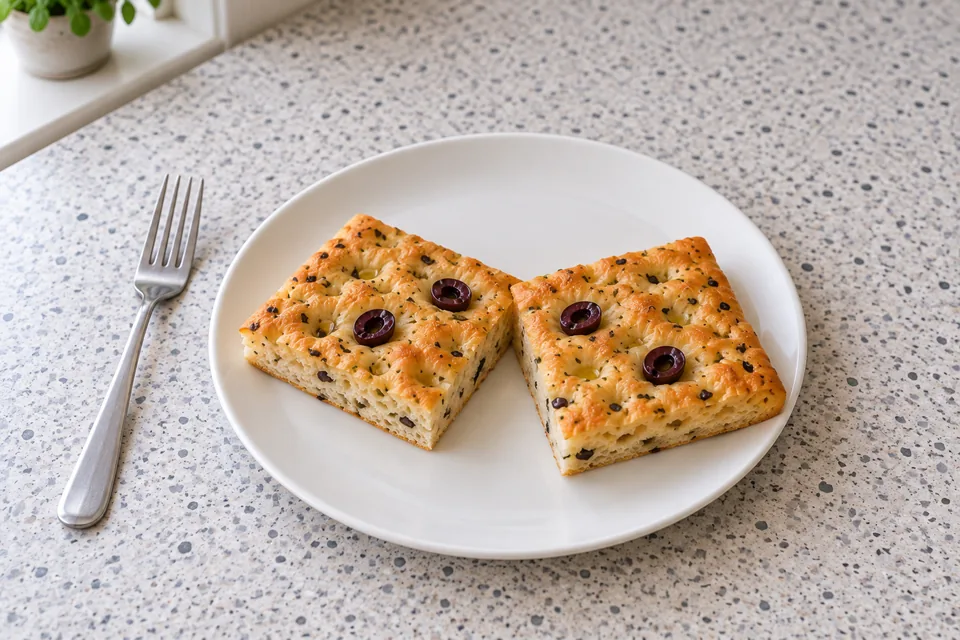
Two shallow squares of olive-and-basil focaccia on a plain white plate beside a fork.
Makes
1 tray bread, 12 pieces
Heat
230°C conventional
Baking time
25–30 min
Cuisine / style
Italy

230°C conventional.

View

Basil and olive focaccia

Makes
1 tray bread, 12 pieces
Heat
230°C conventional
Baking time
25–30 min
Cuisine / style
Italy

230°C conventional.

Italy · Focaccia

Basil and olive focaccia

A tray focaccia with basil and black olives folded into the dough, plus a few olives on its dimpled surface.

Method

  1. 01 · Mix the wet focaccia dough

    7–10 min

    Use: Strong white bread flour; Water for the dough; Extra-virgin olive oil for the dough; Fine salt; Instant dried yeast

    Combine the flour, dough water, dough oil, salt and instant yeast in a stand-mixer bowl. Mix with the paddle on low for 4 minutes, scrape the bowl, then mix for 2–3 minutes at medium-low or the machine’s recommended speed.

    Ready when: The dough is sticky but cohesive, and begins to stretch rather than break.
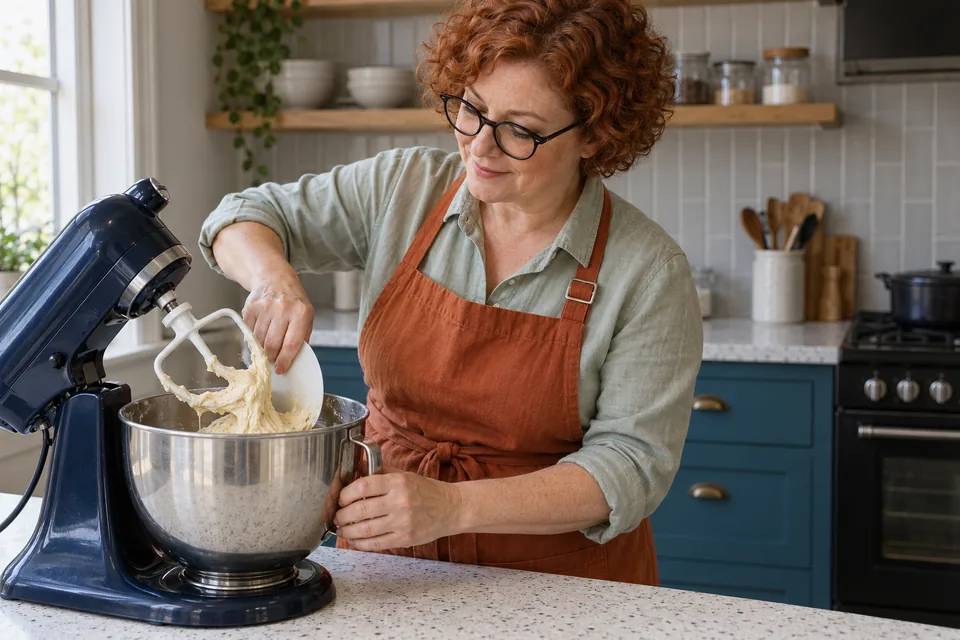
    The cook scrapes soft plain dough from a stand-mixer bowl beneath its raised paddle.
    01 MixMix a sticky, cohesive olive-oil dough.
  2. 02 · Fold during the bulk rise

    90 min

    Use: Olive oil for the bowl

    Coat a clean bowl with the separate bowl oil and add the dough. Cover and leave at 22–24°C for 90 minutes. At 30 and 60 minutes, lift one edge with oiled fingers and fold it over the centre; repeat around all four sides, then cover again. Prepare step 3 while the dough rests between folds.

    Ready when: The dough is aerated, elastic and noticeably expanded.
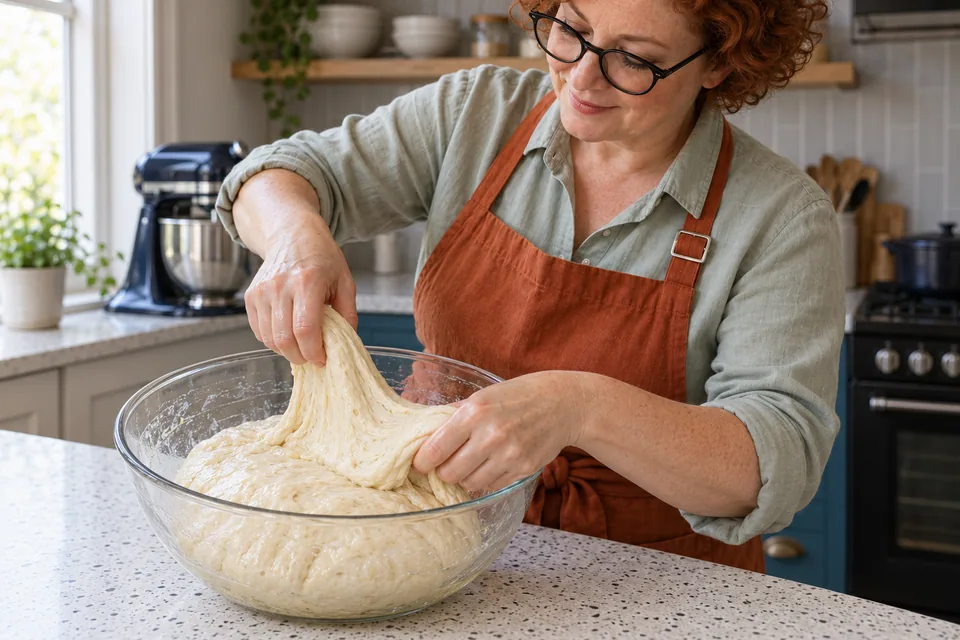
    Oiled fingers lift and fold a soft dough edge in a clear bowl.
    02 Fold RiseFold the dough as it rises.
  3. 03 · Prepare the separate additions

    5–10 min

    Use: Pitted black olives for the dough; Pitted black olives for the top; Fresh basil leaves; Water for the surface brine; Fine salt for the brine

    During the bulk rise, drain and dry both olive portions. Roughly chop the 100 g interior portion and halve the 25 g topping portion. Wash, dry and tear the basil. Dissolve the surface salt in its separate 40 g water.

    Ready when: Both olive portions are well drained and dry; the basil is clean and dry, and the surface salt is dissolved.
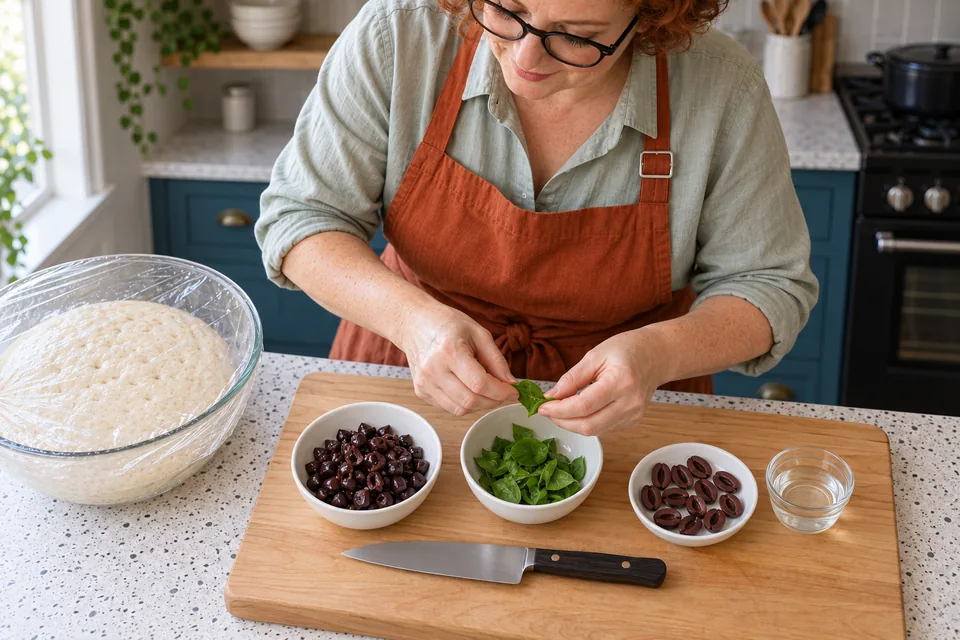
    Chopped olives, torn basil, halved topping olives and a small brine cup are prepared separately.
    03 Prepare ToppingKeep the interior olives and topping olives separate.
  4. 04 · Ease the dough into the oiled pan

    8–10 min

    Use: Olive oil for the tray; Pitted black olives for the dough; Fresh basil leaves

    Before transferring the dough, spread it gently in its bowl, scatter over the 100 g chopped olives and basil, then fold the dough around them until distributed. Line the base of a 30×40 cm rimmed tray with baking paper rated for 230°C, and brush the paper and tray sides with the pan oil. Transfer the dough with a scraper and ease it outward with oiled fingertips. If it springs back, cover for 5 minutes before continuing. Aim for an even shallow rectangle rather than forcing it into every corner.

    Ready when: The tray holds an evenly spread layer, with no torn thin patches.
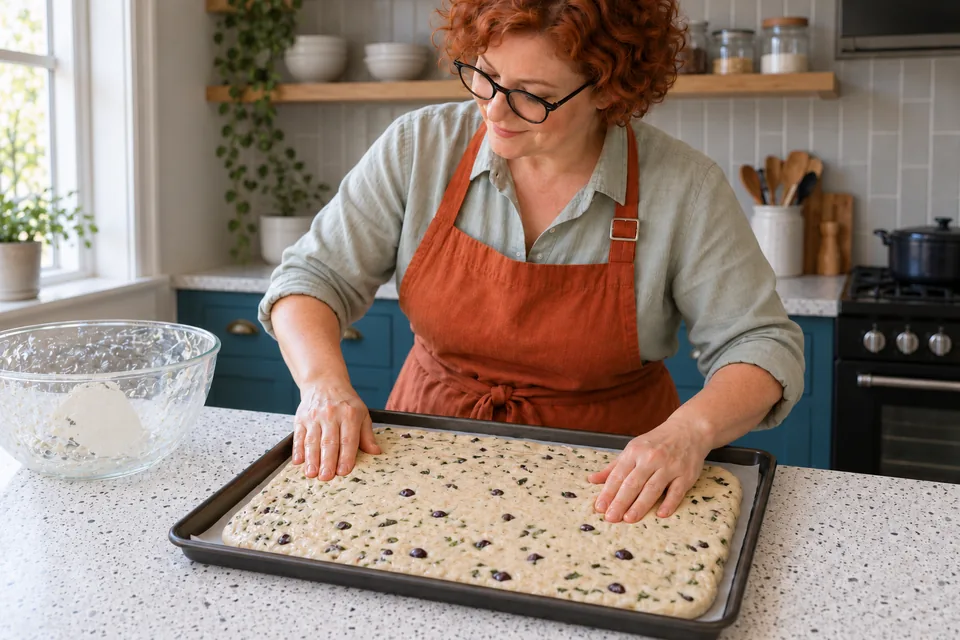
    The cook eases dough containing chopped olives and basil across a lined rectangular tray.
    04 PanSpread the olive-and-basil dough in one shallow tray.
  5. 05 · Proof the dough in the pan

    60–75 min

    Use:

    Cover loosely and leave at 22–24°C for 60–75 minutes. After 20 minutes, gently ease the relaxed dough farther toward the tray corners if needed, then cover again. During the final 20 minutes, heat the oven to 230°C conventional.

    Ready when: The dough is puffy and jiggles when the tray is nudged; it holds a light fingertip dent.
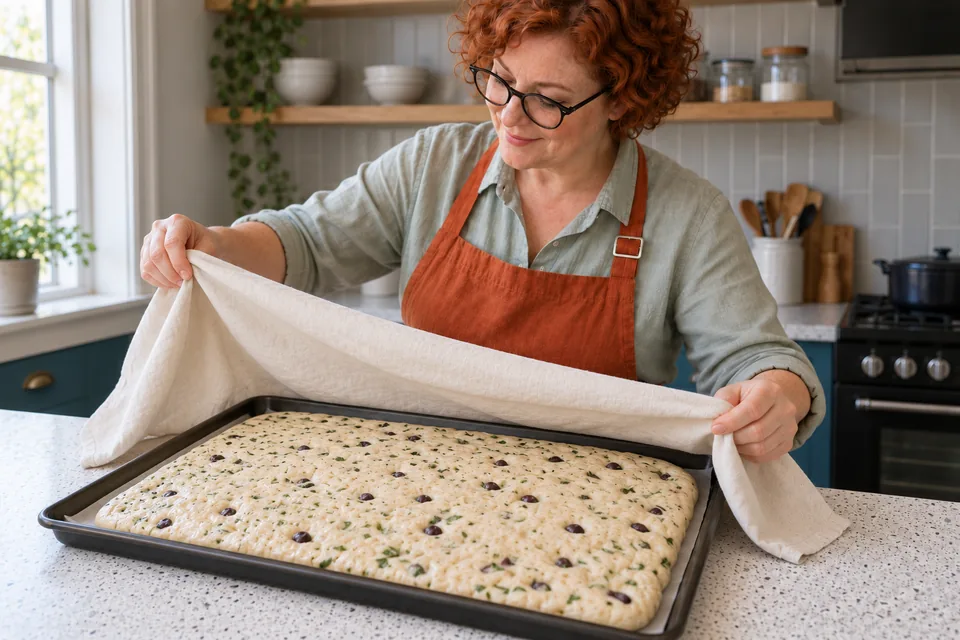
    The cook uncovers a puffy shallow rectangle of olive-and-basil dough.
    05 Pan ProofProof until puffy.
  6. 06 · Dimple and add the measured topping

    5–10 min

    Use: Extra-virgin olive oil for topping; Water for the surface brine; Fine salt for the brine; Pitted black olives for the top

    Drizzle the topping oil and light brine over the puffy dough. With oiled fingertips make deep dimples without tearing, then place the 25 g topping olives across the surface.

    Ready when: The surface is evenly dimpled and lightly topped, with no heavy mound or large pool of liquid.
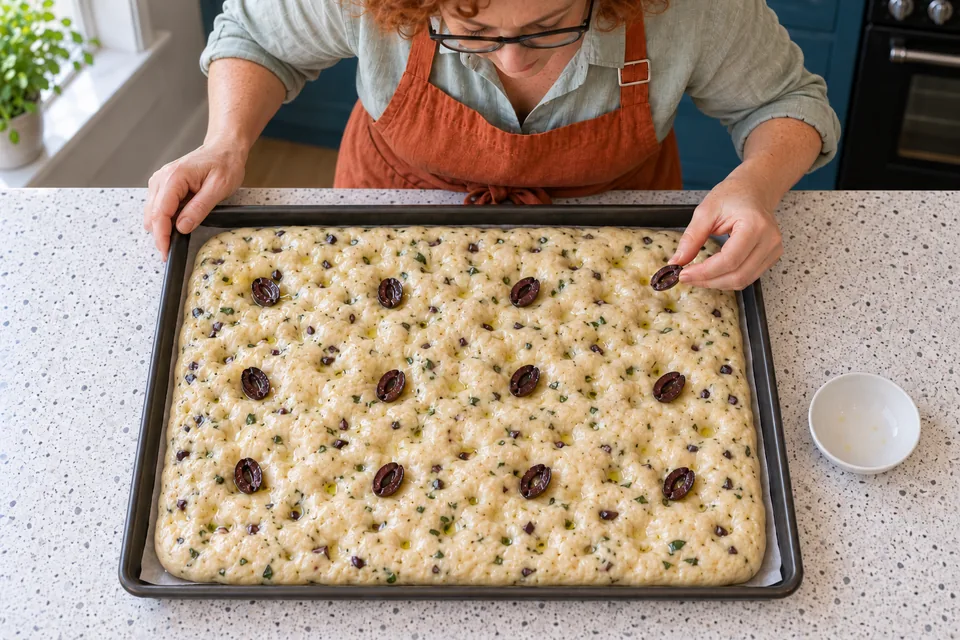
    A dimpled focaccia surface is lightly topped with halved black olives.
    06 Dimple TopDimple, add the light brine and top with olives.
  7. 07 · Bake until the base and topping are set

    25–30 min

    Use:

    Bake on the lower-middle rack for 15 minutes at 230°C conventional. Reduce to 220°C and continue for 10–15 minutes. If the top darkens before the middle cooks, cover loosely with foil. Lift an edge with a spatula to check the base, and probe a thick bread area away from the topping.

    Ready when: The underside is browned and firm, the bread is set with no wet dough, and its centre reaches about 96°C.
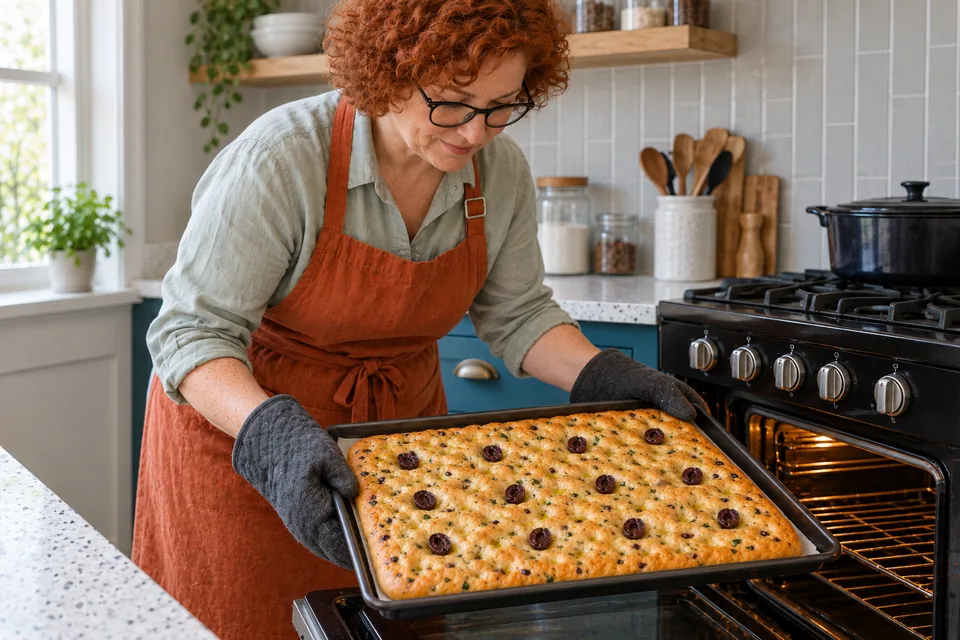
    The cook holds one tray of golden, olive-topped focaccia.
    07 BakeBake until golden with a firm browned base.
  8. 08 · Cool before slicing

    20 min

    Use:

    Leave on the tray for 10 minutes. Lift or slide the bread onto a rack, remove the baking paper, and rest for at least 10 minutes more before cutting into twelve pieces.

    Ready when: The base stays firm and the bread can be cut without crushing the crumb.
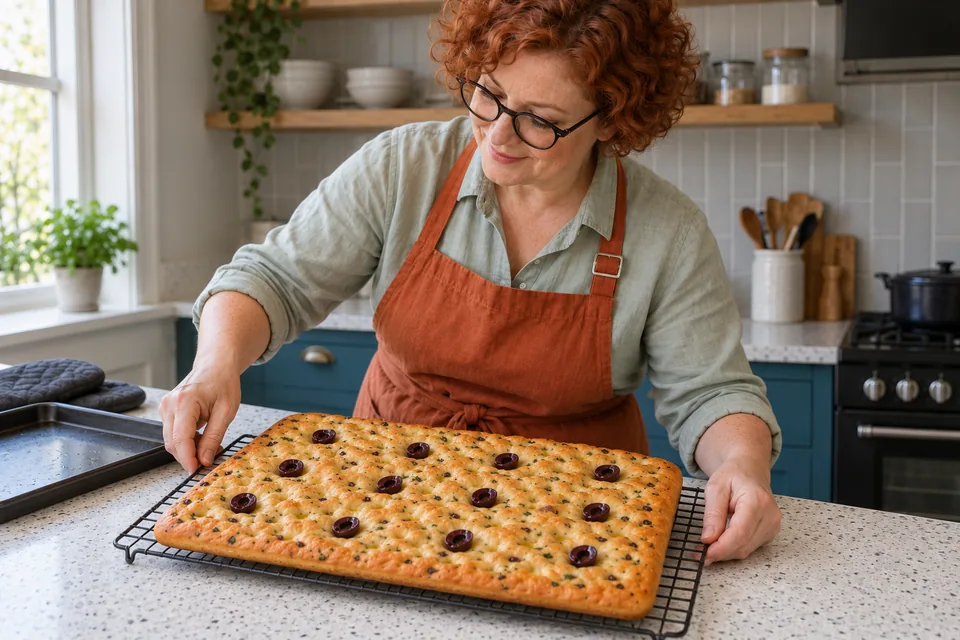
    One whole rectangle of olive-topped focaccia cools on a rack without its baking paper.
    08 CoolCool on a rack before cutting twelve pieces.

What to look for

StageLook / feel forNeeds attention
Mix the wet focaccia doughThe dough is sticky but cohesive, and begins to stretch rather than break.
Fold during the bulk riseThe dough is aerated, elastic and noticeably expanded.
Prepare the separate additionsBoth olive portions are well drained and dry; the basil is clean and dry, and the surface salt is dissolved.
Ease the dough into the oiled panThe tray holds an evenly spread layer, with no torn thin patches.
Proof the dough in the panThe dough is puffy and jiggles when the tray is nudged; it holds a light fingertip dent.
Dimple and add the measured toppingThe surface is evenly dimpled and lightly topped, with no heavy mound or large pool of liquid.
Bake until the base and topping are setThe underside is browned and firm, the bread is set with no wet dough, and its centre reaches about 96°C.
Cool before slicingThe base stays firm and the bread can be cut without crushing the crumb.

Troubleshooting

If you see thisLikely causeWhat to do nowNext time
The dough springs back during spreading.Its gluten is still tight.Cover and rest briefly, then ease outward again without tearing.Keep the dough covered and include the stated pan relaxation.
The top is browned but bread beneath the topping is wet.The topping held excess moisture or the bread needs more time.Cover the top loosely with foil and continue baking until the bread reaches its stated cue.Drain wet ingredients, use the shallow tray and check the base and bread centre.

Storage: Best eaten on the day. Cool promptly, then refrigerate covered leftovers within 2 hours of baking and use within 2 days. Reheat until hot through. Freeze wrapped pieces for up to 1 month.; Contains: wheat.; This Nepedia version has not been kitchen-tested.

Ingredient choices & substitutions

No brand is specified.

Match the ingredient’s function and weight. See the flour, gluten, yeast and salt guide.

Other approaches to this recipe
Cook / recipeUseWhat differs

The working ingredients and method form one recipe. Different formulas are compared without averaging their quantities or rise schedules.

Nepedia
Two shallow squares of olive-and-basil focaccia on a plain white plate beside a fork.
Two modest portions from the olive and basil tray bread.

Recipe

Basil and olive focaccia

A tray focaccia with basil and black olives folded into the dough, plus a few olives on its dimpled surface.

How do I make it?

  1. Mix the wet focaccia dough

    7–10 min

    Combine the flour, dough water, dough oil, salt and instant yeast in a stand-mixer bowl. Mix with the paddle on low for 4 minutes, scrape the bowl, then mix for 2–3 minutes at medium-low or the machine’s recommended speed.

    The cook scrapes soft plain dough from a stand-mixer bowl beneath its raised paddle.
    Mix a sticky, cohesive olive-oil dough.

    Ready when: The dough is sticky but cohesive, and begins to stretch rather than break.

  2. Fold during the bulk rise

    90 min

    Coat a clean bowl with the separate bowl oil and add the dough. Cover and leave at 22–24°C for 90 minutes. At 30 and 60 minutes, lift one edge with oiled fingers and fold it over the centre; repeat around all four sides, then cover again. Prepare step 3 while the dough rests between folds.

    Oiled fingers lift and fold a soft dough edge in a clear bowl.
    Fold the dough as it rises.

    Ready when: The dough is aerated, elastic and noticeably expanded.

  3. Prepare the separate additions

    5–10 min

    During the bulk rise, drain and dry both olive portions. Roughly chop the 100 g interior portion and halve the 25 g topping portion. Wash, dry and tear the basil. Dissolve the surface salt in its separate 40 g water.

    Chopped olives, torn basil, halved topping olives and a small brine cup are prepared separately.
    Keep the interior olives and topping olives separate.

    Ready when: Both olive portions are well drained and dry; the basil is clean and dry, and the surface salt is dissolved.

  4. Ease the dough into the oiled pan

    8–10 min

    Before transferring the dough, spread it gently in its bowl, scatter over the 100 g chopped olives and basil, then fold the dough around them until distributed. Line the base of a 30×40 cm rimmed tray with baking paper rated for 230°C, and brush the paper and tray sides with the pan oil. Transfer the dough with a scraper and ease it outward with oiled fingertips. If it springs back, cover for 5 minutes before continuing. Aim for an even shallow rectangle rather than forcing it into every corner.

    The cook eases dough containing chopped olives and basil across a lined rectangular tray.
    Spread the olive-and-basil dough in one shallow tray.

    Ready when: The tray holds an evenly spread layer, with no torn thin patches.

  5. Proof the dough in the pan

    60–75 min

    Cover loosely and leave at 22–24°C for 60–75 minutes. After 20 minutes, gently ease the relaxed dough farther toward the tray corners if needed, then cover again. During the final 20 minutes, heat the oven to 230°C conventional.

    The cook uncovers a puffy shallow rectangle of olive-and-basil dough.
    Proof until puffy.

    Ready when: The dough is puffy and jiggles when the tray is nudged; it holds a light fingertip dent.

  6. Dimple and add the measured topping

    5–10 min

    Drizzle the topping oil and light brine over the puffy dough. With oiled fingertips make deep dimples without tearing, then place the 25 g topping olives across the surface.

    A dimpled focaccia surface is lightly topped with halved black olives.
    Dimple, add the light brine and top with olives.

    Ready when: The surface is evenly dimpled and lightly topped, with no heavy mound or large pool of liquid.

  7. Bake until the base and topping are set

    25–30 min

    Bake on the lower-middle rack for 15 minutes at 230°C conventional. Reduce to 220°C and continue for 10–15 minutes. If the top darkens before the middle cooks, cover loosely with foil. Lift an edge with a spatula to check the base, and probe a thick bread area away from the topping.

    The cook holds one tray of golden, olive-topped focaccia.
    Bake until golden with a firm browned base.

    Ready when: The underside is browned and firm, the bread is set with no wet dough, and its centre reaches about 96°C.

  8. Cool before slicing

    20 min

    Leave on the tray for 10 minutes. Lift or slide the bread onto a rack, remove the baking paper, and rest for at least 10 minutes more before cutting into twelve pieces.

    One whole rectangle of olive-topped focaccia cools on a rack without its baking paper.
    Cool on a rack before cutting twelve pieces.

    Ready when: The base stays firm and the bread can be cut without crushing the crumb.

What can go wrong, and how can I fix it?

What you noticeLikely causeWhat to do
The dough springs back during spreading.Its gluten is still tight.Cover and rest briefly, then ease outward again without tearing. Keep the dough covered and include the stated pan relaxation.
The top is browned but bread beneath the topping is wet.The topping held excess moisture or the bread needs more time.Cover the top loosely with foil and continue baking until the bread reaches its stated cue. Drain wet ingredients, use the shallow tray and check the base and bread centre.
Useful recipe notes

Storage: Best eaten on the day. Cool promptly, then refrigerate covered leftovers within 2 hours of baking and use within 2 days. Reheat until hot through. Freeze wrapped pieces for up to 1 month.

Contains: wheat.

This Nepedia version has not been kitchen-tested.

See the detailed method and ratios in , or follow ingredients through the .

Ingredient proportions & recipe details

Basil and olive focaccia at a glance

Makes
1 tray bread, 12 pieces
Heat
230°C conventional
Baking time
25–30 min
Cuisine / style
Italy
Leavening
Yeast
Bulk fermentation (including folding)
90 min · The dough is aerated, elastic and noticeably expanded.
How do the ingredient proportions compare?

Percentages compare each listed weight with the combined flour weight (100%). These are ingredient ratios, not dough hydration; milk, eggs and fillings contain other ingredients as well as water.

Formula componentGramsFlour = 100%
Strong white bread flour500 g100%
Water for the dough370 g74%
Extra-virgin olive oil for the dough28 g5.6%
Fine salt8 g1.6%
Instant dried yeast5 g1%
Pitted black olives for the dough100 g20%
Fresh basil leaves10 g2%