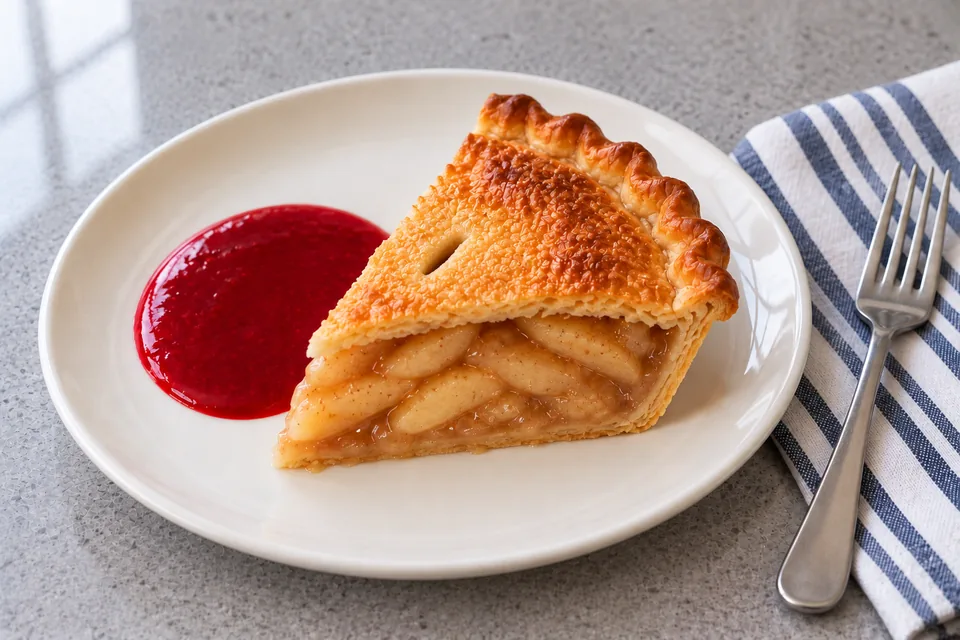
Apple and pear pie with raspberry sauce
A cold double crust around a cooked apple-and-pear filling, served with a separate strained raspberry sauce.
Method
01 · Make, divide and chill the pastry
65–70 minUse: Plain flour for the pastry; Caster sugar for the pastry; Fine salt for the pastry; Unsalted butter for the pastry; Ice-cold water for the pastry
Mix the 300 g pastry flour, 10 g pastry sugar and 4 g pastry salt. Rub or cut in the 170 g cold butter until it remains in small flakes and pea-sized pieces. Add the 110 g ice-cold water and toss with a fork, then press into a cohesive dough without kneading. Divide into two pieces, about 356 g for the base and 238 g for the lid. Flatten into discs, wrap and refrigerate for 60 minutes.Ready when: The dough holds when pressed, with small visible butter pieces; it is cold and firm after resting.
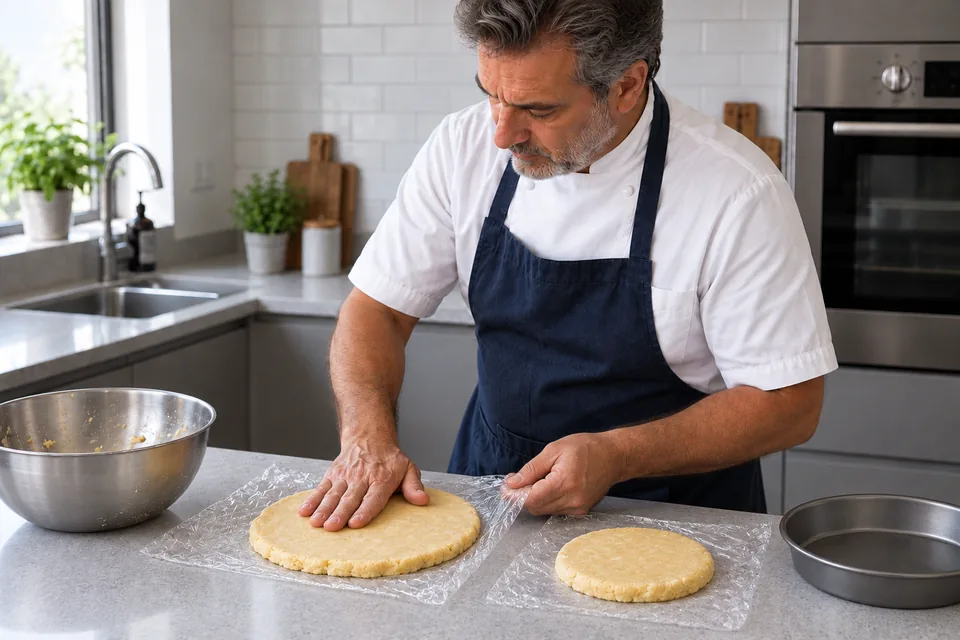
01 Shape and chill two pastry discsShape and chill two pastry discs 02 · Cook the filling while the pastry chills
30–40 minUse: Prepared firm tart apples; Prepared firm ripe pears; Caster sugar for the filling; Cornflour; Ground cinnamon; Fine salt for the filling; Unsalted butter for the filling; Lemon juice
While the pastry chills, prepare the apples and pears. Mix the 80 g filling sugar, cornflour, cinnamon and 1 g filling salt in a small bowl. Melt the 20 g filling butter in a wide 28 cm heavy pan, add both fruits and the lemon juice, and cook over medium heat for 8–12 minutes, stirring gently. Scatter the sugar mixture evenly over the wet fruit and stir well. Cook for 3–5 minutes more, until the juices bubble and thicken.Ready when: The fruit is partly tender and still holds some shape; the juices coat it thickly rather than running freely.
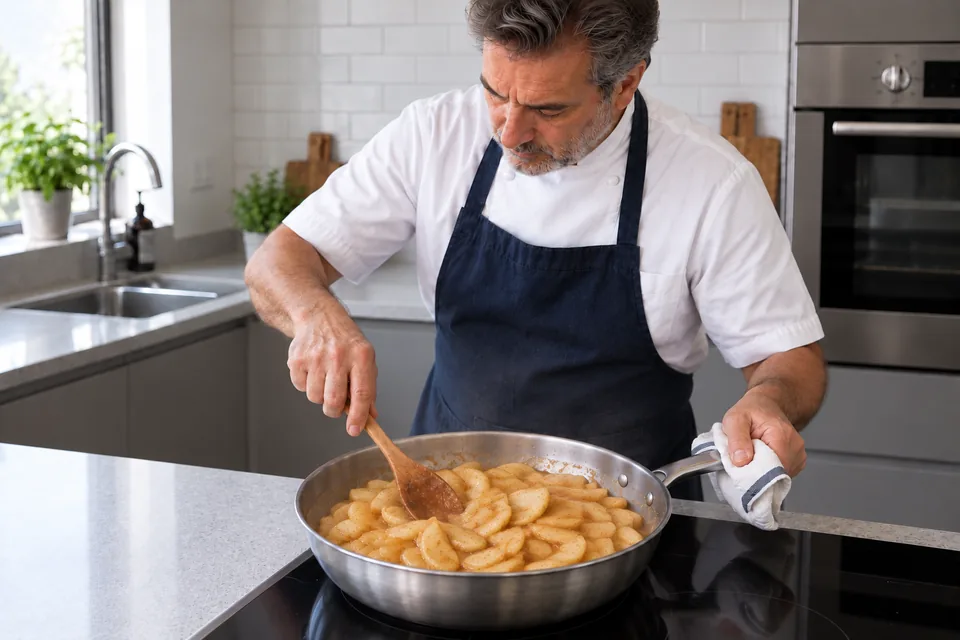
02 Cook the apple and pear fillingCook the apple and pear filling 03 · Cool all the cooked filling completely
45–60 minUse:
Spread all the cooked filling in a shallow dish and let it cool completely, allowing up to 60 minutes. Refrigerate if it is ready before the pastry. Do not put warm filling into the cold pastry.Ready when: The fruit is cool throughout with no thin liquid pooling around it.
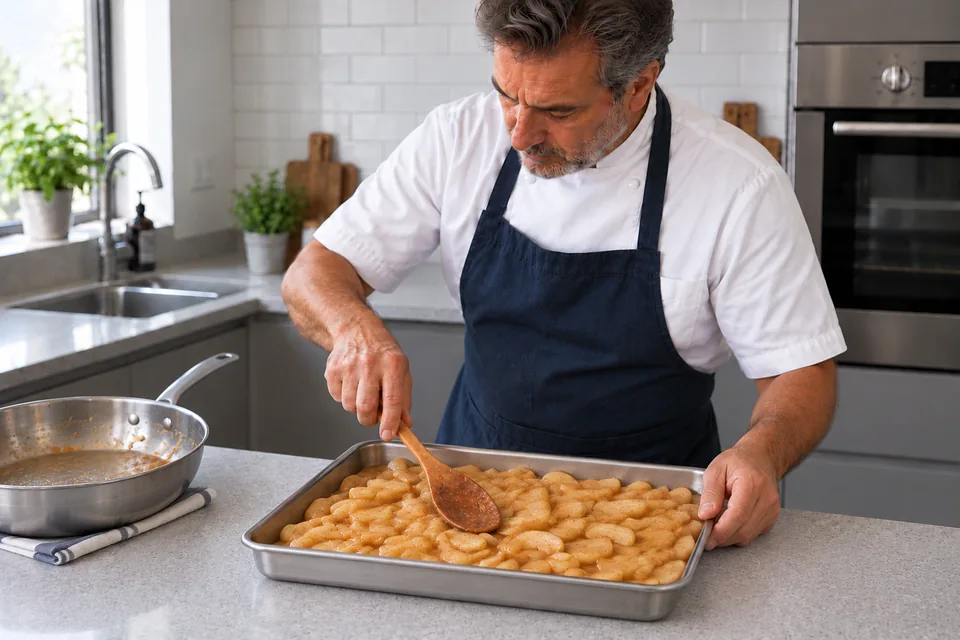
03 Cool all the cooked fruitCool all the cooked fruit 04 · Line the tin with the larger pastry portion and fill
25–30 minUse: Flour for rolling
Use a 23 cm metal pie tin about 4.5 cm deep. Lightly flour the worktop and roll the larger pastry disc to about 32 cm across and 3 mm thick. Ease it into the tin without stretching, letting it settle into the corners. Leave about 1 cm pastry overhanging the rim. Add all the cold filling and level it into a shallow mound, keeping the pastry rim clean.Ready when: The pastry has no holes and the filling fits below the rim at the sides, with only a small central mound.
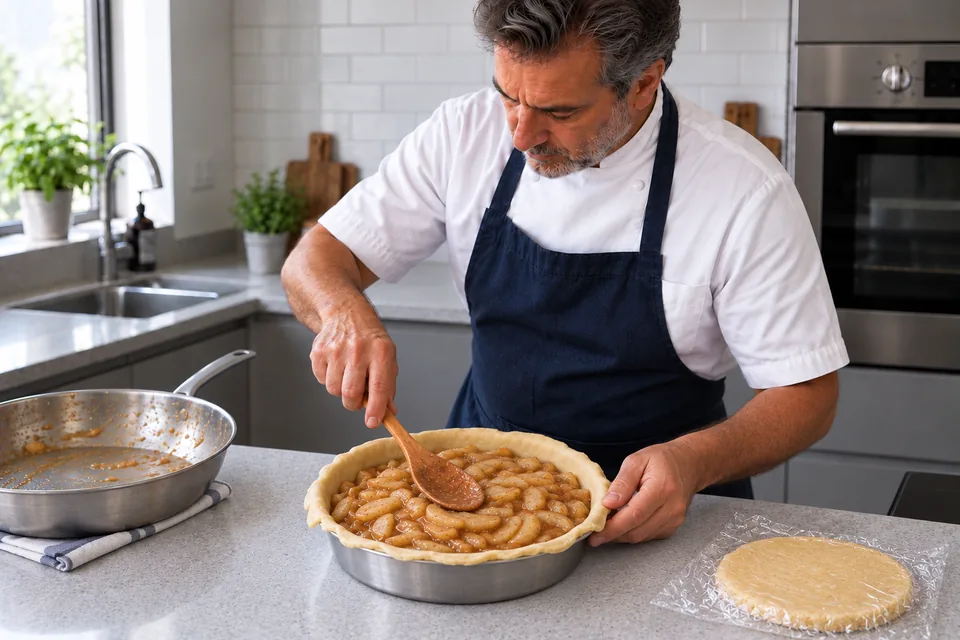
04 Line the tin and add cold fillingLine the tin and add cold filling 05 · Seal with the smaller portion, vent and chill
40–45 minUse: Flour for rolling; Beaten egg for brushing
Roll the smaller pastry disc to about 27 cm across and 3 mm thick. Brush the base rim lightly with some finishing egg, lay the lid over the fruit and trim to a matching 1 cm overhang. Fold both overhangs under together and pinch to seal. Cut five small steam vents near the centre. Refrigerate for 30 minutes. During that time, heat the oven to 220°C conventional with a sturdy baking sheet on the lower-third rack. Keep unused pastry trimmings separate.Ready when: The pie has a sealed cold double crust, small vents and no filling trapped in the rim.
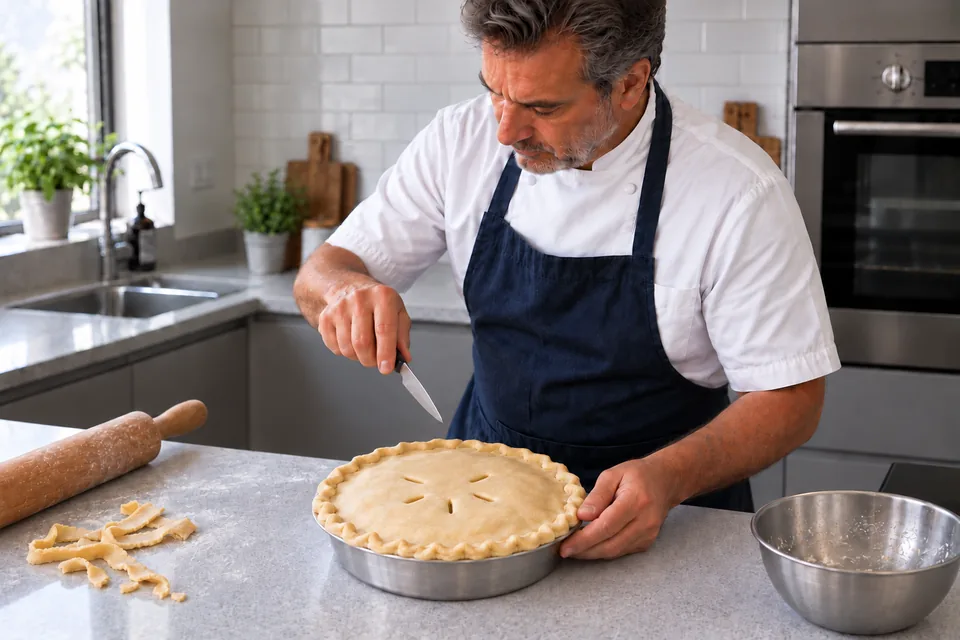
05 Seal the lid and cut five ventsSeal the lid and cut five vents 06 · Bake at 220°C, then reduce to 190°C
55–65 minUse: Beaten egg for brushing; Caster sugar for the lid
Brush the lid lightly with the remaining finishing egg and scatter over the 10 g topping sugar. Put the pie tin on the hot baking sheet. Bake for 20 minutes, then reduce the oven to 190°C conventional and bake for 35–45 minutes more. Shield the rim with foil if it browns early.Ready when: The top and visible edges of the base are deeply golden and dry; thick filling bubbles steadily through the vents. A thin knife through a vent meets tender fruit.
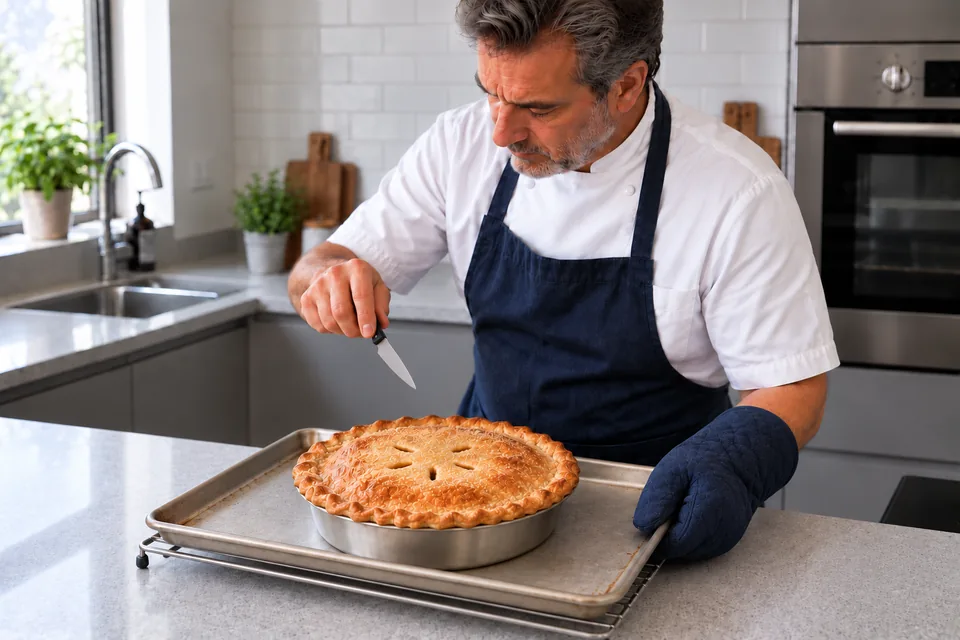
06 Bake the double-crust pieBake the double-crust pie 07 · Cool for at least three hours
180 minUse:
Put the tin on a rack and cool for at least 3 hours before slicing. The filling needs this time to thicken as it loses heat.Ready when: The pastry is set and the filling no longer flows like hot sauce when the pie is gently moved.
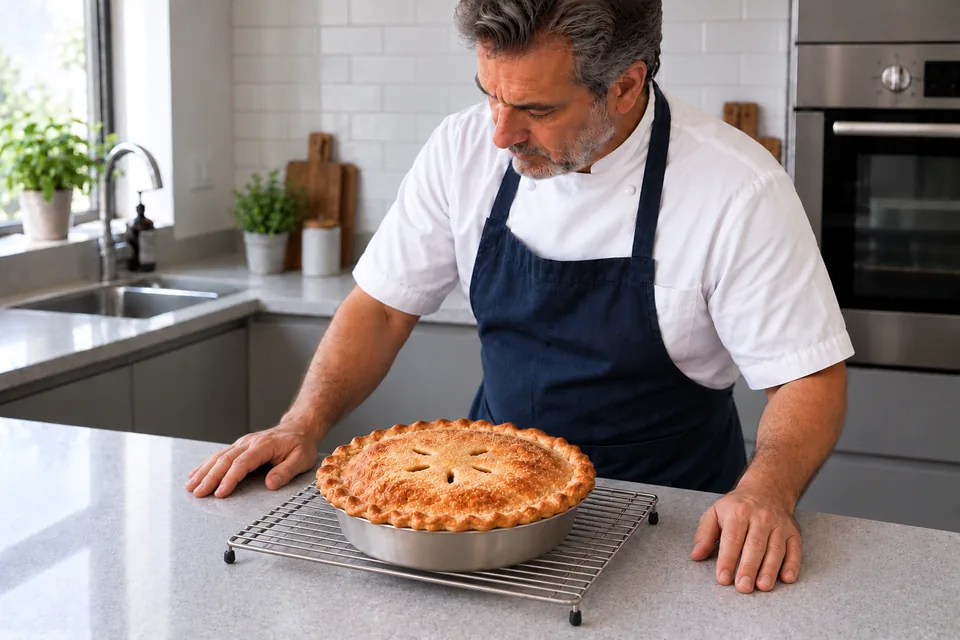
07 Cool the baked pieCool the baked pie 08 · Cook, strain and cool the sauce while the pie cools
20–30 minUse: Raspberries; Caster sugar for the sauce; Water for the sauce
While the baked pie cools, put the raspberries, 20 g sauce sugar and 10 g sauce water in a small saucepan. Heat, stirring, until the berries collapse, then simmer for 2 minutes. Press through a fine sieve into a bowl and discard the seeds. Cool, then refrigerate until serving. Divide the finished sauce between the eight portions rather than assuming a fixed strained yield.Ready when: The sauce is smooth, cool and separate from the pie filling.
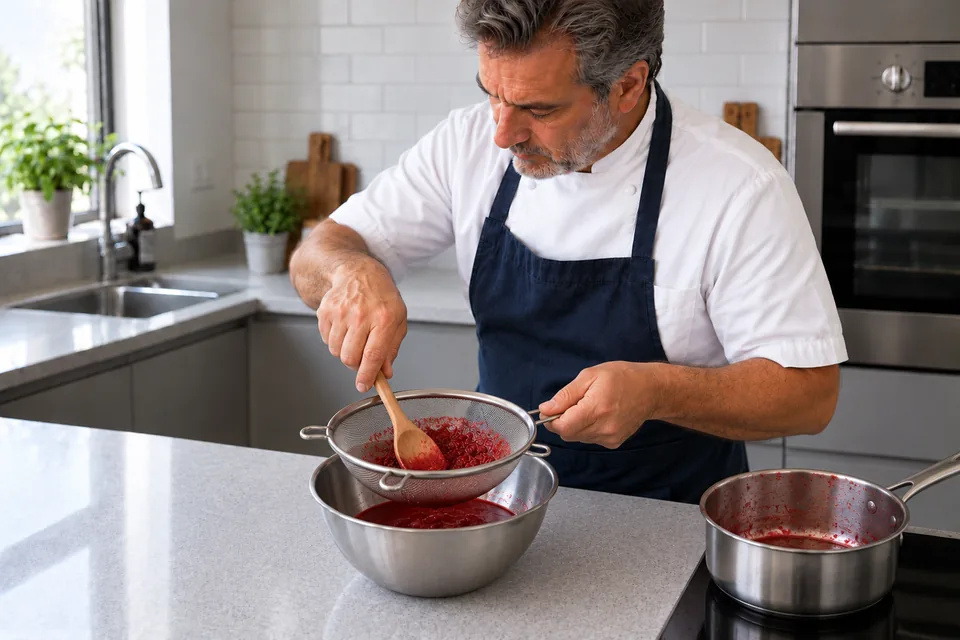
08 Cook and strain the separate sauceCook and strain the separate sauce 09 · Cut eight portions and serve with cold raspberry sauce
3–5 minUse:
Cut the cooled pie into eight portions with a sharp knife. Spoon the cold raspberry sauce beside each portion.Ready when: The filling holds inside each slice; some soft fruit may settle at the cut edge.
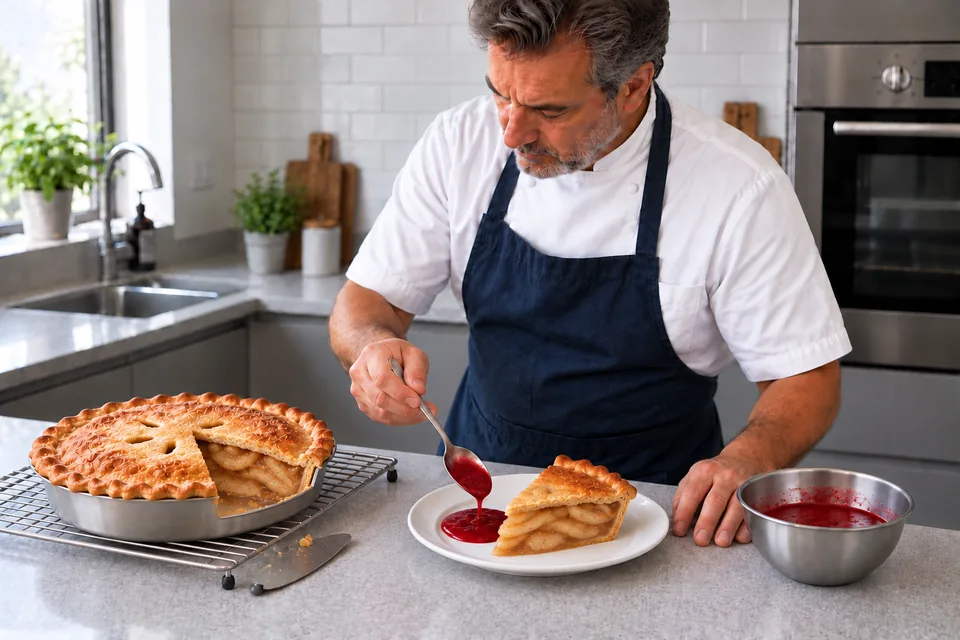
09 Serve eight portions with sauce besideServe eight portions with sauce beside
What to look for
| Stage | Look / feel for | Needs attention |
|---|---|---|
| Make, divide and chill the pastry | The dough holds when pressed, with small visible butter pieces; it is cold and firm after resting. | |
| Cook the filling while the pastry chills | The fruit is partly tender and still holds some shape; the juices coat it thickly rather than running freely. | |
| Cool all the cooked filling completely | The fruit is cool throughout with no thin liquid pooling around it. | |
| Line the tin with the larger pastry portion and fill | The pastry has no holes and the filling fits below the rim at the sides, with only a small central mound. | |
| Seal with the smaller portion, vent and chill | The pie has a sealed cold double crust, small vents and no filling trapped in the rim. | |
| Bake at 220°C, then reduce to 190°C | The top and visible edges of the base are deeply golden and dry; thick filling bubbles steadily through the vents. A thin knife through a vent meets tender fruit. | |
| Cool for at least three hours | The pastry is set and the filling no longer flows like hot sauce when the pie is gently moved. | |
| Cook, strain and cool the sauce while the pie cools | The sauce is smooth, cool and separate from the pie filling. | |
| Cut eight portions and serve with cold raspberry sauce | The filling holds inside each slice; some soft fruit may settle at the cut edge. |
Troubleshooting
| If you see this | Likely cause | What to do now | Next time |
|---|---|---|---|
| The pastry becomes greasy or tears while rolling. | Warm butter or excessive handling weakens the dough. | Chill the pastry until firm and patch small tears with a thin piece of spare pastry. | Use cold ingredients, light dustings and gentle handling; avoid stretching pastry into the tin. |
| The top browns before the base is ready. | The top receives more heat than the pastry against the tin. | Shield the top or rim loosely with foil and continue until the base and filling meet the stated cues. | Use the specified metal pan, cooled filling and preheated baking sheet. |
Storage: Cover the cooled pie and refrigerate for up to 3 days, or freeze slices for up to 1 month. Reheat slices until hot through if serving warm. Refrigerate the raspberry sauce separately and use within 2 days.; Contains: wheat, milk, egg.; This Nepedia version has not been kitchen-tested.
Other approaches to this recipe
| Cook / recipe | Use | What differs |
|---|
The working ingredients and method form one recipe. Different formulas are compared without averaging their quantities or rise schedules.