Ethiopia / Eritrea World collection
Teff Injera — Home-Pan Method
Method
01 · Ferment
4–5 daysUse: Teff, 709.8 mL water
Mix in a clean bowl; cover loosely against insects and leave at room temperature.Ready when: Fizzy; sour aroma
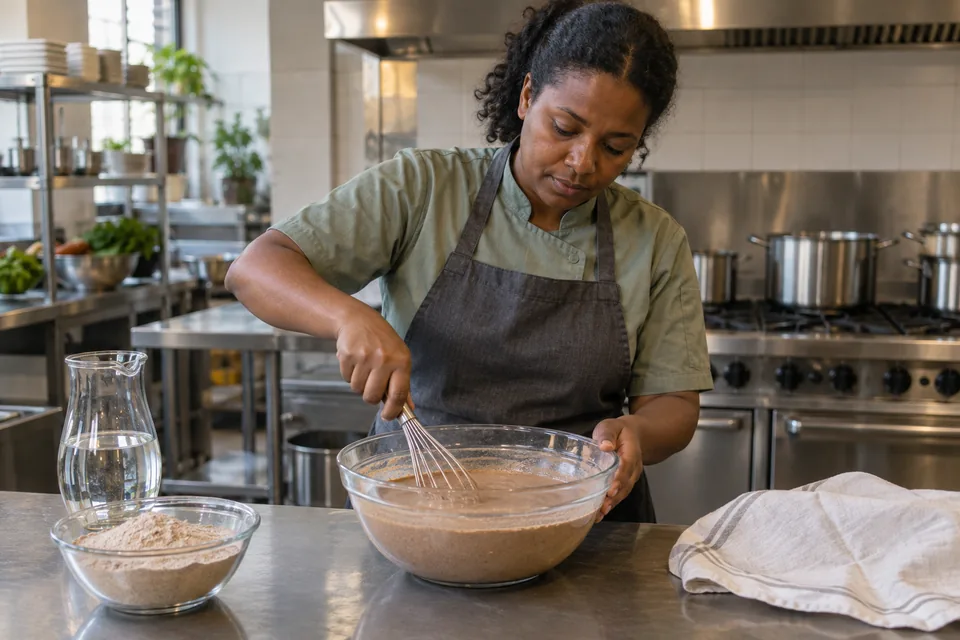
01 Mix the teff batterMix until the teff flour is evenly hydrated. 02 · Inspect
Use: Fermented batter
Discard the entire batch if mold appears or contamination is uncertain. Otherwise pour off surface liquid and stir the thick sediment.Ready when: Thick batter
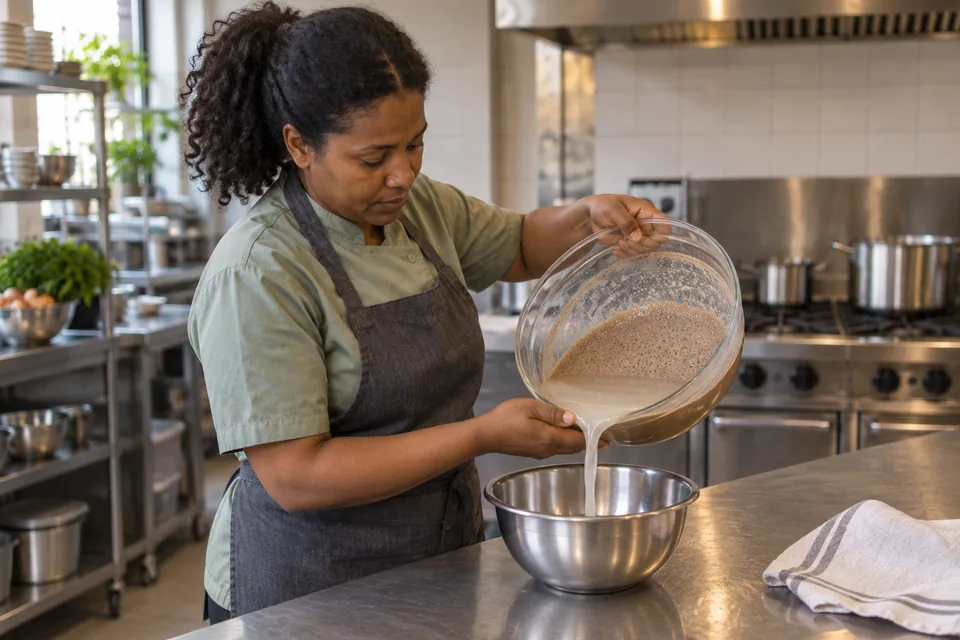
02 Check the fermented batterPour off the surface liquid, then stir the thick batter. 03 · Absit
BrieflyUse: 236.6 mL water; 118.3 mL fermented batter
Boil water; whisk in the measured batter until thick. Stir cooked paste back into remaining batter.Ready when: Thickened paste
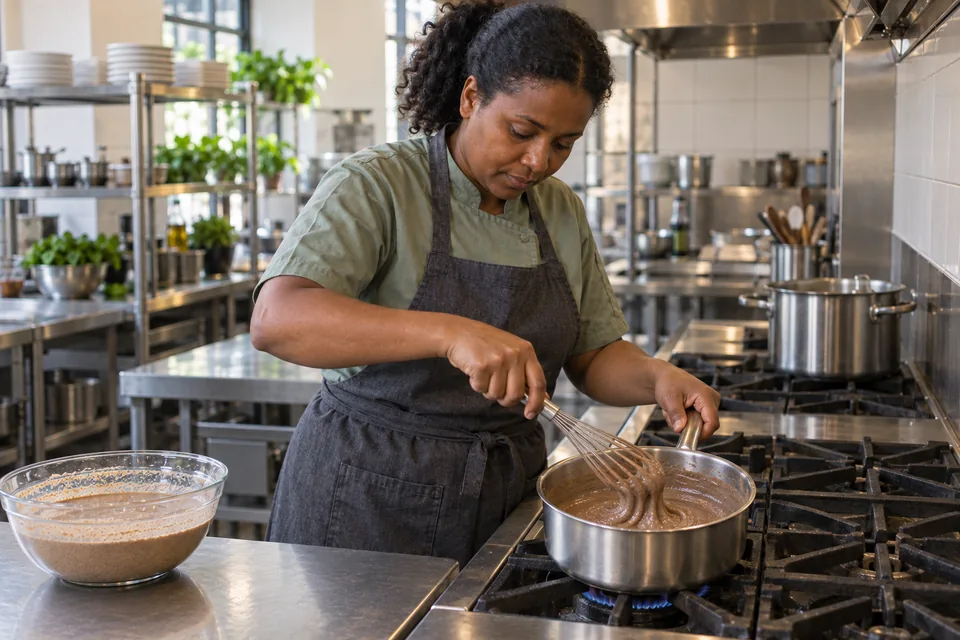
03 Cook the absitCook a small portion of batter into a thick paste. 04 · Thin
Use: Batter; adjustment water
Add water gradually.Ready when: Pourable, like crepe batter
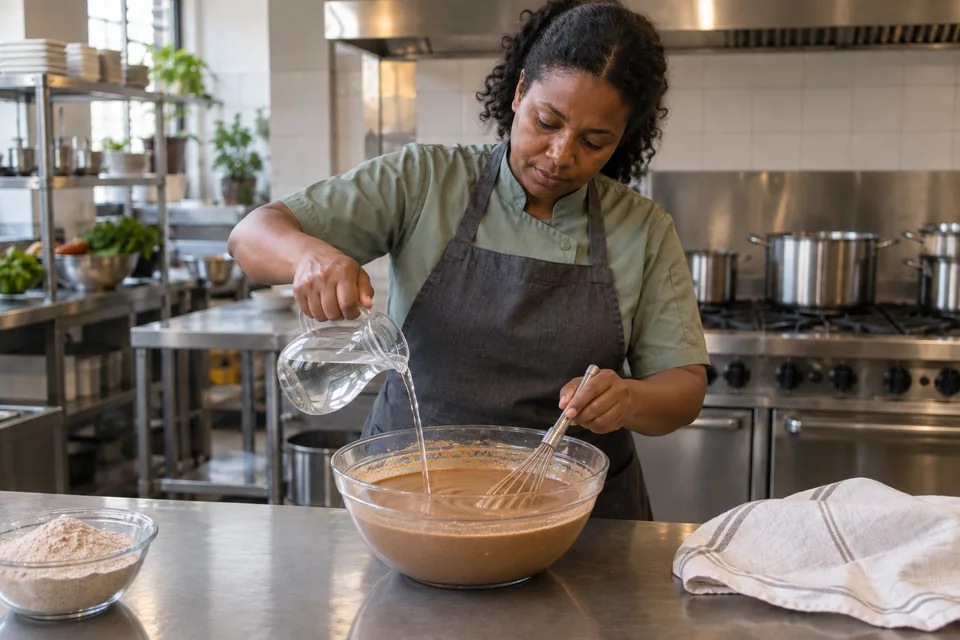
04 Adjust the batterAdd water gradually until the batter pours in a thin stream. 05 · Cook
About 2 min coveredUse: Batter
Heat skillet on medium; lightly oil if needed. Pour a thin layer. Let bubbles pop; cover, turn off heat and steam until set. Lift out; reheat pan and repeat.Ready when: No wet surface
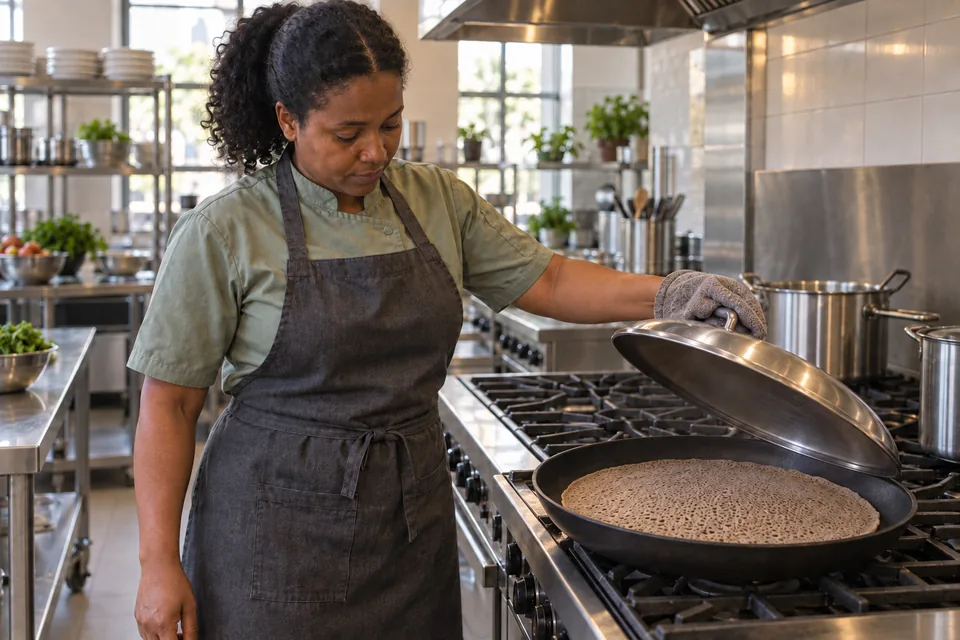
05 Cook until the surface setsLet the holes open and steam until no wet batter remains. 06 · Cool
Use: Injera
Cool separately on parchment before stacking.Ready when: Flexible, no sticking
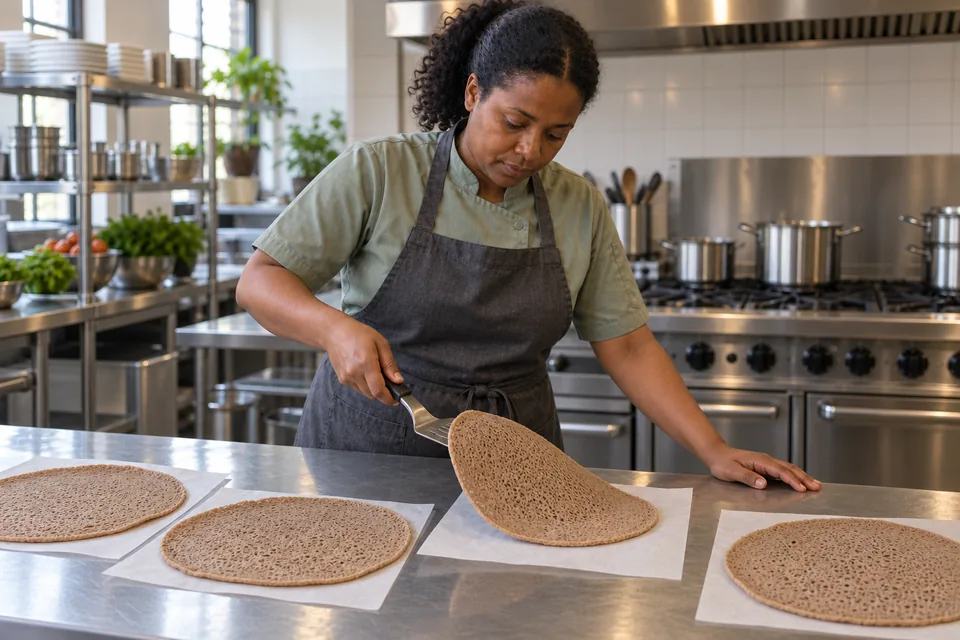
06 Cool before stackingCool the injera separately so the rounds stay flexible.
What to look for
| Stage | Look / feel for | Needs attention |
|---|---|---|
| Pour | Even spreading and open pores. | Watery puddles. |
Troubleshooting
| If you see this | Likely cause | What to do now | Next time |
|---|---|---|---|
| Batter barely spreads | Too thick. | Thin gradually, then test a small round. | Assess flow before each batch. |
| Rounds stick together | Stacked warm. | Cool remaining rounds separately. | Stack only when cool. |
No wheat or commercial yeast in this selected version.