Pita Pocket Bread

Thin rounds inflate into a pocket during a short, very hot bake.

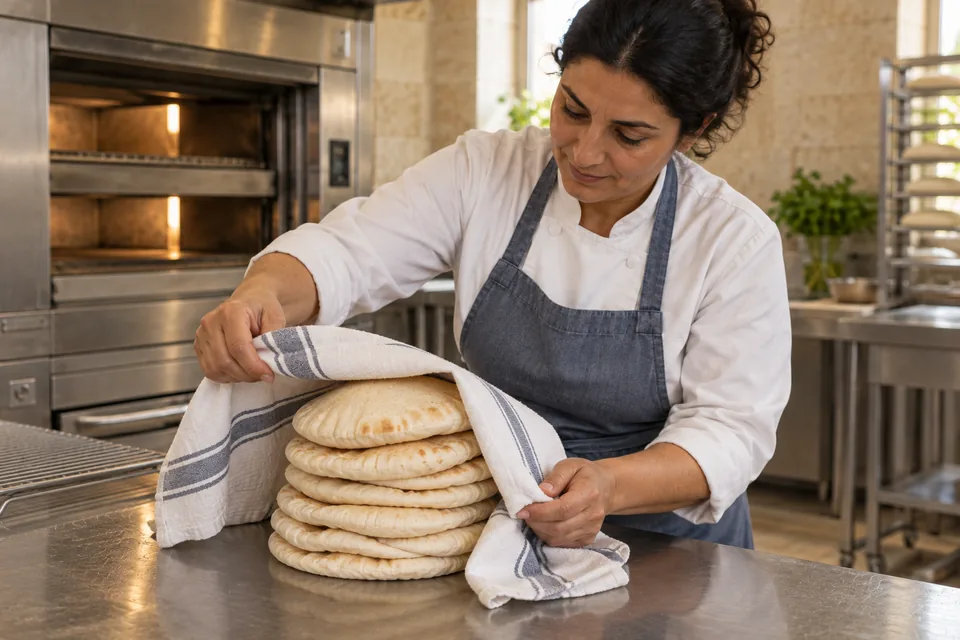
The cook wraps a stack of lightly browned, flexible pitas in a clean towel.
Makes
8 pitas
Heat
260°C conventional
Baking time
5–6 min + about 2 min

Per batch: start on the lowest rack, then move to a middle/top rack.

View

Pita Pocket Bread

Makes
8 pitas
Heat
260°C conventional
Baking time
5–6 min + about 2 min

Per batch: start on the lowest rack, then move to a middle/top rack.

Levant / Eastern Mediterranean · Steam-inflated pocket bread

Pita Pocket Bread

Thin rounds inflate into a pocket during a short, very hot bake.

Method

  1. 01 · Mix and knead

    10 min by hand / 5 min mixer

    Use: Dough ingredients

    Mix; knead until smooth.

    Ready when: Elastic dough

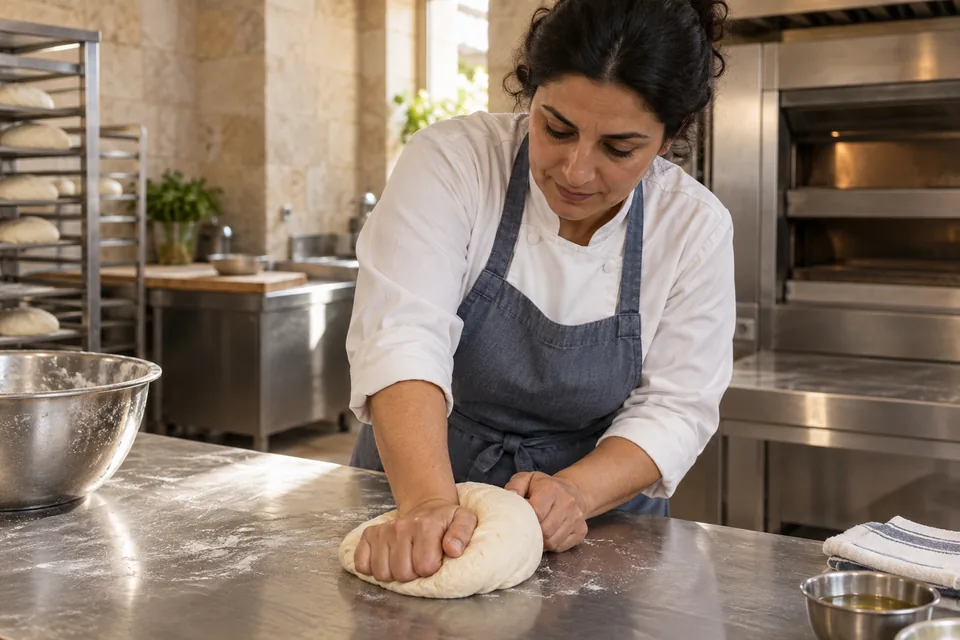
    A cook kneads a smooth pale dough on the professional bakery worktop.
    01 Knead until smoothMix the dough and knead until elastic.
  2. 02 · Rise

    About 1 hour

    Use: Dough

    Cover in an oiled bowl.

    Ready when: Puffy; need not double

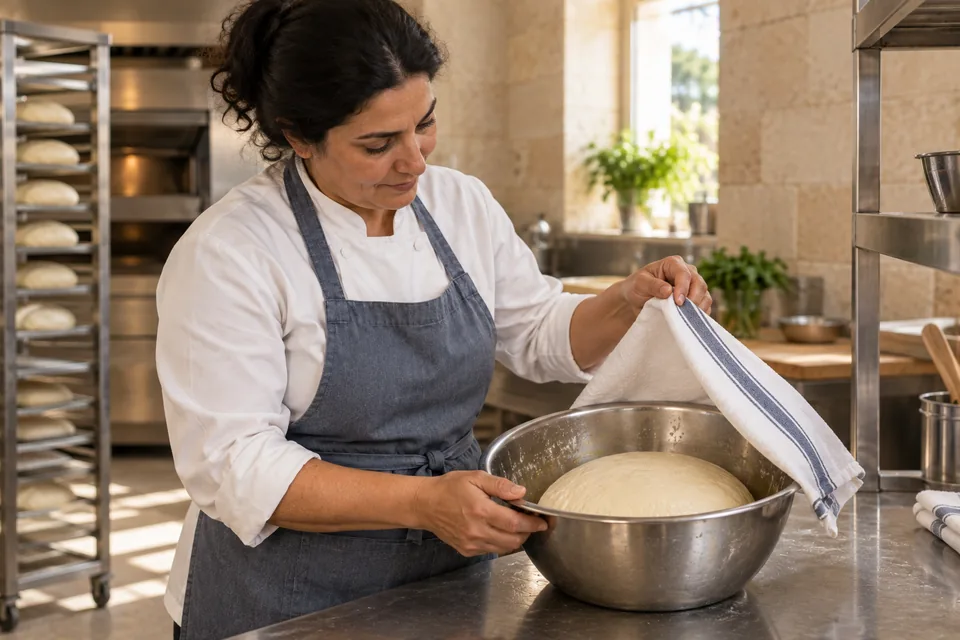
    The cook uncovers a bowl containing one puffy dough mound.
    02 Let the dough become puffyCover in an oiled bowl and let rise until puffy; it need not double.
  3. 03 · Roll and rest

    15 min

    Use: Dough; handling oil

    Divide into 8. Roll a trayful into 15 cm circles. Rest uncovered on an oiled sheet; cover unrolled pieces. Preheat oven.

    Ready when: Even circles

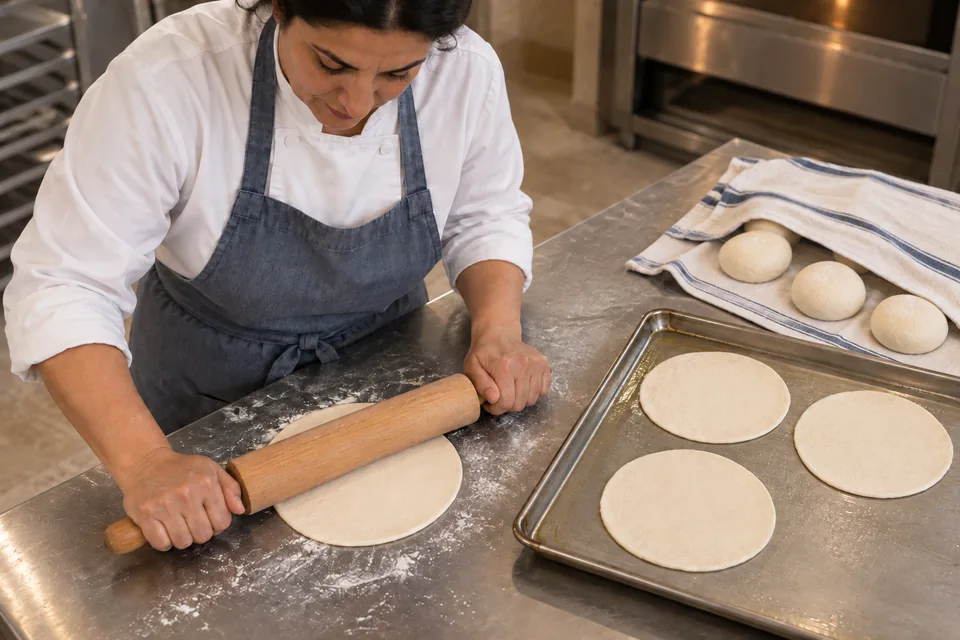
    The cook rolls a thin round beside three shaped rounds and four covered dough portions.
    03 Roll thin, even roundsDivide into eight; roll 15 cm circles and let the trayful rest.
  4. 04 · Inflate

    5–6 min

    Use: Shaped rounds

    Bake on lowest rack.

    Ready when: Pockets balloon

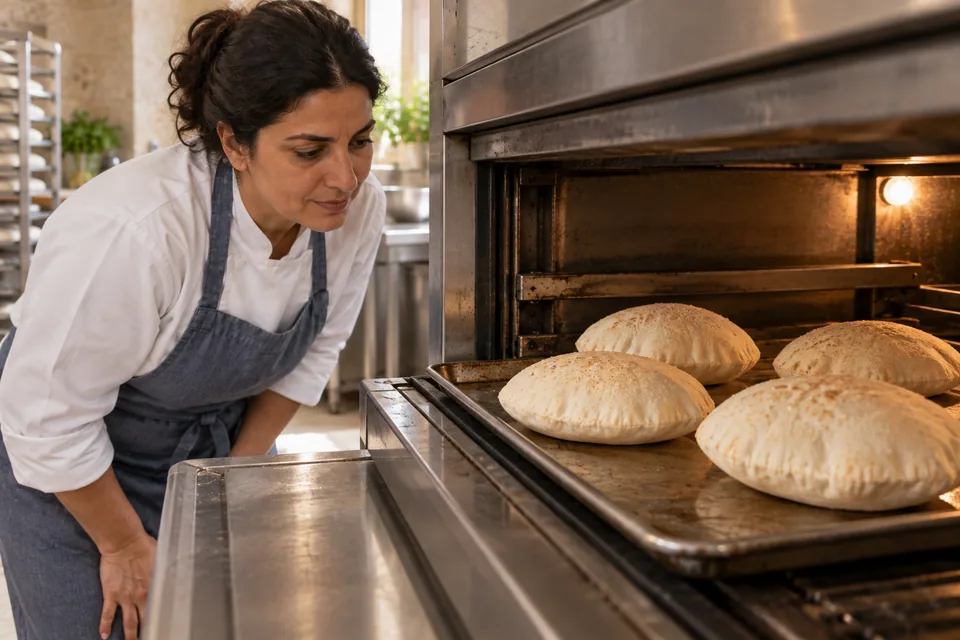
    Four pita rounds have ballooned into pockets on a tray inside the oven.
    04 Bake until the pockets inflateBake on the lowest rack until the rounds balloon.
  5. 05 · Color and soften

    About 2 min

    Use: Puffed pitas

    Move to middle/top rack; finish baking. Wrap hot pitas in a clean towel. Repeat batches.

    Ready when: Lightly browned; flexible

    The cook wraps a stack of lightly browned, flexible pitas in a clean towel.
    05 Finish and softenFinish until lightly browned, then wrap the hot pitas in a clean towel.

What to look for

StageLook / feel forNeeds attention
RollingEven thickness without tearsPuncturing the pocket.
BakeRound balloons before browningLong baking that dries it out.

Troubleshooting

If you see thisLikely causeWhat to do nowNext time
No pocketInsufficient heat or a tear.Let oven recover before next batch.Preheat thoroughly; roll evenly.
Dough springs backGluten remains tight.Rest briefly, then resume rolling.Keep waiting portions covered.
Brittle pitaOverbaked or uncovered cooling.Warm under a lightly damp towel.Use the short bake; wrap immediately.

Base: PJ Hamel. Optional proprietary dough improver omitted. Volumes rounded to practical metric spoons; no density guessed. Bread flour swap is general guidance, not a pita trial.

Ingredient choices & substitutions
IngredientSpecified typeBrandStatus
All-purpose flourUnbleached all-purpose; source specifies its own flourKing ArthurSpecified brand, substitutable
Dough improverOptional relaxer, omittedKing Arthur Easy RollOptional
IngredientAlternative / ratioAdjust handlingLikely outcome
King Arthur all-purpose flourAnother unbleached all-purpose flour1:1 by weightAdjust water only if unusually stiff.Protein differences may change handling.
All-purpose flourBread flour1:1 by weightAdd water gradually if firmer.Potentially stronger, chewier dough; not specifically tested here.

Match the ingredient’s function and weight. See the flour, gluten, yeast and salt guide.

Other approaches to this recipe

Hamel mixes directly and bakes at 260°C. Karadsheh starts a brief sponge and offers a hot-pan method. These are separately attributed formulas; common ancestry is not established.

Cook / recipeUseWhat differs
PJ HamelKing Arthur BakingGolden Pita BreadBase · not-established
Suzy KaradshehThe Mediterranean DishEasy Homemade Pita BreadComparison · adapted
Kye AmedenKing Arthur BakingHow to substitute bread flour for all-purpose flourIngredient guidance · not-established

The working ingredients and method form one recipe. Different formulas are compared without averaging their quantities or rise schedules.

King Arthur Baking

Recipe

Pita Pocket Bread

Thin rounds inflate into a pocket during a short, very hot bake.

How do I make it?

  1. Make the dough

    10 min by hand / 5 min mixer

    Mix the dough ingredients. Knead for 10 minutes by hand or 5 minutes in a mixer, until smooth and stretchy.

    A cook kneads a smooth pale dough on the professional bakery worktop.
    Mix the dough and knead until elastic.

    Ready when: Elastic dough

  2. Let it rise

    About 1 hour

    Put in an oiled bowl and cover. Leave for about 1 hour, until puffy; it does not need to double.

    The cook uncovers a bowl containing one puffy dough mound.
    Cover in an oiled bowl and let rise until puffy; it need not double.

    Ready when: Puffy; need not double

  3. Roll and rest

    15 min

    Divide into 8 pieces and roll enough for one tray into circles 15 cm wide. Rest these uncovered on an oiled sheet for 15 minutes, keeping the unrolled pieces covered. Heat the oven to 260°C, conventional.

    The cook rolls a thin round beside three shaped rounds and four covered dough portions.
    Divide into eight; roll 15 cm circles and let the trayful rest.

    Ready when: Even circles

  4. Make them puff

    5–6 min

    Bake on the lowest rack for 5–6 minutes, until the pitas puff into balloons.

    Four pita rounds have ballooned into pockets on a tray inside the oven.
    Bake on the lowest rack until the rounds balloon.

    Ready when: Pockets balloon

  5. Finish and soften

    About 2 min

    Move to the middle or upper rack for about 2 minutes, until lightly browned. Wrap the hot pitas in a clean towel to keep them flexible. Repeat with the remaining batches.

    The cook wraps a stack of lightly browned, flexible pitas in a clean towel.
    Finish until lightly browned, then wrap the hot pitas in a clean towel.

    Ready when: Lightly browned; flexible

What can go wrong, and how can I fix it?

What you noticeLikely causeWhat to do
No pocketInsufficient heat or a tear.Let oven recover before next batch. Preheat thoroughly; roll evenly.
Dough springs backGluten remains tight.Rest briefly, then resume rolling. Keep waiting portions covered.
Brittle pitaOverbaked or uncovered cooling.Warm under a lightly damp towel. Use the short bake; wrap immediately.
Useful recipe notes

Base: PJ Hamel. Optional proprietary dough improver omitted. Volumes rounded to practical metric spoons; no density guessed. Bread flour swap is general guidance, not a pita trial.

See the detailed method and ratios in , or follow ingredients through the .

Ingredient proportions & recipe details

Pita Pocket Bread at a glance

Makes
8 pitas
Heat
260°C conventional
Baking time
5–6 min + about 2 min
Leavening
Yeast
How do the ingredient proportions compare?

Percentages compare each listed weight with the combined flour weight (100%). These are ingredient ratios, not dough hydration; milk, eggs and fillings contain other ingredients as well as water.

Formula componentGramsFlour = 100%
All-purpose flour360 g100%
Table salt9 g2.5%
Water227 g63.1%
Neutral vegetable oil25 g6.9%