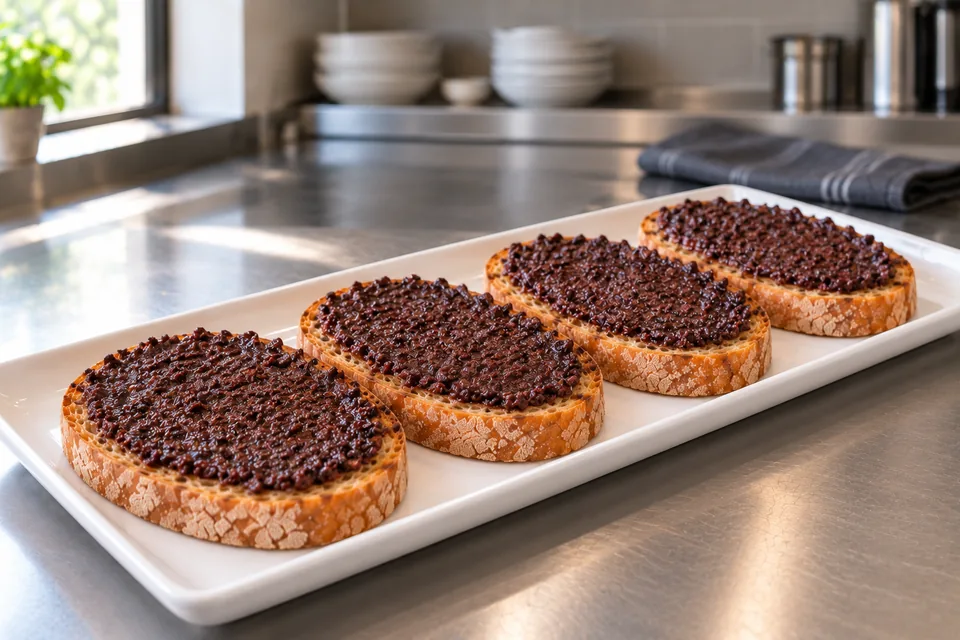
Olive bruschetta
Crisp garlic-rubbed toast with a savoury black-olive and lemon spread. This topping belongs to the same bruschetta family as the tomato version.
Method
01 · Drain and prepare the ingredients
4–5 minUse: Pitted black olives; Rustic wheat bread; Garlic clove
Drain the olives well and check for any pieces of stone. Cut four large bread slices about 1.5cm thick and halve the peeled garlic clove.Ready when: The olives have no pooled brine, and the bread slices are even.
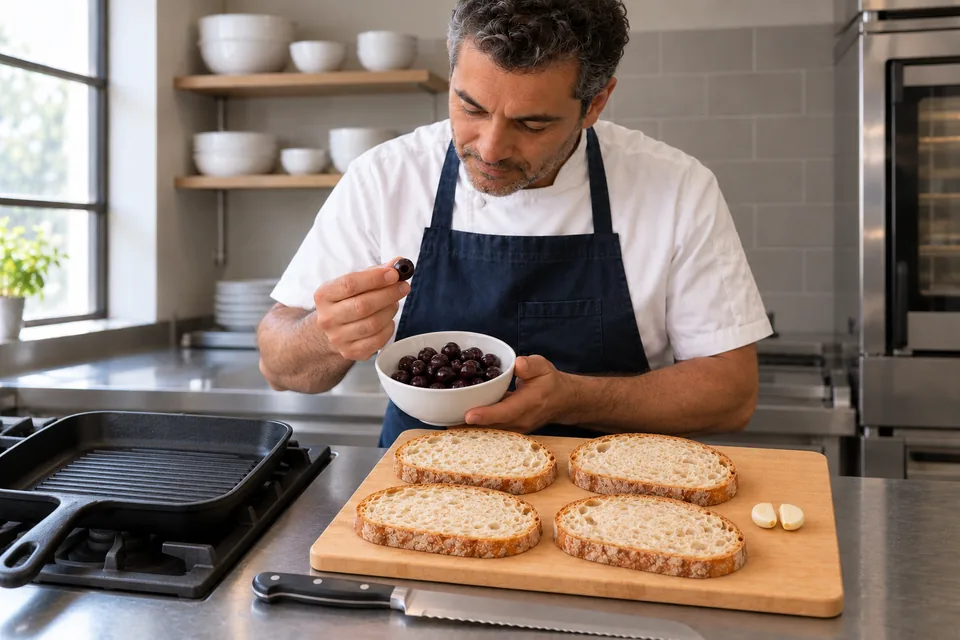
01 Prepare olives and breadCheck the drained olives and prepare four thick bread slices. 02 · Blend the olive spread
2–4 minUse: Pitted black olives; Lemon juice; Extra-virgin olive oil; Ground black pepper
Put the olives, lemon juice, olive oil and pepper in a small food processor. Pulse, scrape down the sides with the machine stopped, then blend briefly until spreadable.Ready when: The paste is finely textured and holds on a spoon without a pool of oil.
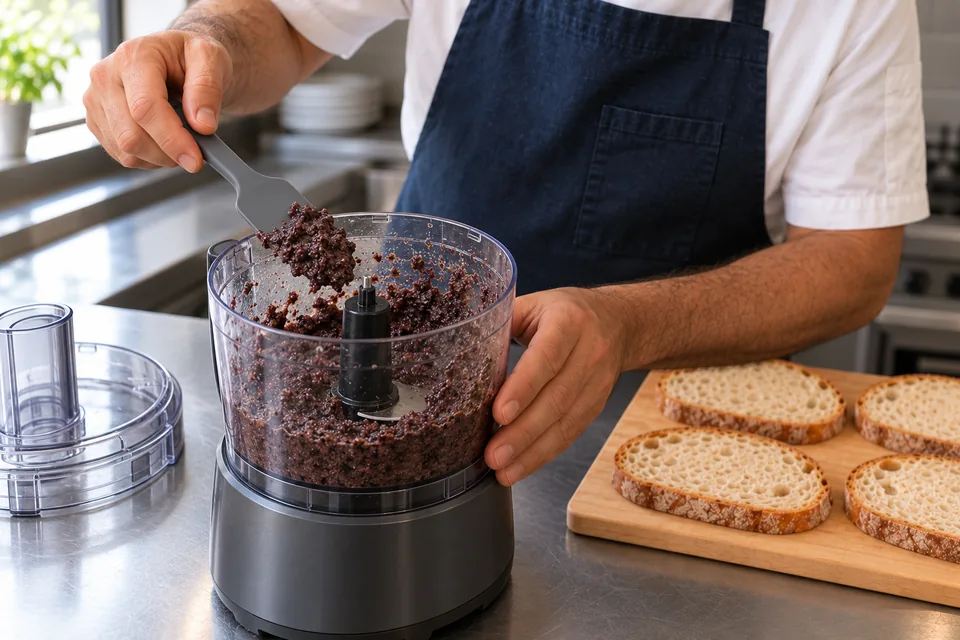
02 Make the olive spreadBlend the olives with lemon, oil and pepper into a spread. 03 · Heat the pan and toast the bread
7–15 minUse: Rustic wheat bread
Heat a dry griddle pan over medium-high heat for about 3 minutes. Toast the bread in one layer for 2–3 minutes on each side, using two batches if needed. Turn with tongs as brown patches appear.Ready when: Both faces are golden in places, with crisp edges and a tender centre.
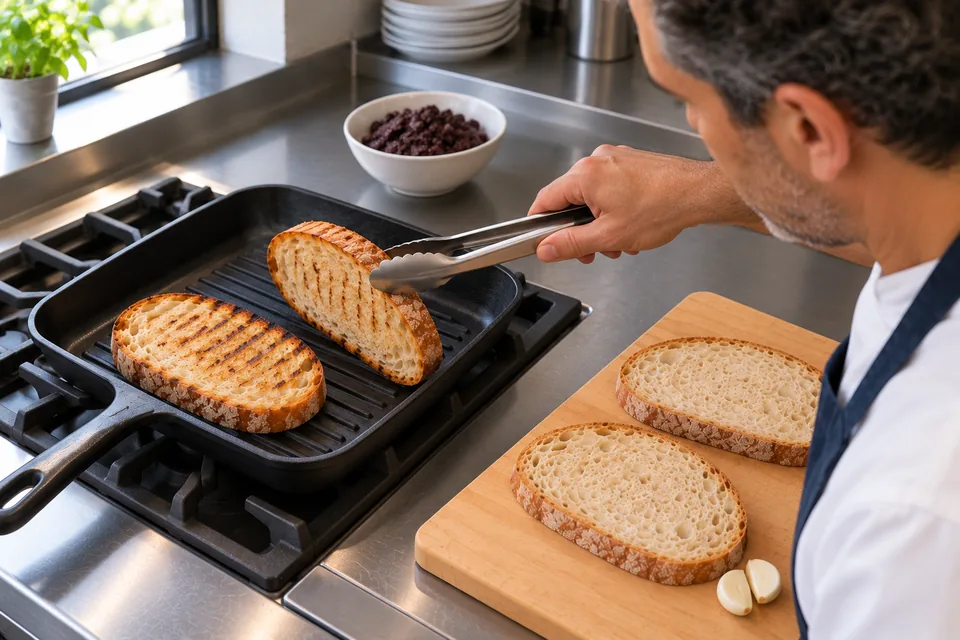
03 Toast the four slicesToast both faces in the dry pan, working in batches if needed. 04 · Rub the warm toast with garlic
1–2 minUse: Rustic wheat bread; Garlic clove
Move the warm toast to a serving plate. Rub one face of each slice lightly with the cut side of the garlic clove.Ready when: The rough toast takes a thin garlic coating without becoming wet.
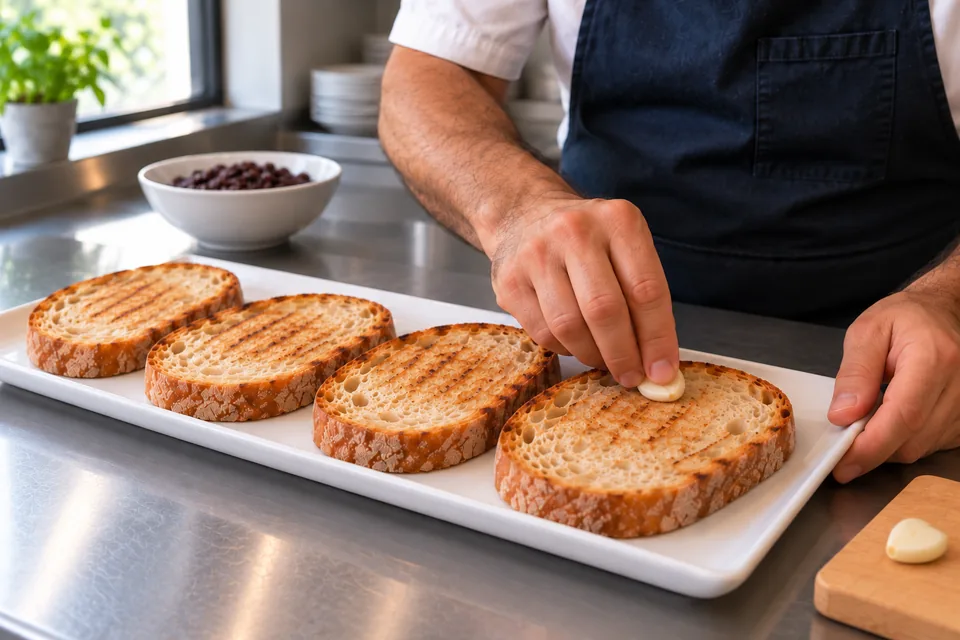
04 Rub the warm toast with garlicRub one face of each warm slice lightly with cut garlic. 05 · Add the olive spread and serve
2–3 minUse: Rustic wheat bread; Pitted black olives; Lemon juice; Extra-virgin olive oil; Ground black pepper
Divide the olive spread among the four garlic-rubbed faces. Spread it almost to the edges with the back of a spoon and serve immediately.Ready when: Each slice carries an even dark topping with a narrow toasted border.
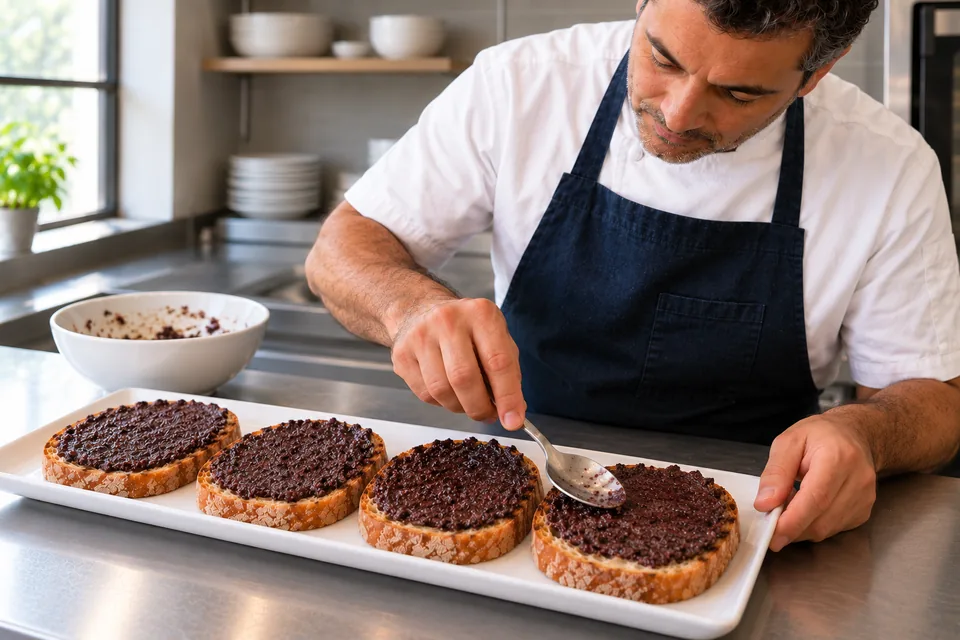
05 Spread the olive toppingSpread the olive topping evenly over the four slices.
What to look for
| Stage | Look / feel for | Needs attention |
|---|---|---|
| Drain and prepare the ingredients | The olives have no pooled brine, and the bread slices are even. | |
| Blend the olive spread | The paste is finely textured and holds on a spoon without a pool of oil. | |
| Heat the pan and toast the bread | Both faces are golden in places, with crisp edges and a tender centre. | |
| Rub the warm toast with garlic | The rough toast takes a thin garlic coating without becoming wet. | |
| Add the olive spread and serve | Each slice carries an even dark topping with a narrow toasted border. |
Troubleshooting
| If you see this | Likely cause | What to do now | Next time |
|---|---|---|---|
| The spread tastes too salty. | Olive curing brines vary. | Use a thinner layer on each slice and reserve the excess. | Taste the drained olives before blending;briefly rinse very salty olives and drain well. |
| The processor does not catch the olives. | Its bowl is too large for this batch. | Stop the machine,scrape down and pulse again,or chop finely by hand. | Use a small processor bowl. |
| The bread loses its crispness. | The topping was applied too early. | Serve immediately. | Keep the paste and toast separate until serving. |
Storage: Assemble just before serving. Keep any unused olive paste covered in the refrigerator for up to 2 days. Toast fresh bread when serving the reserved paste.; Contains: wheat.; This Nepedia version has not been kitchen-tested.
Other approaches to this recipe
| Cook / recipe | Use | What differs |
|---|
The working ingredients and method form one recipe. Different formulas are compared without averaging their quantities or rise schedules.