Japanese milk bread · shokupan

Soft milk bread made with a cooked flour paste for a tender crumb.

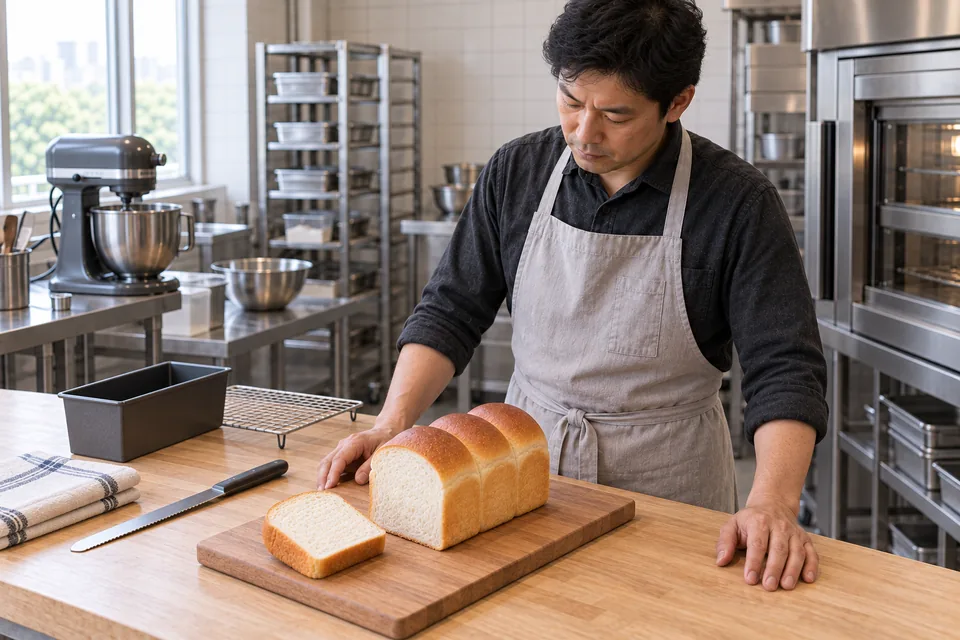
The chef stands at the cutting board beside a cooled milk loaf with an exposed cut end and its matching end slice.
Makes
1 loaf
Heat
175°C
Baking time
30–35 min

First cook the flour paste over low heat for 3–5 min.

View

Japanese milk bread · shokupan style

Makes
1 loaf
Heat
175°C
Baking time
30–35 min

First cook the flour paste over low heat for 3–5 min.

Japan World collection

Japanese milk bread · shokupan style

Method

  1. 01 · Paste

    3–5 min

    Use: A

    Whisk over low heat; cool lukewarm.

    Ready when: Whisk tracks remain.

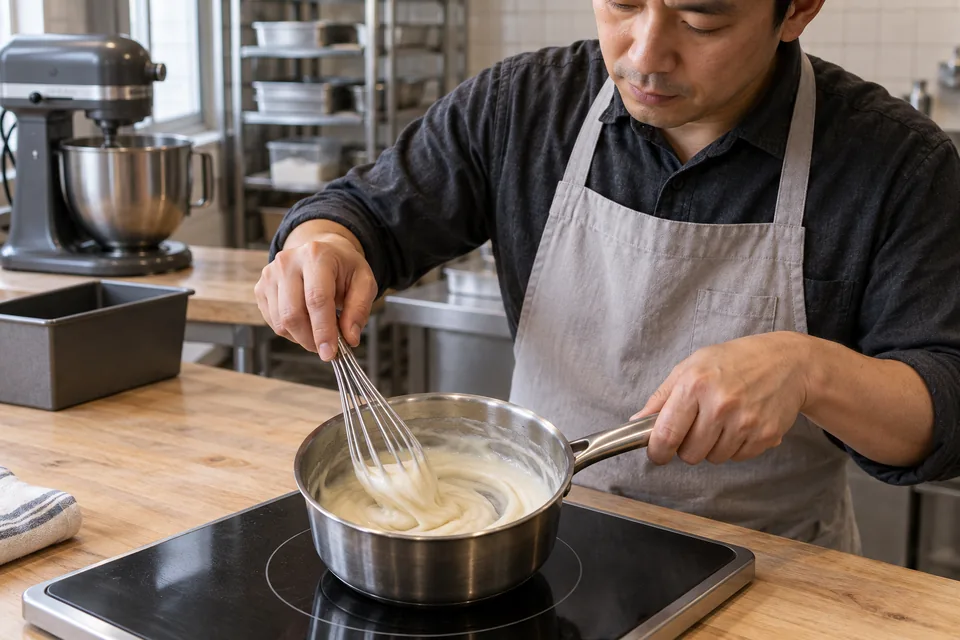
    A whisk leaving clear tracks in thick milk-and-flour paste in a small saucepan.
    01 Cook the flour pasteWhisk the milk, water and flour until the paste thickens and holds the whisk’s tracks.
  2. 02 · Knead

    Up to 15 min

    Use: A+B

    Mix and machine-knead.

    Ready when: Smooth, elastic.

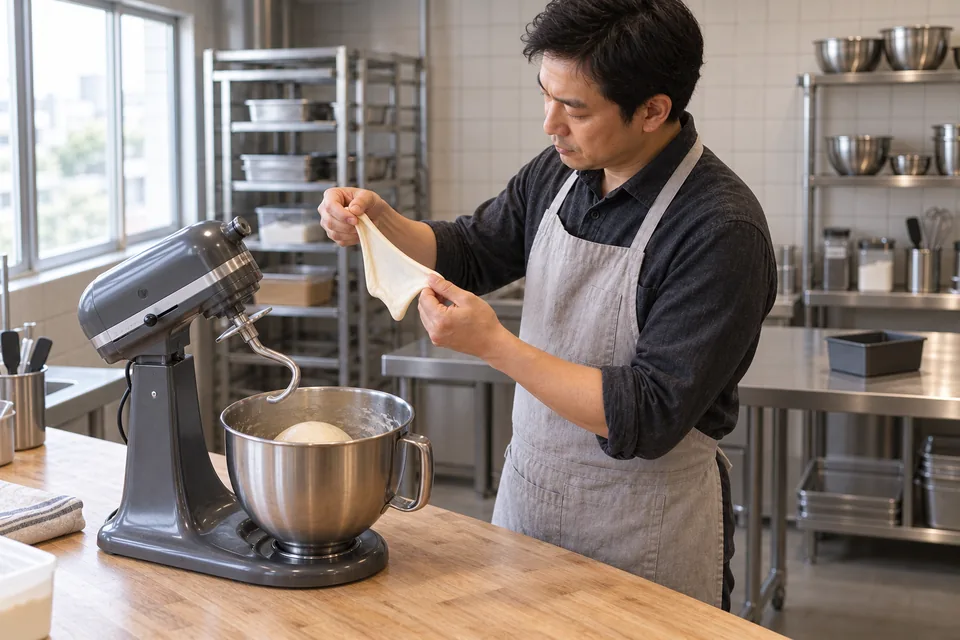
    The chef stands beside the stopped mixer, turning toward a small piece of elastic milk-bread dough held between his hands.
    02 Knead until elasticKnead the dough until it is smooth and elastic.
  3. 03 · Rise

    60–90 min

    Use: Dough

    Cover in greased bowl.

    Ready when: Puffy; doubling unnecessary.
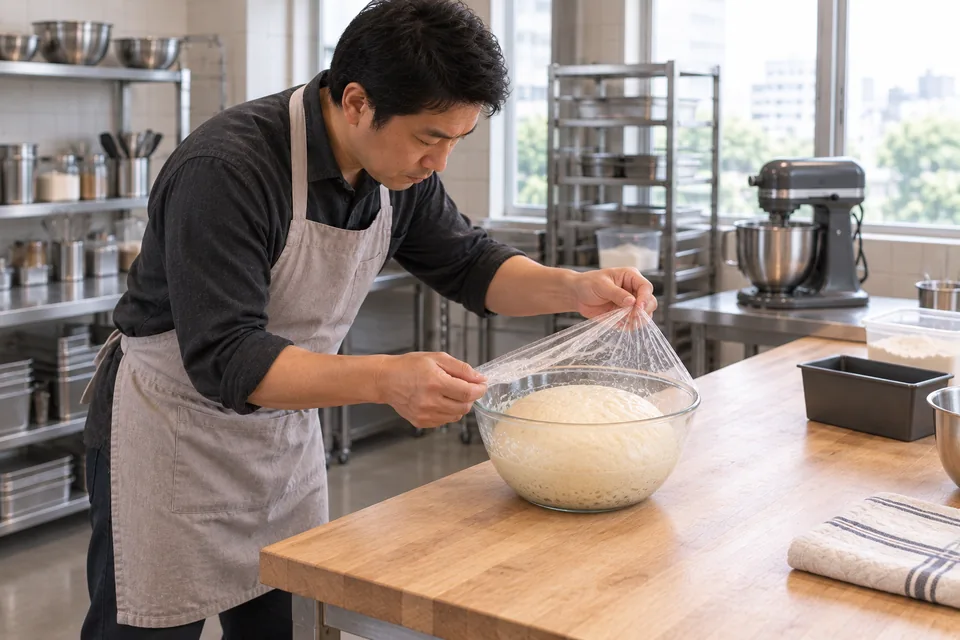
    The chef leans over the end of the bench to lift the cover from puffy milk-bread dough.
    03 Let the dough riseKeep the dough covered until it looks puffy; it does not need to double.
  4. 04 · Shape

    Use: Dough

    Deflate; quarter. Flatten each to 13 × 20 cm; letter-fold short ends inward. Flatten to 8 × 15 cm; roll from short end. Arrange four logs seam-down in greased tin.

    Ready when: Even rolls.

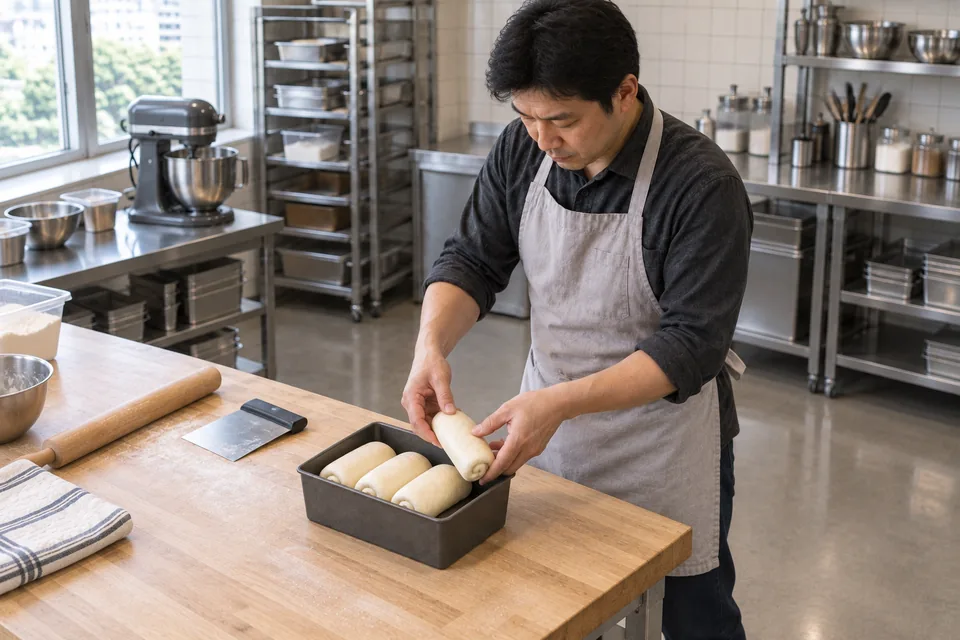
    The chef stands diagonally at the shaping bench, lowering the fourth dough roll beside the three already in the tin.
    04 Shape four rollsRoll the four dough pieces and arrange them seam-side down in the greased tin.
  5. 05 · Proof

    40–50 min

    Use: Loaf

    Cover; preheat oven toward end.

    Ready when: Puffy.

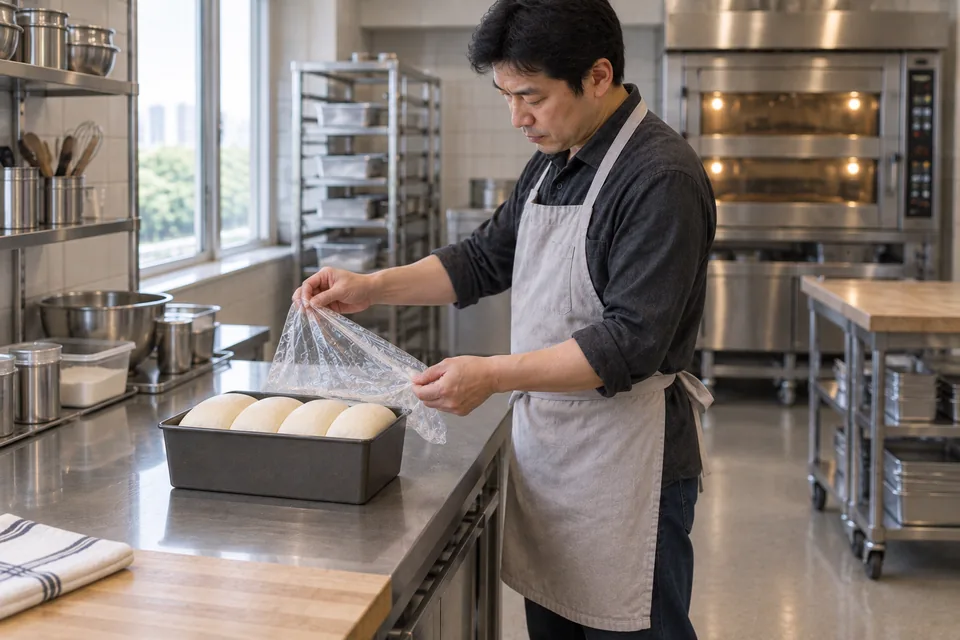
    Standing beside a stainless worktop, the chef lifts the cover from four puffy milk-bread rolls in their tin.
    05 Let the loaf become puffyCover the shaped loaf and let the four rolls become puffy.
  6. 06 · Bake

    30–35 min

    Use: Loaf+milk

    Brush with milk; bake.

    Ready when: Golden; centre ≥88°C.

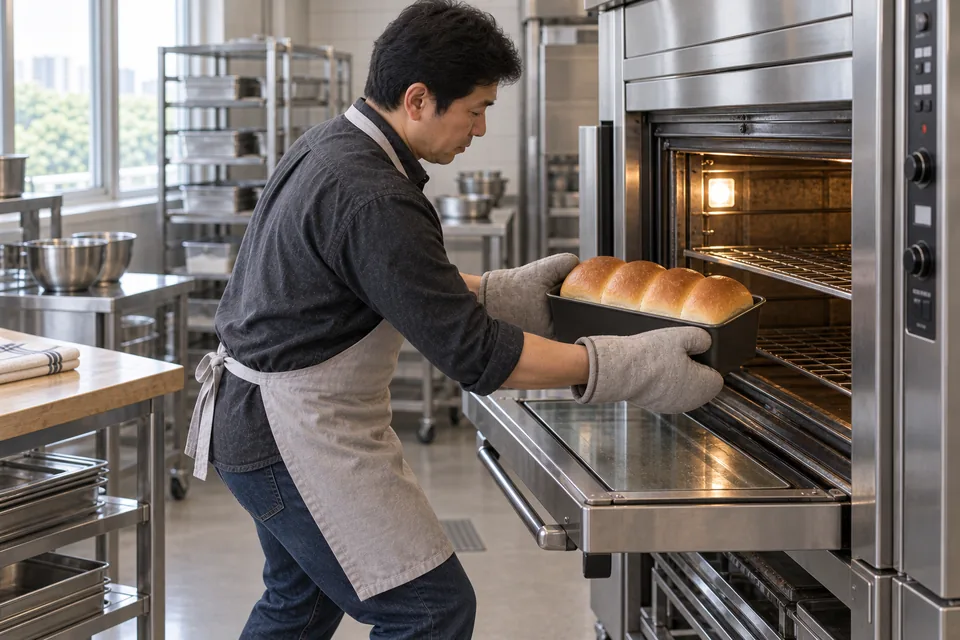
    With knees slightly bent and both hands in oven mitts, the chef lifts the golden four-lobed milk loaf from the oven.
    06 Bake until goldenBrush with milk and bake until the loaf is golden and cooked through.
  7. 07 · Cool

    Until cool

    Use: Loaf

    Rest briefly in tin; transfer to rack.

    Ready when: Sliceable crumb.

    The chef stands at the cutting board beside a cooled milk loaf with an exposed cut end and its matching end slice.
    07 Cool before slicingRest briefly in the tin, then cool the loaf on a rack before slicing.

What to look for

StageLook / feel forNeeds attention
PasteThickened evenly.Flour lumps.

Troubleshooting

If you see thisLikely causeWhat to do nowNext time
Paste runnyInsufficient cooking.Whisk longer.Follow thickness.
Dough tearsUnderdeveloped gluten.Continue kneading.Check elasticity.

Four-log, uncovered-loaf version.

Show ingredient flow

Recipe

Japanese milk bread · shokupan style

Soft tangzhong loaf.

How do I make it?

  1. Cook the flour paste

    3–5 min

    Whisk the water, milk and flour listed in group A over low heat for 3–5 minutes, until the whisk leaves tracks. Let the paste cool until lukewarm.

    A whisk leaving clear tracks in thick milk-and-flour paste in a small saucepan.
    Whisk the milk, water and flour until the paste thickens and holds the whisk’s tracks.

    Ready when: Whisk tracks remain.

  2. Make the dough

    Up to 15 min

    Mix the cooled paste with the remaining dough ingredients in group B. Knead in a mixer for up to 15 minutes, until smooth and stretchy.

    The chef stands beside the stopped mixer, turning toward a small piece of elastic milk-bread dough held between his hands.
    Knead the dough until it is smooth and elastic.

    Ready when: Smooth, elastic.

  3. Let it rise

    60–90 min

    Put the dough in a greased bowl and cover it. Leave for 60–90 minutes, until puffy; it does not need to double.

    The chef leans over the end of the bench to lift the cover from puffy milk-bread dough.
    Keep the dough covered until it looks puffy; it does not need to double.

    Ready when: Puffy; doubling unnecessary.

  4. Shape the loaf

    Gently press out the air and divide into four pieces, flattening each to 13 × 20 cm. Fold the short ends towards the middle like a letter, flatten to 8 × 15 cm, then roll up from a short end. Put the four rolls in the greased tin with their seams underneath.

    The chef stands diagonally at the shaping bench, lowering the fourth dough roll beside the three already in the tin.
    Roll the four dough pieces and arrange them seam-side down in the greased tin.

    Ready when: Even rolls.

  5. Let it rise again

    40–50 min

    Cover the loaf and leave for 40–50 minutes, until puffy. Heat the oven to 175°C towards the end of this rise.

    Standing beside a stainless worktop, the chef lifts the cover from four puffy milk-bread rolls in their tin.
    Cover the shaped loaf and let the four rolls become puffy.

    Ready when: Puffy.

  6. Bake

    30–35 min

    Brush the loaf with milk. Bake for 30–35 minutes, until golden and at least 88°C in the centre.

    With knees slightly bent and both hands in oven mitts, the chef lifts the golden four-lobed milk loaf from the oven.
    Brush with milk and bake until the loaf is golden and cooked through.

    Ready when: Golden; centre ≥88°C.

  7. Cool

    Until cool

    Leave the loaf in the tin briefly, then turn it onto a rack. Cool before slicing so the inside can set.

    The chef stands at the cutting board beside a cooled milk loaf with an exposed cut end and its matching end slice.
    Rest briefly in the tin, then cool the loaf on a rack before slicing.

    Ready when: Sliceable crumb.

What can go wrong, and how can I fix it?

What you noticeLikely causeWhat to do
Paste runnyInsufficient cooking.Whisk longer. Follow thickness.
Dough tearsUnderdeveloped gluten.Continue kneading. Check elasticity.
Useful recipe notes

Four-log, uncovered-loaf version.

See the detailed method and ratios in , or follow ingredients through the .

Ingredient proportions & recipe details

Japanese milk bread · shokupan style at a glance

Makes
1 loaf
Heat
175°C
Baking time
30–35 min
Leavening
Yeast
How do the ingredient proportions compare?

Percentages compare each listed weight with the combined flour weight (100%). These are ingredient ratios, not dough hydration; milk, eggs and fillings contain other ingredients as well as water.

Formula componentGramsFlour = 100%
Water43 g13.7%
Whole milk43 g13.7%
Bread flour14 g4.5%
Bread flour300 g95.5%
Nonfat milk powder14 g4.5%
Sugar50 g15.9%
Table salt6 g1.9%
Whole milk113 g36%
Unsalted butter57 g18.2%