Nepedia

Grissini

Thin, crisp Italian-style breadsticks made with olive oil. Divide the dough evenly and bake until the sticks dry through, then let them cool before storing.

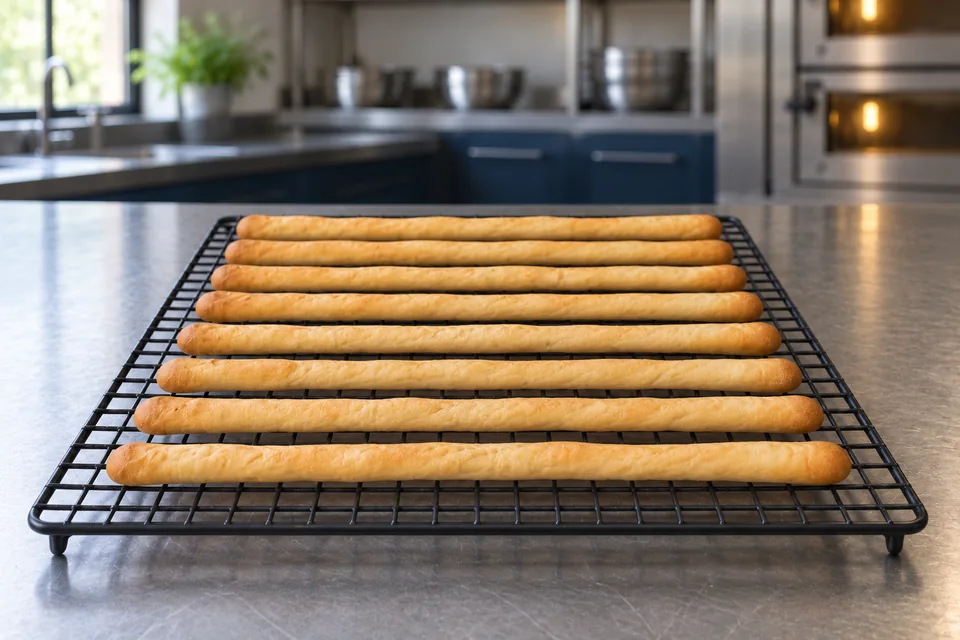
Eight long slender golden grissini arranged in parallel rows on a black wire rack.
Makes
30 breadsticks
Heat
200°C conventional
Baking time
18–25 min per tray; 36–50 min for two trays
Cuisine / style
Italy

If a cooled stick still bends, dry that tray at 150°C conventional for 5–10 min and cool again.

View

Grissini breadsticks

Makes
30 breadsticks
Heat
200°C conventional
Baking time
18–25 min per tray; 36–50 min for two trays
Cuisine / style
Italy

If a cooled stick still bends, dry that tray at 150°C conventional for 5–10 min and cool again.

Italy · Grissini

Grissini breadsticks

Thin, crisp Italian-style breadsticks made with olive oil. Divide the dough evenly and bake until the sticks dry through, then let them cool before storing.

Method

  1. 01 · Mix and knead the dough

    10–13 min

    Use: Strong white bread flour; Water; Olive oil; Instant dried yeast; Fine salt; Caster sugar

    Mix the flour, yeast, salt and sugar in a bowl. Add the water and dough oil, then stir until no loose flour remains. Knead for 8–10 minutes, by hand or with a dough hook at the mixer’s recommended speed.

    Ready when: The dough feels supple and evenly mixed, with a smooth surface that stretches before tearing.
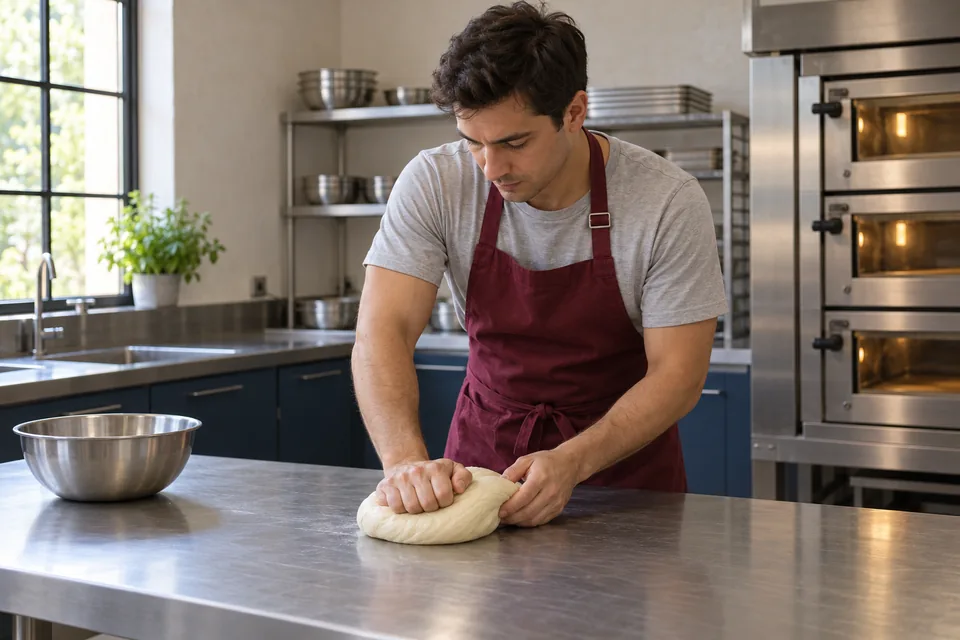
    Baker kneads a compact pale olive-oil dough on a steel workbench beside an empty mixing bowl.
    01 Grissini breadsticks — step 1Knead until the dough is smooth and supple.
  2. 02 · Let the dough rise

    60–120 min

    Use: Olive oil for the bowl

    Coat a clean bowl with the handling oil. Add the dough, turn it once, cover and leave at about 22–25°C for 60–120 minutes.

    Ready when: The dough has roughly doubled and feels lighter and aerated.
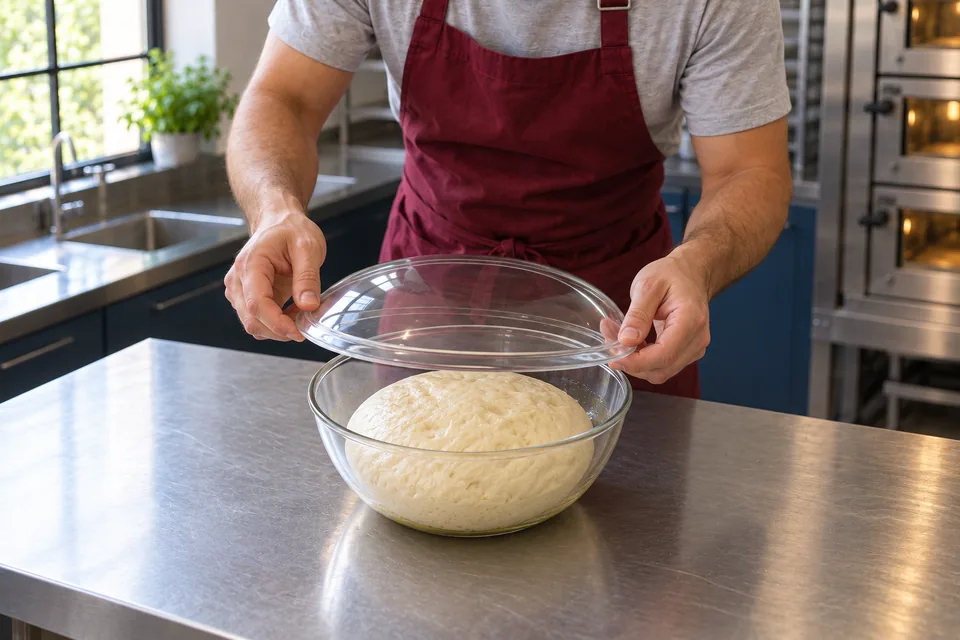
    Hands lower a clear cover over a small glass bowl of aerated olive-oil dough.
    02 Grissini breadsticks — step 2Cover and let the dough roughly double.
  3. 03 · Divide and rest the portions

    15–20 min

    Use: Fine semolina for shaping

    Line two 30 × 40cm baking trays with baking paper. Scatter a little semolina on the worktop. Press the larger bubbles from the dough and divide it into 30 equal pieces, about 15g each. Cover the pieces and rest them for 10 minutes. Heat the oven to 200°C conventional with a shelf in the middle.

    Ready when: The portions are even and begin to relax, ready to roll without springing back sharply.
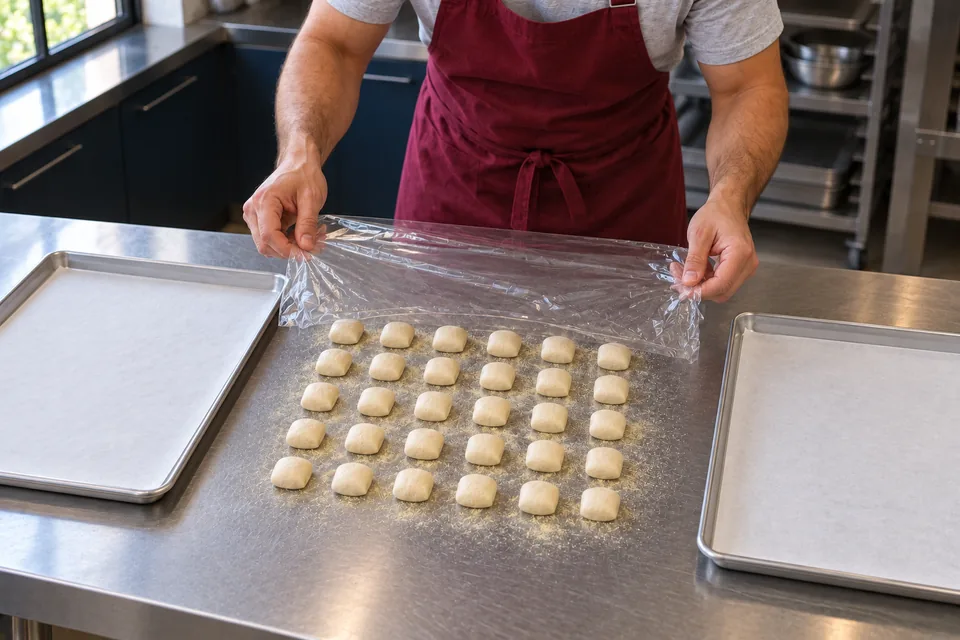
    Thirty small dough portions in five rows of six sit on a lightly semolina-dusted bench beside two lined trays.
    03 Grissini breadsticks — step 3Divide into thirty even portions and rest them covered.
  4. 04 · Roll thirty breadsticks

    15–20 min

    Use: Fine semolina for shaping

    Roll each portion into a thin rope about 25cm long and 8–9mm thick, using only enough of the remaining semolina to prevent sticking. If a piece resists, leave it for a few minutes while rolling another. Put 15 sticks on each tray, with space between them.

    Ready when: The ropes are similar in thickness from end to end; no large knots remain.
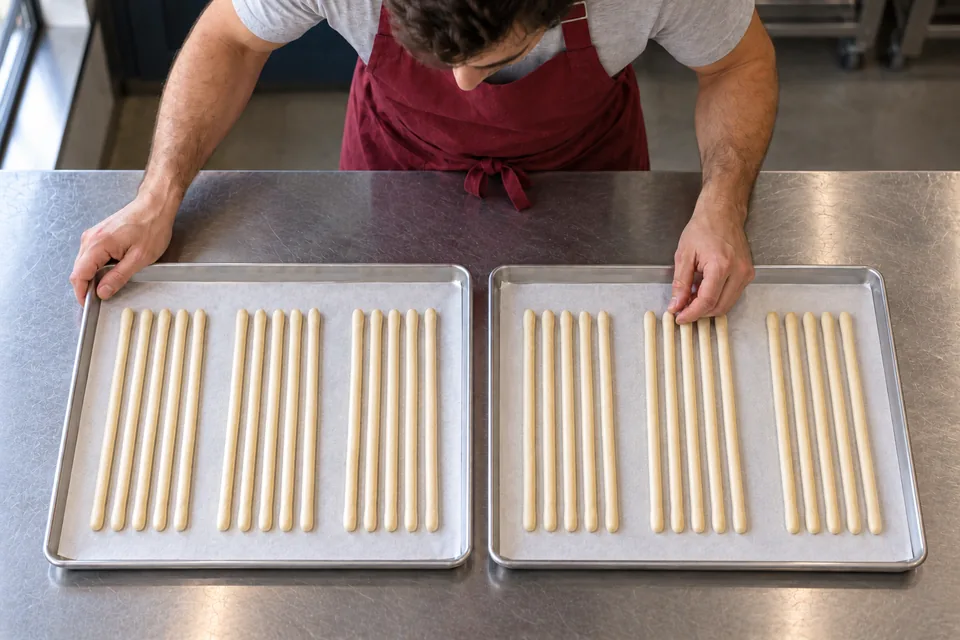
    Baker adjusts a thin raw breadstick on one of two trays, each holding three groups of five parallel sticks.
    04 Grissini breadsticks — step 4Roll thirty thin sticks and arrange fifteen on each tray.
  5. 05 · Bake one tray at a time

    36–50 min

    Use:

    Bake one tray at a time for 18–25 minutes, turning the tray around if colour is uneven. Keep the waiting tray loosely covered, then remove its cover before baking. There is no separate final proof.

    Ready when: The sticks are golden and dry at their centres. A test stick cooled for a few minutes snaps instead of bending.
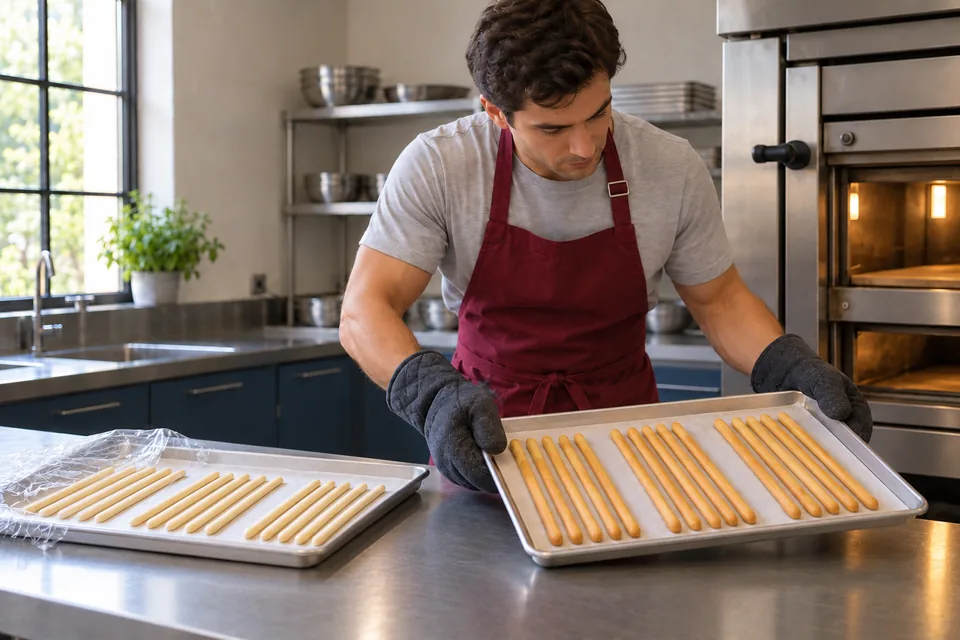
    Baker holds a tray of fifteen golden breadsticks while a second tray of fifteen pale raw sticks waits under a loose cover.
    05 Grissini breadsticks — step 5Bake one tray at a time until the sticks are golden and dry.
  6. 06 · Cool and check the crispness

    30 min

    Use:

    Move the sticks to a rack and cool for at least 30 minutes before packing. If a cooled stick still bends, return that tray to a 150°C conventional oven for 5–10 minutes, then cool again.

    Ready when: The fully cooled sticks are crisp through the middle and break with a clean snap.
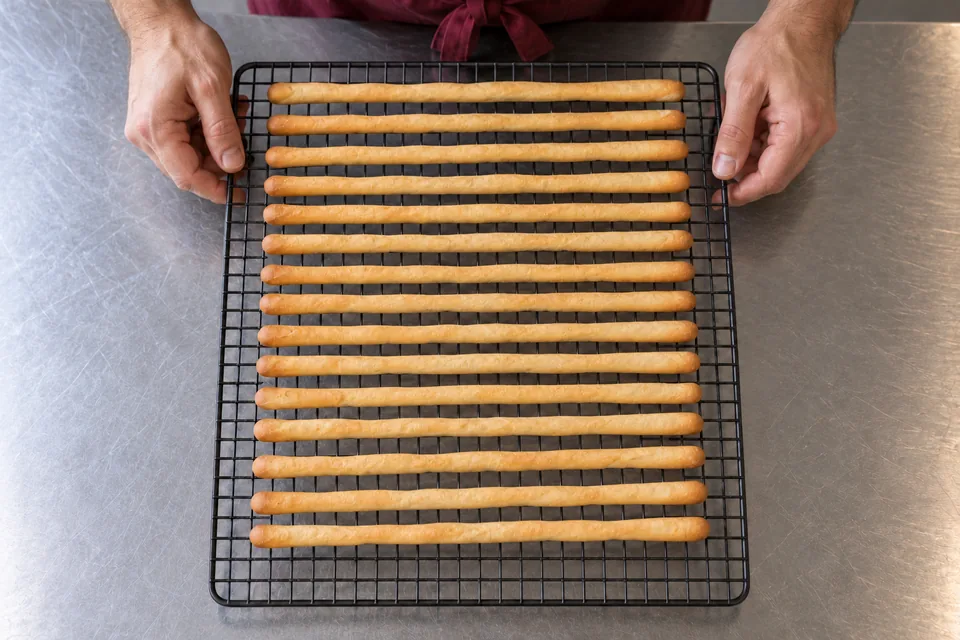
    Fifteen long golden plain breadsticks from one tray cool in parallel rows on a wire rack.
    06 Grissini breadsticks — step 6Move the sticks to a rack and let them cool until crisp.

What to look for

StageLook / feel forNeeds attention
Mix and knead the doughThe dough feels supple and evenly mixed, with a smooth surface that stretches before tearing.
Let the dough riseThe dough has roughly doubled and feels lighter and aerated.
Divide and rest the portionsThe portions are even and begin to relax, ready to roll without springing back sharply.
Roll thirty breadsticksThe ropes are similar in thickness from end to end; no large knots remain.
Bake one tray at a timeThe sticks are golden and dry at their centres. A test stick cooled for a few minutes snaps instead of bending.
Cool and check the crispnessThe fully cooled sticks are crisp through the middle and break with a clean snap.

Troubleshooting

If you see thisLikely causeWhat to do nowNext time
The dough ropes spring back.The gluten needs more time to relax.Cover the resistant pieces and rest them for 5–10 minutes.Give the divided dough its short rest and roll gently.
The sticks are brown but bend when cool.They are too thick or retain moisture at the centre.Dry them at 150°C conventional for 5–10 minutes,then cool and check again.Keep each rope thin and evenly shaped.
Some sticks burn while others stay pale.Uneven thickness or oven heat.Remove finished sticks and continue baking the paler ones.Weigh the portions and rotate the tray if needed.

Storage: Cool completely, then keep in an airtight container at room temperature for up to 3 days. If they soften, warm them at 150°C conventional for 5–10 minutes and cool again before serving.; Contains: wheat.; This Nepedia version has not been kitchen-tested.

Ingredient choices & substitutions

No brand is specified.

Match the ingredient’s function and weight. See the flour, gluten, yeast and salt guide.

Other approaches to this recipe
Cook / recipeUseWhat differs

The working ingredients and method form one recipe. Different formulas are compared without averaging their quantities or rise schedules.

Nepedia

Recipe

Grissini breadsticks

Thin, crisp Italian-style breadsticks made with olive oil. Divide the dough evenly and bake until the sticks dry through, then let them cool before storing.

How do I make it?

  1. Mix and knead the dough

    10–13 min

    Mix the flour, yeast, salt and sugar in a bowl. Add the water and dough oil, then stir until no loose flour remains. Knead for 8–10 minutes, by hand or with a dough hook at the mixer’s recommended speed.

    Baker kneads a compact pale olive-oil dough on a steel workbench beside an empty mixing bowl.
    Knead until the dough is smooth and supple.

    Ready when: The dough feels supple and evenly mixed, with a smooth surface that stretches before tearing.

  2. Let the dough rise

    60–120 min

    Coat a clean bowl with the handling oil. Add the dough, turn it once, cover and leave at about 22–25°C for 60–120 minutes.

    Hands lower a clear cover over a small glass bowl of aerated olive-oil dough.
    Cover and let the dough roughly double.

    Ready when: The dough has roughly doubled and feels lighter and aerated.

  3. Divide and rest the portions

    15–20 min

    Line two 30 × 40cm baking trays with baking paper. Scatter a little semolina on the worktop. Press the larger bubbles from the dough and divide it into 30 equal pieces, about 15g each. Cover the pieces and rest them for 10 minutes. Heat the oven to 200°C conventional with a shelf in the middle.

    Thirty small dough portions in five rows of six sit on a lightly semolina-dusted bench beside two lined trays.
    Divide into thirty even portions and rest them covered.

    Ready when: The portions are even and begin to relax, ready to roll without springing back sharply.

  4. Roll thirty breadsticks

    15–20 min

    Roll each portion into a thin rope about 25cm long and 8–9mm thick, using only enough of the remaining semolina to prevent sticking. If a piece resists, leave it for a few minutes while rolling another. Put 15 sticks on each tray, with space between them.

    Baker adjusts a thin raw breadstick on one of two trays, each holding three groups of five parallel sticks.
    Roll thirty thin sticks and arrange fifteen on each tray.

    Ready when: The ropes are similar in thickness from end to end; no large knots remain.

  5. Bake one tray at a time

    36–50 min

    Bake one tray at a time for 18–25 minutes, turning the tray around if colour is uneven. Keep the waiting tray loosely covered, then remove its cover before baking. There is no separate final proof.

    Baker holds a tray of fifteen golden breadsticks while a second tray of fifteen pale raw sticks waits under a loose cover.
    Bake one tray at a time until the sticks are golden and dry.

    Ready when: The sticks are golden and dry at their centres. A test stick cooled for a few minutes snaps instead of bending.

  6. Cool and check the crispness

    30 min

    Move the sticks to a rack and cool for at least 30 minutes before packing. If a cooled stick still bends, return that tray to a 150°C conventional oven for 5–10 minutes, then cool again.

    Fifteen long golden plain breadsticks from one tray cool in parallel rows on a wire rack.
    Move the sticks to a rack and let them cool until crisp.

    Ready when: The fully cooled sticks are crisp through the middle and break with a clean snap.

What can go wrong, and how can I fix it?

What you noticeLikely causeWhat to do
The dough ropes spring back.The gluten needs more time to relax.Cover the resistant pieces and rest them for 5–10 minutes. Give the divided dough its short rest and roll gently.
The sticks are brown but bend when cool.They are too thick or retain moisture at the centre.Dry them at 150°C conventional for 5–10 minutes,then cool and check again. Keep each rope thin and evenly shaped.
Some sticks burn while others stay pale.Uneven thickness or oven heat.Remove finished sticks and continue baking the paler ones. Weigh the portions and rotate the tray if needed.
Useful recipe notes

Storage: Cool completely, then keep in an airtight container at room temperature for up to 3 days. If they soften, warm them at 150°C conventional for 5–10 minutes and cool again before serving.

Contains: wheat.

This Nepedia version has not been kitchen-tested.

See the detailed method and ratios in , or follow ingredients through the .

Ingredient proportions & recipe details

Grissini breadsticks at a glance

Makes
30 breadsticks
Heat
200°C conventional
Baking time
18–25 min per tray; 36–50 min for two trays
Cuisine / style
Italy
Leavening
Yeast
How do the ingredient proportions compare?

Percentages compare each listed weight with the combined flour weight (100%). These are ingredient ratios, not dough hydration; milk, eggs and fillings contain other ingredients as well as water.

Formula componentGramsFlour = 100%
Strong white bread flour250 g100%
Water140 g56%
Olive oil40 g16%
Instant dried yeast2 g0.8%
Fine salt5 g2%
Caster sugar2.5 g1%