Filipino pandesal

Soft breakfast rolls coated in breadcrumbs before baking.

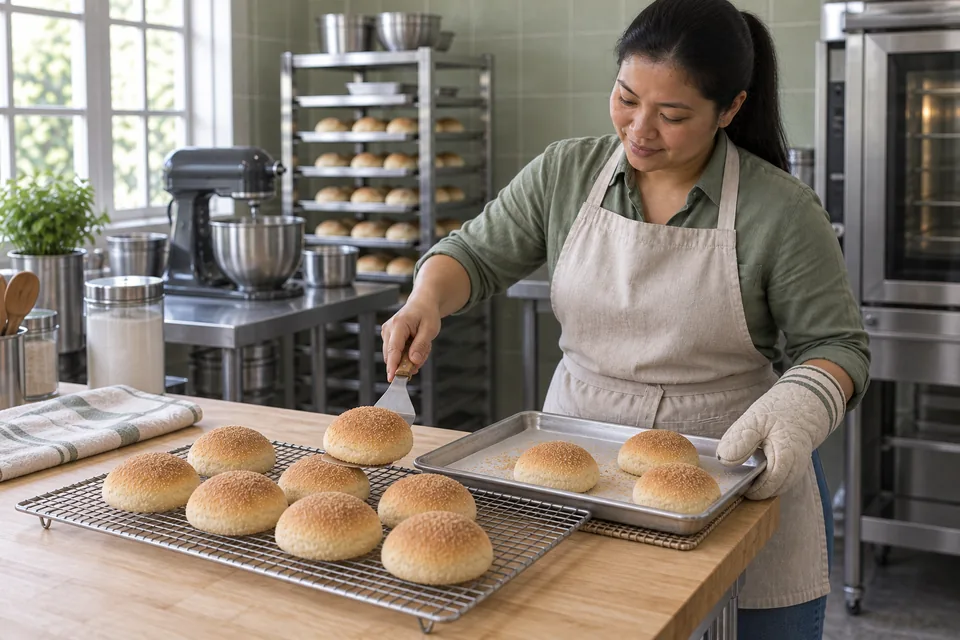
The baker stands beside a cooling rack and transfers a golden pandesal roll from the supported tray with a spatula.
Makes
24 rolls
Heat
175°C
Baking time
20–25 min
View

Filipino pandesal

Makes
24 rolls
Heat
175°C
Baking time
20–25 min
Philippines World collection

Filipino pandesal

Method

  1. 01 · Activate

    5–10 min

    Use: A

    Mix milk, yeast and reserved sugar.

    Ready when: Foamy.

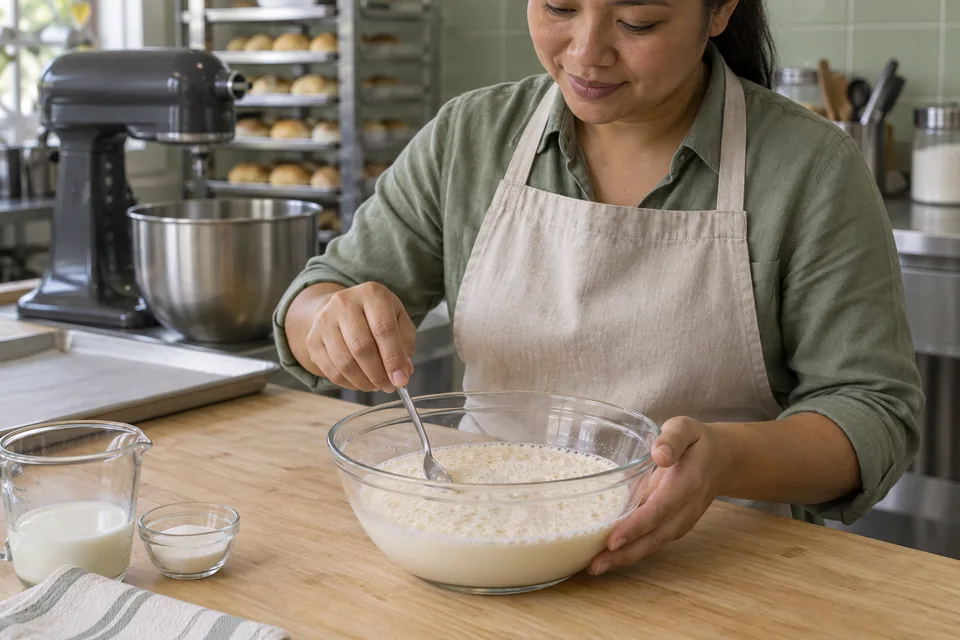
    Foamy yeast and milk in a glass bowl on a professional bakery bench.
    01 Activate the yeastLet the yeast mixture stand until it turns foamy.
  2. 02 · Mix

    5–7 min

    Use: A+B+C

    Add B. Whisk C separately; add in thirds on low. Knead medium.

    Ready when: Elastic; releases sides.

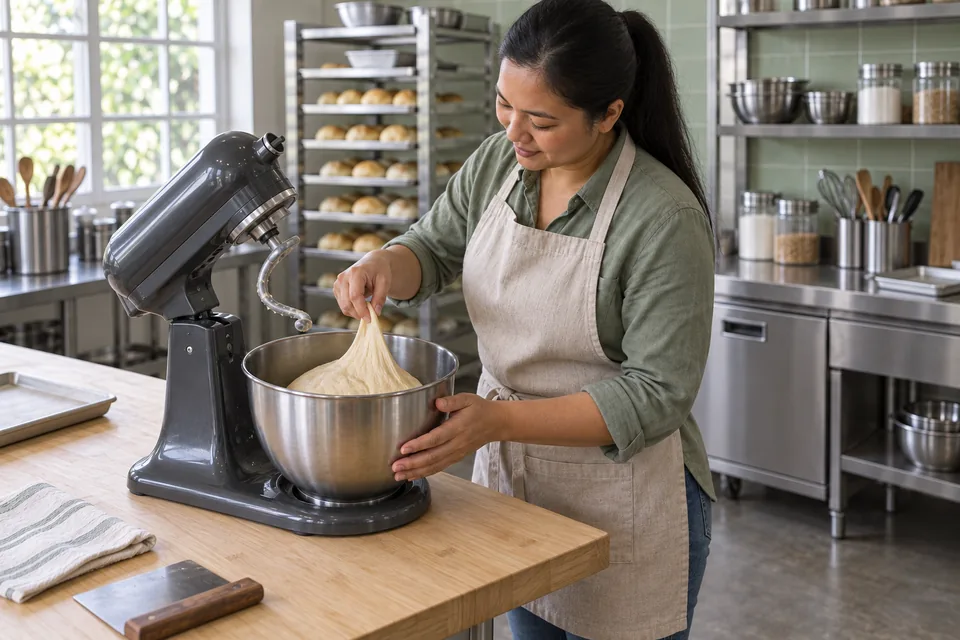
    The baker leans toward a stopped mixer to check the elastic pandesal dough in its bowl.
    02 Mix and kneadKnead until the dough is elastic and pulls away from the bowl’s sides.
  3. 03 · Rise

    About 1 hour

    Use: Dough

    Oil bowl; cover.

    Ready when: Doubled.

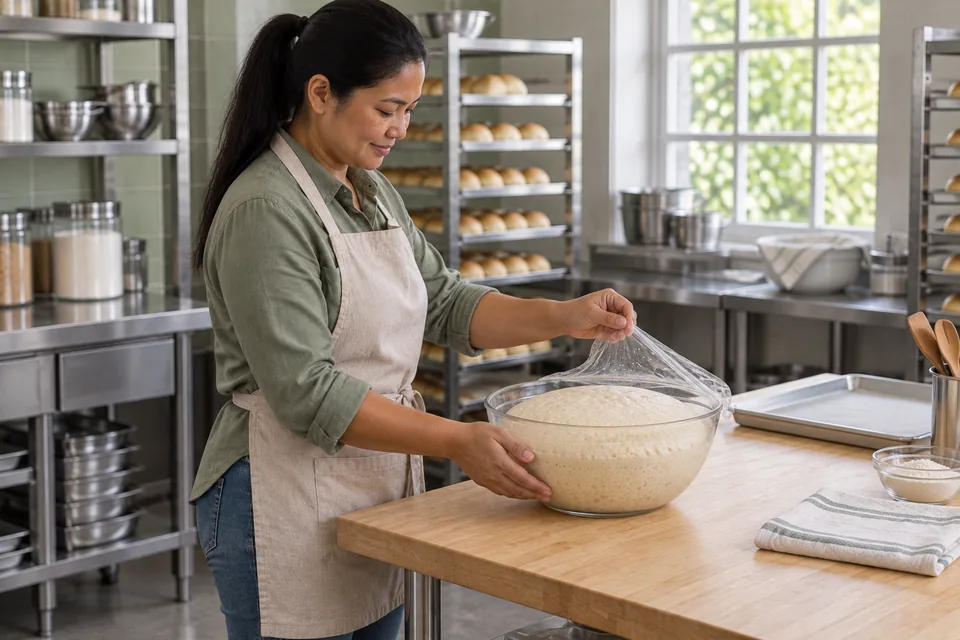
    The baker stands at the side of the bench, lifting the cover to check doubled pandesal dough.
    03 Let the dough doubleKeep the dough covered in an oiled bowl until doubled.
  4. 04 · Shape

    Use: Dough

    Deflate; divide into 24 ovals. Dip tops in crumbs; place 4 cm apart. Cover.

    Ready when: Uniform rolls.

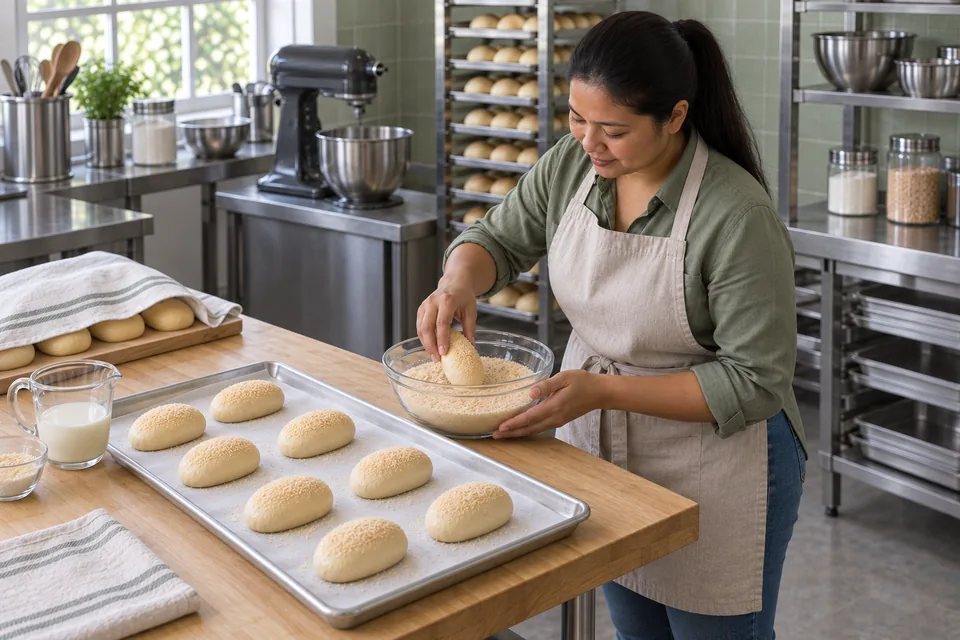
    The baker bends toward a bowl of fine breadcrumbs to coat an oval roll beside a tray of shaped pandesal.
    04 Coat and shape the rollsShape even ovals and dip their tops in breadcrumbs before placing them on the tray.
  5. 05 · Proof

    20–30 min

    Use: Rolls

    Preheat oven; let rise.

    Ready when: Puffy; dent recovers slowly.
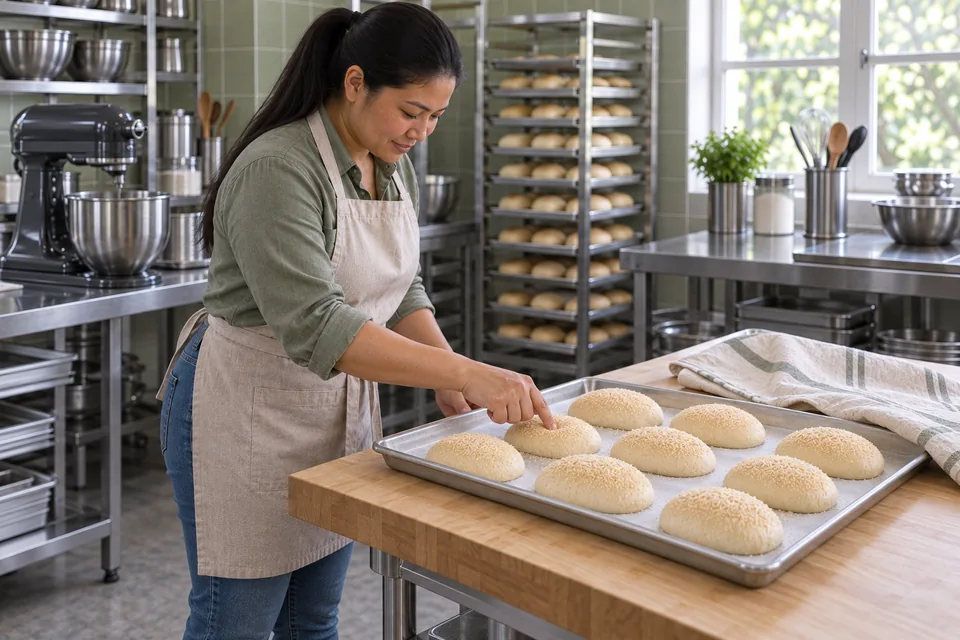
    The baker leans from the side of the tray to gently check a puffy breadcrumb-topped roll with a fingertip.
    05 Let the rolls become puffyLet the rolls rise until puffy and a gentle dent returns slowly.
  6. 06 · Bake

    20–25 min

    Use: Rolls

    Uncover; bake, then transfer to rack.

    Ready when: Golden.

    The baker stands beside a cooling rack and transfers a golden pandesal roll from the supported tray with a spatula.
    06 Bake until goldenBake uncovered, then transfer the golden rolls to a rack.

What to look for

StageLook / feel forNeeds attention
DoughSlight tackiness.Adding unnecessary flour.

Troubleshooting

If you see thisLikely causeWhat to do nowNext time
Dense rollsExcess flour.Weigh next batch.Accept slight tackiness.
Dry dough skinUncovered resting.Cover remaining pieces.Cover while shaping.

Salt brand retained.

Show ingredient flow

Recipe

Filipino pandesal

Breadcrumb-coated breakfast rolls.

How do I make it?

  1. Wake up the yeast

    5–10 min

    Mix the warm milk, yeast and the reserved 9.86 mL sugar. Leave for 5–10 minutes, until foamy.

    Foamy yeast and milk in a glass bowl on a professional bakery bench.
    Let the yeast mixture stand until it turns foamy.

    Ready when: Foamy.

  2. Make the dough

    5–7 min

    Add the remaining sugar, butter, oil and eggs. Whisk the flour and salt separately, then add in three batches with the mixer on low. Knead on medium for 5–7 minutes, until stretchy and pulling away from the bowl sides.

    The baker leans toward a stopped mixer to check the elastic pandesal dough in its bowl.
    Knead until the dough is elastic and pulls away from the bowl’s sides.

    Ready when: Elastic; releases sides.

  3. Let it rise

    About 1 hour

    Put the dough in an oiled bowl and cover. Leave for about 1 hour, until doubled.

    The baker stands at the side of the bench, lifting the cover to check doubled pandesal dough.
    Keep the dough covered in an oiled bowl until doubled.

    Ready when: Doubled.

  4. Shape the rolls

    Gently press out the air and divide into 24 even ovals. Dip the tops in breadcrumbs, place 4 cm apart and cover.

    The baker bends toward a bowl of fine breadcrumbs to coat an oval roll beside a tray of shaped pandesal.
    Shape even ovals and dip their tops in breadcrumbs before placing them on the tray.

    Ready when: Uniform rolls.

  5. Let them rise again

    20–30 min

    Heat the oven to 175°C. Let the rolls rise for 20–30 minutes, until puffy and a finger dent fills back slowly.

    The baker leans from the side of the tray to gently check a puffy breadcrumb-topped roll with a fingertip.
    Let the rolls rise until puffy and a gentle dent returns slowly.

    Ready when: Puffy; dent recovers slowly.

  6. Bake

    20–25 min

    Uncover and bake for 20–25 minutes, until golden. Transfer to a rack.

    The baker stands beside a cooling rack and transfers a golden pandesal roll from the supported tray with a spatula.
    Bake uncovered, then transfer the golden rolls to a rack.

    Ready when: Golden.

What can go wrong, and how can I fix it?

What you noticeLikely causeWhat to do
Dense rollsExcess flour.Weigh next batch. Accept slight tackiness.
Dry dough skinUncovered resting.Cover remaining pieces. Cover while shaping.
Useful recipe notes

Salt brand retained.

See the detailed method and ratios in , or follow ingredients through the .

Ingredient proportions & recipe details

Filipino pandesal at a glance

Makes
24 rolls
Heat
175°C
Baking time
20–25 min
Leavening
Yeast
How do the ingredient proportions compare?

Percentages compare each listed weight with the combined flour weight (100%). These are ingredient ratios, not dough hydration; milk, eggs and fillings contain other ingredients as well as water.

Formula componentGramsFlour = 100%
Active dry yeast7 g1.3%
Whole milk285 g54.8%
Sugar70 g13.5%
Butter15 g2.9%
Neutral oil25 g4.8%
All-purpose flour520 g100%