Nepedia

Dolcelatte bread ring

An olive-oil bread ring with soft blue cheese worked through the dough. An overnight preferment develops the dough before the cheese is added the following day.

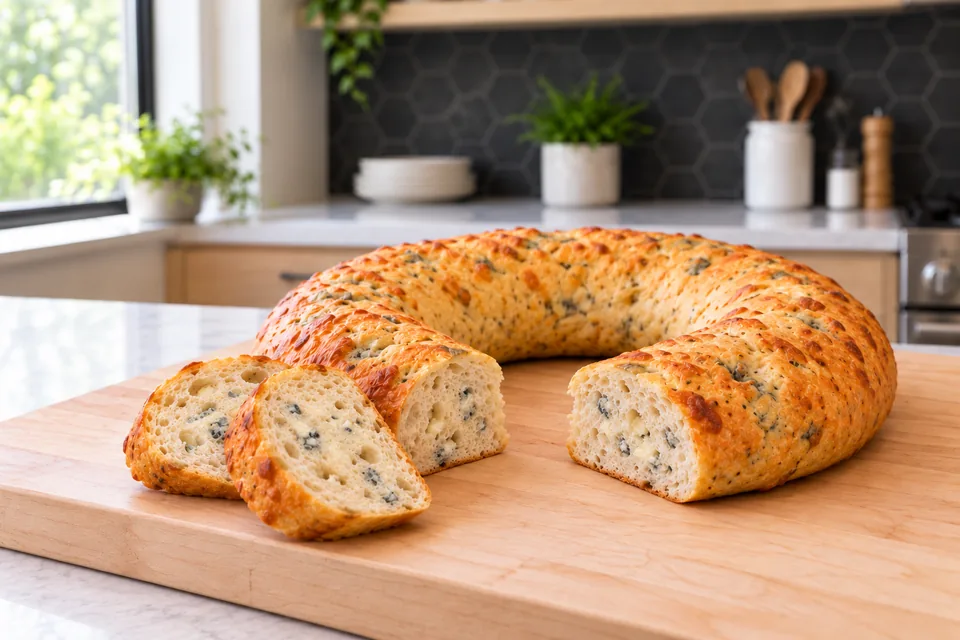
One golden ring with a small cut-out gap and two removed slices shows a set cream crumb with scattered small blue-cheese pockets.
Makes
1 ring, about 16 slices
Heat
220°C conventional
Baking time
30–40 min
Cuisine / style
Italy
View

Dolcelatte bread ring

Makes
1 ring, about 16 slices
Heat
220°C conventional
Baking time
30–40 min
Cuisine / style
Italy
Italy · Tuscan-style bread

Dolcelatte bread ring

An olive-oil bread ring with soft blue cheese worked through the dough. An overnight preferment develops the dough before the cheese is added the following day.

Method

  1. 01 · Make and mature the preferment

    600–840 min

    Use: Strong white bread flour; Water; Instant dried yeast

    Stir the preferment flour, water and 0.6 g yeast in a bowl until no dry flour remains. Cover with space for expansion and leave at 18–21°C for 10–14 hours.

    Ready when: The mixture is expanded and bubbly, with a surface that is just beginning to level.
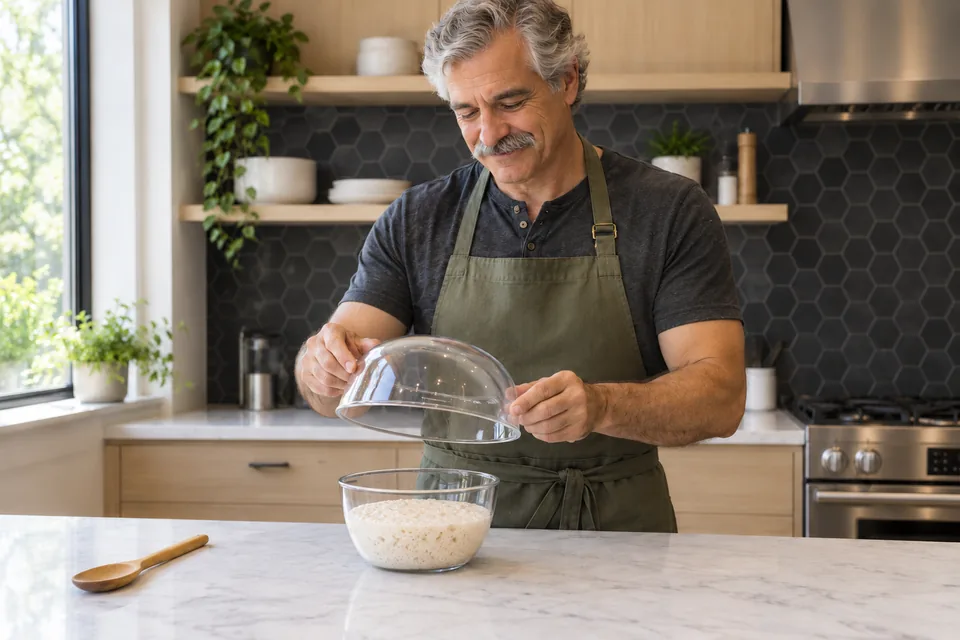
    The cook lifts a clear cover over a small glass bowl of bubbly, expanded preferment.
    01 PrefermentLet the covered preferment expand and become bubbly.
  2. 02 · Mix and develop the final dough

    10–13 min

    Use: Strong white bread flour; Water; Instant dried yeast; Olive oil

    Mix the final flour, water, 3 g yeast and olive oil into the preferment. Knead by hand for 8–10 minutes, or use a dough hook at the machine’s recommended speed until the dough becomes elastic.

    Ready when: The dough holds together and stretches instead of breaking immediately.
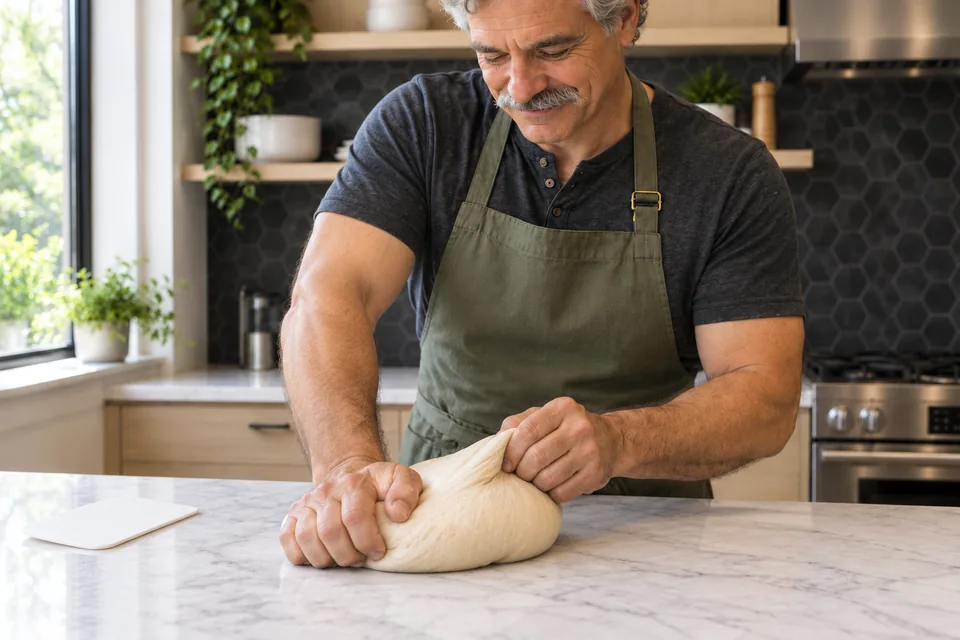
    The cook stretches and folds one smooth pale dough on the counter.
    02 DevelopDevelop the olive-oil dough before adding cheese.
  3. 03 · Fold in the chilled cheese

    3–5 min

    Use: Dolcelatte cheese

    Spread the dough into a thick rectangle. Scatter over the chilled cheese, fold the dough around it and knead gently for 2–3 minutes to distribute it. Avoid adding extra flour to absorb every soft patch.

    Ready when: Small cheese pieces are distributed through the dough; occasional creamy streaks are expected.
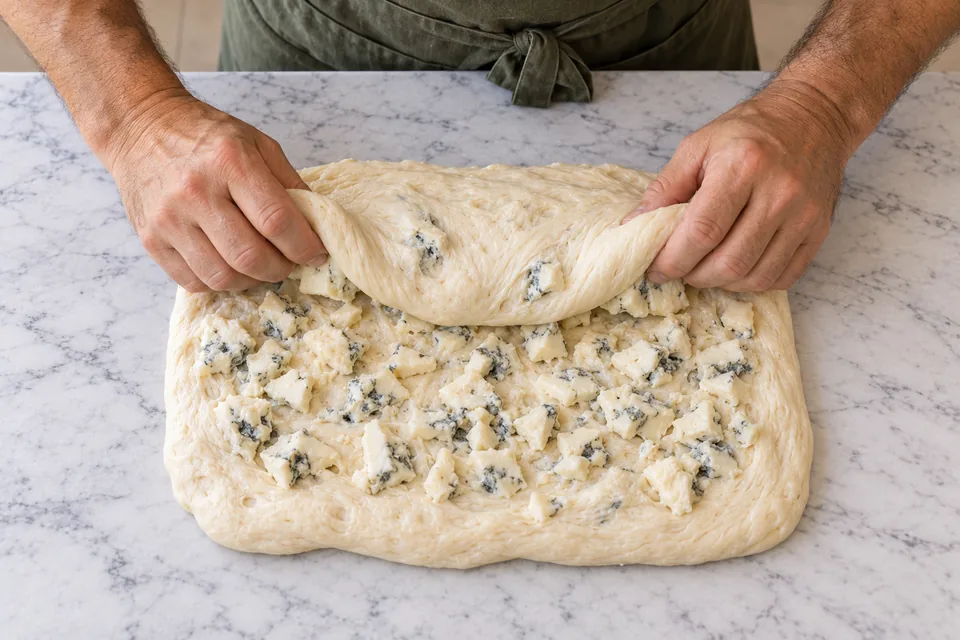
    The cook folds a thick dough rectangle over small cream-and-blue pieces of Dolcelatte.
    03 Add CheeseFold the chilled cheese through the developed dough.
  4. 04 · Let the cheese dough rise

    60–90 min

    Use: Olive oil for the bowl

    Coat a bowl with the separate oil, add the dough and cover. Leave at 22–24°C for 60–90 minutes.

    Ready when: The dough is visibly aerated and roughly doubled in volume.
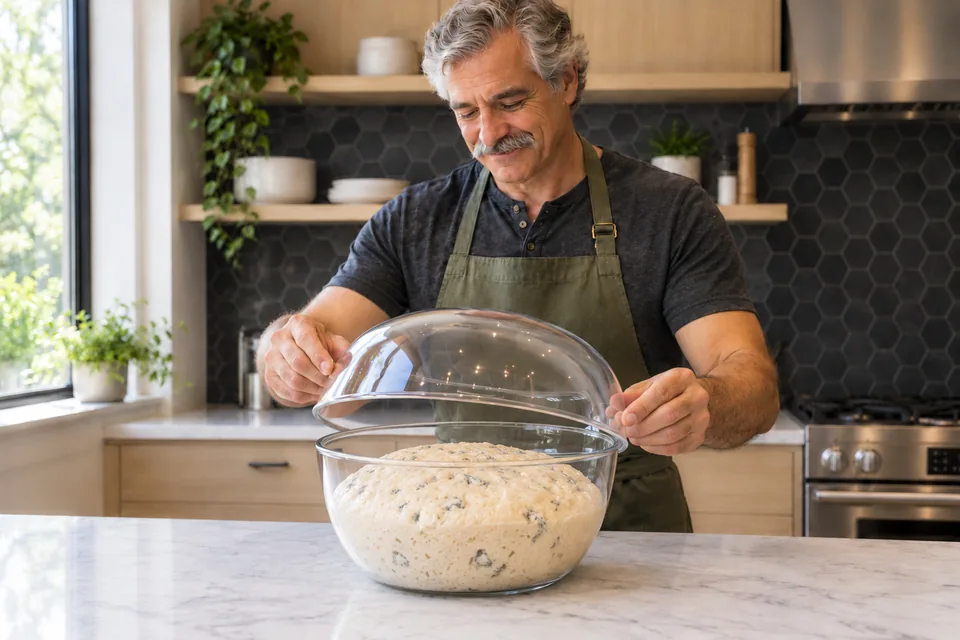
    The cook holds a clear cover above an aerated pale dough flecked with small pieces of blue cheese.
    04 Bulk RiseCover and let the cheese dough roughly double.
  5. 05 · Shape a rope and join into a ring

    10–15 min

    Use: Flour for shaping

    Line a 30×40 cm baking tray with baking paper. On a lightly floured worktop, gently flatten the dough and roll it into an even rope about 55 cm long. Bring the ends together and pinch them firmly closed. Move the ring to the tray with the join underneath, leaving a central opening about 12 cm across. Dust lightly with the remaining shaping flour as needed.

    Ready when: One continuous ring sits evenly on the tray, with a sealed join and a generous central opening.
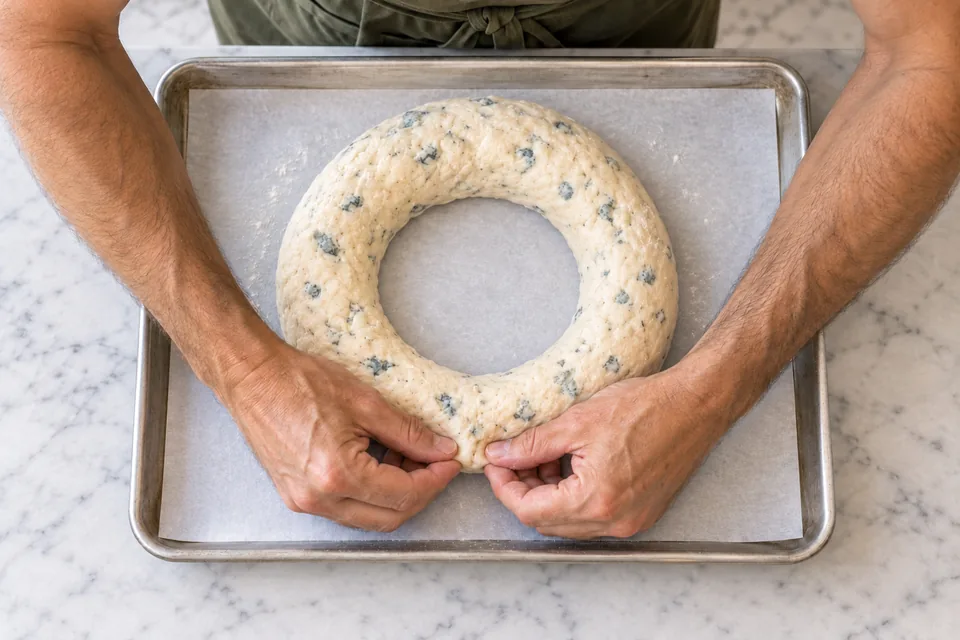
    The cook pinches the join beneath one raw cheese-dough ring with a wide round centre opening.
    05 Shape RingSeal the rope into a ring with a generous centre opening.
  6. 06 · Proof and heat the oven

    45–75 min

    Use:

    Cover loosely and leave at 22–24°C for 45–75 minutes. Heat the oven to 220°C conventional during the final 20 minutes.

    Ready when: The ring is puffy and a gentle fingertip dent fills slowly. The central opening is still clearly visible.
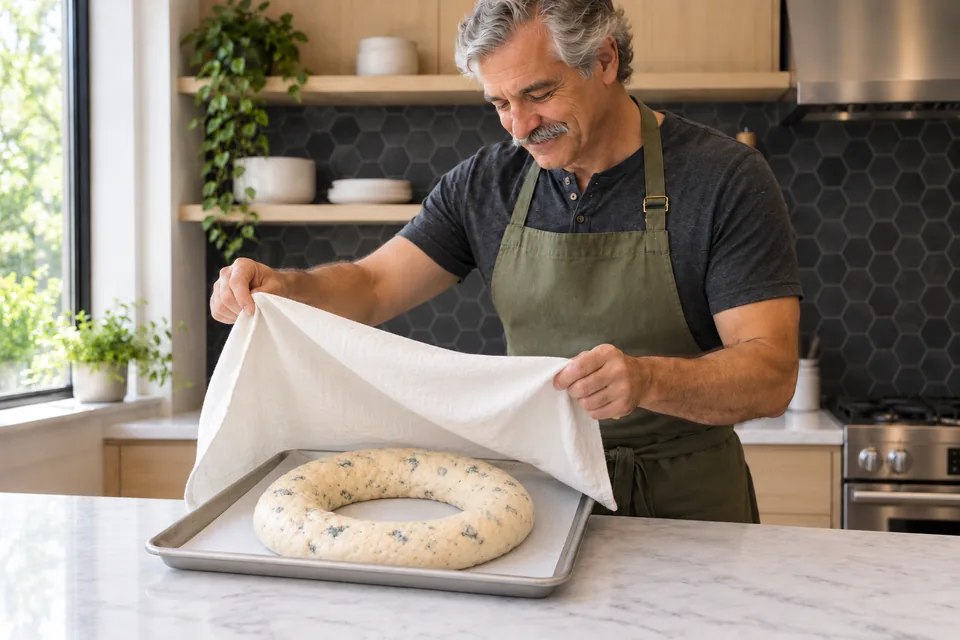
    The cook lifts a loose cloth over one puffy pale bread ring with a clear open centre.
    06 ProofLet the ring become puffy while keeping the centre open.
  7. 07 · Bake the ring

    30–40 min

    Use:

    Bake on the middle rack for 30–40 minutes. If the cheese on top darkens early, cover loosely with foil for the remaining time. Check a thick part of the bread with a probe, avoiding a melted-cheese pocket.

    Ready when: The crust is golden brown, the base is firm, and the bread crumb reaches about 96°C.
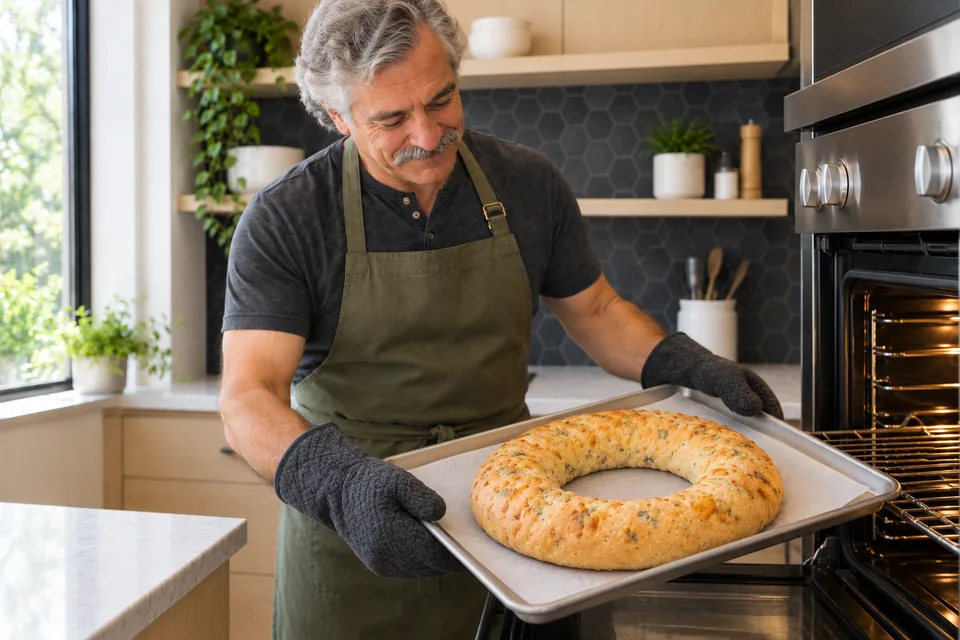
    Using two oven mitts, the cook holds one golden bread ring flecked with baked cheese on a lined tray.
    07 BakeBake until the crust is golden brown and the base is firm.
  8. 08 · Cool before slicing

    60 min

    Use:

    Transfer the ring to a rack and leave for at least 1 hour before slicing.

    Ready when: The underside has cooled and the crumb holds together around the cheese.
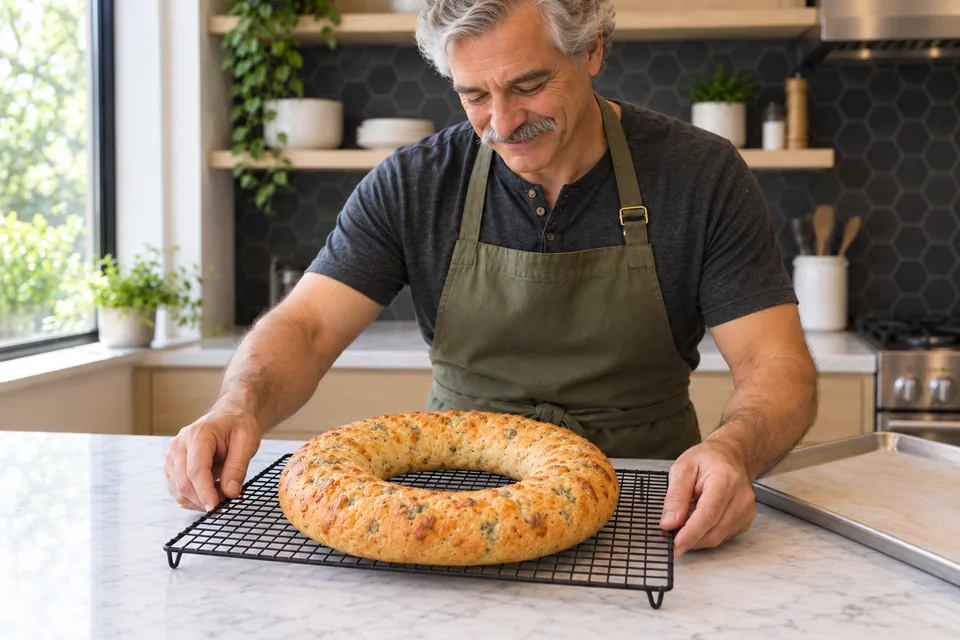
    The cook steadies a wire rack holding one whole golden cheese-bread ring with an open centre.
    08 CoolCool the ring on a rack before slicing.

What to look for

StageLook / feel forNeeds attention
Make and mature the prefermentThe mixture is expanded and bubbly, with a surface that is just beginning to level.
Mix and develop the final doughThe dough holds together and stretches instead of breaking immediately.
Fold in the chilled cheeseSmall cheese pieces are distributed through the dough; occasional creamy streaks are expected.
Let the cheese dough riseThe dough is visibly aerated and roughly doubled in volume.
Shape a rope and join into a ringOne continuous ring sits evenly on the tray, with a sealed join and a generous central opening.
Proof and heat the ovenThe ring is puffy and a gentle fingertip dent fills slowly. The central opening is still clearly visible.
Bake the ringThe crust is golden brown, the base is firm, and the bread crumb reaches about 96°C.
Cool before slicingThe underside has cooled and the crumb holds together around the cheese.

Troubleshooting

If you see thisLikely causeWhat to do nowNext time
The dough smears after adding cheese.Soft cheese and fat were worked too aggressively.Pause for 5 minutes, then fold gently with a scraper.Develop the plain dough first and use chilled cheese.
The central hole closes.The ring began with too small an opening.Before the final proof, gently widen the centre and reseal any loose join.Start with the stated generous opening and leave room for expansion.
Cheese on top browns early.Exposed cheese colours faster than the bread cooks.Cover loosely with foil and continue until the bread is set.Keep most cheese enclosed and check the loaf near the lower end of the baking range.

Storage: Let the bread cool, then wrap and refrigerate for up to 2 days. Warm slices before serving. Freeze wrapped slices for up to 1 month and reheat from frozen until hot through.; Contains: wheat, milk.; This Nepedia version has not been kitchen-tested.

Ingredient choices & substitutions

No brand is specified.

Match the ingredient’s function and weight. See the flour, gluten, yeast and salt guide.

Other approaches to this recipe
Cook / recipeUseWhat differs

The working ingredients and method form one recipe. Different formulas are compared without averaging their quantities or rise schedules.

Nepedia
One golden ring with a small cut-out gap and two removed slices shows a set cream crumb with scattered small blue-cheese pockets.
Dolcelatte bread ring with soft cheese through the crumb.

Recipe

Dolcelatte bread ring

An olive-oil bread ring with soft blue cheese worked through the dough. An overnight preferment develops the dough before the cheese is added the following day.

How do I make it?

  1. Make and mature the preferment

    600–840 min

    Stir the preferment flour, water and 0.6 g yeast in a bowl until no dry flour remains. Cover with space for expansion and leave at 18–21°C for 10–14 hours.

    The cook lifts a clear cover over a small glass bowl of bubbly, expanded preferment.
    Let the covered preferment expand and become bubbly.

    Ready when: The mixture is expanded and bubbly, with a surface that is just beginning to level.

  2. Mix and develop the final dough

    10–13 min

    Mix the final flour, water, 3 g yeast and olive oil into the preferment. Knead by hand for 8–10 minutes, or use a dough hook at the machine’s recommended speed until the dough becomes elastic.

    The cook stretches and folds one smooth pale dough on the counter.
    Develop the olive-oil dough before adding cheese.

    Ready when: The dough holds together and stretches instead of breaking immediately.

  3. Fold in the chilled cheese

    3–5 min

    Spread the dough into a thick rectangle. Scatter over the chilled cheese, fold the dough around it and knead gently for 2–3 minutes to distribute it. Avoid adding extra flour to absorb every soft patch.

    The cook folds a thick dough rectangle over small cream-and-blue pieces of Dolcelatte.
    Fold the chilled cheese through the developed dough.

    Ready when: Small cheese pieces are distributed through the dough; occasional creamy streaks are expected.

  4. Let the cheese dough rise

    60–90 min

    Coat a bowl with the separate oil, add the dough and cover. Leave at 22–24°C for 60–90 minutes.

    The cook holds a clear cover above an aerated pale dough flecked with small pieces of blue cheese.
    Cover and let the cheese dough roughly double.

    Ready when: The dough is visibly aerated and roughly doubled in volume.

  5. Shape a rope and join into a ring

    10–15 min

    Line a 30×40 cm baking tray with baking paper. On a lightly floured worktop, gently flatten the dough and roll it into an even rope about 55 cm long. Bring the ends together and pinch them firmly closed. Move the ring to the tray with the join underneath, leaving a central opening about 12 cm across. Dust lightly with the remaining shaping flour as needed.

    The cook pinches the join beneath one raw cheese-dough ring with a wide round centre opening.
    Seal the rope into a ring with a generous centre opening.

    Ready when: One continuous ring sits evenly on the tray, with a sealed join and a generous central opening.

  6. Proof and heat the oven

    45–75 min

    Cover loosely and leave at 22–24°C for 45–75 minutes. Heat the oven to 220°C conventional during the final 20 minutes.

    The cook lifts a loose cloth over one puffy pale bread ring with a clear open centre.
    Let the ring become puffy while keeping the centre open.

    Ready when: The ring is puffy and a gentle fingertip dent fills slowly. The central opening is still clearly visible.

  7. Bake the ring

    30–40 min

    Bake on the middle rack for 30–40 minutes. If the cheese on top darkens early, cover loosely with foil for the remaining time. Check a thick part of the bread with a probe, avoiding a melted-cheese pocket.

    Using two oven mitts, the cook holds one golden bread ring flecked with baked cheese on a lined tray.
    Bake until the crust is golden brown and the base is firm.

    Ready when: The crust is golden brown, the base is firm, and the bread crumb reaches about 96°C.

  8. Cool before slicing

    60 min

    Transfer the ring to a rack and leave for at least 1 hour before slicing.

    The cook steadies a wire rack holding one whole golden cheese-bread ring with an open centre.
    Cool the ring on a rack before slicing.

    Ready when: The underside has cooled and the crumb holds together around the cheese.

What can go wrong, and how can I fix it?

What you noticeLikely causeWhat to do
The dough smears after adding cheese.Soft cheese and fat were worked too aggressively.Pause for 5 minutes, then fold gently with a scraper. Develop the plain dough first and use chilled cheese.
The central hole closes.The ring began with too small an opening.Before the final proof, gently widen the centre and reseal any loose join. Start with the stated generous opening and leave room for expansion.
Cheese on top browns early.Exposed cheese colours faster than the bread cooks.Cover loosely with foil and continue until the bread is set. Keep most cheese enclosed and check the loaf near the lower end of the baking range.
Useful recipe notes

Storage: Let the bread cool, then wrap and refrigerate for up to 2 days. Warm slices before serving. Freeze wrapped slices for up to 1 month and reheat from frozen until hot through.

Contains: wheat, milk.

This Nepedia version has not been kitchen-tested.

See the detailed method and ratios in , or follow ingredients through the .

Ingredient proportions & recipe details

Dolcelatte bread ring at a glance

Makes
1 ring, about 16 slices
Heat
220°C conventional
Baking time
30–40 min
Cuisine / style
Italy
Leavening
Yeast
Bulk fermentation (including folding)
60–90 min · The dough is visibly aerated and roughly doubled in volume.
How do the ingredient proportions compare?

Percentages compare each listed weight with the combined flour weight (100%). These are ingredient ratios, not dough hydration; milk, eggs and fillings contain other ingredients as well as water.

Formula componentGramsFlour = 100%
Strong white bread flour130 g26%
Water125 g25%
Instant dried yeast0.6 g0.1%
Strong white bread flour370 g74%
Water180 g36%
Instant dried yeast3 g0.6%
Olive oil50 g10%
Dolcelatte cheese150 g30%