Nepedia

Cypriot-style village bread

A round olive-oil loaf scented with mastic and mahlab, with a sesame, nigella and caraway crust.

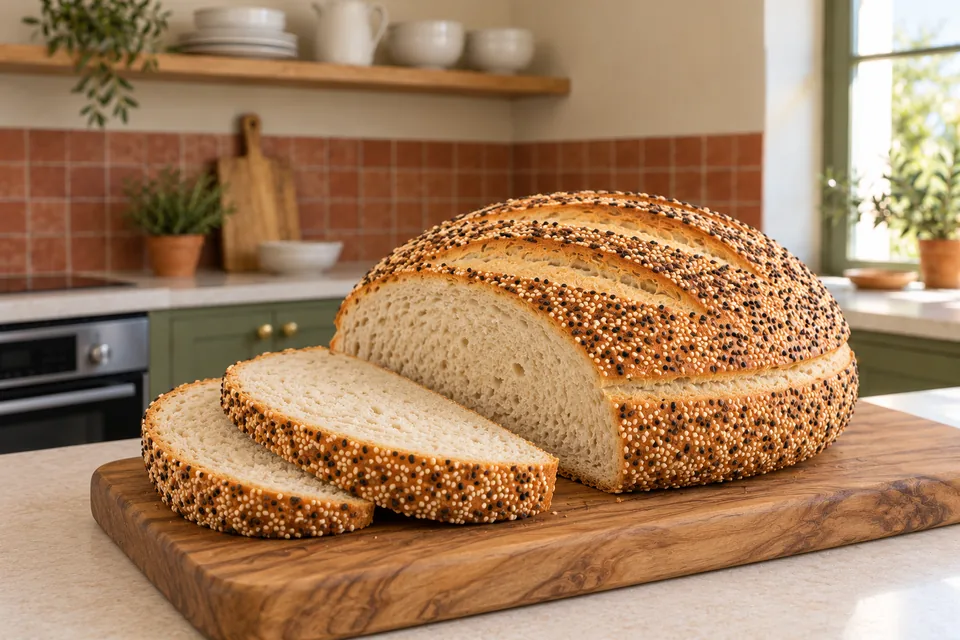
Two slices show the plain set crumb beneath a mixed-seed crust.
Makes
1 round loaf, about 16 slices
Heat
210°C conventional
Baking time
35–45 min
Cuisine / style
Cyprus

210°C conventional; cover if the seed crust colours early.

Jump to ingredients & method ↓
View

Cypriot-style village bread

Makes
1 round loaf, about 16 slices
Heat
210°C conventional
Baking time
35–45 min
Cuisine / style
Cyprus

210°C conventional; cover if the seed crust colours early.

Cyprus · Cypriot-style village bread

Cypriot-style village bread

A round olive-oil loaf scented with mastic and mahlab, with a sesame, nigella and caraway crust.

Method

  1. 01 · Grind mastic and knead the dough

    15–20 min

    Use: Strong white bread flour; Water; Fine salt; Instant dried yeast; Olive oil; Food-grade mastic resin; Ground mahlab

    Crush the mastic with the reserved 5 g flour in a mortar until finely powdered. Mix it with the remaining 495 g dough flour, water, salt, instant yeast and oil, then add the ground mahlab. Knead by hand or with a dough hook at the machine’s recommended speed for 8–10 minutes.

    Ready when: The aromatic dough is smooth, soft and elastic; no hard resin pieces remain.
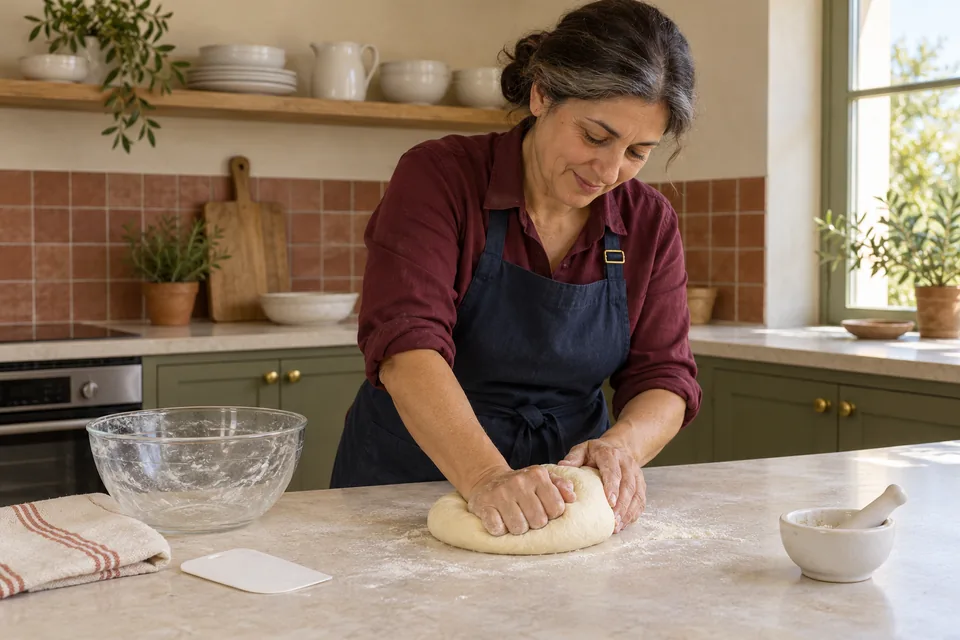
    The cook kneads smooth dough beside the used mortar.
    01 Cypriot-style village breadKnead the aromatic dough.
  2. 02 · Let the dough rise

    60–120 min

    Use:

    Cover the bowl and leave at 22–24°C for 60–120 minutes.

    Ready when: The dough is visibly aerated and roughly doubled in volume.
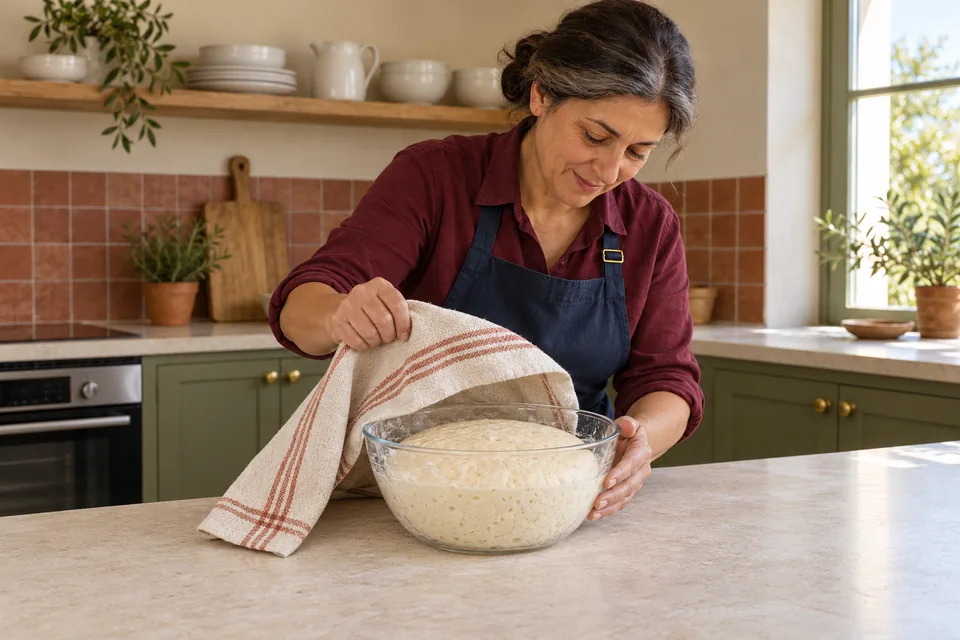
    The dough is visibly aerated and roughly doubled.
    02 Cypriot-style village breadLet the dough rise.
  3. 03 · Shape one even round

    8–10 min

    Use: Flour for shaping

    Line one 30×40 cm tray with baking paper. Use the shaping flour sparingly. Gather the dough edges underneath and shape one even round about 20 cm across and 4 cm tall. Keep the seam underneath; avoid squeezing out all the air.

    Ready when: The dough is evenly shaped without thin torn patches.
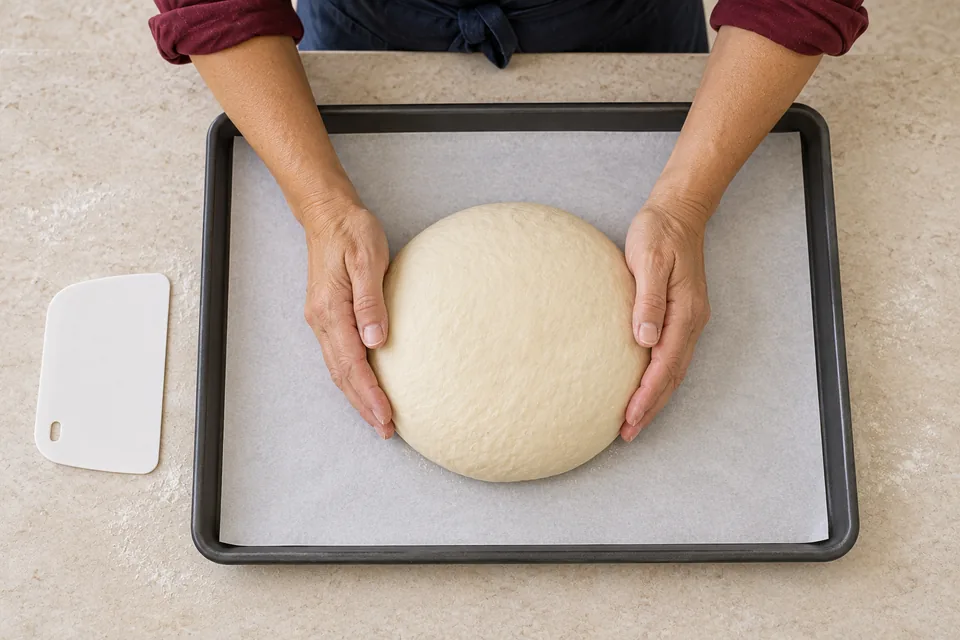
    One plain round rests on the lined tray.
    03 Cypriot-style village breadShape one round loaf.
  4. 04 · Apply the measured water and seed coating

    5–8 min

    Use: White sesame seeds; Nigella seeds; Caraway seeds; Water for the seed coating

    Mix the sesame, nigella and caraway seeds on a wide plate. Brush the round lightly with the 15 g coating water. Turn it gently in the mixed seeds, pressing them onto the top and sides, and place seam-side down on the lined tray. Scatter any remaining seeds over bare damp patches and press lightly.

    Ready when: The measured seed mixture is spread evenly and held by the damp surface.
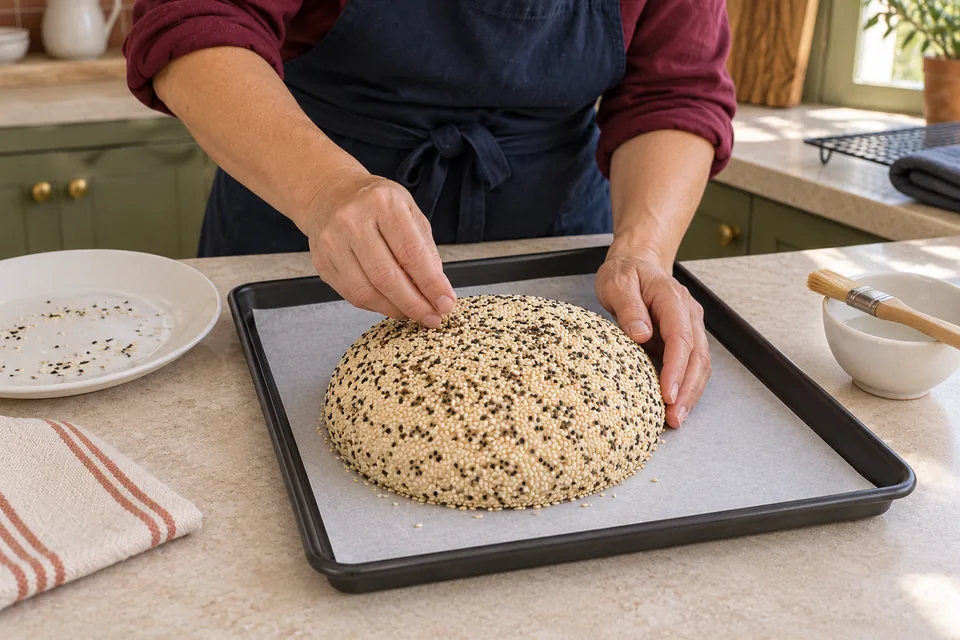
    Mixed seeds cover the damp top and sides.
    04 Cypriot-style village breadCoat with the seed mixture.
  5. 05 · Proof and heat the oven

    45–75 min

    Use:

    Cover loosely and leave at 22–24°C for 45–75 minutes. During the final 20 minutes, heat the oven to 210°C conventional.

    Ready when: The dough is puffy and a light fingertip dent returns slowly.
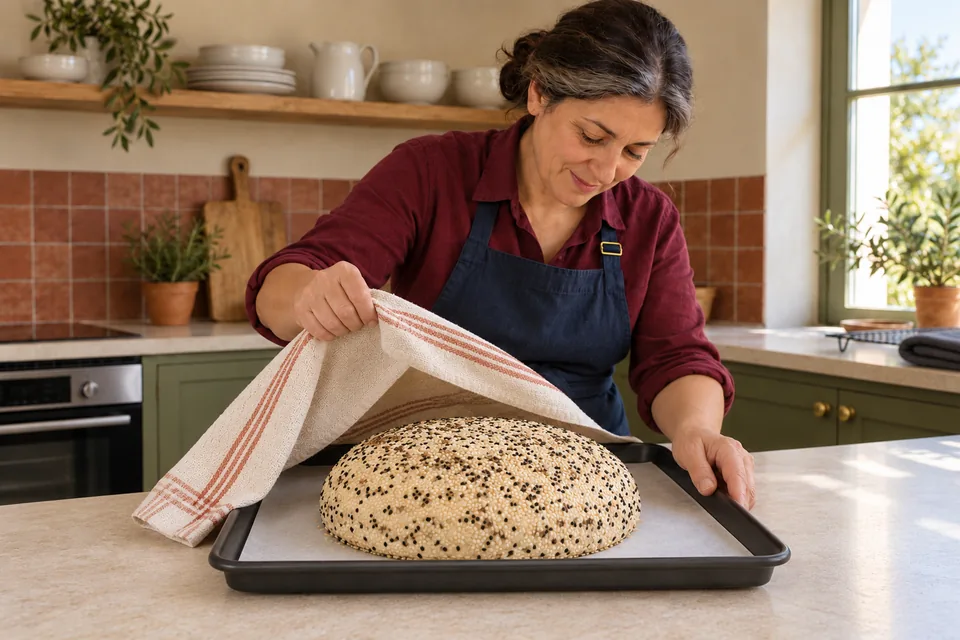
    The seed-coated round has expanded before baking.
    05 Cypriot-style village breadProof until the loaf is puffy.
  6. 06 · Score and bake the round

    35–45 min

    Use:

    With a sharp blade, make a shallow cut about 5 mm deep around the middle of the loaf and two shallow cuts across the top. Bake for 35–45 minutes. Cover loosely with foil if the seeds colour before the bread is ready. Check the underside and probe the thickest bread area.

    Ready when: The base is firm and browned, the crumb is set, and the bread centre reaches about 95°C. The seeds are toasted but not blackened.
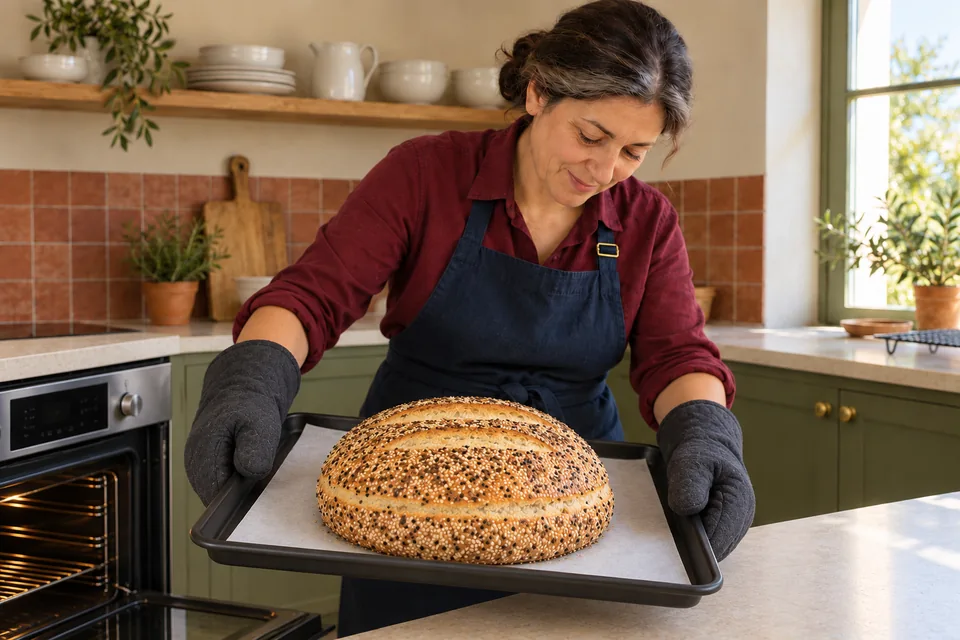
    The baked loaf has toasted seeds and opened shallow cuts.
    06 Cypriot-style village breadScore and bake the loaf.
  7. 07 · Cool on a rack

    90 min

    Use:

    Transfer to a rack and cool for at least 90 minutes before cutting.

    Ready when: The crumb has set and slices hold together.
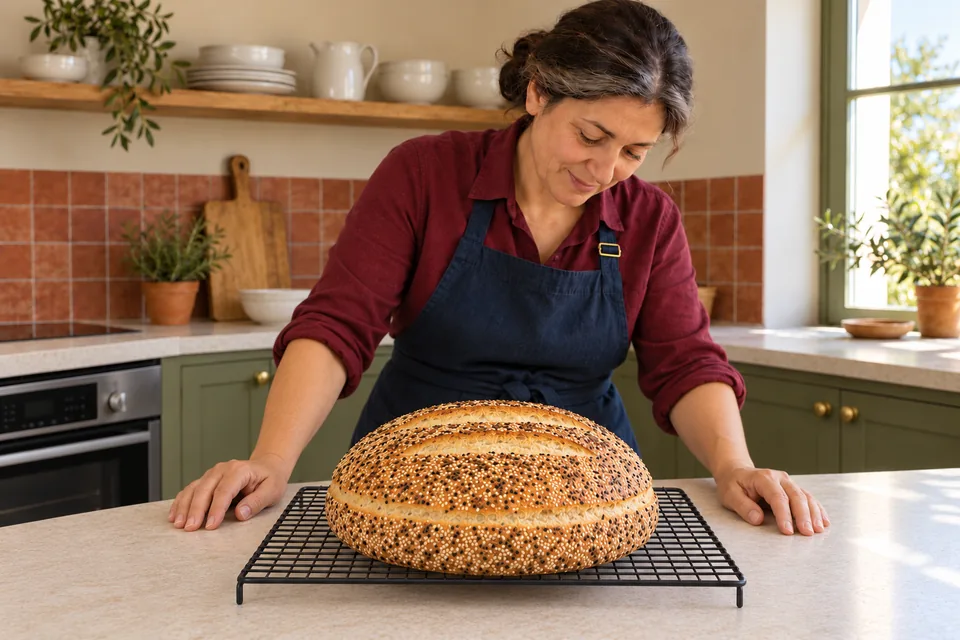
    The whole loaf cools on a raised wire rack.
    07 Cypriot-style village breadCool before cutting.

What to look for

StageLook / feel forNeeds attention
Grind mastic and knead the doughThe aromatic dough is smooth, soft and elastic; no hard resin pieces remain.
Let the dough riseThe dough is visibly aerated and roughly doubled in volume.
Shape one even roundThe dough is evenly shaped without thin torn patches.
Apply the measured water and seed coatingThe measured seed mixture is spread evenly and held by the damp surface.
Proof and heat the ovenThe dough is puffy and a light fingertip dent returns slowly.
Score and bake the roundThe base is firm and browned, the crumb is set, and the bread centre reaches about 95°C. The seeds are toasted but not blackened.
Cool on a rackThe crumb has set and slices hold together.

Troubleshooting

If you see thisLikely causeWhat to do nowNext time
Seeds fall off after baking.The surface dried before the seeds were applied or they were left loose.Collect loose seeds with the serving pieces.Brush the measured water immediately before coating and press the seeds gently into the damp dough.
The seeds darken before the loaf is cooked.The upper surface is getting too much direct heat.Cover loosely with foil and continue until the bread centre and base meet the stated cues.Use the middle oven area and check from the lower end of the baking range.

Storage: Wrap when fully cool and keep in a cool dry place for up to 2 days. Freeze portions for up to 2 months. Toast or warm bread that has firmed.; Contains: wheat, sesame.; This Nepedia version has not been kitchen-tested.

Ingredient choices & substitutions

No brand is specified.

Match the ingredient’s function and weight. See the flour, gluten, yeast and salt guide.

Other approaches to this recipe
Cook / recipeUseWhat differs

The working ingredients and method form one recipe. Different formulas are compared without averaging their quantities or rise schedules.

Nepedia

Recipe

Cypriot-style village bread

A round olive-oil loaf scented with mastic and mahlab, with a sesame, nigella and caraway crust.

How do I make it?

  1. Grind mastic and knead the dough

    15–20 min

    Crush the mastic with the reserved 5 g flour in a mortar until finely powdered. Mix it with the remaining 495 g dough flour, water, salt, instant yeast and oil, then add the ground mahlab. Knead by hand or with a dough hook at the machine’s recommended speed for 8–10 minutes.

    The cook kneads smooth dough beside the used mortar.
    Knead the aromatic dough.

    Ready when: The aromatic dough is smooth, soft and elastic; no hard resin pieces remain.

  2. Let the dough rise

    60–120 min

    Cover the bowl and leave at 22–24°C for 60–120 minutes.

    The dough is visibly aerated and roughly doubled.
    Let the dough rise.

    Ready when: The dough is visibly aerated and roughly doubled in volume.

  3. Shape one even round

    8–10 min

    Line one 30×40 cm tray with baking paper. Use the shaping flour sparingly. Gather the dough edges underneath and shape one even round about 20 cm across and 4 cm tall. Keep the seam underneath; avoid squeezing out all the air.

    One plain round rests on the lined tray.
    Shape one round loaf.

    Ready when: The dough is evenly shaped without thin torn patches.

  4. Apply the measured water and seed coating

    5–8 min

    Mix the sesame, nigella and caraway seeds on a wide plate. Brush the round lightly with the 15 g coating water. Turn it gently in the mixed seeds, pressing them onto the top and sides, and place seam-side down on the lined tray. Scatter any remaining seeds over bare damp patches and press lightly.

    Mixed seeds cover the damp top and sides.
    Coat with the seed mixture.

    Ready when: The measured seed mixture is spread evenly and held by the damp surface.

  5. Proof and heat the oven

    45–75 min

    Cover loosely and leave at 22–24°C for 45–75 minutes. During the final 20 minutes, heat the oven to 210°C conventional.

    The seed-coated round has expanded before baking.
    Proof until the loaf is puffy.

    Ready when: The dough is puffy and a light fingertip dent returns slowly.

  6. Score and bake the round

    35–45 min

    With a sharp blade, make a shallow cut about 5 mm deep around the middle of the loaf and two shallow cuts across the top. Bake for 35–45 minutes. Cover loosely with foil if the seeds colour before the bread is ready. Check the underside and probe the thickest bread area.

    The baked loaf has toasted seeds and opened shallow cuts.
    Score and bake the loaf.

    Ready when: The base is firm and browned, the crumb is set, and the bread centre reaches about 95°C. The seeds are toasted but not blackened.

  7. Cool on a rack

    90 min

    Transfer to a rack and cool for at least 90 minutes before cutting.

    The whole loaf cools on a raised wire rack.
    Cool before cutting.

    Ready when: The crumb has set and slices hold together.

What can go wrong, and how can I fix it?

What you noticeLikely causeWhat to do
Seeds fall off after baking.The surface dried before the seeds were applied or they were left loose.Collect loose seeds with the serving pieces. Brush the measured water immediately before coating and press the seeds gently into the damp dough.
The seeds darken before the loaf is cooked.The upper surface is getting too much direct heat.Cover loosely with foil and continue until the bread centre and base meet the stated cues. Use the middle oven area and check from the lower end of the baking range.
Useful recipe notes

Storage: Wrap when fully cool and keep in a cool dry place for up to 2 days. Freeze portions for up to 2 months. Toast or warm bread that has firmed.

Contains: wheat, sesame.

This Nepedia version has not been kitchen-tested.

See the detailed method and ratios in , or follow ingredients through the .

Ingredient proportions & recipe details

Cypriot-style village bread at a glance

Makes
1 round loaf, about 16 slices
Heat
210°C conventional
Baking time
35–45 min
Cuisine / style
Cyprus
Leavening
Yeast
Bulk fermentation (including folding)
60–120 min · The dough is visibly aerated and roughly doubled in volume.
How do the ingredient proportions compare?

Percentages compare each listed weight with the combined flour weight (100%). These are ingredient ratios, not dough hydration; milk, eggs and fillings contain other ingredients as well as water.

Formula componentGramsFlour = 100%
Strong white bread flour500 g100%
Water325 g65%
Fine salt10 g2%
Instant dried yeast7 g1.4%
Olive oil45 g9%
Food-grade mastic resin0.5 g0.1%
Ground mahlab1 g0.2%