Nepedia

Caraway rye loaf

A dense rye-and-wheat loaf scented with caraway. An overnight preferment starts the dough, and a long rest after baking helps the crumb set.

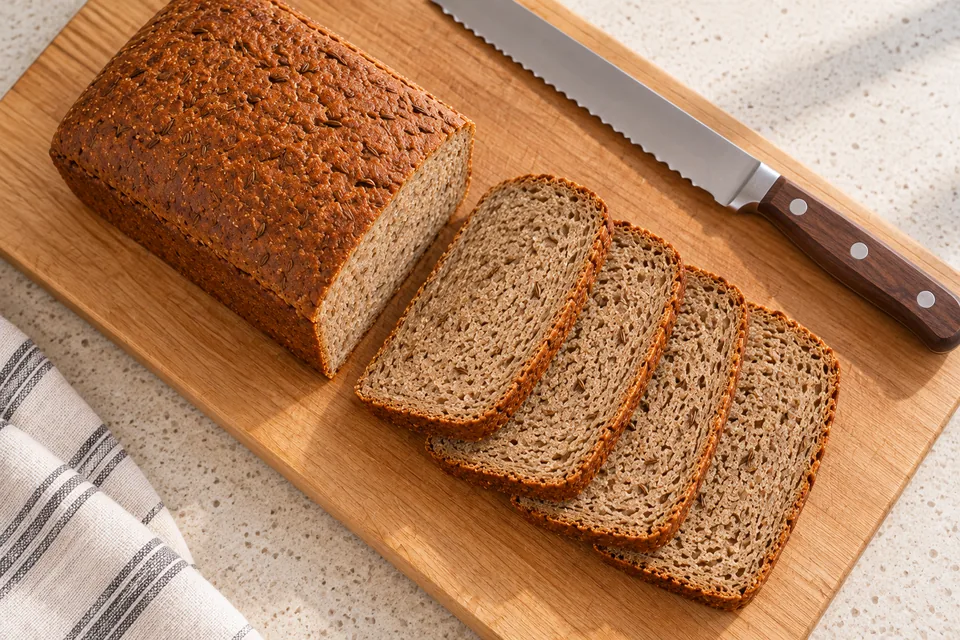
Four thin caraway-flecked rye slices fan beside the shortened rectangular loaf on a wooden board, viewed from above.
Makes
1 loaf, about 16 slices
Heat
220°C conventional
Baking time
45–55 min
Cuisine / style
International

Start at 220°C conventional for 15 minutes,then reduce to 200°C for 30–40 minutes.

View

Caraway rye loaf

Makes
1 loaf, about 16 slices
Heat
220°C conventional
Baking time
45–55 min
Cuisine / style
International

Start at 220°C conventional for 15 minutes,then reduce to 200°C for 30–40 minutes.

International · Rye bread

Caraway rye loaf

A dense rye-and-wheat loaf scented with caraway. An overnight preferment starts the dough, and a long rest after baking helps the crumb set.

Method

  1. 01 · Mix and mature the preferment

    600–720 min

    Use: Wholemeal rye flour; Strong white bread flour; Water; Instant dried yeast

    Mix the preferment rye flour, white flour, 175 g water and 0.6 g yeast into a thick paste. Cover with room for expansion and leave at 18–21°C for 10–12 hours.

    Ready when: The paste has expanded and contains many small bubbles.
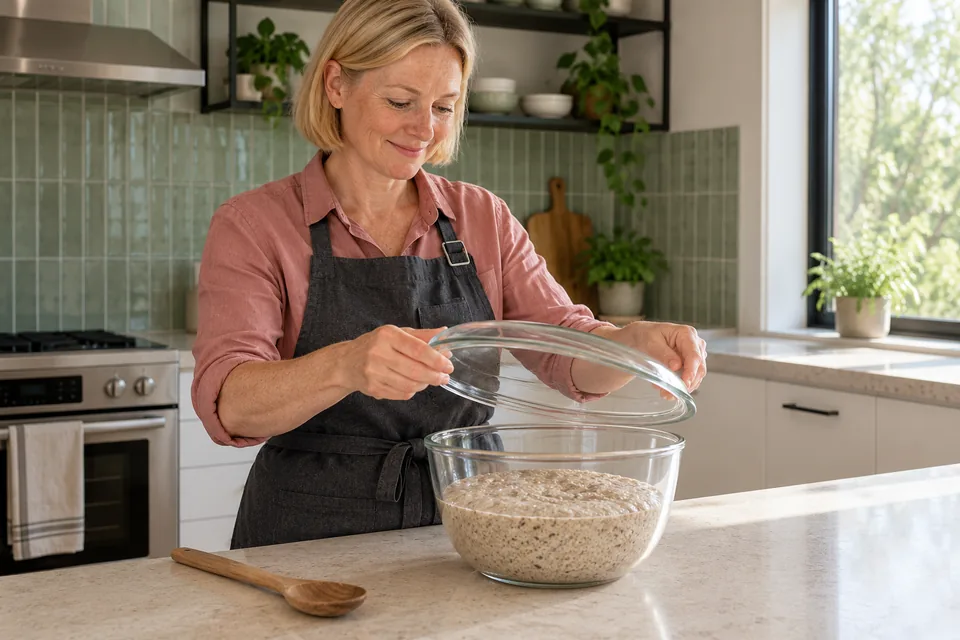
    The cook lifts a clear cover over a thick, bubbly brown-grey rye-and-wheat preferment.
    01 PrefermentLet the covered preferment expand and become bubbly.
  2. 02 · Develop the final rye dough

    5–7 min

    Use: Wholemeal rye flour; Strong white bread flour; Water; Instant dried yeast; Fine salt; Unsalted butter

    Add the final rye flour, white flour, 175 g water, 4.4 g yeast, salt and softened dough butter. Mix firmly with a sturdy spoon or dough hook for 4–5 minutes, until evenly combined.

    Ready when: The dough is cohesive and sticky. It will not form the thin elastic sheet of a white-flour dough.
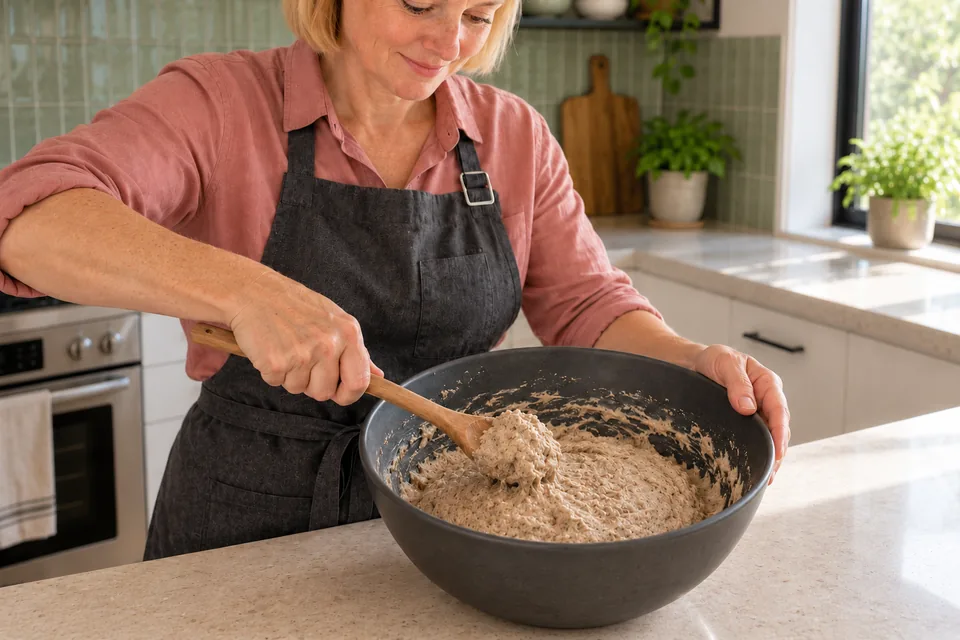
    The cook works a wooden spoon through a compact, sticky brown-grey dough before adding caraway.
    02 MixMix into a cohesive, sticky rye dough.
  3. 03 · Fold in the caraway

    2–3 min

    Use: Caraway seeds

    Mix the caraway seeds through the dough until they are evenly distributed.

    Ready when: There are no large pockets of unmixed filling. Keep the dough soft rather than adding flour to remove all stickiness.
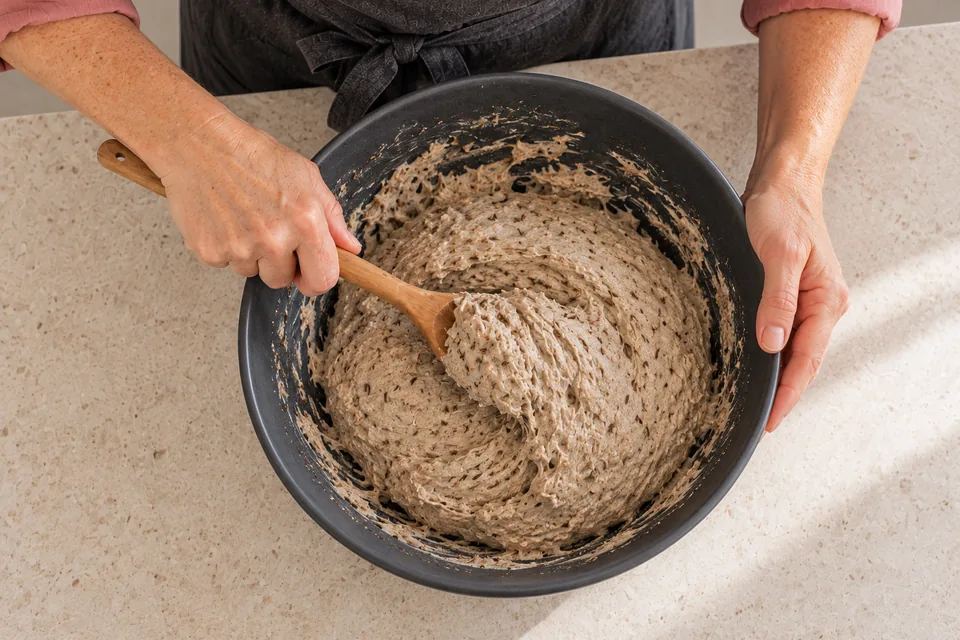
    Slender brown caraway seeds are spread through the sticky grey-brown rye dough as the cook turns it with a spoon.
    03 Add InclusionMix the caraway evenly through the dough.
  4. 04 · Let the rye dough rise

    60–90 min

    Use:

    Cover and leave at 22–24°C for 60–90 minutes.

    Ready when: The dough is visibly aerated and has increased in volume by roughly half; it need not double.
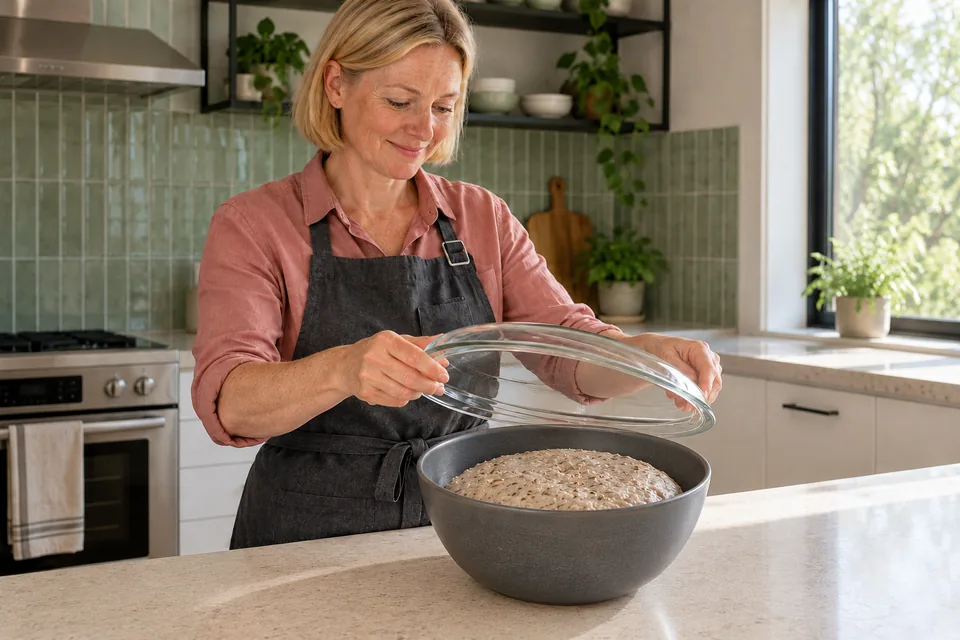
    The cook lowers a clear cover above a softly expanded, caraway-speckled rye dough.
    04 Bulk RiseLet the dough become aerated and increase by about half.
  5. 05 · Shape and fill the loaf tin

    8–12 min

    Use: Butter for the tin; Flour for shaping

    Butter a 23×13×8 cm loaf tin and line its base with baking paper. Use the shaping flour sparingly on the worktop and scraper. Form the dough into a short log and place it in the tin, then press it gently into the corners and smooth the surface.

    Ready when: One evenly filled tin has a level dough surface and no large empty corners.
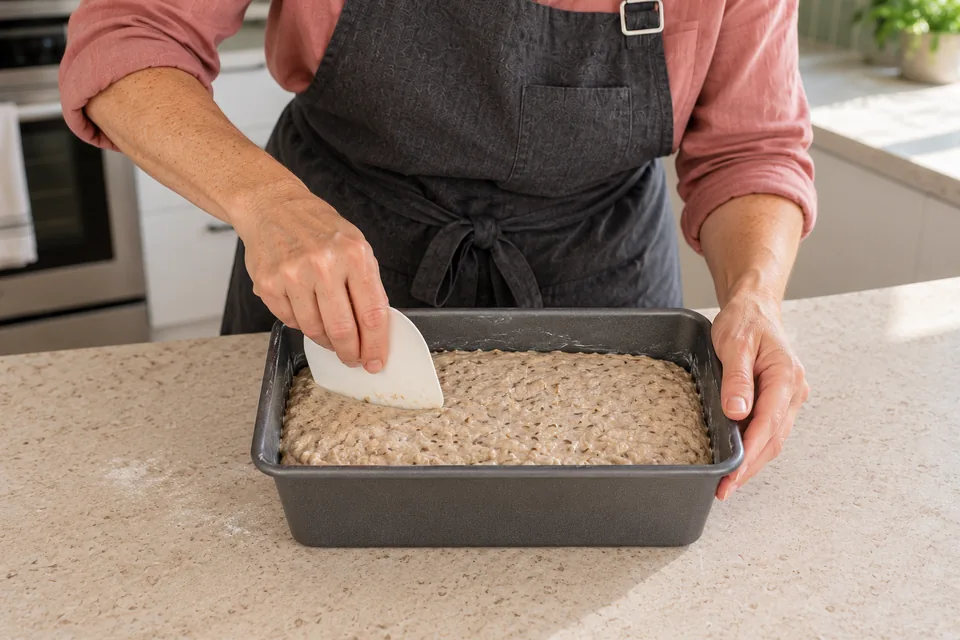
    The cook smooths one level, caraway-speckled rye loaf into the corners of a dark tin.
    05 TinFill the tin evenly and smooth the surface.
  6. 06 · Proof and heat the oven

    45–90 min

    Use:

    Cover loosely and leave at 22–24°C for 45–90 minutes. Heat the oven to 220°C conventional during the final 20 minutes.

    Ready when: The loaf is puffy and rises toward the top of the tin. Fine surface cracks may begin to appear; bake before the surface sinks.
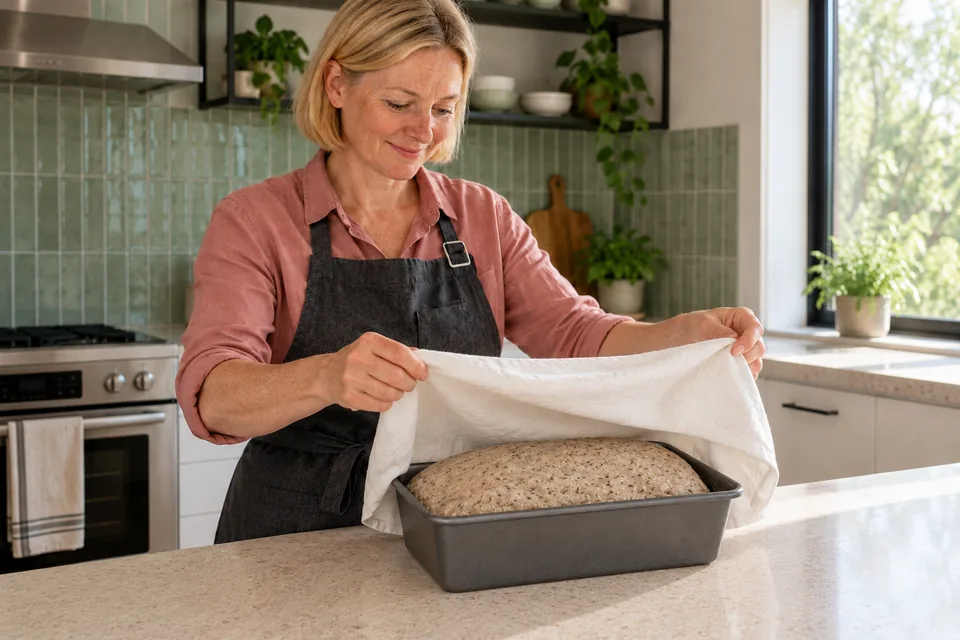
    The cook lifts a loose cloth above one puffy rye loaf with fine surface cracks near the tin rim.
    06 ProofLet the loaf become puffy, then bake before it sinks.
  7. 07 · Bake at two oven settings

    45–55 min

    Use:

    Bake for 15 minutes at 220°C, then reduce the oven to 200°C and bake for another 30–40 minutes. Cover loosely with foil if the top darkens early. Probe the bread near the centre.

    Ready when: The bread reaches 96–97°C and the sides and base are set.
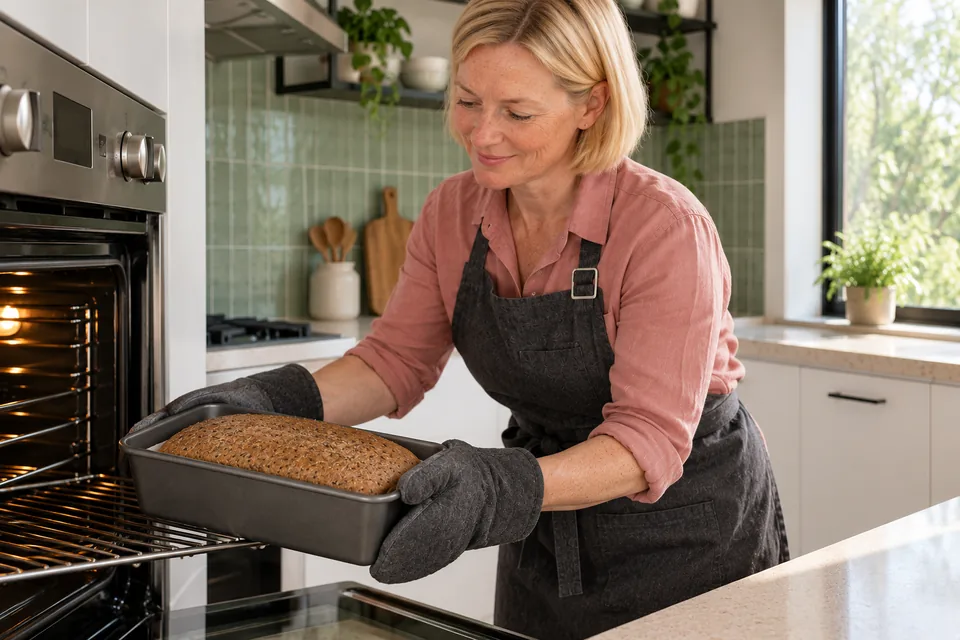
    Using two mitts, the cook holds one brown rye loaf in a dark tin at the oven rack.
    07 BakeBake until the sides and base are set.
  8. 08 · Rest for twelve hours before slicing

    720 min

    Use:

    Leave in the tin for 10 minutes, then turn out onto a rack. Once fully cool, wrap in a clean cloth or paper. Wait at least 12 hours from the end of baking before slicing.

    Ready when: The loaf is completely cool and the dense crumb cuts cleanly rather than smearing.
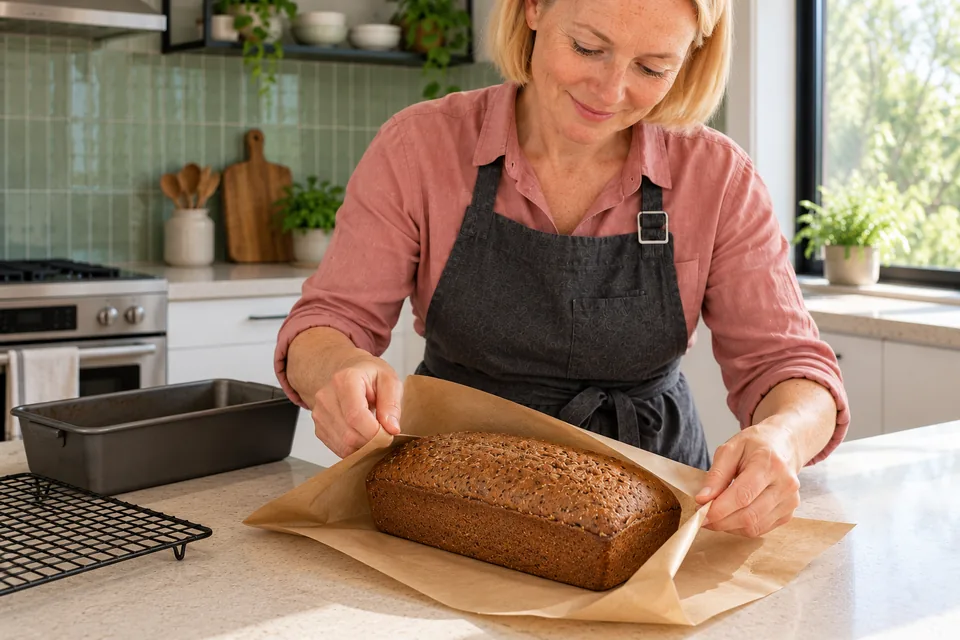
    The cook folds clean paper around one whole rye loaf.
    08 RestOnce cool, wrap and wait before slicing.

What to look for

StageLook / feel forNeeds attention
Mix and mature the prefermentThe paste has expanded and contains many small bubbles.
Develop the final rye doughThe dough is cohesive and sticky. It will not form the thin elastic sheet of a white-flour dough.
Fold in the carawayThere are no large pockets of unmixed filling. Keep the dough soft rather than adding flour to remove all stickiness.
Let the rye dough riseThe dough is visibly aerated and has increased in volume by roughly half; it need not double.
Shape and fill the loaf tinOne evenly filled tin has a level dough surface and no large empty corners.
Proof and heat the ovenThe loaf is puffy and rises toward the top of the tin. Fine surface cracks may begin to appear; bake before the surface sinks.
Bake at two oven settingsThe bread reaches 96–97°C and the sides and base are set.
Rest for twelve hours before slicingThe loaf is completely cool and the dense crumb cuts cleanly rather than smearing.

Troubleshooting

If you see thisLikely causeWhat to do nowNext time
The dough is sticky.Rye forms a paste-like dough rather than a stretchy white-flour dough.Use a scraper and the measured dusting flour without trying to make it dry.Measure the water and use the stated tin for support.
The crumb smears on the knife.The loaf may have been sliced too soon or baked too briefly.If fully baked, finish the stated rest before trying another slice.Check the bread centre and keep the full 12-hour baked rest.
The top sinks before baking.The final rise went beyond the dough’s capacity.Bake promptly; expect a denser loaf.Use the surface and volume cues rather than extending the timer automatically.

Storage: After the full rest, wrap and keep in a cool dry place for up to 3 days. Freeze wrapped slices for up to 2 months. Toast thawed slices if the crumb has firmed.; Contains: rye, wheat, milk.; This Nepedia version has not been kitchen-tested.

Ingredient choices & substitutions

No brand is specified.

Match the ingredient’s function and weight. See the flour, gluten, yeast and salt guide.

Other approaches to this recipe
Cook / recipeUseWhat differs

The working ingredients and method form one recipe. Different formulas are compared without averaging their quantities or rise schedules.

Nepedia
Four thin caraway-flecked rye slices fan beside the shortened rectangular loaf on a wooden board, viewed from above.
Four thin slices and the remaining caraway rye loaf.

Recipe

Caraway rye loaf

A dense rye-and-wheat loaf scented with caraway. An overnight preferment starts the dough, and a long rest after baking helps the crumb set.

How do I make it?

  1. Mix and mature the preferment

    600–720 min

    Mix the preferment rye flour, white flour, 175 g water and 0.6 g yeast into a thick paste. Cover with room for expansion and leave at 18–21°C for 10–12 hours.

    The cook lifts a clear cover over a thick, bubbly brown-grey rye-and-wheat preferment.
    Let the covered preferment expand and become bubbly.

    Ready when: The paste has expanded and contains many small bubbles.

  2. Develop the final rye dough

    5–7 min

    Add the final rye flour, white flour, 175 g water, 4.4 g yeast, salt and softened dough butter. Mix firmly with a sturdy spoon or dough hook for 4–5 minutes, until evenly combined.

    The cook works a wooden spoon through a compact, sticky brown-grey dough before adding caraway.
    Mix into a cohesive, sticky rye dough.

    Ready when: The dough is cohesive and sticky. It will not form the thin elastic sheet of a white-flour dough.

  3. Fold in the caraway

    2–3 min

    Mix the caraway seeds through the dough until they are evenly distributed.

    Slender brown caraway seeds are spread through the sticky grey-brown rye dough as the cook turns it with a spoon.
    Mix the caraway evenly through the dough.

    Ready when: There are no large pockets of unmixed filling. Keep the dough soft rather than adding flour to remove all stickiness.

  4. Let the rye dough rise

    60–90 min

    Cover and leave at 22–24°C for 60–90 minutes.

    The cook lowers a clear cover above a softly expanded, caraway-speckled rye dough.
    Let the dough become aerated and increase by about half.

    Ready when: The dough is visibly aerated and has increased in volume by roughly half; it need not double.

  5. Shape and fill the loaf tin

    8–12 min

    Butter a 23×13×8 cm loaf tin and line its base with baking paper. Use the shaping flour sparingly on the worktop and scraper. Form the dough into a short log and place it in the tin, then press it gently into the corners and smooth the surface.

    The cook smooths one level, caraway-speckled rye loaf into the corners of a dark tin.
    Fill the tin evenly and smooth the surface.

    Ready when: One evenly filled tin has a level dough surface and no large empty corners.

  6. Proof and heat the oven

    45–90 min

    Cover loosely and leave at 22–24°C for 45–90 minutes. Heat the oven to 220°C conventional during the final 20 minutes.

    The cook lifts a loose cloth above one puffy rye loaf with fine surface cracks near the tin rim.
    Let the loaf become puffy, then bake before it sinks.

    Ready when: The loaf is puffy and rises toward the top of the tin. Fine surface cracks may begin to appear; bake before the surface sinks.

  7. Bake at two oven settings

    45–55 min

    Bake for 15 minutes at 220°C, then reduce the oven to 200°C and bake for another 30–40 minutes. Cover loosely with foil if the top darkens early. Probe the bread near the centre.

    Using two mitts, the cook holds one brown rye loaf in a dark tin at the oven rack.
    Bake until the sides and base are set.

    Ready when: The bread reaches 96–97°C and the sides and base are set.

  8. Rest for twelve hours before slicing

    720 min

    Leave in the tin for 10 minutes, then turn out onto a rack. Once fully cool, wrap in a clean cloth or paper. Wait at least 12 hours from the end of baking before slicing.

    The cook folds clean paper around one whole rye loaf.
    Once cool, wrap and wait before slicing.

    Ready when: The loaf is completely cool and the dense crumb cuts cleanly rather than smearing.

What can go wrong, and how can I fix it?

What you noticeLikely causeWhat to do
The dough is sticky.Rye forms a paste-like dough rather than a stretchy white-flour dough.Use a scraper and the measured dusting flour without trying to make it dry. Measure the water and use the stated tin for support.
The crumb smears on the knife.The loaf may have been sliced too soon or baked too briefly.If fully baked, finish the stated rest before trying another slice. Check the bread centre and keep the full 12-hour baked rest.
The top sinks before baking.The final rise went beyond the dough’s capacity.Bake promptly; expect a denser loaf. Use the surface and volume cues rather than extending the timer automatically.
Useful recipe notes

Storage: After the full rest, wrap and keep in a cool dry place for up to 3 days. Freeze wrapped slices for up to 2 months. Toast thawed slices if the crumb has firmed.

Contains: rye, wheat, milk.

This Nepedia version has not been kitchen-tested.

See the detailed method and ratios in , or follow ingredients through the .

Ingredient proportions & recipe details

Caraway rye loaf at a glance

Makes
1 loaf, about 16 slices
Heat
220°C conventional
Baking time
45–55 min
Cuisine / style
International
Leavening
Yeast
Bulk fermentation (including folding)
60–90 min · The dough is visibly aerated and has increased in volume by roughly half; it need not double.
How do the ingredient proportions compare?

Percentages compare each listed weight with the combined flour weight (100%). These are ingredient ratios, not dough hydration; milk, eggs and fillings contain other ingredients as well as water.

Formula componentGramsFlour = 100%
Wholemeal rye flour150 g30%
Strong white bread flour100 g20%
Water175 g35%
Instant dried yeast0.6 g0.1%
Wholemeal rye flour150 g30%
Strong white bread flour100 g20%
Water175 g35%
Instant dried yeast4.4 g0.9%
Fine salt10 g2%
Unsalted butter60 g12%
Caraway seeds10 g2%