Boiled bagels

Firm rings, simmered before baking for a chewy crust.

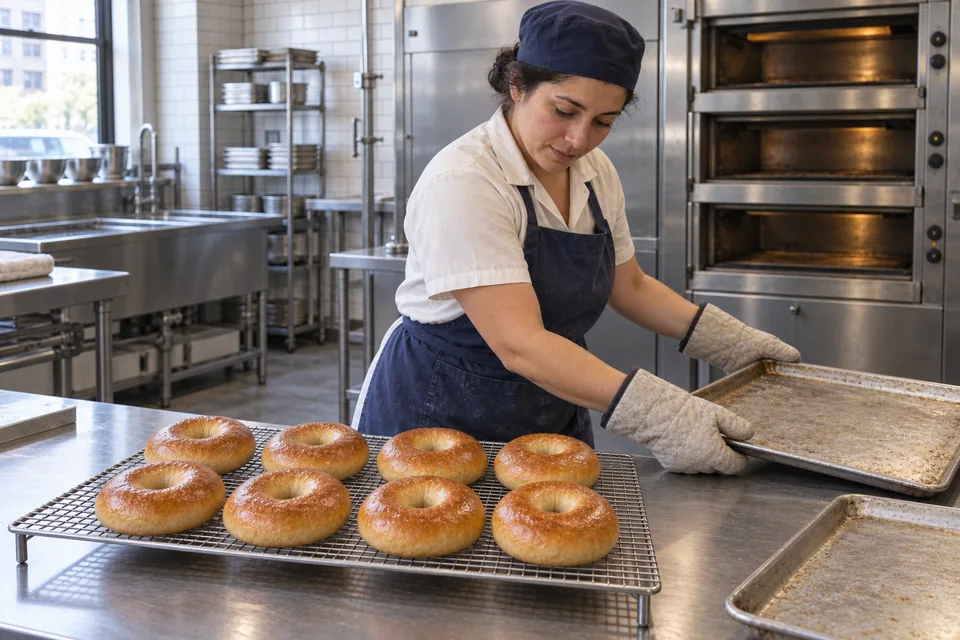
Eight deep golden-brown plain bagels cool on a wire rack beside the baker.
Makes
8 large or 12 smaller bagels
Heat
220°C; simmering bath first
Baking time
20–25 min baking

Boil 2 min on the first side and 1 min on the second; bake, flipping after 15 min.

View

Boiled bagels

Makes
8 large or 12 smaller bagels
Heat
220°C; simmering bath first
Baking time
20–25 min baking

Boil 2 min on the first side and 1 min on the second; bake, flipping after 15 min.

United States; Jewish baking tradition · Boiled breads

Boiled bagels

Firm rings, simmered before baking for a chewy crust.

Method

  1. 01 · Knead

    10 min mixer / up to 15 min hand

    Use: Dough

    Combine; knead vigorously.

    Ready when: Stiff; holds its shape

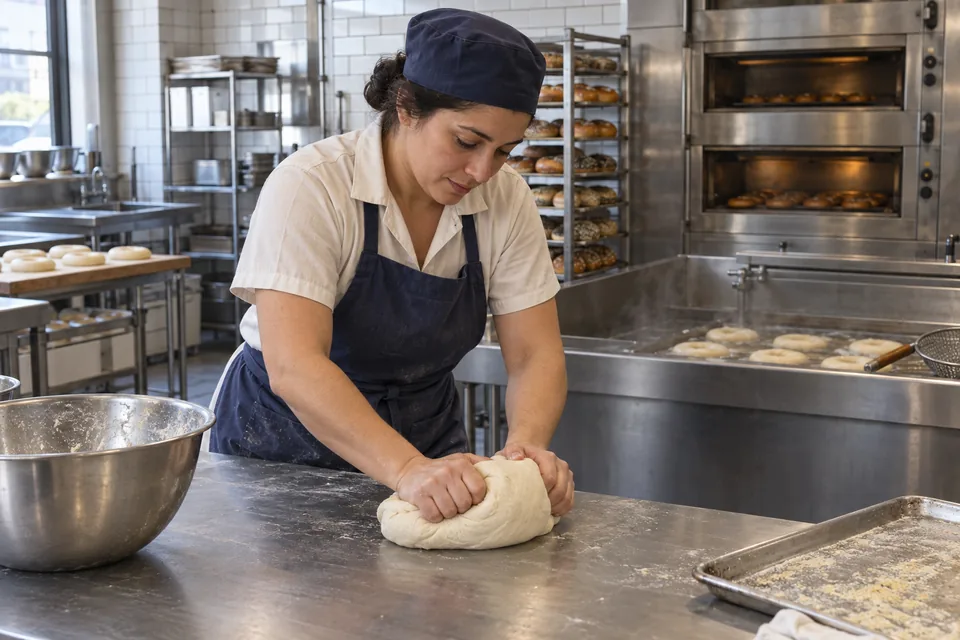
    The baker pushes and folds a firm mass of pale bagel dough on the workbench.
    01 KneadKnead until the stiff dough becomes smooth and holds its shape.
  2. 02 · Rise

    60–90 min

    Use: Dough

    Cover in oiled bowl.

    Ready when: Noticeably puffy

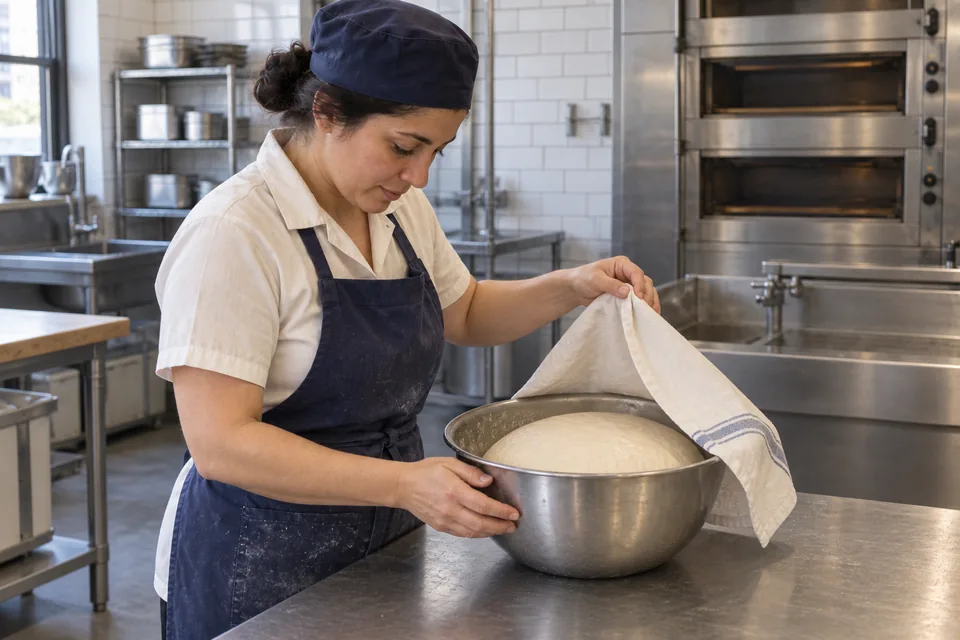
    The baker checks a smooth risen dome of bagel dough in an oiled bowl.
    02 RiseLet the covered dough rise until it is noticeably puffy.
  3. 03 · Divide

    30 min

    Use: Dough

    Make 8–12 smooth balls; cover.

    Ready when: Slight expansion

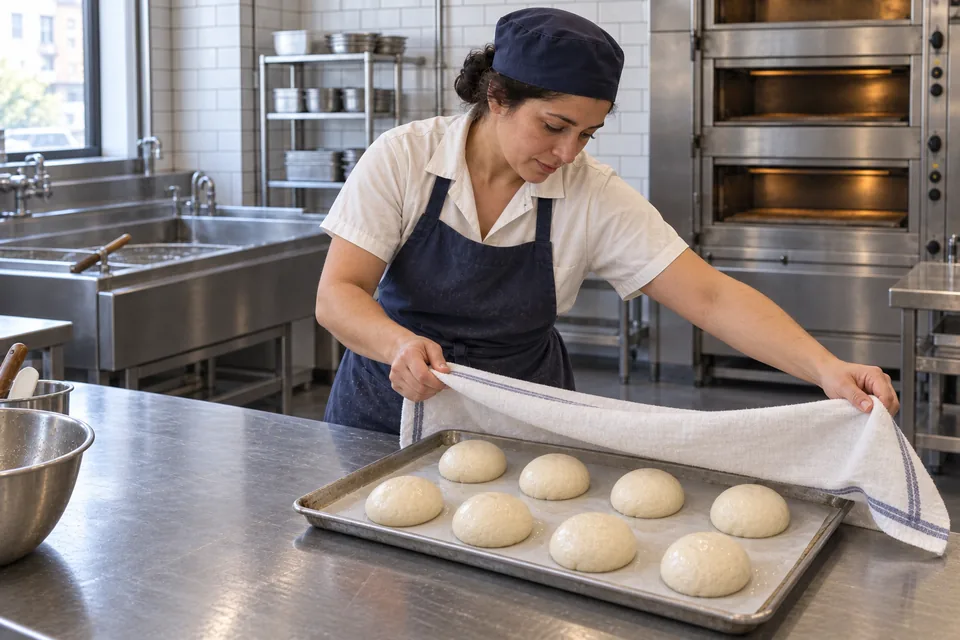
    Eight smooth dough balls rest on a lined tray as the baker brings over a cloth.
    03 DivideDivide into eight smooth balls and cover them for the short rest.
  4. 04 · Prepare

    During rest

    Use: Bath; oven

    Simmer bath ingredients; preheat oven.

    Ready when: Gentle boil

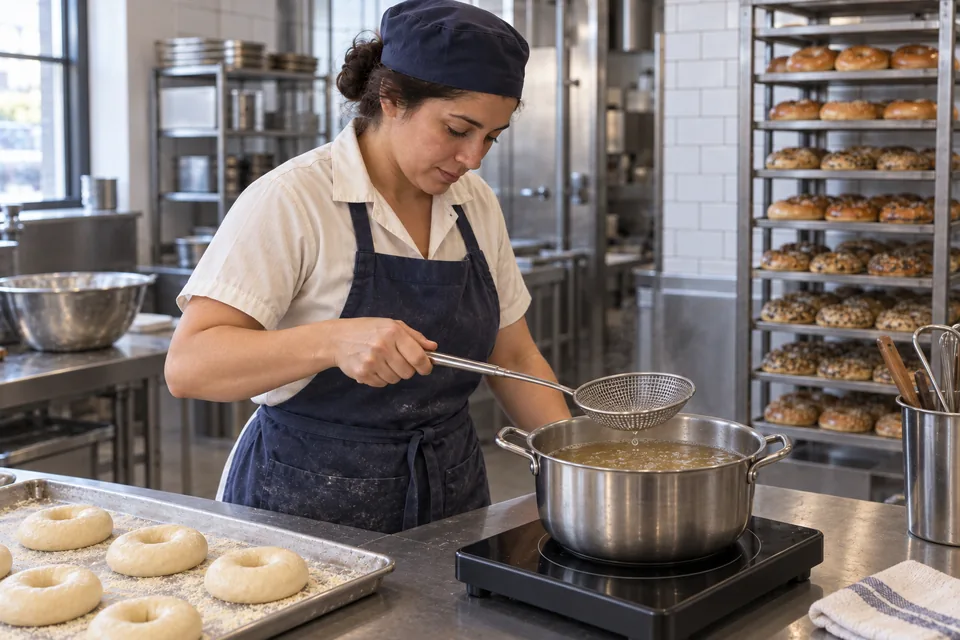
    The baker holds a skimmer beside a wide pot of gently simmering pale amber water.
    04 PrepareBring the sugar-water bath to a gentle simmer while the oven heats.
  5. 05 · Shape

    Before boiling

    Use: Balls

    Pierce centres; widen holes to 4–5 cm.

    Ready when: Even rings

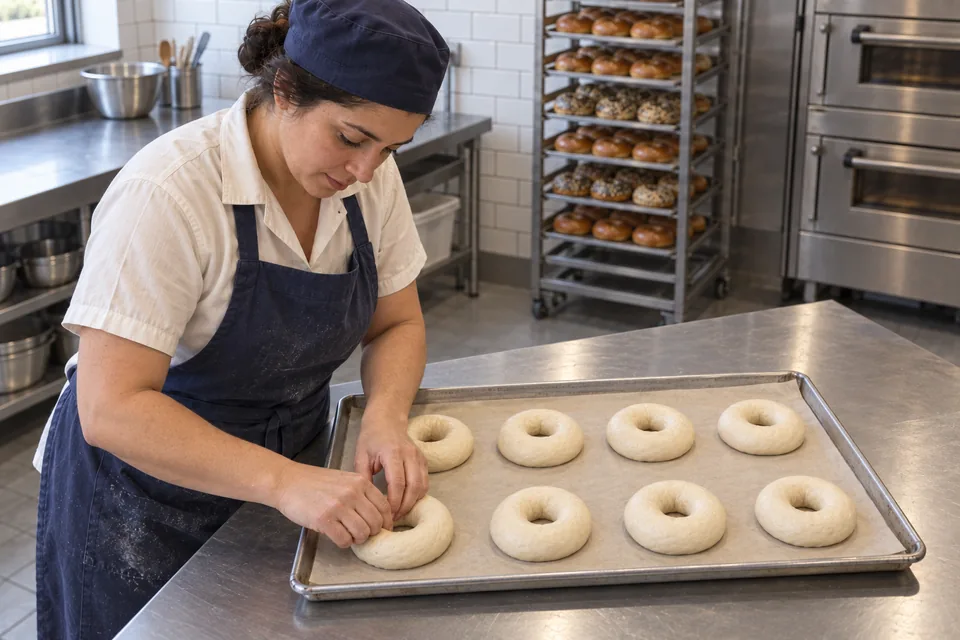
    The baker widens one dough ring while seven shaped rings rest on the tray.
    05 ShapeOpen each centre into a broad hole so the rings keep their shape during boiling.
  6. 06 · Boil

    2 min first side; 1 min second

    Use: Rings; bath

    Simmer in uncrowded batches; drain onto prepared trays.

    Ready when: Surface set

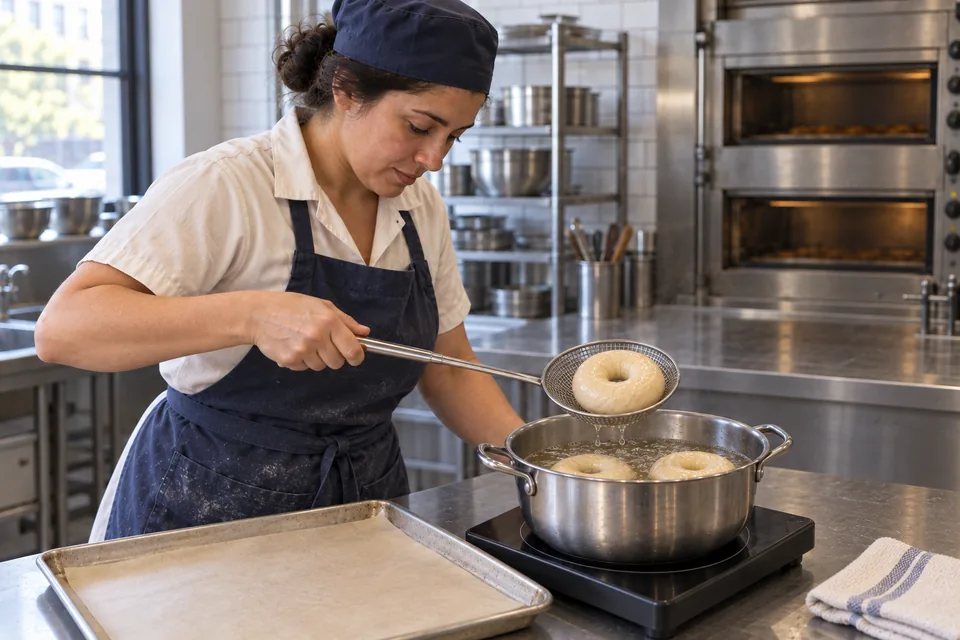
    The baker drains a glossy boiled bagel above the pot while two rings float separately below.
    06 BoilBoil in uncrowded batches, then lift each ring out and let excess water drain.
  7. 07 · Bake

    20–25 min

    Use: Rings

    Bake; flip after 15 minutes; rack-cool before slicing.

    Ready when: Deep brown

    Eight deep golden-brown plain bagels cool on a wire rack beside the baker.
    07 BakeBake until deeply browned, then cool all eight bagels on a rack before slicing.

What to look for

StageLook / feel forNeeds attention
KneadingSmooth, resistant doughSlack batter
ShapingOpen 4–5 cm holesTiny centres

Troubleshooting

If you see thisLikely causeWhat to do nowNext time
TearingInsufficient glutenKnead furtherCheck a stretched sample
WrinklesRough handlingLift gentlyAvoid squeezing rings
Dense textureExcess flourWeigh next batchAvoid heavy bench dusting

Brown sugar replaces malt in this version. The 1.8 L bath water stays separate from the dough water.

Ingredient choices & substitutions
IngredientSpecified typeBrandStatus
FlourBread flourKing ArthurSpecified product
SweetenerNon-diastatic malt or brown sugarNoneSource alternatives
IngredientAlternative / ratioAdjust handlingLikely outcome
Malt powderDark brown sugar14 g dough; 28 g bathUse the listed formulaLess malty flavour
Bread flourSimilar-protein bread flourEqual weightJudge stiffness before adding dusting flourChew should be closer than with soft flour

Match the ingredient’s function and weight. See the flour, gluten, yeast and salt guide.

Other approaches to this recipe

Kanell uses 540 g flour/360 mL water, a soda-containing bath and one minute per side; Hamel uses 480 g/303 g and a longer simmer. These are distinct handling schedules.

Cook / recipeUseWhat differs
PJ HamelKing Arthur BakingBagelsSelected formula and method · Credited recipe; upstream origin unresolved480 g flour; 303 g water
John KanellPreppy KitchenBagel RecipeComparison and handling guidance · Different credited developer; independence unverified540 g flour; 360 mL water; shorter boil

The working ingredients and method form one recipe. Different formulas are compared without averaging their quantities or rise schedules.

King Arthur Baking

Recipe

Boiled bagels

Firm rings, simmered before baking for a chewy crust.

How do I make it?

  1. Make the dough

    10 min mixer / up to 15 min hand

    Mix the dough ingredients and knead firmly for 10 minutes in a mixer or up to 15 minutes by hand. The dough should be stiff and hold its shape.

    The baker pushes and folds a firm mass of pale bagel dough on the workbench.
    Knead until the stiff dough becomes smooth and holds its shape.

    Ready when: Stiff; holds its shape

  2. Let it rise

    60–90 min

    Put in an oiled bowl and cover. Leave for 60–90 minutes, until noticeably puffy.

    The baker checks a smooth risen dome of bagel dough in an oiled bowl.
    Let the covered dough rise until it is noticeably puffy.

    Ready when: Noticeably puffy

  3. Divide and rest

    30 min

    Make 8–12 smooth balls. Cover and rest for 30 minutes, until slightly larger.

    Eight smooth dough balls rest on a lined tray as the baker brings over a cloth.
    Divide into eight smooth balls and cover them for the short rest.

    Ready when: Slight expansion

  4. Get the bath ready

    During rest

    While the dough rests, bring the bath water and both bath sugars to a gentle boil. Heat the oven to 220°C.

    The baker holds a skimmer beside a wide pot of gently simmering pale amber water.
    Bring the sugar-water bath to a gentle simmer while the oven heats.

    Ready when: Gentle boil

  5. Shape the rings

    Before boiling

    Push a hole through the centre of each ball and stretch it to 4–5 cm wide. Aim for an even ring of dough around each hole.

    The baker widens one dough ring while seven shaped rings rest on the tray.
    Open each centre into a broad hole so the rings keep their shape during boiling.

    Ready when: Even rings

  6. Boil

    2 min first side; 1 min second

    Simmer the rings in batches with room around each one, for 2 minutes on the first side and 1 minute on the second. Drain onto trays lined with lightly oiled parchment; the surface should be set.

    The baker drains a glossy boiled bagel above the pot while two rings float separately below.
    Boil in uncrowded batches, then lift each ring out and let excess water drain.

    Ready when: Surface set

  7. Bake

    20–25 min

    Bake for 20–25 minutes, turning the bagels over after 15 minutes, until deep brown. Cool on a rack before slicing.

    Eight deep golden-brown plain bagels cool on a wire rack beside the baker.
    Bake until deeply browned, then cool all eight bagels on a rack before slicing.

    Ready when: Deep brown

What can go wrong, and how can I fix it?

What you noticeLikely causeWhat to do
TearingInsufficient glutenKnead further Check a stretched sample
WrinklesRough handlingLift gently Avoid squeezing rings
Dense textureExcess flourWeigh next batch Avoid heavy bench dusting
Useful recipe notes

Brown sugar replaces malt in this version. The 1.8 L bath water stays separate from the dough water.

See the detailed method and ratios in , or follow ingredients through the .

Ingredient proportions & recipe details

Boiled bagels at a glance

Makes
8 large or 12 smaller bagels
Heat
220°C; simmering bath first
Baking time
20–25 min baking
Leavening
Yeast
How do the ingredient proportions compare?

Percentages compare each listed weight with the combined flour weight (100%). These are ingredient ratios, not dough hydration; milk, eggs and fillings contain other ingredients as well as water.

Formula componentGramsFlour = 100%
Bread flour480 g100%
Instant yeast9 g1.9%
Table salt12 g2.5%
Dark brown sugar14 g2.9%
Water303 g63.1%
Dark brown sugar28 g5.8%
Granulated sugar14 g2.9%