Science is when you ask questions about how our world works. You can look at tiny atoms, big dinosaurs, or the stars in the sky! Scientists use tools to learn new things and solve problems. We use science to stay healthy and make cool new inventions. 

Science is a way to learn about the universe by testing ideas. Long ago, people in Ancient Egypt and Mesopotamia studied the stars and medicine. One amazing fact is that ancient people in Nubia even made early versions of antibiotics to fight germs! 

Science is a system for building knowledge about the universe using testable predictions. It is divided into branches. Natural science studies the physical world, like plants and space. Social science studies how people and societies behave. Formal science includes math and logic.
Scientists use the scientific method. This means they start with a hypothesis (an educated guess) and then do experiments to see if they are right. If an experiment works many times, it might become a theory.
History shows that science has changed over time. In the 1800s, people like Marie Curie discovered radioactivity. She was the first person to win two Nobel Prizes! 

Science is a way of building knowledge about the universe through testing and observation. It is divided into three main branches: natural science (the physical world), social science (people and society), and formal science (logic and math). There is also applied science, like medicine and engineering, which uses this knowledge to solve real-world problems.
The history of science is very old. It began in places like Ancient Egypt and Mesopotamia around 3000 BCE. These early people studied math and the stars. Later, Greek philosophers tried to explain the world using natural causes instead of magic. During the Islamic Golden Age, scientists like Alhazen used experiments to study light, and Avicenna wrote a famous medical book used for hundreds of years. In 1088, the University of Bologna became the first university in Europe, helping science grow even more.
In the 16th and 17th centuries, the "Scientific Revolution" changed everything. Nicolaus Copernicus suggested the Earth moves around the Sun, and Isaac Newton discovered the laws of motion. 

Today, scientists use the scientific method to ensure their work is accurate. They start with a hypothesis, test it with experiments, and then have other scientists check their work through "peer review." Modern science is often done by large teams in universities or companies. However, science faces challenges today. One is the "replication crisis," where some studies are hard to repeat. Another is the "politicization of science," where people might disagree with scientific facts, like climate change, because of their political or social groups. 
Science is defined as a systematic discipline that organizes knowledge into testable hypotheses and predictions about the universe. It is generally categorized into the natural sciences (the physical world), social sciences (human behavior and society), and formal sciences (logic and mathematics). While formal sciences use deductive reasoning rather than the empirical scientific method, they are essential for modeling the universe. Applied sciences, such as engineering and medicine, translate this theoretical knowledge into practical technology and healthcare.
The roots of science date back to the Bronze Age (c. 3000–1200 BCE) in Egypt and Mesopotamia, where early records of mathematics, medicine, and astronomy were kept. The Greeks later developed natural philosophy, seeking natural causes for physical events. During the Middle Ages, the Byzantine Empire and Islamic scholars preserved and expanded this knowledge. The Islamic Golden Age saw major advancements, such as Ibn al-Haytham’s use of controlled experiments in optics and Avicenna’s "The Canon of Medicine." The first European university was established in Bologna in 1088, leading to a revival of learning in the West. 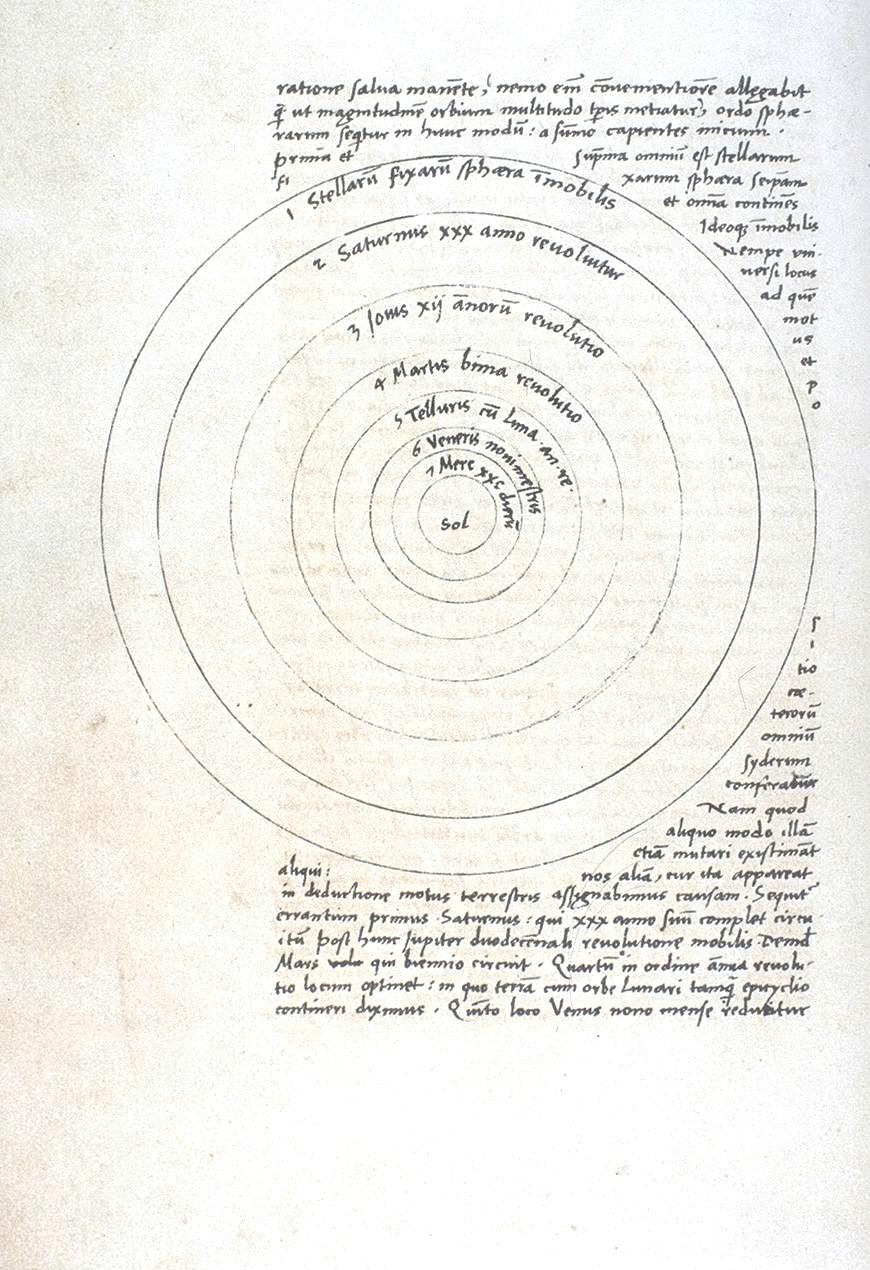
The Scientific Revolution of the 16th and 17th centuries marked a departure from ancient traditions. Copernicus proposed a heliostatic model of the solar system, which Galileo later supported with telescopic observations. In 1687, Isaac Newton published "Philosophiæ Naturalis Principia Mathematica," establishing the foundations of classical mechanics.
In the 20th and 21st centuries, science underwent radical shifts. Einstein’s theory of relativity and the development of quantum mechanics redefined physics at extreme scales. The discovery of the cosmic microwave background in 1964 supported the Big Bang theory. Modern breakthroughs include the completion of the Human Genome Project in 2003, the discovery of the Higgs boson in 2013, and the first direct image of a black hole in 2019.
Philosophically, science relies on different frameworks. Empiricism suggests knowledge comes from observation, while Karl Popper’s "critical rationalism" emphasizes falsifiability—the idea that a theory must be able to be proven wrong to be scientific. Thomas Kuhn introduced the concept of "paradigms," arguing that science moves through "paradigm shifts" when new evidence overthrows old models.
Today, the scientific community is a global network that relies on peer review to maintain objectivity. However, science faces modern hurdles. The "replication crisis" has revealed that many studies in social and life sciences cannot be reproduced by other researchers. Furthermore, the politicization of science occurs when legal or economic pressures influence research, often seen in debates over climate change or public health. Despite these challenges, science remains the primary tool for distinguishing valid claims from pseudoscience and advancing human understanding of the natural world.
🖼️ Images & Media (23)


+ 11 more
🔗 What's this?
Concepts mentioned in this article
✨ What else?
Related topics you might enjoy
🔬 Go deeper
More advanced topics to explore
🪜 Step back
Simpler topics to build understanding