All Bubbles
🏛️

Bronze Age

history Ages 7-9+ Vital Level 3

Long ago, people learned to mix metals to make bronze. They used it to make strong tools and beautiful jewelry.

Solvognen-00100.jpg
Solvognen-00100.jpg
You can see how they even made wheels for chariots!
Spoked wheel from Arokalja.jpg
It was a very busy time for building and trading.

45 words

The Bronze Age was a time when people stopped using just stone and started using metal. They made bronze by mixing copper with tin. This made tools and weapons much stronger than before.

Nebra disc 1.jpg
Nebra disc 1.jpg
One amazing fact is that this was also the time when people first started to write!
Hattusa Bronze Tablet Cuneiform.JPG
Because tin was hard to find, people had to travel far away to trade for it. This helped different cultures meet and share ideas.
Tarian Rhyd y Gors- Rhyd y Gors Shield.jpg
They made beautiful things like shields, jewelry, and even statues during this important time in history.

104 words

The Bronze Age is the middle part of a famous three-age system: Stone Age, Bronze Age, and Iron Age. It began around 3,000 BC in many places. To make bronze, ancient people had to use a process called smelting. They heated copper and mixed it with other metals like tin or arsenic. This created an alloy (a mixture of metals) that was much tougher than copper alone.

TimnaChalcolithicMine.JPG

During this time, great civilizations like Egypt and Mesopotamia grew powerful. They were the first to develop writing systems, such as cuneiform and hieroglyphs.

Hattusa Bronze Tablet Cuneiform.JPG
While some people used bronze for farm tools, it was often very expensive because tin was rare. In places like China, bronze was mostly used for special "ritual bronzes" like fancy pots and weapons for leaders.
Gefuding Gui.jpg
Gefuding Gui.jpg

Trade was very important because people needed to get tin from far away. This led to the first big trade routes on rivers and across land using camels.

World in 2000 BC.svg
The Bronze Age ended when people learned how to use iron, which was even stronger and easier to find than the ingredients for bronze.

190 words

The Bronze Age represents a massive leap in human technology and social organization. It is defined as the period when societies either produced bronze by smelting their own copper and alloying it with tin or arsenic, or traded for it. This era sits between the Neolithic (New Stone Age) and the Iron Age. Because different regions developed at different speeds, the Bronze Age didn't start everywhere at once, but it was widespread in the Old World by 3,000 BC.

Metallurgical diffusion.svg

One of the most significant advancements of this era was the invention of writing. The Sumerians in Mesopotamia created cuneiform, while the Egyptians developed hieroglyphs. These systems allowed for written laws, organized government, and the recording of history.

Hattusa Bronze Tablet Cuneiform.JPG
In the Near East, this led to the rise of powerful empires like the Hittites and the New Kingdom of Egypt. These societies built massive cities, practiced advanced medicine, and studied mathematics and astronomy.

The technology of bronze itself was a major advantage. Bronze is harder and more durable than copper. However, creating it was a complex task. While copper was common, tin was rare and found in only a few places. This scarcity forced civilizations to create vast trade networks. For example, tin from Britain may have been traded all the way to the Mediterranean.

World in 2000 BC.svg
In some cultures, like those in China, bronze was so precious that it was reserved for the elite. They created "ritual bronzes"—highly decorated vessels used in ceremonies—while ordinary farmers continued to use stone tools.
Pu with openwork interlaced dragons design.jpg

The end of the Bronze Age in the Mediterranean and Near East is known as the "Bronze Age Collapse" around 1200 BC. This was a time of great turmoil, involving migrations, famines, and the fall of kingdoms like the Mycenaeans.

Bronze Age End.svg
Bronze Age End.svg
Some theories suggest that as iron became more common, the expensive tin trade networks collapsed. Iron required much higher temperatures to smelt (1,250 °C), but once humans mastered that technology, the Bronze Age gave way to the Iron Age.
MaskOfAgamemnon.jpg
MaskOfAgamemnon.jpg

346 words

The Bronze Age is a pivotal era in human history, marking the transition from prehistoric societies to the first complex civilizations characterized by urban living, social stratification, and the development of writing. It is the second period of the "three-age system," following the Stone Age and preceding the Iron Age. A culture is classified as belonging to the Bronze Age if it mastered the metallurgical process of smelting copper and alloying it with tin, arsenic, or other metals to create bronze—a material significantly harder and more durable than the metals previously available.

Metallurgical diffusion.svg

The Near East was the first region to enter the Bronze Age, beginning around the mid-4th millennium BC with the Sumerian civilization in Mesopotamia. This period saw the birth of the city-state and the first empires, such as the Akkadian Empire. These societies introduced centralized governments, hereditary monarchies, and the first written law codes. The development of cuneiform in Mesopotamia and hieroglyphs in Egypt marked the end of prehistory, as societies began to keep written records of their deeds, religions, and economies.

Hattusa Bronze Tablet Cuneiform.JPG

In Egypt, the Bronze Age spanned the Early Dynastic Period through the New Kingdom, a time of immense prosperity and the construction of iconic monuments. Meanwhile, in the Indus Valley, the Harappan civilization flourished, noted for its advanced urban planning and elaborate drainage systems.
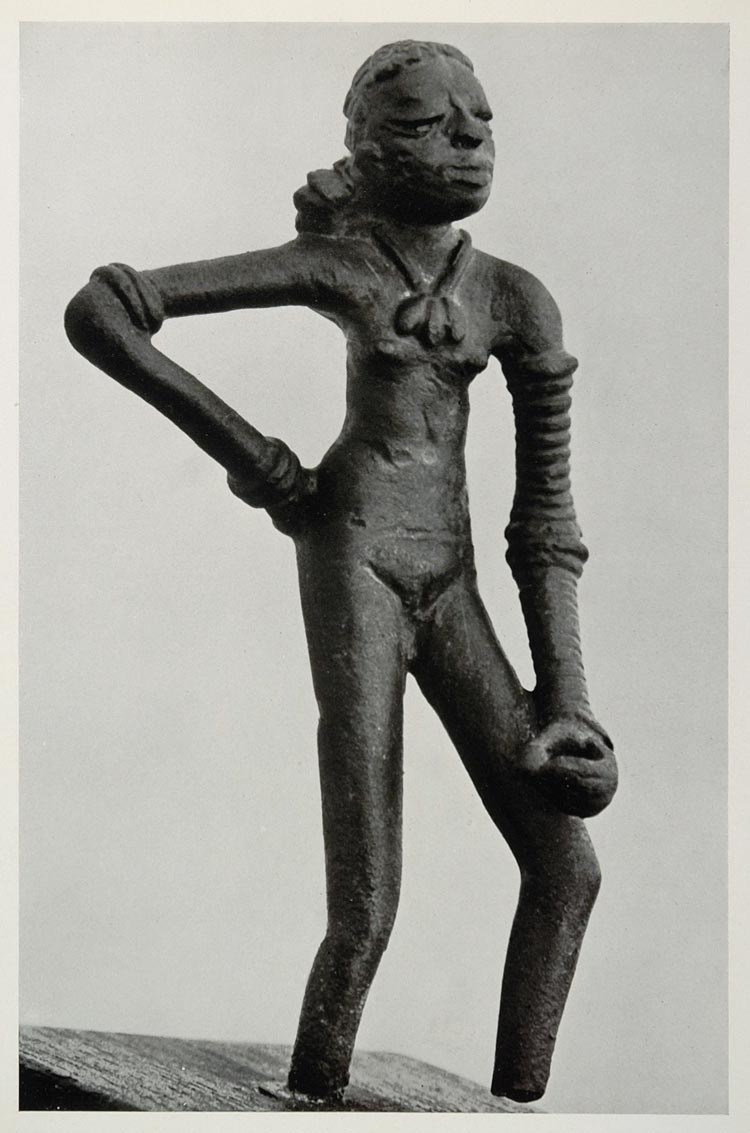
The Dancing Girl, in a photogravure by Alfred Nawrath,1938.jpg
In East Asia, the Chinese Bronze Age is often associated with the Shang and Zhou dynasties. Chinese metallurgy was unique for its focus on "ritual bronzes"—elaborate, highly decorated vessels used in ancestral worship. These items often featured the "taotie" motif, a stylized animal face, and bore inscriptions that provide a permanent record of early Chinese history.
Gefuding Gui.jpg
Gefuding Gui.jpg

The necessity of bronze production drove the first globalized trade networks. Because tin is geologically rare compared to copper, it had to be transported over vast distances. This led to an unprecedented intermingling of cultures. For instance, isotopic analysis suggests that tin from Cornwall in Great Britain reached the Mediterranean, fueling the Aegean civilizations of the Minoans and Mycenaeans.

World in 2000 BC.svg
These trade routes were not limited to metals; they also facilitated the exchange of luxury goods like spices, textiles, and precious stones, as well as ideas and technologies.

In Europe, the Bronze Age manifested in various distinct cultures, such as the Unetice and Urnfield cultures in the center, and the Nuragic civilization in Sardinia, known for its massive stone towers.

Nuraghe Santu Antine 02.jpg
Northern Europe, though entering the period later, produced exquisite artifacts like the Nebra Sky Disk, which demonstrates an early understanding of astronomy.
Nebra disc 1.jpg
Nebra disc 1.jpg

The era reached a dramatic conclusion in the Mediterranean and Near East during the "Late Bronze Age Collapse" around 1200 BC. This period was marked by the sudden disintegration of several major civilizations, including the Hittite Empire and the Mycenaean kingdoms.

Bronze Age End.svg
Bronze Age End.svg
Historians debate the causes, which likely included a combination of internal revolts, invasions by the "Sea Peoples," droughts leading to famine, and the disruption of the vital tin trade. As the trade networks failed, the incentive to maintain the expensive bronze industry vanished. This instability, combined with the technological breakthrough of iron smelting—which required much higher temperatures (1,250 °C) but used more abundant ore—eventually ushered in the Iron Age.
화순 대곡리 청동기 일괄.jpg
화순 대곡리 청동기 일괄.jpg

560 words

🖼️ Images & Media (26)

File:World in 2000 BC.svg
World in 2000 BC.svg
File:Metallurgical diffusion.svg
Metallurgical diffusion.svg
File:Bronze Age End.svg
Bronze Age End.svg
File:Question book-new.svg
Question book-new.svg
File:Symbol list class.svg
Symbol list class.svg
File:OOjs UI icon edit-ltr-progressive.svg
OOjs UI icon edit-ltr-progressive.svg
File:Solvognen-00100.jpg
Solvognen-00100.jpg
File:Spoked wheel from Arokalja.jpg
Spoked wheel from Arokalja.jpg
File:Nebra disc 1.jpg
Nebra disc 1.jpg
File:Zwaard van Jutphaas (24466600427).jpg
Zwaard van Jutphaas (24466600427).jpg
File:Yamnaya Steppe Pastoralists.jpg
Yamnaya Steppe Pastoralists.jpg
File:Nuraghe Santu Antine 02.jpg
Nuraghe Santu Antine 02.jpg

+ 14 more

🔬 Go deeper

More advanced topics to explore

🪜 Step back

Simpler topics to build understanding